What a Semi-Guided Florida Hunt Means
Many hunters find themselves stuck between a rock and a hard place when planning a trip to Florida. On one hand, the idea of a fully outfitted hunt sounds incredible, but the price tag can be a real barrier. On the other, going completely self-guided on unfamiliar public land can feel overwhelming and lead to wasted time. This guide is here to shed light on a fantastic middle-ground solution: the semi-guided Florida hunt. We’ll explore what it truly means, who it's for, and how to make the most of this unique opportunity.
Deciphering the "Semi-Guided" Spectrum
When you start looking into hunting trips, especially in a state as diverse as Florida, you'll hear terms like "fully guided," "self-guided," and "semi-guided" thrown around a lot. It can be confusing trying to figure out where your ideal experience fits in, and honestly, the lines aren't always as clear-cut as we'd like them to be. Let's break down these common categories so you can understand exactly where a semi-guided hunt sits on that spectrum.
What "Fully Guided" Really Entails
A fully guided hunt is often what most people picture when they think of a hunting outfitter. This is typically the most comprehensive, hands-on, and often the most expensive option. When you book a fully guided trip, you're essentially handing over all the logistical heavy lifting to the professionals. They're typically providing meals, lodging, transportation in the field, all the necessary equipment (like blinds, stands, decoys, sometimes even firearms), and, crucially, a dedicated guide who is with you every step of the way.
Imagine an Osceola turkey hunt where your guide wakes you up before dawn, cooks breakfast, drives you to a pre-scouted roost site, calls in the birds for you, handles any recovery, and even takes care of processing afterward. You're there to focus on the shot and the experience, with minimal worry about the details. This model is perfect for first-time hunters, those seeking a specific trophy, or anyone who simply wants to maximize their hunting time without the stress of planning and execution. It's an all-inclusive package, designed to give you the highest chance of success with the least amount of personal effort required beyond showing up ready to hunt.
The Self-Guided, DIY Florida Adventure
At the opposite end of the spectrum is the self-guided, or do-it-yourself (DIY), hunt. This is the path many experienced hunters choose, often to save money or to fully immerse themselves in the challenge of figuring things out on their own. In a self-guided scenario, you are responsible for everything. This means scouting your own ground, whether it's vast stretches of Public Hunting Land in Florida or securing Getting Private Land Permission in Florida. You'll handle all your own lodging, meals, transportation, and equipment.
For a DIY Florida deer hunter, this might involve pouring over maps of a Wildlife Management Area, driving countless miles to check out access points, walking in miles to hang your own stand, packing your own lunch, and dealing with all the field dressing and recovery yourself. It's an incredible challenge and deeply rewarding for those who successfully pull it off. However, it requires a significant investment of time, research, and often physical effort, especially if you're traveling to an unfamiliar area or targeting a notoriously difficult species. The learning curve can be steep, and success rates, particularly for out-of-state hunters unfamiliar with Florida's unique terrain and game behavior, can be lower than with guided options.
Where Semi-Guided Fits in the Middle
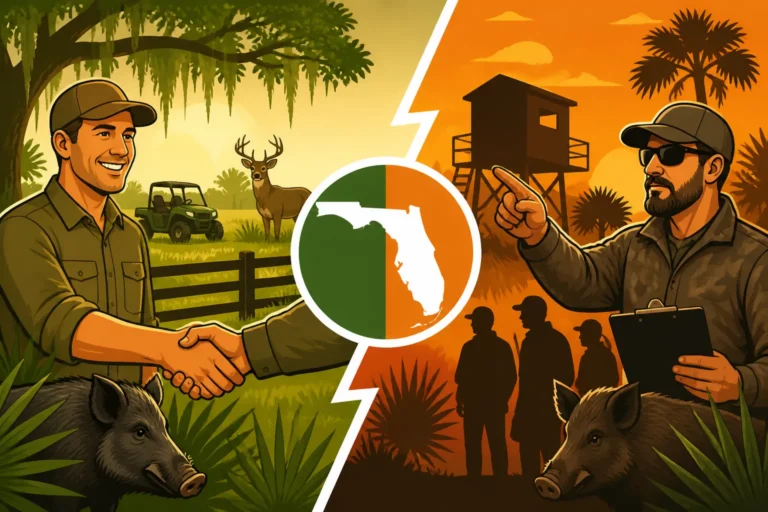
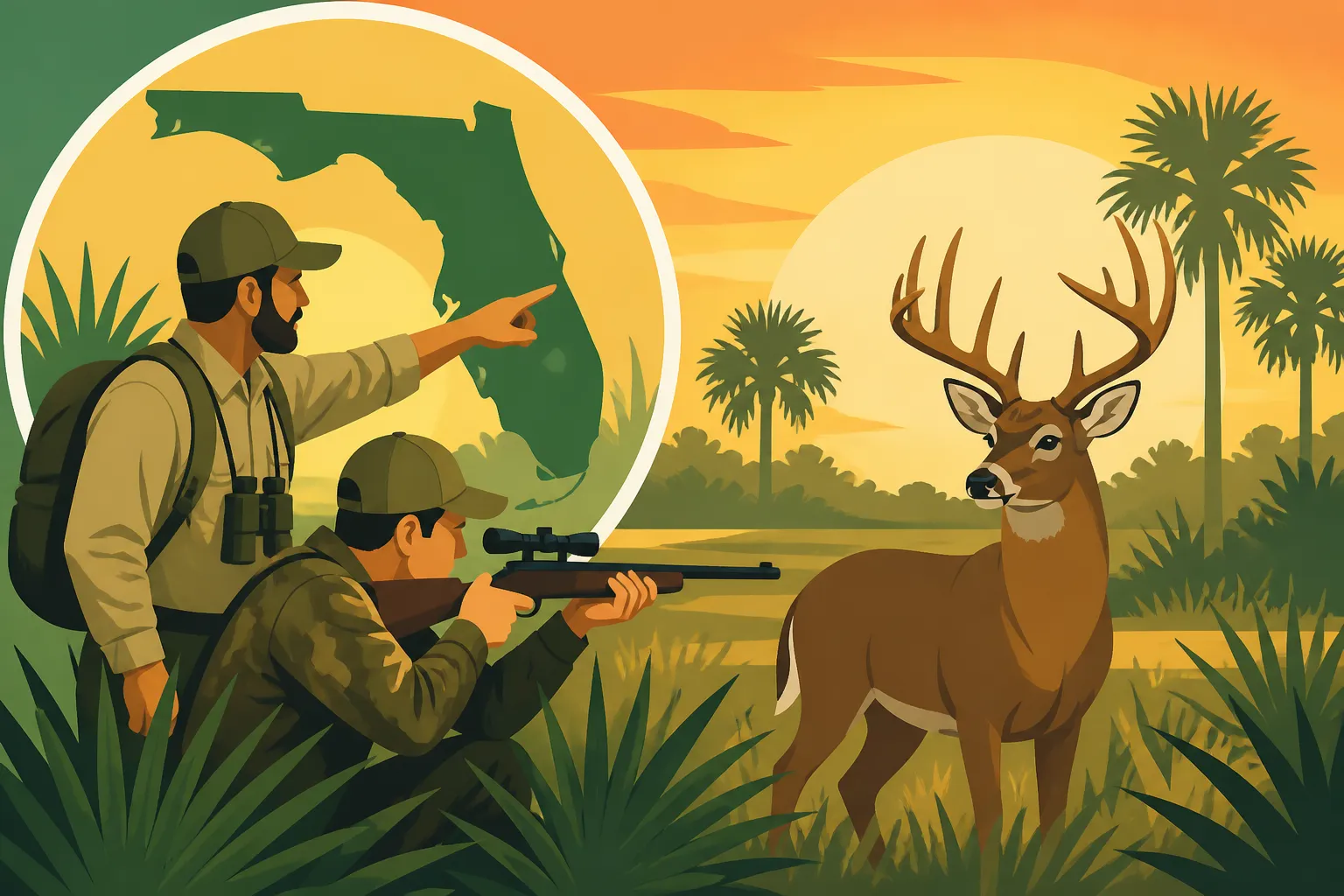
Now, let's talk about the semi-guided hunt, which is truly the sweet spot for many hunters. Think of it as having some essential support and local knowledge without sacrificing your independence or draining your bank account entirely. In a semi-guided scenario, the outfitter provides certain key elements, but you, the hunter, retain a good deal of autonomy over your actual hunting approach. They bridge the gap between the full service of a guided hunt and the complete self-reliance of a DIY trip.
Typically, a semi-guided outfitter will provide access to private land that has been pre-scouted, possibly show you stand locations or areas of recent game sign, and often help with game recovery. They might offer basic lodging, or at least recommend options, but meals are usually on you. You're often responsible for getting yourself to and from the hunting area, setting up your own stand (if not provided), and doing your own calling or stalking. It's about getting a significant leg up on the learning curve and access to quality ground, while still having the thrill of making your own hunting decisions. It empowers you to be an active participant in the hunt, rather than just a shooter, which resonates with many seasoned hunters who appreciate the challenge.
| Feature | Fully Guided Hunt | Semi-Guided Hunt | Self-Guided Hunt |
|---|---|---|---|
| Guide Presence | Dedicated guide with you 100% of the time | Guide provides orientation, access, support; hunts alone | No guide |
| Land Access | Private, pre-scouted, exclusive | Private, pre-scouted, designated areas | Public lands or self-secured private land |
| Lodging | Often included | Sometimes included, often basic or recommended | Your responsibility |
| Meals | Often included | Usually not included | Your responsibility |
| Transportation | In-field transport provided | Usually self-transport to hunting area | Your responsibility |
| Scouting | Done for you, spots pre-determined | Pre-scouted areas, stand suggestions, local intel | Your responsibility |
| Game Recovery | Typically included and handled | Often included, sometimes requires hunter assistance | Your responsibility |
| Cost | Highest | Moderate | Lowest (but highest time investment) |
| Hunter Role | Focus on shooting, minimal logistics | Active hunter, makes own decisions, uses intel | Complete independence, full responsibility |
The Advantages and Trade-offs of Semi-Guided Hunts
Choosing a semi-guided hunt isn't just about splitting the difference in price; it's about finding a hunting style that aligns with your personal preferences, skill level, and desired involvement. There are definite perks to this approach, offering a balance that many hunters find incredibly appealing. However, like any option, it comes with its own set of trade-offs that you need to be aware of before committing. Understanding these will help you determine if this model is truly the right fit for your next Florida adventure.
The Appeal of Independence with a Safety Net
One of the biggest draws of a semi-guided hunt is the incredible sense of independence it offers, something many experienced hunters cherish. You're still calling the shots, deciding where to sit, how to call, or which direction to stalk. This autonomy allows you to apply your own hunting strategies and adapt to conditions as you see fit, rather than being directed by a guide. It's your hunt, your decisions, and ultimately, your success (or failure) based on your own woodsmanship. For someone who has spent years Scouting Florida Public Land Before Season and developing their own tactics, this independence is invaluable.
Yet, you're not completely on your own, and that's the "safety net" part. You've got access to quality, managed land that often holds better game populations and sees less pressure than many public areas. The outfitter usually provides vital local knowledge – recent game movements, hot spots, entry and exit strategies, or even just confirming property boundaries. This insight, gleaned from years of hunting the area, is a game-changer. Plus, the knowledge that someone is available for help with tracking a wounded animal or transporting a harvested buck out of a deep slough can take a huge weight off your shoulders, letting you hunt harder and more confidently. You get to feel like a true hunter without all the anxiety of unfamiliar territory and potential lost game.
Potential Downsides to Consider
While the balance is appealing, a semi-guided hunt isn't without its potential drawbacks. The primary one is that you are still doing a lot of the work yourself. If your goal is a completely relaxing trip where every detail is handled for you, this might not be it. You'll likely be responsible for your own meals, transportation to the hunting area each day, and possibly setting up your own stands or blinds. For some, this is part of the fun; for others, it's just more work they were trying to avoid.
Another consideration is the level of "guiding" can vary greatly between outfitters. Some might simply drop you off at a gate and point you towards a map, while others will spend a full morning showing you specific stand setups and trail camera intel. You need to clarify these expectations upfront. Furthermore, while you get access to private land, you might be sharing it with other semi-guided hunters. This means strategizing to avoid over-pressuring areas or unknowingly impacting another hunter's setup. Unlike a fully exclusive guided trip, you might need to adapt to a shared hunting environment. Always ask about the number of hunters on the property at any given time and how hunting areas are assigned or rotated.
Balancing Cost and Experience
For many hunters, the decision boils down to balancing cost with the desired experience. A fully guided trip can be cost-prohibitive, with prices for a quality experience sometimes reaching into the thousands for a multi-day hunt. A self-guided hunt, while cheap in direct outfitter fees, can become expensive quickly when you factor in extensive travel, lodging, gear purchases, and the sheer amount of vacation time required for scouting and learning a new area.
The semi-guided option often hits that sweet spot. You're paying for access to prime land, invaluable local knowledge, and critical support services like game recovery, but you're saving significantly compared to a fully guided rate because you're handling much of the day-to-day hunting logistics yourself. This allows you to hunt more often, hunt better ground, or try a new species like an Osceola Turkeys in Peninsular Florida without completely breaking the bank. It's about optimizing your hunting budget to get the most valuable elements of an outfitted hunt – the access and the intel – while maintaining the personal satisfaction of a largely self-executed hunt.
What to Expect: Inclusions and Exclusions
When you're looking at different semi-guided hunting packages in Florida, it's crucial to understand what's typically included in the price and, perhaps more importantly, what isn't. Ambiguity here can lead to frustrating surprises or unexpected costs down the road. Every outfitter is different, and the term "semi-guided" can be interpreted broadly, so a clear understanding of what you're signing up for is paramount to a successful and enjoyable trip.
Common Services Provided by Semi-Guided Outfitters
While it varies, there are some common threads you'll find in most reputable semi-guided operations. First and foremost, you're paying for access to private, managed land. This is often the biggest hurdle for hunters in a state like Florida, where quality public land can be heavily pressured. This private ground is usually pre-scouted and known to hold good game numbers. Outfitters will typically provide an initial orientation, walking you through a map of the property, pointing out boundaries, known game trails, feeding areas, bedding cover, and perhaps even existing stand locations. This foundational knowledge is incredibly valuable, saving you days of guesswork.
Many semi-guided outfits also include basic lodging, which might range from a rustic cabin with bunk beds to a small house on the property. Don't expect five-star hotels, but a warm, dry place to sleep is a huge plus. Help with game recovery is another common inclusion. After you've successfully harvested an animal, especially something as large as a Florida deer or a hefty hog, getting it out of a swampy bottom or through thick palmetto can be a monumental task. Knowing the outfitter has an ATV, UTV, or even just the manpower to assist is a significant benefit. Some might even offer initial field dressing facilities or advice on local processors. These core services give you a solid foundation without holding your hand through every moment of the hunt.
Your Responsibilities on a Semi-Guided Trip
Because you're not paying for a fully guided experience, a significant portion of the hunting effort falls squarely on your shoulders. This includes bringing all of your own hunting gear – your bow, rifle, shotgun, ammunition, clothing suitable for Florida's often-humid climate, and any personal optics. You'll also be responsible for all your meals and drinks. While some lodges might have kitchen facilities for you to use, you'll be cooking for yourself or dining out. Many hunters choose to pack coolers with prepared meals or easily cookable items to save time and money.
Transportation is another key responsibility. You'll typically drive your own vehicle to the lodge or designated meeting spot, and then transport yourself to and from your hunting areas on the property each day. This could mean driving a truck down sand roads or using your own ATV if allowed. Furthermore, the actual hunting process, from strategizing your approach to calling, stalking, or sitting quietly in a stand, is entirely up to you. You're the one making the decisions in the field, which requires confidence in your own skills and experience. Remember, you'll also need to have all your Florida Hunting Licenses and What They Cost in order before you arrive, as these are never included in the outfitter's price.
Gear, Logistics, and "Hidden" Costs
When budgeting for a semi-guided hunt, it's easy to focus on the outfitter's fee and overlook other essential expenses. Beyond your personal hunting gear and food, consider the logistics. Will you need a cooler large enough to transport meat home? Do you have proper game bags? What about a reliable flashlight or headlamp for tracking in the dark? You might need a more robust vehicle than your daily driver if the property roads are rough. Fuel costs for daily drives to hunting spots can add up too.
Additionally, remember that while game recovery might be included, meat processing and taxidermy usually are not. Factor in the cost of a local butcher or the supplies needed to process the animal yourself. Tipping your outfitter or any staff who assist you is also customary, typically a percentage of the hunt cost, and should be factored into your budget. Sites like GoHunt and BookYourHunt are excellent resources not just for finding outfitters, but often include details about what's included in various packages and estimated costs, allowing you to compare options and ask pointed questions about potential "hidden" fees before you book. Clarity on these points before you leave home will prevent any unwelcome surprises once you're on the ground in Florida.
When a Semi-Guided Hunt is Your Best Bet
The semi-guided hunting model isn't for everyone, but for a specific type of hunter and certain hunting scenarios in Florida, it truly shines. Understanding who benefits most from this approach and for which species or situations it's particularly well-suited can help you decide if it's the right choice for your next adventure in the Sunshine State. It's about aligning your personal hunting style and goals with the advantages a semi-guided trip offers.
Ideal Hunters for This Model
The semi-guided hunt is tailor-made for experienced hunters who have a solid understanding of basic hunting tactics, can confidently field dress an animal, and enjoy the challenge of making their own decisions in the field. If you've spent years Still-Hunting Florida Palmetto Flatwoods or Hunting Florida Cypress Swamp Edges on public land and feel comfortable navigating various terrains, but you're looking for better access or a break from extensive pre-season scouting, this could be your sweet spot. It's perfect for someone who values their independence but appreciates having a safety net of local knowledge and logistical support.
It also appeals to hunters who are looking to upgrade their experience from purely DIY without making the full financial leap to a completely outfitted trip. Perhaps you've tried the public land grind in Florida and found it too challenging or crowded, but you're not ready to give up the thrill of calling your own shots. This model provides the best of both worlds: premium hunting ground and invaluable local insight, combined with the personal satisfaction of a hunt largely executed by your own hand. Consider it if you're comfortable with your abilities but want to reduce the risk of wasting precious hunting days on unfamiliar, unproductive ground.
Species Well-Suited for Semi-Guided Pursuits
Many of Florida's popular game species lend themselves well to a semi-guided format, particularly if you're comfortable with the specific hunting methods required. For instance, Year-Round Hog Hunting in Florida is a fantastic candidate. Feral hogs are prolific, and outfitters often have established baiting programs or know historical travel corridors. A semi-guided hog hunt might involve the outfitter showing you active areas, dropping you off at a stand overlooking a feeder or wallow, and then you take it from there. The assistance with game recovery, especially for a heavy hog, is a huge bonus.
Deer hunting in Florida, especially for White-Tailed Deer Across Florida, also fits this model nicely. Outfitters can point you to areas with recent buck sign, establish food plots, or show you key funnels. You still get to choose your stand placement, decide when and how to call, and manage your scent, but you're doing so in a target-rich environment. Turkey hunting, particularly for the elusive Osceola Turkeys in Peninsular Florida, can also work well semi-guided. An outfitter might provide access to land with known roosts or strut zones, and give you intel on current gobbling activity, leaving the critical calling and setup to your own expertise. A semi-guided alligator hunt, where the outfitter supplies the boat and access but you do the actual snagging and handling, is another popular option.
Specific Florida Scenarios Where It Shines
A semi-guided hunt is particularly beneficial when you're targeting a specific subspecies like the Osceola turkey, where finding prime habitat and reducing hunting pressure is crucial. Booking with an outfitter who manages land specifically for Osceolas can dramatically increase your odds compared to navigating vast Florida Wildlife Management Areas on your own. For someone traveling a long distance to complete a Grand Slam, this efficiency is incredibly valuable.
It also shines when you're short on time but want a quality hunt. You might only have a few days of vacation, and you don't want to spend half of it scouting. A semi-guided operation cuts out much of that initial legwork, allowing you to hit the ground running. Similarly, if you're dealing with the unique challenges of Florida's varied terrain – dense palmetto, cypress swamps, or vast pine plantations – having an outfitter provide intel on accessible areas and known game movements is an enormous advantage. Instead of wandering aimlessly, you can focus on executing your hunt effectively.
Finding and Vetting Your Semi-Guided Outfitter
Finding a reputable semi-guided outfitter in Florida, especially if you're not local, can feel like searching for a needle in a haystack. There are many options out there, but not all are created equal. Taking the time to properly research and vet potential outfitters is perhaps the most critical step in ensuring you have a successful and enjoyable trip. Don't rush this part; your investment of time and money deserves a thorough investigation.
Researching Reputable Outfitters
Start your search online, but don't stop there. Websites like BookYourHunt can be a great starting point, as they aggregate various hunting packages and often include reviews from previous clients. Pay close attention to these reviews – look for consistent praise regarding honesty, the quality of the hunting experience, and the helpfulness of the outfitter. Similarly, dedicated hunting forums and social media groups focused on Florida hunting can be treasure troves of information. Ask for recommendations from fellow hunters who have had positive semi-guided experiences in Florida. They often have firsthand knowledge that you won't find on a glossy website.
Once you have a few potential outfitters in mind, dive deeper into their specific websites and social media presence. Look for consistency in their messaging, clear descriptions of their semi-guided packages, and photos that look authentic (not just stock images). Be wary of operations that are vague about what's included or that seem to promise unrealistic success rates. A good outfitter will be transparent about the challenges and realities of hunting in Florida, not just the highlights. They should clearly define "semi-guided" in their context, as it can mean different things to different operations.
Key Questions to Ask Before Booking
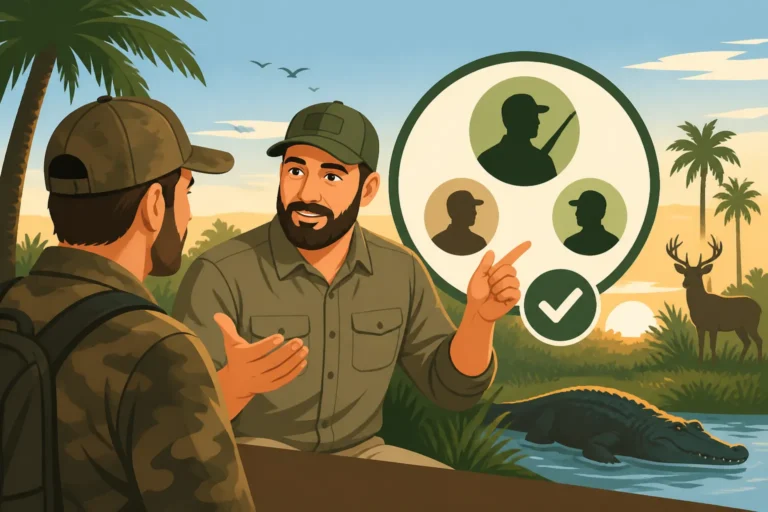
Once you've narrowed down your list, it's time to pick up the phone. A direct conversation with the outfitter is indispensable. Here are some essential questions to ask:
- What exactly is included in your "semi-guided" package? Be specific: lodging, meals, transportation to hunting areas, game recovery, initial scouting walkthrough, stand placement, etc.
- How much hunting pressure does the property receive? How many other hunters (guided or semi-guided) will be on the property during my hunt dates? How large is the hunting area?
- What is the typical success rate for semi-guided hunters on this property for my target species? Don't just ask about overall success; differentiate for semi-guided specifically.
- What is the terrain like, and how will I access my hunting spots? Will my personal vehicle suffice, or do I need an ATV?
- What level of assistance can I expect with game recovery? Is it always available, or only during certain hours?
- Can you provide references from past semi-guided clients? A reputable outfitter should gladly connect you with previous hunters.
- What are your deposit, cancellation, and refund policies? Understand these thoroughly before sending any money.
- Do you offer guidance on local meat processors or taxidermists?
These detailed questions, as outlined in Questions to Ask a Florida Outfitter, will help clarify expectations and prevent misunderstandings. Pay attention not just to what they say, but how they say it. Are they patient, transparent, and eager to answer your questions? Or do they seem rushed, vague, or evasive? Trust your gut feeling.
Understanding Contracts and Expectations
Before you send any money or sign anything, ensure you receive a written contract or booking agreement. This document should clearly outline all inclusions, exclusions, dates, prices, payment schedules, and cancellation policies. Read it meticulously. If anything discussed verbally is not in the contract, get it added or clarified in writing. This protects both you and the outfitter.
It's also important to manage your own expectations. A semi-guided hunt provides advantages, but it's not a guarantee of success. Wildlife is unpredictable, and hunting is inherently challenging. Understand that the outfitter is providing opportunities and support, but ultimately, your success depends on your skill, effort, and a bit of luck. Recognize Red Flags When Booking a Florida Hunt, such as an outfitter demanding full payment upfront without a clear contract, or one who avoids providing references. A solid contract and clear communication are the foundations of a positive semi-guided hunting experience in Florida.
Costing Out Your Semi-Guided Florida Adventure
Money talks, especially when it comes to booking a hunting trip. One of the primary reasons hunters opt for a semi-guided experience is to manage costs more effectively than a fully guided excursion, while still gaining significant advantages over a completely DIY approach. However, merely looking at the advertised price for a semi-guided hunt doesn't tell the whole story. To truly budget for your Florida adventure, you need to dig deeper into the price structure, understand what influences it, and account for all the associated expenses.
Breaking Down the Typical Price Structure
The cost of a semi-guided hunt in Florida can vary widely depending on the species, the length of the hunt, the quality of the outfitter's property, and the specific services included. Generally, you'll see prices that are significantly less than a fully guided hunt, but more than what you'd spend on a purely self-guided trip (not accounting for your time investment). For example, a multi-day semi-guided deer hunt might be a fraction of the cost of a full-service, all-inclusive package. A semi-guided hog hunt, given the abundance of feral hogs, can often be one of the most affordable options, sometimes priced per day or per hog.
Most outfitters will require a non-refundable deposit to secure your booking, with the remaining balance due either before your hunt, upon arrival, or at the conclusion. Ensure you understand this payment schedule clearly. Some outfitters might offer different tiers of semi-guided packages – perhaps a basic land access with minimal intel, versus a slightly higher-priced option that includes a detailed property walkthrough and established stand locations. Always ask for a detailed breakdown of costs, so you know exactly what each dollar is paying for. Compare these costs to What a Guided Florida Deer Hunt Costs or Average Cost of a Guided Osceola Hunt to appreciate the potential savings.
What Influences the Final Price Tag
Several factors will influence the final price you pay for a semi-guided hunt in Florida. The most obvious is the target species. Hunting a highly sought-after animal like an Osceola turkey, with its limited range, will almost always command a higher price than a hog hunt. The duration of the hunt also plays a significant role; a five-day hunt will naturally cost more than a two-day weekend trip. Property quality and size are crucial; outfitters with larger, well-managed tracts of land known for producing quality animals will typically charge more for access.
The time of year can also impact pricing. Peak seasons, like early archery openers or the rut, often see higher demand and thus higher prices. Finally, the level of "semi-guidance" itself is a factor. An outfitter who provides very detailed pre-scouting, maps with GPS coordinates for stand sites, and more intensive game recovery assistance will likely charge more than one who simply grants land access. Understanding these variables allows you to adjust your expectations and budget accordingly.
Smart Budgeting for Your Trip
To avoid any financial surprises, create a comprehensive budget that goes beyond the outfitter's fee. Start with the core cost of the hunt, including your deposit and final payment. Then, factor in your Florida hunting licenses and permits. Remember, these are almost always separate and can include a base license, specific game tags, and potentially a WMA permit if you're venturing onto those areas at any point.
Next, consider your travel expenses: round-trip airfare or fuel for driving, car rental (if flying), and any overnight lodging needed before or after your hunt, separate from what the outfitter provides. Don't forget food and drinks for the duration of your stay. Then, there's gear and supplies: ammunition, broadheads, new camouflage, calls, scent control, binoculars, and anything else you might need to buy or replace. Finally, always include a line item for contingencies (unexpected costs) and gratuities for your outfitter or any staff who provided assistance. Being disciplined in your budgeting, using resources like BookYourHunt to compare packages and read reviews, ensures that your semi-guided Florida hunting trip is not only successful but also financially manageable.
Disclaimer
This article is for general informational purposes only and does not constitute professional advice. Laws, prices and regulations vary by location and change over time. Consult a qualified professional for guidance on your specific situation.