Hunting a CRP Field Edge at First Light
Practical strategies explain how hunters can target Florida whitetails along a Conservation Reserve Program field edge at first light.
Close the distance.
Archery, muzzleloader, and firearm techniques — calling, stand placement, still-hunting, spot-and-stalk, and the weapon rules that change at the state line.
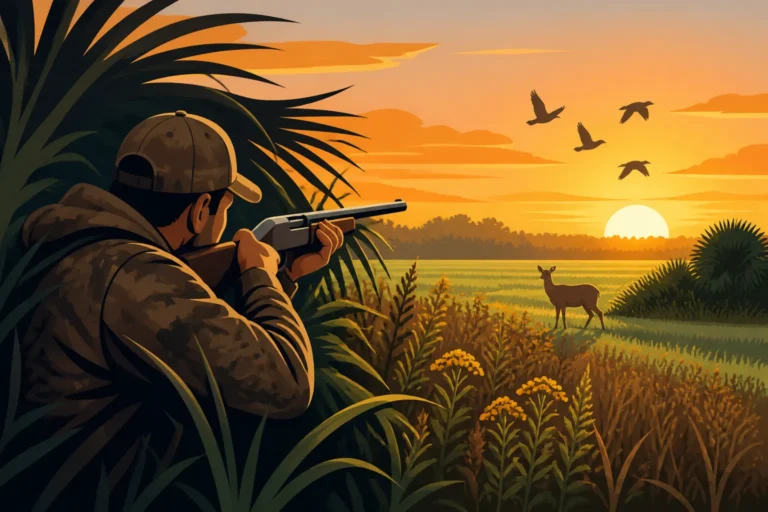
Practical strategies explain how hunters can target Florida whitetails along a Conservation Reserve Program field edge at first light.
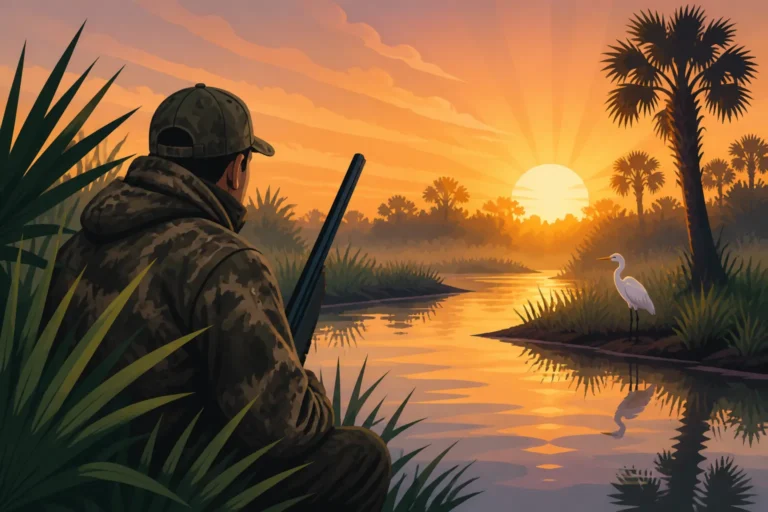
Creek crossings act as natural travel corridors and water sources that channel Florida deer into predictable movement lanes.
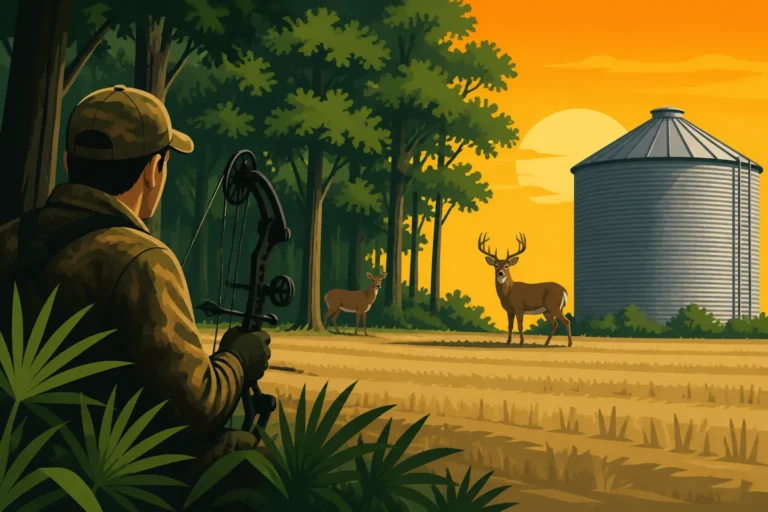
Florida deer behavior near grain bins helps hunters decode movement patterns and plan stand placement in adjacent woodlots.
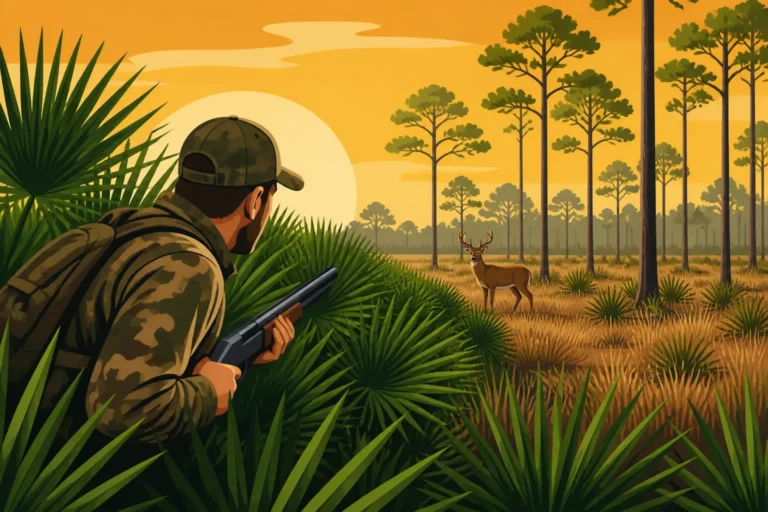
Palmetto flatwoods edges reveal deer, hogs, and turkeys moving between dense bedding cover, swamps, pine trees, and feeding areas.
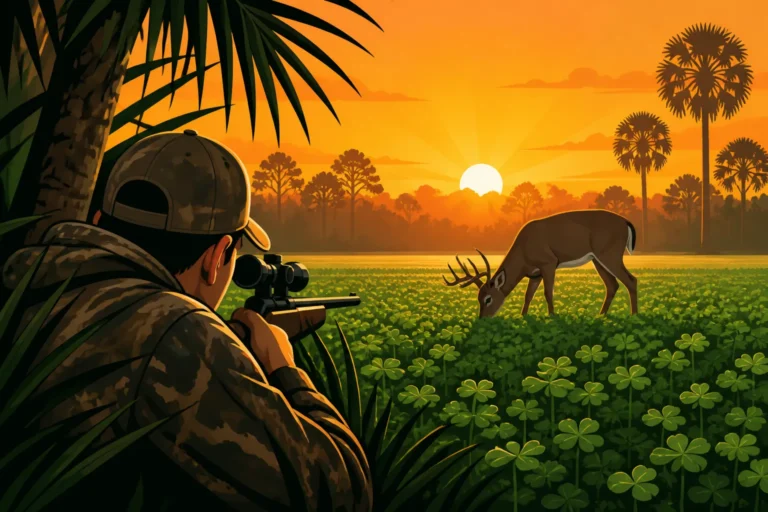
Proven strategies for hunting Florida clover plots at first light help hunters increase success during early morning sits.
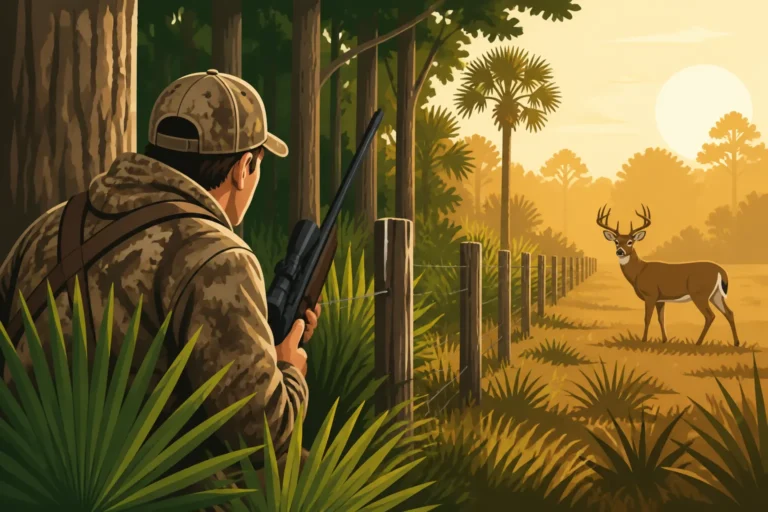
Timbered fence lines act as natural travel corridors for Florida deer, providing security, cover, and efficient movement routes.
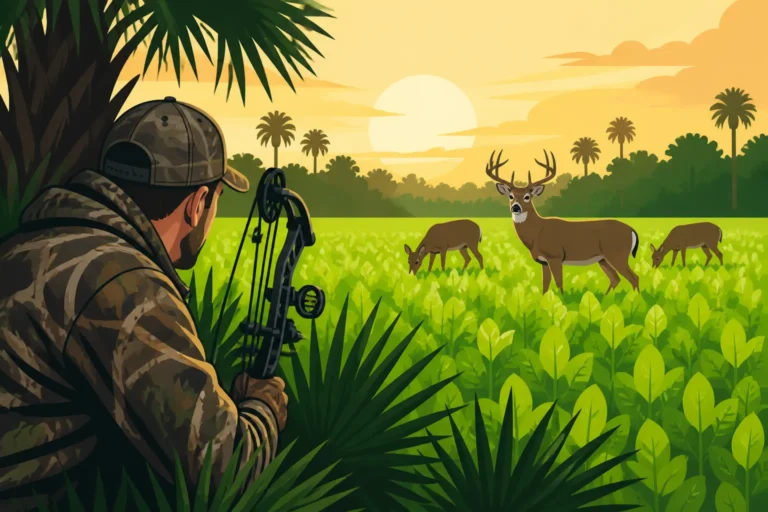
Florida green field deer hunting strategies explain food plot patterns, clover plantings, and dawn or dusk timing to fill tags.
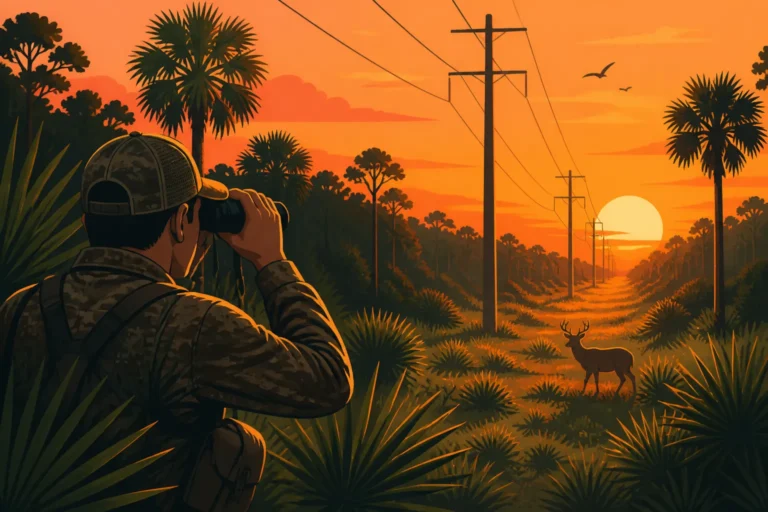
Florida deer hunters use specific glassing strategies and apps like GoHunt to spot wildlife in powerline cuts during fading evening light.
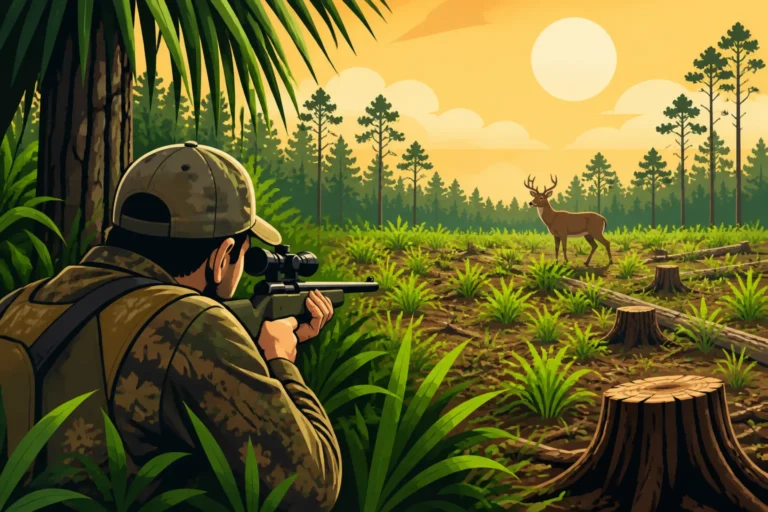
Florida clear-cut regrowth edges provide whitetails and hogs with food and cover, creating productive spots for hunters.
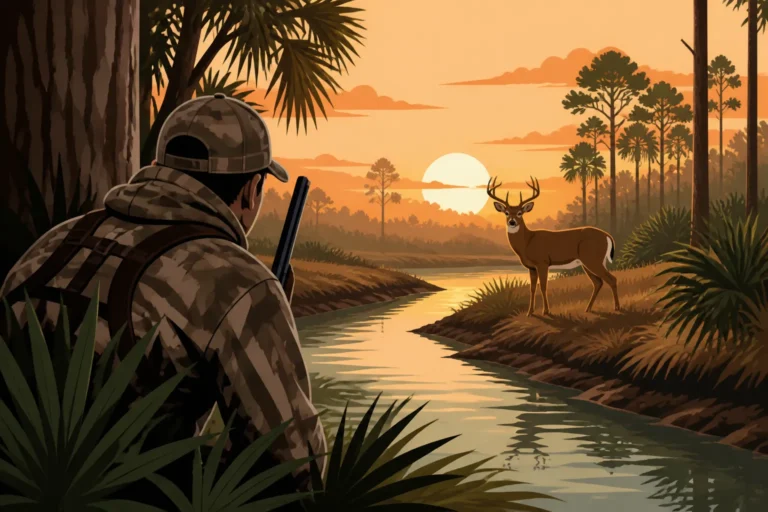
Creek bottoms provide Florida hunters consistent water, thermal cover, and persistent food sources to find late-season deer.