Hunting a Palmetto Flatwoods Edge
Hunting Florida's sprawling palmetto flatwoods can feel like trying to find a needle in a haystack, a dense, unforgiving landscape that swallows up sounds and sight lines. Many hunters get overwhelmed by the sheer scale and thickness, not knowing where to begin. This guide aims to cut through that frustration, focusing specifically on how to effectively hunt the edges of these palmetto flats, where game animals, especially deer and hogs, frequently transition between bedding, feeding, and travel corridors.
Decoding the Palmetto Flatwoods Edge
Florida's landscape is incredibly diverse, but the palmetto flatwoods are a quintessential part of it. These aren't your typical open forests; they're vast expanses dominated by saw palmetto, interspersed with pines, oaks, and often bordered by sloughs, swamps, or more open areas. Understanding the dynamics of these unique ecosystems and why their edges are so crucial is the first step toward consistent success.
The Dynamics of Flatwoods and Transition Zones
Imagine miles of dense, chest-high palmetto. It's tough to walk through, even tougher to see through, and seemingly impenetrable. But beneath that sea of green, the ground can vary from soft, sandy soil to damp, mucky depressions. The scattered pine trees offer some canopy, but the real cover is on the ground. This thick vegetation provides incredible security for game. Deer, hogs, and even turkeys will bed deep within these palmetto heads, feeling safe from predators and hunters alike. The sheer density acts as a fortress.
The challenge for us hunters is that while animals love this cover, they can't always find all their needs within the deepest parts of it. They need to move. They need to feed, drink, and seek out mates. This is where the "transition zone" or "edge" becomes vital. An edge might be where the dense palmetto meets a cypress swamp, a planted pine stand, a creek bottom, or even a sand road. These are the highways and intersections of the natural world, offering easier travel and access to different food sources. Think of it like this: would you rather bushwhack through a mile of dense jungle or walk along the clear path right next to it? Animals, like us, choose the path of least resistance.
Why Deer, Hogs, and Turkeys Gravitate to Edges
Game animals are inherently efficient. They'll expend the least amount of energy to get what they need, while maximizing their safety. The palmetto flatwoods edge offers that perfect balance.
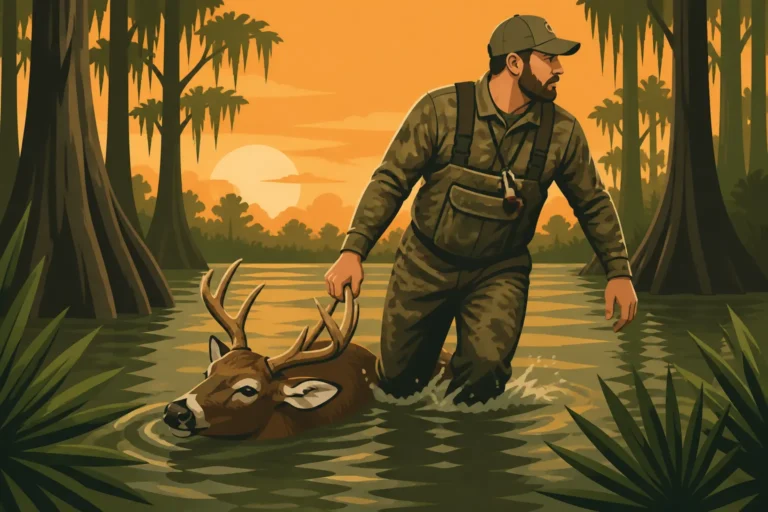
Deer, for instance, might bed deep in the thickest palmetto all day, especially a mature buck looking for a secure daytime hideout. You can learn a lot by understanding Where Florida Bucks Bed in Thick Palmetto. But as evening approaches or during the rut, they'll often emerge from that security cover to browse for acorns, young palmetto shoots, or other forage found along the fringe or in adjacent, more open areas. The edge gives them quick access to both safety and sustenance. During the rut, these edges become key travel corridors as bucks scent-check for does moving out of or into the thick stuff.
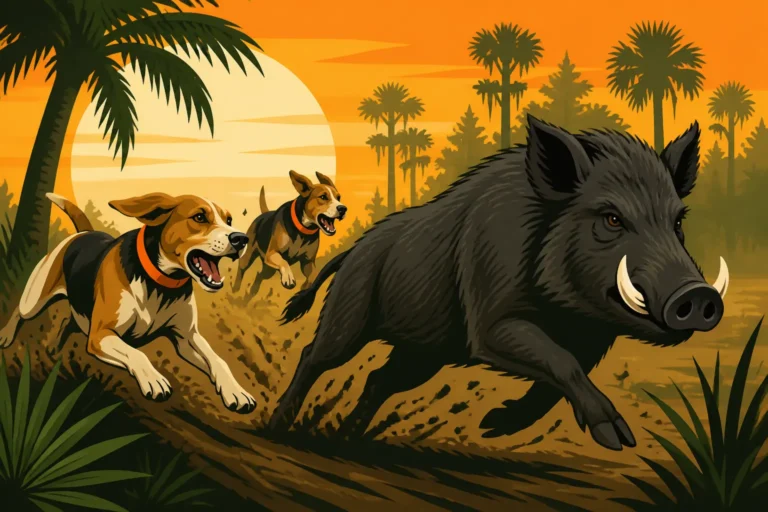
Feral hogs are perhaps even more tied to these edges. They love rooting in the softer soils often found along transitions, digging for tubers, roots, and grubs. A wet ditch or creek edge bordering palmettos is a hog magnet. You'll frequently find fresh rooting, wallows, and rubs along these seams. Hogs are constantly on the move, and these edges facilitate their travel patterns, particularly when they're moving between bedding areas in the dense palmetto and feeding areas like agricultural fields or oak hammocks. If you're looking at Hunting Hogs on WMA Land in the Off-Season, these edge scenarios will be paramount.
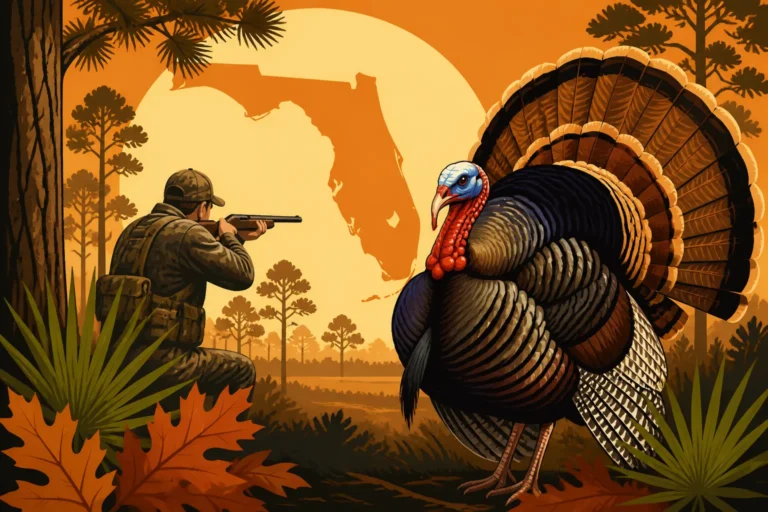
Even turkeys, especially in the Florida Panhandle or parts of the Osceola range, will use flatwoods edges. While they typically roost in tall pines or cypress, they'll feed along the edges, picking insects, seeds, and even emerging palmetto berries. They use the slightly more open ground for strutting and displaying, but often stay close enough to dive back into the palmetto for escape cover. These edges provide a crucial blend of openness for feeding and visibility, with instant security just a few steps away.
Mastering Scouting and Interpretation on the Edge
Finding the "edge" on a map is one thing; understanding which edges are productive and why takes dedicated scouting and a keen eye for subtle details. The flat nature of much of Florida's terrain means you have to think differently about how game uses the landscape.
Reading the Subtle Signs of Travel and Feeding
When you're out there, boots on the ground, don't just look for obvious trails. In Florida's soft sand and often damp soil, animal sign can be fleeting. Along palmetto flatwoods edges, look for:
- Subtle Trails: Deer and hogs will create faint trails as they push through the palmetto, often emerging at specific points along the edge. These won't always be worn paths like in a hardwood forest; they'll look more like tunnels or parting of the brush. You might see scuffed-up leaves, broken palmetto fronds, or even hairs caught on thorns. Focus on where these trails intersect with clearer travel paths like old logging roads, fencelines, or the banks of ditches.
- Tracks and Droppings: These are your bread and butter. Fresh tracks in soft dirt or mud along a transition zone tell you that animals are moving through. Pay attention to the size and direction. Droppings can indicate recent feeding activity and the type of food they're consuming. Are there palmetto berries, acorns, or other plant matter in their droppings? That tells you what they're keying on. Learning to interpret Reading Florida Mud for Fresh Deer Movement can be incredibly insightful.
- Rooting and Wallows: For hogs, fresh rooting along the edge is a huge indicator. They'll tear up the ground looking for food. Look for wallows in muddy depressions, especially after rain, where hogs cool themselves. This tells you they're not just passing through, but bedding or spending significant time in the area.
- Scrapes and Rubs: While less prevalent in the dense palmetto itself, you'll find rubs on small pines or palmetto trunks, and scrapes in open spots along the very edge. Bucks will use these to communicate their presence, especially during the pre-rut and rut. A fresh scrape on a sand road bordering a palmetto flat is like a billboard for deer activity.
- Forage Diversity: Look at what's growing along the edge. Are there oak trees dropping acorns? Wild grapes? Greenbriar? These are all prime food sources. The more diverse the forage along an edge, the more attractive it will be to a variety of game.
Leveraging Modern Tools for Edge Exploration
In today's hunting world, technology can be a massive advantage, especially in a landscape as challenging as Florida's palmetto flatwoods. You're not just relying on walking the woods anymore.
- Mapping Applications: Tools like GoHunt offer incredible satellite imagery that allows you to identify subtle changes in vegetation and topography from your couch. You can clearly see where dense palmetto transitions into more open pine stands, cypress sloughs, or agricultural fields. Look for fingers of palmetto that extend into more open areas, or conversely, strips of harder woods that push into the palmettos. These are natural funnels and travel corridors.
- GoHunt also provides public/private land boundaries, which is essential when Scouting Florida Public Land Before Season to make sure you're on legal ground. You can mark potential stand sites, areas of heavy sign, and even your entry and exit routes. This is critical for efficiency and safety.
- Aerial Photos for Deer: Reading Aerial Photos for Florida Deer isn't just about identifying big oak hammocks; it's about seeing those nuanced edges. Look for subtle changes in tree density, variations in water levels in sloughs, or even old logging cuts that create new edge habitat. Sometimes a barely visible ditch or drain will be a major travel route.
- Trail Cameras: Place cameras on the most promising edges you identify during scouting. Focus them on faint trails emerging from the palmettos, scrapes, or areas with heavy rooting. This gives you invaluable information about what animals are using the edge, when they're using it, and in what numbers. You'll learn their patterns without having to be there constantly.
The Critical Role of Wind and Thermals
In Florida's often flat terrain, wind and thermals behave differently than in mountainous regions, but they are no less critical. Ignoring them will lead to busted hunts time and again.
- Wind Direction: This is fundamental. Always hunt with the wind in your favor, carrying your scent away from where you expect game to appear. In palmetto flatwoods, the wind can swirl more than you might expect due to the broken canopy and dense ground cover. Use a wind checker constantly, even on days with seemingly consistent breezes. Deer and hogs are highly attuned to scent.
- Thermals: While Florida is generally flat, subtle changes in elevation, even a few feet, can create thermals. As the sun rises, warm air typically flows uphill. As it sets, cool air flows downhill. Even a slight dip into a slough or a rise onto a small ridge can create these currents. On a cold morning, your scent might drop into a low-lying palmetto head as warm air rises. In the evening, it might roll down into a low spot as the air cools. Understanding Wind and Thermals in Flat Florida Terrain is a game-changer.
- Hunting the "Cross-Wind": Often, the best stand placement along an edge is where the prevailing wind hits the edge at a 45-degree angle. This allows you to cover game moving both along the edge and those emerging directly from the palmettos, without blowing your scent directly into their primary travel lanes or bedding areas. It's a subtle but effective strategy.
Strategic Hunting Approaches for the Palmetto Edge
Once you've done your homework scouting, it's time to put those insights into action. Hunting the palmetto flatwoods edge requires patience, stealth, and adaptability.
Effective Stand Placement and Ground Blind Tactics
The choice between a treestand and a ground blind depends heavily on the specific edge you're hunting and your personal preference.
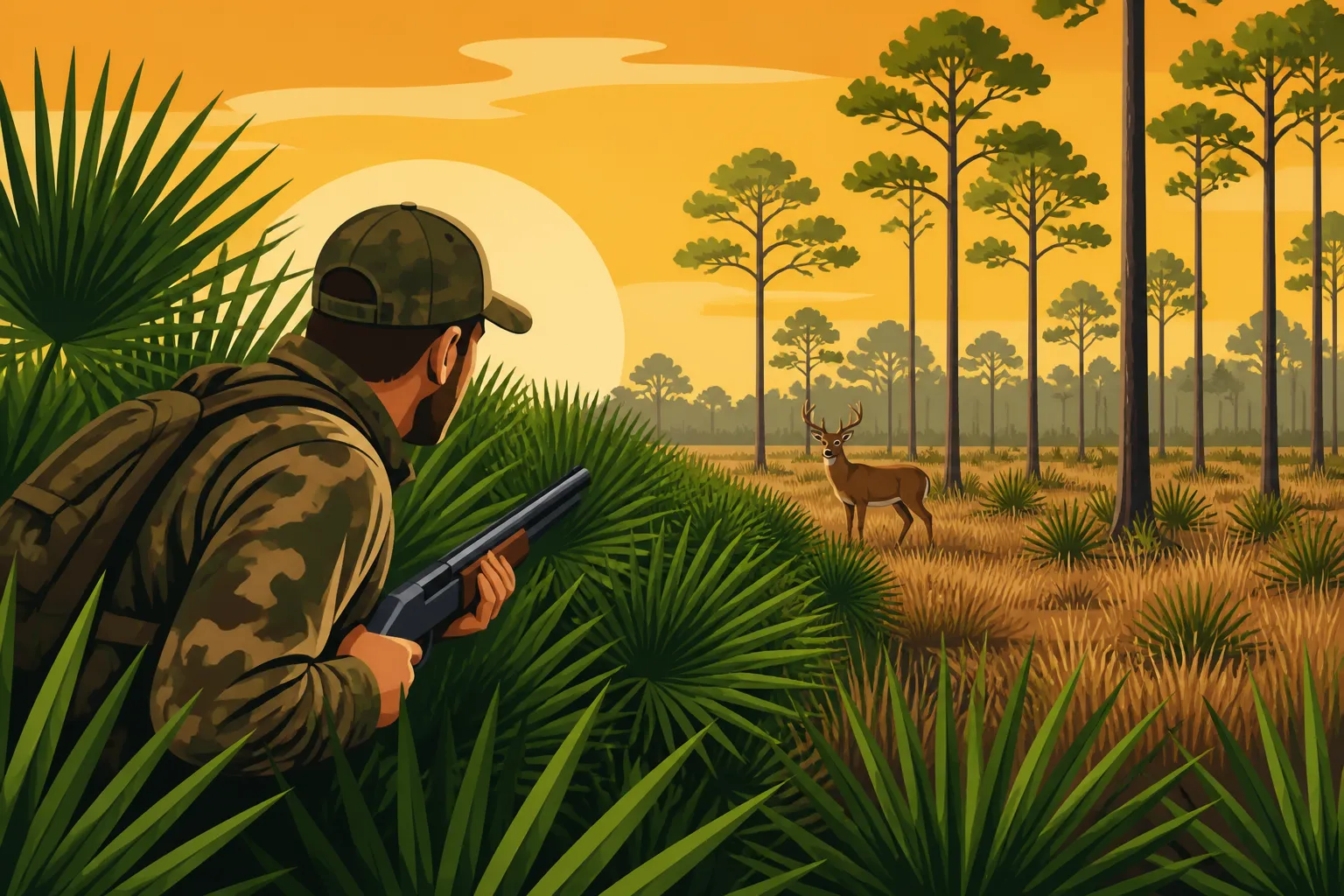
- Treestand Placement: If you can find a suitable tree along the edge—a tall pine or sturdy oak—a treestand offers several advantages. It gets your scent above the primary travel corridors, significantly improving your ability to remain undetected. It also provides a better vantage point over the dense palmetto, allowing you to spot deer or hogs moving deeper into the cover or approaching from a distance. Look for trees that offer natural back cover, such as Spanish moss or dense foliage, to break up your outline. Position yourself so you can see where trails emerge from the palmettos and where they intersect with more open areas.
- Ground Blind Tactics: Often, suitable trees for treestands are scarce or too small directly on a productive palmetto edge. This is where a ground blind shines. A well-brushed-in pop-up blind or a natural ground blind built into the palmettos can be incredibly effective. Animals are used to seeing dense cover, so a blind that blends in seamlessly can be less alarming than an exposed treestand. Make sure the blind is set up well in advance to allow animals to get accustomed to it. Using a Ground Blind on Florida Public Land often involves finding a cluster of palmettos or small pines to tuck into, then adding natural vegetation to break up the shape. Focus on creating shooting lanes from within the blind to cover those key entry/exit points from the thicket.
No matter your choice, always ensure your setup offers a clear shot at the anticipated travel lanes, and remember to trim only what is absolutely necessary for shooting. Over-trimming can make your stand or blind stick out like a sore thumb.
The Art of Still-Hunting and Soft Stalking
While stand hunting is a great tactic for edges, the dynamic nature of Florida's palmetto flatwoods also lends itself well to still-hunting and stalking, especially during cooler periods or after a fresh rain when the woods are quiet. This is truly the art of Still-Hunting Florida Palmetto Flatwoods.
- Slow and Deliberate: The key to still-hunting an edge is moving incredibly slowly. Take one step, pause, and thoroughly scan your surroundings for minutes before taking another. Use binoculars or a monocular to pick apart the dense palmetto. Look for horizontal lines (a deer's back), subtle movements, flicking ears, or patches of off-color fur.
- Utilize Cover: Always stay in the shadows or behind vegetation. Use the palmetto itself as cover, moving from one clump to the next. Break up your silhouette.
- Wind is Your Friend (or Foe): Always be mindful of the wind. A good crosswind can be perfect for still-hunting an edge, as it allows your scent to blow across the likely travel paths without blowing directly into their bedding areas.
- Focus on Sounds: In these thick environments, you'll often hear game before you see it. Listen for the rustle of leaves, the snap of a twig, or the subtle crunch of palmetto fronds. Hogs make distinct grunts and feeding noises, while deer often move more quietly. Stop frequently and just listen, letting the woods tell you what's happening.
- Transition Areas for Stalking: When you're still-hunting, focus on the most interesting transition areas: where a sandy ridge meets a slough, where a game trail intersects a fire break, or where a dense palmetto head thins out into a pine flat. These are the places where animals are most likely to be moving or feeding.
Calling and Decoying on the Fringe
Adding calls and decoys to your edge hunting strategy can be surprisingly effective, particularly during specific seasons.
- Deer Calls: Grunt tubes, doe bleats, and rattling antlers can all be used on the palmetto edge. During the rut, rattling can draw a curious buck out of the thick stuff, especially if he thinks a fight is happening on the fringe of his bedding area. Short, soft grunts can get a buck's attention, making him pause or investigate. Doe bleats can work, too, especially if you're targeting younger bucks or trying to stop a passing deer. The dense cover often makes it hard for deer to pinpoint the exact location of the call, which can make them approach more cautiously, offering you a shot.
- Hog Calls: While less common than deer calls, some hunters use hog calls like grunts and feeding sounds, or even distress calls, to attract hogs. The success can be hit or miss, but in a target-rich environment like a palmetto flat where hogs are present, it's worth experimenting. Often, simply busting through some brush to mimic another hog moving can get a response.
- Turkey Calls: For turkeys, the palmetto edge is ideal for setting up a decoy spread. Place a hen or jake decoy where it can be seen from the edge of the palmettos or a nearby roost tree. Use soft yelps, clucks, and purrs to entice a gobbler to come out of the thick cover and investigate. Knowing Calling an Osceola Off the Roost often involves setting up right on one of these crucial edges.
Essential Gear and Mindset for Flatwoods Success
Hunting Florida's palmetto flatwoods is a unique challenge that demands specific gear and a resilient mindset.
Clothing, Footwear, and Navigational Aids
Being prepared for the environment is paramount. Florida hunting can be hot, buggy, and wet, even in what you'd consider "dry" areas.
- Clothing: Lightweight, breathable clothing in camouflage patterns that blend with the green and brown tones of the palmettos and pines is essential. Long sleeves and pants are a must to protect against thorns, biting insects, and sun exposure. Even on warm days, consider layers, as mornings can be cool before the sun gets high. In some seasons, Florida requires How Much Blaze Orange Florida Requires so make sure you're compliant.
- Footwear: Waterproof boots are non-negotiable. You will encounter wet areas, muddy depressions, and dew-soaked vegetation. Good ankle support is also critical for navigating uneven ground and dense undergrowth. Look for boots that are durable but also breathable to prevent overheating.
- Navigation: A reliable GPS device or a smartphone app like GoHunt with downloaded offline maps is an absolute necessity. It's incredibly easy to get turned around in the featureless expanse of dense palmetto. Always mark your vehicle, stand location, and any major landmarks. GoHunt allows you to drop pins, track your movements, and see satellite imagery even without cell service, which is a lifesaver when you're deep in the woods. Always carry a compass and know how to use it as a backup.
- Insect Repellent: Florida's mosquitoes, ticks, and chiggers are legendary. Bring plenty of repellent, preferably with DEET or permethrin for clothing treatment. A head net can also be a sanity-saver during prime bug hours.
Overcoming the Unique Challenges of Thick Florida Cover
The very thing that makes palmetto flatwoods so appealing to game—the dense cover—also makes it incredibly challenging for hunters.
- Limited Visibility: You'll rarely have long sight lines. Shots will likely be close, often 50 yards or less. This means you need to be proficient with your chosen weapon at close range and be ready for quick, ethical shots. Don't take a shot if you can't clearly identify your target and have a clean background.
- Noise: Moving quietly through crunchy palmetto fronds and thick vegetation is almost impossible. This is why still-hunting requires extreme patience and why stand placement is so critical. Every step needs to be deliberate, testing the ground before you commit.
- Tracking: If you make a shot, tracking an animal into dense palmetto can be a nightmare. Even a well-hit deer can disappear quickly. Always take note of the last place you saw the animal and a landmark nearby. Wait a sufficient amount of time before tracking, and recruit friends to help if possible. If you find yourself Tracking a Deer in Sandy Florida Soil in this cover, every single sign will count.
- Heat and Hydration: Florida's heat can be brutal, even outside of summer. Carry plenty of water and stay hydrated. This is especially important if you're hunting during an Hot-Weather Sitting Strategy in Florida. Take breaks, and don't push yourself to the point of exhaustion, which can lead to mistakes or unsafe situations.
Hunting the palmetto flatwoods edge is an exercise in patience, detailed observation, and strategic planning. It's not about covering vast distances, but about finding those small, overlooked transition zones where game animals feel safe enough to move between security and sustenance. The rewards, whether it's a mature buck emerging from the palmettos or a sounder of hogs rooting along a slough, are well worth the effort. Always respect the land, practice ethical hunting, and cherish the wild beauty of Florida. You can find more comprehensive information about these diverse habitats by researching Florida Wildlife Management Areas.
Disclaimer
The information provided in this guide is for general informational purposes only and does not constitute legal advice. Hunting regulations and requirements in Florida can change frequently. Always consult the latest Florida Fish and Wildlife Conservation Commission (FWC) regulations and local ordinances before engaging in any hunting activity. Ensure you have all necessary licenses and permits. Safety should always be your top priority.