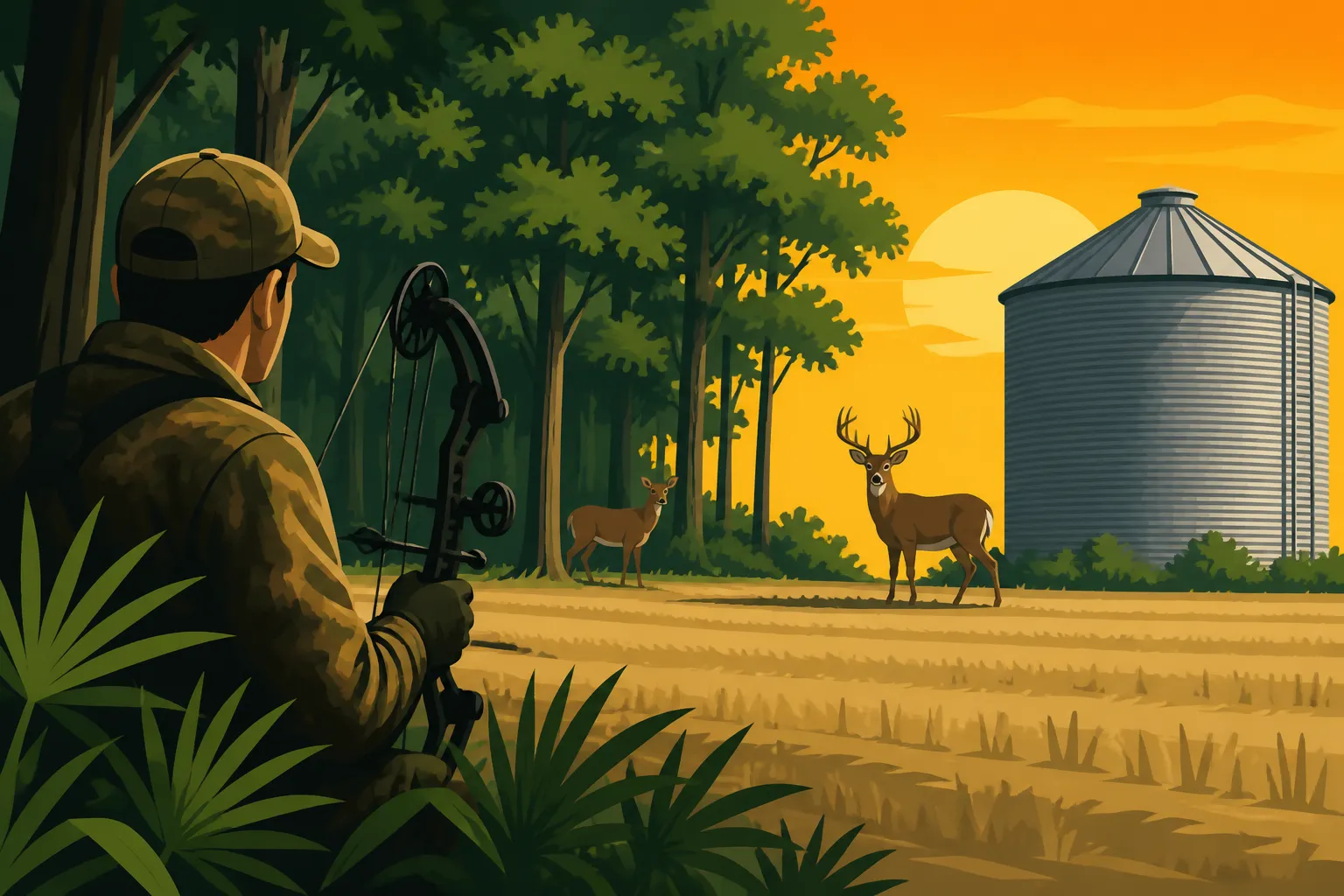
Hunting a Grain Bin Adjacent Woodlot
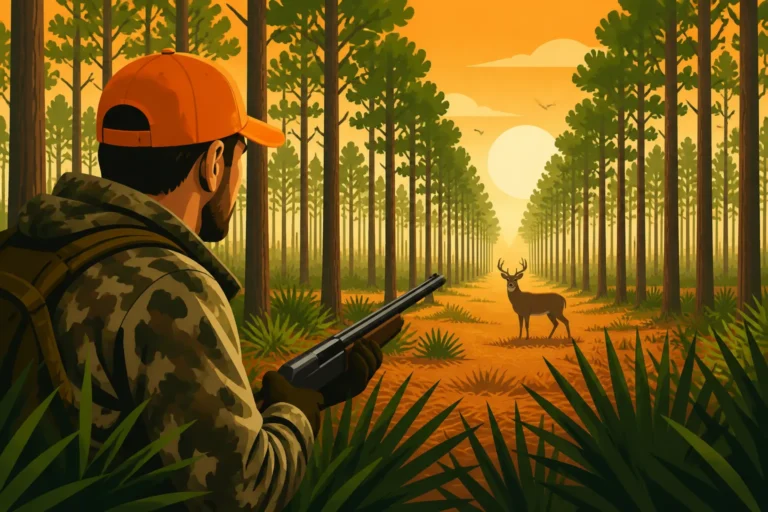
One of the trickiest parts about hunting deer in agricultural areas, especially around a valuable food source like a grain bin, is that the deer are often incredibly wary. They know exactly how good that buffet is, and they've learned to approach it with extreme caution, often under the cover of darkness or thick foliage. This guide is dedicated to unraveling the mysteries of hunting a woodlot that sits right next to a grain bin in Florida, helping you decode deer behavior and strategize your approach for real success.
Understanding Deer Movement Around Grain Bins
Imagine you're a deer in Florida. You've got the heat, the predators, and the constant search for enough grub to keep you going. Then, out of nowhere, you discover a treasure trove: a grain bin, often overflowing with corn or other tasty bits, providing a consistent, high-energy food source. It's a game-changer, but it also makes you a target, so caution becomes your best friend.
The Draw of the Grain Bin
Grain bins are absolute magnets for deer, and it's not hard to see why. While Florida offers a decent spread of natural forage, especially in the form of acorns during fall, and various browse throughout the year, a grain bin offers a concentrated, readily available, and often highly nutritious food source that's hard to pass up. Unlike the unpredictable nature of a mast crop, which can vary wildly from year to year depending on weather patterns and tree health, a grain bin provides a consistent meal.
Deer, being creatures of habit and efficiency, quickly learn that this is a reliable spot. They'll often shift their patterns to incorporate these bins, even if it means moving through slightly less secure areas for a shorter period. It's like finding a five-star restaurant that's always open. The high caloric content, particularly from corn, helps deer pack on weight, sustain themselves through leaner periods, and even support antler growth in bucks. This consistent food source becomes a significant factor in a deer's home range, influencing everything from their bedding areas to their daily travel routes, making the adjacent woodlot a critical piece of the puzzle.
Transition Zones and Travel Corridors
Deer don't just appear magically at a grain bin; they travel to it, often with extreme care. The woodlot adjacent to the grain bin acts as a crucial staging area and security blanket. Within this woodlot, deer will establish well-used travel corridors – essentially highways of hoof prints – that lead them from their bedding areas to the feeding site. These corridors are often found along natural edges, such as the transition from dense palmetto thickets to more open pine stands, or along fence lines that offer just a sliver of visual obstruction.
Funnels and pinch points within the woodlot itself are incredibly important. These could be narrow strips of cover between two open fields, a natural dip in the terrain, or even a section of dense underbrush that forces deer into a tighter path. These areas offer both concealment and efficiency for the deer, allowing them to move quickly while feeling secure. Your job as a hunter is to identify these pathways and understand how deer utilize them. They'll often stick to the thickest cover possible until the very last moment before stepping out into the open to feed. Paying close attention to how these transition zones are used can significantly impact your stand placement.
Time of Day and Pressure Factors
The timing of deer movement around a grain bin is heavily influenced by human activity and hunting pressure. In areas with minimal pressure, deer might venture out to feed during daylight hours, particularly in the early morning and late evening. You might see does and younger bucks frequenting the bin throughout the day. However, add a few hunters to the mix, and those patterns quickly shift.
If deer feel pressured, their visits to the grain bin will often become almost exclusively nocturnal. They'll wait until the deepest part of the night, or just before dawn, to move from the safety of the woodlot to the food. This nocturnal shift is a common frustration for hunters in Florida. Farm activity, such as tractors or other machinery, can also influence movement, pushing deer deeper into cover until the disturbance subsides. Understanding this dynamic is crucial. A wise hunter might choose to hunt the travel corridors within the woodlot, knowing that deer will move through there before full light or after sunset, minimizing their exposure to the open feeding area and to potential human detection.
Scouting and Stand Placement Strategies
Success in hunting any specific area, especially one as dynamic as a grain bin adjacent woodlot, hinges entirely on meticulous scouting. You need to become a deer detective, piecing together clues to understand their patterns, preferences, and vulnerabilities.
Initial Reconnaissance and Remote Scouting
Before you ever set foot on the ground, modern technology gives you a significant advantage. Start your scouting from the comfort of your home using online mapping tools. Programs like GoHunt are invaluable for this initial reconnaissance. Zoom in on the area around the grain bin and the adjacent woodlot. Look for key features:
- The Woodlot Itself: Assess its size, density, and species composition. Are there areas of thick palmetto that might serve as bedding cover, or more open oak hammocks where deer might browse and stage before hitting the grain?
- Connecting Corridors: Identify any natural funnels, fence lines, creek beds, or overgrown ditches that connect the woodlot to the grain bin. Deer will almost always take the path of least resistance that offers the most cover.
- Water Sources: Even if it’s just a small pond or a slough, water is essential. Deer often drink before or after feeding.
- Access Points: Plan your approach and exit routes to the stand, ensuring they are as quiet and low-impact as possible. Avoid walking directly through known travel routes or bedding areas.
By Reading Aerial Photos for Florida Deer, you can pinpoint potential bedding areas deep within the woodlot, stage points, and the most likely routes deer will use. This remote work saves you time and minimizes disturbance when you finally step into the woods.
On-the-Ground Sign Reading
Once you've got a solid idea from your maps, it's time to hit the ground, ideally when hunting pressure is low or in the off-season. Walk the edges of the woodlot and the perimeter of the grain bin, looking for undeniable evidence of deer activity. Fresh tracks in the soft Florida sand or mud are gold. Look for tracks heading directly into the grain bin area, and follow them back into the woodlot to identify the primary entry points.
Rubs and scrapes are another excellent indicator, especially for bucks. While they might be less prevalent directly next to a grain bin (unless a buck is scent-checking before entering), you'll often find them along the main travel corridors within the woodlot or on the fringes where deer feel more secure. Fresh rubs on small trees indicate active buck movement, while a fresh scrape line along a sand road can be a clear sign of a buck's routine. Droppings can also tell you a lot about diet and how recently deer have been in an area. By Finding Sign in a Florida Oak Hammock, you can decipher the intricate movements of deer and verify your remote scouting hypotheses. Pay attention to how heavy the trails are; a super-highway of tracks usually means multiple deer, or consistent usage by a few.
Optimizing Stand Location and Access
This is where the rubber meets the road. Based on your scouting, you need to pick a stand site that offers the best opportunity while minimizing your impact. The absolute paramount factor in Florida hunting is playing the wind. Deer, especially mature ones, rely heavily on their sense of smell. Always set up so your scent is blowing away from where you expect deer to approach or feed. This might mean having multiple stand options for different wind directions.
Consider the prevailing winds for your hunt, and then choose a tree (for a tree stand) or a hidden spot (for a ground blind) that offers good concealment and a clear shot opportunity to the primary travel corridors or the edge of the grain bin. For tree stands, look for trees that break up your outline. For ground blinds, consider areas with dense palmetto or brush to brush in your blind effectively. Remember that deer will often stage just inside the woodlot cover before stepping out into the open, so a stand positioned 20-40 yards inside the woodlot, overlooking a primary trail, can be incredibly effective. Crucially, plan your entry and exit routes meticulously. Your approach should be quiet, concealed, and avoid disturbing any bedding areas or main travel routes. A quiet, circuitous path, perhaps following a natural ditch or a creek edge, is often better than a direct, noisy walk. Using a quality hunting app like GoHunt can help you mark these entry routes, ensuring you stick to them in the dark. If you're considering a ground blind, learn more about Using a Ground Blind on Florida Public Land for tips on concealment and setup in diverse terrain.
Hunting Tactics for Grain Bin Woodlots
Once you've done your homework and found the perfect spot, it's time to execute. Hunting around a grain bin adjacent woodlot requires patience, discipline, and a keen understanding of the subtle nuances of deer behavior in these specific environments.
Playing the Wind and Thermals
In Florida, unlike mountainous regions, the terrain is often flat, which can make wind and thermal currents a bit trickier to predict. While you might not have dramatic updrafts and downdrafts like in the Rockies, subtle thermals still exist, especially around open fields and woodlot edges. As the sun rises, the ground heats up, and thermals tend to rise. In the evening, as the air cools, thermals drop.
Always carry a wind checker and use it constantly. Pay attention not just to the general wind direction but also to localized swirls, particularly if you're set up near a break in cover or a slight depression. A light breeze might be enough to carry your scent right into the path of an approaching deer. Your stand placement should always account for the most likely wind direction during your hunt, and you should be prepared to adjust or move if conditions change unexpectedly. A good rule of thumb is to assume deer will approach from downwind, circling to smell for danger. So, position yourself to intercept them before they get a whiff of you. Understanding Wind and Thermals in Flat Florida Terrain is absolutely paramount to consistent success in the Sunshine State.
Calling and Decoying Considerations
Calling and decoying can be effective tools around a grain bin woodlot, but they need to be used judiciously. During the rut, light grunts can be very effective in piquing a buck's curiosity, making him believe another deer is in the area. A short series of soft Grunt Calls in a Florida Oak Hammock might draw a cautious buck out of the dense cover of the woodlot, especially if he thinks a doe is heading towards the grain. Avoid aggressive calling unless you're very confident in your position and the deer's mood, as it can easily spook an already wary animal.
Decoys, particularly a doe or a small buck, can sometimes draw a deer out into the open or closer to your stand. However, use them with caution. In heavily pressured areas, deer might associate decoys with danger. If you do use a decoy, position it so it's visible from the deer's likely approach, but also so you have a clear shot if a deer approaches the decoy itself. Always be aware of other hunters in the area if using a decoy, especially on public land. For a grain bin setup, the primary focus should usually be on remaining undetected, but a well-timed call or strategically placed decoy can occasionally tip the odds in your favor.
Patient Waiting vs. Stalking
In most grain bin woodlot scenarios, patient waiting is almost always the superior strategy. Deer that frequent these areas are often patterned, but they are also incredibly cautious. They rely on the security of the woodlot to stage before moving into the open feeding area. Your best bet is to be in your stand well before daylight or in the early afternoon, and commit to staying put. Waiting allows the deer to move naturally, following their established routes, without being alerted to your presence.
Stalking, while sometimes necessary in other hunting scenarios, is generally not advisable in the immediate vicinity of a grain bin. The edges of the woodlot and the open areas around the bin often lack sufficient cover for a silent, undetected approach, especially in dry, crunchy Florida conditions. You're far more likely to spook deer, blowing your hunt and potentially educating the deer for future hunts. Focus your energy on stealthy entry and exit, meticulous scent control, and the unwavering patience required to wait for a deer to come to you along their established pathways.
Adapting to Seasonal Changes and Pressure
Florida's hunting seasons offer a long window of opportunity, but deer behavior, especially around a fixed food source like a grain bin, can shift dramatically based on natural food availability and the amount of pressure they're experiencing. Being able to adapt is key to consistent success.
Early Season and Acorn Crop Impact
During the early archery and muzzleloader seasons, especially in late summer and early fall, the availability of natural food sources can significantly influence how deer use a grain bin. If there's a bumper acorn crop in the surrounding oak hammocks or within the woodlot itself, deer might temporarily ignore the grain bin or visit it less frequently. Acorns are a highly preferred natural food, and deer will often gorge on them when available.
This doesn't mean the grain bin becomes irrelevant; it just means the deer's primary focus shifts. During these periods, you might have better luck hunting natural food sources, or focusing on trails that lead between acorn-dropping trees and bedding areas, rather than directly to the grain bin. However, as the acorn crop gets depleted or before it really drops, the grain bin will remain a strong attractant. Always stay informed about how natural food sources are performing in your area; a good resource like the FWC's annual reports or even local chatter can give you insights. Don't forget to consider Hunting After a Poor Acorn Year where the grain bin would be even more critical to deer.
Late Season Food Source Reliance
As the season progresses into late fall and winter, especially in Zones C and D where hunting can extend into February, natural forage starts to dwindle. The lush green browse of summer fades, and many natural mast crops have been consumed. This is when a grain bin truly becomes a lifeline for deer. Its consistent, high-energy offerings become even more critical for deer to maintain their body condition and recover from the rut.
During this period, deer reliance on the grain bin often intensifies. However, so does hunting pressure. Deer might still visit the bin, but their movement patterns could shift to become almost exclusively nocturnal or occur only during periods of extremely low pressure. Your best bet during late season is to focus on the heavy travel corridors within the woodlot itself, catching deer as they head towards or away from the grain bin at first and last light. You might also find success during daylight hours if a cold front pushes deer to feed more aggressively. For more on how deer utilize Late-Season Food Sources for Florida Whitetails, explore articles specific to those times.
Managing Hunting Pressure
Nothing can ruin a good hunting spot faster than too much pressure. Deer are incredibly smart and sensitive to human intrusion. If you hunt a grain bin adjacent woodlot too frequently, or if you're constantly bumping deer, you'll quickly turn them nocturnal or push them out of the area entirely. This is a common problem on both public and private lands in Florida.
To keep the area productive, you need to be strategic about your hunting efforts. Consider rotating your stand sites to avoid over-hunting any single location. Limit your hunts to specific times when conditions (especially wind) are optimal. If you notice deer becoming more nocturnal, give the area a break for a few days or even a week. Avoid walking directly through known bedding areas or main travel routes when entering or exiting, as this will quickly educate deer. If you have access to other hunting grounds, perhaps even public land nearby, consider splitting your time. Hunting other spots can take pressure off your prime grain bin location, allowing deer to revert to more natural, daylight patterns. Remember, understanding Hunting Pressure on Florida Public Land is a crucial skill that applies universally. Use tools like GoHunt to scout other potential areas, even on public land, to help manage pressure on your primary spot.
| Stand Type / Tactic | Pros | Cons | Best Use Case |
|---|---|---|---|
| Fixed Tree Stand | Excellent elevation for visibility and scent dispersal. Can be left in place (with permission). | Requires a suitable tree. Less flexible for changing wind/deer patterns. Can be noisy to get into. | Hunting established, consistent travel routes inside the woodlot on private land. |
| Climbing Stand | Highly mobile, can adjust to changing patterns/winds. Provides elevation. | Requires specific tree types (straight, limbless). Can be noisy to set up. | Adapting to subtle shifts in deer movement along the woodlot edge or deeper trails. |
| Ground Blind | Great concealment, especially in thick Florida vegetation. Comfortable. Good for youth/mobility-challenged hunters. | Limited visibility. Can hold scent if not properly vented. Deer are eye-level. | Hunting very dense woodlot edges or transition zones where trees are unsuitable, or if deer are heavily pressured and wary of elevated hunters. |
| Still-Hunting/Stalking | Highly mobile, allows you to cover ground and find deer. | Extremely difficult to remain undetected in open or crunchy areas. High risk of spooking deer. | Rarely recommended directly around a grain bin; better for deep, dense cover, like in Still-Hunting Florida Palmetto Flatwoods, far from the grain bin. |
Disclaimer
Please remember that hunting regulations and seasons can change. Always consult the latest Florida Fish and Wildlife Conservation Commission (FWC) regulations before planning any hunt. This guide is for informational purposes only and does not supersede state or federal hunting laws. Ensure you have all required licenses and permits.