Hunting Florida’s Osceola Turkey
The distinct call of an Osceola gobbler echoing through the palmetto and pine flats of central Florida is a sound that fuels a unique kind of hunting obsession. For many, chasing this incredibly wary and localized subspecies of wild turkey represents the ultimate challenge in a turkey hunter's Grand Slam journey. Yet, the heat, the thick cover, the ever-present bugs, and the sheer elusiveness of these birds can turn an exciting pursuit into a frustrating test of endurance. This guide aims to break down everything you need to know, from understanding their habitat to mastering the calls, helping you finally tag that iconic Florida bird.
Understanding the Elusive Osceola
Hunting the Osceola turkey isn't just about bagging a bird; it's about immersing yourself in a truly unique Florida ecosystem and appreciating a subspecies that exists nowhere else on Earth. These birds are renowned for their cunning and often shy demeanor, making them a formidable adversary even for seasoned turkey hunters.
What Makes the Osceola Unique
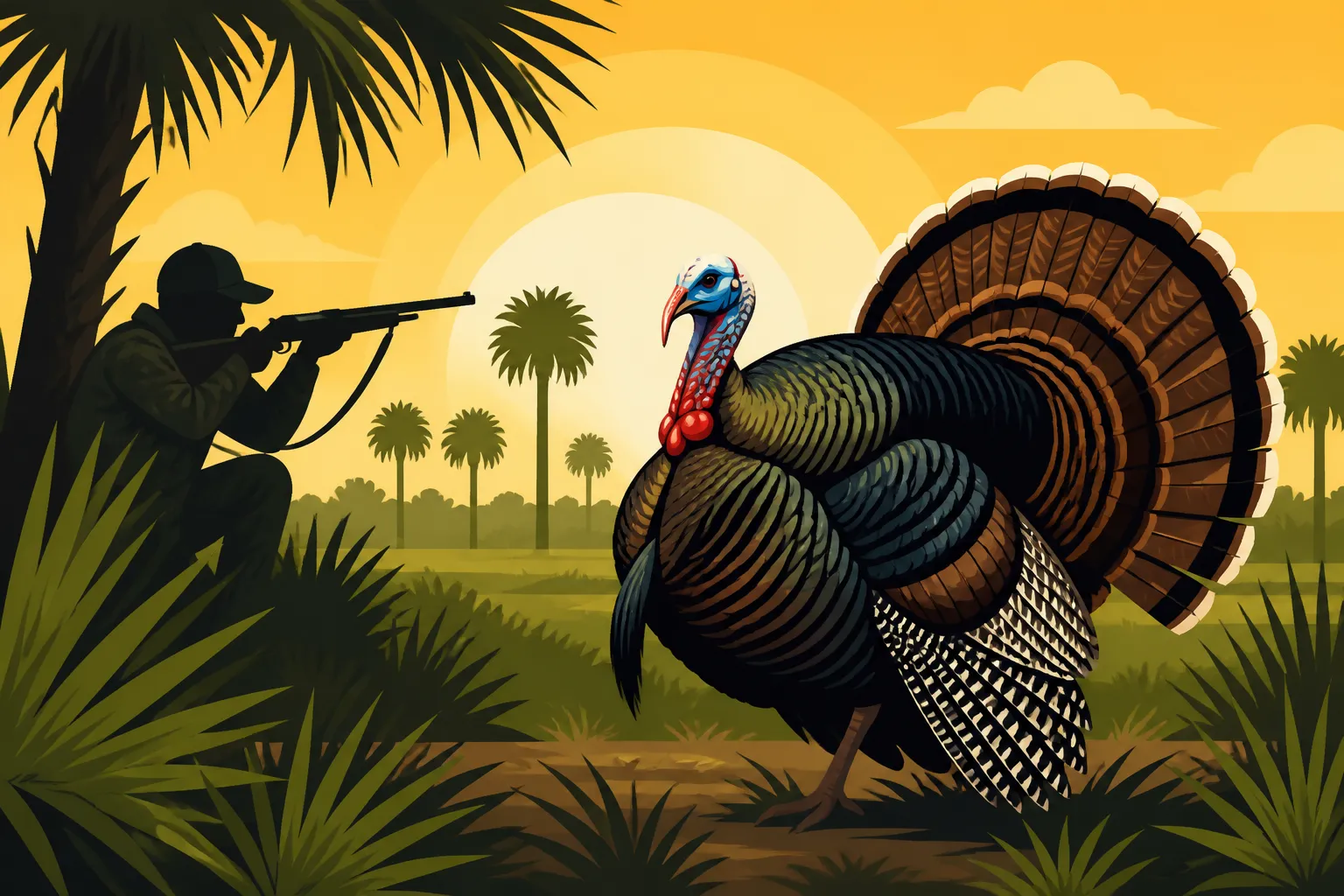
The Osceola turkey, Meleagris gallopavo osceola, also known as the Florida wild turkey, is one of the five subspecies of wild turkey found in North America, but it's the only one whose native range is exclusively within the Florida peninsula. Visually, they share many traits with their Eastern turkey cousins, but Osceolas typically have darker bodies, often appearing almost black, with less iridescent sheen. Their wing feathers are notably darker, lacking the crisp white barring often seen on Easterns, which gives them a much blacker appearance. This darker plumage helps them blend into the shadows of Florida's dense swamps and palmetto scrub. Their calls also tend to be a bit sharper and more distinct. What truly sets them apart, however, is their behavior. Living in a state with no hard freezes and often abundant food, they don't experience the same dramatic seasonal changes that drive the migration or predictable feeding patterns of turkeys in other parts of the country. This can make them incredibly adaptable and frustratingly unpredictable.
Typical Osceola Habitat and Range
The Osceola's domain is specifically defined as the Florida peninsula south of a line running from Jacksonville across to the Steinhatchee River on the Gulf Coast. This includes a vast mosaic of habitats, from dense cypress swamps, pine flatwoods, and oak hammocks to palmetto and sawgrass prairies. They thrive in areas with a mix of open and dense cover, where they can feed in clearings and quickly retreat to thick vegetation for safety. Unlike deer, which might be found almost anywhere, Osceolas are often tied to these specific ecosystems, relying on live oaks for roosting, palmetto thickets for nesting and escape cover, and pine uplands for bugging and feeding. You'll find them scattered across private ranches, state forests, and numerous wildlife management areas (WMAs) like Green Swamp Wilderness Preserve or Three Lakes Wildlife Management Area. Understanding their preferred habitat is crucial, as it dictates where you should focus your scouting efforts.
Behavior Patterns of Florida's Wild Turkeys
Florida's mild climate means Osceola turkeys don't face the same harsh winters that turkeys further north contend with. This can influence everything from their flocking patterns to their breeding season. The rut, or breeding season, typically kicks off earlier in Florida than in many other states, often starting as early as late February and running well into April, depending on the specific zone and conditions. Gobblers will begin sounding off from their roosts just before dawn, eager to round up hens. After fly down, they'll spend their mornings strutting and displaying, often in open areas like pastures, food plots, or even along sandy logging roads. Midday can see them quiet down, retreating to shaded areas to dust or loaf, especially as the Florida heat climbs. In the afternoons, they'll often resume feeding and moving towards their evening roosting sites. Understanding these daily patterns is key to positioning yourself for a shot. Unlike some other turkey subspecies, Osceolas can be incredibly "hetty," meaning they'll come in silently without gobbling, or hang up just out of sight, relying on their sharp senses and the dense Florida cover to stay safe.
Florida's Osceola Zone and Regulations
Navigating the regulations for hunting Osceola turkeys in Florida is paramount. The Sunshine State has specific zones, season dates, and permit requirements that differ significantly from other game species and even other turkey subspecies within the state.
Geographic Boundaries of the Osceola Zone
Florida is unique in that it effectively has two distinct turkey zones: the Osceola zone and the Eastern zone. The division roughly follows State Road 70 and then veers north along the Gulf Coast. Specifically, the Osceola zone covers the entire Florida peninsula south of a line that begins at the Georgia border, runs west along the Aucilla River to US 27, then south on US 27 to State Road 70, and then west on State Road 70 to the Gulf of Mexico. This geographical boundary is critical because it dictates not only which subspecies you'll be hunting but also the specific season dates and regulations that apply. If you're hunting north of this line, you're in Eastern turkey territory. Knowing Where the Osceola and Eastern Turkey Zones Divide is crucial before you even start planning your trip. For example, if you plan to hunt in Collier County, you're squarely in Osceola territory, while a hunt in Baker County would put you in the Eastern zone. Always double-check the current FWC regulations and maps for the most up-to-date boundary information.
Season Dates and Youth Hunt Opportunities
The spring turkey season for Osceolas typically opens in early March and extends through April, providing a generous window for hunters. However, specific dates can vary slightly year to year and between private lands and public Wildlife Management Areas (WMAs). Private land dates usually offer a slightly longer or earlier season. For WMAs, you'll need to consult the specific WMA regulations, as many operate on quota hunt systems, meaning you need to apply for and draw a permit. These quota hunts often have much shorter, more specific hunt periods.
Florida also offers special youth turkey weekends. These hunts usually take place a week or two before the general season opens, allowing young hunters (typically 15 and under) to pursue turkeys with an adult mentor. These opportunities are fantastic for introducing the next generation to hunting, often providing a less pressured environment. Always verify the exact Florida Youth Turkey Weekend Dates by Zone with the FWC before planning. The goal is to provide a safe, educational, and exciting experience for our youth, giving them a head start on the gobblers.
Required Licenses and Permits
Before you even step foot in the woods, you need to ensure you have all the necessary licenses and permits. For residents and non-residents alike, a Florida hunting license is the baseline. Beyond that, you'll need a Florida turkey permit, which is specific to wild turkeys. If you're a non-resident, the cost will naturally be higher, so it's worth reviewing the various Florida Hunting Licenses and What They Cost to choose the option that best fits your hunt duration.
Additionally, if you plan to hunt on any of Florida's extensive Wildlife Management Areas, you will almost certainly need a Florida WMA Management Area Permit. Many WMAs, especially those known for good turkey populations, also require quota permits obtained through a lottery system. It’s highly advisable to apply for these well in advance, as the draw odds for popular hunts can be challenging. Some WMAs may even have specific entry requirements or check-in procedures. You can find detailed information on the Florida WMA Quota Permit System on the FWC website. Make sure to carry proof of all your licenses and permits while hunting, whether physically or digitally on your phone via the FWC Fish/Hunt Florida app.
Essential Gear for Osceola Hunting
Hunting Osceolas, especially in the early spring, means being prepared for Florida's unique climate and terrain. Your gear choices can make or break your comfort and success in the field.
Camouflage and Clothing for Warm Climates
Forget the heavy insulated layers you might wear for deer hunting up north. Florida turkey season is often synonymous with heat and humidity, even in March. Lightweight, breathable camouflage is absolutely essential. Look for materials that wick moisture away from your skin and dry quickly. Many hunters opt for thin, synthetic fabrics that offer good ventilation. Brands like Sitka, Kuiu, or even budget-friendly options from Bass Pro Shops or Cabela's offer excellent warm-weather camo patterns. Consider a lightweight long-sleeved shirt and pants to protect against sun and insects, even if it feels warm.
The camo pattern itself should match Florida's varied landscape. Patterns with greens, browns, and palmetto-like textures are ideal for blending into pine flatwoods and oak hammocks. A good mosquito head net and lightweight gloves are also non-negotiable, especially for early morning setups. Don't forget waterproof boots, as you'll often encounter wet conditions, dewy palmetto, or even shallow standing water in swamps. Having dry feet is a game-changer for long days in the field.
Calls and Decoys for Peninsular Birds
Calling an Osceola turkey can be a humbling experience. These birds are pressured, wary, and often won't commit like turkeys in other states. A diverse array of calls is your best bet. Start with a solid friction call – a slate or a pot call – for those clear, crisp yelps and purrs. A box call can be great for louder, long-range locating or when trying to "shock gobble" a bird on the roost. Don't underestimate the power of a mouth call (diaphragm call) for hands-free operation, allowing you to keep your shotgun mounted and ready. It’s crucial to practice with all your calls long before the season. Too often, hunters overcall. When Rattling Volume in Thick Florida Scrub for deer, you might get away with more noise, but for turkeys, subtlety often wins.
Decoys are also a hotly debated topic among Osceola hunters. Some swear by a single hen decoy, while others prefer a jake or even a full gobbler setup. The key is to make it realistic. A Montana Decoy or Avian-X foldable decoy is lightweight and easy to carry. Decoy placement is critical, especially when Decoy Placement for Pressured Osceola Birds is factored in. Place it where the bird can see it but far enough out that the gobbler focuses on the decoy, not on your position. Often, a simple, realistic hen or jake decoy set 15-20 yards from your position is all you need.
Weapon Choices and Ammunition
When it comes to putting down an Osceola, a shotgun is the traditional and most effective choice. Most hunters opt for a 12-gauge or 20-gauge shotgun, especially with modern tungsten super shot (TSS) loads. TSS shells pack a tremendous punch, allowing for smaller gauges and extended ranges, which can be a lifesaver when a gobbler hangs up at 50 yards. Always pattern your shotgun with your chosen ammunition before the hunt. Knowing your effective range is crucial for a clean, ethical kill. Many hunters utilize red dot sights or low-power scopes to aid in precise shot placement.
Beyond shotguns, crossbows and bows are also legal during Florida's archery season, which often overlaps with or precedes general gun season on some private lands or specific WMA hunts. If you're considering Crossbow Hunting During Florida's Archery Season, ensure you're familiar with the specific regulations for legal draw weights, broadheads, and minimum bolt lengths. Remember, ethical hunting means knowing your limitations and those of your equipment.
Scouting and Locating Osceola Turkeys
Success in Osceola hunting often boils down to preparation. You can't just show up on opening day and expect birds to magically appear. Dedicated scouting, both pre-season and during the hunt, is non-negotiable.
Pre-Season Reconnaissance and Mapping
The work for an Osceola hunt begins long before the season opener. If you have access to private land, spend weekends walking the property, identifying potential roosting areas, strut zones, and travel corridors. Look for large live oaks or tall pines near water sources – these are prime roosting trees. Open fields, logging roads, and even manicured yards can serve as strut zones where gobblers will display for hens. Look for natural funnels and pinch points where turkeys are likely to travel between feeding and roosting areas.
For public land hunters, mapping tools are your best friend. Utilize satellite imagery on platforms like GoHunt, which can help you identify different habitat types, clearings, and potential access points. GoHunt's detailed maps can show you property lines, topographic features (even subtle ones in Florida), and trail systems, allowing you to formulate a game plan from your couch. This is also where you can look for areas that might offer less hunting pressure, often found deeper into a WMA. Remember, Scouting Florida Public Land Before Season is a critical step, as many prime spots get hit hard early on.
Interpreting Turkey Sign and Activity
Once you're on the ground, your eyes should be peeled for turkey sign. Fresh tracks in sand roads or soft soil are a dead giveaway of recent activity. Gobbler tracks are typically larger than hen tracks and usually have longer middle toes. Look for droppings; gobbler droppings are J-shaped, while hen droppings are more coiled. Wingtip drag marks in dusty areas or fields indicate a strutting gobbler. Scratching in pine needles or leaf litter means turkeys have been feeding there.
Feathers can also tell a story. Large primary wing feathers with dark, indistinct barring are a clear indicator of an Osceola. Piles of feathers under a large oak often point to a roost tree. During the early morning hours, listen intently for distant gobbling. Even if you don't hear a full gobble, listen for the "thump" of a bird flying off the roost or the soft clucking of hens. These subtle signs are often the key to Finding Sign in a Florida Oak Hammock and narrowing down your search area. The more sign you find, the closer you are to locating birds.
Using Technology for Scouting
Modern technology has revolutionized turkey scouting. Beyond GoHunt, handheld GPS units or smartphone apps with GPS capabilities are invaluable for marking waypoints, tracking your movements, and navigating dense Florida terrain. Pinpoint roost trees, strut zones, and even where you hear gobbling. This data helps you build a comprehensive picture of turkey activity. Trail cameras, while often restricted on public lands, can be a game-changer on private land. Set them up near food plots, watering holes, or known travel corridors to get an idea of turkey numbers, gobbler-to-hen ratios, and daily movement patterns.
Another often-overlooked tool is simply listening to online forums and local reports. While you might not get exact locations, you can gather valuable insights into how the birds are behaving that season – are they henned up, are they gobbling well, or have they gone quiet? This kind of intelligence can help you adjust your tactics. Just like knowing When Osceola Gobblers Go Quiet in April due to increased hunting pressure or breeding phases, gathering real-time information can save you valuable hunting time.
Effective Osceola Hunting Tactics
Once you've done your homework and found some birds, it's time to put your hunting skills to the test. Osceolas require a specific blend of patience, precise calling, and smart setups.
Mastering the Art of Calling
Calling is perhaps the most iconic aspect of turkey hunting, and it's where many Osceola hunts are won or lost. Unlike some Eastern birds that might charge in at aggressive calling, Osceolas often respond best to subtlety and realism. Start soft. A few soft yelps, clucks, and purrs can often pique a gobbler's interest without making him suspicious. Vary your cadence and volume, mimicking a real hen. Don't be afraid to experiment with different calls – slate, box, and diaphragm calls each have their unique sound profile.
If a gobbler is hot and responsive, you can be more aggressive, but if he hangs up, back off. Silence can be a powerful call, sometimes making a bird curious enough to come looking. Focus on making him believe there's a hen just out of sight. A common mistake is to overcall, especially with locator calls like owl hoots or crow calls. Use these sparingly to get a bird to gobble on the roost, but once he's on the ground and headed your way, less is often more. The goal is to draw him in, not scare him off. For those quieter moments, knowing how to use Grunt Calls in a Florida Oak Hammock can be more effective for deer than loud turkey calls.
Strategic Setup and Blind Use
Your setup location is critical. Osceolas have incredible eyesight, and the often open nature of Florida pine flatwoods or fields means they can spot movement from a long distance. Always set up with your back against a wide tree or dense brush that breaks up your outline. Natural cover is your best friend. Make sure you have a clear shooting lane but enough cover to remain hidden. If using a decoy, place it where the gobbler will see it and approach it from a safe shooting distance – typically 15-20 yards from your position. This ensures the bird is close enough for an ethical shot when it commits.
Ground blinds are another excellent option, especially if you plan to sit for extended periods or hunt more open areas. A quality pop-up ground blind like those from Ameristep or Primos offers excellent concealment and allows for some movement without spooking birds. When Using a Ground Blind on Florida Public Land, make sure you brush it in well with natural vegetation to help it blend into the surroundings. This extra step can make a huge difference in fooling wary gobblers. Remember, turkeys will often circle to get a visual on the "hen," so try to position your setup to account for that approach, forcing them to come into your shooting lane.
Run-and-Gun and Still-Hunting Approaches
While sitting tight can be effective, Osceola hunting often benefits from a more active approach, particularly on large tracts of public land. "Run-and-gun" tactics involve moving through the woods, stopping frequently to call, listening for a response, and then quickly moving to the gobbler's location once he sounds off. This can be exhilarating but requires stealth and a good sense of direction. When a bird gobbles, try to get closer before setting up, closing the distance while he can't see you. This can mean hustling through palmetto or cypress heads.
Still-hunting, or stalking, is another viable tactic, especially during the midday lull or when pursuing birds that have gone quiet. This involves moving slowly and deliberately through known turkey habitat, stopping frequently to scan, listen, and occasionally make a soft call. Focus on areas where you've seen fresh sign or where you believe birds might be feeding or loafing. This method requires extreme patience and attention to detail, as you're essentially hunting with your eyes and ears as much as your calls. If you find yourself in a thick palmetto flat, consider Still-Hunting Florida Palmetto Flatwoods as you would for deer, using the terrain to your advantage. The key is to be as quiet as possible, taking one or two steps at a time, and then pausing to observe.
Dealing with Challenging Conditions
Florida's unique environment presents its own set of challenges for turkey hunters. From the relentless heat to the buzzing insect population, you need to be prepared for more than just wary birds.
Battling Florida's Heat and Humidity
One of the biggest obstacles to spring turkey hunting in Florida is the heat and humidity. Unlike colder climates where birds are active all day, Osceolas (and hunters!) tend to slow down significantly during the midday hours as temperatures soar. This means early mornings are critical. Plan your hunt to be in your spot well before first light, ready for the fly-down. By late morning, when the sun is high, consider repositioning for an afternoon hunt, focusing on shaded areas or water sources where turkeys might retreat.
Staying hydrated is absolutely non-negotiable. Carry plenty of water and electrolyte drinks. Dress in lightweight, breathable clothing that wicks moisture away, as discussed earlier. A wide-brimmed hat can help keep the sun off your face and neck. Remember, the heat isn't just uncomfortable; it can be dangerous. Knowing how to adjust your Hot-Weather Sitting Strategy in Florida can be the difference between a successful, safe hunt and one cut short by exhaustion.
Managing Insects and Other Critters
Ah, Florida! Home to some of the most persistent insects known to man. Mosquitoes, no-see-ums, ticks, and gnats can turn an otherwise perfect morning into a miserable ordeal. Insect repellent is not an option; it's a necessity. Look for repellents with a high DEET concentration or consider permethrin-treated clothing (treat it at home, never apply permethrin to skin). A mosquito head net is also a smart addition to your pack, especially for those early morning setups before the sun is fully up.
Beyond insects, be aware of Florida's diverse wildlife. Venomous snakes like rattlesnakes and cottonmouths are present, so always watch where you step and where you put your hands. Wild hogs are abundant and can sometimes surprise you, though they are generally more afraid of you than you are of them. You might also encounter alligators near water sources. It's all part of the Florida experience, but being aware and prepared for these encounters is crucial for safety.
Adapting to Pressured Public Land Birds
Hunting Osceolas on public land, especially WMAs that see a lot of traffic, can be incredibly tough. These birds are often "pressured" – meaning they've been hunted extensively, are wary of human presence, and have learned to associate certain calls or sounds with danger. They might gobble once or twice, then go silent. They might hang up at 100 yards, refusing to commit further.
To succeed on pressured birds, you often need to go where others aren't. This means walking further, getting deeper into the WMA, or exploring less accessible areas. Using mapping tools like GoHunt to identify remote corners or difficult-to-access pockets can give you an edge. Be patient and subtle with your calling. Often, soft purrs and clucks are more effective than aggressive yelps. Don't be afraid to sit in one spot for an hour or more, letting the woods calm down. Sometimes, the birds will circle or come in silently. Understanding Hunting Pressure on Florida Public Land is key to developing tactics that work for these wily gobblers. Remember, consistency and persistence pay off.
Post-Harvest and Trophy Care
The moment you successfully bag an Osceola gobbler is exhilarating, but the work isn't over. Proper tagging, field dressing, and care are essential, especially in Florida's warm climate.
Legal Requirements for Tagging and Reporting
Once your bird is on the ground, the first thing you need to do is tag it immediately. Florida requires hunters to possess a valid turkey permit and to tag their turkey without delay after harvesting it. The tag should be securely attached to the turkey's leg. Beyond the physical tag, you are also required to report your harvest to the Florida Fish and Wildlife Conservation Commission (FWC). This can typically be done online through the FWC website or via their Fish/Hunt Florida app. The information collected, such as the date, time, and location of the harvest, is vital for wildlife management efforts, helping the FWC track turkey populations and ensure sustainable hunting opportunities. Always familiarize yourself with Florida Turkey Checking Requirements for the most up-to-date procedures. Failing to tag or report your bird can result in penalties, so don't let the excitement overshadow your legal responsibilities.
Field Dressing and Meat Care in Warm Weather
Florida's heat can quickly spoil game meat if not handled properly. After tagging, the next crucial step is to field dress your turkey. This involves removing the entrails to allow the carcass to cool down as rapidly as possible. You can do this by making a small incision near the vent, carefully cutting around the vent, and then reaching inside to remove the internal organs. Some hunters prefer to cut off the head and feet at this stage, especially if they plan to freeze the bird whole for later processing.
Once field dressed, get the bird out of the sun and into a cooler filled with ice as quickly as possible. If you're deep in the woods, a game bag or even a simple pillowcase can help protect the bird from dirt and insects during the pack-out. Don't just throw it in the trunk of your car. The goal is to lower the meat's temperature rapidly to prevent bacterial growth. Once home or at camp, skin and butcher the bird, separating the breast meat, leg, and thigh meat. Keep all meat on ice until you can process it or get it into a freezer. Knowing the ins and outs of Cooking a Wild Turkey Breast can be a great motivator for this crucial step.
Preserving Your Osceola Trophy
Many hunters consider the Osceola turkey a trophy of a lifetime and want to preserve more than just the meat. If you plan to have your bird mounted, whether it's a full strut mount or a fan and beard display, you'll need to take extra steps for preservation. For a full body mount, try not to damage the skin or feathers, especially around the fan and wings. Avoid dragging the bird directly on the ground.
If you only want to preserve the fan, beard, and spurs, you can carefully remove them in the field. To remove the fan, cut through the tailbone at the base of the fan, leaving a small piece of meat and bone attached. Spread the fan open and pin it to a piece of cardboard to dry, sprinkling borax on the flesh side to aid drying and deter insects. For the beard, simply cut a patch of skin around the base of the beard and dry it in borax. The spurs can be removed by cutting the lower leg and freezing them until you can properly clean and preserve the bone. Always research proper taxidermy preparation methods or consult with a local taxidermist immediately after the harvest to ensure your trophy is preserved correctly.
Common Mistakes and How to Avoid Them
Even experienced hunters can make mistakes, especially when pursuing a notoriously wary bird like the Osceola. Learning from common pitfalls can greatly increase your chances of success.
Overcalling and Impatience
One of the most frequent mistakes made by turkey hunters, particularly those accustomed to more aggressive birds, is overcalling. Osceolas are sharp; they hear a lot of hunter calls throughout the season. Too much calling, or calls that sound unnatural, can instantly put them on high alert. Instead of calling incessantly, try a softer, more subtle approach. A few soft yelps or clucks, followed by long periods of silence, often works better. Let the gobbler feel like he needs to come find the hen.
Impatience goes hand-in-hand with overcalling. It's incredibly tempting to move or call more frequently when a gobbler goes silent or hangs up. However, many successful Osceola hunts involve long periods of waiting. A gobbler might circle, approach silently, or simply take his time. Give him at least 30-45 minutes (or even longer if you believe he's close) after his last gobble or response before deciding to move. Rushing in can spook a bird that was just about to commit. Sometimes, the most effective tactic is to just sit and listen. Remember, it's a marathon, not a sprint.
Underestimating the Terrain and Weather
Florida's landscape is unique, and underestimating its challenges can quickly lead to a miserable hunt. The terrain, while often flat, can be deceptively dense. Palmetto thickets, cypress swamps, and tangled undergrowth can make walking, much less stalking, incredibly difficult and noisy. Always scout your access points and potential travel routes. GoHunt and similar mapping apps can help you identify less dense areas or existing trails. Getting lost in vast expanses of palmetto is a real possibility, so always carry a compass and a GPS device with marked waypoints.
The weather is another critical factor. While known as the "Sunshine State," Florida can experience sudden, intense thunderstorms, especially during spring. Always check the forecast, and be prepared for rain with appropriate waterproof gear. Beyond the rain, the heat and humidity are constant companions. Neglecting hydration or wearing improper clothing can lead to heat exhaustion. Preparing for both the physical demands of traversing the terrain and the physiological demands of the weather is crucial for a safe and enjoyable hunt. This is particularly important for non-residents who might not be accustomed to the tropical conditions.
Neglecting Safety Protocols
Hunting is an inherently safe activity when proper protocols are followed, but complacency can lead to accidents. First and foremost, always follow the four fundamental rules of firearm safety. Be absolutely certain of your target and what is beyond it, especially in areas with other hunters. Florida's hunter education requirements are in place for a reason; make sure you or anyone you're mentoring has completed Florida Hunter Education Requirements before heading into the field unsupervised.
When calling, especially if using aggressive gobbling or jake calls, be aware that you might attract other hunters. Blaze orange is not required for turkey hunting in Florida, but it's a good idea to wear it when walking in and out of your hunting spot, then remove it once you're set up. Never wear red, white, or blue while turkey hunting, as these colors are present on a gobbler's head and could be mistaken for a turkey by another hunter. Always identify your target as a legal gobbler before pulling the trigger. Lastly, inform someone of your hunting plans – where you're going and when you expect to return. Cell service can be spotty in remote areas, so a personal locator beacon (PLB) or satellite communicator can be a wise investment for deep woods excursions.
| Characteristic | Osceola Turkey | Eastern Turkey |
|---|---|---|
| Primary Range | Florida Peninsula (South of Aucilla River/SR 70) | Northern Florida Panhandle, Eastern U.S. |
| Plumage | Darker body, almost black; distinctively dark wing bars, often lacking white. | Typically lighter overall, with more pronounced white barring on wing feathers. |
| Size | Generally smaller body size than Easterns. | Larger body size, longer legs. |
| Spurs/Beard | Average length and thickness. | Often longer, thicker spurs and beards. |
| Behavior | Extremely wary, often silent, hangs up frequently. Adapted to hot, humid climates. | Can be more aggressive callers, may commit more readily, but still wary. |
| Habitat | Pine flatwoods, palmetto scrub, cypress swamps, oak hammocks, pasture edges. | Hardwood forests, pine forests, agricultural fields. |
| Hunting Season | Early March – Late April (specific dates vary) | Mid-March – Late April (specific dates vary) |
Disclaimer
Please remember that hunting regulations and season dates can change. Always consult the latest Florida Fish and Wildlife Conservation Commission (FWC) regulations guide before planning any hunting trip. This article is for informational purposes only and does not supersede official FWC rules and guidelines.