Hunting a Clear-Cut Regrowth Edge
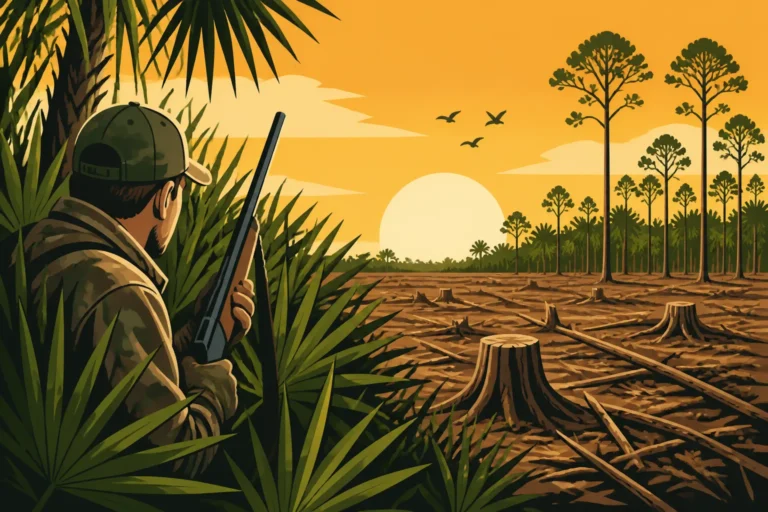
Hunting a clear-cut regrowth edge in Florida can feel like staring into a green, impenetrable wall, making you wonder where on earth a deer could even hide, let alone move through. Many hunters get frustrated and walk right past these areas, but that's a huge mistake. These thick, dense patches of recovering forest are often overlooked goldmines, providing exactly the type of sanctuary and food sources that Florida's whitetails, and even hogs, absolutely crave. This guide will walk you through exactly how to unravel the secrets of these challenging but incredibly productive hunting grounds.
Understanding the Clear-Cut Regrowth Edge Ecosystem
When a timber company comes through and clears a section of forest, it drastically alters the landscape, but it also jumpstarts a brand-new ecological cycle that benefits many game species, especially deer and hogs. The edge where this regrowth meets mature timber is a critical transition zone.
Why Clear-Cuts Attract Wildlife
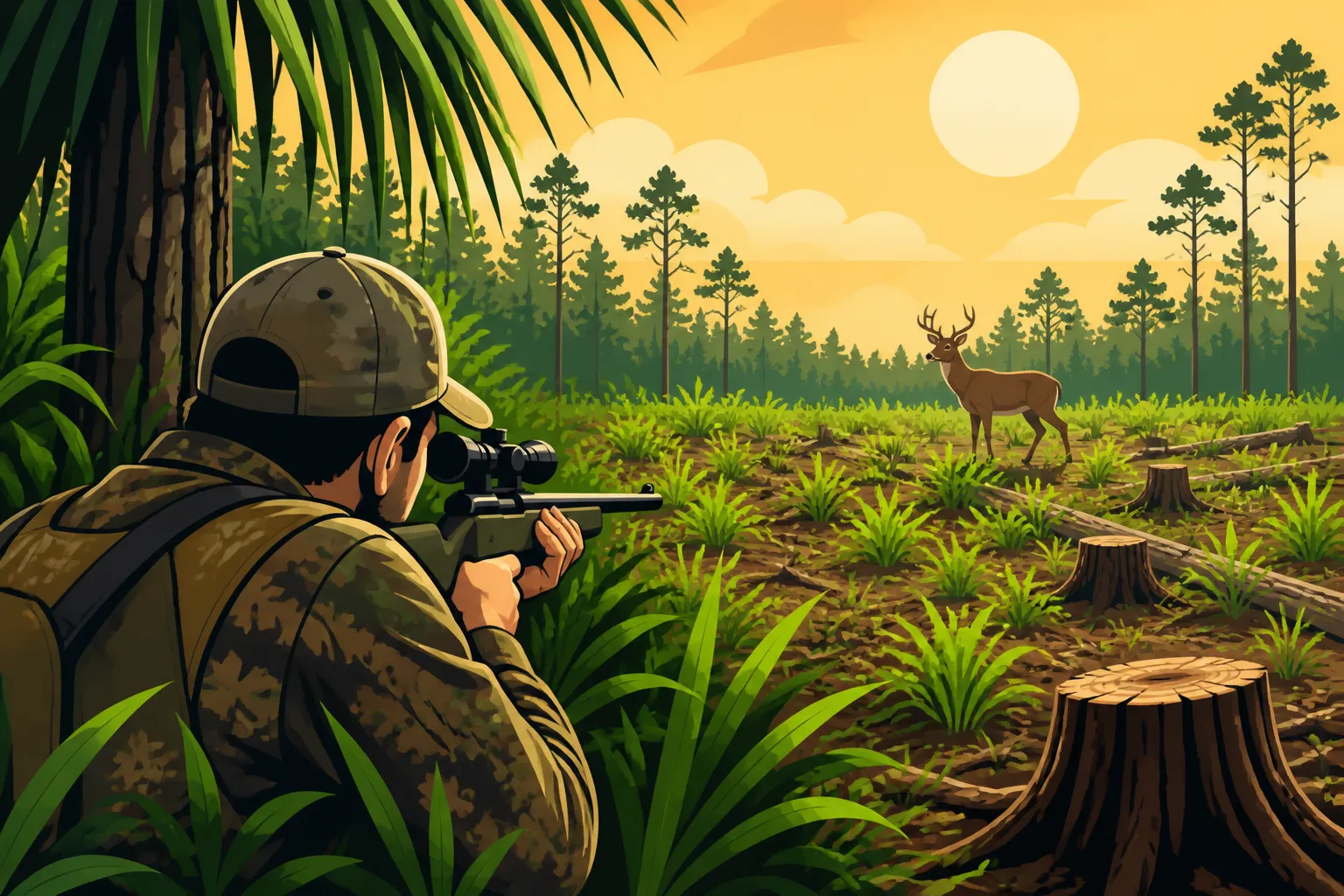
A fresh clear-cut, particularly in its early stages of regrowth, is essentially a massive food plot. Sunlight, which was once blocked by the dense canopy, now drenches the forest floor, causing an explosion of new growth. Tender shoots, young palmetto, briars, and various forbs that deer love to browse sprout up, creating an irresistible smorgasbord. This readily available, nutritious forage is a huge draw. As the vegetation gets taller and thicker, it also provides incredible bedding cover, offering deer and hogs a sense of security from predators and harsh weather. It's a prime example of why diversity in habitat is so crucial, creating both dinner and a safe bedroom all in one spot.
Beyond just food and cover, these areas often contain crucial water sources, especially in Florida. The disturbed soil can hold water longer, or small pockets might open up, creating muddy wallows for hogs or vital drink spots for deer. The sheer density of the vegetation makes it difficult for hunters to penetrate, which means animals often feel safer lingering longer, knowing they have a nearly impenetrable escape route. Understanding these fundamental attractants is the first step to figuring out how to successfully hunt these challenging spots.
Stages of Regrowth and Deer Behavior
Clear-cuts aren't static; they evolve over time, and understanding these stages is key to predicting game movement. In the first 1-3 years, you'll see a lot of low-lying browse. Deer will feed heavily in these areas, often moving into them at first light and before dark, but also bedding down within the young growth if it's thick enough. As it progresses to 3-7 years, the regrowth becomes incredibly dense, a tangled mess of saplings, briars, and palmetto reaching head height or more. This is prime bedding cover. Deer will still browse the edges, but they'll primarily use the interior for sanctuary, moving out to more open feeding areas or into the mature timber at night. Later stages, say 7-15 years, start to see saplings thinning out, and the area becomes more like a young pine plantation, offering less direct browse but still providing decent cover and travel corridors.
Your hunting strategy needs to adapt to these stages. For instance, in very early regrowth, you might set up along a trail entering the center of the clear-cut, hoping to catch deer browsing. In the super thick, mid-stage regrowth, focusing on the edge where deer transition to more accessible food or mature timber for cover is often more productive. Knowing when and where to find deer means understanding how their needs for food, cover, and water are met by each specific stage of a clear-cut's recovery. This is where scouting with tools like GoHunt can really shine, allowing you to examine historical aerial imagery and identify different age classes of clear-cuts before you ever set foot on the ground.
Hidden Gems of the Edge Habitat
The "edge" isn't just a simple line; it's a dynamic zone. Look for subtle features that create microhabitats within this transition. Often, the transition from mature timber to clear-cut isn't uniform. There might be fingers of timber extending into the clear-cut, or islands of unharvested trees left behind. These provide excellent ambush points. Similarly, old logging roads or skidder trails that cut through the regrowth, even if overgrown, often act as internal travel corridors. Deer, being creatures of habit and efficiency, will use the path of least resistance.
Also, pay close attention to elevation changes, even subtle ones common in Florida. A slightly higher knoll might offer better bedding with a view, while a lower, wetter spot could be a persistent water source. These aren't always obvious from afar, which is why actual Scouting Florida Public Land Before Season is so vital. Any anomaly, such as a large downed log or a cluster of oaks that survived the logging, can concentrate deer activity, serving as a staging area before they enter the dense stuff or a preferred bedding location within it. Finding these hidden gems can turn an intimidating clear-cut into a highly effective hunting spot.
Scouting Strategies for Clear-Cut Edges
Effective scouting is paramount when tackling clear-cuts, perhaps more so than in any other habitat type. Without it, you’re just aimlessly pushing through briars and hoping for luck. The sheer density of these areas demands a strategic approach to locating game.
Pre-Season Aerial Map Analysis
Before you even think about putting boots on the ground, spend significant time studying aerial maps. Tools like GoHunt or other satellite imagery providers are invaluable here. Look for the distinct rectangular or irregularly shaped patterns of clear-cuts. Identify the edges where these meet mature timber, swamps, or other habitat types. Pay attention to how deer might enter and exit these areas. Are there natural funnels? Are there pinch points where a narrow strip of timber connects two larger blocks of cover? These are prime locations for ambushing deer, as they tend to gravitate towards areas that offer both concealment and easy travel.
You can often discern different ages of clear-cuts by the color and texture of the regrowth in aerial photos. Bright green, low-lying areas indicate recent cuts with lots of browse, while darker, denser green areas suggest older, thicker bedding cover. Trace potential travel corridors, even if they're not obvious trails yet. Look for creek bottoms, logging roads, or subtle changes in vegetation that might suggest easier passage. Pinpoint these spots on your map; they are your starting points for ground scouting. This digital reconnaissance will save you countless hours of busting brush.
Boots-on-the-Ground Sign Reading
Once you've narrowed down your areas of interest on a map, it's time to hit the woods. This is where the real work begins, and it can be tough going. Focus your efforts on the edges, and don't be afraid to make short, calculated incursions into the thick stuff. Look for fresh deer tracks where they enter and exit the dense regrowth. Pay attention to how far into the clear-cut these trails go. Often, there will be a well-used trail just inside the thickest cover, running parallel to the edge of the mature timber. These "internal edges" are fantastic ambush points.
Scan for rubs and scrapes, particularly along the mature timber side of the edge, or on any larger trees left within the clear-cut. These indicate active buck sign. Bedding areas within clear-cuts can be hard to spot due to the density, but look for small clearings or slightly raised areas where deer might lie down. Fresh droppings are always a good indicator of recent activity. Remember, Where Florida Bucks Bed in Thick Palmetto often correlates to similar dense cover found in clear-cut regrowth. Don't be afraid to put in the effort; the rewards are often worth the struggle.
Utilizing Technology for Edge Scouting
Modern hunting technology has revolutionized scouting, especially in complex habitats like clear-cuts. As mentioned, GoHunt and other mapping apps allow you to mark specific deer sightings, tracks, rubs, and bedding areas directly on your phone, creating a detailed digital map of activity. This data can be invaluable year after year. Beyond mapping, consider trail cameras placed strategically along those internal edges or on prominent trails. They can confirm consistent use, identify specific animals, and help you understand their movement patterns and preferred times of travel.
Another crucial piece of technology is a good GPS or a mapping app on your phone with reliable offline capabilities. Getting turned around in a dense clear-cut is incredibly easy, even for seasoned hunters. Mark your entry points, potential stand locations, and any significant sign you find. Weather apps that provide wind direction and thermals are also critical, as wind swirls notoriously in these broken habitats. Understanding Wind and Thermals in Flat Florida Terrain is essential, and technology can help you predict and react to these conditions effectively. Don't be afraid to leverage these tools; they're designed to give you an edge in these challenging environments.
Tactics for Hunting Florida Regrowth Edges
Hunting clear-cut regrowth edges demands patience, adaptability, and a willingness to get a little uncomfortable. The dense cover often means shorter shot opportunities, so being prepared for quick decisions is key.
Stand Placement and Wind Considerations
The success of hunting a clear-cut edge hinges heavily on your stand placement and how you play the wind. Since deer are often moving just inside the thick cover, your stand needs to be positioned for shots into, or along, these internal travel corridors. Look for a large, mature tree on the timber side of the edge, or an isolated tree that survived the cut, giving you an elevated view into the regrowth. This elevation is critical for seeing over some of the dense vegetation and giving you a wider field of view. Aim to be 15-20 yards off the edge, allowing deer to pass naturally without feeling pressured by your proximity to the thicket's outer boundary.
Wind is your ultimate friend or foe. Clear-cuts can create swirling winds, especially when the mature timber line acts as a barrier. Always set up so your scent blows away from where you expect deer to approach or travel. This often means hunting specific wind directions for specific stand sites. If the wind is wrong, don't hunt that spot. It’s better to sit at home or find a different location than to blow out a good area. Consider the time of day too; thermals in Florida often rise in the morning and fall in the evening. Position yourself to account for these subtle shifts, especially if deer are moving along a slough or low-lying area near the clear-cut.
Still-Hunting and Stalking Techniques
For the truly adventurous and patient hunter, still-hunting or stalking a clear-cut edge can be incredibly effective, especially during times of high deer activity or when hunting hogs that are less sensitive to scent. This is where you move incredibly slowly, taking a few steps, then stopping and scanning for several minutes before moving again. Your eyes should be constantly searching for horizontal lines (a deer's back) in a vertical world (trees and brush), or flicking ears, tails, or the glint of an antler. Still-Hunting Florida Palmetto Flatwoods uses similar principles: slow, deliberate movement, using cover to your advantage.
When stalking, use any available cover to break up your silhouette. Move into the wind, or with a crosswind, never with the wind at your back. Walk along those internal trails or just inside the edge of the clear-cut. Be prepared for very close-range shots, as visibility can be limited to mere yards. This method requires intense focus and often a bit of luck, but it allows you to adapt to deer movement as it happens, rather than waiting for them to come to you. It's not for everyone, but for those who master it, it can be exhilarating.
Calling and Decoying Strategies
While not as common in clear-cuts as in open fields, calling and decoying can still play a role, particularly during the rut. Grunt calls can be effective, especially a short, low grunt to mimic a buck moving through the thick cover. If you hear a buck grunting or rattling in the dense stuff, a few soft grunts back might pique his curiosity enough to make him investigate the edge. Rattling, especially lighter, shorter sequences, can also work, but be mindful that the dense cover will muffle the sound, so adjust your volume. For more on this, check out Rattling Volume in Thick Florida Scrub.
Decoys are more challenging due to the limited visibility. A lone doe decoy placed on the mature timber side of the edge, facing into the clear-cut, might draw a curious buck out into the open. However, ensure you have a clear shooting lane and that other hunters will be able to clearly identify your decoy. In such thick cover, safety is paramount. The best strategy is often to rely on your scouting and patience, but a well-timed, subtle call can sometimes be the perfect trigger.
| Regrowth Stage | Primary Deer Activity | Recommended Hunting Strategy | Key Considerations |
|---|---|---|---|
| 0-3 Years | Heavy browsing, some bedding | Hunt internal trails, early morning/late evening | High visibility for deer, low visibility for hunter. |
| 3-7 Years | Dense bedding, feeding on edges | Ambush points on edges, still-hunting internal trails | Very thick, focus on transition zones. |
| 7-15 Years | Travel corridors, moderate browsing/bedding | Locate major trails, pinch points, transition to mature timber | Thinner than mid-stage, wider shot opportunities. |
| 15+ Years | Less distinct, becoming young forest | Treat as young timber stands, focus on bottlenecks | Integrate with overall forest hunting strategy. |
Gear Considerations for Clear-Cut Hunting
Hunting clear-cuts often means battling dense vegetation, moisture, and limited visibility. Your gear choices can make or break your hunt, impacting comfort, safety, and success.
Essential Clothing and Footwear
Forget your quiet, soft shell hunting gear if you plan on busting through a clear-cut. For still-hunting or scouting these areas, tough, briar-resistant pants and a durable, snag-proof jacket are non-negotiable. Look for materials like ripstop nylon or canvas, or even purpose-built brush pants that offer extra protection. You’ll be pushing through thorns, sharp palmetto fronds, and abrasive brush, and regular hunting clothes will quickly be shredded. For Florida's hot and humid conditions, lightweight, breathable options that still offer protection are ideal.
Footwear is equally important. Waterproof, snake-proof boots are highly recommended. Florida's swamps and wet lowlands often abut clear-cuts, and stepping into standing water is common. Moreover, the dense cover of a clear-cut is exactly where snakes, including venomous ones, love to hide. A good pair of snake boots or gaiters can offer crucial peace of mind. Ensure your boots also offer excellent ankle support, as the uneven ground and hidden obstacles within a clear-cut can easily lead to a twisted ankle.
Weapon Choices for Close Quarters
Given the extremely dense nature of clear-cut regrowth, shots are often going to be at very close range, and shooting lanes can be severely restricted. This means your weapon choice needs to reflect that reality. For archery hunters, a compound bow with fixed broadheads that cut on contact can be a good choice, ensuring penetration even if you hit a small twig. Practice shooting at odd angles and quickly, as a deer might only offer a fleeting glimpse. A crossbow can also be highly effective in these tight quarters, offering less movement to draw and allowing you to remain still for longer. Learn more about Crossbow Hunting During Florida's Archery Season.
For firearm hunters, a shotgun with slugs, a pistol-caliber carbine, or a lever-action rifle chambered in a hard-hitting, brush-busting caliber are often preferred over high-velocity, small-diameter rifle rounds. While modern bullets are designed to minimize deflection, a heavier, slower bullet can sometimes punch through light brush more effectively without significant deviation. Accuracy at short range is key, so make sure you're comfortable with your chosen firearm in these scenarios. The ability to swing and acquire a target quickly in tight cover is far more important than long-range accuracy.
Navigational Tools and Safety Gear
As we discussed earlier, getting lost in a clear-cut is surprisingly easy. A reliable GPS unit or a smartphone with a pre-downloaded mapping app (like GoHunt) is absolutely essential. Make sure it's fully charged, and consider carrying a portable power bank. Mark your truck, your stand sites, and any significant sign you find. This isn't just about finding your way back; it's also about efficiently navigating to and from your chosen spots in the pre-dawn dark or post-dusk twilight.
Beyond navigation, safety gear is paramount. Always carry a small first-aid kit, especially one equipped for snake bites and cuts from briars. A headlamp is crucial for walking in and out. Tell someone exactly where you're going and when you expect to be back. And, of course, blaze orange is a must during Florida's gun seasons. Even though you might feel hidden, it's about being visible to other hunters who might also be pushing through the thick stuff. The dense cover and limited visibility make safety a top priority in these challenging hunting environments.
Disclaimer
Please remember that hunting regulations and seasons in Florida can change. Always consult the latest Florida Fish and Wildlife Conservation Commission (FWC) regulations before planning any hunt. This guide is for informational purposes only and should not be considered legal advice. Stay safe, hunt ethically, and enjoy Florida's incredible outdoor opportunities.