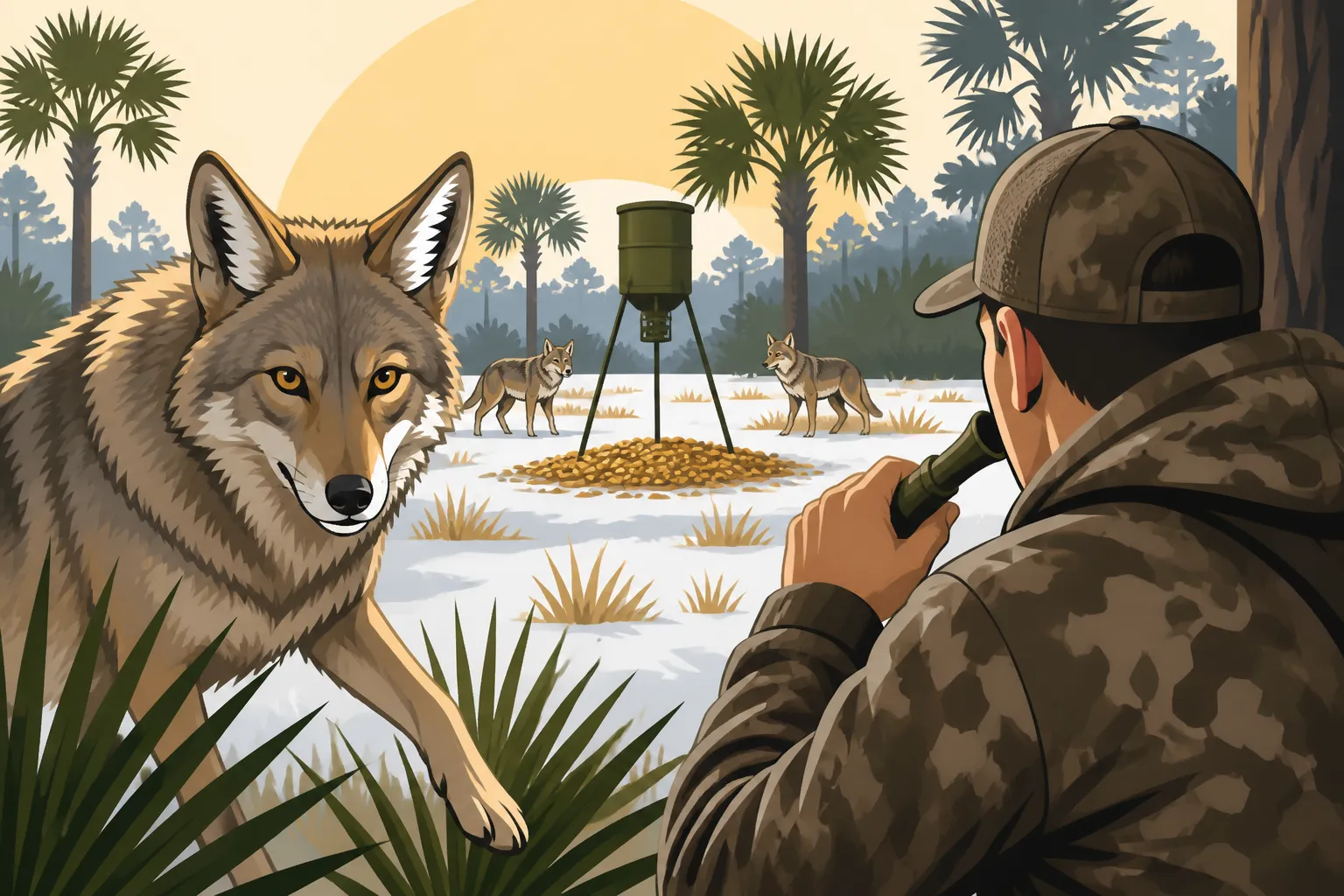
Calling Coyotes Over a Winter Feed Site
Coyotes in Florida can be incredibly elusive, especially when they've learned to associate human presence with danger. For farmers and landowners dealing with these cunning predators around valuable winter feed sites, whether it's for livestock like cattle and goats or supplemental feed for deer and hogs, the frustration is real. These intelligent canids can decimate young calves, target deer fawns, and create significant economic hardship. This guide is here to walk you through the most effective strategies for calling coyotes over a winter feed site, helping you reclaim your property and protect your assets.
Understanding Winter Coyote Behavior Around Feed Sites
Winter in Florida, while not as harsh as up north, still presents unique challenges and opportunities for coyotes. Understanding their seasonal behavior, especially how it revolves around readily available food sources like feed sites, is your first step toward success. They're not just scavenging; they're actively hunting, and they're smart about it.
Why Coyotes Target Winter Feed Sites
Think about it from a coyote's perspective. Natural prey might be a little scarcer or harder to catch as the year winds down. The wild hogs they typically chase might be bigger and tougher, or deer might be more alert. Suddenly, there's a reliable, often easy source of protein—be it sick or vulnerable calves, birthing complications, or even the byproducts and weak individuals attracted to deer feeders. This makes these sites an absolute magnet. Coyotes are incredibly opportunistic predators, and a winter feed site represents a consistent meal ticket with minimal effort. They might not always go for the full-grown, healthy animal, but the young, the old, the injured, or even just the afterbirth from calving become prime targets. They'll also patrol the periphery, waiting for game animals like deer to come in to feed, turning the feed site into an ambush point.
Recognizing Coyote Sign and Patterns
Before you even think about calling, you need to become a detective. Look for tracks in the soft sand or mud around water sources, fence lines, and, of course, directly around your feed site. Coyote tracks are typically more oval and less splayed than a domestic dog's. Scat is another clear indicator; it often contains hair, bone fragments, and other undigested matter from their diet. Pay close attention to any areas where a kill might have occurred—tufts of hair, disturbed ground, or bone fragments.
Trail cameras are your best friend here. Position them strategically around the feed site, focusing on trails leading in and out, and observe activity patterns. Are they nocturnal, diurnal, or crepuscular (active at dawn and dusk)? How many coyotes are you seeing? Are they individuals, pairs, or small packs? Are they bold, or are they skirting the edges? This intel is invaluable for planning your approach and call selection. Tools like GoHunt can be incredibly helpful for mapping out these areas, marking observations, and understanding terrain features that coyotes might be using for cover or travel. Knowing their routines and travel corridors, perhaps along a remote two-track or a natural funnel between two palmetto heads, will dictate where you set up.
Impact of Winter Weather on Coyote Activity
Florida's winter weather can be unpredictable. A sharp cold front rolling through can make coyotes much more active and hungry. They'll need more calories to stay warm, driving them to seek out food more aggressively. Conversely, during periods of heavy, persistent rain, coyotes might hunker down or stick to higher, drier ground, making them harder to call. Clear, calm nights after a front can be prime time for calling, as scent travels well and sound carries far. Pay attention to wind direction and speed; a strong, swirling wind can make calling incredibly challenging, as your sound is dispersed, and your scent might be carried directly to the coyote before it even hears you. They are masters of using the wind to their advantage, often circling downwind to catch your scent before committing.
Essential Gear and Setup for Calling Coyotes in Florida
Successful coyote calling, especially around an established food source, isn't just about making noise. It's about blending in, projecting the right sound, and being ready when the opportunity presents itself. The right gear and a well-thought-out setup are non-negotiable.
Selecting the Right Calls
This is where the magic happens, or doesn't. You have two main categories: electronic calls (e-callers) and hand calls. For winter feed sites, e-callers like those from FoxPro or Primos are often your best bet. They offer a vast library of realistic sounds and consistent volume. In winter, coyotes are often focused on survival and territory. Start with distress calls—rabbit distress, rodent squeals, or even bird distress calls like a woodpecker or a raven. A fawn distress call can be particularly effective if deer are frequenting the feed site, as coyotes often target the young or vulnerable.
Don't forget territorial howls. If you know there's a pack in the area, a challenge howl followed by some pup-in-distress sounds can trigger a territorial response or draw in a curious female. Vary your calls; don't just blast one sound repeatedly. Mix it up, mimic a sequence you'd expect to hear in nature. Consider the volume too. Start low, then gradually increase, mimicking the progression of a real distress scenario. You're trying to sound like an easy meal or a threat to their dominance.
Camouflage, Scent Control, and Concealment
Coyotes have incredible eyesight and an even more incredible nose. Around a feed site, they're likely already wary of human presence, so you need to disappear. Full camouflage, including face paint or a mask, is essential. Break up your outline. Avoid any shiny objects. Scent control is paramount; use scent-eliminating sprays on your clothing and gear, and store them in airtight containers. If possible, shower with scent-free soap before your hunt.
When choosing your setup location, natural cover is ideal. Think dense palmetto heads, thick oak hammocks, or the edge of a cypress slough. If natural cover is sparse, a ground blind is an excellent investment. Pop-up blinds from brands like Ameristep or Primos offer quick concealment. Position your blind to give you a good shooting lane downwind of your call, allowing the coyote to circle and come into your advantage. Remember, wind direction is everything. Always try to set up with the wind in your face, carrying your scent away from where you expect the coyote to approach. Even the slightest breeze can betray your presence to a circling coyote. For more on concealed setups, check out Using a Ground Blind on Florida Public Land.
Weaponry and Optics Considerations
For coyotes, you need a flat-shooting rifle with good accuracy. Popular choices include .223 Remington, .204 Ruger, or .22-250 Remington. A good quality scope with variable magnification will help you acquire targets at various ranges. For closer encounters, or in thicker cover, a shotgun with buckshot or heavy loads of T-shot can be very effective.
If you plan on hunting at night, which is legal for coyotes on private land in Florida with landowner permission (always double-check local regulations and permits!), then night vision or thermal optics become critical. These technologies give you a massive advantage in detecting coyotes in low light or complete darkness. Just remember the Night Hunting Rules for Florida Coyotes to ensure you're operating legally and safely. Always have a powerful spotlight for identifying your target before shooting, even with night vision, and ensure you have a safe backstop.
Effective Calling Strategies for Winter Feed Sites
Once you have your gear and understand the coyotes' habits, it's time to put it all into action. These strategies are tailored for the unique challenges and opportunities presented by winter feed sites in Florida.
Approaching and Setting Up Your Stand
The approach is just as important as the call itself. Coyotes near feed sites are often used to human activity, but they’re also extremely wary. Move slowly and quietly, especially in the last few hundred yards to your setup. Avoid skylining yourself on ridges or opening gates loudly. Consider using a vehicle if permitted and practical, driving directly to your setup to minimize foot traffic and associated scent. Once you’re in position, stay still. Any sudden movements will give you away.
Position yourself to have a clear view downwind of your e-caller. Coyotes, particularly educated ones, will almost always circle downwind to get a whiff of whatever is making the sound. You want to be ready for them when they come into view from that direction. Look for natural funnels, fence lines, or changes in elevation that might guide their approach. A good spot might be an elevated position looking over a field edge where deer or cattle are typically fed, allowing you to see incoming coyotes from a distance. Mapping tools like those on GoHunt can help you identify these key approach corridors and ambush points before you even step foot in the field.
Calling Sequences and Duration
When you start calling, begin with a soft, pleading sound, like a lone pup whimper or a light rabbit squeal. Give it a minute or two. If nothing, increase the volume slightly and try a more intense distress. The idea is to grab their attention without immediately alarming them. A good sequence might involve 30-60 seconds of distress, followed by 2-3 minutes of silence, then another burst of calling. Repeat this for 15-30 minutes.
If a coyote hangs up at a distance, trying to locate the source of the sound without fully committing, a short burst of a territorial howl can sometimes push them over the edge. Alternatively, a quick "lip squeak" or "kiss of death" with your mouth can often stop a moving coyote for a split-second shot. Vary your calls; if rabbit distress isn't working, switch to bird distress or a different animal altogether. Remember, you're trying to simulate a real-life scenario, not just make noise. Sometimes, a subtle approach works best on pressured animals.
Working with the Feed Site Environment
The feed site itself offers unique advantages. If there are hay bales, use them for cover. If cattle are present, their movement and noise can help mask your approach and calling. Place your e-caller 50-100 yards downwind of your position, away from the actual feed source but in an area you expect coyotes to patrol. This draws their attention away from you and towards the sound, allowing you to intercept them.
Consider the layout of the land. Are there ditches, fence rows, or brush lines that coyotes might use for cover as they approach? Position yourself to intercept them as they emerge from this cover. If it's a deer feeder, consider the travel paths deer use to get to it. Coyotes will naturally use these same paths for their own hunting. You can also integrate visual attractants, such as a simple rabbit or bird decoy, placed near your e-caller. The visual stimulus can often overcome a coyote's hesitation, especially if they are hanging up at a distance.
Dealing with Pressured Coyotes
Coyotes that frequent feed sites are often "educated." They've heard calls before, they've seen hunters, and they've learned to be extremely cautious. This is where you need to be creative. If you've hunted a spot several times with little success, try moving your setup to a slightly different location. Change your call repertoire. If everyone else is using rabbit distress, try a grey fox distress or a specific bird call.
Don't be afraid to experiment with silent periods; sometimes, a long pause after a short burst of calling can convince a wary coyote that the danger has passed, and they might sneak in for a look. Consider combining calling with other methods, such as strategic Trapping Florida Furbearers around the feed site's perimeter, to reduce overall pressure on the coyotes you're calling. Information gathered from GoHunt, especially user-submitted data on animal sightings and hunting pressure in similar areas, can provide insights into what might be working (or not working) for other hunters, helping you adapt your tactics.
Common Challenges and Troubleshooting
Even with the best planning, coyote calling can throw curveballs. It's about adapting to the situation and knowing how to overcome common hurdles.
Coyotes Hanging Up or Circling
This is perhaps the most frustrating scenario. You see a coyote, it's interested, but it just won't commit. It stays at 200 yards, or it circles endlessly downwind, trying to catch your scent. One trick is to quickly switch to a different, softer call, perhaps a whimpering pup. This can sometimes make them think the threat is less severe, or that another coyote is investigating, enticing them closer.
Using a decoy can be a game-changer here. A simple furry decoy on a stake, or even a motion decoy that mimics a wounded animal, can provide the visual confirmation they need to close the distance. Place it right near your e-caller. As they circle downwind, they're often trying to get a better look at the source of the sound, and a decoy provides that focus. Another tactic is to try a "stop and go" approach with your calling—quick bursts of sound, then absolute silence for several minutes. This can make the perceived "prey" seem more vulnerable or injured, tempting the coyote to investigate the silence.
Other Animals Responding
It's not uncommon for other curious wildlife to respond to predator calls. Deer, bobcats, or even foxes might come in. While this can be exciting, it can also distract from your primary target or even alert coyotes to your presence if they're particularly spooky. If you see deer or hogs coming in, just hold still. They often lose interest quickly once they realize there's no actual distress.
If a bobcat responds, enjoy the show! They are beautiful and elusive creatures, and a successful bobcat call can be a fantastic bonus. However, always prioritize your coyote objective. If you're confident a coyote is approaching, don't make any sudden movements to observe other animals. Keep your focus on the likely approach paths of the coyote. This is where your scouting with trail cameras and understanding how to recognize different tracks and behaviors, perhaps like those discussed in Reading Florida Mud for Fresh Deer Movement, really pays off.
Safety and Ethical Considerations
Always, always prioritize safety. Know your target and what's beyond it. When hunting near feed sites, especially those with livestock, identify your backstop. Ensure you have a clear shot and that you're not going to hit anything unintended. If you're hunting at night, a powerful handheld spotlight is crucial for positive identification of your target before you even consider taking a shot.
Always respect the property and the landowner's rules. If you're hunting on private land, ensure you have explicit permission. Understand Florida's Florida Trespass and Permission Law thoroughly. Ethically, strive for quick, clean kills. Practice shooting from various positions so you're confident when the moment comes. Our role as hunters is also to be responsible stewards of the land and its wildlife, which includes managing nuisance species like coyotes effectively and ethically.
Table: Common Coyote Calls and Their Best Winter Uses
Here's a quick look at some popular call types and when they might be most effective around Florida winter feed sites:
| Call Type | Description | Best Winter Use at Feed Sites | When to Use |
|---|---|---|---|
| Rabbit Distress | High-pitched screams, squeals of a wounded rabbit. | Mimics an easy, vulnerable meal. | Anytime, especially during colder periods when food is scarce. |
| Rodent Squeals | Sharp, quick squeaks of mice, voles, or rats. | Suggests small, easy prey; less intense than rabbit distress. | Good for wary coyotes or initial subtle approaches. |
| Fawn Distress | Bleating, bawling sounds of a young deer. | Taps into coyotes' opportunistic nature around deer activity. | Where deer frequent the feed site; especially after calving season. |
| Pup-in-Distress | Whimpering, crying sounds of a young coyote. | Can draw in curious or protective adult coyotes. | Effective when trying to elicit a territorial response from a pack. |
| Coyote Howls | Lone howls, challenge howls, group yips. | Mimics territorial behavior, challenges other coyotes. | To gauge presence, locate coyotes, or provoke a response from a dominant male. |
| Bird Distress | Squawking, frantic chirps of a wounded bird. | Less common, can surprise wary coyotes who've heard other calls. | When other calls aren't working; adds variety. |
Disclaimer
Hunting is an inherently dangerous activity. Always adhere to all local, state, and federal hunting regulations. Ensure you have the necessary licenses and permits. Prioritize safety, including proper firearm handling, knowing your target and its surroundings, and communicating with fellow hunters and landowners. The information provided in this guide is for educational purposes only and should not replace professional safety training or legal consultation.