Night Hunting Rules for Florida Coyotes
The frustration of dealing with coyotes is a real one for many Florida landowners and hunters. These intelligent predators can be incredibly elusive during daylight hours, often making traditional hunting methods challenging. This comprehensive guide is here to untangle the specific rules and best practices for night hunting coyotes in Florida, offering clarity on what's allowed and how to do it safely and effectively.
Understanding Florida's Coyote Presence and Management
Coyotes, though not native to Florida, have become a well-established part of our ecosystem, spreading across the entire state over the past few decades. For livestock owners, deer managers, and even suburban homeowners, their presence can bring significant challenges, from depredation on calves and fawns to nuisance issues with pets. The good news for hunters and landowners is that Florida recognizes the need for effective coyote management, which is reflected in the hunting regulations.
Why Coyotes are Classified Differently
Unlike our beloved whitetail deer or the iconic Osceola turkey, coyotes are classified as a non-native, unprotected species by the Florida Fish and Wildlife Conservation Commission (FWC). This designation is crucial because it fundamentally alters how they can be hunted. Essentially, because they are not a "game animal" in the traditional sense and are considered a nuisance species that can impact native wildlife and agricultural interests, the rules for hunting them are far less restrictive. This is a big relief for those trying to get a handle on local coyote populations, as it means fewer closed seasons and more flexible methods. You won't find specific dates for a "coyote season" in the same way you would for deer.
The Impact of Coyotes on Florida Ecosystems
While some may view them as just another wild animal, the impact of a growing coyote population can be significant. On ranches, calves can become easy targets, leading to economic losses for cattlemen. In areas managed for deer, especially on smaller parcels or those with high fawn recruitment goals, coyotes can put a serious dent in fawn survival rates. Even in suburban areas, coyotes can prey on outdoor pets, leading to heartbreaking losses for families. This is why active management, including hunting, is often encouraged to mitigate these issues. Understanding the full scope of "Florida Coyote Attacks on Livestock" really drives home the importance of responsible management.
Specific Regulations for Night Hunting Coyotes in Florida
When it comes to night hunting, Florida law differentiates significantly between private and public land, and also between game animals and unprotected species like coyotes. Navigating these nuances is key to staying legal and safe.
Private Land Regulations for Night Hunting
On private land, the rules for night hunting coyotes are quite straightforward and far more liberal than for game species. This is where most night hunting for coyotes takes place. The FWC permits hunters to use artificial light, including spotlights, vehicle headlights, or headlamps, to hunt coyotes on private property, provided you have explicit permission from the landowner. There are no bag limits, and no closed season. You can hunt them year-round, day or night. This flexibility is a huge advantage when coyotes are most active in low-light conditions.
However, even on private land, common sense and safety are paramount. Always know your backstop and ensure you're not shooting towards roads, dwellings, or other properties where your bullet could travel and cause harm. Always check local ordinances, as some counties or municipalities might have stricter rules regarding discharging firearms at night, regardless of state FWC regulations. It’s also wise to inform neighbors if you plan to be hunting with lights at night, just to avoid any alarm. For those needing help with identifying property lines and ensuring they are on private land, tools like GoHunt can be invaluable for mapping out your hunt area and avoiding any accidental trespass.
Public Land Rules and WMA Specifics
Hunting coyotes on public lands, particularly Wildlife Management Areas (WMAs), is a completely different ballgame. While coyotes are considered an unprotected species, the use of artificial light for night hunting is generally prohibited on WMAs and other public lands, unless specifically authorized by the FWC for certain controlled hunts or designated areas. This is a critical distinction and often trips up hunters accustomed to private land freedom.
Each WMA has its own specific regulations, often outlined in their annual hunt brochures. Some WMAs might allow coyote hunting during general gun seasons, and a few might even have specific designated predator hunts where certain methods are permitted. However, night hunting with lights for coyotes is almost universally restricted on WMAs due to safety concerns and to prevent accidental harassment or poaching of game animals. Before you even think about heading out, you absolutely must consult the specific WMA regulations for the area you intend to hunt. You'll also need a valid Florida hunting license and often a Florida WMA Management Area Permit to hunt on these public grounds. Always respect "Florida Public Land Hunting Hours" and other site-specific regulations.
Legal Weapons and Ammunition
For coyotes in Florida, whether hunting day or night, the FWC allows a wide range of legal firearms including rifles, shotguns, and pistols. There are no caliber restrictions for coyotes, as there are for deer. This means you can choose the right tool for the job, whether it's a .223 rifle for longer shots, a shotgun with buckshot or predator loads for closer encounters, or even a .22 for smaller, more discreet operations if you're targeting pups. Suppressors are legal to use in Florida for hunting and can be incredibly beneficial for night hunting, reducing noise pollution and preserving your hearing. However, crossbows, bows, and air guns are also acceptable if you prefer a quieter, more challenging approach. Remember, regardless of weapon, always adhere to "Florida Firearms Discharge Setback Rules" especially if hunting near populated areas.
Key Gear and Safety Considerations for Night Hunts
Night hunting for coyotes presents unique challenges and requires specialized gear and an unwavering commitment to safety. You're operating in low light, often in unfamiliar terrain, and mistakes can have serious consequences.
Essential Lighting and Optics
The right lighting is non-negotiable for night hunting. A powerful spotlight is often used for scanning and locating coyotes, but a good headlamp is just as critical for navigating, setting up, and processing an animal. Many hunters prefer red or green lights, as these colors are less likely to spook coyotes and also help preserve your natural night vision. Some dedicated predator lights offer adjustable beams and color filters.
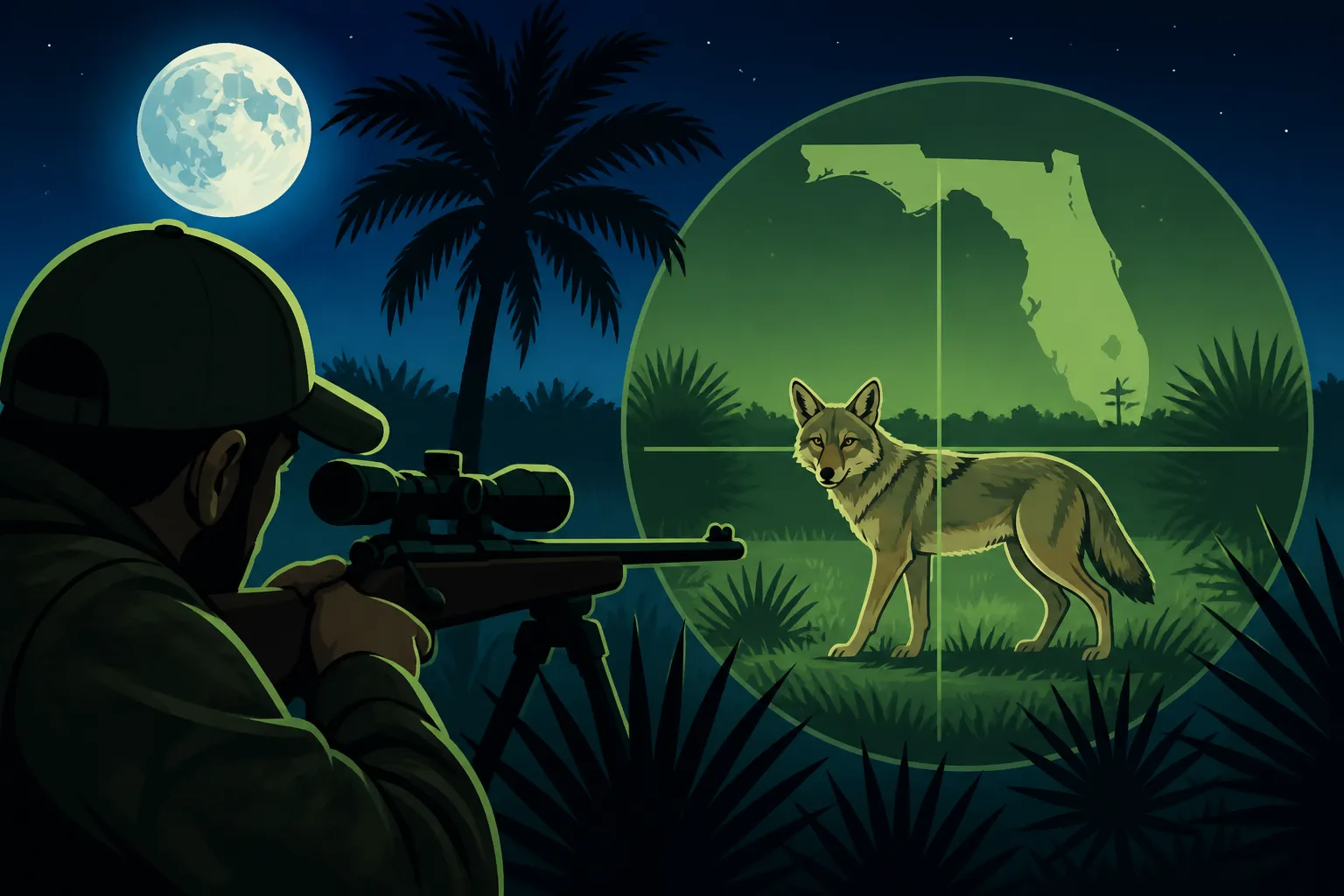
When it comes to optics, thermal imaging scopes and night vision devices have revolutionized night hunting. While expensive, they offer a tremendous advantage in locating and identifying coyotes in the dark. A good pair of binoculars, even if they're standard daylight models, can help you scan before resorting to higher-powered lights or optics. Remember, positive identification of your target is paramount before taking any shot. Never shoot at just "eyes in the dark." Confirm it's a coyote and nothing else.
Calling and Decoying Strategies for Night
Coyotes are highly responsive to calling, and night is often the best time to leverage this. Electronic callers like Foxpro or Primos are incredibly effective, allowing you to cycle through a variety of distress calls (rabbit, fawn, bird) or coyote vocalizations (howls, barks) without moving. Start with softer calls and gradually increase volume. Mimicking a coyote fight or a lone howl can often trigger a response.
Pairing your calling with a visual decoy can drastically increase your success. Motion decoys, often resembling a rabbit or bird in distress, draw the coyote's attention away from your position and give you a clear shot. Placing these decoys slightly upwind and away from your position can help guide the coyote into a favorable shooting lane. Remember that during night hunts, the coyote might come in very quickly and silently, so you need to be ready as soon as you start calling. For more in-depth calling techniques, you might want to look into "Coyote Calling Florida Ranch Land" or "Coyote Calling Florida Palmetto Country".
Critical Safety Protocols
Night hunting is inherently more dangerous than daylight hunting. Every single safety rule is magnified.
- Identify Your Target AND Your Backstop: This is the golden rule. In the dark, it's incredibly easy to misidentify an animal or forget what's behind your target. Use your lights and optics to confirm your target is a coyote and ensure there's a safe and clear backstop that will stop your bullet. Never shoot towards the horizon where a bullet could travel for miles.
- Communication is Key: If hunting with a partner, communicate constantly. Know each other's positions at all times. Use hand signals or low-power radios, especially when stalking or retrieving an animal.
- Know Your Terrain: Scout your hunting area extensively during the day. Identify potential hazards like fences, ditches, ravines, or hidden structures. Use the GoHunt app to mark waypoints and property lines, so you're not stumbling around in the dark.
- First Aid and Emergency Gear: Carry a well-stocked first aid kit, a reliable flashlight (even if you have a headlamp), a knife, and means of communication (fully charged phone, satellite messenger). Tell someone where you're going and when you expect to return.
- Weapon Handling: Always treat your firearm as if it's loaded. Keep the muzzle pointed in a safe direction and your finger off the trigger until you're ready to shoot.
| Aspect | Day Hunting Coyotes (Private Land) | Night Hunting Coyotes (Private Land) | Coyote Hunting (WMA/Public Land) |
|---|---|---|---|
| Hunting License | Required | Required | Required |
| WMA Permit | Not required (private) | Not required (private) | Required |
| Artificial Light | Not typically used | Allowed | Generally Prohibited |
| Electronic Calls | Allowed | Allowed | Allowed (check WMA specific rules) |
| Bag Limit | No limit | No limit | No limit |
| Season | Year-round | Year-round | Varies by WMA, often during game seasons |
| Weapon Restrictions | General hunting regulations apply | General hunting regulations apply | General hunting regulations apply |
| Safety Focus | Target ID, Backstop | Target ID, Backstop, Terrain, Partner Communication | Target ID, Backstop, WMA rules |
Best Practices and Ethical Hunting for Florida Coyotes
Responsible hunting isn't just about following the rules; it's about respecting the land, the animals, and fellow outdoors enthusiasts. This is especially true when hunting an animal like the coyote, which some people have strong opinions about.
Scouting for Coyote Sign
Effective night hunting starts long before the sun goes down. Thorough daytime scouting is paramount. Look for tracks along sand roads, fire breaks, and creek beds. Coyotes often use game trails and property lines as travel corridors. Scat, usually containing hair and bone fragments, is another clear indicator. Listen for howls and yips around dusk or dawn to pinpoint their general location. Understanding "Florida Coyote Range and Density" can help you focus your scouting efforts on areas where they are most prevalent.
Using mapping apps like GoHunt is a game-changer for scouting. You can mark potential den sites, common travel routes, water sources, and areas with dense cover where coyotes might bed down. This information, combined with knowledge of wind direction, will help you plan your approach and set up your calling sequence for success. Look for areas with a mix of open and dense cover, where coyotes can hunt effectively and quickly disappear if pressured.
Shot Placement and Animal Recovery
Just like with any other animal, ethical coyote hunting demands a clean, humane kill. Aim for the vitals: the heart and lungs, which are located just behind the shoulder. A shot to the head can also be effective but offers a smaller target. In low light, it can be tempting to take a marginal shot, but resisting that urge is crucial. If you're not 100% confident in a clean kill, don't take the shot.
If a coyote is hit but doesn't drop immediately, tracking it in the dark can be incredibly challenging. This is another reason why it's so important to have powerful lights and potentially thermal or night vision optics. Take careful note of the direction the animal ran and any visible landmarks. Wait a few minutes before pursuing, giving the animal time to expire. If you're hunting with a partner, having two sets of eyes on the track can be invaluable. Remember that a wounded animal can be dangerous, so approach with caution.
Respect for Landowners and Public Perception
While coyotes might be seen as a nuisance, maintaining a positive public image for hunters is always important. If you're hunting on private land, ensure you have explicit, written permission from the landowner, and make sure you understand any specific requests or restrictions they might have. Leave the property cleaner than you found it.
Be mindful of the noise associated with night hunting, especially if using loud firearms or electronic calls. While legal, excessive noise late at night can be disturbing to neighbors. Choosing a suppressor can significantly mitigate this issue. How you portray your hunting activities, even on social media, can impact public perception. Emphasize responsible hunting, animal management, and the ecological reasons behind coyote control. Always ensure you are in compliance with all "Florida Wildlife Violation Penalties" to avoid any issues.
Disclaimer
Please remember that hunting regulations can change. It is always the hunter's responsibility to review and comply with the most current Florida Fish and Wildlife Conservation Commission (FWC) regulations before engaging in any hunting activity. This guide provides general information and should not be considered a substitute for official FWC publications or legal advice.