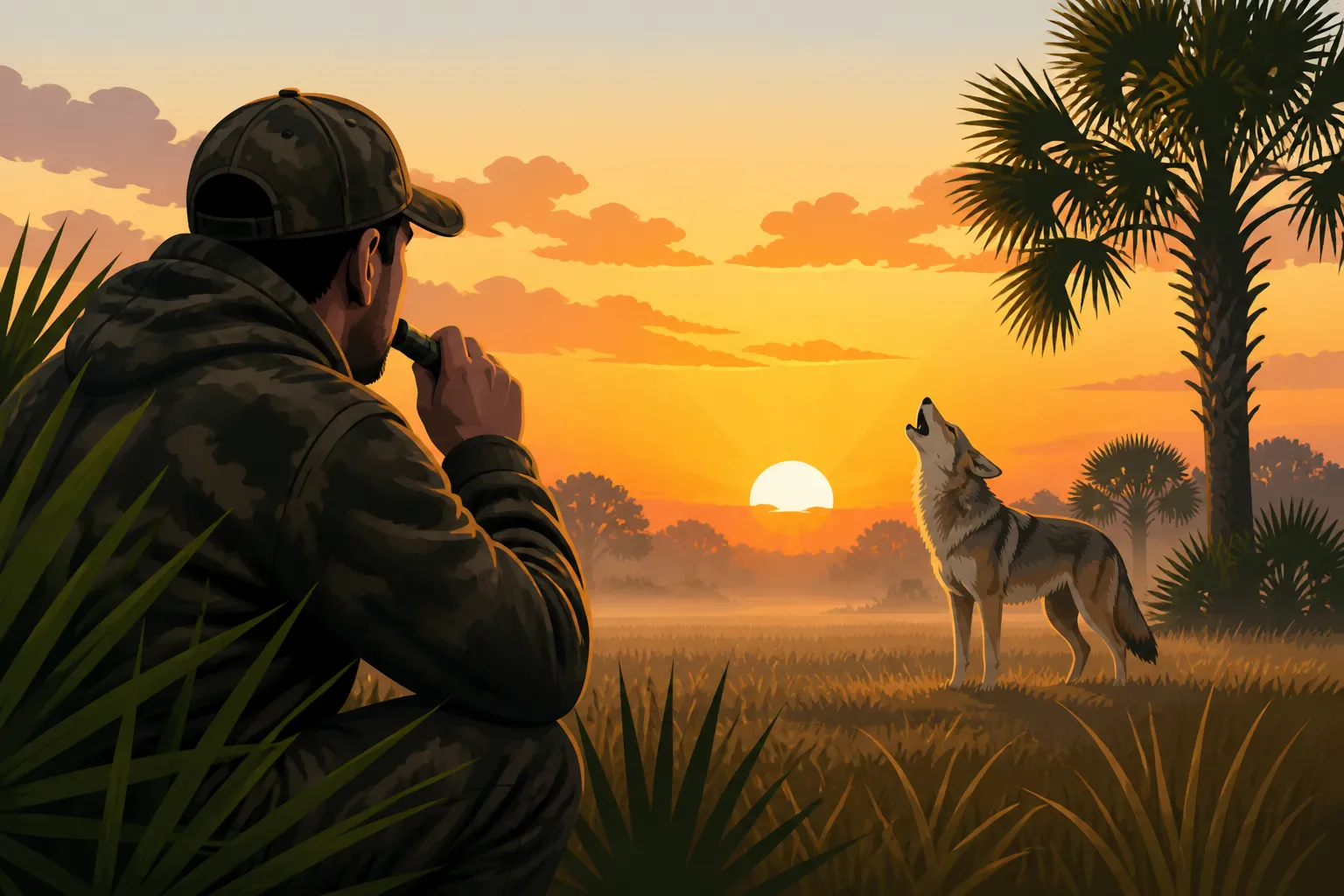
Coyote Calling Florida Ranch Country at Dawn
There’s nothing quite like the cool, crisp air of a Florida dawn in ranch country, the dew still clinging to the palmetto fronds, and the promise of a wily predator answering your call. However, getting a coyote to commit in these sprawling, often open landscapes presents its own set of challenges, from understanding their wary nature to navigating the unique environment of cattle pastures and dense scrub. This guide will walk you through everything you need to know to successfully call coyotes in Florida's ranch lands as the sun begins to kiss the horizon.
The Dawn Advantage: Why Early Morning Matters for Florida Coyotes
Florida's climate plays a huge role in coyote behavior, and understanding this is your first step to success. While coyotes are adaptable, they definitely have a preferred "shift" when it comes to hunting and moving around, and dawn is often prime time, especially in our warm state.
Coyote Behavior and Activity Patterns
Coyotes are naturally crepuscular, meaning they're most active during twilight hours—dawn and dusk. In Florida, this behavior is amplified by the heat. As soon as the sun climbs high, the air gets thick and hot, sending many animals (including coyotes and their prey) seeking shade and cooler temperatures. This makes the brief window just before and after sunrise incredibly productive. They're often wrapping up their nocturnal hunts, or just starting their morning foraging, making them more susceptible to distress calls. You'll find them traveling fencelines, drainage ditches, and the edges of wooded hammocks, looking for an easy meal before hunkering down for the day.
Another factor is their territorial nature and communication. Dawn is when you're most likely to hear them vocalizing—howls, yips, and barks—as they check in with their packs or assert their presence. Learning to mimic these sounds can draw them in or at least get a response that tells you where they are. They are constantly moving and checking for scent trails, making them receptive to curiosity calls or even the challenge of a rival howl.
Understanding Ranch Land as Coyote Habitat
Florida's ranch country, whether it's vast cattle operations or smaller hobby farms, provides an ideal mosaic of habitat for coyotes. These areas offer open spaces for hunting, dense cover for bedding and denning, and a constant food supply, both natural prey and unfortunately, sometimes livestock.
When you're looking at a ranch, keep an eye out for several key features. Fencelines and access roads often serve as natural travel corridors, funnels where coyotes move from one area to another. Brush thickets, palmetto heads, and oak hammocks provide critical cover for bedding during the day and launching ambush attacks. Ponds, drainage ditches, and cattle troughs are essential water sources, especially during dry spells, and coyotes will frequently visit them. The presence of cattle, while sometimes a nuisance, can also be a magnet for coyotes. They might be preying on calves or sick animals, or simply scavenging on afterbirth or carrion. Understanding these patterns helps you anticipate where a coyote might be coming from or heading to.
Before you even set foot on the property, extensive scouting is crucial. Don't just show up hoping for the best. Drive or walk the perimeter, looking for tracks in sandy spots or mud around water sources. Keep an eye out for scat, which can indicate recent activity and even give clues about their diet. Fresh kills, whether a deer fawn or a small calf, are huge indicators of active coyotes. You might also notice areas where birds are diving or circling, indicating a potential carcass that could attract a scavenger. Using scouting apps can help identify terrain features and potential travel routes. For more detailed information on their behavior, check out our guide on Florida Coyote Range and Density. You'll find that their diet is incredibly varied, as explored in Florida Coyote Diet in Ranch Country, adapting to whatever food sources are most available.
Essential Gear and Strategic Setup for Ranch Calling
Hunting coyotes, particularly at dawn in the sometimes-open Florida ranch lands, requires a thoughtful approach to gear and setup. It's not just about making noise; it's about sounding convincing, remaining unseen, and being ready when they inevitably show up.
Calling Devices and Sound Selection
When it comes to calls, you've got options. Many serious coyote hunters swear by electronic calls for their versatility and range. Brands like FoxPro and Lucky Duck offer calls with extensive sound libraries that can mimic everything from rabbit distress to pup barks and full-blown howls. For example, a FoxPro Shockwave allows you to quickly switch between sounds, creating dynamic sequences that keep a coyote guessing. The ability to place the e-caller away from your position can also draw a coyote's attention away from you, increasing your shot opportunity. These calls are especially effective in open ranch country where sound can carry for long distances.
Mouth calls, on the other hand, are excellent for close-in work, adding realism, or for finishing a hung-up coyote that’s almost in range but needs a little extra persuasion. Hand calls, like open reed or closed reed distress calls, allow for subtle variations in tone and volume that an electronic call might not replicate perfectly. A good lip-squeak or a soft whimper can sometimes be the ticket when a coyote is circling cautiously. For dawn calling in Florida, a sequence that includes pup distress, rabbit distress, and perhaps a lonely howl to start can be incredibly effective. The goal is to pique their curiosity or tap into their predatory instinct. When you’re putting together your gear list, resources that provide objective reviews, such as those found on platforms like GoHunt, can be invaluable for making informed choices.
Concealment, Wind, and Decoy Placement
Florida ranch lands often present a challenge when it comes to concealment. While there might be dense palmetto heads or oak hammocks, many pastures are wide open. This means breaking up your silhouette is paramount. Whether you're using a small, lightweight ground blind or simply relying on natural cover like a clump of saw palmetto or the base of a live oak, make sure you blend in. A good camouflage pattern that matches the local vegetation is key.
More importantly, you must pay attention to the wind. Coyotes have an incredible sense of smell, and if they catch your scent, the hunt is over before it begins. Always approach your calling location from downwind, and set up so the prevailing wind carries your scent away from where you expect the coyote to approach. Even in Florida's relatively flat terrain, local thermals can create tricky wind patterns at dawn as the air warms. Understanding Wind and Thermals in Flat Florida Terrain is critical; typically, air sinks into low-lying areas at night and then rises as the sun heats the ground. Factor this into your setup to avoid being busted.
Decoys can be a game-changer, especially for drawing a coyote's attention and holding it long enough for a shot. A simple feather topper, which mimics a struggling bird or small animal, can be enough. For more aggressive coyotes, a full-body decoy of a rabbit or even another coyote can work wonders. Place your decoy 20-30 yards from your position, preferably in an open area where it's visible but not so far that a coyote gets nervous approaching it. The decoy gives the coyote something to focus on other than your hidden position. Many hunters find that combining an electronic call placed 10-20 yards past the decoy, with the wind in their favor, creates a highly effective setup that pulls the coyote's focus away from their exact location.
Mastering the Call Sequence for Florida Ranch Coyotes
Once you've got your gear and you understand the lay of the land, it's time to put it all into action. Calling coyotes at dawn in Florida ranch country isn't just about making noise; it's an art form that requires patience, observation, and adaptability.
Approach, Setup, and the Opening Act
The approach to your calling stand is just as important as the calling itself. Coyotes are incredibly wary, especially in areas where they might encounter humans. Move slowly, quietly, and avoid silhouetting yourself against the skyline, especially as dawn breaks. A silent approach using an ATV or truck to get close, then walking the last few hundred yards, is often ideal. Once you're at your chosen spot, set up quickly but carefully, ensuring your concealment is solid and your wind is perfect.
When you initiate your calling sequence, don't immediately blast out a loud, frantic distress call. Think of it as an opening act. Start with something softer, maybe a few inquisitive whimpers, some soft barks, or a series of short, challenging howls. This serves a few purposes: it gauges the coyote's interest without immediately alarming them, and it allows you to get a feel for how far your sound is carrying in the morning air. After a minute or two of these softer sounds, if you don't get a response, you can then transition to a more attention-grabbing sound like a rabbit in distress or a pup in peril. The first few minutes are crucial, as a nearby coyote might come in quickly, so be ready.
Reading and Responding to the Coyote's Playbook
Patience truly is a virtue in coyote calling. Don't call for five minutes and then pack up if nothing shows. A good stand can last 20-30 minutes, sometimes longer, especially if you're trying to pull a coyote from a distance. During your calling sequence, constantly scan your surroundings. Coyotes are masters of deception and can appear silently from unexpected directions. Look for movement, even subtle changes in the landscape, as they often use cover to approach.
The coyote's response dictates your next move. If a coyote hangs up at a distance, perhaps circling downwind, it means they're suspicious. At this point, you might need to try a different call—maybe a more subtle, pleading pup distress, or even a few soft barks to simulate another coyote. Sometimes, going silent for a few minutes can make them nervous enough to commit, thinking the "prey" has escaped or moved. If a coyote is coming in hot and fast, be prepared for a quick shot. They often stop briefly before committing to the decoy or sound source, offering a small window. If they skirt wide, try to adjust your setup or put more sound out to bring them in. Remember, no two coyotes will respond exactly the same, making each hunt a unique challenge. Being able to adapt on the fly is what separates successful callers from those who go home empty-handed.
Here's a table showing some effective call sequences for different situations:
| Scenario | Opening Sequence (1-2 min) | Primary Sequence (5-10 min) | Finishing Sequence (as needed) | Notes |
|---|---|---|---|---|
| New, Unpressured Area | Lone Howl, Couple of Barks | Cottontail Distress, Fawn Distress | Pup Whimpers, Bird in Distress | Good for locating and drawing in curious coyotes. Vary volume. |
| Pressured Ranch Coyotes | Soft Howls, Inquisitive Barks | Rodent Squeaks, Distant Pup Distress | Silence, then a very soft Mouse Squeak | Subtlety is key. Don't overcall. Let the coyote feel safe. |
| Windy Conditions | High-pitched Howl, Siren | Loud Rabbit Distress, Coyote Challenge Howl | Faster, more aggressive distress | Need louder calls to cut through the wind. Maximize sound dispersal. |
| Coyotes Hung Up/Circling | Very soft Distress, Lip Squeaks | Female Interrogation Howl, Submissive Howl | Silence, then brief, soft Distress | Mimic a lost pup or a submissive coyote. Sometimes silence is the best call. |
| Multiple Coyotes Detected | Group Howls, Challenge Barks | Aggressive Fight Sounds, Pup Distress | Varying Distress | Tap into their territorial nature. Can bring in the whole pack. |
Overcoming Unique Florida Ranch Challenges
Florida's ranch country, while abundant with coyotes, presents some distinct hurdles that hunters need to be aware of and plan for. It's not just about the calling; it's about navigating the environment, respecting landowners, and understanding the specific pressures on these animals.
Navigating Permissions and Respecting Livestock
First and foremost, hunting on private ranch land in Florida absolutely requires permission from the landowner. Trespassing is not just illegal; it can damage your reputation and the reputation of all hunters, making it harder for others to gain access in the future. Don't assume. Always ask, preferably in person, and clarify the exact boundaries you're allowed to hunt. Our guide on Getting Private Land Permission in Florida offers some great tips, and if you're feeling adventurous, Knocking on Doors in Florida Ranch Country delves into the art of securing that valuable access. Remember, a landowner's trust is priceless, and a good relationship can open doors for years of hunting.
Once you have permission, respecting their property and especially their livestock is paramount. Ranchers view coyotes as a legitimate threat, especially to calves or other vulnerable animals. This is why they often welcome coyote hunters, as they understand Florida Coyote Attacks on Livestock can be a serious issue. However, you need to be acutely aware of your surroundings. Always identify your target and what's beyond it. Never take a shot if there's any chance of hitting livestock or property. Use calls that don't excessively spook cattle, and if a coyote is in a herd, let it walk. Your priority is safety and maintaining that critical relationship with the landowner. Discuss safe shooting lanes and areas where livestock might be present before you ever step foot in the field.
Dealing with Heat, Humidity, and Pressured Critters
As mentioned, Florida's heat and humidity are significant factors. While dawn offers the coolest part of the day, it can still warm up quickly. Dress in lightweight, breathable camouflage. Hydration is non-negotiable; always carry plenty of water. The dense vegetation and dampness can also make for uncomfortable sits, so a good Thermacell or other mosquito repellent is often a hunter's best friend. This environment also means tracking a wounded animal can be tough, as scent trails dissipate quickly and dense cover makes visual tracking difficult. Aim for clean, ethical kills.
Another challenge is dealing with pressured coyotes. If an area has been hunted heavily, or if coyotes have had negative experiences with callers, they become "educated." These coyotes are much harder to fool. They might hang up at extreme distances, circle widely to get downwind, or simply ignore calls altogether. For these "wiser" coyotes, subtlety is key. Use softer, more realistic sounds. Instead of a frantic distress, try quieter rodent squeaks or soft, inquisitive howls. Lengthen your setup time between call sequences, giving the coyote more time to feel secure enough to approach. You might even consider trying a "less is more" approach, with very short, infrequent bursts of calling. Sometimes, they just need to hear enough to confirm a presence, not to be bombarded. Patience and an understanding of coyote behavior, coupled with careful observation, will be your greatest assets when facing these wily, pressured animals. Hunting these animals on smaller tracts, as described in Hunting Small Private Tracts in Florida, can sometimes require even more finesse.
Disclaimer
Hunting is an inherently dangerous activity. Always prioritize safety, understand and follow all Florida Fish and Wildlife Conservation Commission (FWC) regulations, and obtain appropriate licenses and permits, such as a Florida hunting license. For details on what you need, see Florida Hunting Licenses and What They Cost and ensure you meet the Florida Hunter Education Requirements. It is your responsibility to know and adhere to all local, state, and federal laws. This guide provides general information and recommendations, but individual hunting situations can vary greatly. Remember to always be a responsible and ethical hunter.