Running Pointing Dogs on Florida Bobwhites
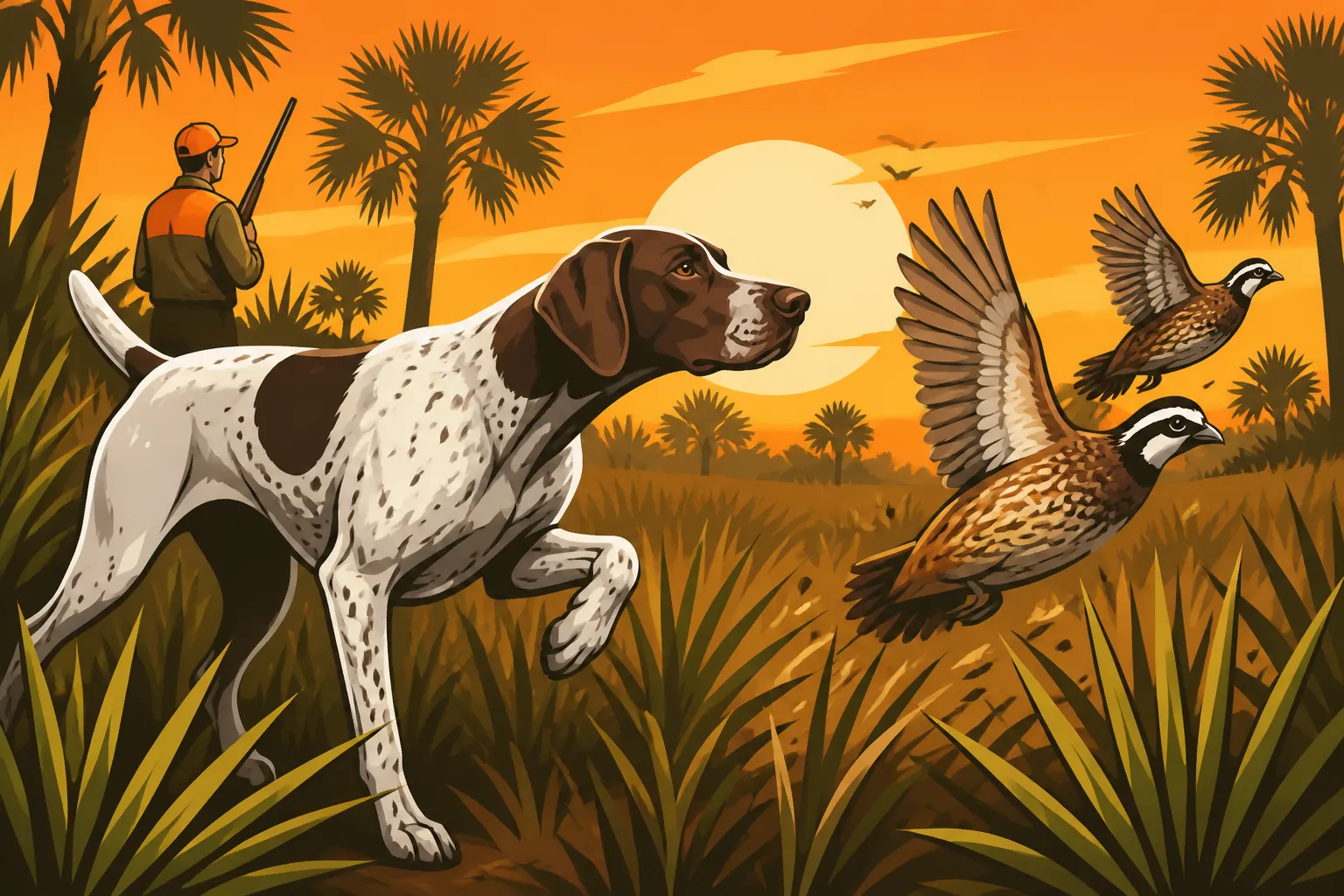
There's nothing quite like the thrill of watching a well-trained pointing dog lock up on a covey of bobwhite quail, especially here in Florida. It's a dance of instinct, training, and anticipation that connects us deeply to the hunting tradition. But let's be honest, hunting wild bobwhites in the Sunshine State, particularly with dogs, comes with its own unique set of challenges – from the relentless heat and humidity to navigating dense palmetto and avoiding unexpected critters. This guide is dedicated to helping you prepare yourself and your trusty canine companion for successful, safe, and immensely rewarding bobwhite hunts across Florida's diverse landscapes.
The Unique World of Florida Bobwhites and Their Habitat
Hunting bobwhites in Florida with pointing dogs isn't just a walk in the park; it's an immersive experience into a specific ecosystem. Florida's bobwhite quail are adapted to our subtropical environment, and understanding their preferences and behaviors is the first step toward a productive hunt. They're not always easy to find, which is part of what makes the reward so sweet when your dog goes on point.
Identifying Prime Bobwhite Territory
When you think of prime quail country in other states, you might picture vast open fields. Here in Florida, it's a bit different. Our bobwhites thrive in a mosaic of habitats, particularly those managed with fire. We're talking about longleaf pine savannas with a wiregrass understory, scrub oaks, palmetto flatwoods, and the edges of cypress heads. They love areas that have seen a recent prescribed burn, which clears out dense undergrowth, allows tender new shoots to emerge, and creates ideal conditions for them to forage and move.
Look for areas with a good mix of cover for protection from predators and the elements, along with open ground for feeding. This often means finding transitional zones, like where a pine stand meets a palmetto patch, or the edges of agricultural fields that haven't been too heavily mowed. These "edge habitats" are crucial, providing both food sources and escape routes. Places where you find native grasses, legumes, and seeds, alongside low, dense woody cover, are where you'll likely find birds. Many of Florida's Wildlife Management Areas (WMAs) are actively managed to promote these very conditions, making them excellent places to scout. You can learn more about specific habitat needs in our detailed piece on Florida Quail Habitat Restoration Efforts.
Understanding Bobwhite Behavior
Florida bobwhites are social birds, typically living in coveys that range from a few individuals to more than a dozen. During the cooler parts of the day, especially mornings and late afternoons, they'll be out foraging. They primarily feed on seeds, insects, and tender green vegetation. When disturbed, a covey will often flush explosively, scattering in all directions before regrouping later. This is where your dog's ability to locate singles after the initial flush becomes invaluable.
They have an incredible ability to hide, often "holding tight" until a dog is almost on top of them, or even stepping out the back door of a covey if the pressure is too high. This is why a steady, patient dog is so critical. They'll leave behind scent trails as they move, and a keen-nosed pointer can pick up on this scent, unraveling the bird's path until they can pinpoint the covey's location. During midday, especially in our warm climate, bobwhites tend to "loaf" in thicker cover, seeking shade and security. Knowing this behavior can help you adjust your hunting times and expectations.
Preparing Your Pointing Dog for Florida's Demands
Bringing your pointing dog to Florida for a quail hunt isn't like hunting pheasants in Kansas or grouse in Michigan. Our environment demands specific conditioning and training to ensure your dog's safety and success. It's about more than just finding birds; it's about enduring the elements and navigating potential hazards.
Conditioning for Heat and Terrain
Florida's heat and humidity are no joke, especially during the early small game seasons. Even in late fall and winter, midday temperatures can soar, making it easy for an unconditioned dog to overheat. Just like you'd condition yourself, your dog needs to be gradually acclimated to working in the warmth. Start with shorter sessions in cooler parts of the day, slowly increasing duration and intensity. Hydration is paramount. Always carry plenty of water for your dog and offer it frequently. A portable water bowl is a non-negotiable piece of gear. Some handlers even use cooling vests for their dogs, though these need to be carefully monitored to ensure they don't trap heat instead of dissipating it.
The terrain itself is challenging. Dense palmetto, thick gallberry, and sawgrass can be brutal on paws. Investing in good quality paw balm or even dog boots can help prevent cuts and abrasions. However, many dogs find boots uncomfortable, so if you go that route, introduce them long before the hunt. Breeds known for their stamina and heat tolerance, like certain lines of German Shorthaired Pointers, English Pointers, or Brittany Spaniels, often excel in Florida. Still, any dog can be susceptible to heat stress if not properly conditioned and managed. Understanding Hot-Weather Sitting Strategy in Florida can also apply to your dog's rest periods.
Training for Florida-Specific Challenges
Beyond basic pointing and retrieving, Florida presents some unique training considerations. The most significant are snakes, particularly rattlesnakes, and, in certain areas, even alligators. While you're less likely to encounter a large alligator in typical quail habitat compared to a cypress swamp, it's always a possibility near water sources. Snake avoidance training, often done with controlled exposure to defanged snakes, can be a lifesaver. This teaches your dog to recognize the scent and sound of a snake and avoid it. Snake-proof vests offer an additional layer of protection, particularly for the chest and belly.
Wild hogs are another concern. While not usually aggressive towards dogs unless cornered or protecting piglets, a large boar can inflict serious damage. Your dog needs to be trained to focus on birds and avoid investigating other wildlife. Steadiness to wing and shot is always important, but in thick Florida cover, it's even more so. Birds can burst out of nowhere, and a dog that breaks point can quickly lose the covey in the dense vegetation. Practicing retrieves in heavy cover will also improve their efficiency in finding downed birds, minimizing the chance of losing a valuable bobwhite in the tangles.
Essential Gear and Safety Considerations for You and Your Dog
When you head into the Florida woods with your pointing dog, being prepared isn't just a suggestion, it's a necessity. The environment can be unforgiving, and having the right gear, combined with a strong focus on safety, can make all the difference for both you and your loyal hunting partner.
Must-Have Gear for the Hunter and the Canine
For yourself, snake boots or chaps are absolutely non-negotiable. The thick cover that quail love is also prime real estate for venomous snakes. Long sleeves and pants, even in warm weather, offer protection from thorns, ticks, and sun exposure. A good quality upland vest or pack is essential for carrying shells, water, snacks, and a first-aid kit.
For your dog, a high-quality GPS collar system is practically mandatory. Systems like the Garmin Alpha or similar tracking devices allow you to know your dog's exact location, even when they're out of sight in dense cover. This is especially crucial on public lands where other hunters might be present, or if your dog gets disoriented. Beyond tracking, many of these systems offer e-collar functions for communication, which is invaluable for working a dog at a distance. When planning your route or scouting new areas, mapping tools like GoHunt can be incredibly helpful for identifying potential quail habitat and staying aware of property lines, complementing your dog's tracking device by giving you a bird's eye view of the terrain.
A sturdy leash and collar, extra water, a portable bowl, and a comprehensive dog first-aid kit are also vital. This kit should include items for cuts, thorns, snakebite treatment (though immediate vet care is paramount), and any medications your dog might need. Reflective gear or a blaze orange vest for your dog is also a smart idea, especially on public land during open gun seasons, to increase visibility for other hunters. You can learn more about general safety in Florida Blaze Orange Requirements.
Navigating Risks: Heatstroke, Critters, and Dehydration
The biggest environmental threat to your dog in Florida is heatstroke. Symptoms include excessive panting, bright red gums, thick saliva, weakness, and disorientation. If you see these signs, get your dog to shade immediately, douse them with cool (not ice-cold) water, and seek veterinary attention. Prevention is key: hunt in the early morning, take frequent breaks, provide abundant water, and watch your dog closely.
Critter encounters are another major concern. Snakebites are always a risk. If your dog is bitten, try to keep them calm and still, carry them out if possible, and get to a vet immediately. Knowing the location of the nearest emergency vet is critical before you even head out. While less common, alligators can be a threat near standing water. Keep your dog away from water bodies, especially murky ones. Wild hogs, as mentioned, are powerful animals; train your dog to avoid them. Regularly check your dog for ticks after every hunt, as tick-borne diseases are prevalent here.
Strategic Hunting Tactics with Pointing Dogs in Florida
Once you and your dog are conditioned, well-equipped, and understand the potential hazards, it's time to put it all together in the field. Hunting Florida bobwhites with a pointing dog is a dynamic, fluid process that requires keen observation and clear communication.
Reading the Dog and the Land
A good pointing dog is like an extension of your own senses, especially in dense cover where vision is limited. Learn to read your dog's body language. A change in gait, a sudden head snap, or intense tail wagging can all indicate they're winding birds. When your dog goes on point, pay attention to their posture. A high, intense point often means birds are close and holding tight. A creeping point might mean the birds are moving ahead of them.
Once your dog is on point, your approach is crucial. Move in slowly and deliberately, covering the ground where the birds are likely to be. Assess the wind direction; approaching from downwind can give you the best chance for a clean shot as the birds flush into the wind. Have your gun ready, but don't rush. Take a moment to scan for potential escape routes the birds might take. Knowing how Florida's flat terrain affects Wind and Thermals in Flat Florida Terrain can also give you an edge in setting up for the flush.
Post-Flush Strategy and Recovery
The covey flush is often exhilarating chaos. Once the birds are up, stay calm and pick your target. Remember, safety first – always be aware of your dog's position and any other hunters. After the shot, mark where the birds scattered as best you can. This is where your dog's "steadiness to shot" comes into play. A dog that doesn't break point or chase after the initial flush can be quickly sent to retrieve a downed bird, then immediately put to work finding "singles."
Hunting singles after a covey flush can be incredibly productive. Scattered birds often hold much tighter than the original covey, offering excellent pointing opportunities. Work your dog methodically through the area where you saw birds drop or heard them land. Communication with your dog is vital here: use commands to direct them, encourage them, and praise them for every retrieve. Even if a bird is missed, always reinforce good pointing behavior. The more you hunt together, the more in tune you'll become, turning these often-challenging Florida bobwhite hunts into truly unforgettable experiences. If you're looking for more general small game advice, consider checking out Small Game and Predator Hunting in Florida.
| Aspect | Hunter Considerations | Dog Considerations |
|---|---|---|
| Habitat | Identify pine savannas, prescribed burns, edge cover. | Navigate dense palmetto, wiregrass, scrub oak. |
| Climate | Hydrate constantly, wear light, protective clothing. | Condition for heat/humidity, frequent water breaks, monitor for heatstroke. |
| Hazards | Wear snake boots/chaps, carry first-aid, know vet locations. | Snake avoidance training, snake-proof vests, avoid hogs/alligators. |
| Gear | Upland vest, shells, personal first-aid, GoHunt mapping. | GPS collar, water, dog first-aid, paw protection. |
| Tactics | Read dog's point, approach downwind, mark flush. | Hold point, retrieve, work singles efficiently. |
Disclaimer
Hunting is an inherently dangerous activity. Always prioritize safety, follow all local, state, and federal regulations, and obtain the necessary licenses and permits before heading into the field. The information provided in this guide is for informational purposes only and should not replace professional training, safety courses, or the advice of local authorities. Conditions in Florida can change rapidly, so always stay informed and be prepared for any situation.