Hunting After a Poor Acorn Year
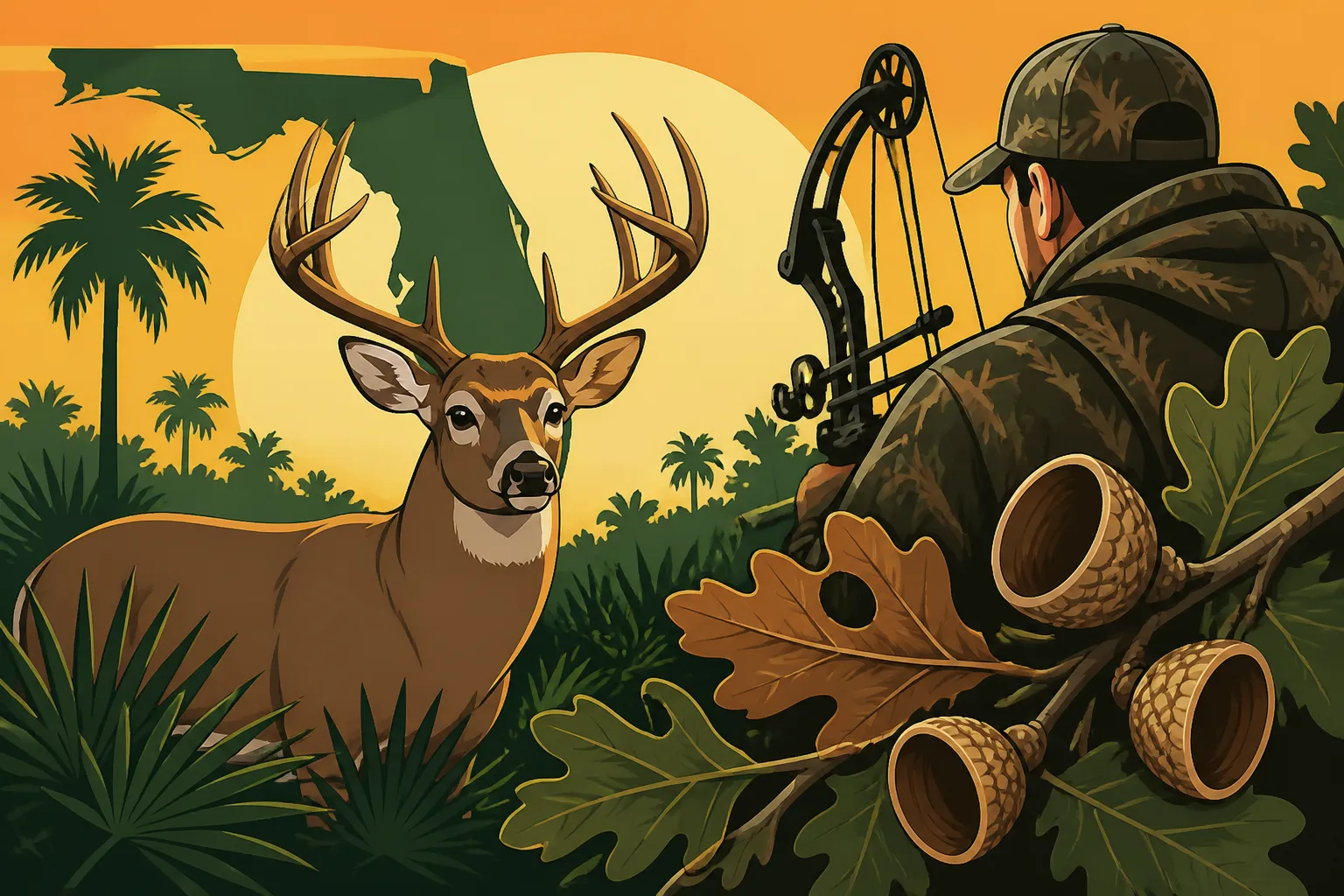
That feeling when you scout your favorite oak hammocks in the late summer, only to find the ground barely littered with acorns, is enough to make any Florida deer hunter groan. A poor acorn year can really throw a wrench into your carefully laid plans, leaving you wondering where in the world the deer will be come opening day. It’s a frustrating reality, especially in a state where consistent mast crops can be hit or miss. This guide is all about navigating those lean acorn years, helping you understand how deer adapt and how you can adjust your own hunting strategies to stay successful.
Understanding the Impact of a Poor Acorn Crop on Deer Behavior
When the primary food source for Florida's whitetails, acorns, simply isn't available in abundance, it doesn't mean the deer vanish. It means they change. Understanding these changes is the first step in adapting your approach and continuing to put venison in the freezer.
Deer Reliance on Acorns and Nutritional Needs
Acorns are a powerhouse of nutrition for deer. They're packed with carbohydrates and fats, providing a concentrated energy source that's crucial for deer to build up reserves for the rut and the cooler months. Think of it like this: for a deer, a handful of acorns is like a hunter's high-calorie protein bar – quick, easy energy. When that readily available, high-octane fuel disappears, deer are forced to seek out less efficient, but still vital, alternatives. They need to find enough calories to maintain their body weight, fuel the demanding rut for bucks, and sustain does through gestation. A severe acorn bust can lead to deer covering more ground to find adequate food, sometimes resulting in lower body weights, reduced antler growth, and even impacting fawn survival rates in the following spring. It’s not just about one season; it can have ripple effects on the health of the entire herd.
Shifting Movement Patterns and Home Ranges
Deer are creatures of habit, but those habits are often dictated by food. In a year with a plentiful acorn drop, you'll find deer concentrating their movements around oak groves, creating obvious trails, and spending significant time in those areas. When the acorns are scarce, those traditional hotspots become ghost towns. Deer will expand their home ranges, venturing further from their core bedding areas in search of sustenance. This means those predictable travel corridors leading to a specific oak flat might no longer be as active. Instead, deer might be making longer, more circuitous routes to lesser-known food sources. You'll often see an increase in daytime movement in areas previously considered secondary, simply because deer have to spend more time foraging to meet their daily caloric intake. This shift isn't just a slight deviation; it can be a complete overhaul of their daily routine, forcing them to explore new territories.
Increased Competition at Remaining Food Sources
Even in a poor acorn year, there are usually some pockets where acorns dropped, or where other mast crops produced well. The problem is, every deer in the area will be keyed in on these rare finds. This leads to intense competition. What might have been a quiet, productive spot in a normal year could become a high-traffic area with multiple deer vying for resources. This increased pressure can lead to more nocturnal feeding, as dominant deer might push others out during daylight hours, or the constant disturbance makes deer wary. It also means that any other dependable food source, like a late-season food plot or a natural browse rich area, will see much heavier use. For a hunter, this can mean more sightings, but also deer that are jumpier and more alert due to the constant presence of other animals.
Identifying and Locating Alternative Food Sources
Alright, so the acorns are a bust. That's fine. Florida's diverse landscape offers plenty of other buffet options for deer, if you know where to look. It requires a different kind of scouting, shifting your focus from the typical oak trees to other plants and agricultural areas.
Natural Browse and Forbs
Florida is a land of lush vegetation, and deer are master browsers. Even without acorns, there's a wealth of natural forage they'll turn to. Think about the understory in pine flatwoods, the edges of cypress swamps, and even those dense palmetto thickets. Deer will key in on fresh greenbrier shoots, which are incredibly nutritious and often found climbing trees or forming dense tangles. Wild muscadine grapes, when they produce, are a highly sought-after treat, as are beautyberry bushes. You'll often find these on the edges of hammocks, along old logging roads, or in areas where sunlight can penetrate the canopy. Even young shoots of tender palmetto can become a consistent food source. Don't underestimate the power of these less obvious foods; when acorns are absent, these become primary attractants. Look for clipped leaves, rubbed stems, and fresh droppings in these areas. Sometimes, the less "glamorous" vegetation holds the key to where deer are feeding. For those interested in deeper scouting, learning to identify these key browse species is invaluable.
Agricultural Fields and Plantings
If you're hunting near agricultural lands, a poor acorn year can be a blessing in disguise for the astute hunter. Deer will quickly pivot to readily available crops. In North and Central Florida, this often means corn, soybeans, peanuts, or even chufa fields. A standing peanut field, especially after the harvest, can be an absolute magnet for deer, as they'll root around for the leftover nuts. Even if a field has been harvested, deer will glean what's left behind, often concentrating their efforts at dawn and dusk. For private land hunters, this is where strategically planted food plots become critical. A lush clover plot, winter wheat, oats, or a mix designed for deer can draw animals from miles around when natural mast is scarce. Understanding Entry Routes Through a Florida Food Plot becomes paramount as deer will approach with extreme caution. This is often the time when you'll see deer travel longer distances, crossing open ground they might normally avoid, just to get to a reliable food source.
Other Mast Crops
While oaks are the kings of mast, they aren't the only game in town. Florida has a variety of other fruit-bearing trees and shrubs that, even if less abundant, can become hot spots when acorns fail. Look for wild persimmon trees; their sweet, fallen fruits are irresistible to deer. Wild cherry trees can also provide a small, localized food source. Even certain varieties of huckleberry and gallberry, especially where they grow in dense patches, will see increased activity. These smaller mast producers might not feed an entire herd, but they can concentrate a few deer into a very huntable area. Often, these alternative mast trees are found on the edges of pine forests, along old fencerows, or in mixed hardwood stands. While scouting, don't just focus on the ground for acorns; look up and scan for other fruiting trees that might be dropping their bounty.
| Alternative Food Source | Typical Location | Peak Attractiveness | Deer Preference (Acorn-less Year) |
|---|---|---|---|
| Greenbrier | Swamp edges, thickets, forest floor | Year-round (new growth) | High |
| Wild Grapes/Muscadines | Hammock edges, climbing trees | Late Summer – Early Fall | High |
| Beautyberry | Understory, open woods | Late Summer – Winter | Medium-High |
| Palmetto (shoots/berries) | Pine flatwoods, dense scrub | Year-round (shoots), Fall (berries) | Medium |
| Persimmon | Forest edges, old fields | Late Fall – Winter | High |
| Peanut Fields | Agricultural areas | Post-harvest Fall | Very High |
| Corn/Soybean Fields | Agricultural areas | Post-harvest Fall | High |
| Clover/Oats/Wheat Plots | Planted food plots | Fall – Winter | High |
Adapting Your Hunting Strategies and Tactics
A poor acorn year isn't a reason to throw in the towel; it's an opportunity to learn and adapt. It forces you to become a more versatile hunter, relying less on traditional wisdom and more on current deer behavior.
Scouting and Trail Camera Adjustments
Your scouting efforts need to shift dramatically. Instead of checking under oak trees, you're now searching for browse lines, freshly clipped stems, and concentrated droppings in areas you might have previously overlooked. Focus on transition zones – those areas where different habitat types meet, such as the edge of a pine plantation bordering a cypress swamp, or a palmetto flat next to a dense hardwood hammock. Deer will use these edges for cover while traveling between bedding and the new food sources. When scouting Florida public land before season, make sure to bring your map and mark down any promising areas.
Trail cameras become even more invaluable. Instead of placing them over scrapes or traditional funnels, deploy them strategically on trails leading to agricultural fields, over natural browse thickets, or near any other identified alternative food sources. This will help you pinpoint when and how deer are using these areas. Don't be afraid to move your cameras frequently based on new sign. You might even find yourself Where to Hang a Camera on a Sand Road that leads to an unexpected food pocket. Pay close attention to time of day; if deer are mostly nocturnal at a particular spot, it might be better to find an intercept point along their travel route rather than sitting directly over the food.
Stand Placement and Approach
With deer moving to different food sources, your stand placement needs a re-evaluation. Forget the old reliable oak stand. You're now thinking about travel corridors that connect bedding cover to those alternative food sources. Look for subtle funnels – a narrow strip of hardwoods between two clear-cuts, a slight rise in elevation in a swamp, or a pinch point where a dense palmetto head meets an open area. Deer will naturally gravitate to these areas for security while traveling. Wind and thermals in flat Florida terrain are always critical, but even more so when deer are on high alert, navigating unfamiliar travel paths. Set up downwind of these new routes, and consider using a ground blind on Florida public land, which offers more flexibility for quick setup in new, unexpected hotspots. The goal is to catch deer as they're heading to or from their feeding areas, rather than directly over the feed itself, especially if competition is high and activity is mostly nocturnal.
Leveraging E-Scouting Tools
In a year where deer patterns are highly unpredictable, digital tools can be your best friend. Platforms like GoHunt offer incredible aerial imagery and topographic maps that allow you to e-scout from the comfort of your home. You can identify potential alternative food sources, such as abandoned agricultural fields, powerline cuts with regenerating browse, or areas with different timber types that might hold persimmons or wild grapes. By reading aerial photos for Florida deer, you can trace potential travel routes, identify bedding areas in dense cover, and mark down pinch points or funnels that deer might use to access these new food sources. The ability to zoom in and examine habitat changes, even subtle ones, can give you a massive advantage when ground scouting is time-consuming. GoHunt also allows you to mark waypoints, measure distances, and track your movements, making your physical scouting much more efficient and targeted. This is particularly useful for identifying isolated pockets of food that might not be obvious on the ground.
The Long-Term Outlook and Management Considerations
A single poor acorn year is rarely catastrophic for a deer herd, but it does offer valuable insights into herd health and habitat resilience. Thinking beyond the immediate season can help both individual hunters and land managers.
Herd Health and Reproduction Impacts
While deer are adaptable, repeated poor mast crops can take a toll. Less abundant food sources can mean deer enter the rut in poorer condition, which can affect breeding success and the overall health of does going into gestation. Bucks might not carry as much antler mass the following year because their nutritional resources were diverted to basic survival rather than antler growth. It's a natural cycle, but it highlights how delicate the balance can be. If you're consistently seeing smaller deer or lower fawn recruitment on your property, it might be a sign that the habitat needs some attention. Observing these trends after a bad acorn year can provide important data points for future management decisions.
Importance of Diverse Habitat Management
A key takeaway from a poor acorn year is the undeniable importance of diverse habitat. Relying too heavily on a single food source, even one as vital as acorns, leaves the deer herd vulnerable to fluctuations. Land managers, and even dedicated private land hunters, should strive to promote a variety of food sources. This includes maintaining diverse forest stands with a mix of oak species (some drop earlier, some later), but also encouraging other mast producers like persimmon and wild cherry. Creating openings for herbaceous browse and forbs, and establishing hardy food plots that can withstand varying weather conditions, provides a buffet that can buffer against the failure of any one food source. This type of strategic habitat work ensures that even if one crop fails, deer still have plenty of options, leading to a more stable and healthier deer population in the long run.
Season-Long Adaptability
Finally, a poor acorn year teaches us the ultimate lesson in hunting: adaptability. Deer are constantly reacting to their environment, and hunters must do the same. Don't go into the season with a rigid plan based on last year's conditions. Be prepared to scout throughout the season, to move your stands, and to try new areas. The early season might find deer clinging to any lingering soft mast, while the late season could see them almost exclusively in agricultural fields or dense browse. Continual observation, leveraging tools like GoHunt to scout and re-evaluate, and a willingness to change your approach are what truly define a successful hunter, especially when nature throws you a curveball like a bad acorn crop. Hunting the Zone B rut in November, for example, might be entirely different when deer are prioritizing calorie intake over traditional rutting activity in certain areas. It's about staying nimble and always asking yourself, "Where would I go if I were a hungry deer?"
Disclaimer
Always ensure you are hunting ethically, safely, and in full compliance with all local, state, and federal regulations. This guide is for informational purposes only and does not supersede official Florida Fish and Wildlife Conservation Commission (FWC) hunting regulations. Before engaging in any hunting activities, consult the most current FWC rules and ensure you have all necessary licenses and permits.