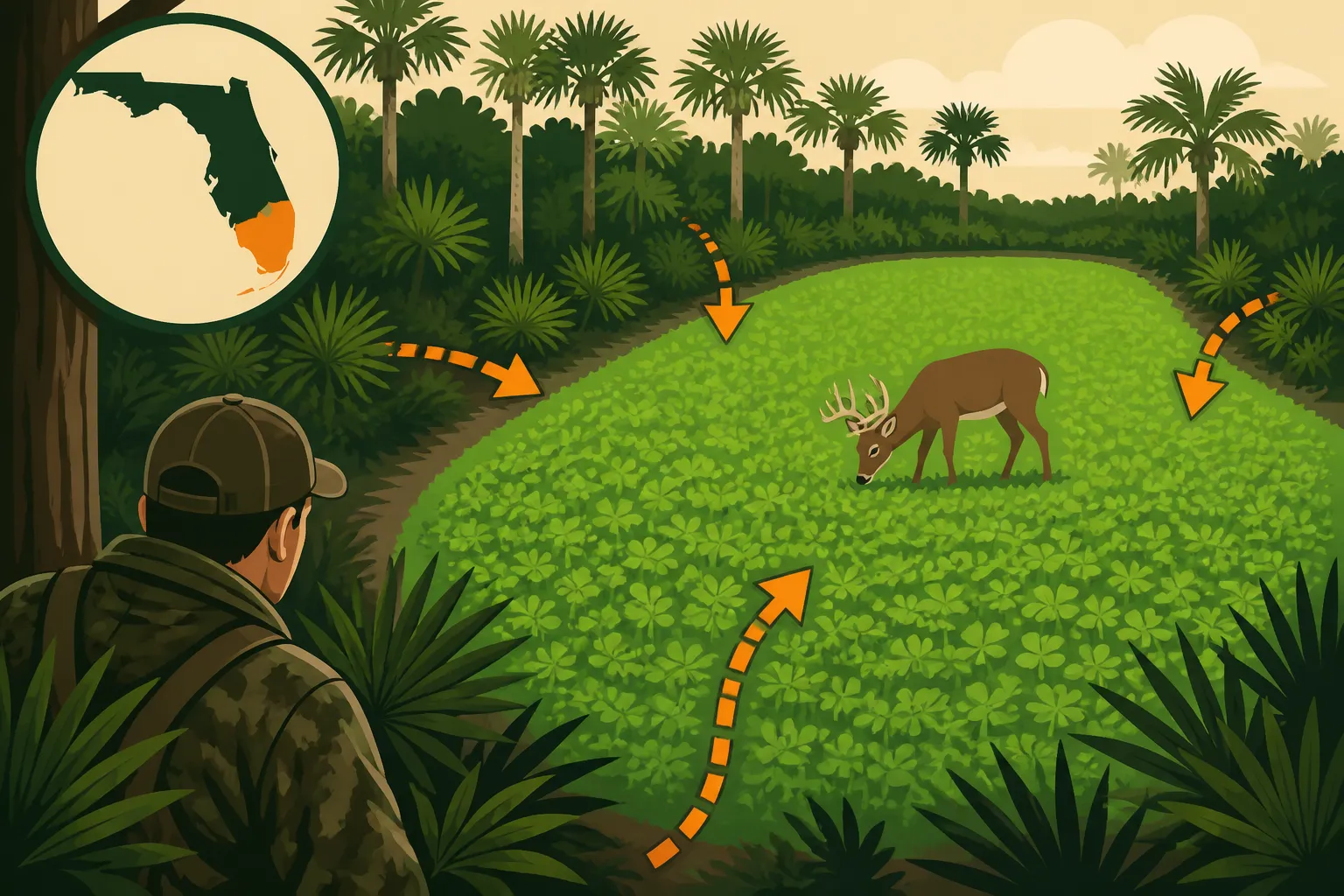
Entry Routes Through a Florida Food Plot
There's nothing quite as frustrating as spending hours scouting, planting, and maintaining a beautiful food plot, only to have your hard work thwarted by spooking deer on your way to or from your stand. Many of us have felt that sinking feeling when a phantom snort-wheeze sends a prime buck bounding away before you even reach your setup. This guide is all about mastering entry and exit routes for your Florida food plots, ensuring your hunting efforts aren't compromised by a careless approach.
Understanding Deer Movement Around Food Plots
Hunting food plots in Florida presents a unique set of challenges, from the variable terrain to the often unpredictable winds and the ever-present pressure of other hunters. To effectively hunt a food plot, you first need to get inside a deer's head and anticipate how they use the area, not just the plot itself.
The Florida Deer's Daily Commute Bedding to Feeding
In Florida, deer operate on a pretty consistent schedule, moving between their bedding areas and their preferred feeding locations, which often include your carefully cultivated food plot. Their bedding areas are typically dense, thick cover – think palmetto heads, cypress swamps, or even thick pine plantations where they can feel secure and hide from predators and hunters alike. When they decide to move, especially in the low light of dawn and dusk, they’ll use established travel corridors. These might be subtle trails through the palmetto, the edges of a cypress slough, or even an old logging road.
The key here is understanding that your food plot isn't an island; it's part of a larger ecosystem. Deer don't just magically appear in the middle of it. They're coming from somewhere and going somewhere. Your goal is to intercept them along these travel routes, or at least approach your stand without alerting them to your presence on these routes. This means identifying the most likely bedding areas nearby and then mapping out the most direct, yet most hidden, path they'll take to your plot. Scouting these transitions, especially where a thicket meets a more open area, can reveal subtle funnels that are perfect for ambush. Don't underestimate the power of knowing where Florida bucks bed in thick palmetto.
How Pressure Changes Deer Behavior
Deer are intelligent and adapt quickly to human pressure. If they detect hunters repeatedly entering a food plot from a particular direction, or if they hear vehicles on a nearby road, they'll adjust their patterns. In high-pressure areas, especially on public lands or even smaller private tracts where hunters are active, deer become largely nocturnal, or they'll only visit plots after dark. They'll also become incredibly wary of open approaches during legal hunting hours.
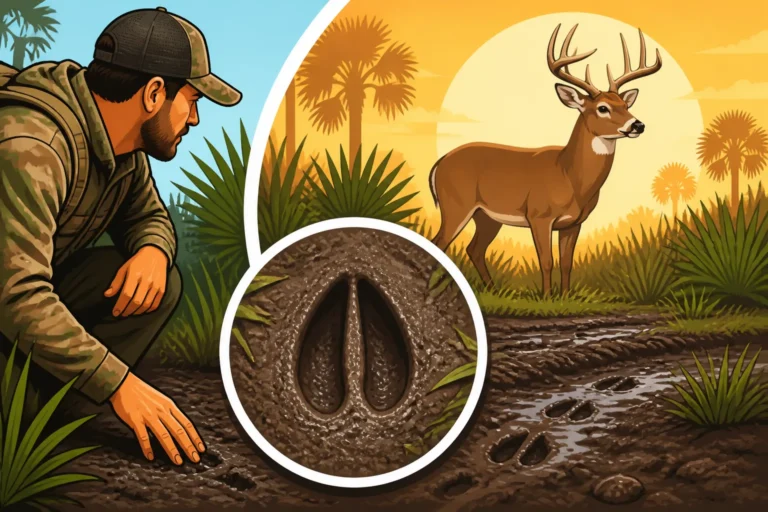
This behavioral shift means that a direct, wide-open march across a field to your stand is almost certainly a recipe for failure. They'll see you, smell you, or hear you. Instead, you need to think like a deer. What path would they take to avoid danger? What cover do they use? This is where good scouting comes in. Observe from a distance if possible, using binoculars or a spotting scope, to see how deer react to different disturbances. Look for faint trails entering the plot, particularly on the downwind side or where cover provides a visual screen. On public land, where hunting pressure on Florida public land is a constant factor, adapting your approach is even more critical. If you're using a tool like GoHunt, you can really dive into satellite imagery to identify these subtle pressure points and escape routes.
Reading Wind and Thermals in Flat Florida Terrain
Florida's relatively flat terrain can make reading wind and thermals tricky, but it's absolutely paramount for successful food plot hunting. Unlike mountainous regions where thermals predictably rise in the morning and fall in the evening, Florida's thermals are often more subtle and influenced heavily by changes in temperature and humidity, especially near water or dense vegetation.
Wind is your scent's taxi, and it will carry your human odor directly to a deer's nose if you're not careful. Always, always, always approach your stand with the wind in your favor. This means walking in a way that your scent is blowing away from where you expect deer to be or where they might be bedding. This might necessitate taking a much longer, more circuitous route, but it’s worth every extra step.
Thermals are another beast. In the early morning, as the sun begins to warm the ground, air will start to rise, potentially carrying your scent up and out of low-lying areas. Conversely, in the evening, as the air cools, thermals will typically drop, pulling scent down into depressions and low spots. This means your perfectly placed stand might be scent-free at noon, but a disaster at dusk or dawn. Understand that wind and thermals in flat Florida terrain can be a double-edged sword; what seems like a safe wind at ground level might be swirling higher up. Carrying a small bottle of scent checker powder or a milkweed pod can give you immediate, visual feedback on air currents right at your stand height, giving you a crucial advantage.
Strategic Entry Points for Food Plot Hunting
Once you understand how deer move and how scent travels, you can start planning your actual physical entry and exit. This isn't just about getting to your stand; it's about doing it undetected.
Utilizing Natural Cover and Topography
Florida might be flat, but it's not devoid of cover. You've got palmetto thickets, stands of pines, cypress swamps, and dense hardwood hammocks that can all serve as your invisible cloak. When planning your entry, always look for the path of most concealment. This means hugging the edge of a tree line, staying deep within a palmetto flat, or using the natural contours of the land, even subtle ones, to break up your silhouette. Think about how a deer would move – they don't typically walk across wide-open spaces in broad daylight, and neither should you.
If your food plot is bordered by a creek or a slough, consider using that as your entry path. Waterways often have natural depressions or thick vegetation along their banks that can shield your movement and help carry away scent. However, be mindful of noisemakers like splashing water or crunching leaves if the water is low. A good strategy might involve scouting Florida Public Land before season to identify these natural funnels and hidden approaches. Perhaps there's a ditch, a fencerow, or even an old logging road grown over with tall grass that provides a perfect screen. Even a slight elevation change can be enough to keep you below the deer's line of sight.
The Role of Wind Direction in Approach
We've talked about wind generally, but let's get specific about how it dictates your entry. You simply cannot ignore it. Your number one priority when selecting an entry route is ensuring that your scent is never blowing towards the food plot or the suspected bedding areas from which deer will emerge. This often means having multiple entry routes planned for a single stand location, each designed for a different wind direction.
For example, if you typically have a prevailing east wind, you'd want an entry route that approaches the stand from the west, keeping the wind at your face or crossing. But what if the wind shifts to the north? You'll need a different route, one that approaches from the south. This level of preparation might seem excessive, but it's what separates consistently successful hunters from those who constantly wonder why deer never show up on their plots. Using a reliable weather app that predicts wind direction hourly can be invaluable here. Check it religiously before you even leave the truck. Sometimes, it means sacrificing the closest entry for the safest one. The GoHunt app, for instance, has excellent mapping features that can help you plot these wind-specific routes precisely.
Planning Your Exit Strategy
Just as important as a silent, scent-free entry is a well-planned exit. Many hunters focus so much on the hunt that they forget how they're going to leave without spooking deer, potentially educating them for future hunts. If you've been sitting over a food plot, and deer are still feeding in it or traveling nearby when you decide to leave, a careless exit can ruin future hunts.
Your exit strategy should, ideally, follow a similar principle to your entry: utilize cover, and move with the wind in your favor, blowing your scent away from any lingering deer or their bedding areas. If possible, consider waiting until after dark when deer activity might naturally disperse, or waiting until there's a significant lull in movement. If you've harvested a deer, the commotion of tracking and recovery will inherently cause some disturbance, but even then, try to minimize your impact on the broader area. Remember that deer drives with three or four hunters might be necessary for recovery, but they will certainly impact deer movement for a while. Planning your exit carefully ensures that your presence doesn't negatively impact future hunts on that food plot.
Gear and Tactics for Silent Entry
Getting in and out quietly isn't just about planning; it's also about what you wear, how you smell, and how much work you put in before the season even starts.
Choosing the Right Footwear and Clothing
The sounds you make are a dead giveaway. Florida's sandy soil and crunchy palmetto fronds can make walking silently a real challenge. Your footwear needs to be designed for stealth. Soft-soled boots or even moccasin-style shoes can be a game-changer compared to stiff, heavy hiking boots. They allow you to "feel" the ground beneath your feet, helping you avoid stepping on sticks or dry leaves that could snap loudly. Pay attention to the tread pattern as well; flatter, less aggressive treads often make less noise.
Clothing also plays a huge role. Avoid noisy materials like stiff denim or certain synthetic fabrics that "swish" with every step. Opt for quiet, brushed fabrics like fleece, wool, or soft cotton blends. Even small details matter – silent zippers, quiet snaps, and minimal dangling straps on your backpack can make a difference. Remember, in the quiet of a Florida morning, even subtle sounds can carry surprisingly far. The goal is to move like a ghost, blending into the ambient sounds of the woods.
Scent Control is Paramount
Deer have an incredible sense of smell, far superior to ours, and in Florida's often humid environment, scent hangs in the air. Scent control isn't just a suggestion; it's a necessity. This means a full regimen, starting well before you even step foot near your food plot. Shower with scent-free soap and shampoo, wash your hunting clothes in scent-free detergent, and store them in airtight containers or bags away from household odors.
On the day of the hunt, dress at your truck or away from any strong odors. Use scent-eliminating sprays on your clothes, boots, and gear. Pay particular attention to areas like the armpits, groin, and feet where body odor is concentrated. Even the rubber on your boots can hold scent, so spray them down. And don't forget your breath – chewing scent-free gum or using scent-free mouthwash can help. Brands like ScentLok and Ozonics offer advanced technologies for scent elimination, though a diligent traditional approach works wonders too. If you're hunting deer after a cold front, the cooler, dryer air might make scent travel less, but don't ever let your guard down. Every little bit of effort you put into scent control adds up to make you practically undetectable to a deer's nose.
Pre-Season Scouting and Trail Marking
The work of planning your entry routes doesn't begin on opening day; it starts weeks, or even months, before the season. Pre-season scouting is crucial. Walk your potential entry and exit routes in daylight, noting any obstacles, noisy areas, or places where you might be exposed. Clear away any loud sticks, trim back thorny bushes, or even rake a path through particularly noisy patches of leaves if you have private land access and permission.
Use a GPS device or a mapping app like GoHunt or onX Hunt to mark these routes precisely. Don't rely on memory alone, especially in the dark of early morning. You might even use reflective tacks or non-intrusive flagging tape to mark the path, removing them after the hunt. Identify specific landmarks along your route – that oddly shaped pine, the bend in the creek, the old stump. The more familiar you are with your chosen path, the less time you'll spend fumbling in the dark, and the quieter your approach will be. It's about creating a 'clean lane' to your stand, so you can focus on the hunt, not the journey. This detailed scouting is also vital for understanding entry routes through a Florida food plot.
Common Mistakes to Avoid
Even seasoned hunters can make mistakes, especially when conditions change. Being aware of common pitfalls can save you a lot of frustration.
The Pitfall of Direct Approaches
The biggest and most common mistake is taking the shortest, most direct path to your stand on a food plot. It's tempting, especially when you're loaded down with gear in the pre-dawn darkness, but it's a surefire way to blow up your hunt before it even starts. A direct approach often means walking across open ground, silhouetting yourself against the sky, or cutting through an area where deer are likely to be moving.
Deer have excellent eyesight, particularly in low light conditions. Any movement out of place will catch their attention. Instead of thinking "shortest distance," think "most covered distance." This might mean walking an extra quarter-mile, but that extra effort is an investment in your hunt. Never assume the deer aren't already near the plot, even an hour before sunrise. Often, a mature buck will stage in cover just outside the plot, watching and waiting. A direct approach puts you right in his sightline or upwind of his staging area. Remember, you're hunting a green field planted for deer, so anticipate their presence.
Ignoring Thermals at Dawn and Dusk
We touched on thermals earlier, but their importance cannot be overstated, particularly at the critical dawn and dusk hunting periods. Many hunters focus solely on the prevailing wind, completely neglecting how rising and falling thermals can betray their presence. At first light, as the sun warms the ground, light air currents tend to rise. If your stand is in a low-lying area, your scent might get pulled upwards and then carried by a subtle upper-air current directly into a bedding area.
Conversely, in the evening, as the air cools, thermals drop. Your scent might get pulled down into a drainage or creek bottom, blanketing an area where deer might be traveling or staging before entering the plot. If you're setting up a ground blind on Florida public land, especially in a depression, this thermal drop could be a major issue. Always be aware of the time of day, the temperature, and the specific topography around your stand. A little common sense, combined with a quick check of a wind checker, can tell you if your scent is falling where deer will be, even if the general wind seems "good."
Overhunting a Productive Plot
Finally, a common mistake is overhunting a single, productive food plot. If you have a killer plot that deer are hitting consistently, it's natural to want to hunt it frequently. However, excessive pressure, even with perfect entry and exit routes, can quickly turn deer nocturnal or push them to find safer feeding grounds. Deer are smart; they learn.
A good rule of thumb for productive plots is to let them "rest." Don't hunt the same plot more than once or twice a week, and sometimes even less. Consider having multiple food plots, or hunt alternative spots like natural funnels or acorn flats, especially in an oak hammock, to spread out your pressure. Rotating your hunting locations keeps deer guessing and prevents them from associating constant danger with your prime food source. This strategy is especially important when you consider Florida's deer herd size and the available hunting areas like the Ocala National Forest Hunting grounds or various Wildlife Management Areas. Variety in your approach and hunting locations can be key to sustained success throughout the season.
| Approach Factor | Best Practice for Food Plot Entry | Why It Works | Potential Issues to Avoid |
|---|---|---|---|
| Wind Direction | Always enter and exit crosswind or upwind. | Keeps your scent blowing away from active deer and bedding areas. | Entering downwind guarantees you'll be smelled. |
| Natural Cover | Hug thick vegetation, ditches, treelines. | Breaks up your silhouette, conceals movement, and dampens sound. | Walking across open fields exposes you visually. |
| Time of Day | Arrive well before dawn, leave after dark. | Minimizes encounters with deer actively feeding or staging. | Arriving at first light risks bumping deer already present. |
| Noise Level | Soft-soled shoes, quiet fabrics, slow pace. | Prevents alarming deer that rely on hearing to detect threats. | Crunching leaves, loud clothing, fast movement. |
| Scent Control | Full scent-free regimen (laundry, shower, spray). | Eliminates human odor that deer can detect from great distances. | Wearing regular clothes, using scented products. |
| Pre-Season Prep | Clear paths, mark routes (GPS/tacks). | Ensures a smooth, silent, and confident journey in the dark. | Fumbling, getting lost, making noise in the dark. |
| Exit Strategy | Plan a safe, silent, scent-free departure. | Prevents educating deer for future hunts; avoids spooking active animals. | Rushing out, walking through the plot, ignoring wind. |
Disclaimer
Hunting is an inherently dangerous activity. Always prioritize safety, follow all local, state, and federal regulations, and obtain proper licenses and permits before heading into the field. The information provided here is for educational and entertainment purposes only and should not replace professional guidance or official safety training.