Blood Trailing After Dark in Florida
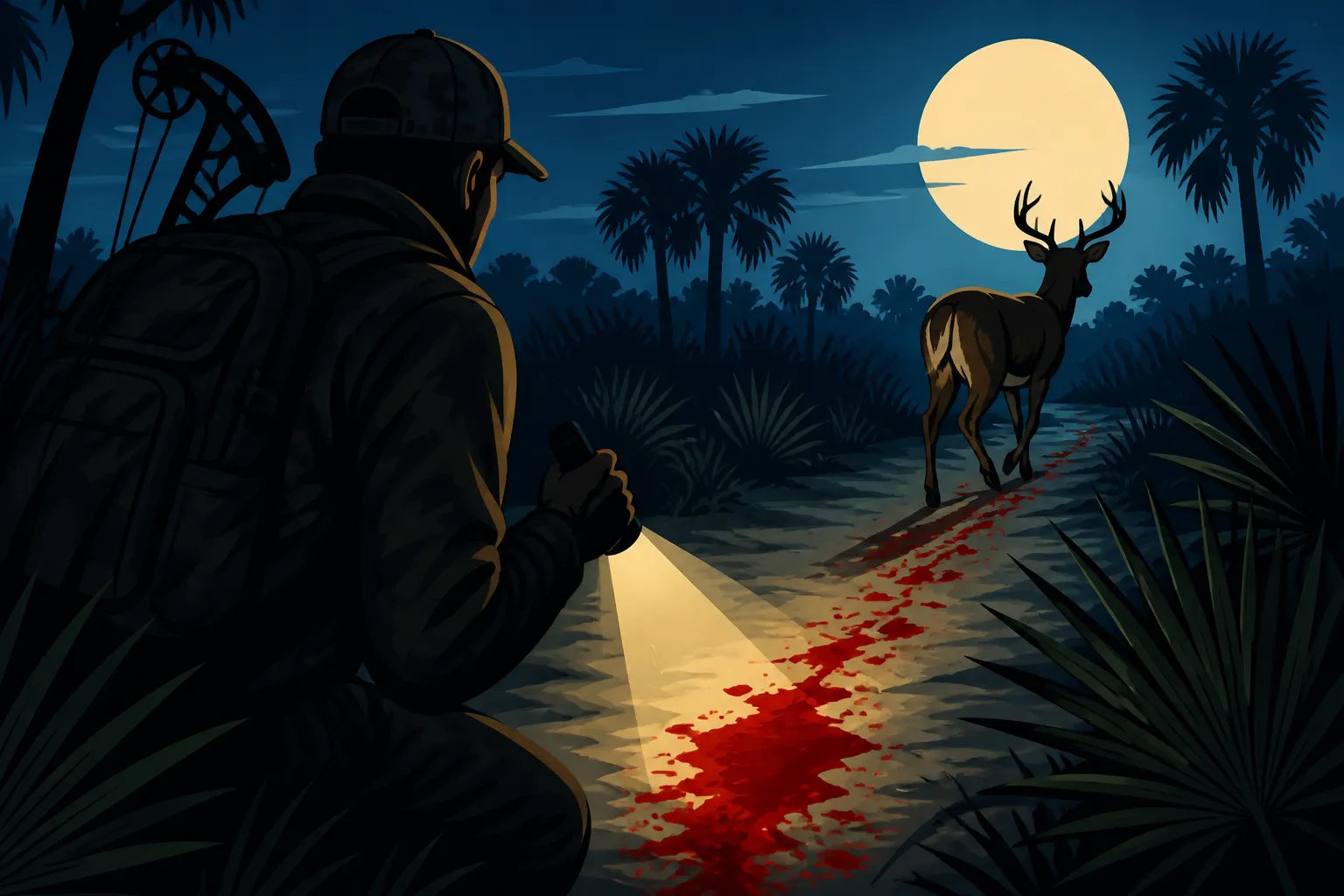
There are few moments in a hunter's life more gut-wrenching than making what you thought was a good shot, only to find a meager blood trail as twilight fades into darkness. The pit in your stomach is real, the pressure mounts, and the decision of whether to push on or back out becomes a heavy one, especially in Florida's unique and often unforgiving terrain. This guide is here to walk you through the complexities, strategies, and essential tools for blood trailing after dark, helping you make the best possible choice for a successful and ethical recovery.
Understanding the Challenges of Night Trailing in Florida
Blood trailing in Florida during daylight hours presents its own set of difficulties, but when the sun dips below the horizon, those challenges multiply exponentially. Our dense vegetation, often sandy or watery soils, and abundance of nocturnal wildlife can turn what seems like a straightforward task into a serious ordeal.
Reduced Visibility and Terrain Obstacles
The most obvious hurdle when trailing after dark is, of course, the lack of light. Even with a powerful flashlight, the subtle nuances of a blood trail — a tiny speck on a leaf, a faint smear on a blade of grass, or a faint track in soft earth — become incredibly hard to discern. What might be obvious in the midday sun can easily be missed in the beam of a headlamp, leading you astray or forcing you to backtrack.
And then there’s the terrain. Florida isn't all flat, open fields, though we certainly have our share of those. We're talking about navigating thick palmetto heads where deer vanish into an impenetrable wall of green, or cypress swamps where water and mud obscure any ground sign instantly. Imagine trying to follow a faint blood trail through a dense oak hammock where leaves litter the forest floor, or across sandy pine flatwoods where deer tracks are barely impressions. Even a "good" trail can become a nightmare when you're tripping over unseen roots, wading through unexpected puddles, or pushing through thorny scrub. It’s not just about finding the blood; it’s about getting to it safely and efficiently. If you've spent any time Hunting a Cypress Head at Last Light, you know exactly what I mean about navigating tricky terrain in low light.
The Urgency Versus Patience Dilemma
The emotional turmoil that accompanies a wounded animal is intense. Every fiber of your being screams to find that animal now. You visualize it suffering, or worse, becoming coyote bait. This urgency, while completely understandable, can sometimes lead to poor decisions. Pushing a marginally hit animal, especially a deer, prematurely in the dark often results in it running much further, making an already difficult recovery nearly impossible.
On the other hand, factors like shot placement, current weather conditions, and proximity to property lines demand immediate consideration. If you suspect a solid double-lung or heart shot and the blood trail is strong, pressing on might be the right call to ensure a quick recovery and prevent spoilage in our often-warm climate. However, a gut shot deer, or one hit in a limb, needs time to bed down and stiffen up. Pushing it relentlessly will only make it run until it's miles away, deep in someone else's property, or lost in impenetrable cover. Knowing when to back off and give the animal space is an act of ethical hunting, even if it feels agonizing. It’s a delicate balance, and one that requires a cool head and an honest assessment of the situation.
Essential Tools and Techniques for Night Trailing
You wouldn't head into a major plumbing repair without the right wrench, right? Blood trailing, especially after dark, is no different. Having the right gear isn't just a convenience; it's a necessity that can drastically increase your chances of success and safety.
Lighting the Way: Flashlights and Headlamps
Forget your grandpa's old dim lantern; modern lighting technology is a game-changer for night trailing. You need powerful LED flashlights with a strong, focused beam. Brands like Streamlight or Fenix offer excellent options that cut through the darkness. A good flashlight allows you to scan ahead, locate distant signs, and really scrutinize the ground at your feet.
But a powerful handheld flashlight still ties up one hand, which can be a real problem when you're trying to push through brush, hold onto flagging tape, or steady yourself. This is where a quality headlamp becomes indispensable. It frees up both hands, directing light wherever your head turns, which is critical for maintaining focus on the trail while navigating obstacles. Look for headlamps with multiple brightness settings and a long battery life. Some hunters even prefer models with red or green light filters, believing these colors make blood stand out more against foliage, though this can be subjective and depends on the specific light spectrum and ambient conditions. Always, always carry spare batteries or a portable power bank, because a dead light in the middle of a Florida swamp is a nightmare you don't want to experience.
Enhancing Visibility: Blood Tracking Lights and Sprays
Beyond standard white light, there are specialized tools designed to make blood "pop" in low light. UV (ultraviolet) blood tracking lights are popular, as they cause certain components in blood to fluoresce, appearing brighter or differently colored than the surrounding environment. However, their effectiveness can vary greatly depending on the type of blood, the surface it's on, and even the specific UV spectrum of the light. Some leaves and moss can also fluoresce under UV, creating false positives.
More reliable for many hunters are specific spectrum LED lights, like those that emit a certain green or red hue, which are designed to enhance the contrast of blood. It's often worth trying a few different types to see what works best for your eyes and the typical conditions you hunt in.
Blood-enhancing sprays, such as Lumenol or Tarsyl, are another option. These chemicals react with hemoglobin in blood, causing it to glow or change color. While they can be incredibly effective on even the smallest or oldest specks of blood, they come with a few caveats. They can be expensive, they can wash away with rain or heavy dew, and applying them can be time-consuming if the trail is long. You also need to be careful not to contaminate potential evidence if you’re in a CWD surveillance zone, though for most recovery scenarios, these are fine. I've found them to be most useful when you're really struggling to find the next sign after a long dry spell. When you're using tools like these, marking your last confirmed blood sign on a robust hunting app like GoHunt can make all the difference, providing a precise GPS reference point for your spray application and ensuring you don't lose your place.
Marking the Trail and Navigational Aids
Following a blood trail, especially a sparse one, requires meticulous attention to detail and a systematic approach to marking your progress. This isn't just about knowing where you've been; it's about being able to return to your last confirmed sign if you lose the trail, and providing a clear path for others if you need help.
Flagging tape, brightly colored and easily tied to branches, is a classic choice. Some hunters prefer toilet paper because it's biodegradable, though it can tear in the wind or rain. Reflective tacks or glow sticks can also be useful for marking longer stretches or points where the trail changes direction significantly. The key is to mark every single blood sign you find, even if it's just a tiny droplet. This creates a visual breadcrumb trail that keeps you on course.
Alongside physical markers, digital navigation is paramount. A reliable GPS device or a hunting app on your smartphone, like GoHunt, is an absolute must. As you find each significant blood sign, drop a waypoint. This creates an electronic record of the trail, allowing you to see your progress, anticipate turns, and easily return to your last mark if you get disoriented. The beauty of apps like GoHunt is that they often work in offline mode, so even if cell service drops out deep in the woods, you still have your map and waypoints. This functionality is invaluable when you're Scouting Florida Public Land Before Season and marking potential deer crossings, and just as crucial when you're trying to recover an animal in the dark.
Safety Considerations and Best Practices
The thrill of the hunt and the urgency of a recovery can sometimes overshadow common sense, but safety should always be your top priority, especially when you're out in the Florida wilderness after dark.
Partner Up and Communicate
Never, ever blood trail alone at night in Florida, especially if you're in unfamiliar territory or dealing with potentially dangerous wildlife. The risks are too high. Tripping and injuring yourself, getting disoriented, or encountering an aggressive hog or even a bear in the dark can turn a stressful situation into a life-threatening one.
Bring at least one, preferably two, hunting partners. More eyes mean a better chance of finding the trail, and more hands make navigating difficult terrain easier. Establish clear communication methods before you start. If cell service is spotty, bring two-way radios. Agree on hand signals or whistles for when someone finds blood, needs a break, or encounters a hazard. A team approach not only improves safety but also drastically increases your chances of a successful recovery. It's just smart practice, whether you're Deer Drives With Three or Four Hunters or following a blood trail.
Respecting Property Lines and Wildlife
Florida's landscape is a mosaic of public and private lands, and while recovering a wounded animal is an ethical obligation, it doesn't grant you carte blanche to trespass. Before you even head out to trail, know your property boundaries. If you suspect the animal has crossed onto private land, the very first step is to contact the landowner and secure permission. This might feel like an awkward conversation, especially late at night, but it's legally and ethically paramount. Showing respect for private property can often make the difference between a retrieved animal and a lost one, or worse, a legal entanglement. Remember that Florida's trespass laws are clear, and you generally need written permission to enter private land for hunting or recovery.
Beyond property lines, remember you're entering the nighttime world of Florida's wildlife. Feral hogs are abundant and can be aggressive, especially if startled in the dark. While you probably won't encounter a Florida black bear in every patch of woods, they are present in many areas. And of course, rattlesnakes and cottonmouths are nocturnal and frequently active after dark, posing a significant risk if you're not paying attention to where you step or place your hands. Carry a sidearm if legally permitted and you're comfortable doing so, and always be aware of your surroundings. The goal is to recover your animal safely, not to become part of the food chain.
Making the Tough Call: When to Push On, When to Back Off
This is arguably the most critical decision point in any blood trailing scenario. It’s the difference between a successful, ethical recovery and a long, frustrating search that often ends in failure.
Assessing the Shot and Initial Sign
The moment you find the first blood, take a deep breath and become a detective. The color, consistency, and location of the blood can tell you a lot about where the animal was hit and how quickly you need to act.
| Blood Sign | Likely Shot Placement | Implications for Trailing |
|---|---|---|
| Bright Red, Frothy | Lungs (aerated blood) | Good, often quick kill. Push on confidently. |
| Dark Red, Clots | Heart, Major Artery, Liver | Very good, usually quick kill. Push on confidently. |
| Watery Pink, Bubbles | Muscle, Non-lethal | Not a lethal hit, likely minor. Animal may survive. Give space or back off. |
| Dark Red, Chunks of Digested Matter, Foul Odor | Gut, Stomach | Non-lethal in short term, but fatal. Immediate retreat needed. Wait 8-12+ hours. |
| Light Red, Minimal, Sporadic | Limb, Graze | Non-lethal, animal will likely recover. Back off, or make a very slow, cautious trail. |
If you have bright red, frothy blood, or dark red blood with significant clots, particularly if it's consistent and plentiful, you likely have a solid lung or heart shot. In these cases, the animal is likely down within a short distance, and pressing on, carefully and methodically, is often the best choice to ensure a quick, ethical recovery. Time is of the essence, especially in hot Florida weather, to preserve the meat. Understanding Florida Deer Age Structure and how it might impact deer resilience can also play into your decision.
However, if you find dark blood with bits of digested matter, or a faint, watery trail, you're likely dealing with a gut shot or a muscle hit. This is where patience becomes your greatest virtue.
The Overnight Wait Strategy
For a gut-shot animal, pushing it immediately is almost always the wrong move. A deer hit in the gut will often travel a short distance, bed down, and then expire over several hours. If you push it, the adrenaline will kick in, and it will run further, potentially for miles, making recovery exceedingly difficult or even impossible. This is the moment to back out. Mark your last confirmed blood sign with a bright, easily visible marker and a waypoint on your GoHunt app. Note the exact time and conditions. Then, quietly and carefully, leave the area.
Returning at first light, approximately 8-12 hours after the shot, gives the animal time to succumb to its wounds and stiffen up. When you return, approach the marked spot cautiously, expecting to find the animal nearby. This strategy significantly increases your chances of finding a deer that has expired and settled, rather than one that you've pushed into the next county.
This decision also has implications for the quality of the meat. While no one wants an animal to suffer, a prolonged chase of a gut-shot deer can introduce more adrenaline and stress hormones into the meat, potentially affecting its flavor. Furthermore, rapid retrieval is critical for Field Dressing a Deer in Hot Weather to prevent spoilage. It's a tough call, but often, the overnight wait is the most ethical and practical path to a successful recovery.
Disclaimer
The information provided in this guide is for general informational purposes only and does not constitute professional advice. Hunting regulations and safety protocols can change, and individual hunting situations vary. Always consult the latest regulations from the Florida Fish and Wildlife Conservation Commission (FWC), local authorities, and qualified professionals before engaging in any hunting activities. Always prioritize safety, ethical hunting practices, and responsible wildlife management.