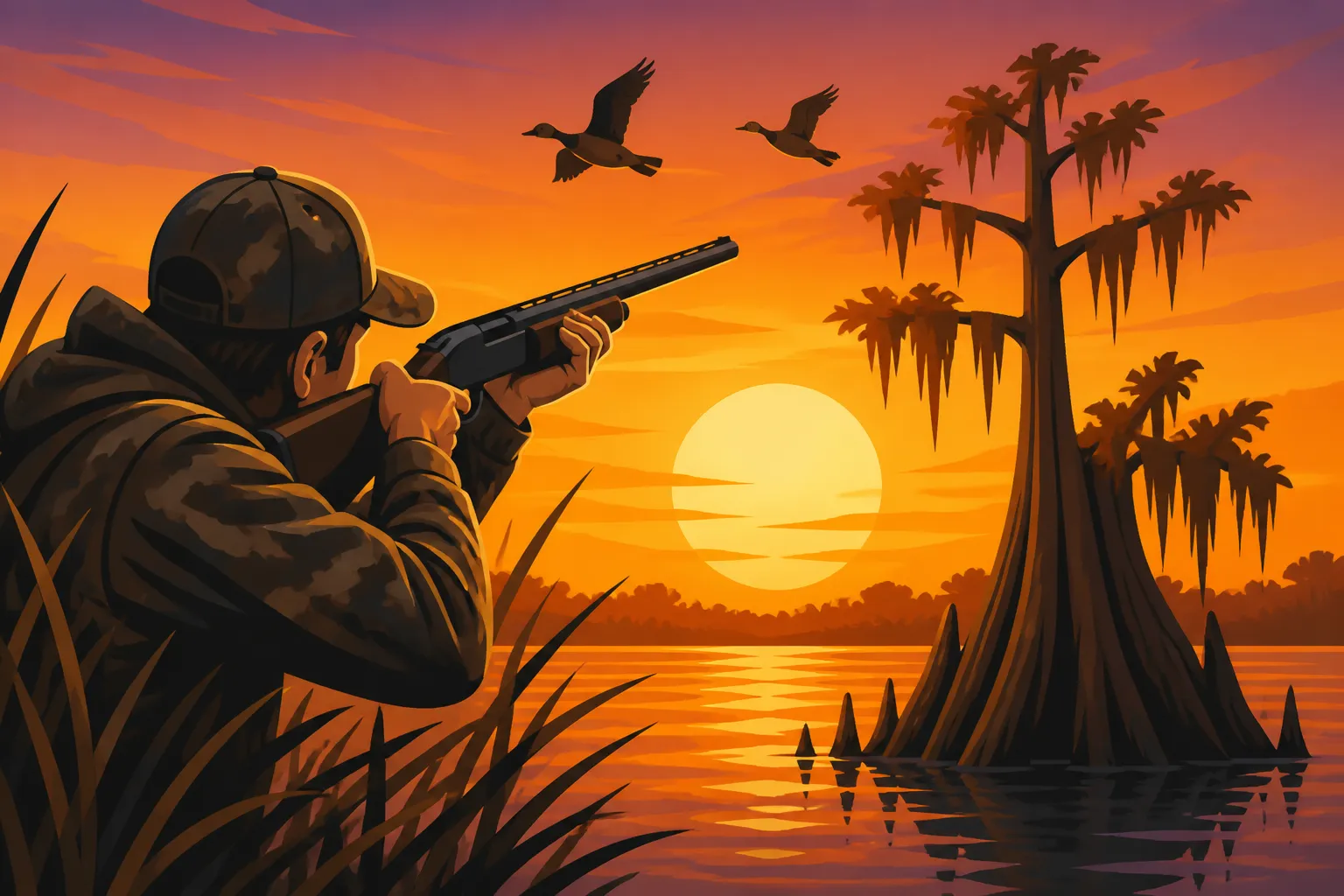
Hunting a Cypress Head at Last Light
Hunting deer in Florida can be incredibly challenging, especially when you’re trying to pinpoint where a mature buck might emerge from the thick cover as daylight fades. Many hunters get frustrated with the vast, often featureless landscape, making it tough to predict deer movement. This guide is all about demystifying one of Florida’s most promising late-day hotspots: the humble, yet highly effective, cypress head. We'll dive deep into how to find them, scout them, set up an ambush, and ultimately capitalize on those crucial minutes before dark.
Why Cypress Heads Are Evening Hotspots in Florida
There's something almost magical about the way a Florida cypress head draws deer as the day begins to wind down. In a state dominated by sprawling palmetto flats, pine plantations, and open pastures, these isolated islands of cypress trees offer a unique combination of resources that deer simply can't resist. Understanding why they're so attractive at last light is the first step to hunting them successfully.
Natural Cover and Security
Cypress heads provide an incredible amount of dense, year-round cover. The intricate network of cypress knees, tangled vines, and often standing water makes them incredibly difficult for predators—two-legged or four-legged—to penetrate easily. For a deer that has spent most of the daylight hours bedded down, often in adjacent palmetto thickets or pine stands, a cypress head offers a feeling of security unmatched by more open terrain. As the shadows lengthen, deer feel more confident moving from these secure bedding areas into the relative openness to feed or stage before a night of activity. This isn't just theory; watch any deer, and you'll see how instinctively they gravitate towards cover when feeling vulnerable, and last light is a prime vulnerability window.
Water and Food Sources
Many cypress heads, particularly those found in flatwoods, offer consistent water sources, even during drier parts of the year. While Florida is generally wet, localized droughts can make standing water a premium, and deer will often travel to reliable sources. But it's not just about drinking water; the moist environment within and around cypress heads often supports different forage than the surrounding uplands. Tender browse, aquatic plants, and sometimes even acorns from neighboring oaks that have dropped into the wetter edges can be highly attractive. For instance, in areas where you might be Hunting Florida Cypress Swamp Edges, these transition zones are absolutely vital. Deer will often browse along the edges of a cypress head, nibbling on new shoots and enjoying the cooler, damper air before moving out into fields or feeder trails.
Crucial Travel Corridors
Think of a cypress head as a natural funnel or intersection in an otherwise open landscape. Deer often use the thicker edges of these heads as travel corridors, moving between bedding areas and evening feeding locations. They provide concealment, making deer feel safe as they move from one point to another. If you can identify a series of cypress heads that create a natural travel route, especially if one sits between a known bedding area and a food source, you've found a goldmine. This is especially true on large public tracts, such as many of the state'managed areas where deer population numbers are often higher in these pockets of dense cover. Bucks, in particular, will often skirt the edges, scent-checking for does or other bucks, making them prime spots for intercepting movement.
Scouting for the Perfect Last Light Ambush
You can't just pick any cypress head and expect success. Effective scouting is absolutely critical, and it takes more than just a quick walk-through. You're looking for subtle clues that tell you deer are not just using the area, but specifically using it at last light. This phase requires patience, attention to detail, and often, some modern tools.
Pinpointing Active Cypress Heads
First, hit the maps. Online mapping tools like GoHunt are invaluable for identifying cypress heads and understanding the surrounding landscape. Look for patterns: are there several heads connected by thinner strips of cover? Is one head strategically located near a large food plot or a field? Once you've got some candidates, it’s time for boots on the ground. Don't be afraid to put in the legwork weeks or even months before the season. Look for fresh tracks, especially larger ones, entering and exiting the head. Pay close attention to trails that appear more heavily used as they lead into or out of the thick cover. Reading Florida Mud for Fresh Deer Movement can tell you not just if deer are present, but how recently they've been there and in what numbers. Also, check for rubs on smaller trees and saplings around the edges, or fresh scrapes, indicating a buck has been actively marking his territory, often during those low-light hours.
Understanding Entry and Exit Routes
This is arguably the most critical part of scouting a cypress head for a last-light hunt. Deer, especially mature bucks, are creatures of habit, but also incredibly wary. They won't just waltz out into the open. Look for subtle deer trails that parallel the edge of the head, or defined paths that lead directly into a prime feeding area. You need to identify their preferred route, not just a route you think they should use. Where are they likely to emerge without feeling exposed? Where do they vanish back into the thicket once it's too dark to see? These specific spots are your ambush points. Also, consider your entry and exit routes. You want to get to your stand or blind silently, without alerting any deer, and just as importantly, be able to leave without spooking them out of the area for future hunts. A noisy, rushed exit can undo all your hard work. Always aim for a route that keeps you downwind and out of sight as much as possible, possibly using ditches, natural depressions, or denser cover.
The Role of Wind and Thermals
In Florida's relatively flat terrain, understanding wind and thermals is paramount, especially at last light. As the sun begins to set, the earth cools, and thermals often shift from rising air during the day to falling air currents. This means that scent, which might have been carried upward during the day, will now drop and settle, or flow downhill if there's any subtle elevation change. Even a slight drop in elevation can create a "thermal drain" that carries your scent away. You might be accustomed to dealing with Wind and Thermals in Flat Florida Terrain in other scenarios, but cypress heads have their own microclimates. The dense cover can sometimes create swirling winds or block airflow, making it tricky. Always check the forecast, but also be prepared to adjust on the fly. A small portable wind checker is your best friend. A slight breeze from the wrong direction could alert every deer within 200 yards, ruining your evening.
Setting Up Your Ambush for Success
Once you've done your homework and identified a promising cypress head, the next step is to set up your position effectively. This isn't just about picking a tree; it's about making yourself invisible and maximizing your shooting opportunities during those precious twilight minutes.
Stand Placement and Concealment
Your stand or blind placement is crucial. For tree stands, look for a tree that offers good cover from behind, breaking up your outline, but still allows for clear shooting lanes into the anticipated deer trails. Ideally, you want to be able to see the deer before they see you. Consider the sun's position at last light – you don't want to be silhouetted against a bright sky. For ground blinds, which are often excellent choices in Florida's cypress and palmetto environments, make sure it’s well brushed in. Don't just plop it down. Use natural vegetation to break up its shape. Dragging in palmetto fronds, small branches, and even Spanish moss can make a world of difference. Think about where the deer will likely be looking. You can gain more insight into effective strategies by exploring Brushing In a Blind on a Field Edge, applying similar principles to the cypress head periphery. When placing a blind, also consider height. Sometimes, a slightly elevated platform ground blind offers a better view over low brush.
Optimal Shooting Lanes
Fading light makes shooting difficult, so clear shooting lanes are non-negotiable. With archery equipment, this means pruning branches carefully so you have unobstructed shots at various distances along the deer's likely travel path. For firearms, while your range is greater, you still want to avoid deflecting branches. Visualize the deer moving through the area, identify where you'd want them to stop, and make sure those spots are clear. It's often better to have a few perfect lanes than many obstructed ones. If you're hunting with a crossbow, remember that while they offer a bit more flexibility, precise lane clearing is still essential, especially when dealing with the dense vegetation commonly found around cypress heads. Crossbow Hunting During Florida's Archery Season details equipment rules and best practices that are relevant here. Use a rangefinder to mark distances to key landmarks (a specific cypress knee, a stump, a distinct bush) so that when a deer appears, you can quickly assess the range without fumbling.
Managing Noise and Scent at the Last Minute
Deer have an incredible sense of smell and hearing. Every bit of noise and scent you create works against you. This means quiet clothing, silent entry, and meticulous scent control. Use scent-eliminating sprays on your clothes and gear. Pay attention to your breath, and consider chewing scent-reducing gum. For noise, make sure your stand doesn't creak, your bow doesn't clank, and your clothing doesn't rustle loudly. Even small things, like an improperly secured thermos or rattling calls, can ruin your hunt. If you're using a game camera to monitor activity (ensure you're following Trail Camera Rules on Florida Public Land), place it well in advance and check it sparingly to avoid disturbing the area. The less intrusion, the more comfortable the deer will be.
Executing Your Last Light Cypress Head Hunt
You've scouted, you've set up, now it's time for the moment of truth. Hunting a cypress head at last light demands a specific mindset and execution to seal the deal.
Patience and Quiet Movement
The final hour of daylight is often when deer are most active, but they rarely burst into the open. They'll typically move cautiously, stopping, looking, listening. Your patience must outlast theirs. Get into your stand or blind well before the prime time—at least 2-3 hours before sunset. This gives the woods time to settle down after your entry. Once you're in place, become part of the environment. Minimize movement. Use slow, deliberate motions if you absolutely must shift position. Avoid looking at your phone or making any unnecessary noise. Every rustle or unnatural sound sends a warning. Remember, the deer are likely watching and listening long before you see them.
Utilizing Low-Light Optics
As the light fades, quality optics become your best friend. A good pair of binoculars (10×42 or 8×42) can help you pick out details in the shadows that the naked eye would miss. A high-quality scope on your rifle, with a large objective lens, will gather more light and give you a clearer picture when it matters most. Practice with your equipment in low-light conditions before the hunt so you know its capabilities and limitations. If you're bowhunting, consider a lighted pin on your sight, but always check local regulations as some WMA rules might apply differently to such devices. Don't just assume your gear will perform; test it. Those last 15-20 minutes can be the most productive, but also the most challenging for visibility.
Critical Shot Placement and Tracking
When a deer finally steps out, you've got to make it count. In fading light, target acquisition can be slower, and judging distances harder. Take a deep breath, verify your target, and make sure you have a clear, ethical shot. Aim for the vitals. If you feel at all unsure about the shot, it's better to let the deer walk. An injured deer in thick Florida cypress at last light is a nightmare scenario. If you do take a shot, mentally mark the spot where the deer was standing and its direction of travel. Then, stay put for at least 30 minutes, sometimes an hour. This allows the deer to bed down and expire. Don't rush in. After the waiting period, begin your track cautiously. Even if you think it was a perfect shot, always assume it wasn't and look for blood. Blood Trailing After Dark in Florida is a skill every Florida hunter needs, and it's especially vital when hunting these dense areas. A powerful headlamp and a tracking buddy can make a world of difference.
| Gear Essential for Last-Light Cypress Head Hunting | Importance | Notes |
|---|---|---|
| GoHunt App (Offline Maps) | High | Essential for scouting and navigation, even without cell service. |
| Quality Binoculars (8×42 or 10×42) | High | Spot deer in shadows, identify details. |
| Rangefinder | High | Confirm distances quickly in fading light. |
| Wind Checker Powder | High | Verify wind direction and thermals before and during the hunt. |
| Powerful Headlamp | High | Crucial for tracking after dark. Don't skimp on lumens or battery life. |
| Scent Control Spray | Medium | Reduce human odor; apply to clothes and gear. |
| Bug Spray (e.g., Permethrin-treated clothing) | High | Mosquitos and gnats are brutal at last light in humid areas. |
| Quiet Clothing | High | Avoid rustling fabric; layers for temperature changes. |
| Snacks/Water | Low | For comfort, but keep packaging silent. |
| Game Camera (pre-season) | Medium | Confirm deer activity and patterns before the hunt. |
Recovery in Thick Cover
Let's be real: recovering a deer in a Florida cypress head, especially after dark, is a monumental task. The standing water, thick brush, and uneven ground make it incredibly difficult. This is where patience and proper planning truly pay off. If you hit a deer at last light, Recovering a Deer From a Cypress Slough requires a systematic approach. Take your time. Mark the last spot you saw the deer. Look for blood, broken branches, or disturbed ground. If you're confident in your shot and found good blood, track slowly. If the blood trail is sparse or you're unsure, back out and return at first light with more help. A deer left overnight in cooler temperatures has a much higher chance of being recovered than one pushed by an impatient hunter into an even thicker, darker section of the swamp. Bring gloves, plenty of water, and ideally, another person who can help carry the deer out of the challenging terrain. It's often helpful to have a small boat or a game cart if the terrain allows, but in many cypress heads, it will simply be brute force.
Hunting a cypress head at last light in Florida offers some of the most exciting and rewarding opportunities for deer hunters. It demands diligent scouting, meticulous setup, and disciplined execution, but the rewards of outsmarting a wary Florida buck in its natural element are truly unmatched. Take the time to learn these unique environments, and you might just find your new favorite spot for those golden hour opportunities.
Disclaimer
This guide is intended for informational purposes only and does not supersede or replace official regulations. All hunters are responsible for knowing and adhering to all current Florida Fish and Wildlife Conservation Commission (FWC) hunting regulations, licensing requirements, and WMA-specific rules. Hunting involves inherent risks; always prioritize safety.