Hunting a Green Field Planted for Deer
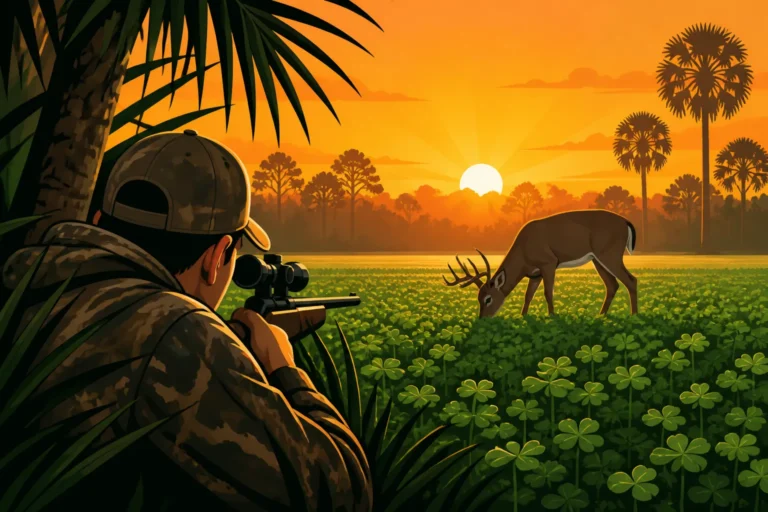
The excitement of seeing a pristine green field, lush and inviting, can sometimes overshadow the complexities of actually hunting it successfully here in Florida. Many hunters, especially those new to our unique ecosystems, find themselves frustrated when deer seem to avoid these tempting plots during legal shooting hours, or worse, disappear the moment they step foot near them. This guide aims to break down the art and science of hunting a green field planted for deer, offering practical, Florida-specific strategies to help you fill your tag.
Understanding Florida's Green Fields and Deer Behavior
Green fields, often referred to as food plots, are powerful magnets for deer. They concentrate deer movement and provide essential nutrition, but knowing how and when deer use them is critical for a successful hunt.
Why Deer Are Drawn to Green Fields in Florida
Florida's natural landscape, while abundant, can sometimes present challenges for deer in terms of consistent, high-quality forage, especially outside of peak mast years. This is where a well-maintained green field truly shines. Deer are constantly looking for the easiest, most nutritious meal, and a food plot provides just that. On private lands, you'll often see plots of clover, rye, oats, wheat, or various peas, all chosen for their palatability and nutritional value. These plantings offer a concentrated energy source that is often richer and more readily available than the native browse in the surrounding pine flatwoods, palmetto thickets, or cypress swamps.
Think about it from a deer's perspective: why spend hours browsing through sparse palmetto scrub, expending precious energy, when a lush field of clover is just a short, safe walk away? This nutritional draw is especially pronounced during certain times of the year, like late summer when natural browse might be less nutritious, or in the colder months when deer need more calories to maintain body heat, even in our mild Florida winters. While deer on public lands might rely more heavily on natural food sources, hunters with access to private land can dramatically increase their chances by understanding this fundamental draw.
Reading Deer Movement Patterns Around Fields
Observing how deer enter, exit, and utilize a green field is paramount to intercepting them. Deer rarely just materialize in the middle of a plot. Instead, they typically follow established trails and cover lines. Look for well-worn paths leading from bedding areas in thick cover—whether that's a dense cypress head or a secluded palmetto patch—into the field. These trails often funnel through pinch points, like narrow strips of woods between two open areas, or along the edges of thicker vegetation.
The time of day is another crucial factor. While deer might browse a field in the middle of the night, your best chances for encountering them during legal hunting hours are usually at dawn and dusk. Early morning hunts might catch deer lingering from their nocturnal feeding, heading back to bed. Evening hunts are classic, as deer emerge from cover to feed before settling down for the night. However, pay close attention to wind and thermals, which behave uniquely in flat Florida terrain. Even a slight breeze can carry your scent far across an open field, ruining your hunt before it begins. An invaluable tool like GoHunt can help you analyze wind patterns and identify optimal stand locations based on forecasted conditions. Understanding when the Florida rut peaks by zone can also help predict increased daytime movement around these food sources, as bucks will be cruising for does.
Strategic Setup for Hunting Green Fields
Once you understand why and how deer use a green field, your next step is to strategize your setup to maximize your chances without spooking game.
Choosing the Right Stand or Blind Location
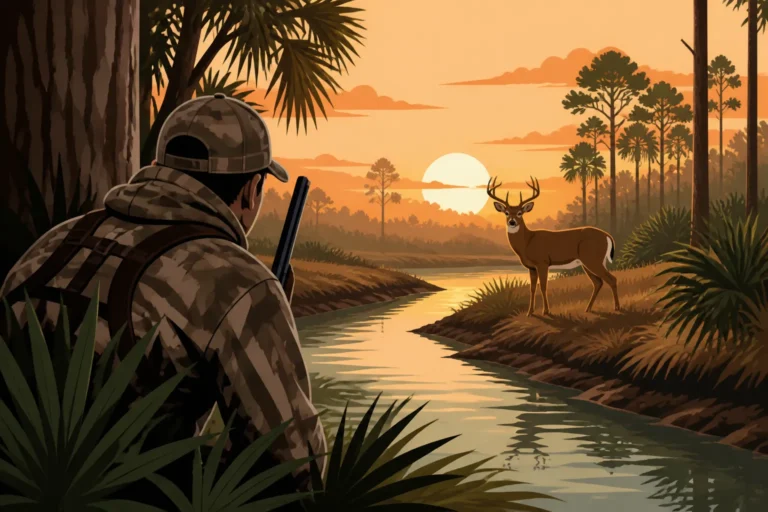
Selecting the perfect spot for your stand or blind near a green field is arguably the most critical decision you'll make. Your primary concern should always be the wind. Always, always, always hunt with the wind in your favor, blowing your scent away from where you expect deer to approach or be feeding. Beyond wind, consider the sun's position, especially during morning and evening hunts; you don't want to be silhouetted or staring directly into the sun. Natural cover is also key. Whether you're in an elevated treestand or a ground blind, you need to blend into your surroundings.
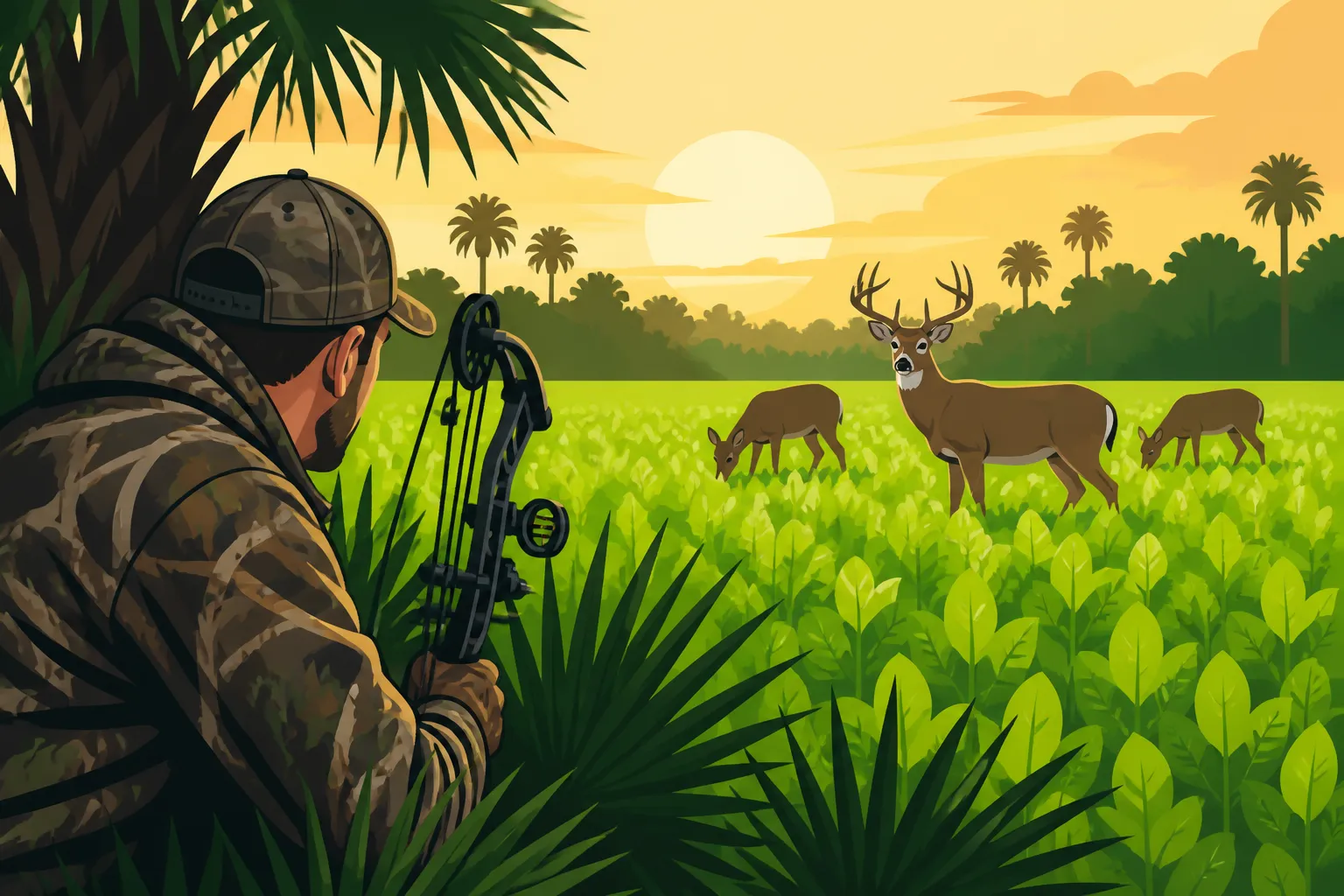
For a ground blind, placing it along a field edge where thicker vegetation meets the open plot is ideal. You can use native palmettos, oaks, or cypress trees as a natural backdrop. Remember, the effectiveness of using a ground blind on Florida public land, or any land for that matter, is greatly enhanced by proper concealment. Take the time to brush in a blind on a field edge, breaking up its outline with branches, palmetto fronds, and other local vegetation. Don't be afraid to put in the work; a well-camouflaged blind can mean the difference between a successful hunt and a bust. Elevated stands offer a wider field of view and help disperse your scent, making them a strong choice if tall, sturdy trees are available on the field's perimeter.
Maximizing Your Approach and Entry/Exit
Getting to and from your stand or blind without alerting deer is just as important as the setup itself. Deer are incredibly sensitive to unusual sounds and movements, especially in the relatively open environment around a food plot. Plan your entry and exit routes meticulously. Ideally, your path should keep you hidden by thick cover, natural terrain features, or low spots. Avoid walking directly across the field or along its most active edges, especially during prime feeding times.
Consider using a ditch, a fencerow, or the back side of a tree line to shield your approach. If you're hunting an evening sit, try to enter your stand a couple of hours before prime movement begins, allowing the woods to settle down after your disturbance. Similarly, for a morning hunt, plan to arrive well before first light, so you're settled and quiet before deer start moving. A common mistake is leaving too early after a morning hunt or entering too late for an evening hunt, often bumping deer either already in the field or on their way to it. Thinking about routes through a Florida food plot and how to minimize your footprint is a game-changer.
| Feature | Elevated Treestand | Ground Blind |
|---|---|---|
| Pros | Better visibility; Scent disperses higher; Out of sight lines. | Easy to set up; Offers full concealment; Protects from elements. |
| Cons | Limited to suitable trees; Can be noisy to climb; Less flexible for wind shifts. | Limited visibility (can be tunnel vision); Scent is closer to ground; Needs heavy brushing-in. |
| Ideal Use | Field edges with tall, sturdy trees; Overlooking large plots. | Areas with dense low cover (palmetto heads, brush piles); Close to deer trails entering field. |
| Florida Tip | Use climbing sticks for palmetto-free trees. | Blend with native vegetation, such as sabal palms. |
Hunting Tactics and Considerations in Florida Green Fields
Even with a perfect setup, success often hinges on adapting your tactics to the dynamic environment of a green field.
Adapting to Weather and Hunting Pressure
Florida's weather can be a real wildcard, and it profoundly impacts deer activity, especially around food plots. During periods of hot weather sitting strategy in Florida, deer movement is often restricted to the coolest parts of the day – early morning and late evening. You might even find them hitting fields only after dark. Be patient, and don't expect mid-day action when the mercury is soaring. Conversely, hunting deer after a cold front often results in increased activity. Deer, like us, feel the chill and instinctively know they need to pack on calories, making them more likely to visit green fields during daylight hours.
Hunting pressure is another huge factor, particularly on shared private land or larger public areas with small, scattered food plots. If a green field is consistently disturbed, deer will quickly learn to avoid it during daylight. This is where scouting before season truly shines; reading Florida mud for fresh deer movement will tell you if deer are hitting the plot regularly or if they've become nocturnal. If pressure is high, you might need to hunt smarter, focusing on the deer's entry and exit points far from the field itself, or targeting less accessible plots that see fewer hunters.
Utilizing Calls and Decoys
While green fields are often about ambush hunting, calls and decoys can sometimes provide that extra edge, depending on the season and deer behavior. During the rut, rattling and grunting Florida bucks can be effective, especially if you're set up where bucks might be cruising the field edges looking for does. However, consider the open nature of a green field. Unlike the thick cover of an oak hammock where rattling volume in thick Florida scrub might need to be aggressive, in an open field, less is often more. A soft grunt or a few light antler clicks might be all it takes to pique a buck's curiosity without alerting every deer in the county.
Decoys can also work, particularly for a lone doe decoy during the rut to attract a cruising buck, or a buck decoy to challenge another buck. Placement is key: position your decoy so it's visible but not completely exposed, and always be mindful of wind direction relative to your decoy and your position. On a long-range plot, a decoy can sometimes pull a wary deer that much closer, giving you a better shot. For a robust scouting strategy that includes optimal times for calling based on deer activity, services like GoHunt offer invaluable data layers that can inform your decisions.
Post-Shot Strategy and Recovery
You've made a good shot, but the hunt isn't over until that deer is recovered. In Florida's unique environment, this phase requires specific considerations.
Tracking in Open Fields and Adjacent Cover
Even with a well-placed shot on a deer in a green field, tracking can sometimes be challenging. Your first step is to mark the exact spot where the deer was standing when you shot, and the precise direction it ran. This visual information is crucial because once you step into the field, everything looks different. Look for immediate signs like blood, disturbed earth, or broken vegetation along the escape route. Tracking a deer in sandy Florida soil might reveal clearer hoof prints or drag marks than in harder ground, but blood can soak in quickly.
If the blood trail is sparse or the deer travels into thick cover, like a nearby cypress slough or dense palmetto, resist the urge to immediately jump on the trail. Back out, give the deer some time (at least 30-60 minutes for a gut shot, or a couple of hours for a suspected liver or leg shot), and then return with a fresh mind and perhaps a tracking partner. Remember, blood trailing after dark in Florida presents its own set of challenges, from mosquitoes to limited visibility, so plan accordingly with good lights. Knowing when to back out and when to push is a learned skill that can prevent pushing a wounded deer further away.
Handling Your Harvest in Florida's Climate
Once you've recovered your deer, the clock starts ticking, especially in Florida's often warm climate. Field dressing a deer in hot weather is a priority. Get the internal organs out as quickly as possible to allow the carcass to cool down internally. This prevents bacterial growth and spoilage. If you're hunting remotely, consider bringing along ice chests with plenty of ice. Some hunters even bring large tarps to protect the deer from direct sun while they work.
After field dressing, transport your deer efficiently. Whether you're dragging a deer out of a palmetto head or using an ATV on approved trails, minimize exposure to heat. Once back at camp or your vehicle, get the deer on ice or to a processor immediately. If you plan to butcher it yourself, ensure you have a clean, cool space to work in. Quick and proper handling ensures that the venison from your hard-earned Florida buck will be delicious and safely consumed.
Disclaimer
Hunting is an inherently dangerous activity. This guide provides general information for educational purposes only and is not a substitute for professional instruction, adherence to all local, state, and federal hunting regulations, or exercising extreme caution in the field. Always prioritize safety, respect wildlife, and understand your local laws before engaging in any hunting activities.