Crossbow Hunting During Florida’s Archery Season
For many hunters, the thought of Florida's archery season conjures images of traditional bowhunters perched silently, drawing a compound or recurve. But what if you prefer or need to use a crossbow? The rules can sometimes feel like a confusing thicket of regulations, leaving many wondering if their preferred equipment is even legal during these specific seasons. This comprehensive guide will untangle the specifics, helping you understand how and when you can legally and successfully hunt with a crossbow in the Sunshine State's archery seasons.
Understanding Florida's Archery Season and Crossbow Inclusion
Florida's hunting seasons are structured to offer various opportunities with different weapon types, and the archery season is a highly anticipated time for many. Traditionally, it's a season focused on primitive weapons, encouraging hunters to get closer to their game. However, over time, the landscape of hunting equipment, and indeed the regulations, have evolved to accommodate a broader range of participants.
General Archery Season Rules and Dates
Florida's archery season typically kicks off in late summer or early fall, varying slightly depending on which of the state's four deer management zones you're hunting in. These zones — A, B, C, and D — dictate the specific opening and closing dates for all deer seasons, including archery. For instance, you might find yourself hunting the Zone A August Opener or perhaps the later Zone D Fall Opener. It's crucial to consult the latest FWC regulations each year, as dates can shift slightly. During this time, the primary legal weapon allowed for deer and wild hog is a bow, which encompasses both vertical bows (compound, recurve, longbow) and, importantly, crossbows. The intent behind the archery season is to provide a challenge through close-range engagement, limiting shot opportunities to what a bow or crossbow can effectively and ethically manage. This early season also often coincides with hotter weather, so proper game care, like prompt field dressing a deer in hot weather, is paramount.
When Crossbows Became Permitted
For a long time, crossbows were relegated to the general gun season or specific special opportunity hunts. However, recognizing the growing popularity of crossbows and their potential to introduce more hunters to the sport, particularly those with physical limitations or those just starting out, Florida changed its regulations. Crossbows are now fully legal for use during the statewide archery season, without requiring a special permit or disability exemption. This change opened up new avenues for hunters, allowing for a longer hunting window with a weapon that offers a unique blend of challenge and accessibility. It's a significant shift that has leveled the playing field for many, meaning hunters don't have to wait for the general gun season to chase deer or hogs if they prefer a crossbow over a traditional bow. This inclusion also simplifies things for those who might prefer a crossbow over a muzzleloader for early-season opportunities.
Legal Requirements for Crossbow Hunters
Just like any other hunting method in Florida, using a crossbow comes with its own set of legal requirements you'll need to understand and adhere to. This isn't just about weapon choice; it's about being a responsible, legal hunter in the state.
Licensing and Permits You'll Need
Before you even step foot in the woods, you need to ensure all your Florida Hunting Licenses and What They Cost are in order. At a minimum, you’ll need a Florida hunting license. For hunting deer, you’ll also need a deer permit. If you plan to hunt on public lands, such as Wildlife Management Areas (WMAs), a Florida WMA Management Area Permit will likely be required in addition to your general hunting license and deer permit. For migratory birds like doves or ducks, you'd also need a Florida Migratory Bird Certification and a federal duck stamp if applicable. These licenses can be purchased online, by phone, or at various license agents across the state. Remember, carrying proof of license on your phone is now generally accepted, but having a physical copy or screenshot for areas without cell service isn't a bad idea. GoHunt's app can often store your license information digitally, making it convenient.
Equipment Specifications and Restrictions
While crossbows are permitted, there are still some specific rules about the equipment itself. For instance, there are no minimum draw weight or arrow speed requirements explicitly stated for crossbows for hunting deer, but ethical hunting dictates using equipment capable of a clean kill. Your bolts must have broadheads with at least two sharpened edges and a minimum width of 7/8 inch. Expanding mechanical broadheads are permitted, provided they meet the minimum width requirement when open. Remember, the use of any device that emits a beam of light (like a laser sight) for aiming purposes is generally prohibited during legal hunting hours for deer and turkey, though some exceptions apply for hog hunting at night with lights in Florida. While there's flexibility with crossbows, adhering to these specific rules ensures you're hunting within the spirit and letter of the law.
Hunter Education and Apprentice Licenses
For new hunters, or those who haven't held a hunting license in another state, Florida Hunter Education Requirements are mandatory. If you were born on or after June 1, 1975, you must complete a state-approved hunter safety course before you can purchase a Florida hunting license, unless you qualify for an exemption. This course covers essential topics like firearm safety, wildlife identification, hunting ethics, and regulations. However, Florida also offers an Apprentice Hunter License option for those who want to try hunting before completing the course. This allows you to hunt under the supervision of a licensed adult (18 years or older) who has already completed hunter education. The mentor must remain within arm's reach while you are actually hunting. This is a fantastic program for getting new hunters, including those interested in crossbow hunting, out into the field with experienced guidance.
Crossbow Hunting Tactics in Florida Terrain
Florida's diverse landscape, from dense palmetto scrub to sprawling pine forests and cypress swamps, presents unique challenges and opportunities for any hunter, and crossbow hunting is no exception. Success often hinges on understanding how to adapt your methods to the specific environment.
Adapting to Thick Cover and Short Shot Distances
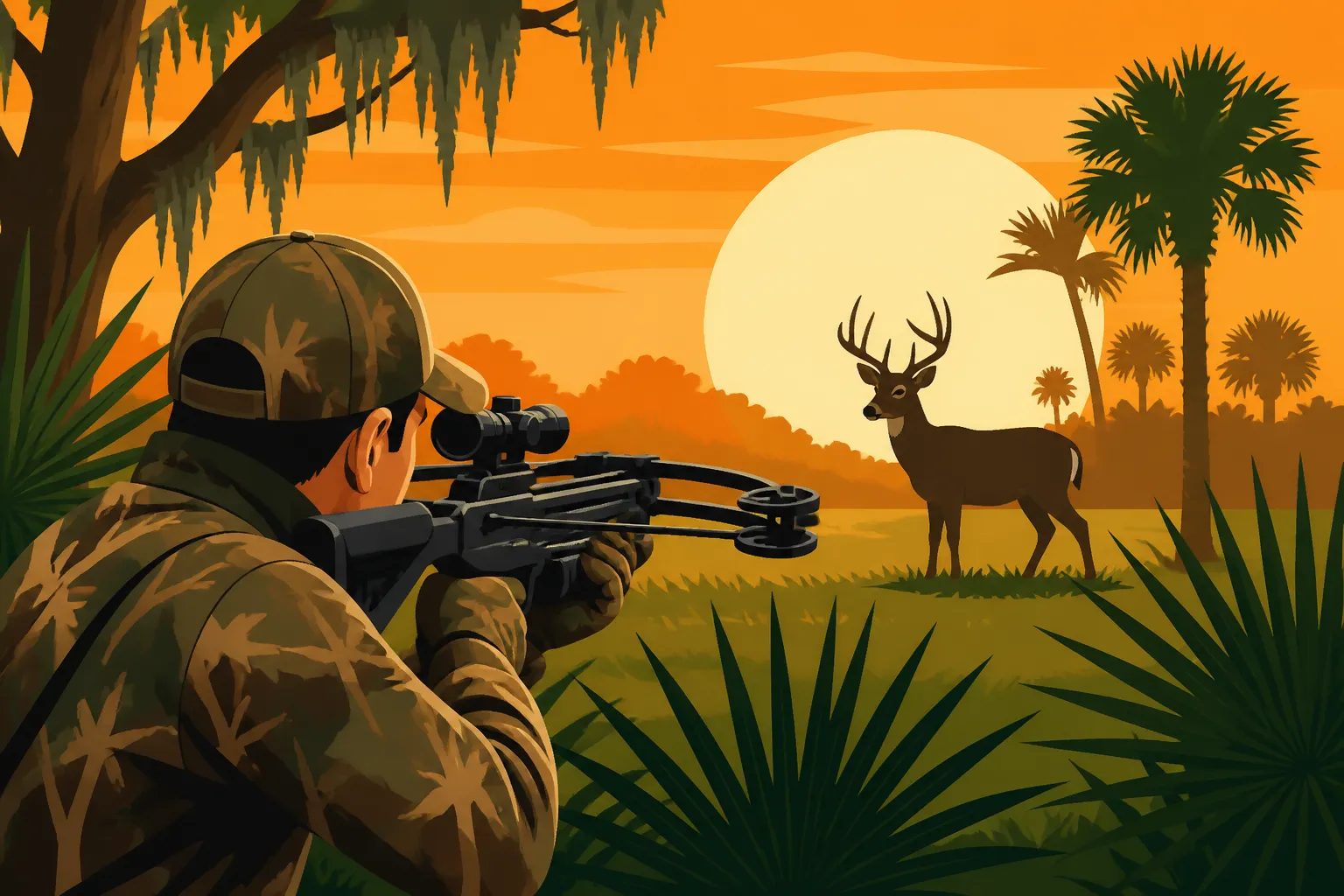
Crossbows shine in Florida's often-thick vegetation. Unlike the wide-open spaces of western states, many prime hunting areas here, such as palmetto flatwoods or cypress swamp edges, involve short visibility and quick shot opportunities. This means you need to get close to your game. When Still-Hunting Florida Palmetto Flatwoods, for example, your maximum shot might only be 20-30 yards. A crossbow, with its inherent stability and faster arrow speed compared to a traditional bow, allows for quick target acquisition and a steady aim in these tight windows. You'll want to practice shooting from various awkward positions – kneeling, sitting, or quickly shouldering the crossbow – to prepare for real-world scenarios. Scouting for natural lanes or clearings where deer might feed or travel is vital. Look for subtle deer trails that funnel through dense cover, giving you a predictable shot opportunity. The more you know about where Florida bucks bed in thick palmetto, the better your chances of intercepting them.
Utilizing Ground Blinds and Treestands
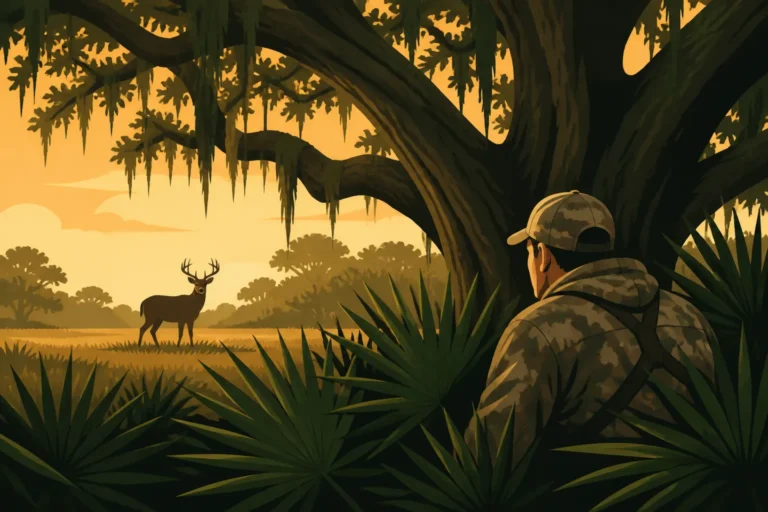
Both ground blinds and treestands are highly effective for crossbow hunting in Florida. Given the often flat terrain and the difficulty of getting above the tree line in some areas, ground blinds are a popular choice. They offer excellent concealment, block human scent to some degree, and provide a stable shooting rest, which can be particularly advantageous for crossbow hunters. Brushing In a Blind on a Field Edge or along a sand road can be incredibly effective, blending it seamlessly into the environment. However, be mindful of wind and thermals in flat Florida terrain, as your scent can travel far. When using a ground blind on Florida public land, ensure it meets any specific WMA regulations regarding temporary structures.
Treestands, on the other hand, elevate you above a deer's primary line of sight and help dissipate your scent. In areas with suitable trees, such as oak hammocks or pine plantations, a treestand can provide a wider field of view and make it easier to spot approaching game. Just remember, treestand rules on Florida public land often specify how long a stand can be left unattended or how it must be marked. Whether you choose a ground blind or treestand, positioning it to allow for clear, unobstructed crossbow shots is crucial. Pre-cutting shooting lanes before the season begins, where allowed, can make a huge difference.
Scouting and Approaching Deer with a Crossbow
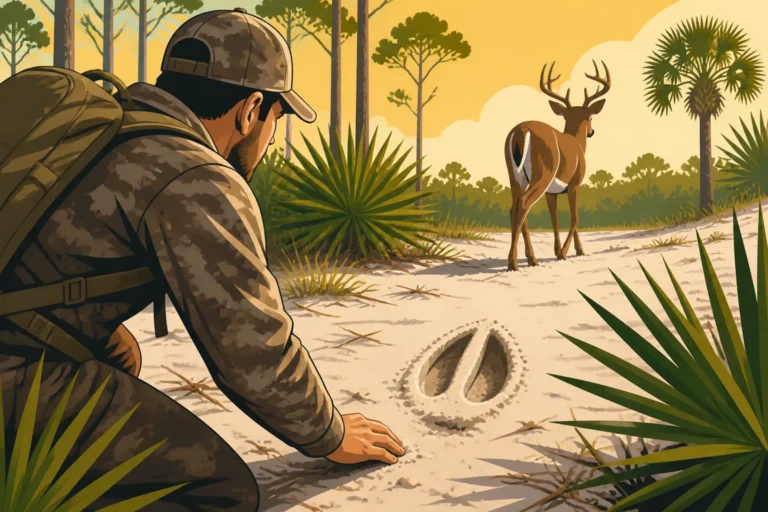
Effective scouting is the bedrock of successful crossbow hunting. Because you need to get relatively close for an ethical shot, understanding deer movement patterns, bedding areas, and feeding habits is paramount. Utilize tools like the FWC App or platforms like GoHunt that provide satellite imagery and topographic maps to identify potential hotspots, funnel points, or where Florida bucks bed in thick palmetto. Look for recent deer sign: tracks in sandy soil, rubs on small trees, and fresh scrape lines along a sand road.
When approaching your hunting spot, move slowly and deliberately, paying close attention to wind direction. Deer have an incredible sense of smell, and even with the best scent control, a sudden shift in wind can betray your presence. Once you're in your stand or blind, patience is key. Crossbow hunting, like traditional bowhunting, often requires more time and stealth than gun hunting. If you're on public land, remember that hunting pressure on Florida public land can make deer wary, so try to find ground others walk past. Use your crossbow's quiet operation to your advantage, allowing you to often make subtle adjustments without alerting nearby animals.
Benefits and Challenges of Crossbow Hunting
Crossbow hunting, while a fantastic way to extend your time in the woods during archery season, isn't without its unique set of pros and cons. Understanding these can help you decide if it's the right choice for your next Florida hunt.
Advantages for Different Hunter Demographics
One of the biggest benefits of crossbow hunting is its accessibility. For hunters who may be new to archery, a crossbow offers an easier learning curve than a compound or recurve bow. It’s often simpler to aim accurately and maintain consistency, building confidence quickly. This makes it an excellent entry point for new hunters, including youth hunters through Florida Mentored Youth Hunting Rules, who might find the strength or technique required for a vertical bow too challenging at first. For older hunters, or those with physical limitations, injuries, or disabilities that prevent them from drawing and holding a traditional bow, crossbows are a game-changer. They allow individuals who might otherwise be sidelined to continue enjoying the archery season, extending their hunting careers. The stability and ease of aim can also be advantageous in thick Florida cover, where quick, accurate shots are often necessary. Crossbows also tend to be less susceptible to string stretch and tuning issues than traditional bows, offering greater reliability in the field.
Common Misconceptions and Ethical Considerations
Despite the clear benefits, crossbows sometimes face misconceptions. One common one is that they make hunting "too easy" or remove the challenge of archery. However, while they may be easier to master than a vertical bow, successful crossbow hunting still demands the same dedication to scouting, patience, scent control, and shot placement required for any ethical hunt. You still need to get close to your quarry, often within 40 yards, to ensure a clean, humane shot. Another misconception revolves around safety. Like any weapon, a crossbow is only as safe as the person operating it. Proper handling, understanding of safety mechanisms, and always pointing the crossbow in a safe direction are paramount.
Ethical considerations are always at the forefront for responsible hunters. Regardless of your weapon choice, the goal is always a quick, humane kill. This means practicing diligently with your crossbow at various distances, understanding your effective range, and only taking shots that you are confident will result in a clean harvest. Never rush a shot, especially when tracking a deer in sandy Florida soil or blood trailing after dark in Florida, where retrieving a wounded animal can be particularly challenging. Familiarize yourself with the specifics of Florida Crossbow Equipment Rules to ensure compliance and ethical practice.
Navigating Public and Private Lands with a Crossbow
Whether you plan to hunt public lands or secure access to private property, understanding the nuances of crossbow use in different Florida hunting areas is vital. Regulations can vary, and knowing them beforehand will save you a headache.
WMA Specific Rules for Crossbow Use
Florida's Wildlife Management Areas (WMAs) offer vast opportunities for public hunting, but they also come with their own specific rules and regulations that sometimes differ from statewide guidelines. While crossbows are generally allowed during the statewide archery season on WMAs, it's absolutely critical to check the specific WMA brochure for the area you intend to hunt. Some WMAs may have special hunt designations or specific requirements that could impact crossbow use. For example, certain quota hunts or antlerless deer hunts might have particular weapon restrictions, though this is rare for general archery season. Always confirm details for the specific WMA, such as Green Swamp Wilderness Preserve Hunting, Apalachicola WMA's Widespread Hogs, or Three Lakes Turkey and Deer Access, through the latest FWC publications. The GoHunt platform can also be a valuable resource for cross-referencing WMA regulations and boundaries, often integrating FWC data directly into their mapping tools. Remember, adhering to treestand rules on Florida public land and other WMA-specific guidelines ensures you have a legal and enjoyable hunt.
Seeking Private Land Permission and Considerations
Hunting private land often offers more flexibility and potentially less hunting pressure, but it requires diligent effort to secure permission. When trying to get private land permission in Florida, remember that Florida trespass and permission law dictates that you need explicit permission to hunt on private property. This permission should ideally be in writing to avoid any misunderstandings. For crossbow hunters, the main consideration on private land is ensuring you have adequate space and a safe backdrop for your shots, especially if hunting near residential areas. The quiet nature of a crossbow can be an advantage here, as it's less intrusive than a firearm.
If you're hunting leased land or joining a Florida Hunting Club, make sure you understand the club's specific rules regarding crossbows and archery season. Some clubs might have their own internal policies that go beyond state regulations. Always prioritize safety, communication, and respect for the landowner or club rules. Even on private land, common sense and ethical hunting practices should always prevail, ensuring your crossbow hunt is conducted responsibly.
Disclaimer
The information provided in this guide is for general informational purposes only and is subject to change. Hunting regulations, season dates, and license requirements are set by the Florida Fish and Wildlife Conservation Commission (FWC) and can be updated annually. It is the responsibility of every hunter to consult the most current FWC regulations and local ordinances before engaging in any hunting activity. Failure to do so may result in legal penalties.