Hunting Standing Cover Left After Harvest
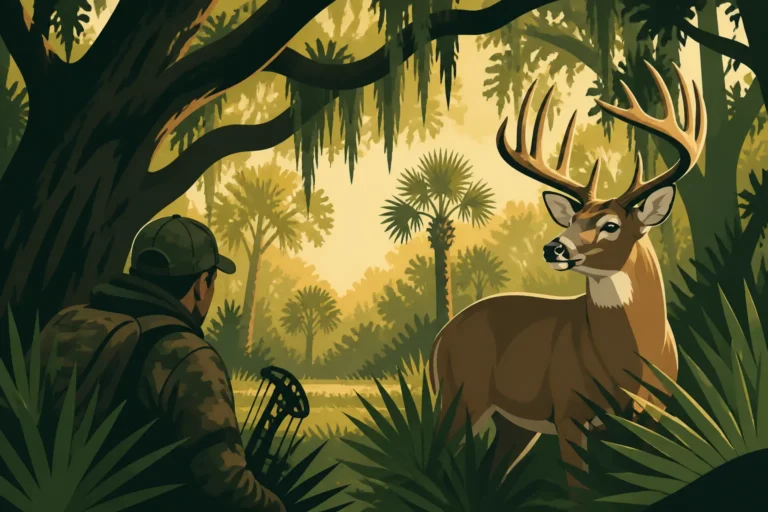
As a seasoned Florida hunter, you know the frustration: one day, you're seeing deer everywhere, almost like they're putting on a parade through the corn or peanut fields. The next, the combines roll in, the crops disappear, and suddenly, the woods feel empty. It’s like the deer just vanished into thin air! But they haven't. They've simply adjusted, as wild animals always do, to the dramatic change in their landscape. This guide is all about helping you understand why deer shift their patterns after harvest and how you can effectively hunt the remaining standing cover in Florida to find those elusive whitetails.
Understanding the Shift: Why Deer Gravitate to Standing Cover After Harvest
When agricultural fields are cut, it’s not just a food source that vanishes; it’s a huge chunk of security cover, too. Imagine spending your days surrounded by towering cornstalks or sprawling peanut plants, feeling completely hidden from prying eyes, whether they belong to a coyote, a bear, or a hunter. Then, practically overnight, that dense shield is gone, replaced by stubble and open ground. Deer don't like being exposed, and they'll quickly seek out the next best thing.
The Post-Harvest Landscape Transformation
Florida's agricultural landscape, especially in areas like the Panhandle or Central Ridge, can transform dramatically once crops like corn, soybeans, or peanuts are harvested. What was once a vast, impenetrable jungle of vegetation becomes a relatively barren expanse. This sudden change leaves deer vulnerable. Their bedding areas within the fields are destroyed, their primary travel corridors become exposed, and their easily accessible food sources are either gone or significantly reduced.
This isn't just a minor inconvenience for them; it's a matter of survival. They have to quickly adapt to a new normal. Instead of meandering through a cornfield, grabbing a bite here and there, they're now looking for concentrated food sources that might still be present, and more importantly, places where they can feel safe. This often means retreating to the nearest dense vegetation, whether it's a natural hammock, a thick palmetto flat, or even just a field edge where some brush has been left. They become much more concentrated, making these remaining pockets of cover incredibly important for hunters to key in on.
Deer Priorities: Food, Water, and Security
At their core, deer need three things to survive: food, water, and security. In a post-harvest environment, the order of these priorities can shift. While food is always essential, the sudden loss of cover elevates security to the top of their list. They'll travel further for food if they know they can retreat to a safe haven.
Standing cover, even if it’s just a narrow strip of uncut weeds, a hedgerow, or a patch of timber that borders a field, becomes their sanctuary. It provides thermal cover on cooler days, protection from the elements, and most importantly, a visual barrier that makes them feel hidden. Think of it as their emergency bunker. They might venture out into the harvested fields at night to glean any leftover scraps, but during daylight hours, especially with increased hunting pressure, they will stick to these pockets of dense vegetation. You'll often find them just inside the edge of such cover, peering out, ready to bolt back into the deepest part if they sense danger. Understanding this fundamental need for security is the first step in successfully hunting these areas.
Identifying Productive Standing Cover in Florida
Finding those elusive deer after the harvest means knowing where to look for the cover they crave. Florida's unique ecosystems offer a variety of "standing cover" types, both natural and agricultural, that can hold whitetails. It’s not always about dense forests; sometimes, it's the subtle edges and overlooked patches that prove to be the most productive.
Common Agricultural Fields and Their Residues
In many parts of Florida, especially across the Panhandle and some central farming regions, you’ll encounter large agricultural operations. When these fields are harvested, they don't always leave a barren wasteland.
Cornfields, for instance, often leave behind shattered ears and kernels that deer will eagerly seek out, particularly in the immediate days following the harvest. The remaining stalks, though not dense, can still offer some visual breaking, and deer will often lay down right in the stubble, especially if there's a good wind.
Peanut fields are another excellent example. After the peanuts are dug and collected, a surprising amount of nuts and plant material can be left behind. This provides a rich, high-protein food source that deer, hogs, and even turkeys will gorge on. Hunters who know how to identify and hunt a standing peanut field can find significant success.
Soybean fields, too, can leave behind pods and beans, though they tend to be a less preferred food source than corn or peanuts. Regardless of the crop, the edges of these fields, especially where they meet a natural treeline or dense brush, become prime travel routes and staging areas. Deer will use these residual food sources, but they'll be hyper-aware of their surroundings, often sticking close to the remaining cover.
Natural Florida Cover Types Adjacent to Harvested Fields
Beyond the agricultural remnants, Florida's diverse natural habitats provide crucial standing cover.
Palmetto Flatwoods: These iconic Florida landscapes, dominated by saw palmetto, are incredibly dense and often overlooked. A thick palmetto head can be virtually impenetrable to humans but offers perfect bedding and escape cover for deer. If a harvested field borders a palmetto flat, you can bet deer will be pushing deep into that cover. Learning Where Florida Bucks Bed in Thick Palmetto can give you a real edge.
Oak Hammocks and Hardwood Thickets: Pockets of live oaks, water oaks, and other hardwoods, especially those with a dense understory of yaupon holly or muscadine vines, create excellent thermal and visual cover. These hammocks also provide critical mast crops like acorns, which become even more important as other food sources diminish. Deer will often bed right in these thickets, venturing out only during low light.
Cypress Swamps and Sloughs: While challenging to hunt, the edges of cypress swamps and sloughs provide dense, often wet, cover that deer feel very secure in. They offer a sanctuary from hunters and a reliable water source. Deer will often utilize the dryer edges of these wetlands as travel corridors or bedding areas. A wise hunter knows that Hunting a Cypress Head at Last Light can be a game-changer.
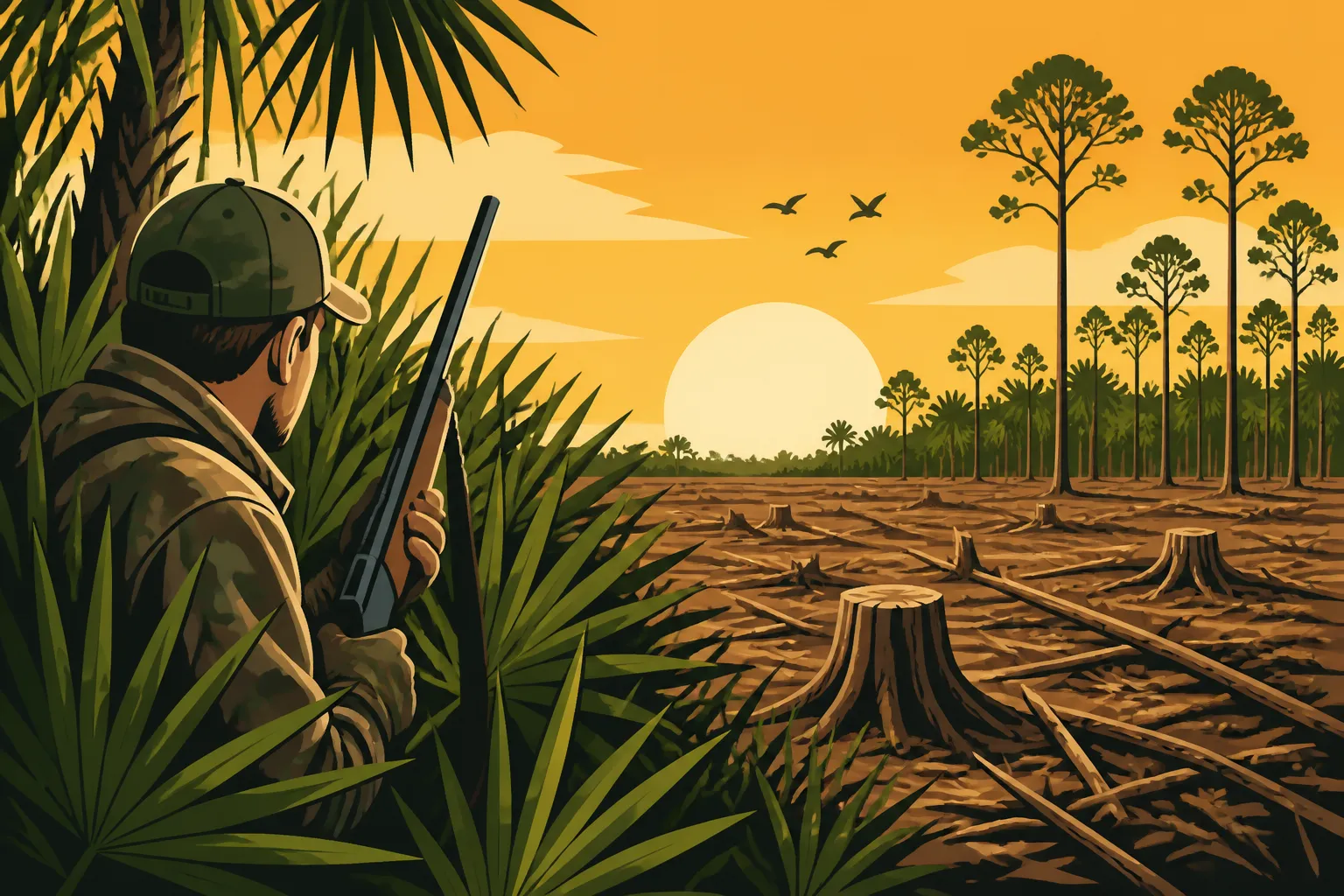
Pine Plantations and Regenerating Clear-cuts: Areas of dense, young pine plantations or thick regrowth in old clear-cuts offer incredibly dense cover. The tight spacing of young pines makes it difficult for predators (and hunters) to move through, giving deer a strong sense of security. These areas often border fields and provide excellent bedding and staging points. Understanding how deer react to Timber Cuts and Where Deer Move After is essential for planning your hunts.
Utilizing Mapping Tools for Scouting
In today's hunting world, mapping tools are absolute necessities, especially when trying to pinpoint standing cover. Platforms like GoHunt offer incredibly detailed aerial imagery and public/private land overlays that can transform your scouting efforts.
Before you even set foot in the woods, you can use these apps to zoom in on agricultural areas. Look for the distinct patterns of harvested fields, but more importantly, identify the darker, denser patches of vegetation right alongside them. These could be natural tree lines, swamp edges, or even areas that simply weren't harvested. You can mark these potential cover spots, plan your approach, and identify possible entry and exit routes for deer. This digital reconnaissance saves you countless hours of unproductive walking.
Furthermore, GoHunt's property line feature is invaluable. It helps you quickly distinguish between public and private land, preventing accidental trespassing and ensuring you're hunting legally. For instance, if you're eyeing a thick palmetto block next to a harvested field, GoHunt can confirm if it's within a WMA boundary or if it's private property requiring permission. This kind of pre-hunt analysis is crucial for maximizing your time in the field and staying compliant with regulations.
Tactics for Hunting Standing Cover Effectively
Once you've identified those prime pockets of standing cover, the real work begins: deciding how to hunt them. Unlike open field hunting, which often relies on long-range shooting, hunting standing cover is about stealth, patience, and often, getting in close.
Still-Hunting and Stalking the Edges
Still-hunting is perhaps the most effective method when dealing with dense standing cover. It's an art form that requires extreme patience and attention to detail. Instead of setting up and waiting, you become an active predator, slowly, deliberately moving through the habitat.
Start by approaching the downwind or crosswind side of the cover. This is critical in Florida, where swirling winds can give you away in an instant. Take one or two steps, then pause. And I mean really pause. Scan every shadow, every broken branch, every flicker of movement. Use your binoculars, even in thick cover, to pick apart the details. Deer will often be bedded down just inside the cover, watching their backtrail. If you are Still-Hunting Florida Palmetto Flatwoods, you'll understand just how vital these slow, deliberate movements are. Look for horizontal lines (a deer's back), dark patches (their eyes or nose), or the subtle twitch of an ear. Move only when you've thoroughly scrutinized your surroundings, ensuring you're not bumping a deer you haven't seen. This method is incredibly demanding but can put you face-to-face with a big buck.
Strategic Stand Placement Within or Near Cover
For those who prefer a more static approach, strategic stand placement is key. The goal is to position yourself where deer are likely to enter, exit, or travel within the standing cover, without alerting them to your presence.
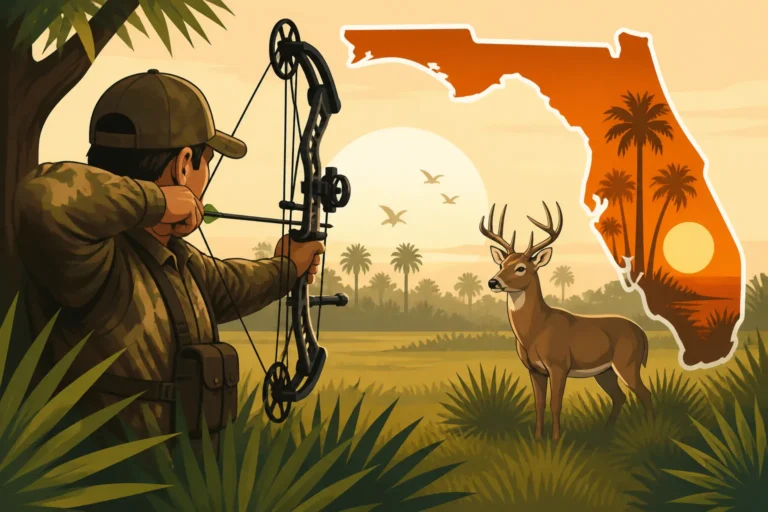
Ground Blinds: These are fantastic for hunting tight to standing cover, especially if it's too thick for a tree stand or if you're hunting public land with strict treestand rules. Using a Ground Blind on Florida Public Land is a common and effective tactic. Set up your blind inside the edge of the cover, not right on the open field edge. This gives you a natural backdrop and helps break up your silhouette. Make sure your shooting lanes are clear, but otherwise, leave as much natural vegetation around the blind as possible for concealment. Place it downwind of where you expect deer to approach or bed.
Tree Stands: If the standing cover includes mature timber, a tree stand can give you an elevated advantage. Look for natural funnels, pinch points, or trails that lead into or out of the thick cover. A saddle between two palmetto heads, or a creek crossing leading into an oak hammock, are prime locations. Position your stand to intercept deer as they transition from bedding to feeding areas, or as they travel through the cover during daylight. Consider entry routes through a Florida food plot if the cover borders one, as deer will often stage in the cover before entering. Remember to account for the sun's position and prevailing wind directions when selecting your tree.
Driving Small Patches of Cover
Sometimes, still-hunting or stand hunting isn't cutting it, or you're dealing with very dense, small pockets of cover that you suspect are holding deer. In these situations, a small, organized deer drive can be highly effective, especially with a few hunting buddies.
This isn't about running through the woods making a racket. This is a strategic maneuver. Identify a distinct, manageable patch of standing cover that you want to push. Station "posters" quietly on the downwind side, positioned where deer are most likely to exit the cover. These should be in elevated positions if possible, or well-hidden ground blinds. Then, have one or two "drivers" slowly and quietly walk through the cover, pushing the deer toward the posters. The key is slow and quiet. You want to ease the deer out, not panic them into rocketing past the posters. For very thick areas, a tactic like Posting a Drive Around a Palmetto Head can be highly effective, pushing deer out of an island of cover. Communication is paramount, so use radios (if legal in your hunting area) or pre-arranged signals to ensure everyone knows the plan.
Considerations for Success and Safety
Hunting standing cover in Florida requires not just solid tactics, but also an understanding of the environment and adherence to regulations. It’s a different ballgame than hunting wide-open spaces, and paying attention to the details will greatly improve your odds and keep you safe.
Reading Wind and Thermals in Florida's Flat Terrain
Florida's famously flat terrain can make wind and thermals tricky, but they are absolutely critical to understand, especially when hunting close to deer in thick cover. Unlike mountainous regions where thermals predictably rise in the morning and fall in the evening, Florida's low elevation means local topography, water bodies, and even dense vegetation can create microclimates and unpredictable air currents.
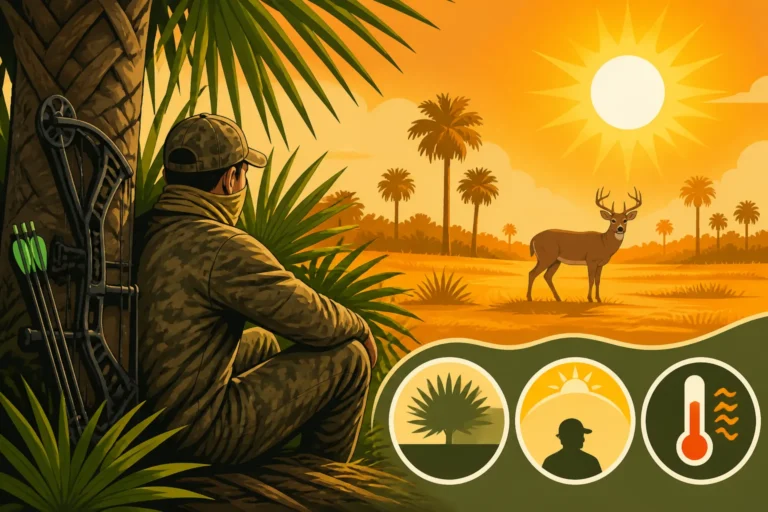
Always, always know the prevailing wind direction. Carry a wind-checker bottle and use it frequently. As you approach a patch of standing cover, especially in the early morning or late evening, pay close attention to subtle shifts in air movement. Even a slight breeze carrying your scent into the cover can blow your hunt. Deer will almost always try to approach or bed with the wind at their nose, or at least quartering to them, so they can smell danger ahead. When still-hunting or setting up a stand, positioning yourself downwind of where you expect the deer to be is non-negotiable. If the wind isn't right for a specific patch of cover, move to another spot or consider a different approach. Ignoring Wind and Thermals in Flat Florida Terrain is a surefire way to educate deer and ruin your hunt.
Public vs. Private Land Access
Florida offers a fantastic amount of public hunting land, but the rules and access can vary significantly, especially when hunting standing cover.
Public Lands: On Wildlife Management Areas (WMAs) and National Forests, you'll often find excellent opportunities to hunt standing cover adjacent to agricultural fields or managed food plots. However, these areas often have specific regulations regarding hunting methods, stand placement, and even vehicle access. Some WMAs might restrict how close you can set up to a private agricultural field, even if you are on public land. Always check the specific WMA regulations for the area you plan to hunt. Be mindful of hunting pressure; public land deer in standing cover are usually very wary. Finding ground that sees fewer hunters often means walking further into remote sections of these cover types.
Private Lands: If you're fortunate enough to have access to private land, either through ownership, a lease, or by Knocking on Doors in Florida Ranch Country, you'll often have more flexibility. Private land can offer less pressured deer in prime standing cover, especially if that cover borders a harvested field. However, even on private land, it's crucial to understand and respect property lines. Always get clear, explicit permission, preferably in writing, before hunting. If you're planning any kind of drive, ensure all participants are aware of boundaries and safety protocols.
Hunting standing cover after harvest is an incredibly rewarding challenge in Florida. It demands patience, keen observation, and a deep understanding of deer behavior. By focusing on security and food, utilizing mapping tools, and employing thoughtful tactics, you can turn a seemingly "empty" post-harvest landscape into a highly productive hunting ground.
Disclaimer
Hunting is an inherently dangerous activity. Always prioritize safety, understand and adhere to all local, state, and federal hunting regulations, and ensure you have the proper licenses and permits before heading afield. The information provided in this guide is for educational purposes and should not replace professional guidance or official FWC regulations.