Using a Ground Blind on Florida Public Land
Hunting Florida’s public lands often feels like an uphill battle, doesn’t it? Between the dense, unforgiving palmetto and thick undergrowth, the sweltering heat and ever-present bugs, and the sheer volume of other hunters, finding a comfortable, concealed spot to ambush game can be incredibly frustrating. This guide is all about cutting through that frustration, showing you how a well-chosen and strategically deployed ground blind can transform your public land hunting experience in the Sunshine State, offering both concealment and comfort.
The Undeniable Appeal of Ground Blinds on Florida Public Land
When you think of hunting blinds, you might picture elaborate permanent structures, but on Florida public land, portable ground blinds are a game-changer. They offer a unique blend of advantages that address many of the common challenges we face as hunters here. Forget trying to become one with a palmetto patch; a good blind can make all the difference.
Overcoming Public Land Pressures and Hunter Interference
Let's be honest, Florida's public lands get hit hard. Especially during opening weekends or peak rut, you'll find hunters in places you never expected. This pressure makes deer incredibly wary, often moving only in low light or sticking to the thickest cover. A ground blind provides a consistent, reliable hide, allowing you to settle in long before dawn without spooking animals with your silhouette against the sky. It also helps you blend in when other hunters are moving around. While it won't make you invisible to every set of eyes, it significantly reduces your footprint and visual impact in an area that might otherwise be a revolving door of human activity. It's about creating a calm, safe zone for yourself and, by extension, the wildlife you're pursuing.
Concealment in Challenging Florida Cover
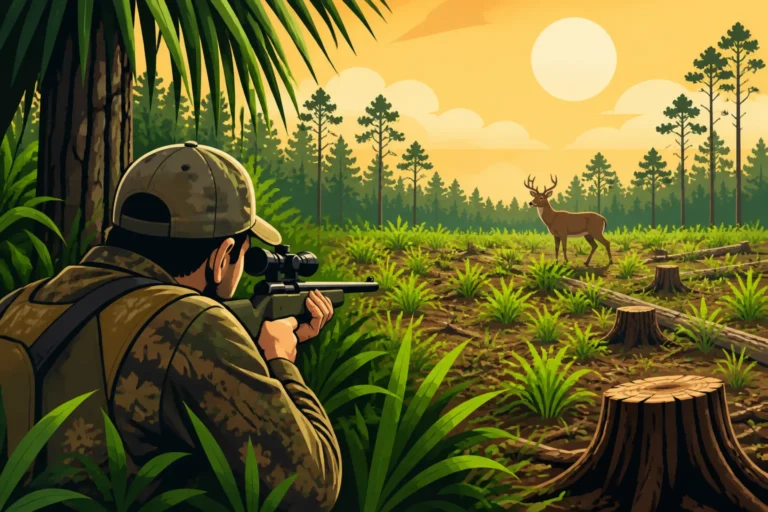
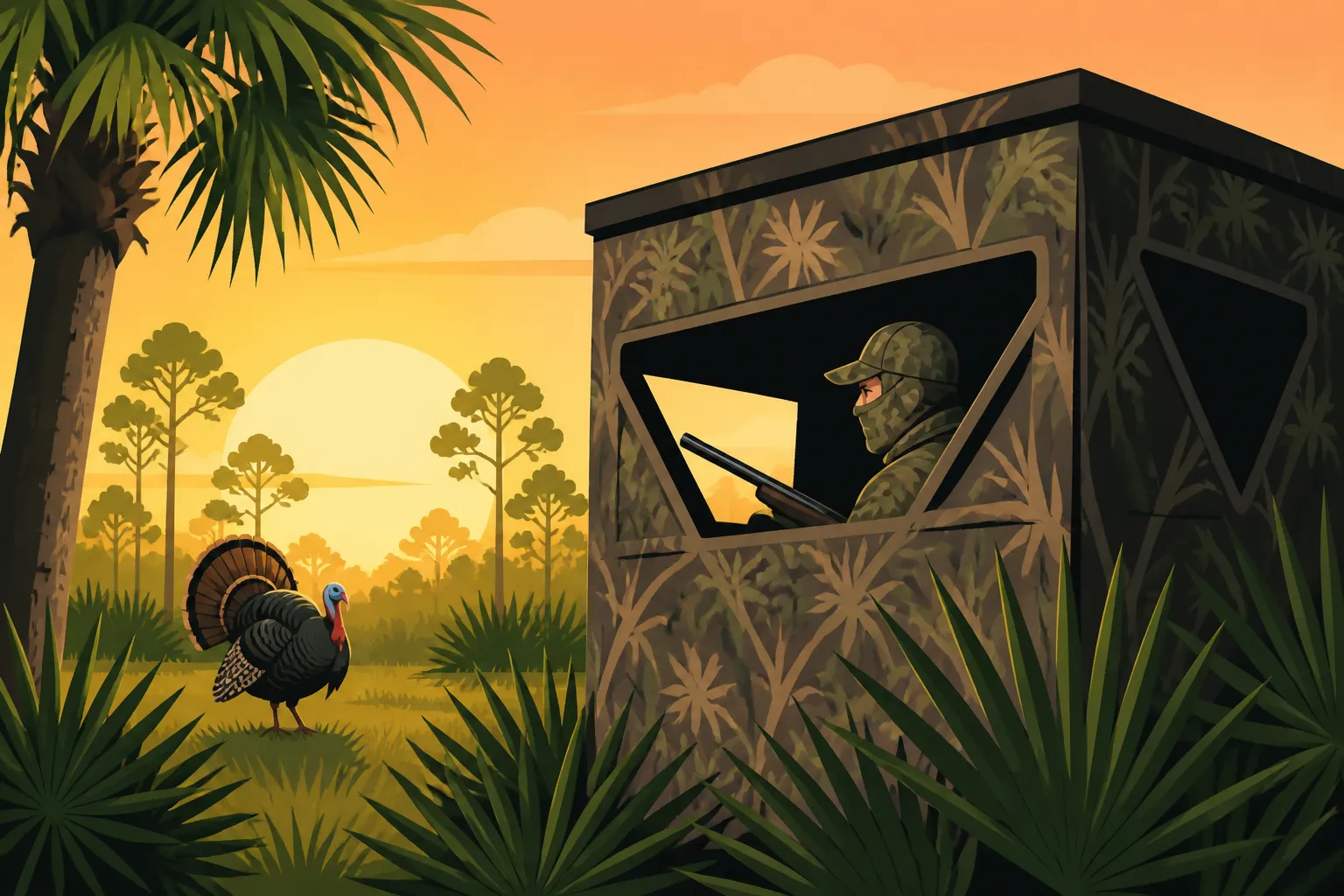
Florida's natural landscape is both beautiful and brutal for hunters trying to find natural cover. Those endless palmetto flats and dense oak hammocks are fantastic for deer, but not so great for a hunter trying to remain unseen. A popup ground blind gives you instant, 360-degree concealment. No more worrying about that sun glare off your face, or the slight twitch of your arm giving you away. You can literally disappear into the landscape. This is especially critical when you're hunting in areas with sparse trees, like some of the vast tracts of pine flatwoods or along clear-cut edges where a tree stand simply isn't an option. It allows you to set up in prime travel corridors or feeding areas that would otherwise be unhuntable from the ground without giving yourself away. You might even find yourself comfortably hidden while deer walk within spitting distance, something that's incredibly difficult to achieve purely with natural vegetation.
Weather Protection and Comfort in Florida's Climate
Florida's weather is notoriously unpredictable and often downright oppressive. One moment it's sunny and humid, the next a torrential downpour rolls in. Temperatures can soar, and the biting insects – oh, the insects! – can drive even the most dedicated hunter insane. A ground blind offers a vital shield against these elements. It provides shade from the relentless Florida sun, keeping you cooler and preventing fatigue. When those inevitable afternoon thunderstorms hit, you're not scrambling to find cover; you're staying dry and comfortable, ready for the deer movement that often follows a rain event. And let's not forget the mosquitos, gnats, and horseflies. With proper netting and a zipped-up blind, you can keep most of those bloodsuckers at bay, allowing you to focus on your hunt instead of swatting. This comfort significantly extends your sit times, which is crucial for success, particularly when considering a Hot-Weather Sitting Strategy in Florida.
Selecting and Preparing Your Ground Blind for Florida Conditions
Choosing the right ground blind isn't just about grabbing the first one you see at the sporting goods store. Florida's unique environment demands specific features and careful preparation to ensure your blind is effective and durable.
Key Features for Durability and Portability
When you're slogging through palmetto or navigating cypress edges on public land, portability is paramount. Look for blinds that are lightweight and pack down into a manageable size. Brands like Primos, Barronett Blinds, and Ameristep offer models known for their quick setup and takedown, which is essential when you're on the move. But don't sacrifice durability for weight. Florida's winds can be surprisingly strong, and the sun's UV rays will quickly degrade flimsy fabric. Opt for blinds made with rugged, weather-resistant materials that can stand up to the elements. Reinforced hubs and sturdy fiberglass poles are crucial for stability. Consider a blind with a dark interior coating to minimize reflections and increase concealment. Also, pay attention to the window configurations. Versatile window systems that allow for silent opening and closing, and offer various shooting angles, are incredibly beneficial. Some blinds even have removable mesh windows for added concealment and bug protection.
Brushing In and Scent Control Strategies
Even the best camouflage pattern on a blind will stick out like a sore thumb if it's not properly "brushed in." This means using natural vegetation from the surrounding area to break up the blind's outline and make it look like a natural part of the landscape. Cut palmetto fronds, small branches, and Spanish moss and weave them into the blind's loops or lean them against the sides. The goal isn't to completely cover the blind, but to disrupt its unnatural shape. Do this subtly so it looks natural. As for scent control, it's just as important in a blind as it is in a tree stand. Even though you're enclosed, human odor can still escape and spook wary Florida whitetails or even hogs. Use scent-eliminating sprays on your blind and gear, wear clean hunting clothes, and consider an Ozonics unit if you want to go the extra mile. Position your blind with the prevailing wind in mind, always trying to keep your scent blowing away from where you expect game to approach. This attention to detail will significantly increase your odds of success.
Scout, Locate, and Mark Your Spot
Before you even think about setting up a blind, serious scouting is non-negotiable. Public land deer are often patternable, but those patterns change quickly with pressure and food availability. Use mapping tools like GoHunt to analyze aerial photos, looking for pinch points, natural funnels between cover, and transitions where different habitat types meet. These are often prime areas where deer will travel. Look for signs on the ground: fresh tracks, droppings, rubs, and scrapes along a Scrape Lines Along a Sand Road. Once you've identified a promising location, don't just plop your blind down. Observe the area for a bit, even if it's just for 15-20 minutes, to see how the wind swirls and what potential approach routes deer are using. Mark your intended blind spot, perhaps with a discreet piece of flagging tape or a GPS waypoint, then leave the area quietly. You want the animals to move through the area naturally for a few days without any disturbance from your setup. This pre-planning makes all the difference, especially when you're trying to find Finding Ground Others Walk Past that other hunters might overlook.
| Feature / Consideration | Ideal for Florida Public Land | Less Ideal / Avoid |
|---|---|---|
| Weight & Portability | Under 20 lbs, compact carry bag | Over 25 lbs, bulky |
| Material | Heavy-duty polyester, UV resistant | Thin nylon, rips easily |
| Color/Pattern | Dark greens, browns, realistic camo | Bright patterns, unnatural colors |
| Window System | Silent zippers, shoot-through mesh | Loud Velcro, limited angles |
| Ventilation | Multiple vents, removable mesh | Poor airflow, stuffy |
| Hub System | Reinforced metal hubs, sturdy poles | Plastic hubs, flimsy fiberglass |
| Footprint | Compact 5×5 or 6×6, low profile | Very large, tall, unnatural |
| Waterproofing | Fully taped seams, repellent fabric | Leaky seams, basic water resistance |
Tactical Placement and Deployment for Success
Placing your ground blind isn't a random act; it's a calculated chess move. Every decision, from the exact spot to the orientation, can mean the difference between seeing game and coming home empty-handed.
Reading the Landscape for Optimal Blind Locations
Florida's terrain might seem flat, but subtle changes in elevation, vegetation, and water features create natural travel corridors. Look for these "micro-funnels." These could be narrow strips of high ground between cypress sloughs, breaks in dense palmetto thickets, or the edges of planted food plots. Deer and hogs are creatures of habit, and they'll often take the path of least resistance. Using a mapping app, like the detailed satellite imagery often available on GoHunt, can help you identify these features even before you set foot on the property.
Consider staging your blind where multiple habitat types converge – for instance, where an oak hammock meets a pine plantation, or where a dense swamp transitions to more open ground. These transition zones are natural travel routes and feeding areas. If you're hunting deer during the cooler months, look for areas where they might bed down in Where Florida Bucks Bed in Thick Palmetto and set up along their likely morning or evening travel routes to and from a water source or feeding area. Think about how the animals will approach the area and how you can intercept them effectively.
Setting Up for Wind and Sun Advantage
The wind is your most important ally or worst enemy. Always position your blind so the prevailing wind carries your scent away from where you expect game to appear. In Florida, the wind can be notoriously fickle, especially in thick cover. Understanding Wind and Thermals in Flat Florida Terrain is critical. Early morning thermals might carry your scent downhill or into a low-lying area, only to reverse as the sun heats the ground. Take a small bottle of scent indicator powder with you and frequently check the wind direction throughout your hunt.
The sun can also give you away. Avoid placing your blind directly in front of the rising or setting sun, as it will backlight your blind, making it more visible and creating a glare that can hinder your vision. Instead, try to set up with the sun at your back or to your side, keeping your blind in shadow as much as possible. This also helps you see into the woods more clearly without squinting. Placing your blind strategically with existing natural backdrops, like a thick clump of palmetto or a large oak tree, will further break up its outline and provide additional cover.
Access and Exit Strategies
This often-overlooked aspect of ground blind hunting is absolutely critical on public land, especially in Florida where cover can be so dense. How will you get to and from your blind without spooking game? Plan your entry and exit routes meticulously. Ideally, your path should be hidden from where you expect game to travel and should allow you to approach and leave quietly, ideally with the wind in your face or crosswind to your target area. This might mean taking a longer, roundabout route, but it’s worth it to avoid educating the animals.
Consider using natural features like old logging roads, creek beds, or dense tree lines to conceal your movement. If you're hunting over a food plot, your Entry Routes Through a Florida Food Plot should be carefully planned to avoid disturbing the area. When you arrive at your blind, approach slowly and quietly, doing your best to minimize noise and visual disturbance. The same goes for leaving. Don't just burst out of your blind; take your time, scan the area, and make a quiet exit. If you have to retrieve a deer, plan that route carefully too.
Maximizing Your Hunt from the Ground Blind
Once your blind is set up and you're settled in, the real work begins. It's not just about waiting; it's about being prepared, staying sharp, and knowing how to make the most of your concealed position.
Managing Movement and Noise Inside the Blind
The biggest advantage of a ground blind is concealment, but you can quickly negate that if you're constantly fidgeting or making noise. Think of your blind as a small, personal hunting sanctuary. Minimize unnecessary movement. Set up your gear, calls, water, and snacks within easy reach so you don't have to rustle around. While the blind offers a good deal of sound dampening, sharp, metallic noises will still carry. Be mindful of zippers, buckles, and anything that can clank or scrape.
If you have kids with you, or if you're not used to sitting still for long periods, a blind can be a lifesaver, allowing for some slight movement or stretching without immediate detection. This is particularly beneficial for Hunting the Youth Turkey Weekend South of SR-70, where keeping young hunters engaged and comfortable is key. However, always remember that even small movements near windows can catch an animal's eye. Try to move slowly and deliberately, especially when game is in sight. Practice raising your weapon and getting into shooting position well before the season to ensure you can do it silently and efficiently.
Shot Opportunities and Ethical Considerations
One of the unique aspects of hunting from a ground blind is the shot angle. Unlike a tree stand, where shots are typically downward, ground blind shots are often flat or slightly downward. This means you need to be acutely aware of your backdrop and what's beyond your target. Always ensure you have a safe shooting lane and that your shot will not endanger anything or anyone beyond your intended target.
Before the hunt, trim any branches or tall grass that might obstruct your shooting lanes from inside the blind. Don't wait until a deer steps out to realize a twig is blocking your arrow or bullet path. Practice shooting from a seated or kneeling position, as that's often how you'll be shooting from a blind. Pay close attention to vitals, as the flatter angle can change how you perceive the kill zone. Be patient, wait for the animal to offer a clean, ethical shot, and be prepared to let it walk if the opportunity isn't perfect. This commitment to ethical hunting is paramount.
Post-Hunt Breakdown and Relocation
After a successful hunt (or even an unsuccessful one), how you break down and manage your blind is important. If you plan to hunt the same spot again soon, you might leave the blind set up if it's secured and allowed on public land. However, on many Florida public lands, particularly WMAs, regulations require blinds to be removed daily, or at least within 24 hours of the hunt. Always check the specific WMA regulations, as ignoring these can lead to fines or permit revocation. Remember to remove all trash and personal items, leaving no trace behind. If you're moving to a new spot, which you might consider doing after a Hunting After a Poor Acorn Year forces deer to shift food sources, carefully pack your blind to prevent damage.
Consider having multiple blind setups or scouting several potential locations. This flexibility allows you to adapt to changing deer patterns, hunting pressure, or shifts in wind direction. By being mobile and having backup plans, you increase your odds of success. When moving your blind, think about how you might incorporate new vegetation for brushing in, ensuring it remains concealed and effective in its new location. The easier your blind is to set up and take down, the more willing you'll be to relocate when conditions demand it, optimizing your time on public land.
Disclaimer
Hunting is an inherently dangerous activity. Always prioritize safety, adhere to all Florida Fish and Wildlife Conservation Commission (FWC) regulations, and obtain the necessary licenses and permits, such as The Florida WMA Management Area Permit. The information provided here is for educational purposes and should not replace professional guidance or personal judgment. Always scout thoroughly, be aware of your surroundings, and hunt ethically and responsibly.