Rattling Volume in Thick Florida Scrub
That dream of rattling in a giant buck, the kind that makes your heart pound just thinking about it, often meets the harsh reality of Florida's dense, sprawling scrub. It's a unique environment, far from the open hardwoods of the Midwest, and what works up north can easily fall flat here. This guide is all about mastering the art of rattling specifically for thick Florida scrub, helping you adjust your approach to volume and strategy for better success in our challenging, yet rewarding, terrain.
Understanding the Unique Challenges of Florida Scrub for Rattling
Florida's landscape is unlike most other deer hunting states. When you picture "deer habitat," you might envision towering oaks and clear understories, but here in the Sunshine State, we often deal with thick, impenetrable walls of palmetto, cypress, and dense pine plantations. This reality presents a specific set of hurdles for anyone trying to effectively rattle in a buck.
The Acoustic Obstacles of Palmetto and Saw Palmetto
Imagine trying to shout across a room filled with heavy curtains and plush furniture – that's a bit like what sound does in Florida's palmetto and saw palmetto scrub. These plants, with their broad, waxy fronds and dense growth patterns, are incredibly efficient at absorbing and scattering sound waves. A loud, aggressive rattling sequence that might carry for hundreds of yards in an open timber stand in Georgia will often dissipate into nothing within 50 yards in thick Florida scrub. This can be incredibly frustrating; you put in all that effort, creating what you think is a realistic fight, only for it to feel like your call just evaporates into the air. The sound simply gets swallowed, making it hard for any distant buck to even register your efforts, let alone pinpoint the source.
Beyond just the absorption, the sheer density creates a kind of "white noise" effect. Every rustle of a palmetto frond in the wind, every small animal moving through, adds to the general ambient soundscape. Your rattling has to cut through all of that, yet not be so loud that it sounds unnatural or alarming to a deer that's likely already quite close. It's a delicate balance, and often, less volume is actually more effective here.
Limited Visibility and Deer Movement Patterns
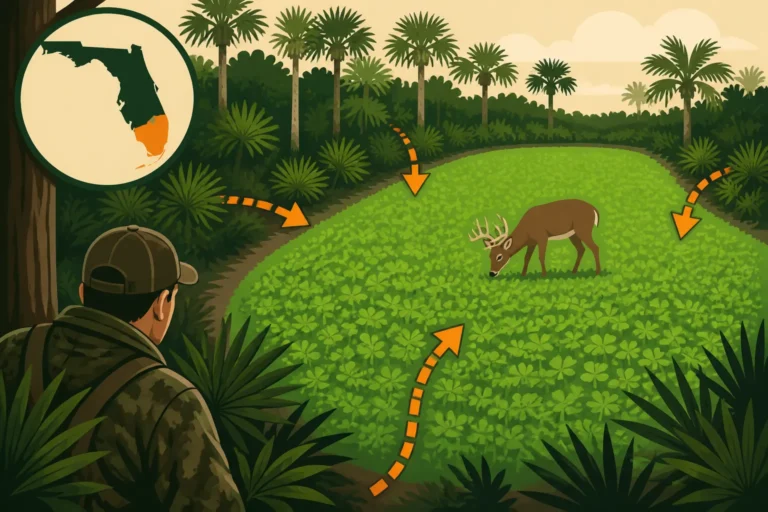
Another significant challenge in our Florida scrub is the extremely limited visibility. In some areas, you'd be lucky to see more than 20 or 30 yards, even from a elevated stand. This means that a buck responding to your rattle isn't going to have a clear sightline to your setup until it's practically on top of you. They move differently here too; instead of trotting confidently into an opening, Florida bucks tend to slink and weave through the densest cover, using every bit of available vegetation for concealment. They are masters of stealth, often ghosting in and out without making a sound until they are within spitting distance.
Because of this, you often won't see a buck until it's very close, and sometimes not at all if they decide to circle downwind or simply hang up just out of sight. This close-quarters dynamic means your rattling strategy needs to be tailored for deer that are already in your immediate vicinity, not necessarily those hundreds of yards away. This is also why understanding Where Florida Bucks Bed in Thick Palmetto is so crucial, as you want to be setting up where they might already be listening.
Calibrating Your Rattling Volume for Close Encounters
Given the unique challenges of thick Florida scrub, throwing a full-volume, all-out fight isn't usually the best strategy. Instead, think about precision, realism, and drawing deer in close without alarming them.
The "Soft Rattling" or "Tickling Tines" Approach
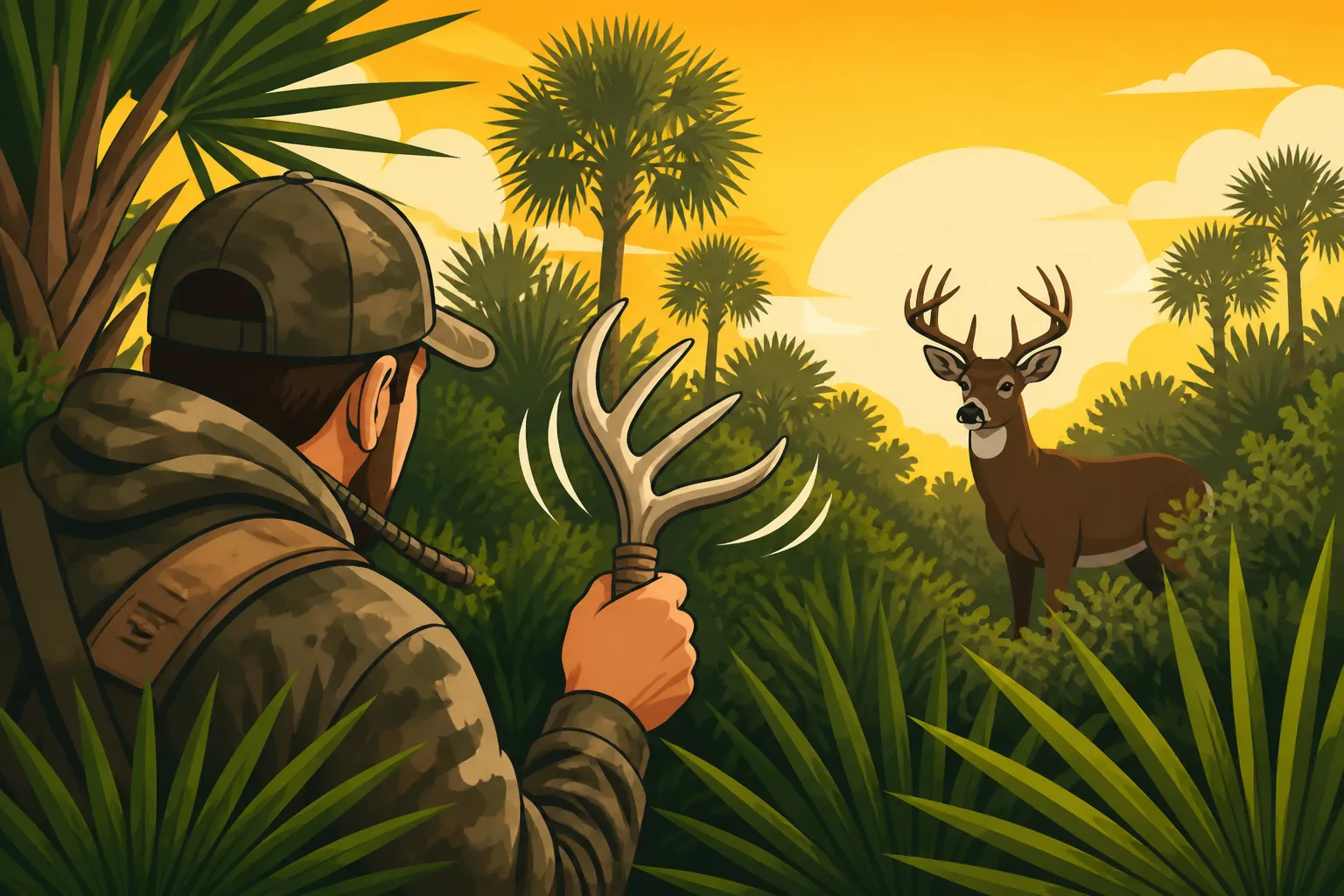
Forget those aggressive, ear-splitting clashes you see on hunting shows. In thick Florida scrub, the name of the game is subtle, realistic sounds. I've had far more success with what I call "soft rattling" or "tickling tines." This isn't about simulating two heavyweights going at it; it's about mimicking a casual sparring match, or even just a buck gently raking a branch, or a pair of younger bucks testing each other out.
To do this, you're not going to slam your antlers together. Instead, gently rub the tines, create light, intermittent clacks, and occasionally grind them softly. Think of it as a low-volume conversation rather than a shouting match. The goal is to produce sounds that are natural, not alarming, and suggest a deer is nearby but not necessarily in a full-blown brawl. A curious buck, especially one bedded nearby, is far more likely to investigate a subtle, non-threatening sound than a cacophony that might signal a larger, more dominant rival. This technique is particularly effective when you're Still-Hunting Florida Palmetto Flatwoods where deer are often very close.
Incorporating Grunts and Deer Calls with Reduced Volume
Rattling in the scrub often works best when combined with other deer vocalizations, but again, volume is key. A loud, booming grunt call echoing through the dense palmetto will sound completely unnatural and can easily spook a nearby buck. Instead, after a short, soft rattling sequence, try a single, soft grunt. This adds another layer of realism – a buck sparring then grunting – without being overpowering.
Think of it as adding a "voice" to the "action." A doe bleat can also be effective, especially during the rut, again, keeping the volume low and natural. The idea is to make the deer believe there are actual deer interacting in that small pocket of cover. Many serious hunters use resources like GoHunt to study deer behavior and vocalizations, refining their calls for specific scenarios. Remember, if you're trying to replicate Grunt Calls in a Florida Oak Hammock, the sound should match the perceived density of the vegetation.
Duration and Frequency of Rattling Sequences
When rattling in thick scrub, you want to avoid long, drawn-out sequences. A protracted, intense rattling session might sound good to you, but it doesn't always mimic natural deer behavior, especially in areas where bucks might be trying to avoid detection. Shorter, more frequent bursts are usually more effective.
I typically opt for a 15-30 second rattling sequence, followed by a minute or two of intense listening. Then, I might repeat it, perhaps adding a soft grunt or two. This mimics the stop-and-go nature of a real deer interaction. It also gives you more opportunities to listen for a response – a subtle flick of an ear, a twig snap, or the distinct sound of a deer approaching through the palmetto. The silence in between sequences is just as important as the sounds you make; it allows you to truly hear what's happening around you.
Strategic Positioning and Environmental Factors for Rattling Success
It's not just how you rattle, but where and when you do it that makes all the difference in Florida's challenging terrain. Positioning yourself correctly can amplify your efforts, even with reduced volume.
Maximizing Sound Travel in Dense Cover
While the scrub is dense, it's rarely uniform. There are often subtle variations – a slight opening created by a logging path, a sparse patch of palmetto, the edge of a cypress slough, or even a deep-cut game trail. These natural "sound tunnels" can be your best friend. Instead of setting up in the absolute thickest part, try to position yourself near one of these slight openings. Even a minor break in the vegetation can allow your carefully calibrated, soft rattling sounds to travel a bit further, reaching a buck that might be just beyond the immediate wall of palmetto.
Always consider your backdrop too. If you're rattling from a ground blind, position it so that any deer approaching will have to expose themselves in a shooting lane, however small. If you're hunting without a blind, ensure you have excellent concealment. This also comes into play when you are Hunting a Funnel Between Two Palmetto Heads as the deer are naturally going to move through areas where sound can carry better.
The Impact of Wind and Thermals in Flat Florida Terrain
In flat Florida, wind and thermals are not just factors to consider; they are absolutely critical. They dictate how your scent travels, and they also significantly affect how your rattling sounds will carry. Ideally, you want to set up so the wind carries your sound to where you expect deer to be, without carrying your scent to them first. This usually means rattling into a crosswind or a very light headwind.
However, the reality in Florida is that the wind can be fickle, often swirling in dense cover. Mornings and evenings, when thermals are rising or falling, can be particularly tricky. Rising thermals in the morning might carry your sound (and scent) upwards and away, while falling thermals in the evening can pull everything down to ground level and across the landscape. Understanding Wind and Thermals in Flat Florida Terrain is essential for any successful hunt. Always use your GoHunt app or a wind checker to constantly monitor conditions. A slight change in direction can mean the difference between drawing a buck in and sending it running.
Listening for the Response and Preparing for a Close Shot
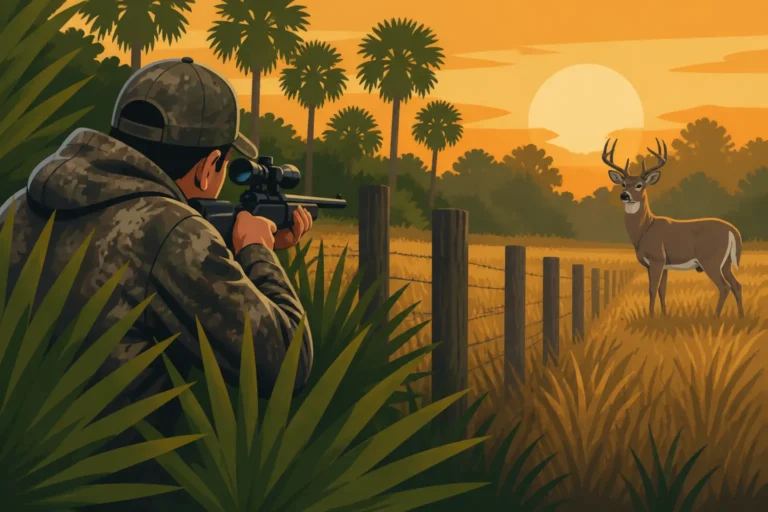
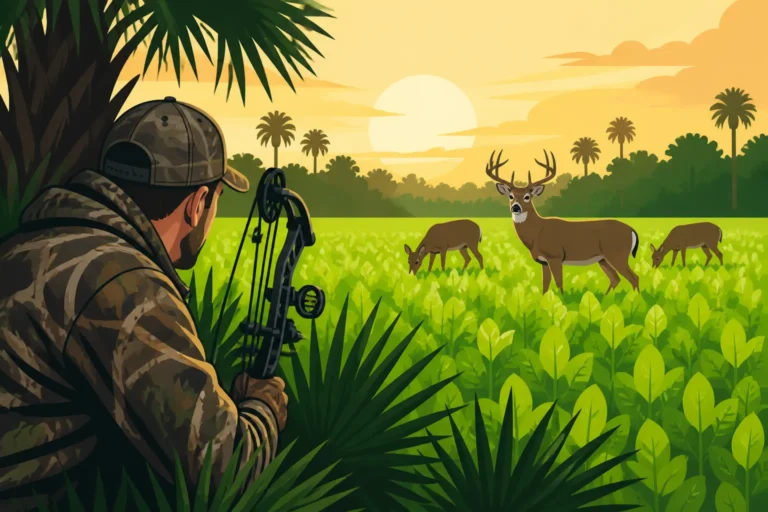
This is perhaps the most crucial part of rattling in thick Florida scrub: you must be ready for a shot at any moment. Because visibility is so limited and deer are so stealthy, a buck might appear silently from the palmetto at 15 yards. It won't be a grand entrance. It will be a ghost, suddenly materializing.
After each short rattling sequence, lower your antlers (or rattling device) slowly and be absolutely still. Listen intently. Look for any movement – a flicking ear, a patch of dark hair, a subtle swaying of palmetto fronds that doesn't quite match the wind. Your eyes should be scanning for shapes, not just brown patches. Have your weapon ready, safety off, and be prepared to shoulder your rifle or draw your bow instantly. Often, you'll have only a few precious seconds for a shot. Using a Ground Blind on Florida Public Land can aid in minimizing your movement while staying alert.
Choosing the Right Rattling Antlers and Gear
The tools you use can also play a significant role in how effectively you can control your rattling volume and execute your strategy in Florida's challenging environment.
Real Antlers vs. Synthetic Rattling Devices
When it comes to rattling, hunters typically choose between real antlers or synthetic devices. Real antlers, often shed whitetail antlers, offer the most authentic sound. They can produce a full range of clacks, grinds, and smashes, which is fantastic for open country where you need to project sound. However, in thick Florida scrub, their bulkiness can be a disadvantage. They can snag on branches, make unintentional noise while you're moving, and can be harder to control for those subtle, soft sounds we discussed.
Synthetic rattling devices, like Primos "Rattling Bags" or Knight & Hale "Pack Rack," often consist of synthetic rods or a bag of small, hard pieces that simulate antler contact. These devices are usually more compact, quieter to carry, and, most importantly for scrub hunting, allow for much finer control over volume. You can easily produce those gentle rubs and light clacks without accidentally creating an overpowering crash. For controlled, low-volume rattling, which is often ideal for Florida's dense cover, many hunters find synthetic options to be a more practical and effective choice. Always check GoHunt for reviews on the latest rattling technology tailored for dense environments.
Carrying and Concealing Your Rattling Gear
Regardless of whether you choose real antlers or a synthetic device, how you carry and conceal your gear is important. Real antlers can be a nightmare to carry through dense palmetto, constantly catching on vegetation and announcing your presence long before you reach your stand. If you do use them, consider strapping them tightly to the outside of your pack, or even carrying them in a quiet, camouflaged bag.
Synthetic devices are typically much easier to manage. Rattling bags fit neatly into a vest pocket or backpack, allowing for silent ingress and egress. The goal is to be as quiet and unobtrusive as possible when moving through the woods. This stealth is crucial, especially when you are trying to approach a spot where you suspect deer are bedded or feeding. Just as you pay attention to your own steps when hunting a Florida cypress swamp slough, you need to ensure your gear isn't making unwanted noise.
Pairing Rattling with Scents and Decoys
To fully sell the illusion of deer activity in the scrub, consider pairing your rattling with other elements like scents or small decoys. A subtle shot of buck urine or a doe-in-heat scent placed downwind, or even on a mock scrape, can add an extra layer of realism. If a buck comes in and hangs up just out of sight, the scent might be just enough to pull him those last few critical yards into view.
Larger, full-body decoys are usually impractical in thick scrub due to the limited visibility and the effort required to set them up and take them down quietly. However, smaller, more compact options like a soft decoy tail that can be activated with a pull-string to mimic a flicking tail can be effective in a small opening. The key is to add visual and olfactory cues that reinforce the auditory message you're sending with your rattling, making it as convincing as possible to a wary Florida buck that is already on high alert due to the dense cover. Many hunters also leverage apps like GoHunt to pinpoint optimal spots for deploying scents or mock scrapes by analyzing Reading Aerial Photos for Florida Deer.
Rattling Techniques Comparison for Florida Habitats
| Feature | Thick Florida Scrub (Low Visibility) | Open Timber/Hardwoods (High Visibility) |
|---|---|---|
| Primary Goal | Draw deer already close; pique curiosity without alarming. | Attract distant deer; mimic intense competition. |
| Volume | Low to Moderate (Soft clacks, rubs, subtle grinding) | High to Aggressive (Loud crashes, grinds, extended fights) |
| Duration | Short bursts (15-30 seconds) | Longer sequences (30-60+ seconds) |
| Frequency | Intermittent, with long listening periods in between | More continuous during peak rut |
| Expected Distance | Deer often appear within 20-60 yards | Deer may travel hundreds of yards to investigate |
| Accompanying Calls | Soft grunts, subtle doe bleats | Louder grunts, snort-wheezes, estrus bleats |
| Best Antler Type | Synthetic devices for control; smaller real antlers | Larger real antlers for volume and resonance |
| Key Mindset | Stealth, patience, readiness for close shot | Projection, commanding attention, visible response |
Disclaimer
Hunting is an inherently dangerous activity. Always prioritize safety, follow all local and state regulations, and ensure you have the proper licenses and permits. The information provided here is for educational and entertainment purposes only and should not replace professional guidance or safety training. Be aware of your surroundings, respect wildlife, and know your target and what is beyond it.