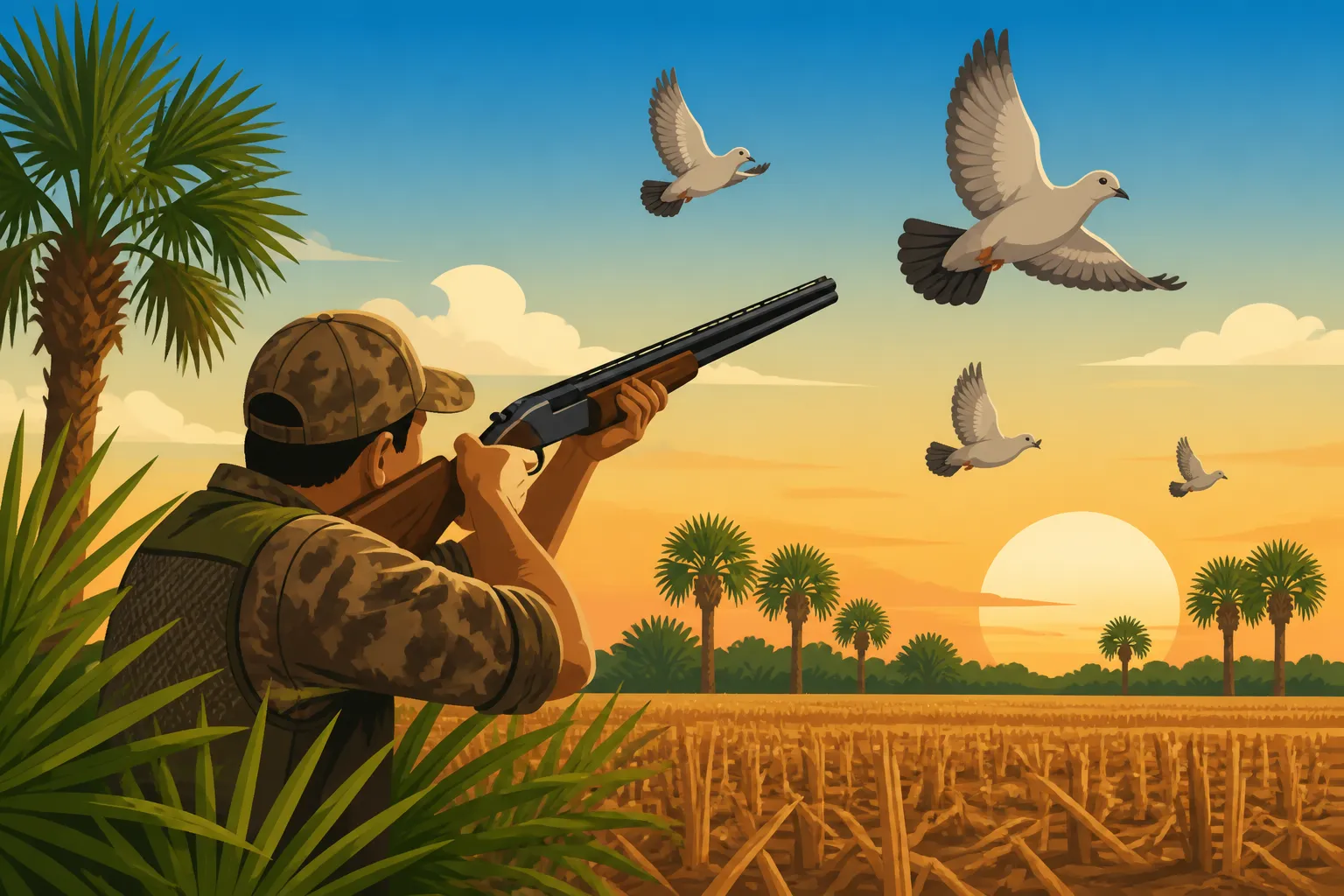
Dove Hunting a Cut Florida Field
There's a special kind of magic that comes with dove hunting in Florida, especially when you find that perfect cut field. But let's be honest, the reality often hits harder than a magnum load of 7.5 shot. You scout, you get excited, then you show up opening morning to find the birds are nowhere to be seen, or worse, they're flying circles around everyone else. It's frustrating when you put in the effort and don't see results. This guide is all about cutting through that frustration, giving you the detailed knowledge and practical strategies you need to consistently find and harvest doves in Florida's cut fields, turning those hopeful mornings into successful hunts.
The Irresistible Pull of Florida's Cut Fields for Doves
There's a reason cut agricultural fields are magnets for mourning doves, and understanding this attraction is the first step to a successful hunt in the Sunshine State. Florida's unique climate and agricultural practices create prime feeding opportunities that doves simply can't resist.
Why Cut Fields Are Dove Havens
Doves are primarily seed-eaters, and nothing provides a more abundant, easily accessible buffet than a freshly harvested field. When crops like corn, sunflowers, millet, or peanuts are cut, the ground is littered with waste grain and seeds that are perfect for doves to forage on. Unlike deer or hogs that might prefer standing crops or mast, doves thrive on what’s left behind.
Think about it from a dove's perspective: a wide-open field offers clear visibility for spotting predators, plenty of food, and often, nearby grit and water sources crucial for digestion. These fields aren't just eating areas; they're social hubs where doves gather before flying off to roost for the night or after visiting a water source. The sheer volume of exposed seed in a cut field far surpasses what they'd find scratching through natural scrub or pine flatwoods. The specific crop type matters, too. Fields of harvested sunflowers, for instance, are notoriously productive, as the birds will alight on the remaining stalks to pick at seeds, then drop to the ground. Millet and corn fields, especially those with smaller, fragmented kernels, are also top producers.
Florida's Agricultural Landscape and Dove Patterns
Florida's diverse agriculture means a variety of cut fields become available throughout the dove season. From the peanut farms in the Panhandle to the cornfields in Central Florida, and the widespread sunflower plots planted specifically for dove hunts, there's always something drawing birds. The timing of these harvests dictates when and where the best hunting will be. Early season hunts, often around the September opener, frequently center around sunflower or millet fields. As the season progresses, corn and peanut fields, or even chufa, might become more active.
What often gets overlooked is how Florida's climate influences these patterns. The intense heat and humidity mean doves will often feed heavily in the early morning and late afternoon, seeking shade and water during the mid-day hours. This makes understanding their daily routine, which usually involves flying from a roost to a feeding field, then to a grit/water source, and back to a feeding field before returning to roost, absolutely critical. When planning your hunt, consider the proximity of these elements. A cut field next to a powerline or a dense pine plantation offering roosting cover, and a stock pond nearby for water, creates a perfect setup for a full day of activity. Hunters often find success by sitting near these key transition points. For more on general migratory bird regulations, you'll want to review your Florida Migratory Bird Certification.
Mastering the Art of Scouting and Field Selection
Finding the right cut field isn't just about driving around hoping to see a few birds. It's a strategic process that involves pre-season diligence, keen observation, and leveraging modern tools.
Pre-Season Reconnaissance: Your Secret Weapon
The real work for a successful dove hunt starts long before opening day. You can't just show up and expect results, especially on public land or fields that see heavy pressure. Start scouting a few weeks, or even a month, before the season. Drive the backroads, particularly around agricultural areas known for growing crops doves love. Look for signs of activity: doves flying into and out of fields, birds sitting on power lines or dead snags adjacent to fields, and flocks feeding on the ground.
Pay close attention to flight paths. Doves are creatures of habit, often using the same flight corridors day after day. These might be fence lines, tree lines, or even dips in the terrain. Knowing these preferred routes allows you to position yourself for optimal pass-shooting opportunities. Don't forget to scout for water sources like ponds, ditches, or even cattle troughs, as doves need to drink multiple times a day, especially in Florida’s warmth. Roosting areas, typically dense tree lines or pine stands, are also key. Identifying these components of their daily circuit helps you connect the dots and anticipate where birds will be. It's not just about finding a cut field, but finding the cut field that integrates seamlessly into the doves' daily life. Many successful hunters utilize apps like GoHunt to study satellite imagery, identify potential fields, and mark waypoints for closer inspection, saving valuable time and gas.
Identifying Productive Fields: What to Look For
Once you're on the ground, discerning a truly productive field from a mediocre one requires a sharp eye.
- Crop Type and Harvest Stage: As mentioned, sunflowers, millet, corn, and peanuts are top contenders. The more recently harvested, the better, as it means more exposed seeds. A field cut a month ago might have been picked clean by doves or other critters, or the seeds might have sprouted.
- Dove Sign: Look for fresh droppings on the ground, particularly in concentrated areas. Dust baths – small, shallow depressions where doves roll around in dry soil – are another clear indicator of regular use. If you see doves actively feeding, note their flight patterns and where they seem to be concentrating.
- Topography and Cover: Even in flat Florida, subtle changes in elevation, a slight ditch, or a fencerow can funnel birds. Fields adjacent to thick cover or wooded areas often see more traffic as birds fly from roosts or seek quick refuge. Keep an eye out for larger fields, which can hold more birds and offer more space for hunters to spread out without crowding.
- Pressure Assessment: On public lands, or even private land leased by multiple hunters, understanding the pressure a field sees is crucial. An over-hunted field will often be barren. Look for less accessible corners, fields further from main roads, or areas that might require a bit more legwork to reach. A tool like GoHunt can show public land boundaries, helping you identify areas that might get less attention from other hunters. For more tips on finding birds on public land, consider resources on Scouting Florida Public Land Before Season.
| Crop Type | Dove Attraction Level | Typical Harvest Timing (Florida) | Notes |
|---|---|---|---|
| Sunflowers | High | Late Summer – Early Fall | Excellent, birds love the seeds. |
| Millet | High | Summer – Early Fall | Smaller seeds, very attractive to doves. |
| Corn | Medium-High | Late Summer – Fall | Abundant waste grain, especially cracked kernels. |
| Peanuts | Medium | Fall | Leftover nuts provide good forage. |
| Wheat/Small Grains | Medium | Late Spring – Early Summer | Often too early for prime dove season in FL. |
| Chufa | Medium | Fall – Winter | Primarily planted for turkeys, but doves use it. |
Setting the Stage for a Successful Dove Hunt
Once you've identified your prime cut field, it's time to transform it into a productive hunting ground. This involves careful consideration of concealment, decoy strategies, and having the right gear.
Blind Placement and Concealment: Becoming Part of the Landscape
Doves have excellent eyesight, and they've seen enough hunters to be wary. Proper concealment is paramount. Simply standing out in the open, even in full camo, usually won't cut it.
- Natural Cover is Best: Always try to utilize existing cover. A fencerow draped with some camouflage netting, the edge of a palmetto head, a brush pile, or even a patch of standing weeds can provide excellent natural concealment. Blend in with your surroundings. If you're on a field edge, try to position yourself where the sun will be at your back, making it harder for incoming birds to spot you.
- Portable Blinds: If natural cover is scarce, a portable dove chair blind or a small pop-up blind can be invaluable. These offer quick setup and good concealment. Make sure the blind fabric matches the dominant colors of the field and its edges. If you're using a portable blind, break up its outline with local vegetation if possible. For open fields, sometimes the best blind is simply a camouflaged hunting chair tucked into a slight depression or against the only piece of cover available. Remember, the goal isn't just to hide from the doves, but to hide where the doves want to be. Thinking about Using a Ground Blind on Florida Public Land can also apply to dove blinds in open fields.
- Angle to the Flight Path: Position your blind to intercept common flight paths, but also consider your shooting lanes. You want to be able to swing your shotgun smoothly without hitting obstacles. Avoid positioning yourself directly under power lines where birds might perch; you want them flying towards or across you, not directly over your head and out of range.
Decoy Spreads and Motion Devices: The Allure of the Flock
Decoys are an absolute game-changer for dove hunting, especially in cut fields. They draw birds in, giving you closer, more consistent shots.
- Types of Decoys: You've got options. Full-body decoys on stakes look realistic, while shell decoys are lighter and easier to carry. The key is to create the illusion of a flock already feeding comfortably.
- Setting the Spread: A classic setup is a "landing strip" or "J-hook" pattern. Place a cluster of decoys in an open area of the field, leaving a clear landing zone in front of them. Doves naturally want to land with their own kind. Position your decoys about 15-20 yards from your blind, which is often the ideal shooting range.
- Motion Decoys: This is where the magic really happens. Devices like Mojo Doves (spinning-wing decoys) create a visible flicker that doves can spot from a great distance. They mimic a dove landing or taking off, acting as a beacon. Place one or two Mojo decoys slightly higher than your static decoys, at the edge of your spread, to maximize visibility. Some hunters also use simple dove flags to draw attention from distant birds, especially when they're locked onto another field.
- Less is More (Sometimes): While a big spread can be effective, don't feel like you need hundreds of decoys. A dozen good quality static decoys combined with one or two motion decoys often works wonders, particularly when you're hunting smaller cut fields or under light pressure.
Essential Gear for a Comfortable and Effective Hunt
Florida dove hunting isn't just about shooting; it's about enduring the elements comfortably.
- Shotgun and Ammo: A 12-gauge or 20-gauge shotgun is standard. Bring plenty of shells; doves are notoriously tough to hit, and you'll likely shoot more than you think. Lead shot (sizes 7.5 or 8) is typically used for doves, but check local regulations for any non-toxic shot requirements on specific public lands.
- Cooler and Water: Florida heat is no joke. Bring a cooler with plenty of water, sports drinks, and snacks. Dehydration can quickly ruin a hunt.
- Chair: A comfortable, portable hunting chair or stool is essential for long sits in a field.
- Bug Spray: Mosquitoes, gnats, and horseflies are common companions. Don't forget a good repellent.
- Blaze Orange: While not always required for dove hunting, if you're on public land or hunting areas that might also have deer hunters, it's a good safety practice to wear a How Much Blaze Orange Florida Requires hat or vest, especially when walking in and out of the field.
- Game Bag/Vest: A good game bag or vest with large pockets makes it easy to collect your birds.
- Sun Protection: Hat, sunglasses, and sunscreen are a must.
- Retriever (Optional but Recommended): If you have a well-trained dog, they are invaluable for finding downed birds in thick cover, preventing lost game.
Effective Hunting Strategies and In-Field Execution
You've scouted, you've set up, now it's time for the actual hunt. Success in the field comes down to reading the birds, executing your shots, and knowing how to manage the experience.
Reading Dove Flight Patterns and Behavior
Doves are creatures of habit, but their patterns can shift throughout the day based on wind, pressure, and temperature.
- Morning and Evening Flights: The most consistent activity usually occurs during the first few hours after sunrise and the last few hours before sunset. Doves will leave their roosts, fly to feed, then move to water/grit, then back to feed before returning to roost. Position yourself to intercept these travel routes.
- Wind Direction: Wind heavily influences dove flight. Birds typically fly into the wind when landing and will be pushed by a tailwind. Position yourself so incoming birds are flying into the wind as they approach your decoys, as this will slow them down and make for an easier shot. If the wind is strong, doves will often fly lower to the ground for protection, creating different shooting opportunities.
- Mid-Day Lulls: Don't be surprised if activity drops off significantly during the hottest part of the day. This is a good time to stretch your legs, rehydrate, or move to a different part of the field if birds have shifted. However, sometimes a lone pigeon or small flock will make a surprise appearance.
- Anticipating Approaches: Watch how doves approach the field. Do they come in low over a tree line, or high over a distant wood? Do they circle several times before committing? This will inform when to shoulder your gun and where to focus your attention. Being able to anticipate their moves is key for Pass-Shooting Doves on a September Field.
Shooting Techniques for These Aerial Acrobats
Doves are small, fast, and erratic flyers. Hitting them consistently requires practice and proper technique.
- Lead, Lead, Lead: This is the most common mistake for new dove hunters. You have to lead these birds significantly. How much depends on their speed, distance, and angle. A good rule of thumb is to start with a generous lead and adjust based on your misses. If you're consistently shooting behind them, increase your lead. If you're shooting in front, decrease it.
- Smooth Swing and Follow-Through: Don't stop your swing when you pull the trigger. Keep the barrel moving through the bird. Imagine you're painting a line through its flight path. A jerky, stop-and-start swing is a recipe for misses. Practice mounting your gun smoothly and swinging to track a target.
- Focus on the Bird: Keep both eyes open, if comfortable, and focus intensely on the bird itself, not just the front bead of your shotgun. This helps with depth perception and lead.
- Choose Your Shots: It's easy to get excited and blast away at distant birds. Be disciplined. Let birds come into your optimal range, typically 20-35 yards. Shooting at birds beyond this range often results in misses or wounded birds. Waiting for closer shots improves your success rate and ensures cleaner kills.
- Call the Shot: If you're hunting with a partner, call out incoming birds and their direction. This helps everyone stay alert and aware of potential shooting lanes.
Retrieving Game and Respecting Limits
Once a bird is down, the hunt isn't over. Ethical hunting means retrieving every bird you shoot.
- Marking the Fall: When a bird goes down, immediately fix your gaze on the spot where it landed. Look for a landmark – a patch of weeds, a specific stubble, a piece of trash – anything to help you pinpoint the area.
- Grid Search: If you can't find the bird immediately, establish a mental grid and systematically search the area. Doves can be surprisingly difficult to find in dense stubble. A well-trained retriever is a huge asset here, saving you time and preventing lost birds.
- Respecting the Bag Limit: Florida's daily bag limit for mourning doves is 15 birds, with a possession limit of 45. Keep a running tally of your harvested birds. Once you reach your limit, unload your gun and enjoy watching the rest of the show, or call it a day. It's crucial to always abide by these regulations. Understanding the Florida Dove Season Opening Day and bag limits is essential for every hunter. You can often find details about Florida Dove Population Trends and harvest numbers on the FWC website, which reinforces the importance of ethical limits.
Disclaimer
Hunting is an inherently dangerous activity. Always prioritize safety, adhere to all local and state regulations, and ensure you have the necessary licenses and permits. This guide is for informational purposes only and does not supersede official Florida Fish and Wildlife Conservation Commission (FWC) regulations or professional safety instruction. Be aware of your surroundings, identify your target and what is beyond it, and never consume alcohol or drugs while hunting.