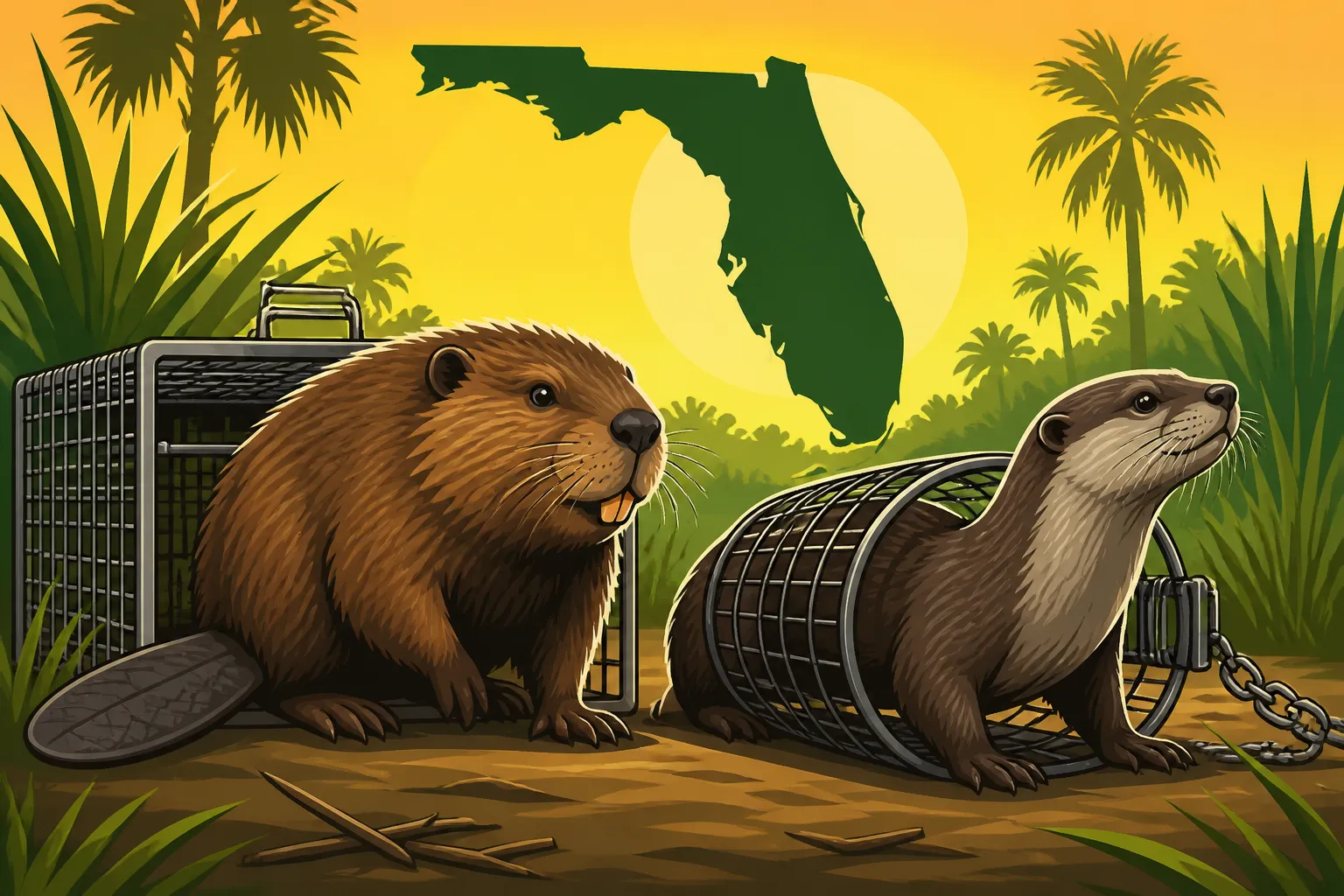
Trapping Florida Beaver and Otter
The sight of a beaver-chewed cypress or the distinctive slide mark of an otter can fill a trapper with a unique blend of excitement and frustration. While these furbearers offer fantastic opportunities in Florida, navigating the specific regulations, finding the right spots, and setting effective traps requires a deep understanding of their habits and the state's rules. This guide will walk you through everything you need to know about legally and successfully trapping beaver and otter in the Sunshine State, addressing the common challenges and sharing practical insights.
Understanding Florida's Furbearer Regulations
Before you even think about putting steel in the ground, it's absolutely crucial to have a rock-solid grasp of Florida's furbearer regulations. Believe me, ignorance of the law is no excuse, and the Florida Fish and Wildlife Conservation Commission (FWC) takes these rules seriously. Many newcomers, and even seasoned trappers from other states, are surprised by how specific Florida's approach can be, especially when it comes to species that aren't typically managed with traditional hunting seasons elsewhere.
License Requirements for Trapping Beaver and Otter
First things first: you need the right paperwork. To legally trap furbearers like beaver and otter in Florida, you're going to need a Florida trapping license. This isn't just a general hunting license; it's a specific permit that allows you to engage in trapping activities. Residents and non-residents alike must purchase this license, and the costs can differ. For a resident, the cost of a Florida trapping license is generally quite reasonable, but it’s always best to check the FWC website for the most current pricing.
It's a common misconception that if you're trapping nuisance animals on your own private land, you don't need a license. While there are some nuances for landowners dealing with depredation, for a dedicated trapping effort for furbearers, you'll need that license. Make sure you understand the nuances by looking into specific details on Florida Trapping License Requirements. You can purchase these licenses online through the FWC website, at tax collectors' offices, or through licensed vendors. Always keep proof of your license on your person when trapping, either a physical copy or readily accessible on your phone.
Season Dates and Bag Limits for Furbearers
Unlike deer or turkey, which have very specific, often short, seasonal windows and strict bag limits, the regulations for furbearers like beaver and otter are a bit different in Florida. For beaver and otter, Florida does not typically impose a closed season or daily/seasonal bag limits when trapping on private land. This can be a huge advantage for trappers, allowing for year-round nuisance control or fur harvesting opportunities, depending on your goals and local population dynamics.
However, this doesn't mean it's a free-for-all. Trapping on public lands, such as Wildlife Management Areas (WMAs) or National Forests, often comes with very different, and usually much stricter, rules. Many WMAs have specific regulations regarding furbearer trapping, including designated open seasons, trap restrictions, and sometimes even quota permits. You absolutely must consult the specific WMA regulations brochure for any public land you intend to trap on. A helpful tool like GoHunt or the FWC's official app can be invaluable for cross-referencing these regulations and ensuring you're not inadvertently violating any rules while pursuing these animals. Remember, the general rule of "no closed season/bag limit" applies primarily to private land.
Legal Trapping Methods and Equipment
Florida is quite particular about the types of traps you can use and how you use them. For beaver and otter, both live traps and lethal traps are permitted, but with specific conditions. Conibear-style body grip traps are highly effective for these animals, particularly in water sets. However, there are size restrictions and requirements for how they are set. Generally, traps with a jaw spread over a certain size (e.g., 8 inches) must be set completely underwater. This is to minimize the risk to non-target species.
Snares are also legal, but they, too, come with strict guidelines on loop size, break-away devices, and how they must be set to prevent strangulation of non-target animals or injury to domestic pets. Leg-hold traps (footholds) are another option, often preferred by trappers aiming for live capture or for specific water sets. Again, check the jaw spread requirements and make sure they are checked regularly to minimize stress on captured animals. Using a mapping application like GoHunt can help you plan your trap lines efficiently and make sure you're placing your sets legally and safely away from high-traffic areas.
It's also important to remember that all traps, regardless of type, must be checked at least once every 24 hours. This is a critical rule for animal welfare and is strictly enforced. Having your trapper identification clearly marked on your traps is also a non-negotiable requirement. Ignoring any of these details can lead to severe Florida Wildlife Violation Penalties, so always err on the side of caution and thoroughness.
Identifying Prime Beaver and Otter Habitat in Florida
Understanding the regulations is one thing, but knowing where to find beaver and otter is entirely another. Florida's diverse landscape offers plenty of suitable habitat, but these furbearers have distinct preferences that, once understood, can drastically increase your trapping success. Scouting is paramount, and it often involves getting your boots wet and your eyes trained on the subtle clues these animals leave behind.
Recognizing Beaver Sign and Damage
Beavers are engineers of the waterways, and their presence is usually quite obvious. They create dams, lodges, and canals, altering the landscape significantly. Look for freshly cut trees and saplings, especially cypress, gum, and willow, characterized by their distinct chisel marks. These "tooth marks" are a dead giveaway. You’ll often find them along the edges of swamps, ponds, lakes, and slow-moving rivers. Florida Beaver Population and Damage details how widespread their impact can be.
Their lodges are typically dome-shaped structures of sticks and mud built in the water, often with underwater entrances. Dams, of course, are their most famous calling card, backing up water and creating new wetland habitats. If you find a fresh dam or a newly flooded area, you've likely found active beaver territory. Look for "runs" or trails that lead from the water to feeding areas on the bank, often slicked down from repeated use. These are prime locations for setting traps. Beavers are often active in areas where water levels are stable, and they have a consistent food source of soft-wooded trees and aquatic vegetation.
Locating Otter Runs and Feeding Areas
Otters are a bit more elusive than beavers, but they leave distinct signs if you know what to look for. These playful semi-aquatic mammals are often found in similar habitats to beaver—swamps, rivers, lakes, and even coastal estuaries. Their presence is often indicated by "slides" – slick, muddy banks where they repeatedly enter and exit the water. These are usually near den sites or preferred feeding spots.
Look for their distinctive scat (feces), which often contains fish scales, crayfish parts, and other aquatic prey remains. Otter scat frequently has a musky, fishy odor and is typically found on prominent logs, rocks, or bare patches of ground near the water's edge, often at intersections of waterways or at the base of trees. Another sign is their tracks; otters have five toes with webbing, and their tracks often show a distinctive "bound" pattern as they move across land. They’re constantly on the move, so fresh sign is key. You might also notice disturbed areas in shallow water where they've been rooting for crayfish or frogs. If you’re interested in specific trends, research on Florida River Otter Trapping Trends can provide deeper insights into their movements.
Scouting Public and Private Land for Opportunities
Scouting is your most powerful tool in furbearer trapping. For private land, gaining permission is the first step. Many landowners, particularly those with agricultural interests or timber operations, are eager to have beaver removed due to flooding and tree damage. A polite request, explaining your methods, can often grant you access. When asking, be clear that you're focused on nuisance control, if that's your goal, and offer to share any furs or provide proof of your efforts.
For public land, it's a different ballgame. You'll need to meticulously study WMA maps and regulations. Use the FWC Public Hunting Map or a mapping app like GoHunt to identify areas with good water access, dense cover, and minimal human disturbance. Look for remote sloughs, canal systems, and river bends that might not see heavy foot traffic. Focus on areas where beaver and otter sign is abundant and fresh. Remember that Scouting Florida Public Land Before Season is crucial, as is understanding specific WMA rules regarding trap placement and access. Some WMAs might restrict access to certain areas, or have specific entry points you need to use. Always respect boundaries and rules to ensure continued access for all trappers.
Setting Effective Traps for Beaver and Otter
Once you've identified your target species and their preferred haunts, the real art of trapping begins: setting effective, humane, and legal traps. This is where experience, attention to detail, and a bit of cunning truly pay off. Choosing the right equipment and knowing exactly where to place it will make all the difference.
Choosing the Right Traps for Each Species
For beaver, the gold standard is often the Conibear-style body grip trap, particularly the larger sizes (like a 330) set in water. These traps are designed for quick, humane dispatch when placed correctly. A 330 Conibear is ideal for beaver runs, channel sets, and castor mound sets. Foothold traps, such as a #3 or #4, are also effective, especially if you prefer to live-capture the animal or if regulations require it. They can be placed at slides, dive poles, or baited sets. Snares are another option, particularly for beaver trails on land or in shallow water channels, provided they meet Florida's breakaway requirements.
For otter, smaller Conibear traps (like a 220) are highly effective in slides, culverts, or crossover points. Otters are curious, so baited sets can work, but blind sets in natural travel ways are often more productive. Foothold traps (like a #1.5 or #2) can also be used, especially in dirt-hole sets or water-edge placements where otters might pause. Otter trapping can be a bit more challenging due to their transient nature and widespread travel. Ensure your traps are robust enough to hold a powerful, feisty otter without causing undue injury.
Strategic Trap Placement and Set Types
The success of your trapline hinges almost entirely on strategic trap placement. For beaver, the most productive sets are usually in water.
- Run Sets: Identify well-used beaver runs or channels. Place a Conibear (like a 330) directly in the run, ensuring it's fully submerged. Guide the beaver into the trap with natural obstructions like sticks or mud.
- Dam Break Sets: Beavers are compelled to repair breaks in their dams. Create a small breach, and they'll come to fix it, offering a perfect opportunity for a submerged Conibear set.
- Castor Mound Sets: Beavers create castor mounds to mark their territory. These are excellent attractants. Set a foothold trap just offshore, submerged, and place a bit of beaver castor (lure) on the bank above it.
- Submerged Pole Sets: Drive a green stick into the mud with the tip sticking out of the water near a lodge or bank den. Wire a Conibear to the bottom, and place a bait (like a poplar branch) on the exposed tip. As the beaver dives for the bait, it enters the trap.
For otter, focus on their travel routes and feeding areas.
- Slide Sets: Place a 220 Conibear or a foothold trap at the base of a well-used otter slide, camouflaged with natural debris.
- Crossover Sets: Otters often cross narrow stretches of land between water bodies. Look for these natural funnels and set traps along the path.
- Culvert/Drainage Pipe Sets: Otters frequently use culverts under roads as travel routes. Submerged Conibears or snares at the entrances/exits can be highly effective.
- Log Sets: Otters often travel over or under fallen logs spanning creeks. A submerged Conibear or foothold on either side can work.
- Dirt Hole/Pocket Sets (less common but can work): While otters aren't primarily interested in land-based bait, a well-camouflaged dirt hole set with a fishy lure or even beaver castor near an otter sign can sometimes entice a curious otter.
Always consider the water depth, potential for non-target catches (especially turtles in Florida!), and anchoring your traps securely to prevent loss or escape.
Safety Considerations and Responsible Trapping Practices
Trapping, while rewarding, carries inherent risks and responsibilities. Your safety, and the safety of others, should always be paramount. When handling traps, especially powerful body grip traps like Conibears, always use safety setters and proceed with extreme caution. These traps are designed to kill or hold, and they can easily crush fingers or hands if mishandled.
Beyond personal safety, responsible trapping means minimizing suffering for the animals and avoiding non-target catches.
- Trap Checks: As mentioned, Florida law requires traps to be checked at least every 24 hours. This ensures that any animal caught is either dispatched quickly or, in the case of a live trap, can be released or relocated promptly.
- Non-Target Catches: Florida's rich biodiversity means you might catch unintended species. Understand what to do if you catch something you didn't intend to, such as a wading bird, turtle, or even a domestic animal. The FWC generally advises the immediate, safe release of non-target species. This is where a foothold trap might be preferable in some situations, allowing for easier release.
- Public Access and Signage: If trapping near public areas or trails, consider posting signs to alert others to your trap line, especially if using larger, visible traps. While not always legally required on private land, it's a courteous and safe practice.
- Lure and Bait Use: Use lures and baits responsibly. Strong-smelling lures can attract domestic pets or other non-target animals if not placed carefully or in specific water sets. Using a mapping tool like GoHunt can help you identify areas away from high-traffic residential spots.
- Cleanliness: Keep your traps clean and scent-free. Animals are wary, and human scent can deter them. Boil traps, wear gloves, and use natural materials to camouflage your sets.
By adhering to these safety and ethical guidelines, you contribute to a positive public perception of trapping and ensure the sustainability of the resource.
Processing and Utilizing Your Harvest
The work doesn't stop once you've made a successful catch. The ethical trapper understands the responsibility of processing and utilizing their harvest. Whether it's for fur, meat, or pest control, knowing the steps beyond the trap line is a vital part of the trapping journey in Florida.
Skinning and Pelting Beaver and Otter
Skinning a beaver or otter is a process that requires a sharp knife, a good fleshing beam, and some patience. For both species, the goal is to produce a clean, well-fleshed pelt that will fetch the best possible price if you plan to sell it. Beaver pelts are traditionally "round cased" or "blanket" skinned, then scraped clean of fat and flesh on a fleshing beam. They are then stretched on a hoop or board to dry. Otter pelts are typically "cased" skinned, meaning they are pulled off inside-out like a sock, leaving the head and tail intact. The fat and membrane are then meticulously removed on a fleshing beam before the pelt is stretched, usually on a wire or wooden stretcher, fur-side in, to dry.
The quality of your skinning and fleshing directly impacts the value of the fur. Any remaining fat or flesh can cause the fur to "slip" (the hair falls out) during drying or tanning. Keep the pelt cool and clean until you can get it processed. If you're new to this, there are many excellent instructional videos and guides available online, or you might find a local experienced trapper willing to show you the ropes. Properly prepared pelts can command decent prices in the fur market, making the effort worthwhile.
Marketing and Selling Furbearer Pelts
If your goal is to sell the fur, understanding the market is important. The fur market fluctuates based on fashion trends, global demand, and supply. Beaver fur is prized for its warmth and durability, often used for hats, coats, and trim. Otter fur is dense and beautiful, popular in higher-end garments. Most trappers sell their pelts to fur buyers or through fur auctions. You might find local buyers who travel the state, or you can ship your pelts to larger auction houses.
It's wise to contact potential buyers before you start trapping to understand current market prices and their specific preparation requirements (e.g., whether they prefer pelts green, fleshed, or dried). The FWC does not regulate the sale of legally trapped furbearer pelts, but interstate commerce can have its own rules, so if you plan to sell out of state, be aware of any additional requirements. A quick search using a tool like GoHunt's forums or community features might even help you connect with local buyers or co-ops.
Other Uses and Ethical Considerations
Beyond fur, beaver and otter can offer other uses. Beaver meat, when properly prepared, is a lean and tasty wild game. It's often compared to beef or pork, though some find it has a unique, slightly musky flavor. Many trappers render beaver fat for use in waterproofing, lure making, or even cooking. The castor glands, which produce a musky secretion, are highly valued in the trapping industry as a lure ingredient and even in the perfume industry.
Otter meat is also edible, though less commonly consumed than beaver. It tends to be leaner and can be prepared similarly to other game meats. Ethically, utilizing as much of the animal as possible honors the life taken and reduces waste. This holistic approach is a cornerstone of responsible hunting and trapping. If you have no personal use for the fur or meat, consider donating it to organizations that can utilize it, or even to wildlife rehabilitation centers (though check their specific requirements and needs first). Remember, trapping is a management tool that, when done responsibly, can help mitigate conflicts between wildlife and human interests while also providing a sustainable resource.
| Species | Primary Habitat | Common Trap Types | Best Set Locations | Key Identification |
|---|---|---|---|---|
| Beaver | Swamps, ponds, lakes, slow-moving rivers | 330 Conibear, #3/4 Foothold, Snares | Runs, dam breaks, castor mounds, submerged pole sets | Freshly cut trees (chisel marks), dams, lodges, canals |
| Otter | Swamps, rivers, lakes, estuaries | 220 Conibear, #1.5/2 Foothold, Snares | Slides, culverts, log crossovers, natural funnels | Slides, fishy scat, webbed tracks, disturbed shallow water |
Disclaimer
Please remember that hunting and trapping regulations in Florida can change. Always consult the most current Florida Fish and Wildlife Conservation Commission (FWC) regulations before engaging in any trapping activities. This guide is for informational purposes only and does not supersede official state regulations. It is your responsibility to know and follow all applicable laws.