Breaking Up a Fall Turkey Flock
There's nothing quite like the sight of a big, robust flock of wild turkeys moving through the Florida pines or palmettos in the fall. It's exhilarating, but for many hunters, it quickly turns to frustration. How do you even begin to hunt such a wary group? Unlike the spring when a lonely gobbler might come strutting to your calls, fall turkeys are all about their social structure and staying together. This guide will walk you through the effective, time-honored tactic of breaking up a fall turkey flock, turning that initial sighting into a real hunting opportunity.
Understanding Fall Turkey Behavior in the Autumn Woods
Hunting turkeys in the fall is a completely different ballgame compared to the spring. Forget those lovesick gobblers; fall turkeys, especially the young ones and their mothers, are tightly knit. You might see mixed flocks of hens, jakes, and even a few mature gobblers hanging out together before the spring breeding season sets in. Their survival instincts are dialed to eleven, and staying together means safety in numbers.
Why Fall Flocks Are Different
In the spring, it's all about breeding. Toms are looking for hens, hens are looking for Toms, and everyone is pretty vocal about it. Come fall, that changes dramatically. Turkeys are primarily focused on food, security, and maintaining their flock. They're often quieter, more wary, and move through the woods like a disciplined army, with many eyes and ears on constant alert. You'll primarily encounter mixed flocks or sometimes bachelor groups of gobblers. For those interested in deeper insights into their behavior, understanding the broader context of Florida Turkey Brood Survey Results can shed light on population dynamics and flock compositions you might encounter.
The dense cover found in many parts of Florida, from the thick palmetto scrub to the pine flatwoods, offers these birds excellent concealment. When you spot a fall flock, they're typically moving with purpose, often to a feeding area like an oak hammock full of acorns or a planted food plot, or heading to a communal roost site. Engaging them requires a nuanced approach, acknowledging their strong instinct to stick together. Trying to call them in as a group is usually a fool's errand; they already have each other.
The Power of the Pecking Order
Every turkey flock operates on a strict pecking order, a social hierarchy that keeps the group cohesive. The matriarch hen usually leads, with various sub-dominant birds, jakes, and younger hens falling in line. This pecking order is why simply trying to call them as a group is ineffective. They're not looking for more friends; they're content with their current, established social structure.
However, this strong social bond is also their Achilles' heel when it comes to the "scatter" technique. When a flock is suddenly dispersed and its members are separated, their primary instinct kicks in: re-assemble! The younger birds, especially, become quite anxious and vocal, eager to find their flock mates. They want to re-establish that pecking order and the security that comes with it. This intense desire to regroup is precisely what you'll exploit when you break them up. The anxiety and the subsequent calling provide your best opportunity to bring them back to your position.
The Art of the Scatter: Executing the Break
The scatter method is arguably the most effective way to hunt fall turkeys, particularly on public lands where birds are often more pressured. It turns their natural instinct to flock into your advantage.
Locating the Flock
Before you can break up a flock, you need to find them. This often involves a lot of scouting. Fall turkeys use predictable patterns. They'll frequent areas with good food sources, like acorn flats, chufa patches, or agricultural fields. They also need reliable water and safe roosting sites, typically large, mature trees that offer good visibility and protection, often over water or in dense stands of pines. Tools like GoHunt can be incredibly useful here, allowing you to scout aerial photos and identify potential food sources, roosting areas, and travel corridors from home. Looking at areas with dense pine plantations, similar to those you might find while Hunting Florida's Eastern Panhandle Turkey, can often reveal excellent fall habitat.
Listen for soft yelps, clucks, or purrs as they feed or move. Sometimes you'll hear the distinctive "kee-kee" run from young birds, indicating their presence. Don't be afraid to put on some miles. Before season, dedicated scouting is key, much like Scouting Florida Public Land Before Season for deer. You might also try roosting them the evening before your hunt. This involves quietly moving into likely roosting areas an hour or two before dark, listening for fly-up cackles or wing beats as they settle into their trees. Once you've located a roost, you'll know exactly where to be at first light.
The Rush and Flush
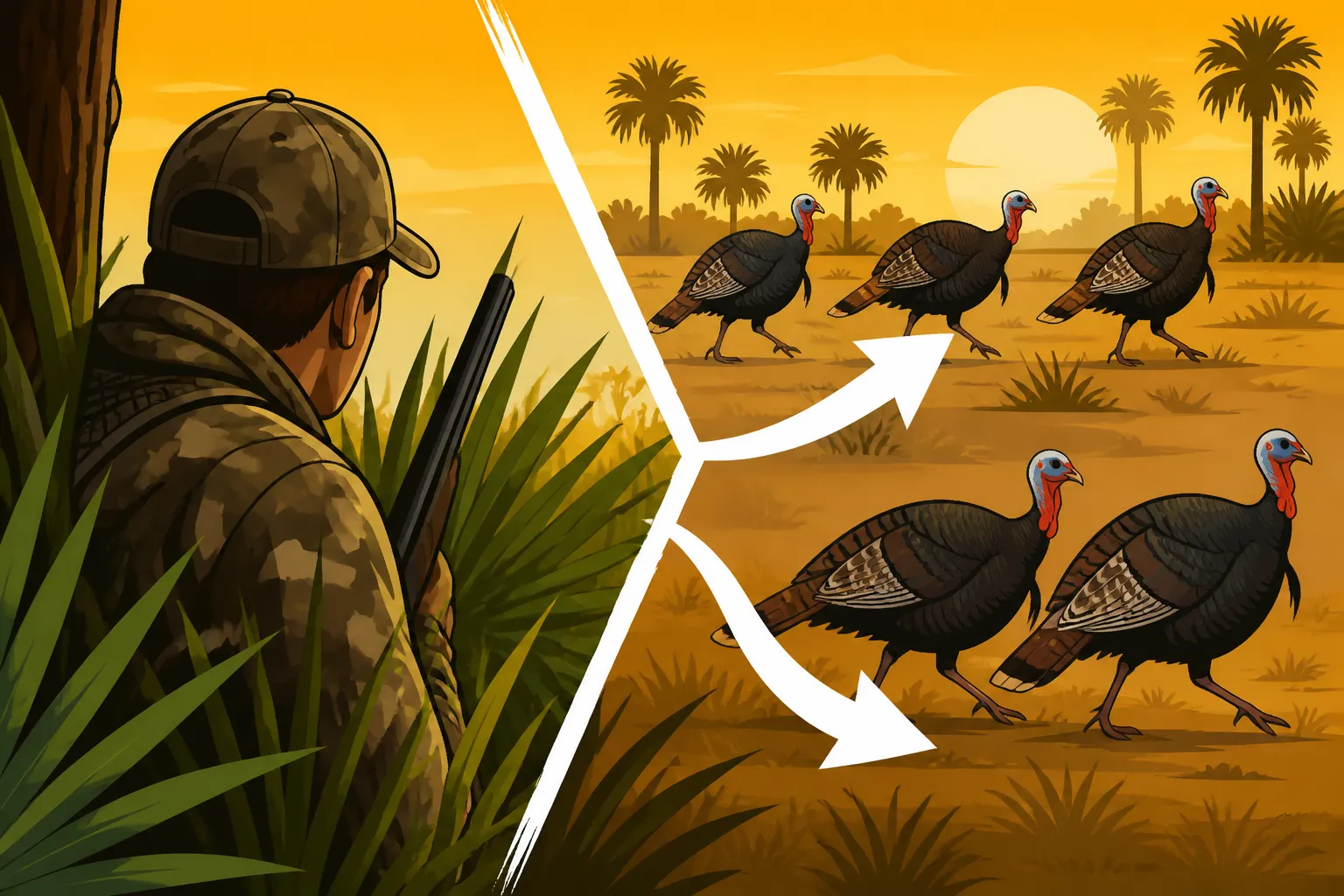
Once you've located a flock, the goal is to surprise them and get them to scatter in all directions. This is the fun part, often the most adrenaline-pumping! Your best bet is to approach the flock as quickly and aggressively as possible. This isn't a stealthy stalk; this is a calculated charge. Run at them, yell, wave your arms – do whatever it takes to create chaos and panic. The more widely they scatter, the better. You want them disoriented and separated, losing sight of each other.
The ideal scenario is when the birds fly off in multiple directions, truly breaking up the unit. If they just run off in a tight group, you haven't succeeded. You need that explosion of wings and a flurry of birds going every which way. Don't worry about being quiet; noise is your friend here. The element of surprise and aggression is paramount. Imagine a covey of quail exploding; that's the effect you're going for with turkeys, just on a grander, louder scale. After this initial rush, quickly get to the spot where the birds were scattered and find a good hiding spot.
Post-Scatter Strategy
Immediately after you've successfully broken up the flock, it's critical to set up quickly in a concealed location right where the birds were initially scattered. This spot is often where they will instinctively try to regroup. Look for a natural blind, a large tree, or use a portable ground blind. If you're on public land, remember to adhere to rules regarding setup, like those for Using a Ground Blind on Florida Public Land. The birds will be eager to reassemble, and you want to be right in the middle of their reunion point.
Patience is your best friend here. Give the woods about 15-20 minutes to settle down after the commotion. The turkeys will be disoriented at first, maybe clucking nervously from a distance. During this time, resist the urge to call immediately. Let them stew in their anxiety a bit. This waiting period allows them to regain their bearings and start contemplating reuniting. As a hunter in Florida, you'll find that understanding your specific zone's regulations for fall turkey, like those outlined in Florida Fall Turkey Season Dates or Florida Eastern Zone Turkey Permit Rules, is crucial before heading out.
Calling and Reconnaissance After the Break
Once the woods quiet down after the scatter, the real calling game begins. This is where your ability to mimic young, lost turkeys comes into play.
Using the Kee-Kee Run
The kee-kee run is your bread and butter for fall turkey hunting after a scatter. This call, a series of high-pitched whistles followed by yelps, perfectly imitates a young turkey that's been separated from its flock and is trying to locate its buddies. It's a call filled with urgency and vulnerability, precisely what you want to convey.
Start with soft, pleading kee-kees, then transition into a few soft yelps. Don't overdo it. You want to sound like a lost, slightly panicked juvenile, not a whole congregation. Listen intently for responses. Young birds often respond quickly, especially if they are close. Sometimes, even the mature hens will offer a soft cluck or a series of yelps in an attempt to gather the scattered young. This particular call is a sharp contrast to the aggressive gobbling you'd hear during Florida Turkey Gobbling Activity Timing in the spring.
Distress and Assembly Calls
Beyond the kee-kee run, other calls can be highly effective. A simple lost hen yelp is always a good bet, especially if you suspect you scattered a mixed flock with adult hens. This call can often pull in jakes and even mature gobblers who might have been tagging along with the hen flock. An assembly call, a series of loud, consistent yelps, can also signal to scattered birds that it's time to regroup.
Vary your calls and listen carefully. Sometimes, a quiet cluck or purr is all it takes to get a response from a nearby bird that's trying to remain hidden. Pay attention to the volume and tone of the responses. A soft, close cluck means a bird is near and potentially coming in quietly. Loud, excited yelps further away indicate a bird that's eager to reunite but still has some distance to cover. Keep your gun ready, because once they commit, they can come in surprisingly fast and silent.
Patient Waiting and Listening
The single most important aspect of fall turkey hunting after a scatter is patience. Unlike spring gobblers that might come charging in, fall birds, especially those that have been pressured, can take a long time to commit. It's not uncommon to wait an hour or more, sometimes even several hours, for birds to begin filtering back in. This waiting game is where many hunters lose out. They call for a few minutes, hear nothing, and assume the birds are gone.
Resist that urge. Remain absolutely still and listen. Use your ears more than your calls. You'll often hear subtle noises first: soft clucks, distant yelps, or even the rustle of leaves as a bird cautiously makes its way back. The birds are often just as wary as you are and will approach with extreme caution, circling, stopping, and listening for any sign of danger. This is where scouting intelligence, perhaps gleaned from Reading Aerial Photos for Florida Deer or other mapping tools, helps you anticipate travel lanes they might use to reassemble. They are looking for their flock, not necessarily you.
Remember, you want to sound like one of them, confused and wanting to regroup. If you hear multiple birds calling from different directions, it's often best to pick one, preferably the closest, and focus your calling on that bird. Mimic its calls, but don't call over it. Let it call, then respond. This creates a convincing illusion that you're just another lost turkey. This type of methodical approach is often covered in more detail when discussing specific tactics like Fall Turkey Tactics in the Panhandle.
Essential Gear and Safety Considerations
Having the right gear and prioritizing safety are non-negotiables for a successful and enjoyable fall turkey hunt.
Must-Have Fall Turkey Gear
When you're heading out to break up a flock, having the right tools makes all the difference. Here’s what you should consider packing:
- Calls: A variety of calls is essential. A slate call, box call, and a mouth diaphragm are all great choices. The mouth call is especially useful for hands-free calling when a bird is coming in. Focus on kee-kee runs, lost hen yelps, and soft clucks.
- Camouflage: Full head-to-toe camouflage is crucial. Turkeys have exceptional eyesight, and any exposed skin or contrasting colors will give you away.
- Shotgun/Bow: Ensure your chosen weapon is patterned for turkey hunting. A shotgun loaded with 3-inch or 3.5-inch magnum turkey loads (like Federal Premium or Winchester Long Beard XR) with a tight choke is standard. For bowhunters, broadheads designed for maximum penetration are key.
- Decoys: While not always necessary for the scatter method, a single hen or jake decoy can sometimes help seal the deal, giving approaching birds something visual to key in on. Place it carefully to draw attention away from your hiding spot.
- Bino/Rangefinder: Useful for spotting birds from a distance and judging shot distances.
- Mapping App: A good mapping app like GoHunt is indispensable for scouting, marking roost sites, potential scatter points, and navigating public lands. It helps you understand terrain, property lines, and potential escape routes for the birds. It's as important as knowing Where the Osceola and Eastern Turkey Zones Divide to ensure you're in the right zone for fall hunting.
- Comfortable Seat/Cushion: You'll be sitting still for long periods, so comfort is key to maintaining focus.
- Water and Snacks: Dehydration and hunger can diminish your patience and focus.
| Call Type | Mimics | Primary Use After Scatter |
|---|---|---|
| Kee-Kee Run | Lost juvenile turkey | Most effective for drawing in scattered young birds |
| Lost Hen Yelp | Disoriented adult hen | Appeals to all flock members, especially jakes and gobblers |
| Assembly Call | Mature hen gathering flock | Longer, louder yelps to signal regrouping from a distance |
| Soft Clucks | Contentment, close proximity | Used to reassure approaching birds or get a response from wary ones |
Safety First: Hunter Orange and Communication
Safety is paramount, especially when hunting fall turkeys in Florida.
- Hunter Orange: While not always legally required while hunting fall turkey in Florida (unless moving between permanent stands or if specific WMA rules apply), it's highly recommended to wear hunter orange when walking into and out of your hunting area, or when moving between locations. You want to be seen by other hunters, particularly in areas where deer or other game seasons might overlap. Always check specific WMA regulations for hunter orange requirements, as they can vary.
- Positive Identification: Always, always, always be 100% sure of your target. In the fall, you might see small groups or individual birds, and identifying legal game (be it a hen or gobbler, depending on your tags and the season) is crucial. Never shoot at sound or movement.
- Communication: If hunting with a partner or group, establish clear communication signals and stay aware of each other's positions. This is vital to prevent accidents, especially during the chaotic scatter phase. Let everyone know the plan.
- Tell Someone Your Plan: Always inform a non-hunting friend or family member of your hunting location and expected return time. Cell service can be spotty in the Florida backcountry, so a physical map and compass, or the offline capabilities of your GoHunt app, are also good to have.
- Check Regulations: Before every hunt, double-check the latest Florida FWC regulations for the specific zone and WMA you plan to hunt. Season dates, bag limits, and legal weapons can change, and knowing the rules, whether it's for Florida Fall Turkey Season Dates or more nuanced rules for a particular area, prevents costly mistakes.
By understanding the distinct behavior of fall turkeys, mastering the scatter technique, and prioritizing safety, you'll greatly increase your chances of success and enjoy a truly unique Florida hunting experience.
Disclaimer
Please be aware that hunting regulations, seasons, and licensing requirements can change. Always consult the latest Florida Fish and Wildlife Conservation Commission (FWC) regulations before planning any hunting trip. The information provided here is for general guidance and educational purposes only.