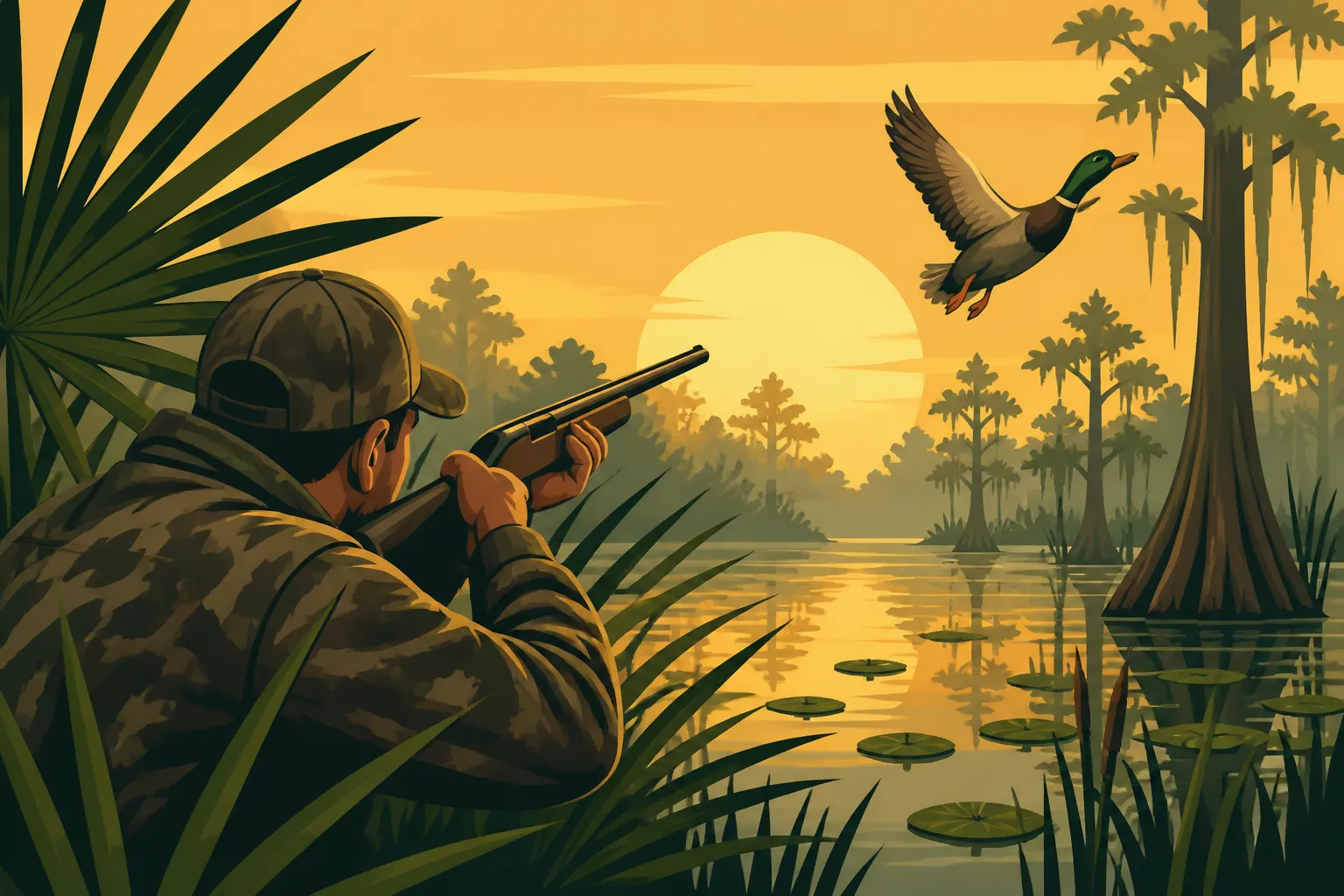
Hunting a Florida Green Swamp Slough
Hunting a Florida Green Swamp slough can feel like venturing into another world, a dense, wet labyrinth that tests even the most seasoned hunters. Many of us have experienced the frustration of wading through knee-deep water, battling thick palmettos, and pushing through thorny vines, only to wonder if a deer could possibly live in such an unforgiving place. But trust me, they do, and this guide is here to equip you with the knowledge, strategies, and mindset needed to navigate and successfully hunt these incredibly challenging, yet immensely rewarding, habitats.
The Green Swamp Slough: An Overview of this Unique Habitat
Florida’s Green Swamp Wilderness Preserve, covering over 50,000 acres across parts of Polk, Sumter, and Pasco counties, is a critical hydrological area, acting as the headwaters for four major rivers. Within this vast expanse are countless sloughs, which are essentially slow-moving, shallow waterways characterized by specific vegetation and an often-unpredictable water table. These aren't your typical dry woods, and understanding their unique ecology is the first step to becoming a successful slough hunter.
What Exactly is a Florida Slough?
A slough, pronounced "slew," isn't just a muddy ditch; it's a distinct ecological feature, often a low-lying channel or depression that carries water slowly through a larger swamp or wetland system. Think of it as a natural, meandering drainageway. In the Green Swamp, these sloughs are primarily fed by rainfall and groundwater, meaning their water levels can fluctuate dramatically depending on recent weather patterns. They serve as vital corridors for wildlife movement, offering both cover and access to water sources in an otherwise often dry, sandy environment. These narrow, sometimes barely discernible, wet strands are magnets for game, especially during drier periods when water is scarce elsewhere. They often hold water year-round, even when the surrounding flatwoods are parched, making them essential oases.
The ground within a slough is typically soft, a mixture of muck, sand, and decaying organic matter, which can range from ankle-deep to waist-deep or more after heavy rains. The edges often feature a distinct transition zone from drier uplands to the permanently wet core, marked by changes in tree species and ground cover. For a hunter, recognizing these subtle transitions and understanding how water flows through these systems is crucial. It’s a completely different landscape than hunting the pine uplands or oak hammocks.
Seasonal Fluctuations and Their Impact on Hunting
The Green Swamp's sloughs are highly dynamic environments, largely dictated by Florida's wet and dry seasons. During the summer and early fall, heavy rains typically flood these areas, making travel difficult and dispersing game across a wider, wetter landscape. This can be a real struggle, turning a simple walk into an exhausting slog through deep water and thick vegetation. When water levels are high, deer and hogs might be anywhere, utilizing higher ground adjacent to the slough or even swimming across flooded sections to escape pressure or find food.
Conversely, during the late fall and winter dry season, water levels can drop significantly, sometimes exposing dry ground in areas that were previously submerged. This is often the prime time for hunting sloughs. As water recedes, game concentrates in and around these remaining wet areas, using them as primary water sources and travel routes. The drier conditions also make foot travel easier, though still challenging, and significantly reduce the area game can inhabit comfortably. Understanding these Seasonal Booking Windows for Florida Outfitters can give you an edge, as savvy guides often focus on these dry-season patterns. A good strategy involves observing historical rainfall patterns and checking current water levels, perhaps using a reliable mapping app like GoHunt to analyze hydrological features and identify likely pinch points where game will funnel.
Decoding the Green Swamp's Dense Vegetation
The vegetation within a Green Swamp slough is notoriously thick and presents a formidable challenge to hunters. You’ll encounter a mix of water-tolerant trees like cypress, swamp tupelo, and red maple, often draped in Spanish moss, creating a dark, eerie canopy. Beneath this, the understory is a nearly impenetrable tangle of saw palmetto, gallberry, wax myrtle, and various aquatic grasses and ferns. This dense cover provides incredible security for wildlife but makes visibility incredibly limited for a hunter.
Navigating this thick stuff requires patience and a good sense of direction. The foliage is so dense in places that you might be within spitting distance of a deer and never know it. This makes stealth paramount and forces you to rely more on your ears and nose than your eyes. Often, the only clear lanes are the slough bottoms themselves, which are usually filled with water, or the narrow game trails that wind through the thickest parts. These trails are your highways, but they're not always easy to spot, especially if the ground is soft or submerged. You’ll need to learn how to identify fresh tracks and broken vegetation to discern active trails from older, less-used ones.
Target Species in the Green Swamp Slough
While the Green Swamp is teeming with various wildlife, hunters primarily focus on two main species in the sloughs: whitetail deer and feral hogs. Both present unique challenges and rewards, and understanding their behavior in this wet environment is key to a successful hunt.
Navigating Whitetail Deer in the Wet Woods
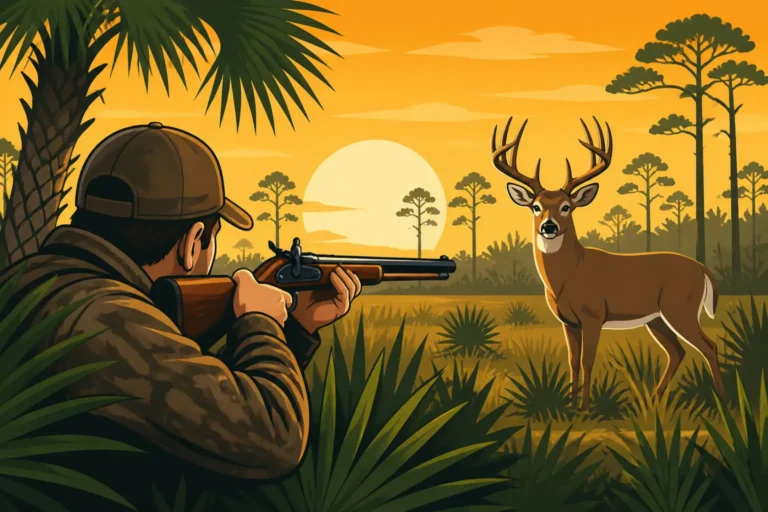
Florida whitetail deer, particularly those in the Green Swamp, are truly creatures of their environment. They are smaller-bodied than their northern counterparts, adapted to the subtropical climate and often dense, low-nutrient forage. What they lack in size, they make up for in wariness and their incredible ability to ghost through the thickest cover. In sloughs, deer often use the water and dense vegetation as a sanctuary, moving through the wetter, harder-to-access areas to avoid human pressure. They know these places offer security.
During the drier months, deer will use the slough bottoms as travel corridors between bedding areas on slightly higher ground and feeding areas on the edges. They’ll also seek out any remaining pockets of water. Look for rub lines on small saplings along the slough edge, especially during the rut, and fresh tracks in the soft mud where they come to drink. When the rut kicks in, these sloughs can become hotspots, as bucks cruise them looking for does, knowing the does will be utilizing these wet corridors. For more detailed information on White-Tailed Deer Across Florida, understanding their specific adaptations to this climate is crucial.
The Ever-Present Challenge of Feral Hogs
If there's one species that truly thrives in Florida's sloughs, it's the feral hog. These animals are incredibly adaptable, love water and mud, and can be found almost anywhere in the Green Swamp. They often root through the soft ground for tubers and invertebrates, leaving distinctive signs of their presence. Unlike deer, hogs often wallow in the mud, creating muddy depressions that are unmistakable indicators of their activity. Their trails through the thick vegetation can be as wide as small paths, making them easier to follow.
Hogs don't have a closed season or bag limit on private lands in Florida, and they are generally considered a nuisance, making them a fantastic year-round target. This is particularly true on public lands where specific Hunting Hogs on WMA Land in the Off-Season rules apply. Hunting them in a slough can be especially thrilling due to the close quarters and their unpredictable nature. They often travel in sounders, so where there’s one, there are usually more. Early morning or late evening often finds them moving along the edges of sloughs, rooting or heading to water. Be prepared for a quick shot, as they don't linger long. For a deeper dive into these prolific animals, check out our guide on Feral Hogs Across Florida.
Unexpected Opportunities: Other Game in the Slough
While deer and hogs might be the main draw, sloughs can also offer opportunities for other game. You might occasionally jump a wild turkey, particularly during the fall, as they use the edges for feeding and roosting. Small game like squirrels and rabbits can also be found in the thicker vegetation bordering the water. Squirrels are often found in the oak hammocks that transition into the slough, especially during good mast years. Waterfowl, particularly wood ducks, can sometimes be found in the deeper pockets or where standing timber provides good cover. While not the primary focus, keeping an eye and ear out for these other species can add a bonus to your slough hunting experience.
Essential Gear for Your Slough Adventure
Hunting a Green Swamp slough isn't a walk in the park, and your gear choices will make or break your comfort and success. You can't just throw on any old hunting clothes and expect to have a good time. The environment demands specific, durable, and functional equipment designed to withstand water, mud, thorns, and heat. Skimping on these essentials will lead to a miserable, and potentially unsafe, experience.
Footwear and Clothing: Staying Dry and Comfortable
This is perhaps the most critical gear decision for slough hunting. Forget your insulated hunting boots; you need serious protection from water. Hip waders or chest waders are often non-negotiable, especially during the wetter parts of the season or if you plan to traverse deep sections. Look for durable, puncture-resistant material that can withstand thorns and sharp palmetto fronds. Neoprene waders offer some insulation for cooler mornings, while lighter, breathable nylon versions are better for hotter days, although they don't offer much thorn protection.
Underneath your waders, wear moisture-wicking layers to help manage sweat, even when it’s cool. For your outer clothing, opt for lightweight, quick-drying materials that can handle snags and tears. Camouflage patterns that blend into the swampy greens, browns, and grays are ideal. A good waterproof rain jacket, even on a sunny day, is a must. You never know when a pop-up shower will hit, and staying dry in a remote swamp is critical for comfort and safety. Think about the physical demands; you'll be exerting a lot of energy, so layering is crucial to adapt to changing temperatures.
Navigation and Communication: Your Lifelines
Getting lost in a Green Swamp slough is not just an inconvenience; it can be genuinely dangerous. The dense canopy often blocks GPS signals, and the monotonous terrain makes it easy to lose your bearings. A reliable GPS unit, either a dedicated handheld device or a robust smartphone app with downloaded offline maps, is absolutely essential. I personally rely on apps like GoHunt for detailed topo maps and satellite imagery, which allow me to pre-mark potential ambush points, bedding areas, and clear exit routes. Before heading out, always mark your vehicle's location and key waypoints.
Beyond GPS, a physical compass and a basic understanding of how to use it can literally be a lifesaver if your electronics fail. A small, loud whistle can also be useful for signaling. Communication is another major concern. Cell service is spotty at best in many parts of the Green Swamp. Carrying a satellite messenger device, like a Garmin inReach or a Zoleo, provides a reliable way to send and receive text messages and, more importantly, to trigger an SOS in an emergency. Always tell someone your hunting plan, including where you're going and when you expect to return. Never assume you'll have cell service.
Weaponry Considerations for Close-Quarters Hunting
The close-quarters nature and dense cover of slough hunting dictate specific weapon choices. Long-range rifles are often overkill and impractical. You’ll rarely get a shot beyond 50 yards, and often much closer. A shotgun with slugs or buckshot is a popular and effective choice for both deer and hogs, offering good knockdown power in thick brush. Rifles chambered in calibers like .30-30, .44 Magnum, or .45-70, designed for brush penetration and quick target acquisition, also perform well. For those who prefer archery, a compact compound or crossbow is excellent for navigating the dense vegetation and offers a quiet, ethical harvest. Crossbow Hunting During Florida's Archery Season is perfectly legal and can be a great option.
Whatever weapon you choose, ensure it's sighted in for close range and that you are proficient with it in quick-shot scenarios. Consider attaching a sling for easier carrying when pushing through brush, and remember that moisture can affect your weapon, so proper cleaning and maintenance after each hunt are crucial. A quality pair of binoculars, even low-power ones, can help identify game in the shadows of the dense undergrowth, but often your ears will be more valuable than your eyes.
Master the Hunt: Strategies for Slough Success
Hunting a Green Swamp slough demands a departure from open-country tactics. This isn't about glassing vast fields or setting up over a food plot. It's an intimate, gritty hunt that requires acute awareness of your surroundings, silent movement, and a deep understanding of how animals use this dense, wet environment. Patience and persistence are your greatest allies here.
The Art of Still-Hunting and Silent Movement
Still-hunting is arguably the most effective strategy for slough environments. This involves moving incredibly slowly, pausing frequently (often for 5-10 minutes at a time), and scanning every shadow and thicket for signs of game. The goal isn't to cover ground quickly, but to move stealthily enough that you don't spook animals before you see them. Take one step, look, listen, then take another. It’s painstakingly slow, but it’s how you catch deer and hogs off guard in such dense cover. Pay attention to every detail: a flick of an ear, a patch of unnatural color, the faint sound of a twig snapping that isn't your own.
The key to silent movement in a slough is recognizing the terrain. Avoid splashing loudly in water if possible, and step carefully over fallen logs and palmetto fronds. Your waders will make some noise, but minimize it. Many hunters find success by moving parallel to the main slough channel, just inside the slightly higher, drier edge, or by slowly working their way directly down the slough bottom itself if water levels allow. This mimics the natural travel patterns of deer and hogs. You might even consider incorporating some techniques from Still-Hunting Florida Palmetto Flatwoods, as the cover density is very similar.
Identifying Key Ambush Points and Travel Corridors
Even in a dense slough, animals don't just wander aimlessly. They use the path of least resistance and funnel points. Your job as a hunter is to identify these critical ambush points. Look for natural constrictions where the slough narrows, or where higher ground forces game into a tighter corridor. Crossings where game trails intersect the slough are also prime locations. These are often subtle, but consistent sign will reveal them.
Satellite imagery on GoHunt can help you spot these features before you even step foot in the swamp. Look for fingers of dry land extending into the slough, or subtle changes in vegetation density that might create natural funnels. During the dry season, areas where water is still present but surrounded by drier land become magnets. Setting up a small ground blind, or simply sitting against a large tree near one of these pinch points, can be incredibly effective. Make sure your scent is blowing away from the expected approach of game.
Playing the Wind and Understanding Thermals in Swamps
Wind direction is always crucial in hunting, but in a dense, humid slough, understanding thermals becomes equally important. While the Green Swamp is generally flat, subtle elevation changes and the presence of water can create localized thermal currents. In the morning, as the air warms, thermals tend to rise, carrying your scent upwards. In the evening, as the air cools, thermals often drop and settle, carrying your scent down into low-lying areas.
The dense canopy also impacts wind patterns, often making them swirl or unpredictable on the ground. Always try to position yourself so your scent is blowing away from where you expect game to appear. If still-hunting, continually monitor the wind using a small puff bottle or milkweed. When selecting a stand location or ambush point, consider how both the prevailing wind and daily thermals will affect scent dispersal. Hunting the edges of Hunting Florida Cypress Swamp Edges where a slough meets higher ground can sometimes provide a more stable wind advantage.
Overcoming the Green Swamp's Unique Challenges
Let's be real: hunting a Florida Green Swamp slough isn't for the faint of heart. It's hot, buggy, wet, and often grueling. These challenges can quickly turn an exciting hunt into a miserable ordeal if you're not prepared. But with the right mindset and preparation, you can mitigate these frustrations and even learn to appreciate the raw wilderness experience.
Conquering Mud, Water, and Unpredictable Terrain
The most obvious challenge is the sheer wetness and uneven terrain. You will get wet, you will get muddy, and you will likely trip. The ground can shift from firm to deep muck in a single step, making every foot placement a calculated risk. Submerged logs, roots, and unseen holes are constant hazards. This demands slow, deliberate movement and extreme vigilance. Trust your waders to keep you dry from the water, but know that slips and falls are almost inevitable.
Carrying a sturdy walking stick or a pair of trekking poles can be invaluable for probing the ground ahead, maintaining balance, and even helping you push through dense brush. When encountering deeper water, assess whether it's safe to cross or if you need to find an alternative route. Always remember that what looks like a solid surface might be nothing more than floating vegetation over deep water. This environment requires a high level of physical fitness and mental endurance.
Battling Bugs and the Florida Heat
Florida's heat and humidity, combined with standing water, create a perfect breeding ground for mosquitoes, gnats, and horseflies. These insects aren't just annoying; they can make a hunt unbearable and even pose health risks. A head net, long sleeves, and good insect repellent (containing DEET or picaridin) are non-negotiable. Thermacell devices can provide a crucial zone of protection, especially if you're sitting for extended periods.
Managing the heat is equally important. Even in cooler months, a strenuous trek through the slough can lead to overheating. Dress in light, breathable layers that you can shed as you exert yourself. Carry plenty of water and electrolytes to stay hydrated. Plan your hunts for the cooler parts of the day – early morning and late evening – and take frequent breaks. Sunscreen and a wide-brimmed hat will protect you from the intense Florida sun, even in shaded areas.
The Critical Task of Game Recovery
So, you've successfully harvested a deer or hog in the slough – congratulations! Now comes perhaps the greatest challenge: getting that animal out. Recovering a Deer From a Cypress Slough is a Herculean task. The dense vegetation, water, and soft ground that made for a great hunting spot now make extraction incredibly difficult. This is where pre-planning is vital.
Before you even pull the trigger, consider your extraction route. Could you get a game cart in here? Probably not. You’ll likely be dragging the animal by hand, possibly through water, mud, and thick brush. Field dressing the animal immediately will significantly reduce its weight, making the drag easier. If possible, hunt with a partner or a small group, as multiple hands make light work of a heavy drag. If the light is fading, be prepared for Blood Trailing After Dark in Florida, which is exponentially harder in a slough. Having a strong headlamp and a detailed GPS track of your path in and out is absolutely essential. Sometimes, the most efficient method is to quarter the animal and pack it out in game bags, making multiple trips if necessary.
Staying Safe and Legal in the Green Swamp
Hunting the Green Swamp, especially the WMA portions, means adhering to specific regulations designed to manage wildlife and ensure public safety. Beyond the rules, personal safety in such a remote and challenging environment is paramount. A responsible hunter is always a prepared hunter.
Understanding WMA Regulations and Quota Hunts
The Green Swamp Wilderness Preserve is managed by the Florida Fish and Wildlife Conservation Commission (FWC) and operates as a Wildlife Management Area (WMA). This means access and hunting opportunities are often regulated through a quota permit system. You can't just show up and hunt; you need to apply for and draw a permit for specific hunt periods. This can be a frustration for many hunters, but it's essential for managing pressure and ensuring quality hunting experiences.
Always check the current WMA regulations handbook for Green Swamp before planning your hunt. These handbooks detail open seasons, bag limits, legal weapons, vehicle restrictions, and specific rules for that WMA. For instance, specific check-in/check-out procedures or areas designated for certain hunting methods may exist. Understanding the Florida WMA Management Area Permit system is the first step to legally accessing these lands. It's your responsibility to know and follow every rule. Ignoring regulations can lead to fines, loss of hunting privileges, and even criminal charges.
Preparing for Emergencies in Remote Areas
In a remote place like the Green Swamp, you are largely on your own until help can arrive, which might take hours. Therefore, emergency preparedness is not an option; it's a necessity. A well-stocked first-aid kit, capable of handling minor injuries like cuts, scrapes, snake bites (though prevention is key), and severe allergic reactions, should always be in your pack. Knowing basic first aid is just as important as having the supplies.
Carry a knife, fire-starting materials (waterproof matches, lighter), and a small emergency blanket. Even in Florida, hypothermia can be a risk if you get wet and the temperature drops unexpectedly, especially if you're stranded after a cold front. A portable power bank for your phone or GPS, even if cell service is non-existent, can keep your navigation tools running. Always carry enough food and water for at least an extra day, just in case you get delayed. It's also wise to complete a Florida Hunter Education Requirements course, as it covers many critical safety aspects, including emergency preparedness.
Ethical Hunting Practices and Environmental Stewardship
Hunting in a challenging environment like the Green Swamp amplifies the importance of ethical conduct and environmental stewardship. Respect the land, the wildlife, and other users. Pack out everything you pack in – and more, if you can. Leave no trace of your presence beyond your footprints. This applies to spent casings, food wrappers, and anything else.
Responsible game recovery is another ethical consideration. Do everything in your power to recover any animal you shoot, even if it means an arduous, uncomfortable, or late-night blood trail. Using a powerful tracking light and patience is key. Be mindful of your impact on the delicate ecosystem of the slough. Avoid disturbing sensitive vegetation unnecessarily, and if you come across protected species, observe them from a distance. The privilege of Scouting Florida Public Land Before Season and hunting in such a wild place comes with the responsibility to protect it for future generations.
Disclaimer
The information provided in this guide is for informational purposes only and is not a substitute for official regulations. Always consult the latest Florida Fish and Wildlife Conservation Commission (FWC) regulations and specific WMA handbooks before planning any hunting trip. Hunting involves inherent risks; always prioritize safety and hunt ethically.