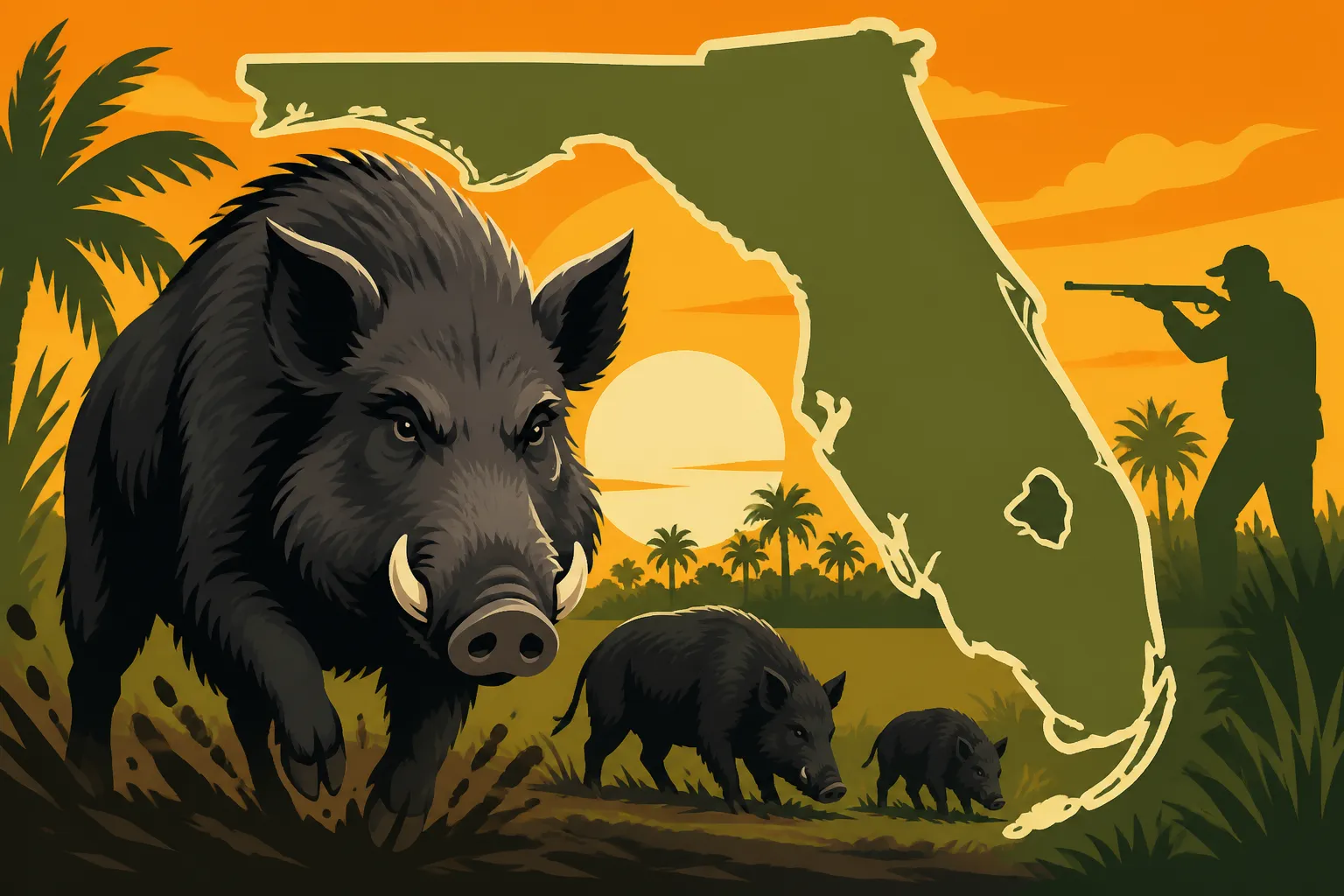
Feral Hogs Across Florida
If you've spent any time at all on Florida's public lands, or even just driven past a stretch of agricultural fields, chances are you've seen the unmistakable signs of a hog. Whether it's the rooted-up earth looking like a rototiller went wild, or a fleeting glimpse of dark hide disappearing into the palmettos, feral hogs are a pervasive challenge for landowners, farmers, and wildlife managers across the Sunshine State. This guide will take a deep dive into understanding these incredibly adaptable animals, where you can find them, the best ways to hunt them, and how to make the most of your time pursuing them in Florida's diverse landscapes.
Understanding Florida's Feral Hog Problem
Florida's lush, subtropical environment is a paradise for many species, but it's also proven to be an ideal breeding ground for feral hogs. These aren't just wild pigs; they're a complex mix of domestic swine that escaped or were released generations ago, cross-bred with European wild boars, resulting in a hardy, intelligent, and highly adaptable animal. They've truly made themselves at home here, and their numbers speak to their success.
A Destructive Force of Nature
It's hard to overstate the damage feral hogs inflict on Florida's ecosystems and economy. Imagine a herd of hungry, shovel-nosed bulldozers constantly plowing through the landscape, and you're getting close to the impact. Hogs cause extensive rooting damage, tearing up fragile wetlands, agricultural fields, manicured lawns, and even golf courses in their search for food. This rooting destroys native plant communities, impacts ground-nesting bird populations, and displaces other wildlife. They also compete directly with native species like deer and turkeys for food sources such as acorns and other mast crops. For farmers, this translates to millions of dollars in crop losses annually, from corn and peanuts to citrus groves.
Beyond habitat destruction, they can be carriers of diseases transmissible to livestock, pets, and even humans, such as brucellosis and pseudorabies. While incidents are rare, their presence introduces a constant disease risk to domestic animal populations. Their sheer numbers and destructive habits make them one of the most pressing wildlife management issues in Florida, pushing hunters and land managers to constantly find new ways to mitigate their spread.
Rapid Reproduction and Population Growth
One of the primary reasons feral hog populations explode so quickly is their incredible reproductive capacity. Sows can begin breeding as early as six months of age and can have two litters a year, sometimes even three under ideal conditions. Each litter typically consists of four to eight piglets, though it's not uncommon to see litters of up to twelve or more. This means a single sow can contribute a dozen or more offspring to the population annually, and those offspring will be ready to breed themselves in less than a year.
Combine this prolific breeding with a lack of natural predators large enough to control their numbers effectively in Florida, and you have a recipe for exponential growth. While alligators, panthers, and bears might occasionally take a piglet, they don't significantly impact the overall population. This rapid turnover and continuous breeding cycle mean that even with sustained hunting pressure and trapping efforts, keeping their numbers in check is a constant battle. It’s truly a testament to their resilience, but also a stark reminder of the uphill climb land managers face. To get a grasp on the scale of the challenge, it helps to understand How Many Feral Hogs Roam Florida.
Hog Population Estimates and Distribution
While exact numbers are notoriously difficult to pinpoint for any wide-ranging wild animal, especially one as elusive as a feral hog, estimates suggest that Florida's population runs into the hundreds of thousands, easily making it one of the states with the highest densities. Hogs are literally found in all 67 counties, from the wildest corners of the Everglades to the suburban fringes of major cities.
Their population is particularly robust in areas with a mix of dense cover (like palmetto thickets, cypress swamps, and pine plantations) and abundant food sources (such as agricultural fields, oak hammocks, and even suburban refuse). The central and northern parts of the state, with their extensive ranch lands, timber operations, and wilder river systems, tend to hold some of the highest concentrations. The Panhandle, with its vast national forests and mixed timber/agriculture, is also a hotspot. Even in South Florida's vast wetland systems, hogs thrive, utilizing elevated islands and cypress heads.
Understanding these distribution patterns is key for any hunter looking to consistently find hogs. While you might stumble upon them anywhere, focusing your efforts on these high-density regions will greatly increase your chances of success. They are truly an invasive species that has leveraged Florida's fertile ground to its maximum advantage.
Where Florida's Hogs Roam
One of the most fascinating, and sometimes frustrating, aspects of hunting feral hogs in Florida is their sheer adaptability to almost any habitat. They aren't particular; if there's food, water, and cover, they'll find a way to thrive. This means hunters need to be just as adaptable in their scouting and hunting strategies.
From Swamps to Suburban Edges
Florida’s diverse landscapes offer hogs a smorgasbord of habitats. You’ll find them deep in the vast cypress swamps of the Everglades, where they navigate the water and islands with surprising ease. Here, they'll root for tubers and invertebrates, and sometimes prey on alligator nests, adding another layer to their destructive nature. Then, shift your focus north to the expansive pine flatwoods, common in areas like the Ocala National Forest, and you'll find them using the thick palmetto and sawgrass for cover, feasting on acorns when they drop.
Further inland, especially in the agricultural heartland, hogs are notorious for raiding corn, peanut, and potato fields. They often bed down in dense cover adjacent to these food sources, moving out at night to feed under the cloak of darkness. It’s not uncommon for them to even infiltrate suburban greenbelts, golf courses, and undeveloped parcels near subdivisions, much to the chagrin of homeowners. They are opportunists, always looking for the easiest meal, and their intelligence allows them to quickly learn human patterns and avoid detection. This wide range of preferred real estate is a major reason why Florida has had to contend with the hog problem for so long.
Public Land Hotspots
For many hunters, public lands offer the most accessible opportunities to pursue feral hogs. Florida boasts an impressive amount of public hunting acreage, primarily managed by the Florida Fish and Wildlife Conservation Commission (FWC) as Wildlife Management Areas (WMAs) and by federal agencies as National Forests. Places like the Big Cypress National Preserve, Everglades WMA, Green Swamp Wilderness Preserve, and the expansive Ocala National Forest are prime examples where hog populations are consistently strong.
On these public grounds, hogs often gravitate towards areas with hardwood hammocks (especially during acorn drop), creek bottoms, and areas with dense undergrowth that provides sanctuary. Look for signs of recent rooting, wallows in muddy areas, and fresh tracks near water sources. While these areas can experience significant hunting pressure, particularly during deer and turkey seasons, hogs are present year-round, meaning dedicated hog hunters can find success even in the off-season for other game. Utilizing mapping tools like GoHunt can be invaluable for identifying prime public land areas, pinpointing cover, water sources, and potential travel corridors. This can help hunters Scouting Florida Public Land Before Season.
Private Land Challenges
While public lands offer opportunities, many of the highest hog concentrations, and the most severe impacts, occur on private agricultural and ranch lands. For landowners, managing hogs is a constant battle, and many welcome hunters to help alleviate the problem. Gaining permission to hunt private land can be incredibly rewarding, offering less pressure and often more consistent hog activity.
Large cattle ranches, citrus groves, and row crop operations in counties like Osceola, Polk, and Collier often deal with significant hog damage. Hogs will live and breed in the dense, often impenetrable, fencerows, fallow fields, and swampy areas within these properties, only venturing into cultivated areas to feed. Farmers and ranchers are often keenly aware of hog movements and patterns on their property and can be a fantastic source of information if you're fortunate enough to gain access. Just remember, a hog on private land isn't just a trophy; it's a service to the landowner. Always be respectful and adhere to any specific rules they might have.
Legalities and Regulations of Hog Hunting in Florida
When it comes to hunting feral hogs in Florida, there's a refreshing simplicity compared to the often complex rules surrounding deer or turkey. This straightforward approach is a direct reflection of the state's recognition of hogs as an invasive, destructive species.
Why They're an Unprotected Species
Unlike native game animals that have specific seasons, bag limits, and often weapon restrictions, feral hogs in Florida are classified as a non-native, nuisance species. This means they are largely unregulated in most contexts. On private land, you can hunt them year-round, day or night, with almost any legal method you choose, and there are no bag limits. This is why you often hear about landowners running continuous trapping programs or allowing hunters to pursue them aggressively. The state wants them gone, or at least greatly reduced, for the sake of native wildlife and agriculture.
This "unprotected" status is a significant advantage for hunters, as it provides immense flexibility. You don't need to worry about zone dates, specific weapon periods, or daily limits. If you have access to private land and a valid Florida hunting license (which is still generally required unless you're a landowner hunting your own property, or your direct invitee), you can hunt hogs almost at will. This fundamental difference is worth understanding; Why Florida Treats Hogs as Unprotected isn't just about fun, it's about ecological management.
License Requirements for Residents and Non-Residents
While hogs themselves are largely unregulated, you as a hunter still need to adhere to standard licensing requirements.
If you're hunting hogs on private land and are a Florida resident, you generally need a valid Florida hunting license. This isn't specifically for hogs, but rather for the act of hunting itself, and it covers all legal game species you might pursue. For non-residents, a non-resident Florida hunting license is also required. These licenses are relatively affordable and easy to obtain either online through the FWC website, at a local tax collector's office, or at many sporting goods stores like Walmart or Bass Pro Shops.
The only exception to this is often if you are hunting hogs on your own private property, or if you are directly invited by a landowner to hunt on their private land and you are a Florida resident. Even then, many prefer to simply hold a valid license to avoid any confusion.
However, the rules change slightly when you step onto public land, specifically Florida Wildlife Management Areas (WMAs). While the "unprotected" status of hogs still generally applies (meaning no bag limits or closed seasons for hogs themselves), WMA regulations often dictate specific hunting periods, access rules, and even weapon choices. On WMAs, you will need not only your base hunting license but also a Florida Management Area Permit. Some WMAs may also require a quota permit for specific hunt dates, even if you are just targeting hogs during a general gun or archery season. Always, always check the specific WMA regulations before you go, as they can vary greatly from one area to another. This is crucial for navigating Public Hunting Land in Florida.
| Hunting Location | License Requirements (Generally) | Bag Limits | Season Dates | Weapons | Notes |
|---|---|---|---|---|---|
| Private Land | Florida Hunting License (Resident/Non-Resident) | No Limit | Year-Round | Almost Any Legal | Landowner permission required. |
| Public Land (WMA) | Florida Hunting License + Management Area Permit (and sometimes a quota permit) | No Limit | Specified WMA Hunt Dates | WMA-specific | Check WMA regulations before you go. |
| Your Own Property | No license (for landowner/invitee) | No Limit | Year-Round | Almost Any Legal | Owner's discretion. |
Always remember, regulations can change, so a quick check of the current FWC hunting regulations is always a wise move before any trip. It might seem like a pain, but a few minutes of research can save you a lot of headache and potential fines.
Effective Hunting Methods for Florida Hogs
Hunting feral hogs in Florida is an exciting and challenging endeavor, primarily because they are intelligent, wary, and operate on their own schedule. What works one day might not the next, and what works in one habitat might fail miserably in another. To be consistently successful, you need a diverse toolkit of approaches.
Stalking and Still-Hunting in the Palmettos
Florida's dense palmetto flatwoods and oak hammocks offer fantastic cover for hogs, making stalking and still-hunting a truly immersive experience. This method requires patience, stealth, and a keen eye for sign. Hogs often move through these areas in small groups or "sounders," rooting as they go.
The key here is to move slowly, often only taking a few steps at a time, and then pausing to scan and listen. Wind direction is critical; hogs have an exceptional sense of smell, and if they catch your scent, they're gone. Early mornings and late evenings are prime times, as hogs are most active when temperatures are cooler. Look for fresh rooting, distinct hog tracks, and fresh droppings. Listen for the subtle sounds of hogs rustling through the brush, grunting, or crunching on acorns. A good pair of binoculars can help you pick out a patch of dark hide or a subtle movement in the shadows. This approach is similar to the careful movements needed for Still-Hunting Florida Palmetto Flatwoods, requiring maximum situational awareness.
Baiting Strategies and Setup
Baiting is an incredibly popular and effective method for drawing hogs into a predictable location, especially on private land where it’s legal and common practice. Corn is king here, but hogs will also readily come to soured grains, sweet feeds, or even specialized hog attractants.
Setting up a bait site involves choosing a secluded area with good cover nearby, ideally near a known hog travel corridor or bedding area. Start by broadcasting corn over a wide area to get them accustomed to finding food there. Once they're regularly hitting the spot, you can concentrate the bait to a smaller area or use a feeder. Automatic feeders that dispense corn at specific times can be highly effective, conditioning hogs to show up during daylight hours or at a consistent time. Digging a small trench and burying some soured corn can keep them working the area for longer, as they love to root it out.
When setting up your stand or blind, always consider the prevailing wind and approach routes. You want to be downwind of where you expect the hogs to come from. Patience is paramount, and it often takes several days or even weeks of consistent baiting to establish a productive site. Just ensure you are following all applicable rules, particularly regarding Baiting Hogs Legally in Florida.
Night Hunting with Lights and Thermal
Given their nocturnal nature and wariness during daylight hours, night hunting with artificial lights or thermal imaging equipment has become one of the most effective strategies for harvesting large numbers of hogs, particularly on private agricultural lands where they cause the most damage. Florida allows night hunting for hogs on private lands, often with no restrictions on weapon type or light source, which is a game-changer.
Dedicated night hunting rigs often involve trucks or ATVs equipped with powerful spotlights or thermal scanners. The thermal units are exceptional for detecting hogs at long distances, even in thick cover, as they pick up body heat. Once spotted, you can either stalk into range or position for a shot. For those on foot, handheld thermal units are invaluable for scanning areas before moving in. Many hunters use red or green lights mounted on their rifles, as hogs seem less sensitive to these colors than white light.
The thrill of spotting a sounder in the darkness, quietly maneuvering into position, and taking a shot under the stars is an unforgettable experience. However, safety is paramount during night hunts. Always be absolutely certain of your target and what lies beyond it. Coordination with your hunting partners and clear communication are essential. For a deep dive into this tactic, consider learning more about Night Hunting Hogs With Lights in Florida.
Dog Hunting in Florida's Thick Cover
For many Floridians, hunting hogs with dogs isn't just a method; it's a deeply ingrained tradition. This high-energy, adrenaline-fueled approach is particularly well-suited for Florida's dense, often impenetrable cover where still-hunting is nearly impossible. There are typically two types of dog teams: bay dogs and catch dogs.
Bay dogs are usually curs, Catahoulas, or similar breeds that are trained to find hogs, bay them (bark loudly) at a distance, and keep them contained until the hunter can arrive. The dogs don't engage the hog directly but rather hold it at bay, allowing the hunter to approach for a shot or to send in catch dogs. Catch dogs, typically powerful breeds like pit bulls or Dogo Argentinos, are armored with protective vests and collars and are sent in to physically hold the hog by the ear or head, allowing hunters to move in and dispatch the animal with a knife or a short-barreled firearm.
This method requires experienced dogs, handlers, and a strong understanding of hog behavior. It's often done with a group of hunters communicating via radio or GPS collars on the dogs. It's physically demanding, as you'll often be running through thick brush to keep up with the action. While incredibly effective for removing hogs from dense areas, it's also a controversial method for some, and hunters must ensure their dogs are well-trained and protected. For more detail, you can check out Dog Hunting Hogs in Florida.
Trapping for Population Control
While not strictly "hunting" in the traditional sense, trapping is arguably the most effective method for sustained population control and can remove entire sounders at once. For landowners dealing with severe hog problems, it’s an indispensable tool. Modern hog traps range from simple box traps to large, sophisticated corral traps with cellular-triggered gates.
The most successful trapping operations involve pre-baiting an area to habituate hogs to the food source, then setting up a large corral trap with a feeder inside. Wireless cameras, often linked to a GoHunt mobile app, allow trappers to monitor the trap remotely. Once a whole sounder is inside, the gate can be triggered via a smartphone. This minimizes disturbance and allows for the capture of multiple hogs simultaneously.
Trapping requires patience, careful site selection, and consistent monitoring. Hogs are smart, and they will avoid traps if they've had a bad experience or if the trap is set up improperly. However, when done correctly, it's an incredibly efficient way to remove a significant number of animals without the constant time investment of hunting. For those looking to implement this on private land, understanding Trapping Feral Hogs on Florida Private Land is key.
Gear Essentials for Florida Hog Hunters
Hunting hogs in Florida means dealing with diverse terrain, often thick cover, and frequently warm, humid conditions. Your gear choices can make a huge difference in comfort, effectiveness, and safety. Thinking through what you carry and wear is just as important as your hunting strategy.
Weapon Choices: Rifles, Bows, and Shotguns
Florida’s relaxed regulations on hog hunting, especially on private land, mean you have a wide array of weapon choices. The best option often depends on your chosen hunting method and personal preference.
- Rifles: For baiting, stalking, or night hunting, a reliable rifle in a common deer caliber (like .308, .270, 6.5 Creedmoor, or even a .223/5.56 with appropriate bullet selection) is an excellent choice. Hogs are tough animals, so good bullet construction that offers penetration and expansion is crucial. Modern sporting rifles (AR-15 platforms) are incredibly popular for hog hunting due to their capacity, modularity, and rapid follow-up shot capability, especially when dealing with multiple hogs in a sounder.
- Bows and Crossbows: Archery hunting for hogs offers a unique challenge and a deeply satisfying experience. A compound bow or crossbow with a heavy, sharp broadhead (fixed blade is often preferred for hogs due to their tough hide) can be very effective, particularly from a treestand over a bait site or during a careful stalk. Always ensure your setup delivers enough kinetic energy for a clean pass-through.
- Shotguns: A shotgun loaded with slugs is a potent hog medicine, especially in thick cover where shots are often close and fast. A 12-gauge or 20-gauge slug offers tremendous knockdown power. Some hunters also use buckshot in extremely dense situations, though its range is limited.
- Handguns: For those using catch dogs, a powerful handgun (like a .357 Magnum, .44 Magnum, or 10mm Auto) is often the weapon of choice for dispatching a hog at close quarters.
Whatever weapon you choose, practice is essential. Know its capabilities, your personal limitations, and ensure it’s sighted in correctly.
Optics and Thermal/Night Vision
This is where technology really shines for hog hunters. Given the low-light habits of hogs, quality optics are a game-changer.
- Binoculars: A good pair of 8x or 10x binoculars are indispensable for scouting, still-hunting, and identifying hogs in thick cover during daylight. Look for models with good light transmission for those crucial dawn and dusk hours.
- Rifle Scopes: For rifle hunting, a variable power scope (e.g., 2-7x, 3-9x, or 4-12x) with good low-light performance is ideal. For night hunting with lights, a scope with an illuminated reticle can be a huge advantage.
- Thermal Imaging and Night Vision: These are the ultimate tools for night hunting.
- Thermal scopes are attached to your rifle and detect heat signatures, allowing you to see hogs in complete darkness, fog, or heavy brush. They don't require any ambient light. Brands like Pulsar and ATN offer a range of thermal devices.
- Night vision scopes amplify available light (starlight, moonlight) to allow you to see in darkness. They work well, but struggle in pitch black conditions compared to thermal.
- Handheld thermal scanners are fantastic for spotting hogs from a distance before you ever raise your rifle. They allow you to survey an area quickly and locate animals without having to shoulder your weapon. Many hunters consider a handheld thermal unit almost a necessity for effective night hunting. When researching these advanced optics, consulting resources like GoHunt can help you compare models and find reputable retailers.
Clothing, Footwear, and Scent Control
Florida's environment demands specific clothing and footwear choices for comfort and success.
- Clothing: Light, breathable, quick-drying fabrics are your friends. Long pants and sleeves are advisable to protect against biting insects, thorny brush, and sun exposure. Camouflage patterns that blend with Florida's greens and browns are effective. During cooler winter months, layering is key, as temperatures can fluctuate dramatically.
- Footwear: Waterproof boots are practically a necessity, especially if you're venturing into swamps, wet flatwoods, or after a rain. Look for comfortable, durable boots with good ankle support. Muck boots or knee-high rubber boots are popular choices for navigating wet terrain and snake-prone areas.
- Scent Control: While hogs have incredible noses, complete scent elimination is tough. However, minimizing your human odor is always a good idea. Wash your hunting clothes in scent-free detergent, shower with scent-free soap, and store clothes in scent-free bags. Playing the wind is still your best defense against a hog's nose, but every little bit helps.
Additionally, always carry insect repellent, plenty of water, a first-aid kit, a sharp knife, and a reliable headlamp or flashlight, even for daytime hunts. Florida's woods can be disorienting, and it's easy to get turned around, especially when focused on tracking an animal.
Processing and Utilizing Your Harvest
So, you've successfully harvested a Florida hog! Congratulations! Now comes the critical part: proper field dressing and meat care. This is where the real work begins, but also where you ensure that delicious wild pork makes it to your dinner table.
Field Dressing in Florida's Heat
Florida's warmth means you need to act fast. Unlike colder climates where you might have a bit more time, the clock starts ticking the moment a hog hits the ground here. Heat and humidity are a breeding ground for bacteria, which can quickly spoil meat.
The absolute priority is to get the guts out as quickly and cleanly as possible to allow the carcass to cool internally. Lay the hog on its back, elevate its head if possible, and make a careful incision from the sternum to the pelvis. Be careful not to puncture the intestines or stomach. Reach in, sever the windpipe and esophagus, and pull out all the organs. You can carefully sever the rectum to free the digestive tract. Once the cavity is clear, prop it open to allow air circulation. If you have access to water, a quick rinse of the cavity can help, but ensure you dry it thoroughly afterward.
If you're deep in the woods, consider quartering the animal right there. Removing the legs and backstraps reduces the weight and allows for faster cooling and easier transport. Pack the meat into game bags or coolers filled with ice immediately. Do not let the meat sit uncovered in the sun or heat. The goal is to get the internal temperature of the meat down as rapidly as possible to prevent spoilage. This is a crucial step that can make or break the quality of your wild pork.
Meat Care and Recipes
Once you've field dressed and transported your hog, the next step is processing the meat. This can be done yourself if you have the tools and know-how, or by a professional meat processor. For those just starting out, taking it to a reputable processor is often the easiest route.
Wild hog meat is incredibly versatile and can be used in countless dishes. It's lean, flavorful, and a healthy alternative to store-bought pork. However, it's important to remember that wild hogs are known to carry diseases like brucellosis. While the risk to humans is low if proper precautions are taken, always handle wild hog meat with gloves and ensure it is cooked thoroughly to an internal temperature of at least 160°F (71°C) to kill any potential pathogens. Never consume wild hog meat rare or medium-rare.
For cooking, the possibilities are endless. Hog roasts are a classic, especially for larger animals. Smaller hogs yield fantastic cuts for chops, steaks, and roasts. The tougher cuts and trimmings can be ground for sausage, chorizo, or burger meat. Ribs from a young hog are incredibly tender and delicious when slow-cooked. Don't be afraid to experiment with different marinades, rubs, and cooking methods. For some inspiration and guidance on preparing your harvest, definitely check out Cooking a Wild Florida Hog. There are tons of resources online and in cookbooks dedicated to wild game that can help you turn your hard-earned hog into a culinary masterpiece. Utilizing platforms like GoHunt can also lead you to forums or articles sharing unique wild game recipes.
Challenges and Ethical Considerations
Hunting feral hogs in Florida, while largely unregulated, still comes with its own set of challenges and ethical considerations. Being a responsible hunter goes beyond just following the law; it means respecting the land, the animals, and fellow outdoors enthusiasts.
Dealing with Hunting Pressure on Public Land
Florida's public lands, while vast, can experience significant hunting pressure, especially during peak deer and turkey seasons. This pressure can make hogs even more wary and nocturnal. If you're hunting WMAs, expect to encounter other hunters, and be prepared to put in extra effort to find areas less disturbed.
Strategies for overcoming pressure include:
- Hunting midweek: Weekends are typically the busiest. If your schedule allows, a Tuesday or Wednesday hunt can make a big difference.
- Going deep: Most hunters don't venture far from access points. If you're willing and able to walk a mile or more into remote areas, your chances of finding undisturbed hogs increase significantly.
- Hunting during off-seasons: Since hogs can be hunted year-round, targeting them outside of general deer or turkey seasons often means less competition. However, be mindful of specific WMA rules that might still dictate access or allowable activities during these times.
- Utilizing technology: Apps like GoHunt, with their detailed mapping layers, can help you identify remote pockets of public land, track your movements, and avoid heavily trafficked areas. They can also highlight areas of dense cover or water sources that might hold hogs that other hunters overlook.
Above all, maintain respect for other hunters. Be courteous, share information when appropriate, and avoid disrupting someone else's hunt.
Respecting Private Property Boundaries
While the goal is often to reduce hog populations, it's absolutely critical to respect private property boundaries. Hogs don't recognize property lines, and it's easy for them to cross from public land onto private land or vice-versa.
- Know where you are: Always use a reliable GPS device or mapping app (like GoHunt's property line feature) to confirm your exact location, especially when hunting near public/private land interfaces.
- Obtain permission: If a hog runs onto private land, you cannot pursue it without explicit permission from the landowner. This is Florida trespass law, plain and simple. Trying to retrieve game from private land without permission can lead to serious legal trouble.
- Communicate: If you're hunting near a property line, it's often a good idea to contact the adjacent landowner beforehand, if possible. Let them know you'll be hunting and ask about their preferences. This can prevent misunderstandings and build goodwill.
Accidentally crossing a property line is an easy mistake to make in dense Florida cover. Being proactive and constantly aware of your location is the best defense against inadvertently trespassing. Remember, permission is not forgiveness.
Conservation Through Control
While some might view hog hunting as purely recreational, it's important to frame it within the larger context of conservation. Feral hogs are an invasive species, and their unchecked proliferation poses a serious threat to Florida's native wildlife, delicate ecosystems, and agricultural economy.
By participating in hog hunting, you are actively contributing to the control of an ecologically damaging species. Every hog harvested is one less animal rooting up valuable habitat, competing with native deer and turkeys for food, and potentially spreading disease. This form of "nuisance animal" hunting is a vital management tool, and hunters are essential partners in this effort.
It's a stark reminder that not all hunting is about conservation in the traditional sense of protecting a native species from overharvest. In the case of feral hogs, it's about removing an invasive species to protect and restore the native balance. This is a unique and important role that hog hunters play in Florida's overall wildlife management strategy.
The Future of Hog Management in Florida
The battle against feral hogs in Florida is ongoing, and it's clear they aren't going anywhere fast. However, ongoing research, adaptive management strategies, and the continued dedication of hunters and landowners offer hope for mitigating their impact.
Ongoing Research and FWC Initiatives
The Florida Fish and Wildlife Conservation Commission (FWC) continuously monitors hog populations and their impact. Researchers study hog movements, reproduction rates, habitat use, and the effectiveness of various control methods. This scientific data is crucial for developing and refining management strategies.
FWC often collaborates with state and federal agencies, as well as universities, to explore new technologies and approaches. This includes investigating improved trapping designs, more efficient baiting methods, and even potential biological controls, although the latter is often fraught with complexities and risks. Their goal is not necessarily eradication, which is largely considered impossible given the hogs' widespread distribution and prolific breeding, but rather effective population reduction and damage mitigation. Hunters play a crucial role in providing harvest data and on-the-ground observations that feed into these research efforts. The FWC's pragmatic approach to Florida's Year-Round Hog Hunting Rules reflects this ongoing effort.
The Role of Hunters in Ecosystem Health
As we've discussed, hunters are not just participants in a sport; they are integral to the management of feral hogs in Florida. Without hunter involvement, the hog problem would be far more severe, causing even greater ecological and economic damage. The year-round, unlimited take on private lands, and liberal regulations on public lands, are designed to encourage maximum hunter participation.
Every hunter who takes to the field, whether with a rifle, bow, or a pack of dogs, contributes to ecosystem health by reducing hog numbers. This decentralized, hunter-driven control is cost-effective for the state and provides a valuable service to the environment and agricultural community. As a hog hunter, you are a frontline defender of Florida's natural resources, actively working to minimize the damage caused by these highly successful invaders. So, embrace the challenge, enjoy the hunt, and know that you're doing your part to protect the Sunshine State's unique wild places.
Disclaimer
This article is intended for informational purposes only and does not constitute legal advice. Hunting regulations, license requirements, and rules for specific Wildlife Management Areas (WMAs) in Florida can change. Always consult the most current Florida Fish and Wildlife Conservation Commission (FWC) regulations before engaging in any hunting activities. It is the responsibility of each hunter to know and abide by all applicable federal, state, and local laws.