Trapping Feral Hogs on Florida Private Land
Feral hogs on private land in Florida can feel like an unending battle, tearing up pastures, rooting through food plots, and even threatening native wildlife and livestock. This comprehensive guide will walk you through the most effective strategies for trapping these destructive animals on your own property, turning frustration into control.
Understanding the Feral Hog Problem in Florida
If you own private land in Florida, chances are you've already experienced the relentless damage caused by feral hogs. These intelligent, prolific animals can make land management a nightmare, and understanding their impact and the legal framework for dealing with them is the first step toward effective control.
Why Hogs are Such a Nuisance on Private Land
Florida's lush landscape, abundant food sources, and mild climate create a perfect breeding ground for feral hogs, and they're not native to these parts, making them an invasive species with no natural predators to keep their numbers in check. They reproduce at an astounding rate, often having two litters of 4-8 piglets per year, meaning that if you see one hog, there are usually many more just out of sight, and an exponential number on the way.
Their impact on private property is devastating. Hogs are voracious eaters, constantly rooting with their powerful snouts, seeking out tubers, roots, and invertebrates. This rooting activity completely destroys agricultural crops like peanuts, corn, and potatoes, devastates managed food plots intended for deer or turkeys, and turns pristine pastures into warzones overnight. Beyond agricultural damage, they compete directly with native wildlife for food, spread diseases like brucellosis and pseudorabies to livestock and other wildlife, and can even pose a direct threat to pets or young animals. When you see a field that looks like it's been rototilled, you know a sounder of hogs has paid a visit, and your blood pressure probably rises right along with the ruined soil. It's a constant, uphill battle for many landowners, and it's easy to feel overwhelmed. For more context on their prevalence, you might find it helpful to read about How Many Feral Hogs Florida Has.
Legalities of Trapping Hogs on Private Property
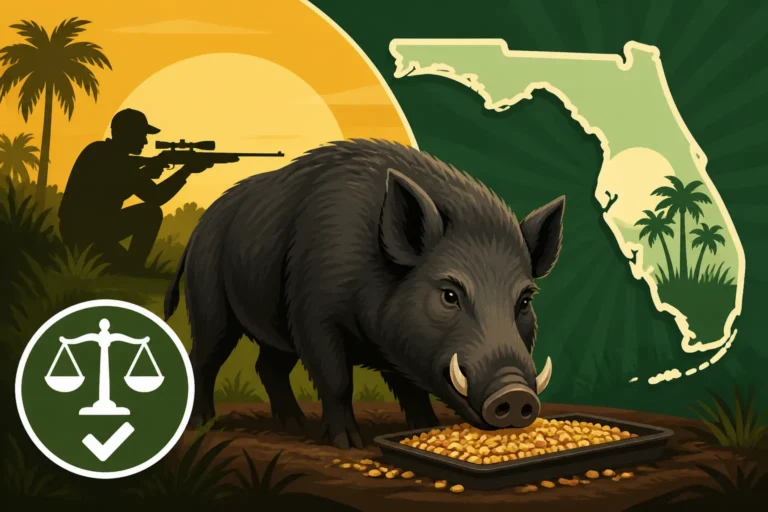
One of the few upsides to Florida's extensive feral hog population is the relaxed regulatory environment surrounding their control on private land. The Florida Fish and Wildlife Conservation Commission (FWC) classifies feral hogs as an unprotected species, meaning there are no closed seasons, no bag limits, and no size restrictions when hunting or trapping them on private land. This gives landowners immense flexibility to implement year-round control measures without the usual red tape associated with game animals.
You don't need a hunting license to take feral hogs on private land with the landowner's permission. This is a huge relief for many, as it simplifies the process considerably. However, there are still some common-sense rules to follow. For instance, while baiting for hogs is generally permitted year-round on private land, you need to ensure any baiting activities don't unintentionally attract or habituate regulated game species to bait during their respective closed seasons or within areas where baiting for those species is prohibited. Also, while snares are legal in Florida, their use comes with significant ethical and practical considerations, especially regarding non-target animals, which we'll discuss later. Always remember that even on your own property, animal cruelty laws still apply, so dispatch methods should be humane. Understanding these regulations is key, and you can delve deeper into Florida's Year-Round Hog Hunting Rules for a full breakdown.
Essential Considerations Before Setting Traps
Before you even think about buying or building a trap, the most crucial step is to understand the hogs you're dealing with. Knowing their habits, travel patterns, and preferred areas will dramatically increase your success rate and prevent wasted time and effort.
Scouting and Sign Recognition
Effective hog trapping begins with diligent scouting. Hogs are creatures of habit, and they leave a clear trail of their activities. You need to become an expert at reading these signs to identify where they are, what they’re doing, and where they’re going. Look for these key indicators:
- Rooting: This is the most obvious sign. Hogs use their powerful snouts to dig up soil in search of food. Fresh rooting indicates recent activity. Pay attention to the depth and spread of the rooting; it can tell you if it's a small individual or an entire sounder.
- Wallows: Hogs love to cool off and remove parasites by rolling in mud or shallow water. These muddy depressions, often near water sources, are prime locations to observe their movements. Fresh mud and distinct hog tracks around a wallow are great indicators.
- Tracks: Hog tracks are unique. They are typically cloven (two toes), but unlike deer tracks, the dewclaws (smaller upper toes) often show, especially in soft mud, giving a splayed appearance. The overall track shape is rounder and blunter than a deer's. Following these tracks can reveal travel corridors.
- Rubs: Hogs will rub against trees, fence posts, or anything sturdy to remove mud and parasites. Look for mud residue and hair on low branches or posts, often just a few feet off the ground.
- Droppings: Hog scat can vary greatly depending on their diet, but it's often cylindrical or clumped, and you might see undigested food matter like corn or acorns.
- Trails: Hogs create distinct trails through dense vegetation, often wider and more worn than deer trails. These are their highways between bedding, feeding, and watering areas.
To really get an edge, consider deploying game cameras. These are invaluable for monitoring activity without disturbing the area. Place them on trails, near rooting, or by potential trap sites. A cellular camera can send real-time photos or videos to your phone, letting you know exactly when and where hogs are moving. Platforms like GoHunt offer excellent tools for mapping your property, marking sign locations, and even integrating camera data, allowing you to visualize hog movement patterns over time. This detailed intelligence will help you pinpoint the best spots for your traps, rather than just guessing. If you're looking for more general scouting tips, consider checking out Scouting Florida Public Land Before Season, many principles of which apply to private land as well.
Choosing the Right Trap Location
Once you've identified areas of high hog activity through your scouting, selecting the precise trap location becomes critical. You want to place your trap directly in their path or where they naturally congregate, minimizing the chance they'll simply walk around it.
Think about the natural funnel points on your property. These could be narrow strips of woods between open fields, edges of dense palmetto thickets or cypress swamps, or bottlenecks between bodies of water. Hogs will often use the path of least resistance. Areas where different types of habitat converge—like where a pine forest meets an oak hammock, or a dry ridge meets a marshy bottom—are also excellent choices, as these transition zones often offer a variety of food sources and cover.
Water sources are another magnet for hogs, especially in Florida's warm climate. Placing traps along trails leading to ponds, creeks, or muddy wallows can be highly effective. Consider areas where you've seen consistent rooting, as this indicates a regular feeding spot. Always try to position the trap in a discreet location, preferably with some natural cover around it, rather than out in the wide open. While hogs aren't typically "trap shy" in the same way some predators are, making the trap feel like a natural part of their environment can help encourage entry. Remember, this isn't just about catching one hog; it's about catching a whole sounder, so picking a location they regularly frequent is paramount.
Types of Feral Hog Traps and How They Work
There's no single "best" trap; the ideal choice depends on your specific situation, the size of your hog problem, your budget, and how much time and effort you're willing to invest. Understanding the different types available is crucial for making an informed decision.
Box Traps
Box traps are typically smaller, rectangular enclosures, often constructed from heavy-gauge wire mesh or sturdy lumber. They usually feature a single spring-loaded or gravity-activated gate that drops or swings shut once an animal triggers a trip plate or wire inside.
Pros:
- Portability: Many box traps are relatively lightweight and can be easily moved by one or two people, allowing you to relocate them quickly based on hog movement.
- Simplicity: Their design is straightforward, making them easy to set up and maintain.
- Cost-effective for smaller scale: For landowners dealing with a few nuisance hogs or smaller sounders, a single box trap can be an affordable initial investment.
- Good for targeting specific animals: If you have an individual hog causing trouble, a box trap can sometimes be more discreet and effective for single captures.
Cons:
- Limited capacity: The biggest drawback is their small size, typically only accommodating one to three hogs at a time. If you have a large sounder, you'll catch a few, and the rest will quickly learn to avoid that particular trap.
- Requires frequent checking: Due to their limited capacity, box traps need to be checked often to avoid stress to the trapped animals and to reset for new captures.
- Can be escaped by larger hogs: A truly large, powerful boar might be able to damage or even escape a less robustly built box trap, especially if it's not anchored properly.
Setup and Ideal Scenarios:
Box traps are best placed in tight travel corridors, on small private plots, or where you're dealing with individual problem hogs. Bait them heavily inside and just outside the entrance. The trigger mechanism needs to be sensitive enough to be activated by a hog but robust enough to hold it. Always anchor the trap securely to prevent it from being moved or tipped over by a trapped animal. They are an excellent starting point for those new to trapping or with limited resources, but they're rarely the sole solution for a significant hog problem.
Large Panel Traps (Corral Traps)
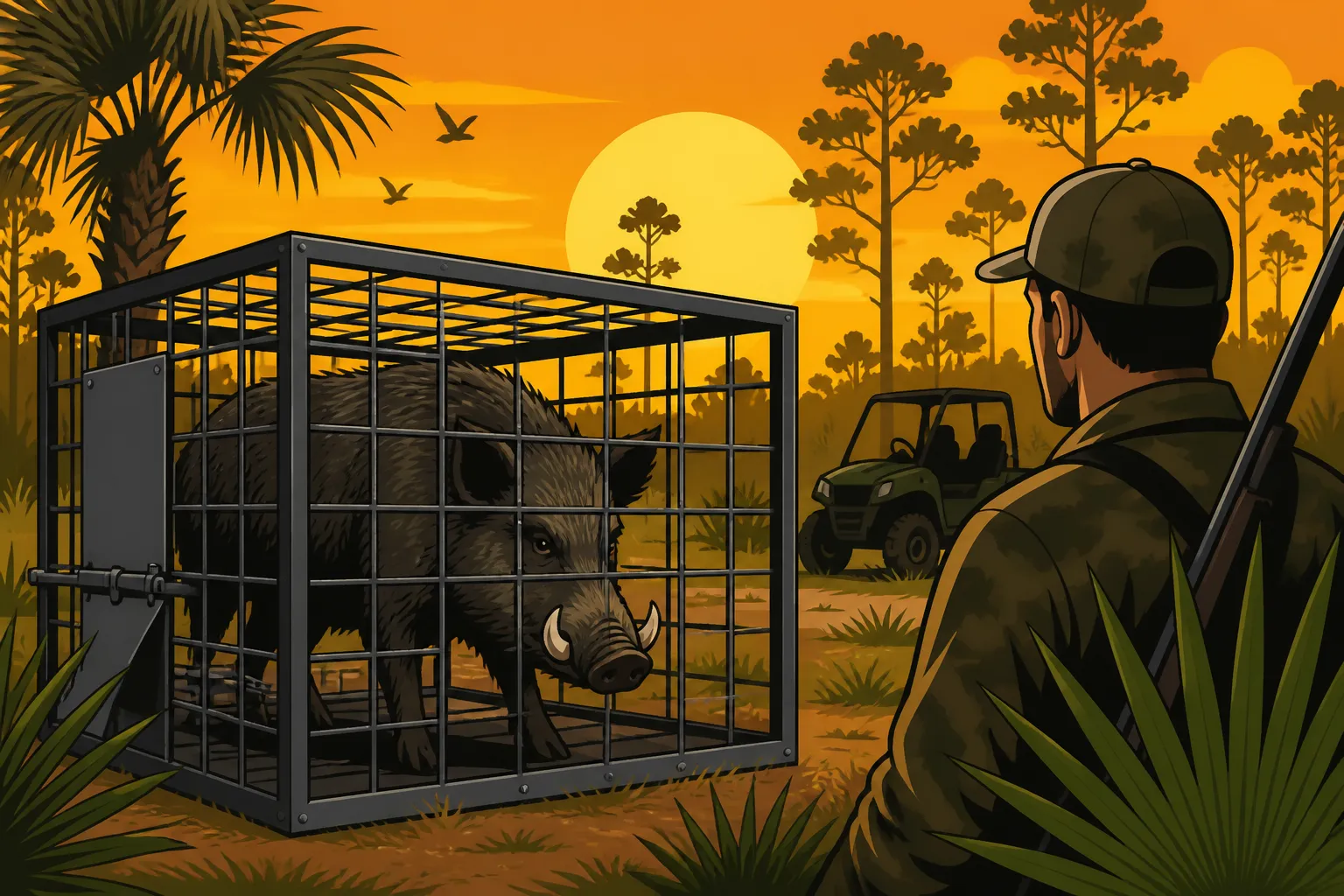
Corral traps, also known as large panel traps or sometimes "group traps," are the big guns of hog trapping. These are substantial enclosures made from multiple heavy-duty steel panels, forming a circular, square, or irregular-shaped pen. They feature a single, often sophisticated, gate mechanism—like a guillotine gate, saloon-style swing gate, or even a rooter door—that allows multiple hogs to enter freely before being triggered.
Pros:
- High capacity: This is their main advantage. Corral traps are designed to capture an entire sounder at once, which is crucial for making a real dent in hog populations. You can often catch 10-30+ hogs in a single setting.
- Highly effective for population control: By removing whole groups, you disrupt their social structure and breeding cycles more effectively than individual captures.
- Reduced trap shyness: Because hogs can enter and exit freely during the pre-baiting phase, they become habituated to the trap area before the gate is ever set to trigger.
Cons:
- High initial cost: The materials and construction of a large corral trap represent a significant investment compared to box traps.
- Labor-intensive setup: Transporting and assembling these heavy panels requires more effort, and often multiple people.
- Less portable: Once set up, moving a corral trap is a major undertaking, so careful initial placement is key.
Design and Advanced Systems:
A typical corral trap will consist of 6-10 heavy-duty steel panels, often 4-6 feet high and 10-12 feet long, secured together to form an enclosure. The gate mechanism is usually the most critical component. Some gates are manually tripped, but modern systems often incorporate remote cellular triggers. With these, you can monitor your trap site via game camera (GoHunt's mapping features can help visualize camera placement) and then remotely drop the gate when you see the entire sounder inside the trap. This avoids catching only a few hogs and spooking the rest. Manufacturers like Jager Pro and BoarBuster offer complete, integrated trapping systems that combine high-tech cameras, remote triggers, and robust corral designs, representing the cutting edge of hog control. For those looking to capture entire families, Trapping a Sounder on Private Land will give you even more detailed insights.
Snare Traps
Snare traps utilize a loop of cable that tightens around a hog's neck or leg when triggered.
Pros:
- Inexpensive: Snares are very cheap to purchase or make.
- Lightweight and portable: They are easy to deploy in remote or hard-to-access areas.
- Effective when properly set: A well-placed snare can be highly effective for catching individual hogs.
Cons:
- Significant risk to non-target animals: This is the most substantial drawback. Snares are indiscriminate. Deer, bears, small game, and even domestic animals can be caught, often resulting in injury or death. This ethical concern leads many to avoid them entirely or use them only in very specific, isolated situations.
- Requires expertise: Proper snare placement and setup are critical to minimize non-target captures and ensure a quick, humane capture. Incorrectly set snares can cause prolonged suffering.
- Safety concerns: Handling snared animals, especially large hogs, can be dangerous.
Caveats for Florida: While legal, the indiscriminate nature of snares means they are generally not recommended as a primary trapping method, especially on properties with diverse wildlife or where pets might roam. If you choose to use them, ensure they are checked extremely frequently (multiple times a day), and always consider the potential impact on other species.
Trap Type Comparison
To help you decide which trap might be best for your situation, here's a quick comparison:
| Trap Type | Initial Cost | Ease of Setup | Effectiveness for Sounders | Portability | Safety for Non-Target |
|---|---|---|---|---|---|
| Box Trap | Low-Moderate | Easy | Low (single captures) | High | Moderate |
| Corral Trap | High | Moderate-Hard | High (whole sounder) | Low | High |
| Snare Trap | Very Low | Easy | Very Low (single captures) | Very High | Very Low |
Baiting Strategies for Maximum Success
Once you have your trap type and location sorted, the next crucial step is baiting. This isn't just about throwing out some food; it's about systematically luring hogs to your trap and conditioning them to feel safe inside it.
What Baits Attract Hogs Best
Hogs are omnivores, but they have a particular fondness for certain foods, especially those that are fermented and highly aromatic. Here are some of the most effective baits for drawing them in:
- Fermented Corn (Sour Corn): This is arguably the king of hog baits. The fermentation process creates a strong, sweet-sour smell that hogs can detect from a considerable distance, even in Florida's humid air. To make it, simply soak cracked corn or whole kernel corn in water for several days in a sealed container (like a 5-gallon bucket), allowing it to ferment. Adding a packet of yeast or some sugar can speed up the process. Just a warning, it smells absolutely terrible to humans, but hogs can't get enough of it!
- Commercial Attractants: Many companies produce granular or liquid hog attractants designed to mimic the smell of fermented foods or natural hog food sources. Brands like Wildgame Innovations or Big & J often have products specifically formulated to draw in hogs. These can be convenient if you don't want to ferment your own corn.
- Other Grains and Sweets: Dry corn, oats, and even stale pastries or donuts can work. Hogs have a sweet tooth, so anything sugary can be appealing. Some trappers also use overripe fruit or vegetables.
- Used Cooking Grease/Oil: The smell of rancid grease can be a surprisingly effective attractant for hogs. Drizzling it over your primary bait can add another layer of allure.
When choosing your bait, think about scent dispersal. The stronger the smell, the further it will carry, and the more likely hogs will pick it up on the wind. Always consider the environmental impact of your bait choices, avoiding anything that might be harmful to other wildlife or contaminate water sources. For specific rules on what you can and cannot use to entice game, it's always smart to review Baiting Hogs Legally in Florida.
Pre-Baiting and Conditioning Hogs
This phase is where many amateur trappers fail, rushing to set the trap gate too early. Pre-baiting is the practice of consistently placing bait at your chosen trap site, often inside the unset trap, for several days or even weeks before you intend to activate the trigger. The goal is to build trust and habituate the entire sounder to feeding safely within the trap's confines.
Here’s how to do it effectively:
- Start Outside, Move Inside: Begin by scattering bait in a wide area around your chosen trap location. As hogs start hitting it regularly, gradually move the bait closer to and then inside the unset trap.
- Leave the Gate Open: For box traps, prop the door open so hogs can freely enter and exit. For corral traps, ensure the gate is secured in an open position. You want them to associate the trap with an easy, safe meal, not a threat.
- Monitor Activity: Use game cameras (GoHunt's platform is excellent for this) to observe how many hogs are entering the trap, how frequently, and at what times. Don't set the trap until you see the entire sounder comfortably entering and feeding. If you set it too early and only catch a few, the others will become trap-shy and be much harder to catch later.
- Consistency is Key: Replenish the bait regularly, ensuring there's always food available. This builds a routine and reinforces their comfort level. If they show up and the bait is gone, they might get suspicious.
- Patience Pays Off: This stage can take days, or even weeks, especially with wary sounders. Resist the urge to set the trap prematurely. The longer you pre-bait and condition them, the higher your chances of catching every hog in the sounder.
By following this pre-baiting strategy, you're not just luring them with food; you're actively working to overcome their natural wariness, turning the trap into a routine food source rather than a perceived danger. This is especially effective with smart older sows who lead the sounders.
Monitoring, Managing, and Releasing/Dispatching Trapped Hogs
Once your trap is set and actively catching hogs, the work isn't over. You need a plan for monitoring, safely managing the captured animals, and humane dispatch or relocation.
Remote Monitoring with Cellular Cameras
Gone are the days of constantly driving out to check your traps, wasting time, fuel, and potentially spooking animals. Modern cellular trail cameras have revolutionized hog trapping, especially for large corral systems. These cameras transmit images or videos directly to your phone or computer, giving you real-time updates on what's happening at your trap site.
- Real-time Intelligence: You can see exactly which hogs are visiting, how many, and whether the entire sounder is present. This is invaluable for knowing when to activate a remote-controlled gate on a corral trap, ensuring you capture the whole group.
- Reduced Pressure: By not physically visiting the trap daily, you minimize human scent and disturbance, keeping the area feeling safer for the hogs and increasing your chances of a successful capture.
- Efficiency: Instead of making unnecessary trips, you only visit the trap when there's an animal caught or when you need to re-bait.
- Enhanced Safety: You know what you're walking into, whether it's an empty trap or one full of agitated hogs.
Many popular cellular camera brands, like Moultrie Mobile or Spartan GoCam, integrate well with mapping and scouting apps like GoHunt, allowing you to manage your camera network, view images, and mark capture locations all in one place. This seamless integration gives you a bird's-eye view of your trapping efforts and helps you make informed decisions.
Humane Dispatch Methods
Once you've trapped a hog, the next step is humane dispatch. It's imperative to prioritize the animal's welfare and ensure a quick, clean kill, both for ethical reasons and for the safety of the trapper.
The most common and recommended method is a well-placed shot to the brain.
- Firearms: A .22 caliber rifle or pistol is sufficient for this purpose, as you are shooting at very close range. Aim for the spot directly behind the ear, or for a frontal shot, imagine a line drawn between each ear and aim where they intersect on the forehead. This ensures a rapid and humane dispatch.
- Bang Stick/Capture Device: For those who prefer not to use traditional firearms in a trap, specialized "bang sticks" or capture devices designed for close-range animal dispatch can be used. These deliver a fatal blow or shot directly to the brain with minimal risk of ricochet.
Safety First: Always approach a trapped hog with extreme caution. They can be incredibly powerful and aggressive, even when confined. Never enter a trap with a live hog. Perform the dispatch from outside the trap, maintaining a safe distance. Ensure you have a clear shot and that there are no obstructions. For safety and to minimize stress on the animal, dispatch should happen as quickly as possible after discovery.
Carcass Disposal and Processing
After dispatching a trapped hog, you'll need to decide what to do with the carcass. Florida law allows you to possess and consume feral hog meat.
- Personal Consumption: Feral hog meat is lean, flavorful, and excellent table fare. Many landowners trap hogs specifically for their meat. If you plan to process the hog yourself, ensure you field dress it quickly, especially in Florida's warm climate, to prevent spoilage. Cool the meat down as rapidly as possible. You can learn more about preparing your harvest by checking out Cooking a Wild Florida Hog.
- Donation: If you don't want the meat yourself, consider donating it to local food banks or organizations that accept wild game. Always check their specific requirements beforehand.
- Disposal: If processing for meat isn't an option, you must dispose of the carcass legally and responsibly. This usually involves burying it deep enough to prevent scavengers from digging it up, or transporting it to a designated animal disposal site if available. Do not simply leave carcasses exposed where they could attract other unwanted animals or become a public nuisance. In Florida, never dispose of carcasses in water bodies.
Proper handling and disposal are critical not only for hygiene but also to prevent the potential spread of diseases that hogs can carry, even though the risk of transmission to humans is low with proper precautions.
Advanced Trapping Tactics and Troubleshooting
Even with the best planning, trapping can present challenges. Hogs are smart and adaptable, and sometimes you'll encounter trap-shy individuals or sounders that seem to outwit you.
Addressing Trap-Shy Hogs
A "trap-shy" hog is one that has had a negative experience with a trap, or has simply observed others being caught, and now actively avoids the trapping area. Catching these wary individuals requires extra patience and some creative strategies.
- Change the Bait: Hogs can associate specific baits with danger. Try a completely different attractant. If you've been using fermented corn, switch to sweet potatoes, pecan meal, or even commercial protein pellets. The novelty might pique their curiosity.
- Relocate the Trap: If a trap has been in the same spot for a long time without success, or if a sounder became wary after a partial catch, move the trap entirely to a new, promising location. Sometimes a fresh start is all it takes.
- Camouflage the Trap: While hogs aren't known for keen eyesight, breaking up the silhouette of a large, man-made trap can sometimes help. Use natural vegetation like palmetto fronds, branches, or brush to help the trap blend into its surroundings.
- Leave the Gate Open for Extended Periods: For truly trap-shy sounders, you might need to leave a corral trap's gate open and baited for several weeks, or even a month or more. The goal is to fully re-establish their trust, letting them feed in and out without any pressure whatsoever, until they are completely habituated again. Use your cellular cameras to confirm their consistent, relaxed presence inside the trap before remotely setting the gate.
- Use a "Trapshy" Panel: Some advanced trappers use specific "trap-shy" panel designs for corral traps. These panels allow hogs to push their way in through a one-way opening but cannot easily push their way back out. These can be particularly effective for hogs that will enter but won't trigger a traditional trip plate.
Patience is your biggest weapon when dealing with trap-shy hogs. Don't rush it, and be prepared to experiment with different approaches until you find what works for your particular sounder.
Combining Trapping with Other Control Methods
Trapping is an incredibly effective tool for hog control, but it doesn't have to be the only one. Integrating trapping with other methods can create a comprehensive management plan that maximizes your success and keeps hog populations in check over the long term.
- Hunting: While trapping removes entire sounders, targeted hunting can address individual problem hogs or those that become trap-shy. Spot-and-stalk methods during daylight, or Night Hunting Hogs With Lights in Florida (where legal) can be very effective for culling remaining animals. Remember, there's no bag limit on private land, so any hog taken is a step in the right direction.
- Dog Hunting: For landowners who enjoy it and have the appropriate resources, dog hunting can be a highly efficient way to locate and dispatch hogs in dense cover. Cur dogs or catch dogs are specifically trained for this purpose. This method is particularly useful in areas too thick for effective trapping or shooting. To explore this option, you might want to look into Dog Hunting Hogs in Florida.
- Fencing: While expensive and labor-intensive to install, hog-proof fencing around specific areas like food plots, gardens, or livestock pens can provide a physical barrier. Electric fences, especially those with multiple wires placed low to the ground, can be very effective at deterring hogs. Fencing isn't a control method in itself, but it can protect valuable areas while you work on population reduction through trapping and hunting.
- Habitat Modification: Reducing areas of dense, impenetrable cover can make your property less attractive to hogs. While you don't want to eliminate all cover for native wildlife, strategic clearing in areas where hogs bed can make them more vulnerable and less likely to settle in.
The key is to use a multi-pronged approach. Trapping focuses on mass removal, while hunting and other methods target the elusive survivors. By continually adapting your strategies and combining these tools, you can achieve much more sustainable control over feral hog numbers on your Florida private land.
Disclaimer
Please note: This article is intended for informational purposes only and does not constitute legal advice. Hunting and trapping regulations can change, and it is the responsibility of each individual to verify and comply with all current Florida Fish and Wildlife Conservation Commission (FWC) rules, local ordinances, and landowner permissions before engaging in any hunting or trapping activities. Always prioritize safety and ethical practices.