How Many Feral Hogs Roam Florida
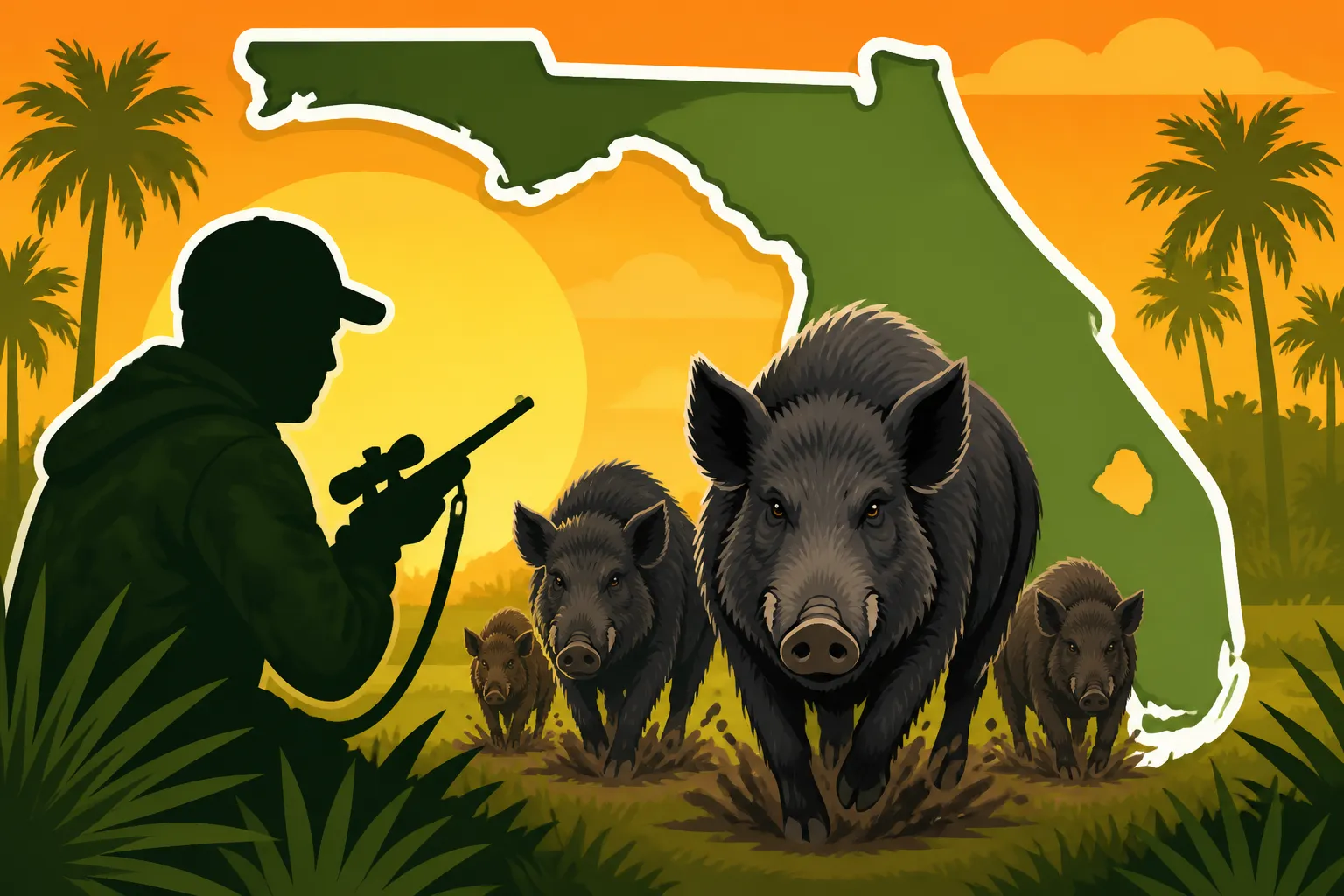
It's no secret that Florida is absolutely teeming with wildlife, but perhaps no animal sparks as much conversation, and often frustration, among landowners, farmers, and hunters alike as the feral hog. You might drive down a rural road and see a field completely rooted up overnight, or stumble upon tracks so fresh you know a sounder just moved through. The sheer number of these critters can feel overwhelming, leading many of us to wonder: just how many feral hogs are actually roaming our beautiful Sunshine State? It's a question without a simple answer, but understanding the challenges in counting them, the best estimates available, and the implications of their widespread presence is key to grasping this complex Florida hunting landscape. This guide will dive deep into the elusive world of Florida's feral hog population, giving you a clearer picture of their numbers and their impact.
The Hidden Hoard: Why Pinpointing Florida's Feral Hog Numbers is a Challenge
Trying to get an exact count of feral hogs in Florida is like trying to count grains of sand on a beach – it's an impossible task that keeps wildlife managers and researchers scratching their heads. These aren't deer that can be easily spotted in open fields, or turkeys that gobble from a roost. Hogs are secretive, often nocturnal, and incredibly adept at avoiding detection, making any precise enumeration a monumental undertaking.
Their Elusive Nature and Rapid Reproduction Cycle
Feral hogs are masters of concealment. They thrive in dense palmetto thickets, impenetrable cypress swamps, and even surprisingly close to human habitation in overgrown areas. This makes traditional census methods, like aerial surveys or spotlight counts, incredibly difficult and often inaccurate. You could fly over a section of prime hog habitat and see nothing but trees, yet a hundred hogs could be bedded down just beneath the canopy. Their camouflage, combined with their tendency to be most active when we're least active – from dusk till dawn – means they largely operate under the radar.
Beyond their stealth, the reproductive capabilities of feral hogs are nothing short of astounding. A sow can start breeding as early as six months old and can have two litters of four to twelve piglets per year. This means their populations can explode in a very short amount of time. If you remove a portion of a sounder, the remaining hogs can quickly fill that void. This high turnover rate makes any static count obsolete almost as soon as it's taken. It's a constant, uphill battle against their natural prolificacy.
Challenges in Data Collection and Reporting
Unlike deer or turkeys, which have mandatory harvest reporting in Florida, there's no requirement to report harvested feral hogs. This means there's a huge gap in our understanding of how many hogs are actually being removed from the landscape each year. While many hunters are dedicated to hog control, their efforts aren't systematically tracked, which leaves wildlife agencies without a critical piece of the population puzzle.
Furthermore, hogs move. They don't respect property lines or county borders. A sounder might root up a farmer's field in Levy County one night and be in Gilchrist County the next. This constant movement across varying habitats and land ownership types makes consistent, wide-scale data collection incredibly complex. Researchers rely on various methods, from camera trapping and track surveys to landowner interviews and modeling, but each comes with its own set of limitations and potential biases. Without a centralized, mandatory reporting system for hog harvests or more standardized large-scale surveys, precise numbers remain out of reach.
Estimating the Uncountable: What Current Data and Experts Suggest
Given the difficulties, wildlife biologists and land managers rely on various methodologies to develop estimates of Florida's feral hog population. While no single number can be definitively stated, these estimates paint a picture of a pervasive and numerous species across the state.
State-Level and Regional Estimates
The truth is, there isn't one universally agreed-upon, definitive number for how many feral hogs roam Florida. Most experts will tell you that the best estimates hover in the hundreds of thousands, potentially even pushing close to a million animals statewide. Some older estimates have put the number well over a million for the entire United States, with Florida being one of the top five states for hog density. What we do know is that their presence is widespread, from the northern panhandle all the way down to the Everglades.
These estimates are often derived from a combination of scientific modeling, localized studies on public lands, and anecdotal evidence from private landowners. For example, some Wildlife Management Areas (WMAs) might conduct extensive trapping or aerial surveys in specific sections, giving them a localized density estimate. When extrapolated across similar habitats statewide, these localized figures contribute to the larger picture. While imprecise, these estimates consistently show a robust and often increasing hog population. It’s not uncommon to hear a rancher say they see hundreds of hogs on their property in a given year, especially if they aren’t actively managing them.
Comparing Florida to Other High-Density States
Florida is often cited alongside states like Texas, California, and certain southern states as having some of the highest feral hog populations in the nation. Texas is typically considered the epicenter, with estimates suggesting millions of hogs. While Florida's total might not reach those astronomical Texas figures, our unique climate, vast tracts of wild lands, and agricultural richness provide an ideal environment for hogs to thrive.
Unlike some states where hogs might be more concentrated in specific areas, Florida's population is incredibly dispersed. You'll find them in the pine flatwoods, the hardwood hammocks, the cypress swamps, agricultural fields, and even suburban greenbelts. This widespread distribution contributes to the perception that they are "everywhere" and supports the high population estimates. The lack of harsh winters that can naturally suppress populations in other regions also plays a significant role in their sustained numbers here. The mild Florida weather allows them to breed year-round, giving them a distinct advantage.
| Factor | Challenge in Estimation | Impact on Population |
|---|---|---|
| Nocturnal/Secretive Nature | Difficult to observe, aerial surveys are ineffective | Hogs avoid predation and human disturbance, allowing them to thrive |
| Rapid Reproduction | Populations rebound quickly, making counts obsolete | Sustained high numbers despite management efforts |
| Lack of Mandatory Reporting | No clear data on harvest rates statewide | FWC lacks full scope of hunter impact on population control |
| Vast, Varied Habitat | Difficult to apply uniform survey methods across diverse landscapes | Hogs can adapt to almost any environment, spreading widely |
| Mobility | Hogs cross property lines, complicating local counts | Challenges coordinated management efforts |
| Mild Climate | No natural population control from severe winters | Allows year-round breeding and higher survival rates |
The Ramifications: Why So Many Hogs Matter for Florida's Ecosystems and Landowners
The sheer number of feral hogs in Florida isn't just an interesting statistic; it has profound and often devastating consequences for our natural environment, agricultural producers, and even other wildlife. Their presence is a constant pressure on Florida's delicate ecosystems.
Environmental Degradation and Habitat Destruction
Feral hogs are essentially living rototillers. Their incessant rooting for food – bulbs, tubers, invertebrates, small vertebrates, and fungi – can completely churn up large areas of forest floor, marsh, and pastureland. This rooting activity destroys native plant communities, alters soil composition, and even creates erosion issues, especially near waterways. Imagine a pristine hammock floor, rich with native wildflowers and groundcover, utterly decimated and turned into a moonscape of overturned soil. That's the work of feral hogs. This destruction also impacts the foraging grounds and nesting sites of other ground-dwelling wildlife, creating competition for essential resources.
Beyond rooting, hogs wallow in sensitive wetlands and cypress sloughs, stirring up sediment and degrading water quality. This can harm aquatic life and spread diseases. They also carry and transmit a host of diseases, including pseudorabies, brucellosis, and leptospirosis, which can pose a risk not only to native wildlife but also to domestic livestock. This makes managing hogs not just about their numbers, but about protecting the broader health of Florida's wild and agricultural spaces.
Impact on Agriculture and Property
For Florida's farmers and ranchers, feral hogs represent a constant threat to their livelihood. A sounder of hogs can destroy an entire field of corn, peanuts, soybeans, or even newly planted turf grass in a single night. Their rooting damages irrigation systems, fences, and roads, leading to significant financial losses. Imagine investing thousands of dollars in planting a crop, only to wake up and find it utterly ruined by these destructive animals. It’s a heartbreaking and costly reality for many. Florida Hog Damage to Agriculture is a topic that resonates deeply with those who work the land.
Beyond direct crop damage, hogs can prey on newborn calves and other small livestock, further impacting rancher profitability. Their widespread presence makes it difficult for landowners to simply enjoy their property without constant vigilance and management efforts. Many private landowners spend countless hours and resources simply trying to keep hog numbers in check, often to no avail, because the animals from neighboring properties simply move in to fill the void. This constant battle highlights why even an estimated population of "hundreds of thousands" is a massive problem.
Competition with Native Wildlife for Resources
The sheer biomass of feral hogs means they are significant competitors for food resources that native wildlife, such as white-tailed deer and wild turkeys, depend on. Hogs will devour acorns, wild berries, fungi, and invertebrates – all crucial components of a deer or turkey's diet. When hog populations are high, there's less food to go around, which can lead to stress, reduced reproduction, and even localized declines in native game species.
Consider a mast crop of acorns in a prime oak hammock. That's a vital food source for deer going into winter, and turkeys depend on it too. If a large sounder of hogs moves through, they can consume a vast percentage of those acorns, leaving little for other animals. This direct competition, coupled with their role as predators of eggs and young of ground-nesting birds, creates an ecological imbalance. Florida's native wildlife already faces challenges from habitat loss and other pressures; the pervasive presence of feral hogs just adds another layer of complexity to their survival.
Taking Action: How Hunters and Land Managers Impact Feral Hog Populations
While the numbers might seem daunting, hunters and professional land managers play an absolutely critical role in attempting to control Florida's feral hog population. It's a never-ending battle, but every hog removed makes a difference.
Hunter Opportunities and Strategies
Florida has one of the most liberal hunting regulations for feral hogs in the country, and for good reason: they are considered an invasive nuisance species with no closed season or bag limit on private lands. This means you can pursue hogs year-round, which is a fantastic opportunity for hunters and a crucial tool for population control. Year-Round Hog Hunting in Florida isn't just a leisure activity; it's a vital service to the state.
Hunters utilize a variety of methods to pursue hogs, each effective in its own right. Still-hunting in dense cover, especially near water sources or food plots, can be productive. Baiting with corn is a common and highly effective strategy, especially on private lands where it's permitted. Using thermal or night vision equipment allows hunters to target these nocturnal animals when they are most active. For those looking for a different experience, Dog Hunting Hogs in Florida is a traditional and exciting way to root them out of thick palmetto. Even something as simple as carrying your rifle or bow while scouting for other game can lead to an opportunistic hog encounter. Many hunters use mapping tools like GoHunt to identify potential travel corridors, bedding areas, and water sources where hogs are likely to be found, increasing their chances of success. Understanding the terrain and their patterns is key.
Trapping and Other Control Methods
Beyond direct hunting, trapping is hands down one of the most effective ways to remove multiple hogs at once, especially on private lands. Modern hog traps, often equipped with remote-activated gates and cellular cameras, allow landowners to capture entire sounders. This is particularly efficient because it targets the entire social group, preventing individual hogs from simply moving into the void created by a partial removal. Trapping Feral Hogs on Florida Private Land requires dedication and the right equipment, but the results can be substantial.
Land managers on large tracts, including some Wildlife Management Areas, also employ various strategies, from large-scale trapping operations to targeted sharpshooting efforts. On public lands, hunting opportunities for hogs are often integrated into specific WMA regulations, allowing hunters to contribute to control efforts. Hunting Hogs on WMA Land in the Off-Season can be a great way to enjoy the woods and help the ecosystem simultaneously. Some properties even offer specialized hunts, like Night Hunting Hogs With Lights in Florida, where the use of artificial light is permitted to increase success rates. The goal of all these methods is the same: reduce their numbers to mitigate their destructive impact. While eradication isn't feasible, aggressive management can certainly lessen the burden these numerous animals place on Florida's natural and agricultural resources.
The Role of Mapping and Scouting Tools
In today's hunting world, technology plays a huge part in success, especially when you're dealing with a mobile and elusive animal like the feral hog. This is where tools like GoHunt can really shine. Hunters can use detailed satellite imagery and property line layers to identify key hog habitat, like dense cover near agricultural fields or natural waterways, which are prime areas for hog activity. By dropping pins and marking observations, you can build a comprehensive picture of hog movement on a property, whether it's public or private land.
Think about it: you can analyze historical aerial photos to see old timber cuts or grown-up areas that provide thick bedding cover. You can scout remotely for water sources that might not be obvious on the ground. When you're out in the field, GoHunt's GPS capabilities help you track your own movement, mark fresh hog sign like rooting or tracks, and even identify potential ambush points. This kind of detailed scouting and mapping is invaluable for developing a strategic approach to hog hunting, whether you're setting up a trap line or planning a stalk. It helps you focus your efforts where they'll be most effective, turning those vague estimates of "a lot of hogs" into tangible, actionable intelligence for your hunt.
Disclaimer
This article is for general informational purposes only and does not constitute professional advice. Laws, prices and regulations vary by location and change over time. Consult a qualified professional for guidance on your specific situation.