Florida Predator Impact on Fawn Recruitment
It's a frustrating reality for many Florida hunters: you put in the time scouting, locate prime habitat, and see plenty of does, but the buck-to-doe ratio feels off, and the big, mature bucks seem scarce. A major underlying factor that often goes overlooked is the survival rate of fawns, or "fawn recruitment," which directly impacts the future health and huntability of our deer herds. This guide dives deep into the significant role predators play in the recruitment of fawns in Florida, exploring which animals are the biggest threats and what strategies can help ensure a stronger deer population for years to come.
Understanding Fawn Recruitment and Why It Matters
When we talk about deer hunting, most of the focus often lands on antler size or the overall number of adult deer. But beneath the surface, a crucial biological process called "fawn recruitment" is constantly at play, silently shaping the future of our herds. If recruitment rates are low, even a seemingly healthy adult population can quickly decline, impacting everything from hunting opportunities to ecosystem balance.
What "Fawn Recruitment" Truly Means for Deer Herds
Fawn recruitment simply refers to the number of fawns that survive to reach sexual maturity, typically around one year of age, and become part of the breeding population. It's not just about how many fawns are born, but how many actually make it through that incredibly vulnerable first year. Think of it as the ultimate report card for the deer herd's ability to sustain itself. If a doe has two fawns, but only one survives its first year, the recruitment rate is 50%. This number is critical because it tells us if the population is growing, stable, or shrinking.
For us hunters, strong fawn recruitment means a healthier, more robust deer population down the line. It ensures a consistent supply of young deer to replace older ones, leading to better age structures, more mature bucks, and sustained hunting seasons. Without adequate fawn recruitment, a deer herd is essentially on a treadmill, running in place or slowly losing ground, and that's something no hunter wants to see in their favorite hunting grounds. It directly influences your future opportunities, especially when you're hoping for those big, mature bucks.
Florida's Unique Challenges for Deer and Fawns
Florida, with its diverse and often wild landscapes, presents a unique set of challenges for white-tailed deer and their fawns. We're not talking about vast, open plains here; we're dealing with palmetto flatwoods, dense cypress swamps, and vast tracts of pine timber, all under the relentless Florida sun. The environment itself plays a huge role in fawn vulnerability. Our warm, humid climate means different vegetation cycles and different types of cover compared to northern states.
The sheer density of certain types of cover, while offering concealment, can also sometimes become a trap. For example, a doe might hide her fawn in a thick palmetto patch, only for that patch to become a hunting ground for an opportunistic predator. Moreover, Florida's sandy soils and transient water sources can affect forage quality and availability, impacting a doe's nutritional health, which in turn affects the vigor and survival chances of her fawns. We also have a high density of potential predators, which thrive in these same diverse habitats. Understanding these foundational elements is key to appreciating the complex struggle fawns face from day one. Florida Fawn Survival Rates are constantly being studied to better understand these environmental pressures.
The Main Players: Key Predators of Florida Fawns
Florida's wild landscape is a rich tapestry of life, and unfortunately for vulnerable fawns, that tapestry includes a robust population of predators. While nature has its way of balancing things, a high predator load, especially when combined with other environmental stressors, can significantly impact how many fawns make it to adulthood.
Coyote: The Top Predator in the Sunshine State
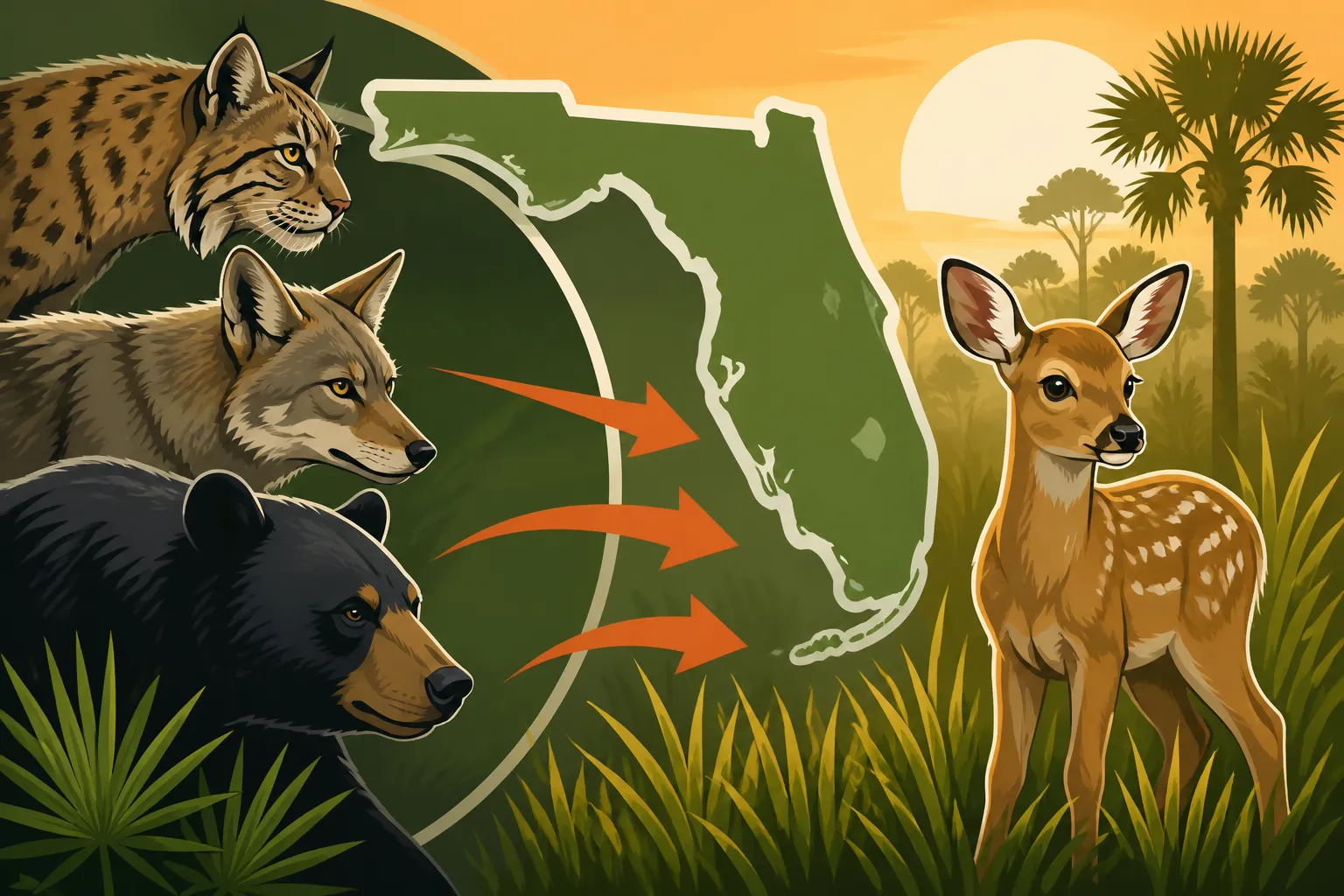
There's no sugarcoating it: coyotes are, without a doubt, the number one predator of white-tailed deer fawns in Florida, and in much of the Southeast. These incredibly adaptable canids have expanded their range across the entire state, thriving in everything from remote wilderness areas to suburban fringes. They are opportunistic hunters, and a helpless newborn fawn is a relatively easy meal compared to a healthy adult deer.
Coyotes possess an uncanny ability to locate fawns hidden in dense cover. Their keen sense of smell and their persistent hunting style mean few fawns escape their notice during the peak fawning season. Studies have consistently shown that coyote predation accounts for a significant percentage of fawn mortality within the first few weeks of life. For hunters and wildlife managers alike, understanding and managing coyote populations is a critical component of any strategy aimed at increasing deer numbers. Many hunters participate in Coyote Calling Florida Ranch Country at Dawn as a way to help manage these populations.
Florida Black Bears: An Overlooked Threat to Young Deer
When people think of bears, they often picture them eating berries and raiding trash cans, not actively hunting fawns. However, the Florida black bear, which has seen a remarkable population recovery and expansion across the state, can be an opportunistic predator of fawns. While their diet is primarily omnivorous, consisting of nuts, fruits, insects, and carrion, they will readily take a newborn fawn if the opportunity arises.
Bear predation on fawns is often less direct than that of coyotes, but it can be substantial in areas where bear populations are dense and overlap with fawning habitat. A sow bear emerging from her den with cubs in tow is constantly seeking high-protein food sources, and a vulnerable fawn can fit the bill perfectly. While not as widespread or consistent as coyote predation, the impact of bears shouldn't be underestimated, especially in regions like the Ocala National Forest or along the Central Ridge, where their numbers are significant. Understanding Florida Black Bear Subspecies Explained can offer insights into their behavior and habitat preferences.
Feral Hogs: A Silent but Significant Destroyer
Feral hogs are perhaps the most destructive invasive species in Florida, and their impact on fawn recruitment is multifaceted and severe. Unlike coyotes, who are dedicated predators, or bears, who are opportunistic, hogs affect fawns both directly and indirectly. Directly, feral hogs are known to be opportunistic predators of fawns, especially during the fawning season. A sounder of hogs moving through dense cover can stumble upon a bedded fawn, and the outcome is rarely good for the fawn.
Beyond direct predation, hogs also destroy fawning habitat. Their relentless rooting habits can decimate critical understory vegetation that fawns rely on for concealment. They compete with deer for food sources, particularly hard mast like acorns, impacting the nutritional health of does and, consequently, the health of their fawns. The sheer numbers of feral hogs across Florida mean their cumulative impact on fawn survival is enormous, making hog control a vital aspect of deer management. Florida Hog Damage to Row Crops is well-documented, but their impact on wildlife is equally devastating.
Other Opportunistic Predators and Environmental Factors
While coyotes, bears, and hogs are the primary concerns for fawn recruitment, Florida's rich ecosystem includes other animals that can opportunistically prey on young deer. Bobcats, for instance, are agile and skilled hunters, and while they primarily target smaller game, a newborn fawn can certainly become part of their diet, especially if found alone and defenseless. Alligators, though typically associated with aquatic environments, might occasionally take a fawn that ventures too close to water's edge or during floods when fawns might be seeking higher, but exposed, ground.
Beyond direct predation, environmental factors also play a critical, albeit indirect, role. Severe weather events like hurricanes or prolonged periods of drought can weaken does, leading to less vigorous fawns or even fawn abandonment. Flooding can displace fawns from their hiding spots, making them more vulnerable to predation. Disease outbreaks, though less common for fawns directly, can weaken the overall herd and increase vulnerability. It's a complex web where multiple factors can conspire against a fawn's chances of survival.
| Predator Type | Primary Impact on Fawns | Hunting/Management Role | Habitat Focus |
|---|---|---|---|
| Coyote | Direct predation | Significant | Widespread |
| Black Bear | Opportunistic predation | Moderate | Wooded, dense areas |
| Feral Hog | Direct predation & habitat destruction | Significant | Widespread |
| Bobcat | Opportunistic predation | Minor | Dense cover |
| Alligator | Opportunistic (aquatic edge) | Minimal | Near water |
Strategies to Mitigate Predator Impact on Fawn Recruitment
Understanding the problem is the first step, but what can we actually do about it? Mitigating predator impact on fawn recruitment isn't a one-size-fits-all solution; it requires a multi-pronged approach that combines active management with smart habitat work and ongoing scientific understanding. It's about giving those little fawns the best possible chance to grow into the next generation of Florida's deer herd.
Active Predator Management: Hunting and Trapping
One of the most direct ways to influence fawn recruitment is through active predator management, primarily focused on coyotes and feral hogs. For coyotes, year-round hunting and trapping efforts can help reduce local populations, especially during the fawning season. This isn't about eradication, which is largely impossible, but about reducing pressure in specific areas during critical times. Many Florida hunters actively pursue coyotes, not just for sport, but as a way to directly benefit deer. Engaging in ethical and legal predator hunting, such as Coyote Calling Florida Ranch Land, can contribute to a healthier fawn survival rate.
Feral hogs, being an invasive species, have no closed season or bag limits on private lands in Florida, and regulations are often very liberal on public lands. This presents a continuous opportunity for hunters to help reduce their numbers through hunting, trapping, and even Night Hunting Hogs With Lights in Florida. Landowners often invest heavily in trapping programs to control hog populations, understanding that fewer hogs mean less habitat destruction and fewer fawns lost. While controversial to some, controlled hunting and trapping programs are recognized by wildlife biologists as effective tools for balancing predator-prey dynamics and supporting deer populations.
Habitat Enhancement for Fawn Survival
While reducing predator numbers is important, an equally vital strategy is to improve the habitat where fawns are born and raised. Think about it: a well-hidden fawn in dense, nutritious cover has a much better chance of surviving than one exposed in sparse areas. Habitat enhancement focuses on creating and maintaining areas that provide excellent fawning cover and ample food for lactating does.
This can involve prescribed burns to promote new, thick growth of grasses and forbs that offer both concealment and forage. Planting native vegetation that provides dense escape cover, like thickets of saw palmetto or young pine stands, is also crucial. Creating a mosaic of habitat types – open areas for foraging adjacent to dense cover – gives does options for where to bed their fawns. Landowners and land managers use tools like GoHunt to analyze aerial imagery and topographic maps, helping them identify areas that can be improved for fawning cover or to plan the placement of supplemental food plots that benefit does before and after fawning. Providing quality forage means healthier does, which typically lead to stronger, more viable fawns. This work is essential for long-term deer herd health.
Understanding the "Why": Research and Monitoring
Effective wildlife management isn't just about taking action; it's about understanding the impact of those actions and continuously learning. This is where scientific research and ongoing monitoring become indispensable. Wildlife agencies, like the Florida Fish and Wildlife Conservation Commission (FWC), conduct extensive studies on fawn recruitment, predator diets, and habitat use.
By utilizing techniques such as radio-collaring fawns to track their survival rates, conducting camera surveys to monitor predator presence, and analyzing harvest data, biologists gain critical insights into what's truly happening on the ground. This data helps them tailor management strategies to specific regions and conditions. For example, knowing the Florida Buck-to-Doe Ratio by Zone or understanding Florida Fawn Survival Rates in a particular area helps managers decide if predator management or habitat enhancement needs to be prioritized. As hunters, staying informed about these findings, perhaps through FWC reports or wildlife management publications, helps us understand the rationale behind seasons and bag limits, and empowers us to contribute more effectively to conservation efforts. Tools like GoHunt can also help private land managers monitor their own properties for deer and predator activity through trail camera analysis and mapping features.
Disclaimer
This article is for general informational purposes only and does not constitute professional advice. Laws, prices and regulations vary by location and change over time. Consult a qualified professional for guidance on your specific situation.