Florida Turkey Roost Tree Preferences
One of the most frustrating things for a Florida turkey hunter is hearing that first gobble before dawn and having absolutely no idea where that bird is roosted. It’s a gut punch when you know he’s close, but you can’t quite pinpoint his exact location. This guide is going to peel back the layers on where Florida turkeys, both the elusive Osceola and the robust Eastern, prefer to roost, giving you the upper hand in your early morning setups. We’ll dive deep into the specific tree types, structural features, and environmental cues that tell you, "A turkey is sleeping here."
The Critical Role of Roost Trees in Turkey Hunting Strategy
Understanding where turkeys roost isn't just a detail; it's often the cornerstone of a successful hunt. Turkeys are creatures of habit, especially when it comes to their nighttime retreats. Pinpointing these spots allows you to position yourself for that critical first call, giving you an advantage before the bird even hits the ground. It’s about being proactive rather than reactive, getting ahead of the game instead of chasing it.
The "Roost-to-Roost" Mindset
For many seasoned turkey hunters, the entire day revolves around the roost. You start the day trying to call a bird off the roost, and if that doesn't work, you spend the afternoon trying to locate where birds will fly up for the night. This "roost-to-roost" mindset means you're always thinking about where the turkeys are starting and ending their day. In Florida, where thick cover can make mid-day hunting a real challenge, knowing those roosting areas becomes even more vital. You want to be close enough to hear that first gobble and determine its direction, but far enough not to spook the birds as they prepare to fly down. This requires careful consideration of terrain and vegetation, ensuring a stealthy approach in the predawn darkness.
Imagine you're hunting a piece of public land in the Green Swamp. You know the general area holds birds, but without knowing a specific roost, you're just guessing where to set up. If you've done your homework and found a consistent roost, you can slip in, get positioned, and be ready to call as soon as the first light cracks the horizon. It's the difference between hoping for a chance and creating one.
Scouting for Success Before the Hunt
This is where the real work happens, and honestly, it’s one of the most rewarding parts of turkey hunting. Pre-season scouting, whether it’s walking timber lines or using satellite imagery on a platform like GoHunt, is paramount. You're looking for patterns, travel corridors, and, most importantly, potential roost sites. Turkeys will often use the same roost trees or general roosting areas repeatedly, especially if they feel secure there. So, finding evidence of past use is a huge indicator.
When you're out scouting, look for high ground near water, open areas adjacent to thick cover, or prominent tree lines. In Florida, this might mean the edge of a cypress swamp bordering a pine flat, or a mature oak hammock surrounded by palmetto. Don't be afraid to put boots on the ground in the off-season. Walk those areas at dusk and dawn. Listen for fly-up cackles or morning gobbles. Even if you don't hear anything, the physical evidence on the ground can tell a story. Scouting Florida Public Land Before Season is a great resource for developing these pre-hunt habits. Remember, the more you scout, the better your chances are when the season finally arrives.
Identifying Prime Roost Tree Characteristics
Turkeys don't just pick any tree to sleep in. They're looking for specific features that offer them security from ground predators, good visibility, and comfortable perches. Understanding these preferences is key to narrowing down your search.
Species Preferences: What Turkeys Look For
While turkeys aren't strictly loyal to one tree species, certain types offer more of what they need. In Florida, you'll find them commonly roosting in:
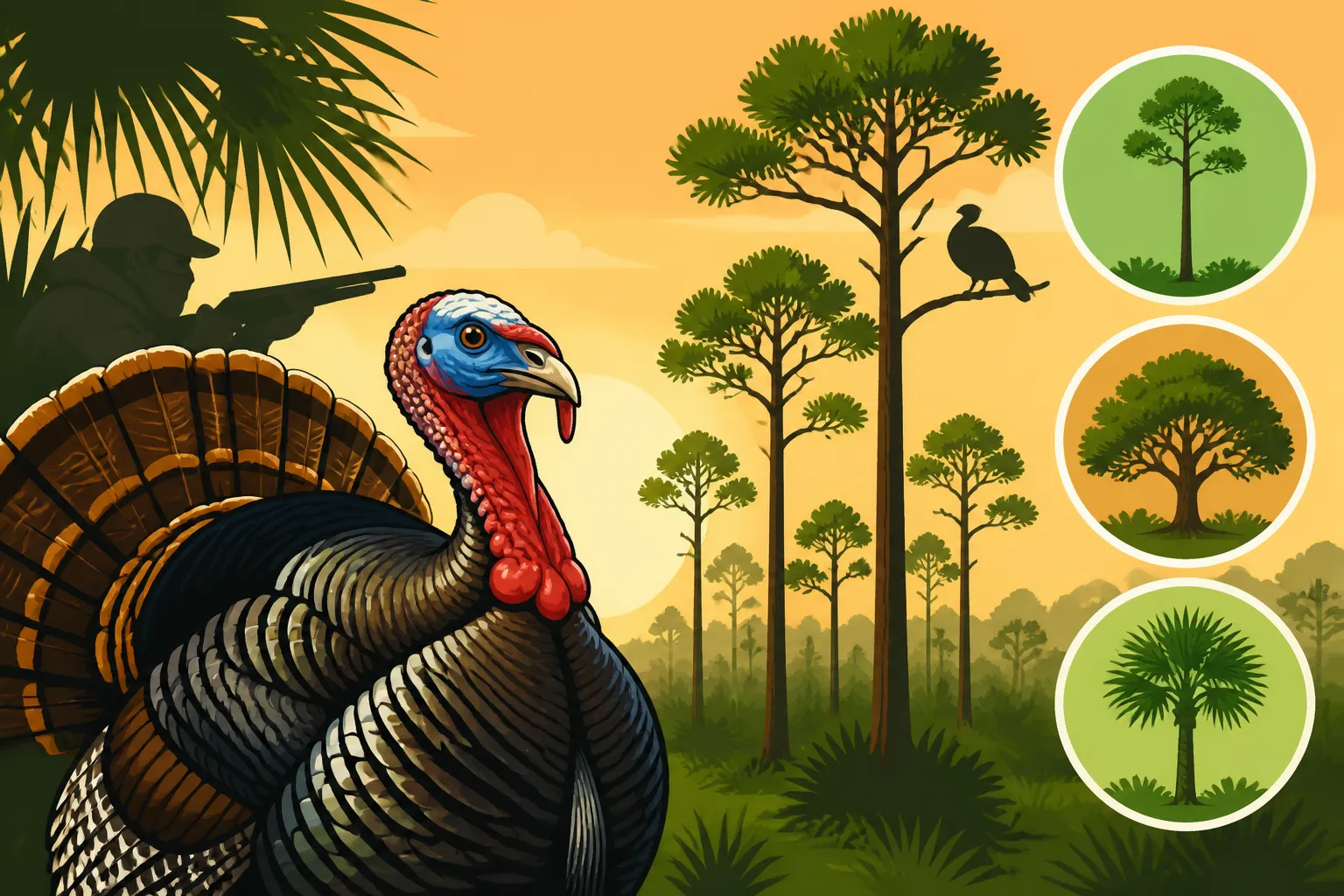
- Large Pine Trees: Especially longleaf or loblolly pines with strong, horizontal limbs high off the ground. These offer excellent visibility and can be found across much of Florida, particularly in the Panhandle.
- Mature Live Oaks: These iconic Florida trees, with their sprawling, sturdy branches, are absolute magnets for turkeys, especially the Osceola subspecies. The strong, often gnarly limbs provide stable perches, and the dense canopy offers some protection from aerial predators. Osceola Turkeys in Peninsular Florida often favor these in areas like central Florida.
- Cypress Trees: Often found on the edges of swamps and sloughs, cypress trees offer height and unique branch structures. Turkeys might use these, particularly in wetland-rich areas, as long as there are suitable horizontal limbs.
- Poplars and Sweetgums: Less common in some areas but where present and mature, they can offer tall, straight trunks with high branching that turkeys appreciate.
The critical factor isn't always the species itself, but the structure it provides.
Structural Elements That Offer Security and Comfort
Beyond the species, the individual characteristics of the tree are paramount. Turkeys are looking for:
- Height: A tall tree provides distance from ground predators like coyotes, bobcats, and even bears. Turkeys want to be well above the reach of anything that might try to sneak up on them during the night. The higher they are, the harder it is for a predator to surprise them, and the more time they have to react if one tries.
- Strong, Horizontal Limbs: Turkeys are heavy birds. They need sturdy branches to comfortably perch on throughout the night. Limbs that extend horizontally offer more stable footing than steeply angled ones. These limbs also give them a good launchpad for flying down in the morning.
- Open Understory: While the roost tree itself offers cover from above, turkeys often prefer a relatively open understory around the roost tree. This allows them to see and hear predators approaching on the ground before they fly up, adding another layer of security. Conversely, a clear flight path when they fly down in the morning is also important.
- Clustering: Sometimes, you'll find multiple turkeys roosted in the same large tree or in several adjacent trees. This communal roosting provides an extra layer of security, as more eyes and ears are available to detect threats. When scouting, if you find one good roost tree, always check the surrounding mature timber for additional activity.
Here's a quick look at some common Florida trees and their roosting potential:
| Tree Type | Roosting Potential | Key Characteristics for Turkeys |
|---|---|---|
| Live Oak | High | Strong, sprawling horizontal limbs; dense canopy; often solitary. |
| Longleaf Pine | High | Tall, straight trunk; sturdy horizontal branches high up; good visibility. |
| Loblolly Pine | High | Similar to Longleaf, common in disturbed sites; good height. |
| Bald Cypress | Medium to High | Tall in swamps; can have strong branches; often near water. |
| Sweetgum | Medium | Tall, strong central leader; branches can be high and stable. |
| Water Oak | Medium | Can be tall with good limbs, but often in dense areas. |
| Red Maple | Low to Medium | Often too short or limbs too flimsy, typically found in dense understory. |
| Palmetto | None | Too short, no stable branches. |
Strategic Location for Safety and Egress
The location of the roost tree within the landscape is just as important as the tree itself. Turkeys prioritize safety and convenience.
- Near Water Sources: Turkeys need water daily, so roosting near a pond, creek, or slough makes sense. It provides a convenient first stop after flying down in the morning. These areas also often feature the larger, older trees turkeys prefer.
- High Ground: Even in relatively flat Florida, turkeys will seek out the highest ground available. This gives them a vantage point to survey their surroundings before flying up and after flying down. A small ridge, a slight elevation change, or even a levee can be enough.
- Edge Habitat: Roost trees are often found on the edge of distinct habitat types. For example, where a dense palmetto flat meets an open pine timber, or where a thick cypress swamp borders an old field. This provides both security (thick cover to escape into) and open areas (for strutting and feeding) within easy reach. The GoHunt platform can be very useful for identifying these edge transitions on aerial maps.
- Protected from Wind: While they appreciate height, turkeys will sometimes pick a roost that is somewhat sheltered from prevailing winds, especially on cold or stormy nights. A cluster of pines or a thick oak hammock can provide this natural windbreak.
Considering these factors together helps you form a comprehensive picture of what a prime roost site looks like in the Florida landscape. It's not just about one tall tree, but that tall tree's position within the greater ecosystem.
Reading the Ground for Roosting Evidence
You don't always have to catch a turkey flying up or gobbling to find a roost. These birds leave behind plenty of clues on the ground if you know what to look for. This "sign" is your best friend when scouting.
Droppings and Feathers: Your Best Clues
When turkeys spend hours perched in the same spot night after night, they inevitably leave their mark. This sign is a dead giveaway:
- Piles of Droppings: Turkey droppings are distinct. Gobbler droppings are typically J-shaped or coiled, while hen droppings are more blob-like. Underneath a regularly used roost tree, you'll find an accumulation of these droppings. The fresher they are (darker, wetter), the more recently the tree has been used. If you find a significant concentration, you've likely found a solid roost.
- Feathers: Turkeys preen before and after roosting, and sometimes during the night, so you'll often find feathers on the ground directly beneath a roost tree. Look for wing feathers, body feathers, and even downy feathers. The condition and abundance of these feathers can also indicate how frequently the tree is being used.
- Scratches on the Bark: While less common than droppings and feathers, sometimes you can find faint claw marks on the bark of the tree, especially on the main trunk or larger limbs, where the birds have scrambled up. This is a subtle sign, but worth noting if other evidence is present.
When you're walking through likely roosting areas, keep your eyes peeled for these telltale signs. Don't just look in one spot; turkeys can shift their roosts within a general area depending on weather or disturbance. A good rule of thumb is to circle likely trees, extending your search out 20-30 yards to make sure you don't miss anything. This detailed ground-level scouting, combined with insights from a mapping tool like GoHunt, gives you a powerful advantage.
The Sounds of the Roost: Listening for Activity
Even if you don't find physical evidence, your ears can be your most valuable scouting tool. Turkeys are vocal, especially around roosting time.
- Fly-Up Cackles and Yelps: As turkeys fly up to roost in the evening, they'll often make a series of loud cackles and yelps. This is a great way to pinpoint their exact location. Arrive at a suspected roosting area about an hour before sunset, find a quiet spot, and just listen.
- Wing Beats: The sound of large wings beating as a turkey flies up to a limb can be surprisingly loud, especially in the quiet of dusk. This sound can help you narrow down which tree they're using.
- Morning Gobbles and Tree Talk: Before flying down in the morning, gobblers will often "tree gobble" from their perch, especially if they hear a crow or an owl. Hens will "tree yelp" as they wake up. Getting into your hunting spot well before dawn and listening intently can confirm if a roost is active. Calling an Osceola Off the Roost often starts with hearing these vital morning communications.
- Disturbance Calls: If turkeys are spooked while on the roost, they'll often make alarm putts or fly off loudly. While not ideal for hunting, hearing this can confirm birds were there, and perhaps they'll return once they feel safe.
Listen for these sounds not just the day before your hunt, but weeks leading up to it if possible. Consistent evening fly-up sounds or morning gobbles indicate a reliable roost.
Adapting Roost Tree Knowledge to Florida's Unique Ecosystems
Florida's diverse landscape means that what constitutes a "perfect" roost tree can vary significantly depending on which part of the state you're hunting. The Panhandle looks very different from the Everglades, and turkeys adapt their roosting habits accordingly.
Panhandle Pines vs. Peninsular Live Oaks
The Florida Panhandle is often characterized by vast pine forests, particularly longleaf and loblolly pines. Here, Eastern Turkeys in the Florida Panhandle will often choose the tallest pines with the highest, strongest limbs. These trees provide excellent visibility over the relatively open understory that often accompanies these pine stands, allowing them to spot predators from a distance. You'll find these birds keying in on clusters of pines on slight elevations, or along the edges of clearings.
Contrast this with Peninsular Florida, where the iconic live oaks often dominate the landscape. In these regions, Osceola Turkeys in Peninsular Florida frequently utilize mature live oaks with their massive, horizontal limbs. These oaks, often found in hammocks or scattered in pasture lands, provide dense cover from above and incredibly sturdy perches. The "umbrella" canopy of a live oak can offer more protection from rain and cold than an open pine. When Hunting an Osceola Gobbler in Palmetto Scrub, you'll often find them roosted in the tallest live oaks that tower over the dense undergrowth, giving them a clear line of sight.
It’s crucial to observe the dominant tree species in your specific hunting area and understand which ones offer the best combination of height, strong limbs, and surrounding cover. A mapping tool like GoHunt can help you identify these habitat distinctions from your computer before you ever step foot in the woods.
Roosting in Wetland Edges and Cypress Swamps
Florida is renowned for its wetlands, and turkeys certainly make use of these environments. On the edges of cypress swamps, sloughs, and even larger lakes, you'll find turkeys roosting in the tallest trees available. This might include:
- Cypress Trees: Particularly mature bald cypress or pond cypress trees that have developed strong horizontal branches. They offer height and are often situated directly over water, providing an extra barrier against ground predators.
- Water Oaks and Poplars: Growing along the slightly drier edges of these wetlands, these species can also provide excellent roosting opportunities if they are tall and have the right branch structure.
Roosting over water or on the very edge of a wetland provides a distinct advantage: a predator approaching on the ground has to contend with water, slowing them down and often making noise. The turkeys can hear or see them coming long before they pose a serious threat. When Setting Up Against a Big Live Oak or even a towering cypress, consider its proximity to water as a key factor in why a turkey might choose it. It adds a layer of security that these wary birds truly appreciate.
Remember, turkeys are survivors. They will pick the roost trees that offer them the best chance of making it through the night. By thinking like a turkey and understanding their preferences, you can significantly increase your odds of being in the right place at the right time when that morning gobble finally breaks the silence.
Disclaimer
This article is for general informational purposes only and does not constitute professional advice. Laws, prices and regulations vary by location and change over time. Consult a qualified professional for guidance on your specific situation.