Why South Florida Deer Run Smaller
It's a question many Florida hunters, especially those new to the state or accustomed to deer hunting up north, ask with a mix of curiosity and sometimes a little frustration: why do the deer in South Florida seem so much smaller? You're not imagining things, and it's not just a trick of the eye. This guide is going to peel back the layers of environmental factors, genetics, and habitat challenges that collectively explain why our whitetails south of the I-4 corridor typically don't reach the same hefty proportions as their northern cousins.
The Environmental Reality of South Florida
South Florida is a unique ecosystem, a vibrant tapestry of wetlands, cypress swamps, and pine flatwoods that are unlike almost anywhere else in the continental U.S. While stunningly beautiful, this environment presents some specific challenges for a deer herd trying to pack on pounds and grow impressive antlers. It’s a far cry from the rich agricultural landscapes many hunters picture when thinking of prime deer habitat.
Subtropical Climate and Habitat
Imagine living in a place where summer never truly ends, and "winter" often means nothing more than a few cool fronts. That's essentially South Florida. Our subtropical climate means a prolonged growing season for plants, but it also comes with intense heat and humidity for much of the year. This constant warmth means deer are expending energy just to stay cool, and they don't get the cold-weather cues that trigger major physiological changes like thickening coats or significant fat reserves seen in northern deer.
The habitat itself, characterized by vast expanses of palmetto, saw palmetto, and dense underbrush, offers incredible cover – a deer's best friend when it comes to evading predators. However, this same dense cover can also make foraging more challenging. While there's always something green, the nutritional punch of much of this vegetation can be surprisingly low. Think of it like a buffet with endless plates of lettuce; it fills you up, but it's not going to build a lot of muscle or bone. Deer here are constantly browsing on a variety of plants, often having to work harder to find concentrated pockets of high-quality forage.
Nutritional Challenges and Soil Quality
One of the biggest unsung heroes in deer development is good soil. Rich, fertile soil provides the minerals and nutrients that plants absorb, which then get passed up the food chain to the deer. Unfortunately, much of South Florida's soil is notoriously poor. We're talking about sandy, well-drained soils in the pine flatwoods, and deep, often waterlogged organic soils in the Everglades and cypress swamps. These soils simply don't hold nutrients as effectively as the richer loams found in more northern parts of the state or the Midwest.
Heavy rainfall, which is a staple of our wet season, contributes to rapid nutrient leaching. Minerals like calcium, phosphorus, and other trace elements crucial for bone development and antler growth are quickly washed away, making them less available to the forage plants. Even if a deer is eating all day long, if the plants themselves are deficient in these key building blocks, the deer's growth will inevitably be stunted. It’s a foundational issue; you can’t build a strong house without good materials, and deer can’t build big bodies or racks without the right nutrients from their diet.
Genetic Influences and Adaptation
Beyond the environment, the very genetic makeup of Florida's deer plays a significant role in their smaller stature, especially as you move south. These aren't just smaller versions of Midwestern deer; they are adaptations shaped by millennia of natural selection in a unique environment.
Unique Deer Subspecies in the South
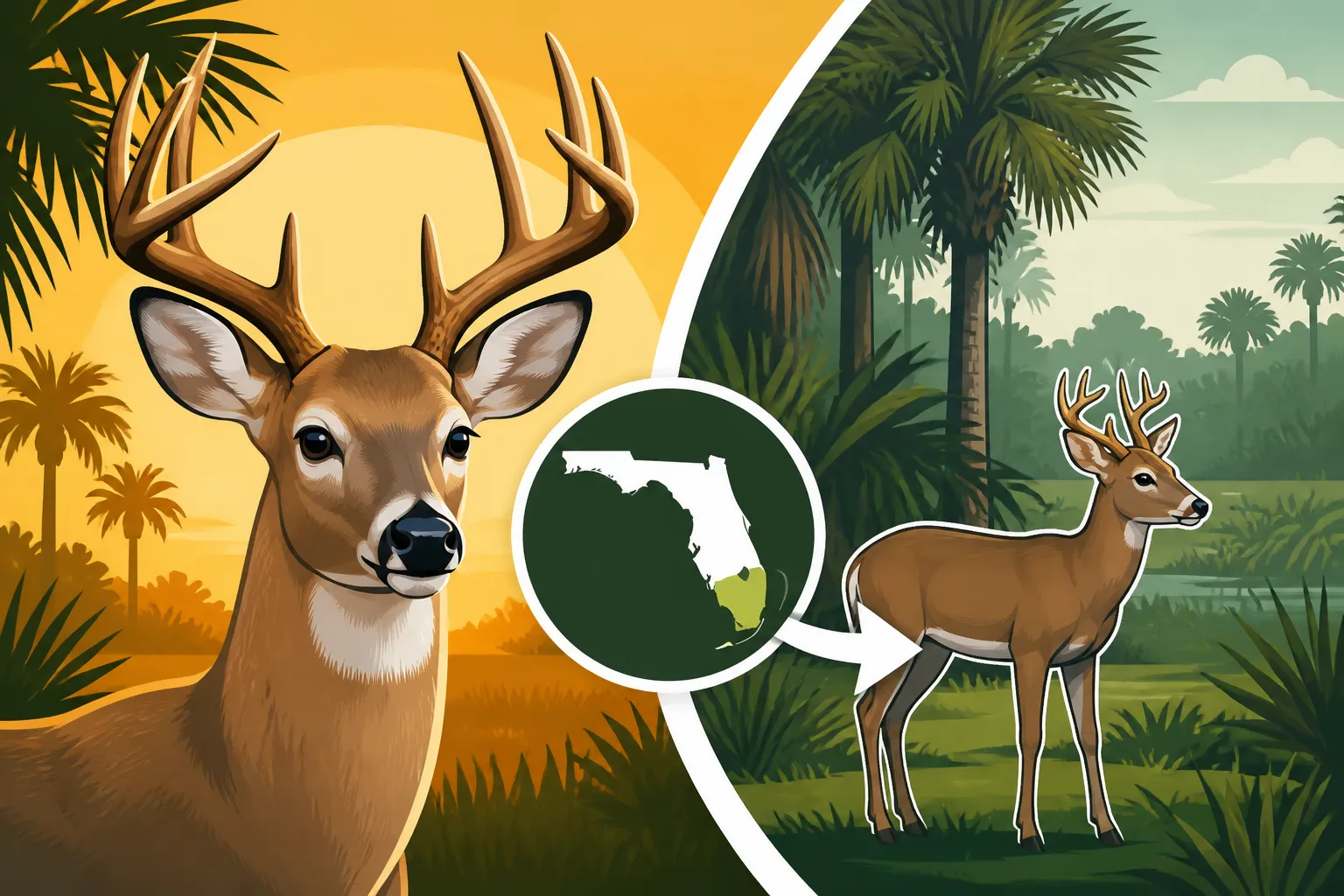
Florida is home to a few distinct subspecies of white-tailed deer, and those found in the southern reaches of the state are inherently smaller-bodied. While not a completely separate species, the deer of South Florida, particularly around the Everglades and Big Cypress, are often described as a smaller, more compact form, a genetic legacy tailored to their surroundings. This is a crucial point: it’s not just that individual deer grow smaller due to conditions; they are genetically predisposed to be smaller.
Think about the extreme example of the Key deer ( Odocoileus virginianus clavium ), a critically endangered subspecies found only in the Florida Keys. These deer are tiny, often no bigger than a large dog, a classic example of insular dwarfism. While mainland South Florida deer aren't as drastically small, they share some of the same evolutionary pressures that favored a smaller body size. A smaller body mass can be advantageous in hot climates, as it helps dissipate heat more efficiently. It's a natural adaptation to survive, not necessarily to be a Boone and Crockett contender.
Evolution for Survival, Not Size
Natural selection in South Florida has prioritized traits that promote survival in a challenging, predator-rich, and nutritionally sparse environment over sheer body or antler size. For deer in dense palmetto and swamp habitats, agility and the ability to slip through thick cover are paramount. A smaller, more compact frame allows for easier navigation through the almost impenetrable undergrowth, making it harder for predators like bobcats, coyotes, and even Florida panthers to catch them.
Furthermore, a smaller body requires less food and water to maintain, which is a huge advantage where quality forage can be spread thin and water levels fluctuate dramatically. These deer have evolved to be incredibly efficient at utilizing the available resources. This contrasts sharply with deer in states like Iowa or Illinois, where abundant agricultural crops and colder winters have historically favored larger body sizes for fat storage and navigating deeper snow. The evolutionary pressure here isn't to grow massive antlers to impress does or fight off rivals, but rather to be quick, stealthy, and conserve energy. Hunters using mapping apps like GoHunt can often see how broken up and dense these habitat pockets are, which really highlights the need for a compact frame to move through them effectively.
The Role of Food Sources and Forage Quality
As we’ve touched on, what deer eat directly impacts their growth. In South Florida, the types of food available, and their nutritional content, are primary drivers of the smaller deer size. It's not a buffet of protein-packed soybeans and lush alfalfa fields here; it's a different kind of menu entirely.
Constant Availability, Lower Nutritional Value
One might assume that because South Florida stays green year-round, deer would have an endless supply of high-quality forage. Unfortunately, "green" doesn't always equal "nutritious." Many of the dominant plant species in our natural landscapes, such as various palmettos, wax myrtle, and saw palmetto, are abundant and provide cover, but their nutritional value – particularly protein and digestible energy – can be quite low compared to plants found in other regions.
Deer are browsers, meaning they eat a wide variety of leaves, shoots, and forbs. While they do consume some highly nutritious species, these are often scattered and may not be enough to support maximum growth rates across the entire population. Compare this to regions with distinct seasons where deer benefit from flushes of high-protein spring growth, carbohydrate-rich summer forbs, and fat-building mast crops like acorns in the fall. In South Florida, the forage tends to be more consistent but less potent. This means deer are often "grazing" more than truly "browsing" for nutrient-dense morsels, expending a lot of energy to consume sufficient bulk without necessarily getting optimal nutrition. If you're Hunting Florida Cypress Swamp Edges, you'll see firsthand the types of dense, often fibrous vegetation deer rely on.
Mineral Deficiencies in Sandy Soils
We already talked about poor soil in general, but it's worth emphasizing the specific impact of mineral deficiencies. Antler growth, in particular, is a massive drain on a buck's mineral reserves, especially calcium and phosphorus. If these minerals aren't readily available in the diet, the body will prioritize essential functions, and antler growth will suffer. This is why you often see smaller, thinner antlers on South Florida bucks, even mature ones.
Our sandy soils, especially in the pine flatwoods and sandhills, are naturally low in these critical minerals. Even where deer have access to private land food plots, overcoming these inherent soil deficiencies can be a significant challenge, often requiring extensive soil amendments. On public lands, it's simply a fact of life. The deer are making do with what nature provides, and what nature provides in terms of minerals for growing huge racks is often limited. When you're Scouting Florida Public Land Before Season, it's good to keep this in mind – a smaller set of tracks might belong to a mature animal.
Population Dynamics and Hunting Pressure
While less of a primary driver than genetics and habitat, population dynamics and the way deer are hunted can also influence the average size of deer in South Florida, contributing to the overall picture of smaller animals.
High Deer Densities in Certain Areas
Believe it or not, despite the nutritional challenges, some areas in South Florida can have surprisingly high deer densities. When a deer population exceeds the carrying capacity of its habitat – meaning there are more deer than the land can sustainably support with high-quality forage – individual deer often suffer. This can lead to increased competition for food, over-browsing of preferred plants, and a general decline in the health and size of the herd.
In such scenarios, deer are constantly undernourished, unable to reach their full genetic potential for body or antler size. The pressure on the habitat prevents younger deer from getting the nutrition they need to grow, and even older deer struggle to maintain condition. This cycle can perpetuate smaller deer over generations if not managed effectively. It's a complex balance, and understanding Deer Density by Florida Zone can shed light on why certain areas might consistently produce smaller animals.
Hunter Preference and Harvest Selectivity
Historically, and to some extent still today, hunter preferences can play a role. If hunters are consistently harvesting the largest-bodied or largest-antlered bucks, it can, over time, remove the genetics for larger size from the breeding pool. While this is less pronounced in free-ranging, genetically diverse populations, it can contribute to a subtle downward pressure on average size.
However, in Florida, deer bag limits are generally conservative, and there's a strong emphasis on managing for a healthy, balanced herd. The Florida Fish and Wildlife Conservation Commission (FWC) uses data from deer reporting requirements to monitor harvest trends and implement appropriate regulations. The biggest impact of hunting pressure in South Florida likely isn't selective harvesting of the largest deer, but rather the sheer challenge of finding and harvesting any deer in such dense cover. Many hunters are simply thrilled to connect with any legal buck, regardless of size, given the difficulty of the hunt. Tools like GoHunt can help hunters analyze harvest data from specific WMAs or counties, giving them a better idea of what to expect in terms of deer size.
Water Management and Habitat Fragmentation
Florida is defined by its water, and how we manage it has profound effects on our wildlife. In South Florida, the extensive water management systems and ever-expanding human footprint significantly shape deer habitat and, consequently, deer size.
Impact of Water Levels on Forage
The Everglades and vast areas of South Florida are naturally wetland environments. Extensive canal systems, levees, and water control structures dictate water levels across millions of acres. While some wetlands are crucial for ecosystem health, prolonged or excessively high water levels can severely limit the availability of prime deer forage. Deer are creatures of the "edge" – they thrive where different habitats meet, often preferring drier uplands adjacent to wetlands for bedding and browsing.
When water levels rise, these critical edge habitats can shrink dramatically, forcing deer into smaller, more confined areas. This concentrates the deer, increases competition for the remaining forage, and can stress animals. Conversely, excessively low water levels during droughts can also harm forage quality, as plants wilt and nutrient uptake becomes difficult. The constant fluctuation, or sometimes prolonged extremes, directly impacts the quantity and quality of food available to deer, contributing to their smaller stature. If you’re trying to understand Why Florida's Deer Seasons Vary So Much by Zone, part of the answer lies in these varied habitat types and water regimes.
Urbanization and Habitat Loss
Florida is one of the fastest-growing states in the U.S., and this rapid development inevitably leads to habitat fragmentation and loss. As towns and cities expand, natural areas are carved up by roads, residential developments, and commercial properties. This directly shrinks the amount of available deer habitat.
For deer, this means less space to roam, fewer diverse food sources, and increased encounters with humans and vehicles. Habitat fragmentation can also isolate deer populations, limiting genetic exchange and potentially exacerbating the issues of smaller size if a localized population gets trapped in a perpetually marginal habitat. Deer are incredibly resilient, often adapting to suburban fringes, but this often comes at the cost of optimal health and size. When you're researching potential hunting spots, the FWC public hunting map is an invaluable resource for seeing where wild spaces still exist amidst development.
Comparing North and South Florida Deer
To really drive home the point about why South Florida deer run smaller, it's helpful to compare them directly to their counterparts in the Panhandle and northern parts of the state. The differences are quite striking.
Panhandle Versus Peninsular Deer Growth
If you head north of Gainesville, into the Florida Panhandle, you'll start to notice a definite change in the landscape and, correspondingly, in the deer. The Panhandle generally features richer, more fertile soils, often influenced by the geological characteristics of Alabama and Georgia. This region experiences more distinct seasons, with cooler winters and a more traditional mast crop cycle (acorns!). These factors combine to create a more robust nutritional environment for deer.
Deer in the Panhandle, particularly in areas like the Apalachicola National Forest or private timberlands, tend to be significantly larger-bodied and grow larger antlers on average. They benefit from a longer period of high-quality forage during spring and summer, followed by a concentrated food source in the fall. You'll hear more stories of 130-pound bucks in the Panhandle than in the Everglades. This stark difference really highlights how much geology, climate, and vegetation dictate Why Panhandle Deer Grow Bigger Than South Florida Deer.
Antler Development Differences
Antler size is a direct reflection of age, genetics, and nutrition. In South Florida, because of the combination of genetic predisposition to smaller body size, year-round heat stress, and the less-than-ideal nutritional value of much of the native forage, antler development is typically more modest. Bucks often have smaller main beams, fewer points, and less mass compared to deer of the same age class in the Panhandle or other parts of the country.
While you might still find an older, mature buck in South Florida with a decent rack, it will almost always be proportionate to his smaller body size. The energy and mineral resources that go into growing antlers are simply not as abundant or as efficiently utilized in the southern environment. It's a testament to the deer's adaptability that they survive and reproduce at all in such a nutrient-poor landscape, let alone grow any antlers. Knowing this helps set realistic expectations for hunters heading into South Florida.
| Feature | South Florida Deer | North Florida/Panhandle Deer |
|---|---|---|
| Average Body Size | Smaller, more compact (often 80-120 lbs for bucks) | Larger, more robust (often 120-180+ lbs for bucks) |
| Antler Size | Generally smaller, less mass, fewer points | Larger, more mass, more points (greater genetic potential) |
| Climate Influence | Subtropical, year-round heat, high humidity | More temperate, distinct seasons, colder winters |
| Soil Quality | Predominantly sandy, poor mineral content, leached | Generally richer, more fertile, better mineral retention |
| Primary Forage | Palmetto, wax myrtle, saw palmetto, some forbs | Acorns (mast crops), diverse forbs, agricultural crops (some) |
| Evolutionary Drivers | Heat dissipation, agility in dense cover, efficiency | Fat storage for winter, larger body for strength/dominance |
| Habitat Type | Everglades, cypress swamps, pine flatwoods | Pine forests, hardwood hammocks, agricultural edges, river bottoms |
Disclaimer
Please remember that hunting regulations and wildlife management practices are subject to change. Always consult the latest Florida Fish and Wildlife Conservation Commission (FWC) regulations before planning any hunting trip to ensure compliance. This information is for general educational purposes and does not constitute legal advice.