Deer Density by Florida Zone
Trying to figure out where the deer are in Florida can feel like a real guessing game, can't it? You spend hours scouting, driving miles, poring over maps, only to wonder if you're even looking in the right place. It's frustrating to dedicate so much time and effort without a clear understanding of where the populations actually thrive. This guide is going to pull back the curtain on deer density across Florida's various zones, giving you a much clearer picture of where you might find more success and helping you understand the unique challenges and opportunities each region presents.
Understanding Florida's Deer Management Zones
Florida isn't just one big, uniform chunk of deer habitat. The Florida Fish and Wildlife Conservation Commission (FWC) has meticulously divided the state into distinct deer management zones, and for good reason. These zones are more than just lines on a map; they represent significant differences in habitat, climate, deer genetics, and, most importantly for us hunters, deer density and rut timing. Ignoring these distinctions is like trying to use the same fishing lure in a clear spring-fed lake and a brackish estuary – you might get lucky, but it's not optimal. Understanding these zones is the first crucial step to becoming a more effective deer hunter in the Sunshine State.
Why Zones Matter for Deer Density
The FWC's zone system is designed to manage deer populations effectively based on regional ecological factors. Think about it: the pine flatwoods of the Panhandle are vastly different from the saw palmetto scrub of Central Florida or the vast wetlands of the Everglades. Each of these environments offers different types and amounts of forage, cover, and water sources, which directly impacts how many deer an area can support. A zone with abundant, year-round forage and diverse habitat will naturally sustain a higher deer density than a fragmented landscape with limited food sources or intense development pressure. This localized management approach allows the FWC to set specific season dates, bag limits, and other regulations that are tailored to the deer herd's health and hunter success within that particular region.
What this means for you, the hunter, is that a strategy that works wonders in Zone A might be a complete bust in Zone D. Knowing the general deer density and the reasons behind it in each zone helps you set realistic expectations and adapt your tactics. It helps you understand why you might see dozens of deer on one hunt in the Panhandle, while a similar amount of effort in South Florida might yield only a handful of sightings. This isn't just about finding a deer; it's about finding more deer, and understanding the zones is the bedrock of that knowledge. You can find a comprehensive breakdown of Florida's Four Deer Management Zones Explained to really grasp the nuances of each area.
The Four Distinct Zones: A, B, C, D
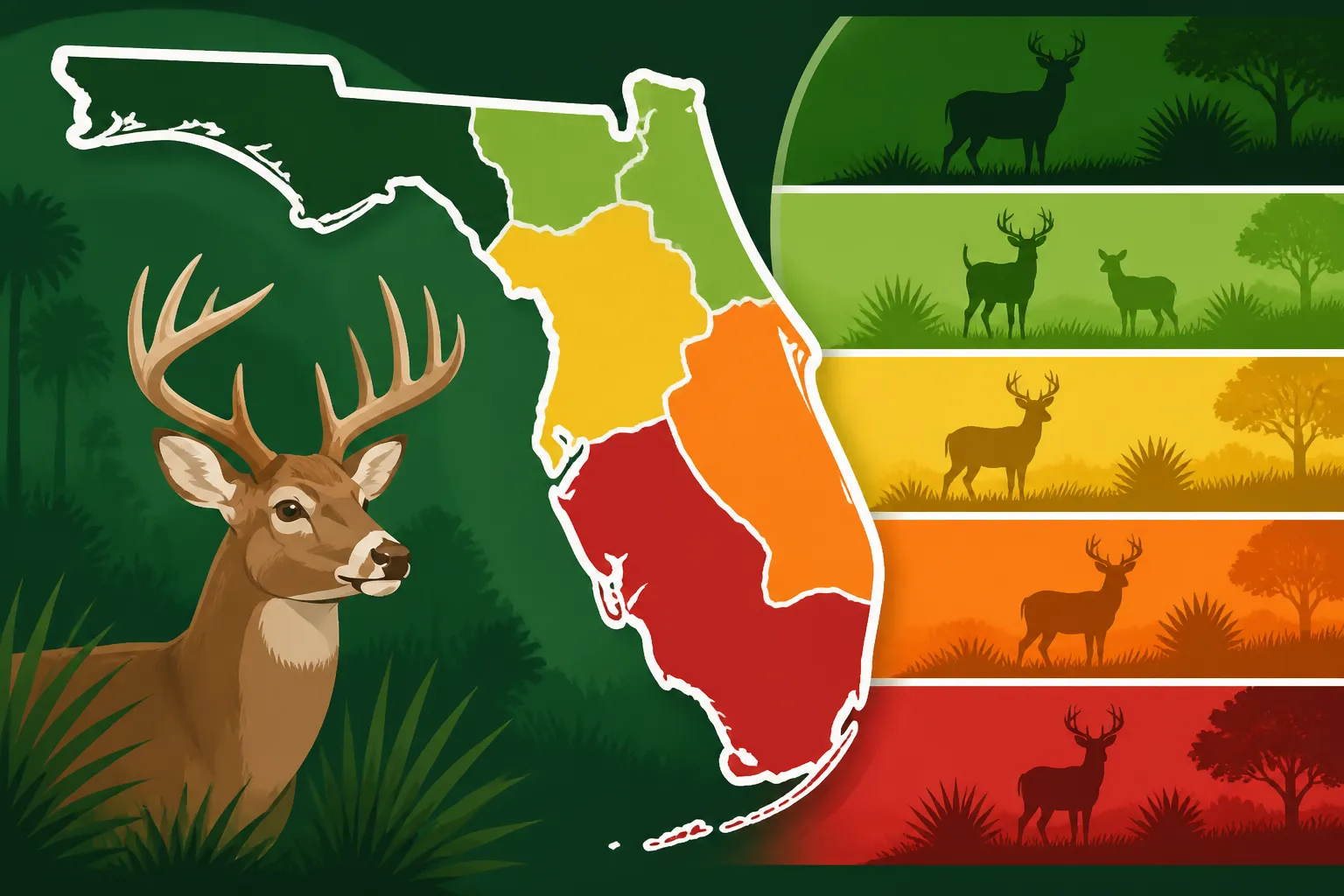
Florida is divided into four primary deer management zones: A, B, C, and D. Each has its own character and challenges when it comes to deer hunting.
- Zone A covers the western Panhandle, stretching from the Perdido River east to the Apalachicola River. This area is characterized by rolling hills, large tracts of pine timber, bottomland hardwoods, and agricultural fields. It's often considered prime deer habitat, historically boasting some of the highest deer densities and larger-bodied animals in the state.
- Zone B encompasses much of North-Central Florida, from the Apalachicola River east to the St. Johns River and south to approximately Marion County. This zone is a mix of agricultural lands, vast expanses of managed timber, and dense hardwood hammocks. Deer here benefit from consistent food sources, leading to healthy populations and often impressive antler growth.
- Zone C is the sprawling heart of peninsular Florida, covering the central and eastern portions of the state, south to just north of Lake Okeechobee. This zone is heavily influenced by human development, but still holds massive tracts of palmetto scrub, pine flatwoods, and cypress swamps. Deer densities can be more localized and variable here, often concentrated in remaining wilderness areas.
- Zone D is the vast wilderness of South Florida, including the Everglades and Big Cypress regions, extending south of Lake Okeechobee to the very tip of the peninsula. This zone is dominated by wetlands, sawgrass prairies, and scattered cypress strands. Deer populations here are typically the lowest in the state, with smaller-bodied animals adapted to the challenging environment, and are often impacted by unique factors like panther predation and water levels.
Zone A: The Panhandle's Piney Woods and Swamps
Zone A, encompassing Florida's western Panhandle, holds a special place in the hearts of many Florida deer hunters. It often feels more akin to deer hunting in Georgia or Alabama, with its distinct seasons and more traditional hunting landscapes. If you've spent any time hunting this region, you know it offers a unique blend of experiences, from quiet mornings in oak bottoms to the rustle of deer through vast pine plantations.
General Deer Density in Zone A
Historically, Zone A has maintained some of the highest deer densities in Florida. We're talking about a healthy number of deer per square mile, particularly in the more rural counties that still have significant timberland and agricultural operations. The landscape here is diverse, offering a mosaic of habitats that deer absolutely thrive in. You'll find expansive pine forests, which provide excellent bedding cover, especially in managed stands with varying stages of growth. Interspersed are fertile hardwood bottomlands, often bordering creeks and rivers, which are critical food sources during the fall and winter months when mast crops like acorns are abundant.
Many hunters flock to this zone, especially during the various gun seasons, and for good reason. The consistent presence of deer means more opportunities for encounters, whether you're still-hunting the edges of a clear-cut or sitting over a food plot. Even with substantial hunting pressure on public lands like the Apalachicola National Forest or Blackwater River State Forest, the habitat's carrying capacity often allows deer populations to remain robust. It's not uncommon to see multiple deer in a single outing here, which can be a stark contrast to other parts of the state where a single sighting is a cause for celebration.
Factors Influencing Deer Density in Zone A
Several key factors contribute to the impressive deer density found in Zone A. Firstly, the habitat diversity is paramount. You have those sprawling pine plantations, providing bedding and security cover. Then, you've got the richer soil of the hardwood hammocks and bottomlands, which produce a crucial acorn crop. When the acorns drop in the fall, deer literally pile into these areas, offering incredible hunting opportunities, especially if you understand Hunting After a Poor Acorn Year and how deer adapt. Furthermore, significant agricultural acreage, particularly corn and peanut fields, provides abundant, high-energy food sources for much of the year. This combination of natural and agricultural food sources keeps deer well-fed and healthy, translating to better fawn recruitment and higher overall populations.
Secondly, management practices by both private landowners and the FWC play a huge role. Many private timber companies manage their lands not just for wood products but also with wildlife in mind, implementing prescribed burns that promote beneficial browse and creating wildlife openings. The FWC also actively manages public lands, balancing timber harvesting with wildlife habitat needs, often including planting food plots or creating early successional habitat. While hunting pressure can be high on public lands, the sheer size and diversity of areas like the Apalachicola National Forest allow deer to disperse and find refuge. Understanding these factors is key, as is being able to discern healthy deer activity, which can be aided by modern tools. For example, using a mapping application like GoHunt can give you an edge by highlighting different timber types and potential food sources from an aerial perspective, helping you pinpoint high-density pockets even in vast public areas.
Zone B: North-Central Florida's Rolling Hills and Hammocks
Moving east from the Apalachicola River, Zone B takes over much of North-Central Florida, offering a somewhat different deer hunting experience. This region, often characterized by its gentle rolling hills and dense oak hammocks, feels a bit less "Panhandle" and more distinctly Central Florida, yet still maintains a strong deer presence compared to the southern zones.
General Deer Density in Zone B
Zone B typically exhibits moderate to high deer densities, often comparable to parts of Zone A but with its own unique flavor. What often sets Zone B apart is the quality of the individual deer. While overall numbers might not always eclipse the absolute peak areas of Zone A, this zone is well-known for producing larger-bodied deer, and often, bucks with more substantial antler growth. This isn't just anecdotal; the combination of good nutrition and diverse habitat allows deer to reach their full potential. Counties like Levy, Marion, and Alachua, with their mix of vast timber tracts, ranch lands, and agricultural fields, are particularly productive.
The deer here benefit from a longer, more pronounced fall and winter season for natural mast crops, particularly acorns from the widespread oak hammocks. When you walk through a mature oak flat in this zone, you'll often see the ground absolutely littered with acorns, which is essentially prime deer fuel. This consistent, high-quality forage contributes to robust, healthy herds. Public lands in Zone B, such as Goethe State Forest or some of the larger Wildlife Management Areas (WMAs) like Ocala National Forest, also hold significant deer populations, though they demand more strategic hunting due to pressure. Even during Hunting Florida's Zone B Late Rut, you can find exceptional activity.
Factors Influencing Deer Density in Zone B
The factors that influence deer density in Zone B are a blend of natural bounty and human management. Abundant mast crops, particularly acorns from numerous oak species, are a cornerstone of deer nutrition here. The sprawling oak hammocks provide a consistent food source that fuels deer through the critical breeding and post-rut periods. When you're scouting for Late-Season Food Sources for Florida Whitetails, these oak flats are a must-check. In addition, there's significant agricultural influence from row crops like corn, peanuts, and even citrus groves in the southern parts of the zone, offering supplemental food that enhances deer health and carrying capacity.
Another significant factor is the prevalence of large private landholdings. While public land offers incredible opportunities, many of the largest, best-managed deer populations in Zone B reside on private timberlands, cattle ranches, and hunting leases. These properties often implement quality deer management (QDM) practices, managing harvest rates, improving habitat, and planting food plots, all of which contribute to higher densities and healthier deer. Even on public lands, habitat management, including prescribed burning and timber thinning, helps maintain diverse forage. Access to tools like GoHunt can be invaluable in this zone, allowing hunters to identify landownership, habitat types, and topographical features that might concentrate deer. This helps in understanding the lay of the land, especially when trying to gain Getting Private Land Permission in Florida or navigating public tracts.
Zone C: Central Florida's Palmetto and Cypress Dominance
Zone C is the sprawling heart of peninsular Florida, and for many hunters, it presents a dramatically different challenge. If you've ever tried to push through thick palmetto or navigate a cypress swamp here, you know it's not for the faint of heart. This zone requires patience, grit, and a deep understanding of how deer survive in such an unforgiving, yet sometimes surprisingly productive, environment.
General Deer Density in Zone C
Deer densities in Zone C are generally more variable and often lower than what you'd expect in the Panhandle. However, don't let that discourage you. While the overall numbers per square mile might be less, this zone contains significant pockets where deer density can be quite good, especially within large, contiguous tracts of undeveloped habitat. We're talking about areas like the Green Swamp Wilderness Preserve or the central portions of the Ocala National Forest, where deer can find refuge from development and hunting pressure.
The deer here are tough, well-adapted to navigating dense cover, and often more solitary. You might not see large groups of deer regularly, but the ones you do encounter are often hard-earned. The challenge is less about if deer are present and more about where they are concentrated within the vast, often impenetrable landscapes. Hunters who learn to read the subtle signs of deer movement in these thick environments are the ones who find consistent success. Despite the challenges, understanding Hunting Florida's Green Swamp can lead to surprisingly fruitful hunts.
Factors Influencing Deer Density in Zone C
The primary factors influencing deer density in Zone C are habitat type and fragmentation. This zone is dominated by vast expanses of pine flatwoods, palmetto scrub, and cypress swamps, which, while offering excellent cover, don't always provide the diverse, high-energy forage found in agricultural areas or rich hardwood bottoms. The nutrition available to deer can be less consistent, impacting overall herd health and density. Additionally, rapid urban and suburban development has fragmented much of the deer habitat in this region. Interstates, sprawling communities, and agricultural operations have carved up traditional deer ranges, forcing populations into smaller, isolated pockets.
Another significant challenge is the seasonal flooding that occurs in many of the wetland areas, particularly in the Everglades-adjacent portions of the zone. High water levels can reduce available dry land and forage, stressing deer populations. However, areas managed with prescribed fire can be incredibly beneficial. Burns clear out dense undergrowth, promoting fresh, nutritious new growth that deer will flock to. Deer in these areas become highly attuned to these regenerated food sources. For hunters, this means adapting your approach, maybe relying more on strategies like Still-Hunting Florida Palmetto Flatwoods or understanding Where Florida Bucks Bed in Thick Palmetto rather than sitting over traditional food plots, which are less common on public land here. Using a detailed mapping application like GoHunt becomes even more critical in Zone C to help identify subtle changes in elevation, habitat edges, and potential bedding areas within vast, uniform landscapes.
Zone D: South Florida's Everglades and Flatwoods
Zone D, stretching across the vast wilderness south of Lake Okeechobee, is a world unto itself when it comes to Florida deer hunting. This isn't your traditional "sit in a treestand over a food plot" kind of hunting. This is about embracing the wild, often unforgiving, nature of the Everglades and Big Cypress. If you're mentally prepared for a true backcountry adventure, Zone D can offer an incredibly rewarding, albeit challenging, experience.
General Deer Density in Zone D
Let's be realistic: deer densities in Zone D are generally the lowest in the state. The sheer scale of the habitat here – expansive sawgrass prairies, cypress strands, and isolated hammocks – means deer are spread out over vast areas. You're not going to see the numbers you might in the Panhandle. The deer themselves are also notably smaller-bodied, a testament to their adaptation to a less nutritionally rich environment. They are lean, tough, and incredibly elusive.
However, "lowest density" doesn't mean "no deer." Deer here are survivors, masters of their challenging domain. They utilize scattered high ground, island hammocks, and the edges of cypress heads for bedding and forage. Hunters who learn to read the landscape, understand water levels, and embrace long stalks or airboat access often find success. While it's a grind, harvesting a deer from the Everglades or Big Cypress is a monumental achievement, reflecting true grit and perseverance. This kind of hunting requires a deep understanding of the landscape, like learning Hunting the Everglades and Big Cypress or navigating Everglades Wildlife Management Area Access.
Factors Influencing Deer Density in Zone D
The low deer density in Zone D is primarily due to several pronounced environmental factors. The dominant wetland habitat presents the biggest challenge. While areas like the Everglades have incredible biodiversity, they lack the consistent, high-protein forage found in more agricultural or hardwood-rich zones. Nutritional stress is a real issue, especially during prolonged high-water periods when dry ground and accessible browse are limited. Deer are constantly moving to find higher ground and suitable food.
Predation also plays a more significant role here. Zone D is home to the Florida panther, a protected species that relies heavily on deer as a primary food source. Add to that a healthy population of alligators, which can prey on fawns, and you have a natural ecosystem with robust predator pressure. These factors naturally keep deer populations in check. Furthermore, the lack of extensive agricultural influence means deer rely almost entirely on natural forage, which, while diverse, is often not as calorically dense as row crops. Hunters in this zone often employ unique strategies, sometimes using airboats to access remote areas, or focusing on subtle features like "islands" of higher ground within the vast wetlands. Even for these challenging areas, mapping tools are invaluable. GoHunt, for instance, can help identify subtle elevation changes, isolated hammocks, and potential travel corridors that are invisible from the ground, giving you a crucial advantage in this immense landscape.
Interpreting Deer Density for Your Hunt
Okay, so we've talked about the numbers and the habitat differences across Florida's zones. But what does "deer density" actually mean for your next hunt? It's more than just a statistic; it's a guide to how you approach the season, where you focus your scouting, and what kind of experience you can expect. Don't fall into the trap of thinking a high-density zone guarantees easy hunting, or that a low-density zone is a waste of time. The truth, as always, is a little more nuanced.
Beyond the Numbers: Habitat Quality is King
Here’s the thing: a high deer density doesn't automatically mean high hunter success. Conversely, a low density doesn't spell doom. What matters most, perhaps even more than the raw numbers, is habitat quality and how deer are using it. You could be in a high-density zone, but if the deer are spread out over vast, uniform timberland with no clear food sources or bedding areas, finding them can still be incredibly tough. Think about it: a thousand deer spread over a thousand square miles is still only one deer per square mile, which is incredibly difficult to find.
On the flip side, you might be in a lower-density zone, but if you find a small, pristine block of diverse habitat – a hardwood hammock surrounded by pines, a creek bottom with abundant browse, or a secluded food plot – that area will concentrate the deer. These specific pockets of high-quality habitat act as magnets, pulling deer from the surrounding lower-quality areas. So, instead of just chasing "high density" on a map, focus your energy on finding those smaller, high-quality habitat features within any given zone. This is where tools like GoHunt really shine, allowing you to layer aerial imagery with topographical maps to identify these crucial habitat transitions and features that other hunters might overlook. For deep dives, check out articles on Reading Aerial Photos for Florida Deer or Finding Sign in a Florida Oak Hammock.
Utilizing Technology and Local Knowledge
In today's hunting world, ignoring the advancements in technology is like trying to navigate without a compass. Mapping applications are no longer a luxury; they are essential tools for scouting and hunting smarter, especially in a state as diverse and geographically complex as Florida. Platforms like GoHunt allow you to scrutinize satellite imagery, identify different timber types, pinpoint water sources, and even mark potential travel corridors or bedding areas long before you ever step foot in the woods. You can mark scrapes, rubs, and tracks, building a comprehensive picture of deer movement over time. This is critical for understanding where deer are concentrated, even in low-density areas.
However, technology is only half the battle. Local knowledge remains irreplaceable. This means talking to FWC biologists who can provide insights into local herd health, disease monitoring (especially with Florida's Florida's Single Confirmed CWD Case in Holmes County), and population trends. It means striking up conversations with seasoned local hunters who understand the nuances of specific tracts of land, the impact of varying water levels, or the timing of local acorn drops. It also means actively scouting the area yourself, getting boots on the ground to confirm what your maps are telling you and to discover those subtle pieces of fresh sign that only human eyes can discern. Combine your digital scouting with actual field reconnaissance and you'll be well on your way to understanding where the deer truly are, regardless of the overall zone density. Don't forget to learn Scouting Florida Public Land Before Season for best results.
The Impact of Management and Environmental Factors
Deer density isn't a static number. It's a dynamic reflection of ongoing management efforts and the ever-changing environmental conditions. Hunters often feel the direct impact of these shifts, from fluctuating harvest success to concerns about herd health. Understanding these underlying influences helps you not only become a more informed hunter but also a better conservationist, appreciating the delicate balance at play.
FWC's Role in Deer Population Management
The FWC plays a crucial role in maintaining healthy and sustainable deer populations across Florida's zones. They don't just set season dates; they implement comprehensive management strategies based on scientific research, harvest data, and population surveys. This includes setting specific bag limits, regulating legal hunting methods, and establishing special hunt opportunities like youth hunts or antlerless days, all tailored to the needs of each zone's deer herd. For example, understanding Florida Deer Reporting Requirements helps the FWC gather vital data on harvest numbers, which directly informs future management decisions.
Beyond harvest regulations, the FWC actively monitors for deer diseases, most notably Chronic Wasting Disease (CWD). While Florida has only had one confirmed case, the FWC maintains rigorous surveillance protocols, including CWD testing requirements in certain zones and restrictions on carcass movement. These efforts are vital to protecting the long-term health of Florida's deer herd, and as hunters, our cooperation is essential. By participating in reporting and following regulations, we contribute directly to the FWC's ability to keep deer populations healthy and resilient, ensuring future generations can enjoy the same hunting opportunities we do.
Environmental Challenges and Opportunities
Florida's unique environment presents both significant challenges and incredible opportunities for deer populations. Water levels are a prime example. In South Florida's Zone D, prolonged droughts can concentrate deer around remaining water sources, making them easier to pattern but also stressing the herd. Conversely, extended periods of high water can push deer onto smaller islands of dry land, reducing forage and increasing vulnerability. Hunters must be keenly aware of these hydrological cycles and how they influence deer movement.
Prescribed fire is another powerful environmental tool, widely used across Florida's pine forests and palmetto flatwoods. While a fresh burn might look barren, it quickly stimulates a flush of nutritious new growth that deer will aggressively seek out. This creates temporary but incredibly attractive food sources. Large-scale timber harvesting also creates early successional habitat, providing dense cover and abundant browse. Understanding the timing and location of recent fires or clear-cuts can give hunters a significant advantage. Finally, weather patterns like severe cold fronts or unusually warm winters can affect deer activity and foraging behavior. Deer, like us, seek comfort and food, and understanding how they react to these environmental shifts is a critical part of developing effective hunting strategies, helping you with Hunting Deer After a Cold Front or figuring out a Hot-Weather Sitting Strategy in Florida.
Comparative Overview of Florida Deer Management Zones
To summarize and compare the key characteristics of Florida's deer management zones, here's a helpful table. This isn't a definitive rulebook, but rather a general guide to help you frame your expectations and plan your hunts effectively.
| Feature | Zone A (Western Panhandle) | Zone B (North-Central) | Zone C (Central Peninsula) | Zone D (South Florida/Everglades) |
|---|---|---|---|---|
| General Deer Density | High to Moderate | Moderate to High | Variable; Moderate in pockets, Low overall | Low |
| Typical Deer Size | Medium to Large-bodied; often larger antlers | Large-bodied; good antler potential | Medium-bodied; often smaller antlers | Small-bodied; adapted to harsh environment |
| Dominant Habitat | Pine plantations, Hardwood bottoms, Ag fields | Oak hammocks, Timber, Ag/Ranch land | Palmetto scrub, Pine flatwoods, Cypress swamp | Wetlands, Sawgrass, Isolated hammocks |
| Key Food Sources | Acorns, Ag crops, Diverse browse | Acorns, Ag crops, Supplemental food plots | Natural browse, Burned areas, Limited ag | Sparse natural browse, Marsh vegetation |
| Hunting Pressure | Moderate to High, especially on public WMAs | Moderate; lower on private tracts | Moderate to High near population centers | Low, but physically demanding to access |
| Hunting Challenges | Pressure, Weather variability | Finding access, Understanding private land | Dense cover, Habitat fragmentation, Heat | Vastness, Water levels, Predators, Heat |
| Rut Timing (General) | Late October – Mid November | Mid-October – Early November | Late July – Early September | Late July – Early September (Variable) |
| Notable Public Land | Apalachicola NF, Blackwater River SF | Ocala NF, Goethe SF, Osceola NF | Green Swamp WP, J.W. Corbett WMA | Big Cypress NP, Everglades WMA |
Disclaimer
Please remember that hunting regulations, season dates, and specific WMA rules can change. Always consult the latest Florida Fish and Wildlife Conservation Commission (FWC) regulations and specific WMA brochures before planning any hunt. This information is intended for educational and general guidance purposes only.