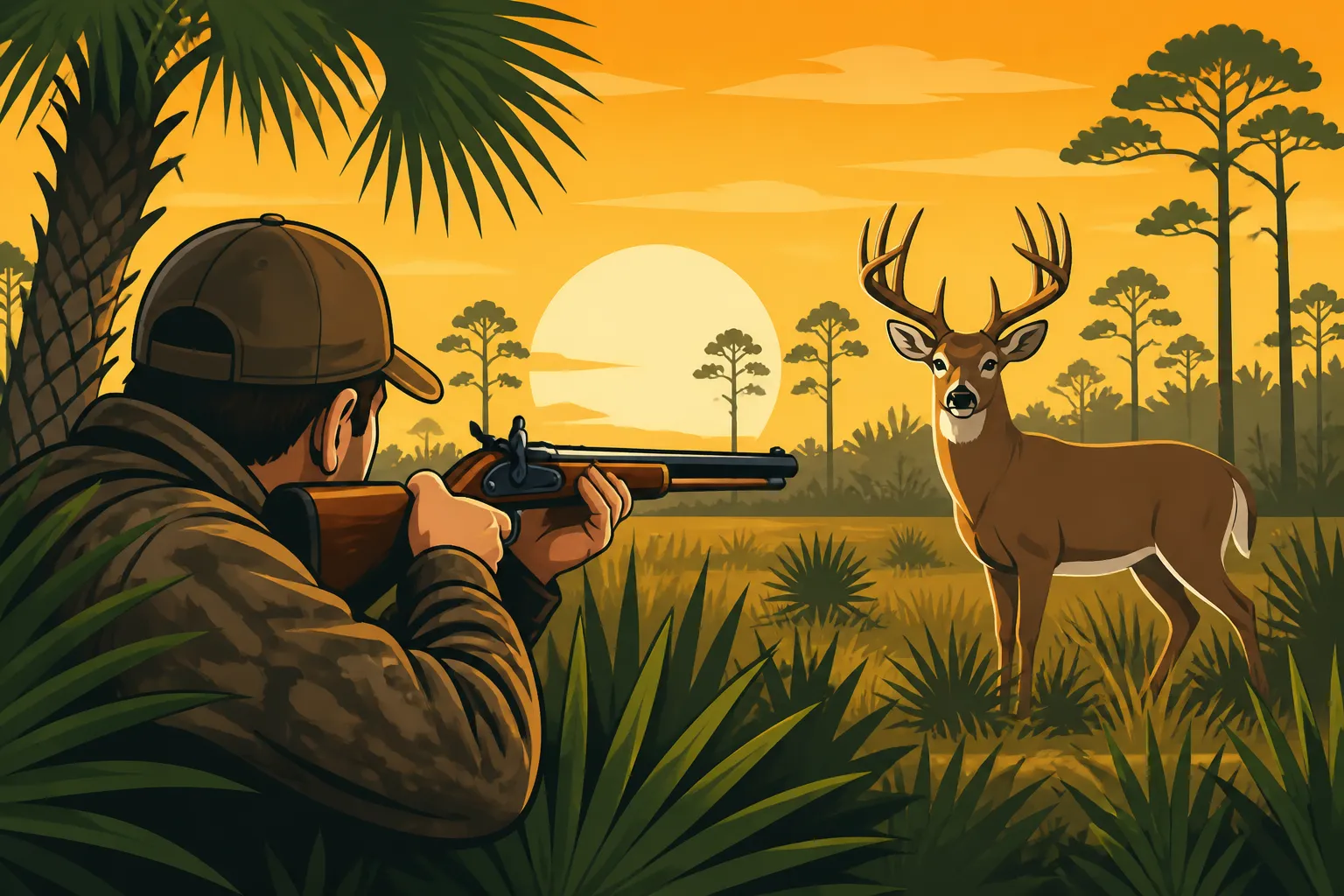
Muzzleloader Deer Hunting in Florida
There's a special kind of hunter who feels the itch as archery season winds down but before the general gun season really kicks off. You're looking for those extra days in the woods, that unique challenge, and a chance to extend your Florida deer hunting season. If you've been curious about muzzleloading, or even if you're a seasoned black powder enthusiast looking for Florida-specific insights, you know the regulations and nuances can be a real head-scratcher. This comprehensive guide will walk you through everything you need to know to successfully pursue whitetails with a muzzleloader in the Sunshine State.
The Unique Appeal of Muzzleloader Season in Florida
Florida's hunting landscape is incredibly diverse, and so are its hunting seasons. Unlike some states where muzzleloader season might be an afterthought, here in Florida, it carves out a fantastic, often less-pressured, window to chase deer. It's a chance to get out there with a different challenge, pushing your skills and extending your time in the beautiful, wild parts of our state.
Why Muzzleloaders Offer Extended Opportunities
The beauty of muzzleloader season in Florida lies precisely in its timing. It often falls after the initial archery and crossbow excitement has settled but before the hustle and bustle of the general gun season begins. This timing creates a distinct advantage for hunters looking for a bit more solitude and a less pressured deer herd. Imagine the woods, still relatively quiet after the early archery hunters have left, but before the influx of hunters with modern firearms. That's the sweet spot muzzleloading offers. It's a fantastic way to feel like you're getting a jump on things, experiencing the Florida wilderness in a more primitive, intimate way. Many of us feel that pang of longing for the woods as the short archery window closes, and muzzleloader season is the perfect answer, allowing us to keep that connection alive a little longer.
For some, it's about the challenge itself – the single shot, the plume of smoke, the historical connection to hunting traditions. For others, it's purely strategic; more time in the woods equals more opportunities. This interim period can be particularly productive as deer patterns might be shifting from summer to fall food sources, and they haven't yet been heavily educated by constant human presence. It allows you to observe these patterns and capitalize on movements that might be harder to pinpoint once the woods are full of activity.
Understanding Florida's Muzzleloader Zones and Dates
Florida is a big state, and to manage its deer populations effectively, it's divided into four distinct deer management zones: A, B, C, and D. Each of these zones has its own specific season dates, including those for muzzleloaders. This can be one of the most confusing aspects for both resident and nonresident hunters alike, because what's legal in Zone A might be totally different in Zone C just a few counties over. You absolutely need to pinpoint which zone your hunting location falls into and meticulously check the current year's Florida Fish and Wildlife Conservation Commission (FWC) regulations.
Generally, muzzleloader season provides a bridge between archery/crossbow season and the general gun season. For instance, Zone A, covering much of South Florida, often has an early muzzleloader period. Zone C, encompassing the bulk of Central Florida, might see its muzzleloader season kick off in late September, giving hunters a fantastic chance to hunt while the weather is still warm but before the deer have truly felt the pressure. It's not a one-size-fits-all situation, and getting it wrong could lead to a citation, or worse, losing your hunting privileges. Don't just assume; always confirm the specific dates for your chosen zone and Wildlife Management Area (WMA), if applicable. For a deeper dive into how these zones dictate all aspects of deer hunting, check out our guide on Florida's Four Deer Management Zones Explained.
Essential Muzzleloader Regulations and Equipment in Florida
Hunting with a muzzleloader comes with its own set of rules and equipment requirements, some of which are specific to Florida. It's not just about having a black powder gun; it's about making sure your equipment meets the state's legal definitions and that you're properly licensed to hunt during this special season. Nobody wants to be caught off guard in the field, so understanding these details is paramount.
Legal Muzzleloader Specifications for Deer Hunting
Florida's FWC is quite clear about what constitutes a legal muzzleloader for deer hunting. You can't just bring any old black powder firearm out there. First and foremost, the muzzleloader must be capable of being loaded only from the muzzle. This means no breech-loading firearms during the designated muzzleloader periods, even if they shoot black powder. It must also fire a single projectile, not shot. The bore diameter needs to be .40 caliber or larger, and that single projectile must weigh 210 grains or more. These specifications are in place to ensure ethical and effective harvesting of deer.
One common question hunters have, especially those coming from other states, is about optics. In Florida, during muzzleloading gun season, telescopic sights are indeed permitted. This is a huge relief for many hunters who prefer the accuracy and target acquisition that a scope provides, especially in low light conditions or at longer ranges. You'll also need to use either black powder or an approved synthetic substitute, such as Hodgdon Triple Seven or IMR White Hots. Smokeless powder is strictly prohibited in muzzleloaders for deer hunting in Florida; it's simply too dangerous in firearms not designed for it and can lead to catastrophic failure. Always double-check your powder type to avoid a serious accident.
Necessary Licenses and Permits
Just like any other hunting season in Florida, you'll need the proper licenses and permits to legally pursue deer with a muzzleloader. This isn't just a suggestion; it's a legal requirement that protects wildlife populations and ensures fair chase. The foundation is your Florida hunting license, which is mandatory for all hunters. On top of that, you'll need a deer permit, specifically for taking deer. These are usually purchased together or as part of a package.
If you plan on hunting on public lands, which include many of Florida's fantastic Wildlife Management Areas (WMAs), you'll also need a Management Area Permit. Many WMAs also require a quota permit for specific hunts, so always verify if your chosen WMA requires one and if the application period is open. Failing to secure the correct permits is an easy way to turn an exciting hunt into a frustrating encounter with a game warden. These licenses and permits can be easily purchased online through the FWC website, at a local tax collector's office, or through various license agents across the state. Using the FWC Fish/Hunt app on your smartphone is also a convenient way to carry proof of your licenses in the field. To get a full breakdown of the costs and options, take a look at our detailed guide on Florida Hunting Licenses and What They Cost and further information on The Florida WMA Management Area Permit.
| Feature | Legal Requirement / Recommendation | Notes |
|---|---|---|
| Bore Diameter | 0.40 caliber or larger | Check your specific firearm's stamping. |
| Projectile Weight | 210 grains or more | Applies to single projectile firearms. |
| Loading | Capable of being loaded only from the muzzle with a single projectile. | No breech-loading firearms during muzzleloader season. |
| Sights | Telescopic sights permitted | Unlike some states, scopes are allowed during FL muzzleloader season. |
| Propellant | Black powder or approved synthetic substitutes (e.g., Triple Seven) | Smokeless powder is not permitted in muzzleloaders for deer. |
| Licenses | Florida Hunting License, Deer Permit, WMA Permit (if applicable) | Purchase online or at agents. |
Choosing Your Muzzleloader and Ammunition
Just like choosing a modern rifle, selecting the right muzzleloader and ammunition is a personal decision that significantly impacts your hunting success. There's a wide world of options out there, from traditional to technologically advanced, and understanding the pros and cons of each in Florida's unique environment is crucial. The right combination will ensure accuracy, reliability, and ultimately, a more enjoyable and ethical hunt.
Types of Muzzleloaders Suited for Florida
When it comes to muzzleloaders, you generally have two main categories: traditional and in-line. Traditional muzzleloaders, like flintlocks or percussion cap rifles, are what many purists think of when they hear "black powder." They offer a profound connection to history and a greater challenge, but they can be more finicky, especially in Florida's often-humid climate. Keeping the pan dry on a flintlock or ensuring percussion caps don't get fouled in a sudden downpour requires extra diligence. Brands like Lyman or Dixie Gun Works offer classic designs.
Modern in-line muzzleloaders, on the other hand, are the workhorses for many contemporary black powder hunters. They resemble modern rifles more closely, with centerfire-style primers (often 209 shotshell primers) that offer significantly more reliable ignition, especially in damp conditions. Their design generally allows for easier cleaning and better accuracy, making them a popular choice for hunters prioritizing performance and dependability. Manufacturers such as CVA, Traditions, and Thompson/Center lead the market with a wide range of reliable in-line models. For Florida's unpredictable weather and often thick, close-quarters hunting, the reliability and ease of use of an in-line can be a real game-changer, reducing the frustration of misfires that can ruin a hunt.
Powder, Primers, and Projectiles
The heart of muzzleloading lies in its components: powder, primers, and projectiles. As mentioned, Florida requires black powder or approved synthetic substitutes. True black powder (Goex, Schuetzen) burns dirty but reliably. Substitutes like Hodgdon Triple Seven or Pyrodex are less corrosive, cleaner, and often more readily available, making them popular for their convenience and performance. Whichever you choose, consistency is key; always measure your powder charge precisely using a volume-based measure, not by weight, unless specifically stated by the manufacturer. Varying charges will lead to inconsistent accuracy, a frustrating problem when you're trying to hit a deer.
For primers, 209 shotshell primers are the most common and reliable for modern in-line muzzleloaders, offering a hot, consistent spark that helps ensure ignition even with slightly damp powder. Traditional percussion caps or flintlock flints require more care to keep dry and functional. Projectile selection is equally important. While the FWC specifies a minimum weight of 210 grains, there's a huge variety beyond that. Sabots, which encase a smaller, faster bullet in a plastic sleeve, offer excellent accuracy and velocity. Conical bullets, like those from Hornady or Buffalo Bullet, are solid lead projectiles that can offer devastating knockdown power, especially at closer ranges. PowerBelt bullets are a popular choice as they are designed for easy loading and offer good accuracy. It's vital to test several types and brands of projectiles with your specific muzzleloader and powder charge at the range to find the combination that yields the best accuracy. What works in one gun might not work in another, and discovering this in the field is a terrible feeling.
Pre-Season Preparation and Scouting for Muzzleloader Hunting
Successful muzzleloader hunting in Florida isn't just about showing up with a legal firearm; it's about meticulous preparation long before opening day. This includes not only getting your equipment dialed in but also intimately understanding the deer and their habits in your chosen hunting area. The time you invest in the off-season will pay dividends when the moment of truth arrives.
Tuning Your Muzzleloader for Accuracy
Hitting what you're aiming at is fundamental to ethical hunting, and with a single-shot muzzleloader, it becomes even more critical. Range time is not just recommended; it's absolutely essential. You need to sight in your muzzleloader carefully, understanding its capabilities and limitations. Muzzleloaders, especially those shooting heavier projectiles, have a more rainbow-like trajectory than modern centerfire rifles, so knowing your holdovers at various distances is paramount. Practice shooting from common hunting positions – offhand, kneeling, and from a rest – to build muscle memory.
Florida's climate presents unique challenges. Temperature and, more importantly, humidity can affect powder performance and therefore accuracy. Pay attention to how your groups change on damp days versus dry days. Consistent cleaning between shots is another key to accuracy with many muzzleloaders, as powder fouling can quickly build up and affect projectile seating and bore condition. Don't be afraid to experiment with different powder charges and bullet combinations to find what your specific rifle prefers. It can be frustrating when groups spread out unexpectedly, but systematically working through different variables at the range will help you overcome these inconsistencies and build confidence in your setup.
Scouting for Deer Sign in Florida's Habitats
Scouting is the cornerstone of any successful deer hunt, and muzzleloader season is no different. With Florida's diverse habitats, from vast palmetto flatwoods to dense oak hammocks and cypress swamps, knowing where to look for deer sign is crucial. Focus on transitional areas where different habitat types meet, as deer often use these edges for travel, feeding, and bedding. Look for fresh tracks, rubs on small trees (especially by early season bucks), and active scrape lines along sand roads or game trails. Acorns, especially from live oaks and water oaks, are prime food sources in early fall, so scouting for mast crop production is vital. If there are any planted food plots, pay close attention to entry and exit routes.
Utilizing mapping tools can be a tremendous advantage during scouting. Platforms like GoHunt allow you to overlay property lines, topo maps, and aerial imagery, helping you identify potential pinch points, bedding areas, and travel corridors before you even set foot in the woods. This digital scouting can save you countless hours of walking. Remember that deer patterns can shift, so fresh sign is always preferable to old. During this pre-season period, the deer might still be in more predictable summer patterns before hunting pressure scatters them. Pay attention to water sources as well; even in Florida, deer need water, and small ponds or sloughs can be hotspots. For a comprehensive look at how to approach your pre-season efforts, read our articles on Scouting Florida Public Land Before Season, Finding Sign in a Florida Oak Hammock, and Where Florida Bucks Bed in Thick Palmetto.
Effective Muzzleloader Hunting Tactics in Florida
Once your muzzleloader is sighted in and your scouting is complete, it's time to put a plan into action. Muzzleloader hunting demands a different approach than modern rifle hunting. The single-shot limitation and the unique characteristics of black powder firearms mean that shot placement, patience, and a solid understanding of deer behavior are more critical than ever.
Still-Hunting and Stand Hunting Strategies
In Florida's dense and often challenging terrain, both still-hunting and stand hunting can be highly effective with a muzzleloader. Still-hunting involves moving very slowly and deliberately through the woods, stopping frequently to look and listen. This tactic is particularly good in thick palmetto flatwoods or cypress swamps, where visibility is limited and deer often hold tight. Your pace should be excruciatingly slow, taking a step or two, then pausing for several minutes, scanning every shadow and detecting any movement. Pay close attention to the wind, as deer rely heavily on their sense of smell. In Florida's generally flat terrain, thermals can still play a role, especially around water bodies or elevation changes, so understanding Wind and Thermals in Flat Florida Terrain is crucial.
Stand hunting, whether from a treestand or a ground blind, is another excellent strategy. Setting up near known food sources, travel corridors, or bedding areas can yield fantastic results. Ground blinds are particularly popular in Florida's thick cover, offering concealment and scent control. If using a ground blind, ensure it's well-brushed in and set up several weeks before your hunt to allow deer to get used to its presence. When choosing a stand location, consider your shot distances. While modern in-lines can be accurate out to 150-200 yards, many muzzleloader hunters prefer to keep shots under 100 yards for ethical reasons and to maximize the projectile's energy. Make sure your shooting lanes are clear and you have a solid rest. Our guide on Still-Hunting Florida Palmetto Flatwoods and Using a Ground Blind on Florida Public Land offers more specific tips for these tactics.
The Importance of a Quick Follow-Up
The single-shot nature of a muzzleloader means that your first shot is absolutely paramount. There's no quick second shot if you miss or make a poor hit. Therefore, every aspect of your shot placement must be perfect. Practice aiming for the vital zone – the lungs and heart – to ensure a quick, ethical harvest. Once the shot is taken, don't rush. The smoke from black powder can obscure your view, so take a moment to collect yourself and observe the deer's reaction before reloading.
Reloading a muzzleloader in the field, especially under the adrenaline of a shot, takes practice. Many hunters carry a speed loader with a pre-measured powder charge and projectile to make the process as fast and smooth as possible, allowing for a follow-up shot if needed. Even with a good hit, deer in Florida's dense cover can disappear quickly. Give the deer some time if you suspect a vital hit, especially if it didn't drop in its tracks. A minimum of 30 minutes, or even an hour, for a lung shot is often recommended to allow the animal to expire peacefully. Then, begin your tracking slowly and meticulously. Blood trailing in Florida's sandy soil and thick vegetation can be challenging, particularly if the sun is setting. Knowing how to efficiently Blood Trailing After Dark in Florida can be a valuable skill.
Post-Harvest Care and Meat Processing
Harvesting a deer with a muzzleloader is a rewarding experience, but the work isn't over once the animal is down. In Florida's typically warm climate, proper post-harvest care is crucial to preserve the meat and ensure it's fit for the table. Neglecting these steps can lead to spoilage, which is a heartbreaking waste of both effort and a valuable resource.
Field Dressing and Cooling in Florida's Heat
Florida's mild falls and often warm early winter days mean that heat is your biggest enemy when it comes to venison. Rapid field dressing is not just good practice; it's absolutely essential. The sooner you remove the deer's entrails, the faster the carcass can begin to cool down. Carry a sharp knife, gloves, and a few towels. Get the deer gutted as quickly and cleanly as possible, aiming to reduce the internal body temperature. Elevating the deer or positioning it to allow air circulation can help.
Once field dressed, getting the deer cooled down quickly is the next priority. If you're near your vehicle, an ice chest large enough for quartered deer, or even several large coolers, filled with ice is indispensable. Quartering the deer in the field, if allowed and practical, can significantly speed up the cooling process by breaking the large muscle masses apart and exposing more surface area to air or ice. Protecting the meat from insects, particularly flies, is also vital. Game bags, often made of breathable cloth, can help keep flies off while still allowing air circulation. You've worked hard for that venison, so don't let the heat ruin it! For more in-depth advice on this critical step, refer to our guide on Field Dressing a Deer in Hot Weather.
Transporting and Processing Your Deer
After your deer is field dressed and cooling, you need to be aware of Florida's legal requirements for transport. You're typically required to register your harvested deer within 24 hours of harvest and prior to final processing or taxidermy. This can often be done conveniently through the FWC Fish/Hunt app or their website. Make sure you understand how to properly tag and transport your deer, especially if you're traveling across county lines. Our guide on Registering a Florida Deer Online has all the details.
When it comes to processing, you have a couple of options. Many hunters enjoy the satisfaction and cost savings of butchering their deer themselves. This gives you complete control over cuts and packaging. If you go this route, ensure you have a clean workspace, sharp knives, and plenty of freezer paper or vacuum seal bags. Alternatively, there are numerous professional meat processors throughout Florida who can handle the job for you. These butchers often provide custom cuts and packaging, saving you time and effort. If you're hunting in or around Holmes County, be mindful of Florida's single confirmed Chronic Wasting Disease (CWD) case and associated surveillance zone. There are specific rules regarding the movement of deer carcasses out of this area, and testing may be required or encouraged.
Overcoming Common Muzzleloader Challenges
Muzzleloading, while deeply rewarding, isn't without its unique hurdles. Florida's environment, with its subtropical climate and public land dynamics, can amplify some of these challenges. Being prepared for these potential issues can mean the difference between a successful hunt and a frustrating one.
Dealing with Florida's Humidity and Rain
One of the most persistent frustrations for muzzleloader hunters in Florida is the battle against humidity and rain. Black powder and its substitutes are hygroscopic, meaning they readily absorb moisture from the air. This can lead to the dreaded misfire or a hangfire, where the primer ignites but the main charge takes a moment longer, ruining your shot or spooking the deer. Preventing this requires diligent waterproofing.
Ensure your powder and primers are stored in airtight, waterproof containers. Many hunters use small plastic baggies or film canisters for individual pre-measured powder charges. When in the field, protect your muzzleloader's bore and percussion cap or primer with a piece of electrical tape or a balloon, especially if rain is a possibility. Some manufacturers make specialized weatherproof primers, or you can even use a small dab of grease around the cap to seal it. Always carry spare components – extra primers, a cleaning jag, patches, and a nipple wrench – because a fouled or wet primer can stop your hunt cold. Practicing ignition tests at home with a spent primer or a small amount of powder can help build confidence in your setup's reliability in damp conditions.
Public Land Pressure During Muzzleloader Season
While muzzleloader season often sees less pressure than the peak of general gun season, Florida's public lands can still feel crowded, especially on popular WMAs or around easily accessible areas. It's a valid frustration to scout hard, only to find another hunter has set up shop right where you planned to be. This means adapting your strategy and being prepared to work a little harder to find unpressured ground.
One effective tactic is to walk farther than most. Many hunters stick close to roads and designated trails. By pushing deeper into the WMA, or exploring less obvious access points, you can often find pockets of deer that haven't been disturbed. Using detailed mapping apps, such as GoHunt, can help you identify these "hidden" areas by showing contours, drainages, and vegetation changes that might funnel deer away from the crowds. Look for areas that require a bit more effort to reach, such as swamp edges or dense palmetto heads that are off the beaten path. These spots, while physically demanding to access, often hold resident deer that are accustomed to limited human presence. Remember, patience and persistence are your greatest assets when navigating Hunting Pressure on Florida Public Land and striving to Finding Ground Others Walk Past.
Disclaimer
Please remember that hunting regulations in Florida can change. Always consult the latest Florida Fish and Wildlife Conservation Commission (FWC) regulations guide for the current season dates, license requirements, and legal equipment specifications before heading into the field. Safety should always be your top priority when hunting.