Alligator Hunting Florida’s Lakes and Rivers
Trying to navigate the complex world of Florida alligator hunting, especially when you're dreaming of tangling with one of these prehistoric beasts on your own, can feel incredibly daunting. The rules, the gear, the sheer power of the animal – it’s a lot to wrap your head around before you even think about putting a hook in the water. This comprehensive guide is here to demystify the process, walking you through everything from securing your permit to safely bringing your gator home, focusing specifically on hunting them in Florida's vast network of lakes and rivers.
Deciphering Florida Alligator Hunting Regulations
Before you even think about buying a new harpoon or scouting a honey hole, you absolutely must understand Florida's alligator hunting regulations. The Florida Fish and Wildlife Conservation Commission (FWC) has a robust system in place to manage the state's healthy alligator population, and ignorance of these rules is simply not an option. From permit applications to legal methods and specific season dates, getting this foundational knowledge right is the key to a legal and successful hunt. It’s not just about avoiding fines; it’s about participating in a well-managed conservation program that respects the resource.
The Permit System and Application Process
Florida's Statewide Alligator Harvest Program is primarily managed through a limited entry permit system, meaning you can't just decide to go hunting on a whim. The demand for these permits is incredibly high, reflecting the unique thrill and challenge of alligator hunting. Each permit is specific to a particular harvest unit (which could be a lake, a river system, or a collection of smaller waters) and a set harvest period.
To even have a chance at a permit, you'll need to participate in the FWC's annual alligator hunt lottery. The application period typically opens in May, and while you can apply for multiple hunt choices, you’ll want to research which areas offer the best opportunities for the type of hunt you envision. For instance, some units are known for larger gators, while others might offer more consistent action. The FWC website is your go-to resource for detailed information on how to apply for a statewide alligator permit. The odds can be tough, especially for prime spots, but it's truly the only way to get your foot in the door for a public land alligator hunt. It's a bit like applying for any other highly coveted quota hunt – patience and persistence are key. And don't forget, there are also special "Super Hunt" permits available that offer extended harvest opportunities and are highly sought after; you can find out what the Alligator Super Hunt costs and how to apply on the FWC site.
Legal Hunting Methods and Restrictions
Florida is very specific about how you can harvest an alligator. This isn't a free-for-all; safety and ethical take are paramount. The core principle is that alligators must be initially captured with a hand-held device or a device attached to a line, ensuring a controlled and humane capture. This means no firearms for the initial take! Once an alligator is secured to a line, and only then, can a finishing device be used.
The permitted initial capture methods include hook and line (using a fishing pole or handline with a non-baited hook, or a baited hook from a set-line), harpoon, snare, gig, or crossbow. Bowfishing is also a legal initial capture method, though it's important to differentiate it from a traditional fishing rod and reel setup. After the alligator is on a line, you can use a bang stick (a specialized device that delivers a percussive blow to the brain) or a handgun to dispatch it. Legal weapons during Florida Archery Season and other specific seasons often have different rules, so it's vital to focus on the alligator-specific regulations. You cannot use baited hooks free-floating in the water; they must be attached to a set-line that's anchored or secured. This level of detail underscores why thoroughly reading the FWC alligator hunting guide is non-negotiable.
Season Dates and Bag Limits
The alligator hunting season in Florida is generally quite structured, with specific opening and closing dates for the statewide harvest program. The season typically runs for several weeks, often from mid-August through early November, although exact dates can vary slightly year to year. Each permit is issued for a specific "harvest period" within this overall season, usually lasting about a week or two. It’s not a continuous free-for-all, but rather a series of structured opportunities.
For instance, the Florida alligator season opening date is usually in August, kicking off an intense period for hunters. Your permit will clearly state your designated harvest unit and period. The bag limit for each permit is typically two alligators. However, there are length restrictions. While there isn't a statewide minimum length, certain harvest units might have specific limitations based on management goals for that particular body of water. You are required to possess a valid Florida hunting license and an alligator trapping license, in addition to your harvest permit. Remember that alligators must be tagged immediately upon harvest with a CITES tag provided with your permit, a critical step to ensure legal compliance.
| Permit Type | Application Method | Typical Season Dates | Bag Limit (per permit) | Primary Legal Methods |
|---|---|---|---|---|
| Statewide Alligator Permit | Lottery Application | Mid-Aug to Early Nov | Two Alligators | Hook & Line, Harpoon, Snare, Gig, Crossbow (initial capture) |
| Alligator Super Hunt | Lottery Application | Extended period | Two Alligators | Hook & Line, Harpoon, Snare, Gig, Crossbow (initial capture) |
| Private Land Permits | FWC Application | Year-Round (with specific permit) | Varies | Varies (consult FWC for specific rules) |
Scouting and Locating Alligators in Florida Lakes and Rivers
Finding alligators in Florida's vast and diverse waterways can be a challenge, even with a robust population. They are masters of camouflage and often prefer to remain hidden. Effective scouting is paramount to a successful hunt, transforming a hopeful expedition into a targeted pursuit. It’s about more than just spotting a gator; it’s about understanding their habits, preferred environments, and travel corridors.
Key Habitat Features: Deep Holes, Banks, and Cover
Alligators are cold-blooded reptiles, and their habitat choices are heavily influenced by temperature regulation and access to food. In lakes and rivers, they gravitate towards areas that offer a mix of deep water for refuge, sunny banks for basking, and dense cover for ambush and concealment. Think about those lazy summer days when you see them sunning themselves on the edges of canals or along sandy shores; these are prime spots.
Look for deep holes or channels, especially near bends in rivers or transitions from open water to thick vegetation. These areas provide thermal refuge during colder periods and escape routes when disturbed. Heavily vegetated shorelines, particularly those with dense reeds, cattails, or cypress knees, offer ideal ambush points and security cover. River oxbows and secluded coves within larger lakes are also excellent places to find them, as these areas often have less human disturbance and abundant prey. They also love areas where feeder creeks or canals enter larger bodies of water, as these create natural funnels for prey and offer varied depths. When you're scouting, especially during the day, pay close attention to the sunniest banks where they might be out catching some rays. Using a mapping app like GoHunt with satellite imagery can help identify these features from above, allowing you to pre-scout potential hot spots before you even launch a boat.
Reading the Water for Alligator Sign
Alligators leave behind plenty of clues if you know what to look for. Beyond direct sightings, their presence is often betrayed by subtle signs on and around the water. Perhaps the most obvious sign is "gator trails" – worn paths in the mud or vegetation where alligators regularly drag themselves in and out of the water. These are particularly noticeable along riverbanks or marsh edges.
Another key indicator is mud holes or "gator wallows" near the water's edge, often used for cooling down or as nesting sites. Keep an eye out for disturbed vegetation in shallow water, which can indicate an alligator has recently moved through the area or is lurking just beneath the surface. You might also spot "wakes" or ripples in calm water where a submerged alligator is slowly swimming. In areas with soft bottoms, you can sometimes see distinct tail drags or foot tracks. Listen, too; while they're often silent, a big gator can make a surprising splash as it dives, or emit a low growl, especially during mating season, though you'll be hunting later than that. These subtle cues are what separate a lucky encounter from a strategic hunt.
Using Technology for Scouting
In today's hunting world, technology can be a huge asset in alligator hunting, especially for covering vast Florida waterways. GPS mapping applications are invaluable for identifying promising habitat, marking potential gator sightings, and navigating safely, particularly during night hunts. Many hunters use platforms like GoHunt, which provide detailed satellite imagery, topographic maps, and even public/private land overlays, helping you to pinpoint those deep holes, dense cover, and accessible banks.
Sonar or fish finders, typically used for angling, can also be beneficial. While they won't show you a gator like a fish, they can reveal bottom contours, submerged structure, and changes in depth that indicate prime alligator habitat. Some advanced side-imaging sonar units can even pick up larger objects, which could be a gator cruising the bottom. Night vision or thermal imaging devices are game-changers for identifying alligators after dark, as their eyes glow bright red when illuminated, making them stand out against the darkness. This can drastically improve your chances of locating a legal-sized animal during your designated hunting period. Remember, scouting with the Florida FWC app can also provide specific WMA boundary information and regulations for public lands.
Essential Gear for Alligator Hunting
Alligator hunting is not like deer hunting or bass fishing; it requires a specialized arsenal of gear designed for safety, efficacy, and the sheer power of the animal you're pursuing. Skimping on quality here can lead to lost gators, damaged equipment, or, worst of all, dangerous situations. Preparing your gear meticulously is as important as any other aspect of the hunt.
Primary Capture Gear: Hooks, Harpoons, and Snare Poles
Your initial capture device is the cornerstone of your alligator hunt. The choice often depends on personal preference, the type of water you're hunting, and how close you can get to the alligator.
Hook-and-line setups are very popular. This typically involves heavy-duty fishing gear, like large saltwater reels spooled with 80-200lb braided line, or specialized handlines. The hooks used are heavy-gauge, non-offset circle hooks, often 10/0 or larger. These can be deployed with a rod and reel, or as a "set-line" where the hook is baited (with something like rotten chicken or fish) and suspended just above the water from a sturdy anchor point like a tree limb or a floating jug. Set-lines are often deployed in the evening and checked at first light. When using a rod and reel for an active hunt, the hook is usually cast or lowered near a spotted gator without bait, aiming to snag it or entice it to bite.
Harpoons are perhaps the most iconic alligator hunting tool. A harpoon consists of a long shaft (often fiberglass or aluminum) with a detachable, barbed head (known as a "dart" or "flounder gig"). The dart is connected to a heavy rope, which is then tied to a float or a strong anchor point in your boat. The idea is to thrust the harpoon into the alligator, the dart detaches, and the barb secures it, allowing you to fight the gator on the line. Harpoons require precise aiming and getting close enough to the gator, often within 10-20 feet.
Snare poles are another effective method, especially for gators that are reluctant to bite a hook or are in dense cover. A snare pole is typically a long, sturdy pole with a loop of heavy cable or rope at one end. The hunter maneuvers the loop over the alligator's head or tail and tightens it, securing the animal to the pole. This method requires excellent boat handling and stealth to get within striking distance. Remember that bowfishing for Florida alligators is also a legal method, requiring a specialized bow and arrow setup with a retrieving line.
Processing and Safety Equipment
Once you've secured an alligator, the real work, and potential danger, begins. Proper processing and safety equipment are non-negotiable for a humane take and safe handling.
A bang stick is the primary finishing device. It's a short pole with a cartridge firing mechanism at one end. When pressed against the alligator's brain, it discharges, delivering a humane and instant dispatch. Always use the correct caliber and keep it unloaded until ready for use. Alternatively, a large-caliber handgun (e.g., .357 magnum or .44 magnum) can be used, again, only for a brain shot when the gator is secured. Never use a firearm for the initial capture.
You'll also need heavy-duty gloves (like welding gloves) to protect your hands from teeth and scales, and gaffs or grappling hooks for pulling the secured gator alongside the boat. A sturdy tether rope is essential for securing the gator's jaws once it's on the boat (even if dispatched, its muscles can spasm). A bright spotlight or headlamp is critical for night hunting, especially for spotting those glowing red eyes and for safe navigation. For processing, bring a sharp skinning knife and possibly a hatchet or saw for butchering. Don't forget a cooler full of ice to properly chill the meat as quickly as possible.
Boats and Retrieval Tools
Hunting alligators on Florida's lakes and rivers demands a suitable vessel. Most hunters opt for flat-bottomed boats, jon boats, or small center consoles that are stable and can navigate shallow waters. Airboats are also used, particularly in marshy or very shallow areas like parts of the Everglades. The size of your boat should be appropriate for the size of the waterbody and the number of hunters and gear. A 16-20 foot boat is often a good compromise for most lakes and rivers.
Essential boat features include reliable navigation lights (if hunting at night), a powerful trolling motor for stealthy approaches, and a robust outboard engine for covering long distances. Make sure your boat has plenty of open deck space for handling a large animal. For retrieval, a strong grappling hook or gaff can help bring a submerged gator to the surface if it dives after being hooked. A heavy-duty winch (manual or electric) mounted on the boat can be incredibly useful for pulling a large gator into the vessel, preventing back injuries and dangerous slips. Always ensure your boat is well-maintained and stocked with all required safety equipment, including life vests, a fire extinguisher, and signaling devices, especially when Hunting Alligators at Night Legally.
Primary Hunting Methods Explained
Now that you're geared up and understand the regulations, let's dive into the actual methods you'll employ to hunt alligators on Florida's lakes and rivers. Each method has its nuances, requiring different skill sets and approaches. The common thread is patience, precision, and respect for a powerful apex predator.
Hook-and-Line Techniques
Hook-and-line is arguably the most common and versatile method for alligator hunting. It encompasses two main approaches: active rod-and-reel fishing and passive set-line deployment.
Active Rod-and-Reel Hunting: This method involves spotting an alligator, then casting a large, heavy-duty fishing rod with a heavy line and a large non-baited hook near or over the alligator, attempting to snag it. This is often done at night, using a spotlight to locate the gator's eyes. The challenge here is getting close enough for an accurate cast without spooking the animal and then setting the hook securely. Once hooked, the fight is on! It's an intense battle of strength and endurance, requiring a strong back and careful boat maneuvering to tire the alligator and bring it alongside the boat. This method is particularly effective when you can approach gators that are relatively still or slowly cruising the surface. Remember, if you are Stalking an Alligator on a Freshwater Lake, you need to be extremely quiet.
Set-Line Hunting: This is a more passive approach, ideal for hunters who may not have the time for continuous active hunting or prefer to target specific gators known to frequent an area. A set-line involves a baited hook (often rotten chicken or fish scraps work wonders for attracting gators) tied to a heavy-duty rope. The rope is then secured to a sturdy anchor point on shore, such as a strong tree, or to a weighted jug that acts as a buoy. The baited hook is suspended just above the water or submerged slightly in an area where gators are known to travel. Set-lines are typically deployed in the evening and checked at first light the following morning. The thrill of set-line hunting comes from the anticipation of finding a gator on your line, and then the challenge of getting it to the boat. This method does require careful placement to avoid public access areas and to prevent non-target animals from taking the bait.
Harpooning and Snaring
These methods involve a more direct, close-quarters confrontation with the alligator, requiring precision and steady hands.
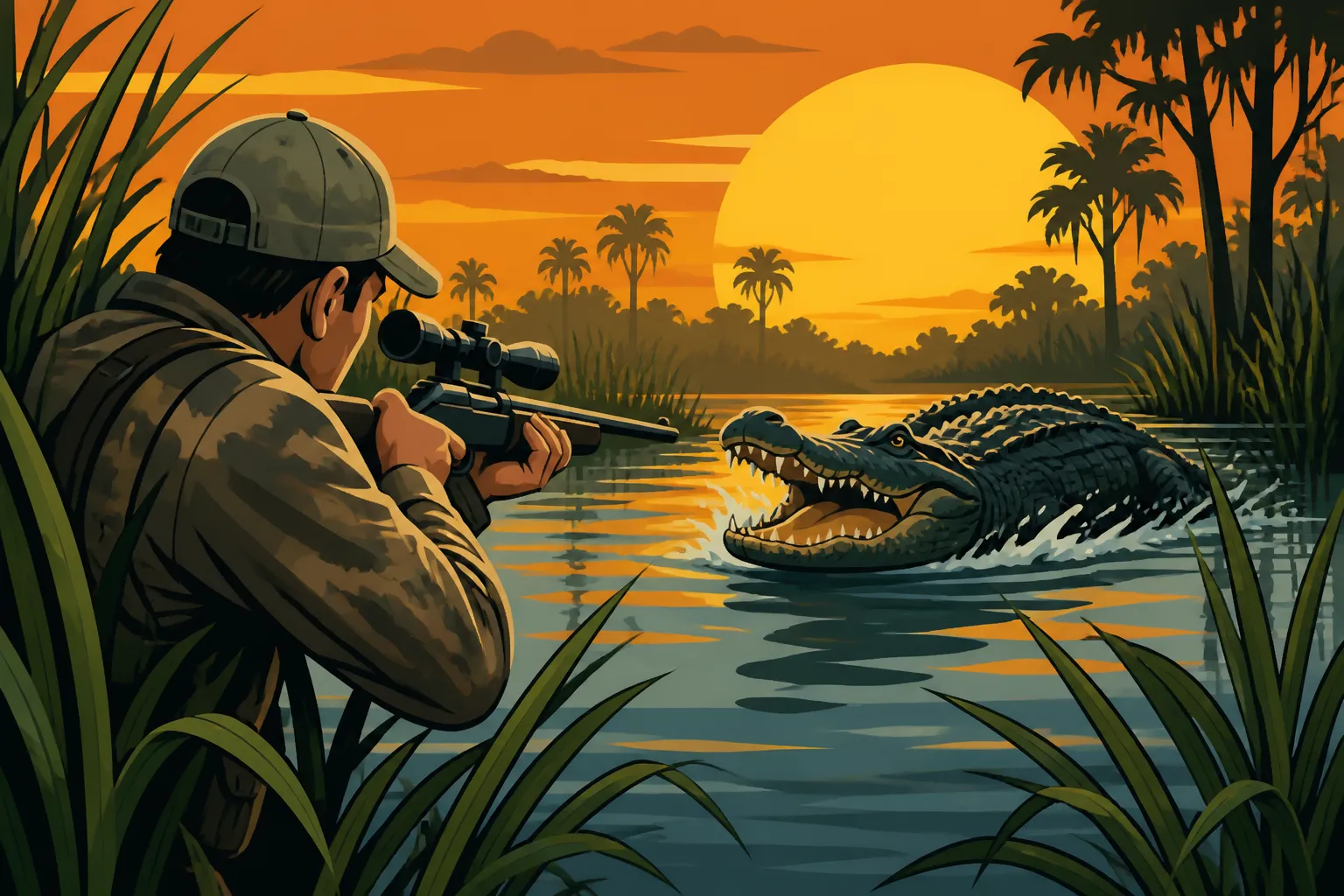
Harpooning: This classic method is all about stealth and accuracy. You'll approach an alligator, often at night under the cover of darkness with a spotlight, getting as close as possible without alarming it. Once within range (typically 10-20 feet), you thrust the harpoon with its detachable dart into the alligator, aiming for the thick hide along its back or side. The dart is designed to penetrate and then toggle to secure itself. As soon as the dart connects, the harpoon shaft detaches, and you're left fighting the alligator on the heavy line attached to the dart. This often leads to explosive dives and powerful thrashing, demanding quick reactions and teamwork to manage the line and control the boat. It's a method that truly puts your hunting prowess to the test, and is often favored by those looking for a more visceral experience.
Snaring: Snaring is particularly effective for alligators that are either in dense vegetation where casting a hook or harpooning might be difficult, or for those that are wary of baits. A snare pole allows you to slip a loop of cable or rope over the alligator's head or, more commonly, its tail. This requires an even closer approach than harpooning, often just a few feet away. Once the loop is in place, you quickly tighten it, securing the alligator. This can be tricky, as gators are incredibly strong and can thrash violently once snared. The goal is to get the snare tight enough to control the gator and then bring it alongside the boat for dispatch. It's a method that demands excellent boat control and coordination with your hunting partners.
Hunting with a Bang Stick Finishing Device
Regardless of how you initially capture an alligator – be it by hook, harpoon, snare, or crossbow – the final step of dispatching the animal requires a specific and humane method. In Florida, this almost exclusively means using a bang stick or a large-caliber handgun. Remember, firearms are NOT for initial capture; they are strictly for dispatching a secured alligator.
A bang stick is a specialized tool designed for humane dispatch. It's essentially a short, stout pole with a firing mechanism at one end that discharges a cartridge (often a .38 Special, .44 Magnum, or 12-gauge slug) when pressure is applied to the tip. The critical aspect is precisely delivering this force to the alligator's brain. The brain of an alligator is relatively small and located just behind the eyes, near the top of its head. Once the alligator is secured to your boat (meaning it's on a line and pulled alongside, its head accessible), you carefully position the bang stick over the brain area and push firmly to fire. This results in an immediate and humane dispatch. Using a bang stick is the preferred method for most experienced alligator hunters because of its efficiency and safety when handled correctly. When Harvesting an Alligator With a Bang Stick, always double-check safety features and ensure the gator is fully controlled.
Some hunters may use a large-caliber handgun as an alternative finishing device, again, only for a brain shot on a secured alligator. This requires extreme caution, as the projectile can ricochet off water or the boat. For both methods, accuracy is key for a humane dispatch and safety for everyone in the boat. Never attempt to dispatch an alligator that is not fully secured and controlled. This is not only inhumane but incredibly dangerous.
Safety Protocols and Ethical Considerations
Alligator hunting is inherently dangerous, and respecting the power of the animal and the environment is paramount. Skipping safety protocols or disregarding ethical considerations can lead to serious injury, loss of life, or damage to the hunting tradition. This isn't just about following rules; it's about responsible participation in a challenging pursuit.
Boat Safety and Navigation at Night
Most alligator hunting occurs at night, which adds a significant layer of complexity to boat safety and navigation. Reduced visibility means you need to be hyper-aware of your surroundings, potential hazards, and other boaters. Always have a designated operator for the boat who is not actively hunting.
Before heading out, perform a thorough check of your vessel. Ensure all navigation lights are functioning correctly – red and green bow lights, and a white stern light. Carry spare bulbs. Your spotlight or headlamp is crucial for spotting gators, but don't rely on it for navigation. Have a good GPS unit or reliable mapping app like GoHunt to mark your travel routes and potential hazards like submerged stumps, shallow areas, or crab pot buoys. Always inform someone on shore of your float plan, including your intended hunting area and estimated return time. Carry all required safety equipment: life vests for everyone onboard (and wear them!), a fire extinguisher, distress signals (flares or an air horn), a first-aid kit, and a fully charged cell phone. Never overload your boat, and always be aware of the boat's stability, especially when maneuvering a thrashing alligator. Navigating a Florida Cypress Swamp Edge at night can be particularly tricky, so caution is key.
Handling a Captured Alligator
This is perhaps the most dangerous part of the hunt. Even a "dead" alligator can sometimes thrash due to nerve spasms, and a seemingly docile one can suddenly become violent. Extreme caution is required at every step.
Once you have an alligator secured on a line and alongside the boat, ensure it's fully controlled before attempting dispatch. Its head should be kept away from the gunwales and clear of the hunters. After dispatching the animal with a bang stick or handgun, immediately secure its jaws. This is done by wrapping heavy-duty tape (electrical tape or specialized gator tape) or rope around its snout multiple times, ensuring it cannot open its mouth. Even after dispatch, the powerful jaw muscles can clench in a reflex action, so securing them is crucial before bringing the gator into the boat. Always use heavy gloves, and have multiple people assist with hauling a large alligator into the boat, lifting with your legs, not your back. Maintain situational awareness; never turn your back on an unsecured alligator, even if you think it's dead.
Respecting the Resource and Other Users
Ethical hunting extends beyond just legal compliance; it embodies respect for the animal, the environment, and fellow outdoor enthusiasts. Florida's alligator population has made an incredible comeback, and responsible hunting plays a role in its management.
This means striving for a humane, clean kill. Practice with your harpoon or bang stick so you're proficient when the moment comes. Do not chase or harass alligators unnecessarily. When deploying set-lines, ensure they are clearly marked and placed away from public swimming areas or high-traffic boating lanes. Be considerate of other boaters, anglers, and wildlife observers. Maintain a safe distance and avoid disturbing their activities. Remove all your gear, including spent bait and lines, from the water and shoreline when you leave. Leaving trash or abandoned lines poses a hazard to wildlife and detracts from the natural beauty of Florida's waterways. Understanding Florida Wildlife Violation Penalties also emphasizes the importance of adherence to rules. Treat the alligator and its habitat with the respect they deserve, ensuring that this incredible hunting opportunity remains available for future generations.
Post-Harvest: Tagging, Processing, and Reporting
The hunt isn't truly over until your alligator is properly tagged, processed, and reported. These steps are critical for legal compliance, meat preservation, and contributing to the FWC's vital conservation efforts. Neglecting these post-harvest duties can negate all your hard work and lead to legal issues.
CITES Tagging Requirements
This is a non-negotiable step: immediately upon harvesting an alligator, you must attach the provided CITES (Convention on International Trade in Endangered Species of Wild Fauna and Flora) tag. Each alligator permit comes with specific CITES tags, typically two per permit. The FWC requires that the tag be securely attached to the alligator's tail within six inches of the tip, or to the carcass, as soon as it is brought to the boat and dispatched. This tag must remain with the alligator until it reaches the final processing facility or the point of consumption.
The CITES tag is a crucial regulatory tool. It allows wildlife authorities to track the legal harvest of alligators and prevent poaching or illegal trade. Failing to tag an alligator immediately is a serious violation. Make sure you understand How Many CITES Tags Come With a Permit and exactly where and how to affix them. Losing a tag or failing to use it correctly can result in fines and the confiscation of your harvest. It's a small but vital piece of paper that validates your entire hunting effort.
Field Processing and Meat Care
Alligator meat is a delicious and highly sought-after wild game protein, but proper field processing and rapid cooling are essential to maintain its quality, especially in Florida's often warm climate. The goal is to get the meat on ice as quickly as possible to prevent spoilage.
Once the alligator is dispatched and secured in the boat, you'll need to decide on your field processing strategy. Some hunters choose to skin and butcher the entire gator right there in the boat or immediately upon returning to shore, saving the hide and feet for taxidermy or sale, and the meat for consumption. Other hunters may opt for a more limited field dress, simply gutting the animal to facilitate cooling, especially if they plan to take it to a commercial processor or want to keep the skin intact for a full mount.
Regardless of your chosen method, focus on separating the meat from the carcass and getting it into a cooler packed with ice. The primary meat cuts are the tail (often called "tail straps" or "gator tenderloin"), the jowls, and the legs. The tail meat is white and firm, often compared to pork or chicken, while the leg meat is darker and richer. Ensure all meat is thoroughly cleaned of any blood, dirt, or foreign material before icing. Having a large, well-insulated cooler and plenty of ice is critical. If you're hunting in hot weather, don't delay this step; the sooner the meat is cooled, the better its flavor and safety. Knowing how to field dress a deer in hot weather is good general knowledge, but gators require specific attention to detail.
Reporting Your Harvest
The final piece of your legal hunting puzzle is reporting your harvest to the FWC. This step is as important as obtaining your permit, as it provides critical data for wildlife management. The FWC uses harvest data to monitor population trends, assess the effectiveness of management strategies, and set future season quotas.
The specific method for reporting your alligator harvest will be outlined in your permit package. Typically, this involves either an online reporting system through the FWC website or a phone call to a designated number within a specific timeframe after the harvest, usually within 24 hours. You'll need to provide details such as your permit number, the harvest unit, the date of harvest, and often the length of the alligator. It's crucial to measure your alligator accurately before reporting. The FWC also often requests a sample from the harvested alligator for CWD surveillance, though this is primarily for deer, they do monitor other species for various health indicators. Be sure to follow all instructions regarding reporting precisely. Your compliance helps ensure the continued health of Florida's alligator population and the sustainability of the hunting program.
Navigating Specific Florida Waterways
Florida's lakes and rivers offer incredibly diverse environments for alligator hunting. What works in a vast, open lake might be completely ineffective in a tight, winding river or a dense swamp. Understanding these differences and adapting your tactics accordingly is key to success.
Hunting Alligators in Large Lakes (e.g., Lake Okeechobee)
Large, open lakes like Lake Okeechobee, the second-largest freshwater lake entirely within the United States, present unique challenges and opportunities. These vast bodies of water can hold enormous numbers of alligators, but finding a specific, legal-sized animal can be like finding a needle in a haystack.
Challenges: The sheer size means you'll spend a lot of time covering water. Alligators often have extensive home ranges and can be widely dispersed. High winds can make boating hazardous and spotting difficult, especially at night. There's also more commercial and recreational boat traffic to contend with, which can make gators warier. You might be interested in reading about Florida Alligator Population Estimate to understand the numbers in these large systems.
Tactics: Focus your efforts on specific areas known for high gator density, such as marshy edges, dense cattail beds, or areas around islands. Use good quality binoculars or a spotting scope during the day to identify basking gators and note their locations for a return trip at night. For night hunting, a powerful spotlight is essential to scan wide expanses of water. Consider employing set-lines more heavily in large lakes, as you can spread them out over a wider area and let the gators come to you. A stable, larger boat is almost a necessity for safely navigating rough water and handling potentially larger gators. Using a robust GPS and depth finder is crucial for staying oriented and avoiding submerged hazards in such expansive waters.
Hunting Alligators in Smaller Rivers (e.g., St. Johns River)
Smaller to medium-sized rivers, such as the St. Johns River or parts of the Suwannee River, offer a different hunting experience. These environments are often more intimate, with distinct banks and current, but can also be more constricted.
Challenges: The current can be a factor, making boat control more challenging when fighting a gator. Navigating narrow stretches at night requires excellent boat handling. Alligators might be more concentrated but can also be warier due to more frequent human interaction. The winding nature of rivers means gators can quickly disappear around a bend.
Tactics: In rivers, alligators often favor bends, oxbows, and areas where feeder creeks enter the main river. These spots offer deeper water, cover, and ambush points for prey. Pay close attention to cut banks where gators might have dens or basking spots. Stealth is paramount when approaching gators on rivers; use a trolling motor or paddle quietly. Harpooning and snaring can be very effective in river environments where you can often get closer to gators along the banks. If using set-lines, ensure they are anchored securely to prevent them from drifting downstream with the current. Scouting for "gator slides" – worn paths where gators enter and exit the water – is especially productive along riverbanks, indicating active travel routes.
Challenges of Swamp and Marsh Hunting
Hunting alligators in true swamps and marshes, like parts of the Everglades or remote WMA lands, is an entirely different beast. These are often shallow, heavily vegetated, and extremely difficult to navigate, but can hold huge, untouched gators.
Challenges: Access is a major hurdle; traditional boats may not work. You'll often need an airboat or a highly specialized shallow-water vessel. The dense vegetation makes spotting incredibly difficult, even with a powerful spotlight. Retrieval of a gator in thick cover can be an epic struggle. Temperatures can be stifling, and insects relentless.
Tactics: If you're serious about swamp and marsh hunting, an airboat is often the only way to effectively cover ground. These specialized vessels can glide over shallow water and dense vegetation, allowing access to areas untouched by other hunters. Thermal imaging or night vision is incredibly helpful for penetrating the visual clutter of dense vegetation. In these environments, identifying clear patches of water, sloughs, or small ponds within the marsh are key. Harpooning or snaring are typically the primary methods, as active hook-and-line casting can be impossible in thick cover. When you do connect with a gator, be prepared for a wrestling match in the vegetation; bringing a gator out of a Cypress Slough or a dense grass bed can be a Herculean task requiring strong lines and sometimes even multiple boats. This is often where outfitters who specialize in Airboat Hunting Guides in Florida really shine, as they have the specialized equipment and knowledge to navigate these extreme conditions safely and effectively.
Advanced Tactics and Tips for Success
Beyond the fundamentals, there are nuanced tactics and deeper understandings of alligator behavior that can significantly improve your chances of a successful hunt. These aren't just tricks; they're insights gained from experience that allow you to anticipate, adapt, and ultimately outsmart these ancient predators.
Night Hunting Strategies
Night hunting is the predominant and most effective way to hunt alligators in Florida, primarily because their eyes glow bright red when illuminated by a spotlight, making them easily visible against the dark water. This visual cue is your primary tool for locating and assessing gators.
The "Red Eye" Scan: Spend a lot of time slowly scanning the water with a powerful, focused spotlight. Look for those unmistakable red or orange reflections. Once you spot eyes, maintain a steady light on them. The gator will often hold still, trying to figure out what's going on. Pay attention to the distance between the eyes – a wider set indicates a larger gator. This is where Judging a Legal-Size Florida Alligator comes into play. You can estimate length by eye width or by simply getting closer to see more of the body profile. Using a thermal monocular can also be incredibly effective, as alligators radiate heat and stand out clearly against the cooler water, even if their eyes aren't reflecting perfectly.
Stealthy Approach: Once you've identified a target gator, switch to a silent approach. Turn off the main outboard engine and use a quiet trolling motor or paddle the rest of the way. Keep the spotlight focused on the gator's eyes, but try not to "burn" them too harshly, as this can spook them. Approach slowly and steadily, minimizing noise and wake. If the gator starts to sink, back off and give it a few minutes, then try again. Sometimes, a slow, continuous drift with the current can be less alarming than a direct motor approach.
Teamwork: Night hunting is best done with at least two people: one to operate the boat and spotlight, and another to be ready with the capture device (harpoon, fishing rod, or snare). Good communication is vital. The boat operator needs to anticipate the gator's movements and position the hunter for the best shot.
Understanding Alligator Behavior and Patterns
Alligators, like any wild animal, exhibit predictable behaviors that, once understood, can be exploited for hunting success. They are creatures of habit, especially concerning feeding, basking, and movement.
Basking Patterns: During cooler periods, especially in the mornings or late afternoons, alligators will often bask on sunny banks to warm themselves. These daylight sightings are excellent for scouting and marking potential nighttime spots. Note specific logs, mud flats, or sandy points they use repeatedly.
Feeding Habits: Alligators are opportunistic predators. They feed primarily at night or during twilight hours. They tend to patrol specific areas known for abundant prey, such as areas with concentrations of fish, waterfowl, or small mammals. Observing areas with active bird life or dense populations of gar can indicate good feeding grounds. The FWC's research into Florida Hog Damage to Agriculture also highlights how these opportunistic predators will take advantage of vulnerable prey.
Seasonal Shifts: While Florida's climate is relatively mild, alligators do respond to temperature changes. During colder fronts, they become less active and may seek refuge in deeper water or dens. Post-cold front, as temperatures rise, they will often become active again, seeking to feed or bask. Knowing Hunting Deer After a Cold Front applies to gators too: conditions change behavior. During your specific harvest period, observe local weather patterns and how they might be influencing gator activity.
Adapting to Weather and Water Conditions
Florida's weather is notoriously unpredictable, and water conditions can vary wildly, both of which have a significant impact on alligator hunting. Being able to adapt on the fly is a hallmark of an experienced hunter.
Wind and Waves: High winds can make navigation challenging, make it difficult to spot gator eyes (due to surface chop), and can push your boat off course during an approach or fight. On windy nights, consider hunting more sheltered areas like coves, canals, or narrower river sections. Conversely, calm, clear nights with little to no wind are ideal for spotting and quiet approaches on open water. Understanding Wind and Thermals in Flat Florida Terrain is important for all hunting.
Water Levels and Clarity: Fluctuating water levels can change gator access to certain areas. High water might allow them to move into previously inaccessible marsh areas, while low water can concentrate them in deeper channels or force them onto exposed banks. Water clarity also plays a role; clear water might make gators warier, while murky water can allow for closer approaches, but makes visual spotting harder without eye shine. After heavy rains, rivers might experience strong currents and high debris, making hunting difficult and dangerous.
Temperature: While alligators are tough, extreme cold (rare in Florida, but it happens) can make them completely lethargic. On the other hand, extremely hot nights might make them less visible on the surface, as they seek cooler, deeper water. The most active hunting often occurs during mild, stable conditions that don't stress the alligators. Paying attention to these environmental factors and adjusting your strategy and location accordingly will greatly increase your odds of success.
Disclaimer
Please remember that hunting regulations and safety guidelines can change. Always consult the most current Florida Fish and Wildlife Conservation Commission (FWC) regulations before planning or undertaking any hunting trip. This guide provides general information and should not be considered a substitute for official FWC rules and safety courses. Hunting involves inherent risks, and personal safety should always be your top priority.