Harvesting an Alligator With a Bang Stick
Alligator hunting in Florida is an experience unlike any other, a true test of grit and patience. But let's be honest, for many, the moment of truth—the actual dispatch—can feel daunting. It’s a high-stakes situation where you want to ensure a quick, humane, and effective harvest, but figuring out the best tool and technique for the job can be overwhelming. This comprehensive guide is dedicated to demystifying the process of harvesting an alligator with a bang stick, giving you the confidence and knowledge needed to execute this critical final step safely and successfully.
Understanding the Bang Stick for Alligator Harvest
When you picture alligator hunting, you might imagine ropes, harpoons, and a bit of a wrestle. And you'd be right, those are often crucial parts of the experience. But when it comes to the final act of dispatching a powerful, ancient reptile, a specialized tool called a bang stick often comes into play. It's an ingenious device, but one that demands respect and a solid understanding of how it works and why it's used.
What Exactly is a Bang Stick?
At its core, a bang stick, also known as a powerhead, is a simple yet incredibly effective tool. Imagine a sturdy pole, often made of aluminum or fiberglass, with a spring-loaded firing pin assembly at one end. You load a pistol or rifle cartridge into this assembly, and when the tip of the bang stick is pushed firmly against a hard surface, the firing pin strikes the primer, discharging the bullet. It’s essentially a single-shot firearm designed for underwater or close-contact use, delivering immense kinetic energy directly into the target. Unlike a conventional firearm where the bullet travels down a barrel, a bang stick delivers its force instantaneously upon impact, making it ideal for dispatching large animals like alligators with precision and minimal bullet travel beyond the target.
Many hunters, especially those new to alligator hunting, might find the concept a bit intimidating. It looks like something out of a movie, and the idea of discharging a cartridge so close to a powerful, thrashing animal in a boat can certainly raise a few eyebrows. However, it's precisely this direct-impact design that makes it so effective and, when used correctly, surprisingly safe for the hunter. The key is understanding its mechanics and treating it with the same respect you would any firearm. It's a tool built for rapid, humane dispatch, and that's exactly what it excels at when the moment comes to end the hunt cleanly.
Compared to other dispatch methods, such as trying to use a small caliber pistol from a distance or attempting to brain-shot a gator with a conventional firearm in the chaos of a boat, the bang stick offers significant advantages. Once an alligator is secured alongside the boat—typically with a harpoon, snare, or heavy fishing line—the bang stick allows for a direct, powerful shot to the brain. This minimizes the risk of a glancing blow, ensures maximum energy transfer, and significantly reduces the animal's suffering. It's about efficiency and effectiveness in a high-pressure situation, which is why it has become such a standard piece of equipment for alligator hunters.
Why the Bang Stick is a Preferred Method in Florida
In Florida, the use of a bang stick for alligator harvest is not just permitted, it's often the preferred and most recommended method by experienced hunters and guides alike. The Florida Fish and Wildlife Conservation Commission (FWC) explicitly allows the use of bang sticks, or "powerheads," as a legal method for taking an alligator, recognizing its efficacy in ensuring a quick and humane end to the hunt. This legal acceptance isn't arbitrary; it stems from the practical realities of dealing with an animal of the alligator's size and power in its aquatic environment.
The primary reason for its preference lies in the paramount importance of humane dispatch. An alligator's brain is relatively small and housed within a thick, bony skull. Getting a clean, lethal shot requires extreme precision, and the bang stick delivers exactly that. By physically pressing the device against the alligator's skull at the precise target location, the hunter ensures the bullet's energy is concentrated exactly where it needs to be. This significantly reduces the chance of wounding the animal, which is not only unethical but also poses a considerable safety risk to the hunters in the boat.
Furthermore, the practical challenges of alligator hunting often make other methods less desirable. Imagine trying to make an accurate shot with a conventional firearm on a thrashing gator next to your boat, especially at night. The risk of missing, hitting an unintended target, or having the bullet ricochet is greatly reduced with a bang stick, as its effective range is literally zero. This direct-contact method dramatically enhances safety for all involved, which is a huge consideration for guides and recreational hunters. When considering the overall efficiency of Florida Alligator Harvest Numbers, the bang stick plays a significant role in successful and ethical takes.
Legalities and Safety Protocols for Bang Stick Use
Before you even think about putting a bang stick to an alligator, it's absolutely critical to understand the legal framework and safety protocols surrounding its use in Florida. This isn't just about following rules; it's about ensuring your safety, the safety of others, and upholding the ethical standards of hunting. Florida's FWC takes alligator hunting seriously, and so should you.
Florida Regulations Governing Alligator Harvest Tools
Florida FWC regulations are very specific about the legal methods for taking an alligator, and the bang stick, or powerhead, is one of them. While you can technically dispatch an alligator with a firearm, the bang stick is categorized as a "powerhead" and has specific usage parameters. It's crucial to ensure your bang stick is designed for the appropriate ammunition and that you are using legal calibers. Common and recommended calibers for bang sticks include .44 Magnum, .45-70 Government, and sometimes .357 Magnum. The choice often depends on the size of the alligator you expect to encounter, with larger calibers offering more assurance for big gators.
Beyond the tool itself, remember that the bang stick is merely the dispatch mechanism. The entire hunt is regulated. You must possess a valid statewide alligator permit, and if you're the permit holder, you'll be issued CITES tags which are absolutely essential. Without a permit obtained through the Applying for a Statewide Alligator Permit process and the correct CITES tags, your harvest would be illegal, regardless of the method used. The CITES tag must be immediately attached to the alligator after harvest, typically to the tail, to legally possess and transport the animal. Neglecting this crucial step can lead to serious legal consequences, so always have your tags ready and understand the rules for Tagging an Alligator With a CITES Tag.
It’s also important to note that while bang sticks are powerful, they are designed for dispatch after the alligator has been captured and brought under control. They are not to be used as a primary hunting tool to shoot free-swimming alligators from a distance. The entire process—from initial capture with a hook-and-line or snare, to securing the animal alongside the vessel, and finally dispatching it—must adhere to FWC guidelines. Any deviation not only risks violating regulations but also compromises safety and ethical hunting practices.
Essential Safety Practices When Handling a Bang Stick
Safety is non-negotiable when dealing with any hunting implement, and a bang stick is no exception. While it functions differently from a traditional rifle or shotgun, it still uses a live cartridge and can be incredibly dangerous if mishandled. The first rule of thumb, much like any firearm, is to treat every bang stick as if it's loaded, even when you know it's empty. This mindset is critical to preventing accidents.
Always ensure the bang stick is unloaded until the very moment you are ready to use it for dispatch. This means keeping the cartridge separate from the device during transit, while waiting, and especially when moving around in a boat. An accidental discharge in an enclosed space like a boat could have catastrophic consequences. When loading, always point the bang stick in a safe direction, away from yourself and others, and ensure there’s nothing behind your target that could be struck by the projectile. Wearing appropriate safety gear, including personal flotation devices (PFDs), is also a good practice, especially given the aquatic environment of alligator hunting.
Effective communication with your hunting partners is paramount. Everyone in the boat needs to understand the plan, their roles, and where the bang stick will be deployed. Designate a clear "line of fire" and ensure everyone is out of the way before the bang stick is loaded and deployed. The adrenaline of an alligator hunt can be intense, but maintaining a calm, focused, and safety-conscious approach is vital. If you're new to alligator hunting or bang stick use, considering a guided hunt with an experienced outfitter can provide invaluable hands-on safety instruction. For general hunting safety, it's always wise to review and adhere to Florida Hunter Education Requirements.
Step-by-Step: The Bang Stick Dispatch Process
The moment of dispatch is the culmination of your alligator hunt. It’s where preparation meets opportunity, and performing this step correctly is crucial for a humane harvest and your own safety. While every hunt is unique, the general sequence for using a bang stick remains consistent.
Securing and Positioning the Alligator
Before the bang stick even comes out, the alligator must be safely and securely brought alongside your boat. This is typically achieved using heavy fishing rods, harpoons, or snares to capture and control the gator. You'll likely have multiple lines on the animal, allowing you to pull it close and manage its thrashing. This initial capture phase is often the most physically demanding part of the hunt, requiring teamwork and patience. For those starting their adventure, learning about methods like Stalking an Alligator on a Freshwater Lake can help you get the gator within reach.
Once the gator is alongside the boat, the critical step is to gain control of its head. A powerful alligator can thrash violently, and a direct headshot is impossible without stability. Experienced hunters often use a "snare stick" or a sturdy gaff to loop around the gator's jaw or neck, pulling its head up and stabilizing it against the boat's gunwale. This allows for a controlled, precise shot. It’s a moment where adrenaline runs high, but maintaining calm and ensuring the gator's head is completely secured is non-negotiable. Trying to rush this step increases the risk of an inaccurate shot and potential injury to those in the boat.
With the head secured, you'll need to identify the "sweet spot" for the shot. This is the small, triangular area on the top of the alligator's head, directly behind the eyes. The alligator's brain is located here, and a shot to this area results in immediate and humane dispatch. You want to aim for a spot that's slightly off-center, as a perfectly centered shot might hit the spinal column instead of the brain. Visualizing this small target on a powerful, often dark-colored head, especially at night when many alligators are hunted, can be challenging, but practice and a clear understanding of alligator anatomy are key.
The Critical Shot Placement
With the alligator's head secured and the target identified, it's time for the bang stick. As mentioned earlier, precision is far more important than brute force. While the larger calibers provide ample power, it's the placement that ensures a humane kill. Load your bang stick carefully, ensuring the safety mechanisms are disengaged only when you are absolutely ready to fire. Hold the bang stick firmly, positioning the tip directly over the predetermined sweet spot on the alligator's skull.
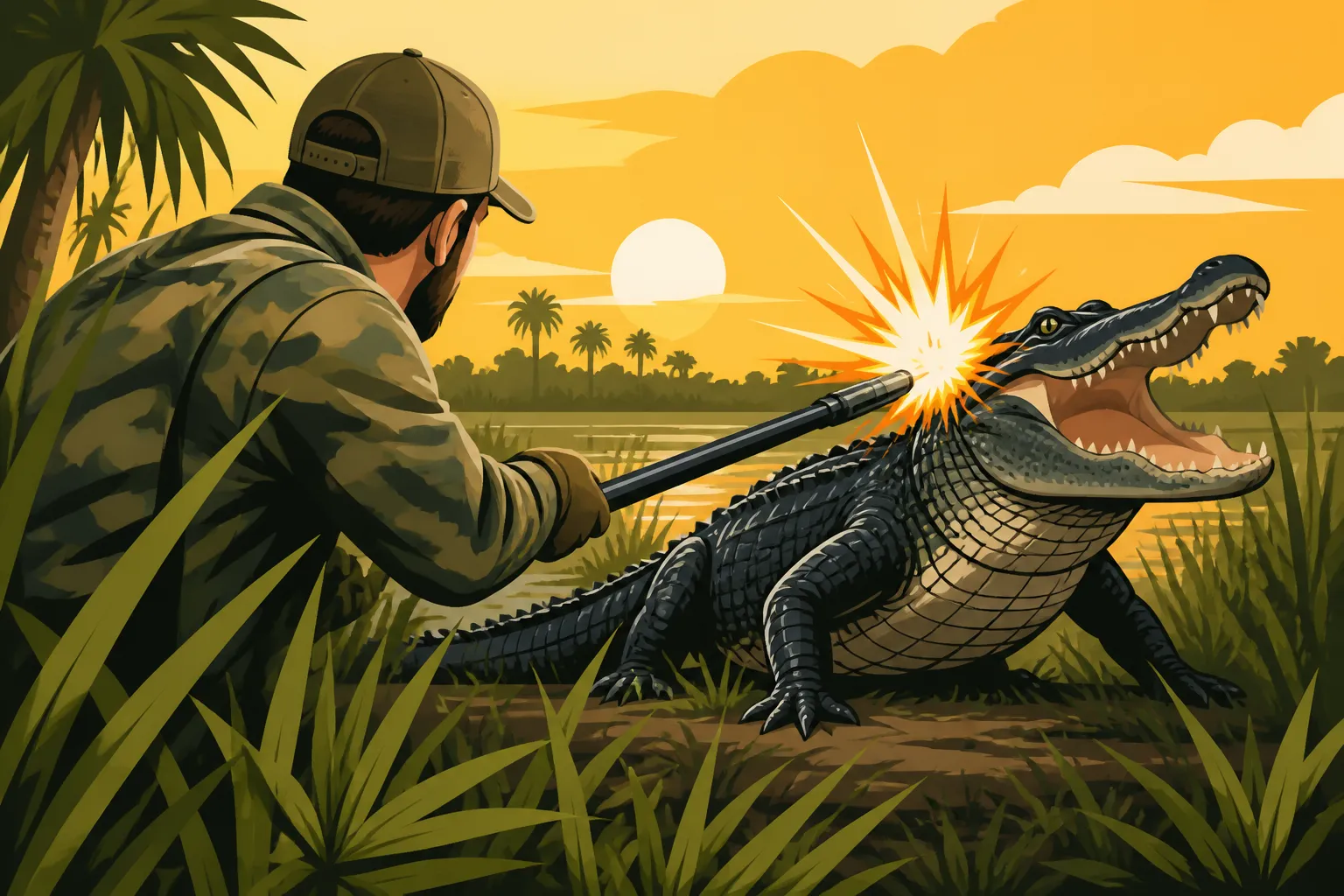
Then, with a controlled and decisive push, apply downward pressure. The spring-loaded mechanism will activate, driving the firing pin into the cartridge primer, and the round will discharge. You’ll hear a distinct "pop" or "thump," and the effect should be immediate. The alligator's body will typically go limp, though some residual muscle twitching might occur. The key is that the powerful thrashing should cease almost instantly, indicating a successful brain shot. The bang stick’s design ensures that the bullet’s energy is almost entirely absorbed by the target, making it incredibly efficient.
After the shot, it’s imperative to observe the alligator for any signs of life. While a proper brain shot is instantly lethal, sometimes a gator might have involuntary muscle spasms or a final gulp of air. Always remain cautious and vigilant. If there's any doubt about the animal being fully dispatched, a second shot in the same area might be necessary. This situation highlights why many hunters choose to carry multiple rounds for their bang stick. Knowing these steps are part of the process helps when you're Hunting Alligators at Night Legally, where visibility adds another layer of challenge.
Post-Harvest Procedures and CITES Tagging
Once you are absolutely certain the alligator is dispatched, the immediate next step is to secure it. Pull the entire animal fully alongside the boat, or, if it's a very large gator, at least ensure its head and upper body are stable. This prevents it from sinking or drifting away, which, believe me, can happen faster than you think in a Florida lake or river.
The next critical step is to attach your CITES tag. This is not something you can delay or forget. Florida law mandates that the CITES tag must be immediately attached to the alligator after harvest and before it is moved from the capture site. The tag typically gets affixed to the tail, often by piercing the hide and securing it with zip ties or the provided locking mechanism. This tag serves as proof of legal harvest and is essential for possession, transport, and processing of your alligator. Failing to properly tag your gator immediately can lead to significant penalties, so make sure you understand the requirements for Tagging an Alligator With a CITES Tag thoroughly.
After tagging, it's good practice to measure your alligator. While you may have a rough estimate, getting an accurate length confirms the size for your records and ensures you haven't mistakenly taken an undersized gator (though this is rare with bang stick use on targeted animals). Understanding Judging a Legal-Size Florida Alligator before the hunt is also important, but post-harvest confirmation is a good final check. Transport the gator carefully, ensuring it is properly secured in your vessel. You've worked hard for this harvest, so take pride in ensuring every step, from dispatch to transport, is handled ethically and legally.
Choosing Your Bang Stick and Ammunition Wisely
Just like picking the right rifle for deer or the perfect shotgun for ducks, selecting the correct bang stick and ammunition for alligator hunting is vital. It’s not a one-size-fits-all situation, and understanding your options can make a significant difference in your confidence and success.
Types of Bang Sticks and Calibers
Bang sticks come in a few different forms, primarily distinguished by their overall design and the caliber of ammunition they chamber. Some are long, pole-mounted devices, ideal for reaching an alligator's head from a slight distance over the gunwale of a boat. Others are more compact, often referred to as "powerheads," which might be handheld or attach to a spear pole. The choice between these often comes down to personal preference, the size of your hunting vessel, and how you anticipate securing the gator. Pole-mounted versions offer a bit more reach and leverage, which can be advantageous with a powerful, thrashing alligator.
When it comes to caliber, the most common choices for alligator bang sticks are .44 Magnum, .45-70 Government, and sometimes .357 Magnum. Each has its pros and cons. The .44 Magnum is a popular choice, offering a good balance of power and ammunition availability. It delivers a solid punch and is generally effective on medium to large alligators. The .45-70 Government, on the other hand, is a much more powerful rifle cartridge, providing exceptional penetration and knockdown power. It’s often preferred for very large alligators where maximum energy transfer is desired, though the ammunition can be a bit more expensive and less universally available. The .357 Magnum is a lighter option, perhaps suitable for smaller gators or as a backup, but it requires even more precise placement due to its comparatively lower power. Many Florida outfitters and serious hunters often consult resources like GoHunt to compare different models and ensure they're using reliable equipment.
Regardless of the type or caliber, prioritize durability and reliability. Alligator hunting is tough on gear, and your bang stick needs to withstand being wet, potentially dropped, and subjected to significant force. Look for models with corrosion-resistant materials and robust construction. Regular cleaning and maintenance, especially after use in brackish or saltwater environments, are crucial to ensure it functions perfectly when you need it most.
Ammunition Selection and Storage
Choosing the right ammunition goes hand-in-hand with selecting your bang stick. Always ensure the ammunition you use precisely matches the caliber specified for your device. Attempting to use the wrong caliber can lead to dangerous malfunctions or simply not work at all. For bang stick use, hunters typically opt for solid point or hard cast bullets rather than hollow points. Solid points offer superior penetration, which is critical for punching through the alligator's tough hide and thick skull to reach the brain. You want that energy to go through the target, not expand on the surface.
Proper storage of your ammunition is also vital. Given that you’ll be hunting in wet, humid environments, keeping your cartridges dry is paramount. Waterproof ammunition boxes or sealed containers are highly recommended. Moisture can compromise primers and powder, leading to misfires or reduced effectiveness, which is the last thing you want when facing a large alligator. Avoid using old, corroded, or visibly damaged ammunition; reliability is key in this application.
Consider carrying enough rounds for your hunt, including a few spares. While a single, well-placed shot is usually all it takes, having a backup or two can alleviate stress if the first shot isn't immediately effective or if you encounter multiple gators if you have the tags. Thinking through your ammunition needs, from selection to storage and quantity, is just another layer of preparation that contributes to a successful and responsible alligator hunt.
| Caliber | Primary Target Size | Ammunition Availability | Penetration Power | Recoil (relative) | Common Considerations |
|---|---|---|---|---|---|
| .44 Magnum | Small to Medium Alligators | High | Good | Moderate | Versatile, widely available, solid choice for most Florida gators. |
| .45-70 Gov't | Large to Very Large Alligators | Moderate | Excellent | High | Maximum stopping power for trophy gators, can be overkill for smaller animals. |
| .357 Magnum | Small Alligators, Backup | High | Moderate | Low | Requires precise placement, often considered a secondary or smaller gator option. |
Important Disclaimer
Please remember that hunting regulations can change, and it's always your responsibility to consult the latest Florida Fish and Wildlife Conservation Commission (FWC) regulations before embarking on any hunt. This guide is for informational purposes only and does not supersede state laws or professional guidance. Safety should always be your top priority.