When Osceola Gobblers Go Quiet in April
There's nothing quite as frustrating as those first few weeks of Florida's spring turkey season, where gobblers are seemingly everywhere, hammering away, practically running into your setup, only for April to roll around and it feels like every single bird packed up and moved to another state. It's a common, soul-crushing experience for many Osceola hunters, but it doesn't mean the season is over. This guide will delve deep into why these elusive birds seemingly disappear and, more importantly, how you can adapt your tactics to find success even when they're playing hard to get.
Understanding the Osceola's April Shift
The early days of Florida's spring turkey season are often characterized by frenzied gobbling and aggressive birds. Hens are just coming into their breeding cycle, and gobblers are eager to establish dominance and find mates. But as April progresses, the landscape of turkey behavior changes dramatically.
Post-Peak Breeding Behavior
Let's be honest, those first few weeks of March and early April are wild because the breeding cycle is in full swing. Hens are receptive, and gobblers are strutting and sounding off at every opportunity. It's a high-stakes game for them, and you, the hunter, are often just a bystander taking advantage of their natural inclinations. However, by mid-to-late April, a significant number of hens have been bred and are now sitting on nests. When hens are on nests, they're not out parading around, clucking and yelping. This shift means gobblers have fewer "hot" hens to chase, and their intense need to gobble and attract attention starts to wane.
Think about it from a biological perspective: a gobbler's primary drive early season is to breed. Once that peak has passed, and most hens are accounted for or simply uninterested, the urgency decreases. They might still gobble from the roost, maybe even a bit throughout the morning, but those all-day, relentless gobbling sessions become rare. They become lonelier, sure, but also warier and less inclined to expose themselves to potential danger just for a faint hen call. Understanding this fundamental change in their priorities is the first step in adjusting your approach to Hunting Florida's Osceola Turkey in the late season.
Increased Pressure and Wariness
Another massive factor contributing to the "quiet" phenomenon is hunting pressure. Florida's spring season, while long in some zones, sees a significant amount of hunter activity, especially on public lands. By April, these birds have heard every call, seen every decoy, and likely had close encounters with hunters. They've been educated, sometimes brutally so, and that makes them incredibly wary.
Imagine a gobbler that's been called to, spooked, or even shot at multiple times. Its natural instinct to survive kicks in hard. A loud yelp that worked wonders in March might now send it sprinting in the opposite direction. They've learned to associate certain sounds and visual cues with danger. This heightened wariness often leads them to become "call shy." They might hear your calls, but they're now too smart to commit, preferring to stay hidden in the thick palmetto or cypress heads. This is where your ability to scout thoroughly and remain patient becomes paramount, because you're no longer hunting a naïve bird.
Abundant Natural Food Sources
Early in the spring, when the woods are just waking up, certain food sources are key attractants for turkeys. But as April deepens into May, Florida's lush environment explodes with new growth. Insects are everywhere, tender green vegetation is abundant, and if it was a good acorn year, there might still be some mast crops available, particularly in damp areas or shaded hammocks.
This explosion of natural food means turkeys don't have to venture as far or rely on specific open areas where hunters might be waiting. They can often find everything they need within the dense cover, making them less visible and less susceptible to typical ambush tactics. When food is easy to find and spread out, it disperses the birds, making concentrated groups harder to locate. It also means they're not necessarily "hungry" for what a decoy setup might imply. This shifts the hunter's focus from waiting on a food source to actively locating birds in their preferred, often thicker, habitats.
Adapting Your Calling and Decoy Strategy
When Osceola gobblers go quiet in April, it's a clear signal that your early-season playbook needs a serious overhaul. What worked in the initial weeks will likely fall flat now, and could even be detrimental.
Subtle and Patient Calling
The days of aggressive, loud calling are largely over once April truly sets in. That doesn't mean you stop calling entirely, but your approach needs to become far more nuanced and patient. Think soft, seductive hen talk rather than urgent, demanding yelps. Quiet clucks, soft purrs, and subtle tree yelps from the roost can sometimes pique a gobbler's interest without alarming him. When you make your setup, try a few soft calls, then wait. A long wait. Sometimes 20-30 minutes of silence. These pressured birds are often hesitant to respond directly but might slowly make their way in, or at least give a quiet shock gobble from a distance.
Vary your cadence and volume. A short series of soft yelps, followed by a long pause, then maybe a few soft clucks can sometimes elicit a response. The goal isn't to shock them into gobbling, but to reassure them there's a hen in the area that isn't too pushy. This is a game of finesse, not power, and patience is your most potent weapon. Many hunters give up too quickly, thinking the bird isn't there, when in reality, it's just taking its sweet time.
Realistic Decoy Setups
Just like calling, your decoy strategy needs to become more conservative. Gone are the days of setting out three full-strut gobblers and a handful of hens. By late April, an aggressive tom decoy can actually intimidate or spook a wary gobbler, especially if he's alone or has already been beaten up by other toms.
Instead, opt for a minimalistic, realistic approach. A single, submissive hen decoy, or perhaps a jake decoy paired with a laydown hen, can be much more effective. Position them naturally, as if they're feeding or content. Sometimes, no decoy at all is the best option, especially if you're hunting in extremely thick cover where visibility is limited anyway. If you are using a decoy, ensure it's positioned where an approaching gobbler can spot it from a reasonable distance, but not so far that it appears out of place. This applies whether you're working a field edge or a palmetto opening. For more ideas on how to make your fakes look good, check out Decoy Placement for Pressured Osceola Birds. Remember, the idea is to provide just enough visual interest to seal the deal, not to scream "ambush!"
Using Locator Calls Sparingly
Early in the season, loud owl hoots, crow calls, or even coyote howls are fantastic for getting shock gobblers to reveal their positions. But once birds go quiet in April, these can be a double-edged sword. While they might still elicit a shock gobble from a distant bird, they can also cause a nearby, wary gobbler to shut down completely or sneak away undetected.
If you do use locator calls, do so sparingly and thoughtfully. Try them once or twice in an area, then listen intently. Wait a good 10-15 minutes after each attempt. Sometimes a gobbler won't respond to the locator call itself but will gobble a few minutes later, seemingly at nothing, simply because the sudden noise startled him. A useful tool like the GoHunt app or other mapping software can help you identify potential roosting areas or travel corridors where a soft locator call might be less intrusive and more effective for confirming a bird's general location without alarming it unnecessarily. Remember, the goal is to pinpoint, not provoke.
Adjusting Your Hunting Locations and Tactics
The shift in turkey behavior in April demands a corresponding shift in where and how you hunt. Sitting on a field edge and hammering on a call might have worked early on, but now you need to be more surgical and mobile.
Roosting Birds is Key
In late season, finding a bird on the roost the evening before is arguably the most crucial tactic. Knowing exactly where a gobbler is sleeping gives you a monumental advantage. Instead of blindly walking through the woods in the dark, you can plan your approach, get set up well before first light, and be in position when he wakes up. This means spending your late afternoons and evenings driving or walking to listen for those tell-tale goodnight gobbles.
Once you hear a gobbler fly up to roost, mark the location on your GoHunt app or GPS. Then, carefully scout the area for potential setup spots that offer good concealment and a clear shot lane for the morning. Focus on finding a natural funnel or a slight rise where you can position yourself for a silent approach. The less disturbance you create, the better your chances of getting that bird to gobble once or twice on the limb, and maybe even pitch down in your direction. Mastering this can be a game-changer for Calling an Osceola Off the Roost.
Silent Infiltration and Ambush
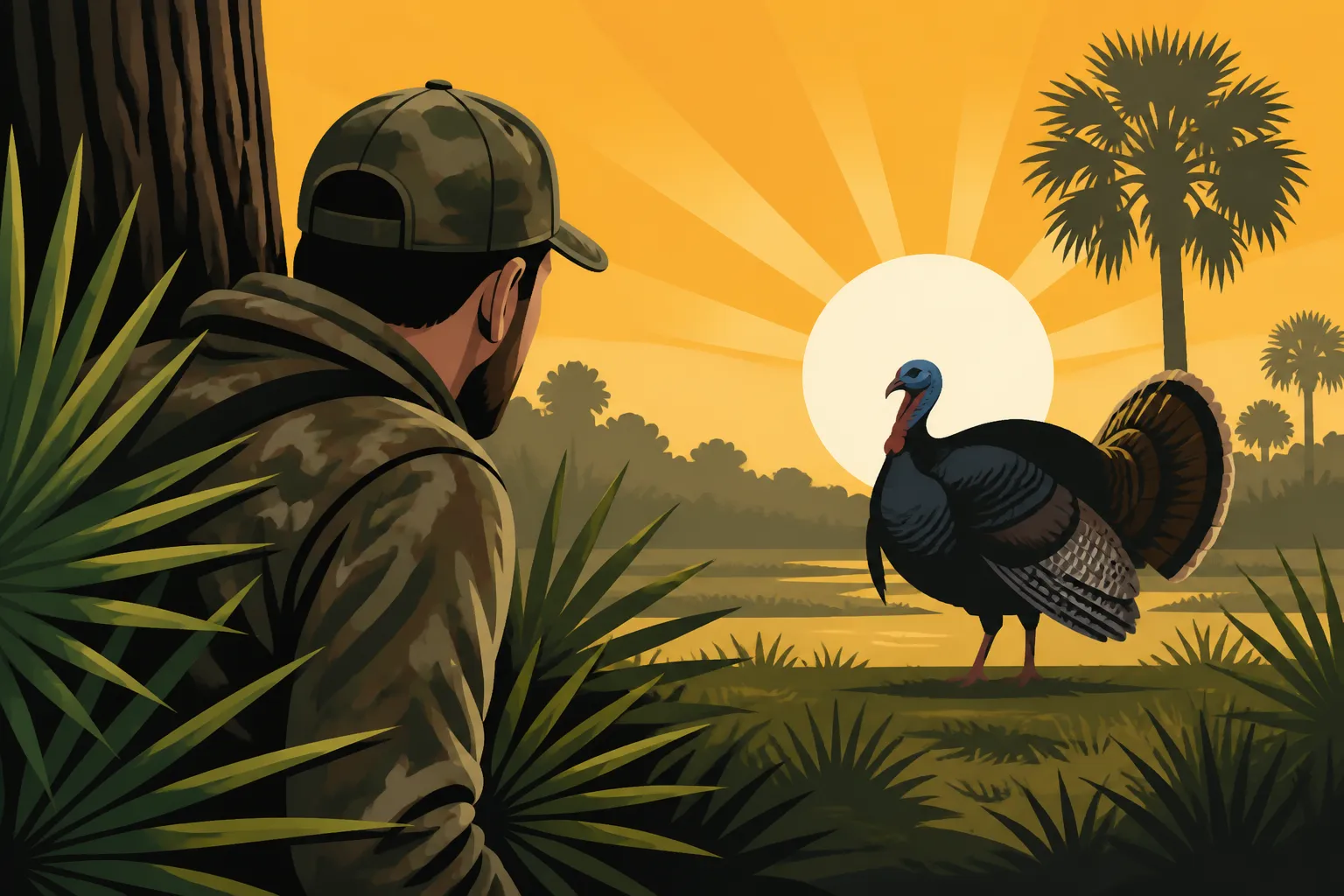
With a roosted bird located, the morning strategy becomes one of silent, stealthy infiltration. Arrive at least an hour before dawn, using a flashlight sparingly and always covered with a red lens. Move slowly and quietly to your pre-scouted setup location. Set up your chair or cushion against a wide tree like a majestic live oak, making sure you break up your silhouette completely. Total concealment is vital, as a bird on the roost has an elevated view and can spot movement or unnatural shapes easily. This is precisely why finding a good setup, perhaps Setting Up Against a Big Live Oak, is so important.
Once you're settled, remain absolutely still. No fidgeting, no checking your phone, just patience. A few soft tree yelps as light begins to break might get a response, but often, the most effective strategy is to simply wait for the bird to gobble on its own. If it pitches down, be ready. If it heads the other way, you may need to quickly reposition or try very soft calls to pull it back. This takes nerves of steel, but it's often the only way to seal the deal with a late-season Osceola.
Still-Hunting and Scouting
When traditional calling isn't working, or you can't locate a roosted bird, still-hunting becomes an invaluable tactic. This involves moving incredibly slowly and deliberately through areas known to hold turkeys, actively looking for fresh sign like tracks, droppings, scratchings, and strut marks. Instead of sitting and calling, you're becoming a predator, silently traversing the terrain. Focus on areas with good cover like palmetto thickets, oak hammocks, and cypress edges. These are prime spots where turkeys might be feeding or simply laying low. For insights into tackling dense cover, explore Hunting an Osceola Gobbler in Palmetto Scrub or Still-Hunting Florida Palmetto Flatwoods.
Take five steps, stop, and scan for five minutes. Use your binoculars to pick apart the shadows. Turkeys blend in remarkably well, especially a dark gobbler against the backdrop of Florida's woods. Look for movement, subtle color differences, or the shine of a gobbler's head in the sun. This method requires immense patience and sharp observational skills, but it can pay off by allowing you to stumble upon an unpressured bird or identify new patterns of movement that you wouldn't have discovered from a static blind. This type of active Scouting Florida Public Land Before Season becomes even more critical during the late season.
Exploiting Mid-Day Lulls
Many hunters head home or take a break after the initial morning fly-down period, assuming all activity ceases. However, late-season gobblers, especially those that are lonely or haven't found a hen yet, can become surprisingly active in the middle of the day. Hens might leave their nests for a few hours to feed, and this can spark a renewed interest in gobblers.
If you can tough it out through the mid-morning lull, you might find birds gobbling between 10 AM and 2 PM. These can be some of the best times to locate a cruising gobbler who is actively looking for a hen. Don't be afraid to take a portable setup and try to strike a gobble with a soft call every 15-20 minutes in different locations. Focus on transition areas, field edges, or creek bottoms where birds might be traveling. This is where Run-and-Gun Turkey Tactics on Florida Public Land can really shine, allowing you to cover ground and find those mid-day movers.
Gear and Technology for Late-Season Success
When the turkeys get tight-lipped and wary, having the right gear can make all the difference in connecting with one of Florida's elusive Osceolas. It's not just about the gun or bow; it's about tools that enhance your ability to locate and outsmart these challenging birds.
Optics and Scouting Tools
Good optics are non-negotiable for late-season turkey hunting. A quality pair of binoculars, like 8×42 or 10×42, can help you spot subtle movements in thick cover or pick out a distant gobbler strutting in a field you wouldn't otherwise check. Instead of blindly walking into an area, you can glass from a distance, identifying potential roost trees, feeding areas, or even active birds, all without risking spooking them. Many experienced hunters use binoculars almost as much as their calls in April.
Beyond traditional optics, modern scouting tools, especially mapping applications, are invaluable. Apps like GoHunt provide detailed satellite imagery, property boundaries, and topographical maps that can help you identify prime habitat, potential travel corridors, and access points. You can mark roost locations, track your movement, and even study historical satellite images for changes in vegetation. This allows you to hunt smarter, not harder, by maximizing your time in areas with the highest potential. Having this information at your fingertips helps to understand the Florida Turkey Population Trends and how they relate to the specific habitat you are scouting.
Camouflage and Concealment
By late April, turkeys have seen it all, and their eyesight is legendary. Full camouflage, including a head net or face paint and gloves, is absolutely essential. Don't just think about breaking up your outline; consider your pattern. Florida's woods are a mix of palmetto, cypress, pines, and oaks, so choose a pattern that blends effectively with the specific environment you'll be hunting.
More importantly, your concealment is paramount. Setting up against a large tree that breaks up your outline, minimizing movement, and ensuring your gun barrel or bow limbs aren't shining in the sun can make or break a hunt. Even small details, like having your calls easily accessible without large movements, matter. A wary gobbler will pick up on the slightest unnatural shape or motion.
Lightweight and Mobile Setups
Since late-season hunting often involves more moving, scouting, and potentially long waits, a lightweight and mobile setup is hugely beneficial. Carrying a bulky ground blind might be great for early-season field edges, but it's a hindrance if you need to quickly reposition or still-hunt through dense cover.
Consider a comfortable turkey vest that distributes weight evenly and keeps essential calls, water, and snacks easily accessible. A lightweight, portable seat or cushion is also crucial for comfort during those long, patient waits. The goal is to be able to move silently and efficiently, without being bogged down by unnecessary gear. This ability to adapt and move is often the difference between striking out and punching your tag when Florida Osceola Spring Season Dates are winding down.
Late Season Osceola Turkey Hunting Guide
Here’s a quick overview of how early season and late season tactics compare for those tricky Osceola gobblers.
| Feature | Early Season (March-Early April) | Late Season (Mid-April-May) |
|---|---|---|
| Gobbler Behavior | Aggressive, eager to breed, responsive to calls | Wary, call-shy, less vocal, often with hens or solitary |
| Calling Style | Aggressive yelps, cuts, loud volume | Subtle clucks, purrs, soft yelps, long pauses, minimal volume |
| Decoy Setup | Multiple hens, jake/tom decoys, aggressive setups | Single hen, jake, or no decoy; submissive poses |
| Primary Tactic | Sit and call on field edges, travel corridors | Roosting, silent infiltration, still-hunting, run-and-gun |
| Scouting Focus | Locating gobblers by sound | Locating fresh sign, identifying roosts, observing from afar |
| Pressure Level | Lower, birds less educated | High, birds highly educated and wary |
| Food Sources | Specific, more concentrated (chufa, early greens) | Abundant and dispersed (insects, new growth, residual mast) |
| Patience Level | Moderate | Extreme, extended waits are common |
Disclaimer
Hunting is an inherently dangerous activity. Always prioritize safety, follow all local, state, and federal regulations, and obtain proper licensing before heading into the field. This guide is for informational purposes only and does not substitute for professional instruction or personal experience. Be aware of your surroundings and hunt ethically and responsibly.