Run-and-Gun Turkey Tactics on Florida Public Land
You’ve been out there, haven’t you? That feeling of setting up before dawn, eyes strained, ears perked, only to hear that booming gobble from a quarter-mile away, heading in the opposite direction. Or maybe you’ve sat patiently for hours, calling your heart out, only for a wise old longbeard to hang up just out of range, never offering a shot. Hunting turkeys on Florida public land can be incredibly frustrating precisely because these birds are often pressured, wary, and constantly on the move in vast, unforgiving terrain. This guide is all about embracing that movement, ditching the static sit, and teaching you the dynamic "run-and-gun" tactics that put more Florida gobblers in your vest.
Understanding the "Run-and-Gun" Philosophy for Florida Turkeys
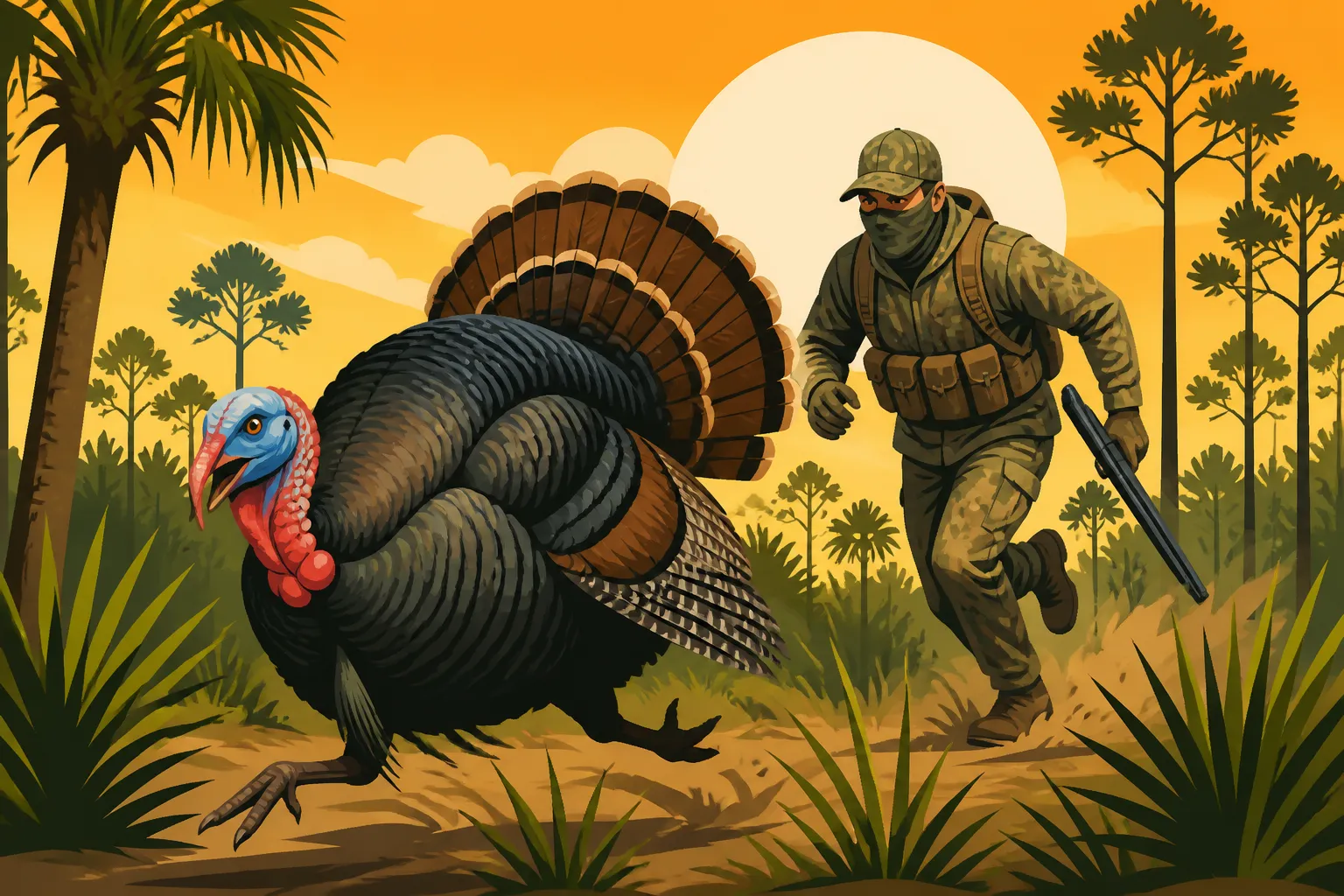
The term "run-and-gun" might sound a bit chaotic, but it's actually a highly disciplined and strategic approach that can be incredibly effective, especially when you're chasing those elusive Osceola or Eastern gobblers on Florida's expansive public lands. It's all about being proactive, covering ground, and putting yourself in front of birds that aren't going to walk right into your lap.
Why Traditional Setups Fall Short on Public Land
Think about it: how many times have you heard a gobbler hammering away on the roost, you set up perfectly at first light, and he flies down and heads straight for the next county? Or perhaps you've spent hours tucked into a natural blind, softly calling, only for nothing to show up. This isn't a reflection of your calling skills or patience; it's often a symptom of hunting pressured birds in environments where they have endless options. On public land, turkeys are educated. They've seen decoys, they've heard calls, and they’ve certainly felt the presence of hunters. Sticking to one spot, no matter how good it looks, can mean you're waiting for a bird that simply isn't coming your way. Florida's vast landscapes, from sprawling palmetto flats to dense cypress swamps, also make it nearly impossible to predict a turkey's exact travel route, further diminishing the effectiveness of static, wait-and-see setups.
The Mobile Hunter's Mindset
Embracing the run-and-gun strategy requires a shift in your thinking. It's less about finding the perfect spot and more about finding a hot bird. This means you need to be flexible, persistent, and ready to adapt at a moment's notice. The mobile hunter isn't afraid to put miles on their boots, to constantly evaluate the situation, and to change plans mid-hunt. It’s about being a predator, actively seeking out your quarry, rather than passively waiting for it to come to you. You’re always asking yourself: "Where could that bird be headed?" or "What's the next best place to get eyes and ears on a turkey?" This proactive approach is key to success when Hunting an Osceola Gobbler in Palmetto Scrub or pursuing other wild turkeys across the state.
Benefits of a Dynamic Approach
The advantages of run-and-gun are numerous, especially in Florida. First, you dramatically increase your chances of locating birds. Instead of hoping a gobbler strolls by, you're actively seeking out multiple birds, listening for distant gobbles, and covering prime habitat. Second, you can adapt quickly to changing conditions. If the birds shut up in one area, you can move to another. If you hear a distant gobble, you can close the distance rapidly. Third, it helps you escape hunting pressure. When you’re constantly moving, you're less likely to be sitting in a spot another hunter has already blown out, or to have someone inadvertently walk in on your setup. It allows you to find those secluded pockets where gobblers might feel safer, offering you a better chance at a successful hunt on properties like the Green Swamp Wilderness Preserve or other less-trafficked WMAs.
Essential Gear for the Mobile Florida Turkey Hunter
When you’re constantly on the move, every ounce matters. You want to be comfortable, efficient, and ready to set up quickly. Over-packing is the enemy of the run-and-gun hunter, but under-packing can leave you unprepared for a crucial moment. It’s about finding that sweet spot of functionality and portability.
Lightweight Vest and Decoys
Your turkey vest is your mobile command center. For run-and-gun, you'll want something that's lightweight, breathable, and offers smart organization. Brands like Ol' Tom, Primos, or GoHunt often have vests designed with mobility in mind, featuring pockets that are easy to access without fumbling. Look for vests with a comfortable padded seat that can be deployed quickly – you’ll be sitting down and popping back up frequently.
When it comes to decoys, think minimalist. A full-strut decoy might look great, but it’s cumbersome to carry through dense palmettos. Instead, consider lightweight, packable options like a soft-sided hen decoy, a realistic jake decoy, or even just a simple fan. A fan can be incredibly effective for fanning a gobbler in, mimicking a strutting bird without the bulk. For aggressive tactics, a small, collapsible jake or a DSD Submissive Hen decoy can often be enough to pull a wary gobbler the last few yards. The goal is to provide just enough visual to seal the deal without weighing you down or making too much noise during transit.
Calling and Locator Tools
Your calling arsenal should be versatile but compact. A good mouth call (diaphragm call) is paramount because it allows for hands-free calling, which is essential when you're trying to set up quickly or even call while moving. Master a few basic yelps, clucks, and purrs with a mouth call. Complement this with a small, lightweight pot call (slate or crystal) for consistent, realistic hen sounds. A small box call can also be useful for loud, far-reaching calls when you're trying to locate a bird in windy conditions or across vast open areas.
Locator calls are your best friend for run-and-gun. An owl hooter or crow call can often get a shock gobble out of a silent bird, especially early in the morning or late in the afternoon. Sometimes, just letting out a loud hoot or caw will reveal a gobbler's location when he wouldn't respond to a turkey call. Knowing Calling an Osceola Off the Roost requires more than just turkey sounds; sometimes, a good owl hooter is the ticket.
Navigation and Scouting Aids
Before you even step foot in the woods, thorough scouting is crucial. Use tools like the FWC app, Google Earth, or a premium mapping application like onX Hunt to study terrain, identify potential roosting areas, feeding grounds, and travel corridors. These digital maps allow you to mark potential setups, escape routes, and even record where you heard gobbles during previous scouting trips. Remember to download offline maps if you're going into areas with spotty cell service, which is common on Florida public lands.
During the hunt, a reliable GPS device or your smartphone with a mapping app is indispensable. It keeps you oriented, helps you navigate through thick scrub, and ensures you know where public land boundaries lie, which is especially important when you’re on the move in areas bordering private property. Being able to quickly pinpoint your location and the direction of a gobble allows you to execute your run-and-gun plan with precision, rather than wandering aimlessly. For more information on using technology for scouting, check out our guide on Scouting With the Florida FWC App.
Here's a quick comparison of popular turkey calling tools for mobile hunting:
| Call Type | Pros | Cons | Best Use for Run-and-Gun |
|---|---|---|---|
| Mouth Call | Hands-free, versatile, compact | Requires practice, can be inconsistent for beginners | Constant calling while moving, subtle purrs, aggressive yelps |
| Pot Call | Realistic hen sounds, easy to learn, good volume | Requires two hands, can be bulky if not careful | Mid-range calling, soft clucks, steady purrs after relocation |
| Box Call | Loud, long-range calling, easy to operate | Bulky, less versatile, can sound repetitive | Locating distant birds, initial loud calling to get a response |
| Locator Calls | Excites gobblers without turkey sounds | Doesn't work on all birds, can spook if overused | Shock gobbles at distance, early morning/late afternoon checks |
Executing the Run-and-Gun Strategy in Florida's Diverse Habitats
Florida’s public lands offer a mosaic of habitats, and each requires slight adjustments to your run-and-gun approach. The key is to understand the terrain, predict turkey movement, and adapt your tactics accordingly.
Working Palmetto Scrub and Pine Flatwoods
Ah, the classic Florida landscape! Palmetto scrub and pine flatwoods are incredibly common on public lands like Big Cypress National Preserve or Three Lakes Wildlife Management Area. These areas can be dense, making silent movement a challenge, but they also offer fantastic cover.
When traversing palmetto scrub, the trick is to move slowly and deliberately. Use existing game trails or fire breaks where possible. When you decide to set up and call, look for natural openings, slight rises, or the edge of a pine island that provides a clear line of sight and shooting lanes. Gobblers often use these same openings to travel or strut. If you hear a distant gobble, try to get into a position where you can see into one of these more open areas before you hit your call hard. Remember, turkeys in this habitat are often wary, so don't over-call. Soft clucks and yelps might be more effective than aggressive calling. This stealthy approach is vital when Still-Hunting Florida Palmetto Flatwoods.
Navigating Cypress Swamps and Hammocks
Cypress swamps and hammocks present a different set of challenges. Water can be a barrier, and the dense undergrowth and cypress knees can make silent movement nearly impossible. However, these areas are often magnets for turkeys, especially in the afternoon when they might be heading to roost.
When approaching a swamp or hammock, look for higher ground or "islands" within the wetland. These spots often serve as congregation points or roosting areas. If you hear a bird in a swamp, try to get to the nearest dry edge or island and call from there. Don't be afraid to use water as a natural barrier to your advantage; a gobbler might feel more comfortable crossing a small slough if he thinks he's approaching a hen on the other side. Alternatively, if a bird is across a large body of water, it might be challenging to draw him over. In such cases, note the location and plan to approach from a different angle on your next move. For more on navigating these challenging environments, check out Hunting Florida Cypress Swamp Edges.
Utilizing Food Plots and Field Edges
While not as prevalent on all public lands, some WMAs and national forests do have managed food plots or natural clearings that act like de facto food plots. These areas are high-traffic zones, especially early in the morning or late in the afternoon.
When run-and-gunning, don't just blindly walk past these areas. Take a moment to scan them with binoculars from a distance, looking for any turkey activity. If you don't see anything, move into a good calling position on the edge, hit a few calls, and listen intently. Turkeys often skirt the edges of fields before committing to walking out into the open. If you get a response, quickly assess the best setup to intercept the bird before he commits to entering or crossing the field. A swift setup near a field edge, using available cover, can be the ticket. Sometimes, simply knowing the Entry Routes Through a Florida Food Plot can give you the edge you need.
Reading the Landscape and the Birds
Successful run-and-gun hunting isn't just about covering ground; it's about covering it intelligently. This means constantly observing, listening, and interpreting the subtle cues the birds and the landscape provide.
Interpreting Turkey Sign and Activity
Even when you're moving quickly, keep your eyes peeled for turkey sign. Tracks in sandy roads or moist ground tell you where birds are traveling. Droppings can indicate recent feeding activity – fresh droppings are dark and moist, older ones are chalky. Dusting bowls, often found in dry, sandy areas, show where turkeys have been preening and cleaning their feathers. Feathers, especially primary wing feathers, indicate a recent presence. The more fresh sign you find, the "hotter" the area, increasing your chances of finding a bird nearby.
Beyond physical sign, listen for activity. Turkeys are vocal, even when not gobbling. Pay attention to putt-putts, clucks, and yelps that might indicate birds feeding or moving through the undergrowth. Sometimes a subtle sound is the only clue you'll get before you spot a bird.
Calling Sequences for Mobile Hunting
The key to calling while run-and-gunning is variety and moderation. You don't want to over-call, but you need to be audible enough to get a response. Here's a general approach:
- Locating Calls (Loud and Infrequent): When you move to a new location, start with a loud locator call (owl or crow) or a series of loud yelps or cutts from a box call or a loud pot call. Wait a few minutes, listening intently for a response.
- Softening the Call (Mid-Range): If you hear a gobble, assess the distance. If it's a good way off, you might make another round of slightly softer calls to gauge his interest.
- Subtle Calling (Close Range): As you close the distance, switch to softer, more realistic calls with a mouth or pot call. Light clucks, purrs, and soft yelps are often all it takes to convince a bird to commit the last few yards. You're trying to sound like a hen going about her business, not a desperate one.
Remember to vary your cadence and tone. Some days, aggressive cutting works, other days, a simple series of yelps is best. Don't be afraid to try different calls if a bird isn't responding to your initial attempts. For more nuanced calling advice, consider practices like Rattling and Grunting Florida Bucks, as the principles of varying sound can sometimes apply to turkey vocalizations, albeit with different calls.
Adjusting to Pressured Birds
Florida's public lands, especially during peak season, see a lot of hunting pressure. This makes turkeys wary, and they often become "call-shy." If you find that gobblers are hanging up, gobbling but not coming in, or going silent after your calls, it's time to adjust.
- Go Silent: Sometimes, the best call is no call at all. If you've located a gobbler but he's acting hesitant, try moving silently to a better ambush point, setting up, and waiting him out. Let curiosity get the better of him.
- Minimal Calling: Instead of loud, aggressive sequences, try soft clucks and purrs. Sometimes, mimicking a contented hen is less intimidating to a wary gobbler.
- Decoy Placement: Instead of placing your decoy in wide-open view, try putting it just inside the tree line or partially obscured. This makes it seem more natural and less like a trap.
- Circumventing: If a gobbler is consistently hanging up at a certain distance, try to circle around him, putting yourself ahead of his likely travel path. You might need to make a wide loop, using terrain features for cover, to get into a new setup location. Understanding Hunting Pressure on Florida Public Land is crucial for adapting your strategy.
Safety and Ethical Considerations for Mobile Turkey Hunting
Being constantly on the move means you need to be extra vigilant about safety and mindful of other hunters. Public land is a shared resource, and responsible hunting ensures everyone has a positive experience.
Hunter Safety in a Dynamic Environment
When you're run-and-gunning, you're not stationary in a blind, and your visibility can change rapidly. Always assume there are other hunters in the woods, even if you haven't seen them.
- Wear Blaze Orange: While not always mandatory when stationary for turkey hunting, wearing a patch of blaze orange while moving between setups is a smart safety measure. Stow it in your vest and put it on when you pick up your decoys and move to the next spot. Once you're set up, you can remove it.
- Identify Your Target and Beyond: This is paramount. Always be 100% certain of your target and what's beyond it before you squeeze the trigger. In dense Florida cover, it can be easy to misidentify movement or sound. Never shoot at sound or movement alone.
- Communicate with Partners: If you're hunting with a partner, always know their location. Use radios or pre-determined signals, especially if you plan to split up and cover ground.
- Treat Every Gun as Loaded: Follow all basic firearms safety rules, especially when moving with a loaded shotgun. Keep the muzzle pointed in a safe direction at all times.
Respecting Other Hunters
Public land belongs to everyone, and with the growing number of hunters, courtesy is more important than ever.
- Avoid "Sky-Busting": Don't try to call in a bird that's already working towards another hunter. If you encounter another hunter or realize you're moving into an area someone else is actively working, back out quietly and find new ground. A quick "Hunter!" shout can prevent an accident if you accidentally stumble into someone's setup, but generally, quiet retreat is best.
- Don't Claim Territory: No one "owns" a patch of public land. While it's smart to have a plan, be prepared to adjust if someone else is already there. This is where the run-and-gun philosophy shines – you can quickly pivot and find a new area.
- Leave No Trace: Pack out everything you pack in. Leave the woods cleaner than you found them. This includes shell casings, snack wrappers, and anything else.
Ethical Shot Placement and Recovery
The goal is a quick, humane kill and efficient recovery.
- Aim for the Head and Neck: For turkeys, the head and neck are the most vital areas for a quick, clean kill. Pattern your shotgun with your chosen turkey load at various distances (20, 30, 40 yards) to know its effective range. This is especially important for public land birds that might offer only fleeting opportunities.
- Know Your Limits: Don't take a shot that's beyond your effective range or through too much cover. A wounded bird is a tragedy, and recovering a cripple in Florida's thick scrub can be incredibly challenging, even impossible.
- Diligent Tracking: If you hit a bird and it runs, mark the spot where it was standing and the direction it went. Give it a few minutes, then begin a slow, methodical search for blood, feathers, and tracks. In Florida's often sandy or soft ground, finding tracks can be easier than blood. Be prepared to search thoroughly; it’s your responsibility to recover every bird you shoot. This might require some serious bushwhacking, similar to Tracking a Deer in Sandy Florida Soil, but for a smaller, often camouflaged bird.
Remember, the privilege of hunting on Florida public land comes with the responsibility to do so safely, ethically, and with respect for the resource and fellow outdoors enthusiasts. Happy hunting!
Disclaimer
The information provided in this guide is for general informational purposes only and does not constitute legal advice. Hunting regulations, seasons, and licensing requirements can change. Always consult the most current regulations published by the Florida Fish and Wildlife Conservation Commission (FWC) before engaging in any hunting activities. It is the individual hunter's responsibility to know and follow all applicable laws and regulations.