Hunting an Eastern Gobbler in Panhandle Pines
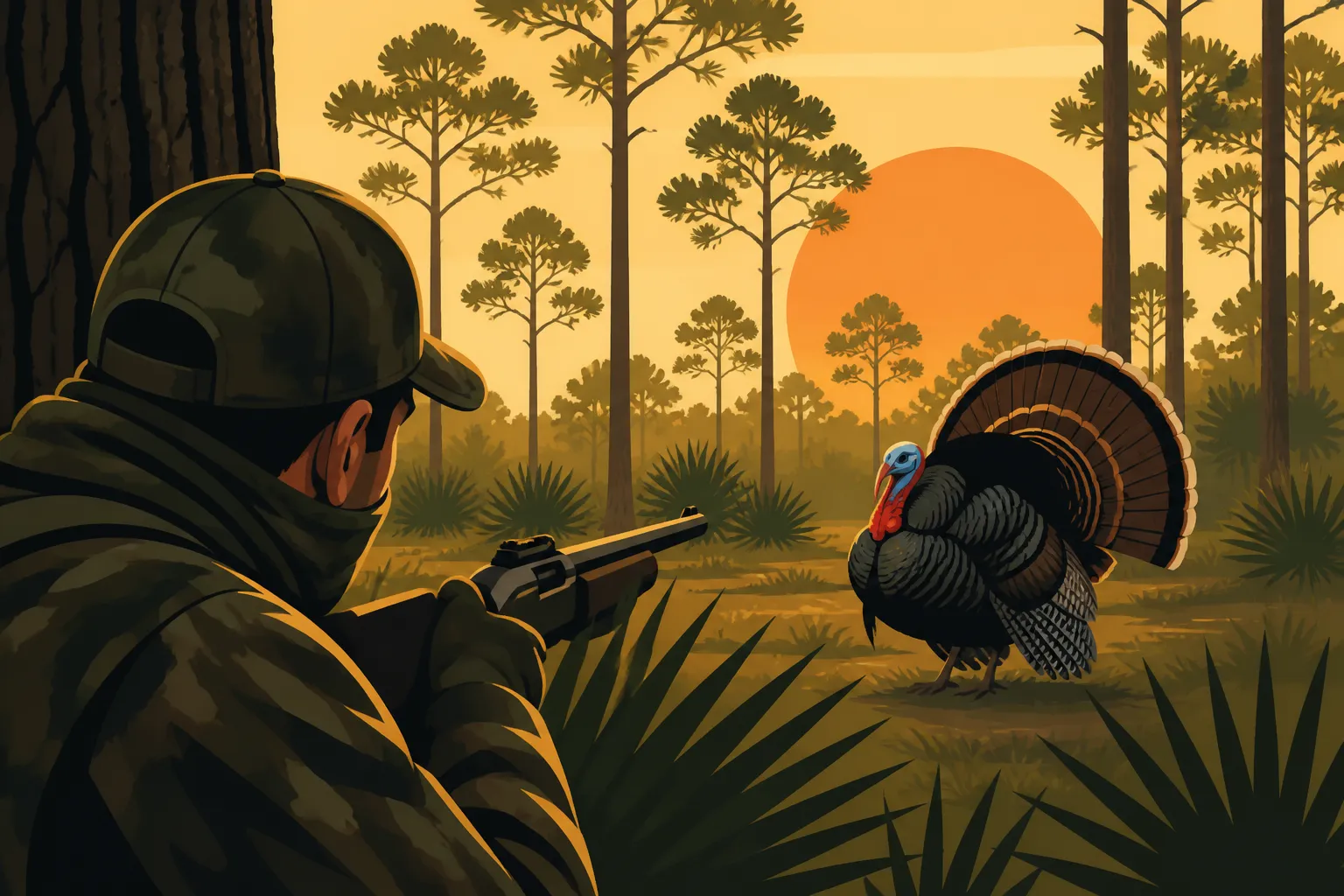
Finding that elusive gobbler in the vast, often dense pine plantations of the Florida Panhandle can feel like searching for a needle in a haystack. It’s a completely different ballgame than hunting open fields or hardwood bottoms up north, and it can be incredibly frustrating to put in the miles only to be outsmarted by a ghost. This guide is dedicated to helping you unravel the mysteries of Hunting an Eastern Gobbler in Panhandle Pines, offering practical strategies and insights to increase your chances of calling in a wary bird.
Understanding the Eastern Gobbler in the Panhandle Ecosystem
The Eastern wild turkey in the Florida Panhandle is a distinct and often challenging bird to pursue. They’ve adapted to the unique environment of longleaf and loblolly pine forests, thick palmetto undergrowth, and a landscape that, unlike much of the state, actually has some topographical variation. Understanding their habits in this specific ecosystem is the first step toward putting one in your vest.
Distinguishing Easterns in Florida
While many hunters across the state dream of completing their Grand Slam with an Osceola, the Eastern wild turkey is the predominant subspecies found in the Florida Panhandle, roughly north of State Road 70. These birds share much of their genetic lineage and characteristics with Easterns found throughout the southeastern U.S., displaying the rich, dark body feathers with iridescent bronze and copper hues, dark brown-tipped tail feathers, and wings barred with white and black. They are generally larger-bodied than their Osceola cousins found further south, though individual size can vary widely.
However, the key distinction isn't just physical. Their behavior is often heavily influenced by the habitat. In the Panhandle, they frequently contend with dense pine saplings, prescribed burn areas with low, regenerating vegetation, and a landscape often crisscrossed by logging roads. This environment makes them incredibly wary, often relying on their keen eyesight and hearing to detect threats long before you ever see them. Unlike turkeys in agricultural areas, they rarely frequent wide-open fields, preferring the cover and foraging opportunities found within the pine woods. If you're used to hunting Osceola Turkeys in Peninsular Florida, you'll quickly learn that these Panhandle birds present a different set of challenges and require a shift in tactics.
Seasonal Behavior in North Florida Pines
The annual cycle of an Eastern gobbler in the Panhandle is driven by breeding, feeding, and predator avoidance, all dictated by the specific conditions of the pine forest. As winter fades and spring approaches, typically from early March through late April, gobbling activity picks up dramatically. This is when the mature toms are most vocal, attempting to attract hens and establish dominance. You’ll notice an increase in their strutting behavior, often in slightly more open areas within the pines, like old logging decks, fire lanes, or sparse timber stands. The Florida Eastern Spring Season Dates generally align with this peak activity.
However, once the hens breed and start nesting, gobbling can become much more sporadic and challenging to pattern. This is often referred to as the "gobbler's slump" – a time when toms, having serviced their hens, become more interested in regrouping with other gobblers or simply feeding without the urgency of breeding. You might find them in small bachelor groups, roaming silently through the pines. Understanding this shift is crucial; what worked in the first two weeks of the season might be useless later on. Factors like cold fronts, sudden rain, and increased hunting pressure also play a significant role in their daily movements and vocalizations. For example, a crisp, clear morning following a cool front can often invigorate gobbling, while a day of drizzling rain might keep them tight-lipped and hunkered down.
Diet and Foraging Habits in Pine Plantations
Eastern gobblers in the Panhandle are opportunistic foragers, and their diet is heavily influenced by what’s available in the pine forest understory. Acorns from scattered oak hammocks, pine seeds, various berries (like gallberry and huckleberry), insects (especially grasshoppers, beetles, and spiders), and tender green vegetation are all staples. They spend a significant portion of their day scratching through pine needles, fallen leaves, and undergrowth for these food sources.
In managed pine plantations, prescribed burns are a common practice to reduce fuel loads and promote new growth. These burned areas, particularly a few weeks or months after a fire, become prime foraging grounds as new shoots and insects emerge. Turkeys will often gravitate to these areas, especially where the understory isn't too thick to impede their movement and visibility. Areas adjacent to food plots, even small ones planted for deer, can also attract turkeys, though they tend to be more cautious in these open areas than deer. Understanding their foraging habits helps you predict where they’re likely to be during different parts of the day, moving from roost sites to feeding areas, and then potentially to strut zones before heading back to roost. You might find great success targeting a prescribed-burn unit for Turkeys, as these areas offer both food and clearer travel lanes.
Key Panhandle Pine Habitat Characteristics for Turkeys
Florida's Panhandle is a mosaic of different timber types, but the vast expanse of pine plantations and natural pine flatwoods defines much of the turkey hunting experience. Identifying the specific characteristics that make these areas attractive to turkeys is paramount to successful scouting and hunting.
Identifying Prime Roosting Areas
One of the most critical elements in patterning an Eastern gobbler is locating their roost sites. Turkeys prefer to roost in large, mature trees that offer good visibility and protection from ground predators. In the Panhandle, this usually means tall pines, often those with strong, horizontal limbs that can support their weight. They typically choose trees that are near a water source, or overlook a clearing, creek bottom, or swamp edge, providing a safe takeoff and landing zone. These trees might be solitary giants, or part of a small cluster of older growth that stands taller than the surrounding younger pines.
Look for areas where the pine forest transitions into a hardwood bottom or a cypress swamp. These "edge habitats" frequently offer the diversity of large trees and nearby water. You might find turkeys roosting along a Florida Cypress Swamp Edge, where the larger trees provide good perches. During late winter and early spring, before leaf-out, these mature pines are easier to spot, and you can often see droppings and splash marks on the ground directly beneath them. Listen for gobbling just before sunrise and after sunset to pinpoint active roosts. The sound of their wings as they fly up to roost or pitch down in the morning is also a dead giveaway.
Understanding Feeding Flats and Strut Zones
Once a gobbler flies down from the roost, his first priority is often to feed, especially early in the season when he needs energy for breeding, or later when he's just cruising for food. Feeding flats in the Panhandle are typically areas within the pine forest that have a relatively open understory, allowing turkeys to scratch for insects, seeds, and acorns. These could be areas recently thinned, older pine stands with less dense palmetto, or sections that have undergone a recent prescribed burn, promoting new, tender growth. Look for areas with a mix of pine needles and bare earth, which makes foraging easier.
Strut zones, on the other hand, are spots where gobblers display for hens. These are almost always areas that offer good visibility and room to maneuver, allowing the tom to showcase his plumage effectively. Fire lanes, logging roads, small clearings, or even sparse areas within a mature pine stand serve this purpose. These areas will often show distinct tracks, wing-drag marks in the dirt, and an abundance of droppings. Turkeys will often use the same strut zones repeatedly, making them high-value scouting locations. A good strategy is to find these strut zones and then identify natural travel corridors or funnel points that lead into or out of them. These spots are perfect for setting up a blind or ambush.
Navigating the Dense Understory
One of the biggest frustrations when hunting Eastern gobblers in the Panhandle is the sheer density of the understory. Think palmetto, gallberry, briar patches, and regenerating pine saplings that can be waist to chest high. This thick vegetation provides excellent cover for turkeys, allowing them to slip away undetected, and makes it incredibly difficult for hunters to move silently or see more than a few yards in any direction. This is a common challenge when Still-Hunting Florida Palmetto Flatwoods for any game.
To combat this, you need to adapt your movement and setup strategies. Instead of trying to bust through the thickest stuff, look for natural openings, old logging roads, game trails, or fire lanes that offer easier passage. These corridors also act as natural travel routes for turkeys. When setting up, find areas where you have a relatively clear line of sight for 30-40 yards in at least a few directions, even if it means sitting tight against a large pine or a cluster of palmettos. Don’t underestimate how quickly a turkey can appear and disappear in this cover. Patience is key, as is understanding that sometimes, the only way to get a shot is to let the bird come to you through a small opening.
Scouting Strategies Before the Season Opens
Effective scouting is the bedrock of successful turkey hunting, especially for wary Eastern gobblers in the vast Florida Panhandle. Putting in the legwork before the season even opens can save you countless hours of frustrated hunting once the birds are pressured.
Using Maps and Aerial Imagery for E-Scouting
Before you even step foot in the woods, the best place to start your scouting is from the comfort of your home with detailed maps and aerial imagery. Tools like GoHunt are invaluable for this. You can overlay different map layers to identify public land boundaries, timber types, and topographical features that might influence turkey movement. Look for key features such as:
- Timber Stands: Identify older, mature pine stands (potential roosting areas) versus younger, dense plantations (good cover, less likely for strutting).
- Water Sources: Creek bottoms, swamps, and small ponds are magnets for wildlife.
- Edge Habitats: The transition zones between pine uplands and hardwood bottoms or swamps are often highly productive.
- Roads and Trails: Note old logging roads, fire lanes, and ATV trails. These serve as travel corridors and potential strut zones.
- Clearings and Food Plots: Even small openings or established food plots will draw turkeys.
By studying these details on a map, you can pinpoint potential roost sites, feeding areas, and travel routes, and then develop a plan for your initial ground scouting. Pay attention to areas that look difficult to access, as these often hold less pressured birds. For a more general approach to understanding the landscape, reading Aerial Photos for Florida Deer can also provide valuable insights into habitat interpretation applicable to turkeys.
Locating Sign: Droppings, Feathers, Tracks
Once you have your e-scouting plan, it’s time to hit the woods. The most reliable way to confirm turkey presence and patterns is to find their sign. This requires diligent searching and attention to detail.
- Droppings: Turkey droppings are distinct. Gobbler droppings are typically J-shaped or coiled, while hen droppings are usually more blob-like or spiraled. Fresh droppings indicate recent activity. Look for them concentrated under potential roost trees, in strutting areas, and along heavily used game trails.
- Feathers: Finding feathers, especially large primary wing feathers or distinct breast feathers, confirms turkeys are in the area. Look for them under roost trees, where birds have preened, or in areas where a gobbler has been strutting vigorously.
- Tracks: Turkey tracks are unmistakable. Three prominent toes with a shorter hind toe, usually around 4-5 inches long for an adult bird. Look for fresh, clear tracks in soft dirt, sand roads, fire lanes, or muddy creek banks. Note the direction of travel to understand their daily movements. Often, you'll see a drag mark between the tracks of a strutting gobbler, indicating his wing tips dragging the ground.
Beyond these, look for scratch marks in the leaf litter where they've been feeding, or even dusty bowls where they've taken dust baths. The more fresh sign you find, the more confident you can be that you're in an active area.
Listening for Gobbles and Locator Calls
While finding physical sign is crucial, nothing confirms the presence of an active gobbler quite like hearing him sound off. During prime spring mornings, arrive well before daylight and position yourself in an area where you can hear a wide expanse of forest. Listen intently for those explosive tree gobbles just before and after sunrise. Sometimes, a gobbler might not gobble on his own, especially if pressured or if hens are nearby.
This is where locator calls come in. An owl hooter, crow call, or even a coyote howl can sometimes provoke a shock gobble from a tom who might otherwise remain silent. He’s not gobbling at your call, but reacting defensively to another perceived intrusion into his territory. Using a locator call every 15-20 minutes as the sun rises can help you pinpoint a gobbler’s location without tipping him off to your presence as a turkey. However, be judicious; overuse can make birds wary. Once you hear a gobble, mark the location and try to estimate the distance. Then, plan your silent approach. Remember, sometimes "When Osceola Gobblers Go Quiet in April," Easterns can also follow suit, making locator calls even more important.
Calling Tactics for Panhandle Easterns
Calling is an art form when it comes to turkey hunting, and it requires a nuanced approach, especially with the often-pressured Eastern gobblers of the Panhandle. It's less about making loud noises and more about realistic communication.
Matching the Call to the Situation
One of the biggest mistakes a turkey hunter can make is using the same calls in every situation. Panhandle Easterns can be notoriously wary, so tailoring your calls to the scenario is critical.
- Fly-down cackles: Use these sparingly, right when turkeys are pitching off the roost, to simulate a hen flying down.
- Soft Tree Yelps: Just before fly-down, soft, subtle tree yelps can pique a gobbler's interest without making him suspicious.
- Assembly Yelps: If you've located a lone gobbler far off, a series of louder, more excited yelps can sound like a hen trying to gather her flock, potentially drawing him in.
- Clucks and Purrs: These are excellent close-range calls, simulating a content hen. They can be particularly effective when a gobbler is hung up at 60-80 yards, trying to get him to take those last few steps.
- Cutting: Short, sharp, aggressive yelps or "cuts" can challenge a gobbler or simulate a hen that's eager and perhaps a bit frustrated. Use these when a gobbler is responding but not committing, or when you want to get his attention from a distance.
Experiment with different calls – slate calls, box calls, diaphragm calls – to find what sounds most natural and what the birds in your area respond to. Having a variety allows you to adapt. Often, a gobbler that ignores a diaphragm call might respond to the raspier tones of a slate.
Soft Calls Versus Aggressive Calling
This is a perpetual debate among turkey hunters, and for Panhandle Easterns, a more subtle approach often yields better results, especially later in the season or on pressured public land.
Soft Calling:
When you’ve pinpointed a gobbler close by (say, within 200 yards), starting with soft, subtle calls is usually best. A few soft yelps, clucks, or purrs can sound natural and non-threatening. The goal is to make him believe a hen is nearby and perhaps a bit hesitant, forcing him to come investigate. This is particularly effective when you're set up close to a roost site, trying to pull him in right after fly-down. Over-calling can make a bird wary and suspicious, especially if he has encountered other hunters. Think about it: a real hen isn't constantly squawking. They communicate naturally, and often sparingly.
Aggressive Calling:
There are times, however, when aggressive calling can work. If a gobbler is far off, not responding to soft calls, or is "henned up" (with real hens), aggressive cutting and louder yelps might challenge him or make him think another hen is stealing his girls. This can sometimes break him away from the real hens. Be careful with this tactic, though. If he’s already wary, loud, aggressive calls can send him running in the opposite direction. It’s a risk-reward scenario, and often best reserved for birds that are not responding to softer tactics, or when you are trying to pull him a significant distance. For example, if you're trying to draw a bird off the roost from a long distance, a series of excited "Run-and-Gun Turkey Tactics on Florida Public Land" might involve louder calls to elicit a response and then a quick move.
Using Decoys Effectively in Open Pines
Decoys can be a game-changer, but they must be used intelligently in the Panhandle’s pine environments. The goal is to present a realistic visual target that draws the gobbler into shotgun range.
- Visibility is Key: Unlike open fields where decoys are visible for hundreds of yards, the dense pine understory means decoys need to be placed where they can actually be seen. Look for small clearings, logging roads, or fire lanes. Position your decoy (or decoys) so that an approaching gobbler has a clear line of sight to it for at least 30-40 yards.
- Types of Decoys:
- Single Hen: Often, a single hen decoy is all you need. It's less intimidating than a full flock.
- Hen and Jake: A jake decoy combined with a hen can be highly effective, especially early in the season. A jake poses a threat to a dominant gobbler, often inciting an aggressive approach. The gobbler comes in looking for a fight.
- Strutter Decoy: A full strutting gobbler decoy can be extremely effective but also risky. A dominant gobbler might charge in, but a wary, subordinate tom might be intimidated and steer clear.
- Positioning: Always set your decoy(s) up slightly off-center from your position, so the gobbler is focused on the decoy, not directly on your blind. If using a jake decoy, point its head away from your position, so the gobbler has to swing around to confront it, offering you a better shot angle. Be mindful of decoy placement for Pressured Osceola Birds, as the principles apply to Easterns too. Ensure your decoys are visible but not so exposed that they look out of place.
Remember that decoys require careful consideration of safety, especially on public land. Always be sure of your target and what's beyond it. Never walk through the woods with an exposed decoy.
Setting Up for Success in Pine Flatwoods
The dense, often monotonous landscape of Panhandle pine flatwoods can make setting up a true challenge. Unlike areas with prominent terrain features, finding that perfect ambush spot requires a keen eye for subtle advantages.
Concealment and Camouflage Considerations
In the flat, often sparse understory of mature pine stands, or the thick, uniform tangle of regenerating clear-cuts, effective concealment is paramount. Turkeys have exceptional eyesight, and any unnatural movement or outline will immediately alert them.
- Break Up Your Outline: Avoid sitting in the open, even if you’re wearing full camo. Always set up against a tree that is wider than your shoulders, or within a thick clump of palmetto or brush. This helps break up your human silhouette. For example, setting up against a Big Live Oak is excellent, but even a sturdy pine can work.
- Utilize Natural Cover: Don't just pick any tree; find one with natural shadows, a small rise behind it, or surrounding vegetation that provides additional cover. A fallen log or a stump can also offer a bit of extra concealment if used wisely.
- Static Position: Once you've chosen your spot, remain as still as possible. Turkeys are masters at detecting movement. Small adjustments, like reaching for a call or adjusting your gun, should be done slowly and deliberately when the bird is not looking your way, or when its head is behind a tree.
- Camo Pattern: While modern camouflage patterns are highly effective, the most important aspect is choosing a pattern that blends with the specific colors and textures of the pine forest. Earth tones, greens, and browns that mimic bark, pine needles, and palmetto are ideal. Don't forget your face and hands – a face mask and gloves are non-negotiable.
Ambush Points and Travel Corridors
Since Panhandle Easterns often move through thick cover, identifying and setting up on their travel corridors and natural ambush points is crucial.
- Natural Funnels: Look for areas where the terrain or vegetation naturally funnels turkeys into a smaller, more predictable path. This could be a narrow strip of pines between two thick clear-cuts, a slight rise in elevation that offers easier walking, or an old roadbed cutting through dense woods.
- Edge Habitats: As mentioned earlier, transition zones between different habitat types (pine to hardwood, pine to swamp) are frequently used travel routes. Turkeys often walk these edges.
- Roads and Lanes: Logging roads, fire lanes, and even old deer trails are prime travel corridors. Turkeys use these as highways through the woods, especially for strutting. Setting up 20-30 yards back from such a lane, with a clear shooting lane, can be very effective.
- Roost-to-Feed Routes: Once you've identified potential roost trees and feeding areas, try to anticipate the most likely route a gobbler would take between them. Set up along this path. Often, birds will travel along the path of least resistance. Identifying Entry Routes Through a Florida Food Plot can also show you how to predict movement in less dense areas.
The key is to think like a turkey: what's the easiest, safest, and most direct way for them to get from point A to point B in this specific environment? That’s where you should be.
Patient Waiting Versus Run-and-Gun Tactics
This is the eternal tactical dilemma in turkey hunting, and the Panhandle's pine forests often demand a blend of both approaches.
Patient Waiting (Sit-and-Call):
When you have a gobbler located or are set up in a known high-activity area, patience is often your greatest ally. Find a good spot with excellent concealment, settle in, and call sparingly. Let the woods wake up around you. If a gobbler is responding, give him time to work his way to you. Turkeys, especially wary ones, can approach silently, circling widely to get a visual before committing. This strategy is particularly effective in areas with dense cover where you can't easily move without being detected. Sometimes, calling once every 15-20 minutes with soft clucks and purrs is all it takes. If you're Sitting a Food Plot in Late Season, this patient approach is typically best.
Run-and-Gun Tactics:
There will be days when the gobblers are silent, or they gobble once and then shut up, or they're constantly moving. In these situations, a more aggressive "run-and-gun" approach might be necessary. This involves covering ground, stopping periodically to call (often with a locator call first, then some aggressive turkey calls) to try and elicit a response. If a bird responds, quickly assess the situation and try to close the distance as much as possible, using terrain and cover to your advantage, before setting up to call again. The goal is to get as close as safely possible before making your final setup. This requires light gear, good stamina, and the ability to set up quickly and quietly. It’s effective for covering large tracts of public land, but you must be constantly aware of your surroundings and hunting pressure on Florida Public Land.
| Tactic | Best Situation | Calling Style | Decoy Use | Key Advantage |
|---|---|---|---|---|
| Sit-and-Call | Roost sites, known travel corridors, high-traffic areas, wary birds, dense cover | Soft, patient, infrequent (clucks, purrs, soft yelps) | Yes, often single hen | Allows bird to approach cautiously; minimizes hunter movement |
| Run-and-Gun | Silent mornings, covering large ground, searching for unresponsive birds, locating new gobblers | Aggressive, frequent (cuts, assembly yelps, locator calls) | Seldom, only quick setups | Covers more ground; effective for locating and intercepting moving birds |
Post-Shot Procedures and Regulations
Harvesting an Eastern gobbler in the Florida Panhandle is a rewarding experience, but the hunt isn't over until you've properly tagged, reported, and prepared your bird according to Florida Fish and Wildlife Conservation Commission (FWC) regulations. Understanding these steps beforehand will ensure a smooth and legal process.
Tagging and Reporting Requirements
Florida has specific rules that hunters must follow immediately after harvesting a turkey. These regulations are designed to help FWC monitor harvest numbers and manage populations effectively.
- Tagging: As soon as you recover your gobbler, you must immediately attach your valid turkey tag to the bird. This tag, provided with your hunting license, must be securely fastened to prevent it from being removed. It's often best to attach it to a leg or wing. Make sure all required information, such as the date and time of harvest, is accurately filled out on the tag. Carrying a pen or pencil with your license is a good habit.
- Reporting: After tagging, you are required to report your turkey harvest to the FWC. This can typically be done through a few convenient methods:
- Go Outdoors Florida App: Many hunters use the official FWC "Go Outdoors Florida" mobile application, which allows for quick and easy reporting directly from your phone, even if you have spotty cell service in some remote Panhandle areas.
- FWC Website: You can report online through the FWC's Go Outdoors Florida website.
- Phone: A dedicated phone line is also usually available for reporting.
The reporting deadline is generally 24 hours after harvest. Failing to tag or report your bird promptly can lead to citations, so it’s crucial to make this a priority before you do anything else. You can find more specific information on Florida Turkey Checking Requirements on the FWC website.
Field Dressing and Transport
Proper field dressing and transport are essential for preserving the quality of your wild turkey meat, especially in Florida's warm climate.
- Field Dressing: While some hunters choose to breast out their turkey in the field, many prefer to take the bird whole. If you are far from your vehicle or cooler, field dressing (removing the entrails) can help cool the bird down faster. Carefully open the cavity and remove all internal organs. Some hunters also prefer to remove the beard and spurs at this stage to prevent damage during transport.
- Cooling: As soon as possible, get your turkey cooled down. In Florida, even on cool spring days, temperatures can rise quickly. Place the bird in a cooler with plenty of ice. If you plan to keep the bird whole for taxidermy, avoid getting it wet and instead wrap it in a towel and place it on ice, ensuring the ice doesn’t directly touch the feathers for extended periods. Keeping the meat cool is vital to prevent spoilage and ensure it tastes its best when you get around to Cooking a Wild Turkey Breast.
- Transport: When transporting your turkey, ensure the tag remains attached and visible. If you are taking it to a taxidermist or processor, keep it as cool as possible. Be aware of any rules regarding transporting game across county or state lines, though generally, a properly tagged and reported bird for personal consumption is fine within Florida. If you're coming from out of state, always check regulations for both Florida and your home state.
Safety After the Shot
Even after the shot is fired and the bird is down, safety should remain your top priority.
- Confirm the Kill: Always approach a downed turkey cautiously. Use your gun or call to poke it from a distance to ensure it is completely expired. A wounded turkey can still run, fly, or deliver a powerful spur kick.
- Gun Safety: Keep your firearm pointed in a safe direction and ensure the safety is on. If you need to walk any distance with the bird, unload your gun.
- Hunter Orange: While not always mandatory during certain turkey seasons in Florida, it's wise to consider wearing a blaze orange vest or hat after you've harvested your bird, especially if you're walking out on public land. This clearly identifies you as a hunter to other people in the woods. However, remember that blaze orange is typically not worn while actively hunting turkeys, as their eyesight makes it a liability. This is an important distinction from deer hunting, where Florida Blaze Orange Requirements are often stricter.
- Awareness: Remain aware of your surroundings as you field dress and transport your bird. Other hunters might be in the area, and wildlife, including predators, might be attracted to the scent of a fresh kill. A safe and respectful exit from the woods ensures a positive end to your successful hunt.
Disclaimer
Please note that hunting regulations, seasons, and licensing requirements can change. Always consult the most current Florida Fish and Wildlife Conservation Commission (FWC) regulations before planning and embarking on any hunting trip. This guide provides general information and recommendations but is not a substitute for official FWC rules and guidelines.