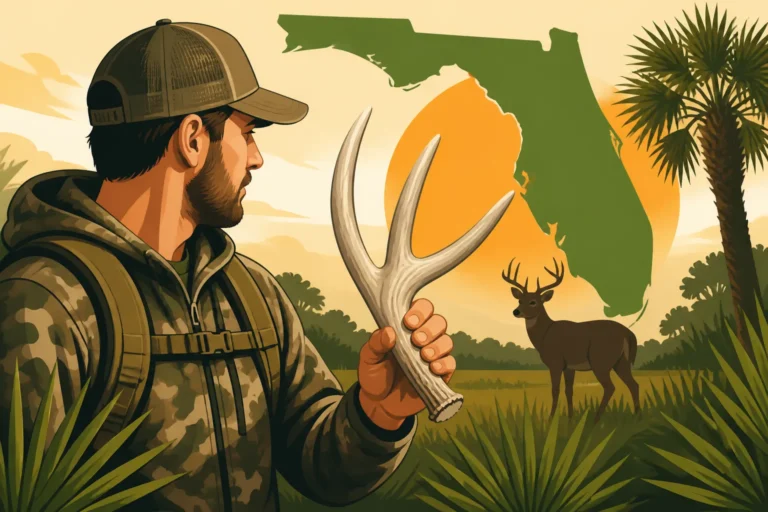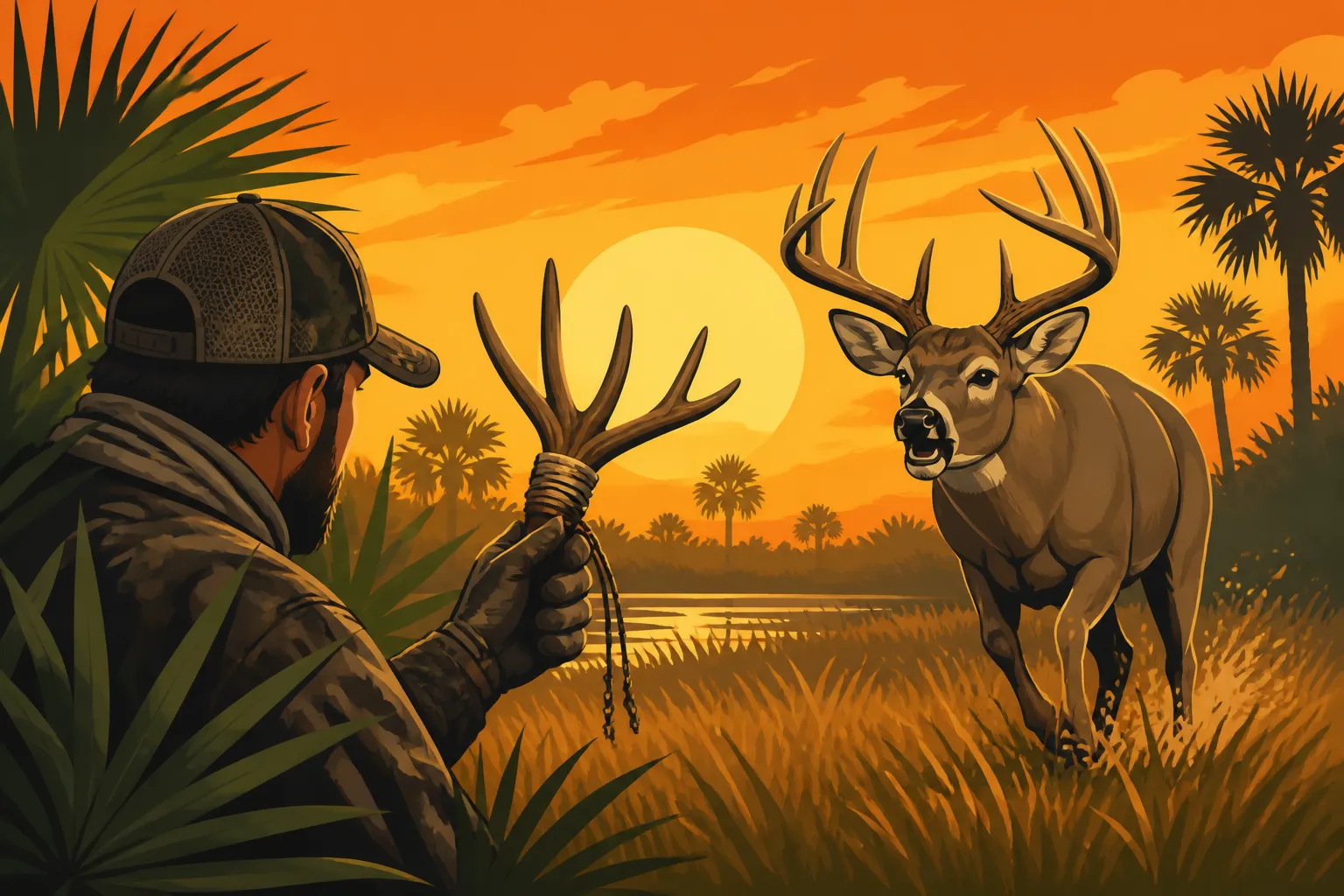
Rattling and Grunting Florida Bucks
Trying to coax a wary Florida buck out of the dense palmettos or thick cypress swamps can feel like an impossible task. You scout, you set up, you wait, and often, those elusive antlers remain hidden, leaving you frustrated and questioning your approach. This comprehensive guide is here to unravel the mysteries of rattling and grunting, offering practical, Florida-specific strategies to help you effectively communicate with and ultimately draw in those whitetails, making your time in the woods more productive.
Understanding Florida Deer Behavior and Communication
Before you even think about picking up a set of antlers or a grunt tube, it's crucial to understand how Florida deer communicate and what drives their behavior. Our whitetails are unique, adapting to subtropical climates and often denser cover than their northern cousins. Their vocalizations and social cues are tailored to their environment, and mimicking them requires a nuanced approach.
The Nuances of Florida Whitetail Vocalizations
Florida whitetails, much like deer everywhere, use a variety of sounds to communicate everything from alarm to contentment, but the frequency and intensity can vary. Bucks, in particular, employ a range of vocalizations during the rut and even in the pre-rut stages to assert dominance, challenge rivals, and attract does. Grunts are probably the most recognized, ranging from aggressive "roars" to softer, contented feeding grunts. We also have bleats, which are often associated with does and fawns, but bucks will sometimes bleat too, especially when curious or seeking a doe. Understanding these different sounds, and when they're typically heard, is your first step. It's not just about making noise; it's about making the right noise at the right time.
What you might notice in Florida's vast public lands, especially during the early archery season, is that deer can be less vocal than in other states. The dense undergrowth often means visual cues are limited, so they rely on sound, but they also have fewer wide-open fields where long-distance vocalizations are the norm. This makes subtle, realistic calling even more important. Trying to sound like a massive buck fight breaking out when there's barely a clear line of sight might just push deer further into cover.
Reading Deer Body Language and Behavior
Beyond vocalizations, deer constantly communicate through their body language, and being able to read these cues is vital for successful calling. A buck might not vocalize at all but will instead approach a scent post, paw at the ground, or rub a sapling to signal his presence and dominance. When you're rattling or grunting, pay close attention to how deer react. Are they stopping and staring? Are their ears swiveling? Do they suddenly flag their tail and bolt? Every movement tells a story.
Consider a scenario where you've given a few soft grunts. If a buck hears you and stops, his head high, ears forward, he's curious but wary. This is not the time for an aggressive challenge. A softer, follow-up grunt might be more effective. If he starts walking stiff-legged with his hackles raised, he's accepting the challenge, and you might consider a more assertive rattle or grunt. Knowing when to escalate or back off is the difference between a deer walking into range and one disappearing into the shadows. Using resources like the FWC app for scouting can help you understand game behavior in specific areas, giving you a baseline for what to expect.
The Art of Rattling Florida Bucks
Rattling, the act of mimicking two bucks fighting, is a classic deer hunting technique. However, rattling for Florida bucks presents its own set of challenges, from the typical thick terrain to the often-earlier rut timing in certain zones. You can't just crash antlers together and expect miracles; you need strategy, patience, and a deep understanding of your environment.
Choosing the Right Rattling Antlers and Technique
When it comes to rattling antlers, you have a few options. Natural antlers provide the most realistic sound, especially from Florida bucks, which tend to have smaller, harder racks than deer in more northern climates. Synthetic rattling systems, like those from Rattlin' Rack or Knight & Hale, are lighter, less bulky, and can be easier to control, producing a consistent sound. The key is to find something that sounds authentic to deer in your area. Big, heavy synthetic antlers might sound out of place if the local deer typically grow smaller racks.
The technique itself is crucial. Start with light sparring, clashing the tips together, then gradually build up the intensity to mimic a full-blown fight. Incorporate pauses – deer fights aren't continuous. Throw in some incidental noises like breaking twigs or scraping the ground with your foot to simulate the thrashing and movement of a real fight. In thick Florida scrub, you'll want to focus on Rattling Volume in Thick Florida Scrub, keeping it realistic for the dense cover. Over-rattling in a small, tight palmetto head might make you sound like an anomaly.
Optimal Times and Scenarios for Rattling in Florida
Timing is everything with rattling. While the peak rut is often considered the prime time, successful rattling can occur during the pre-rut and even sometimes in the post-rut. In Florida's diverse zones, the rut can peak at different times. For example, in Zone B, the rut might be in full swing by November, whereas in Zone C, it's typically much earlier, in September or October. Knowing When the Florida Rut Peaks by Zone is crucial for maximizing your chances.
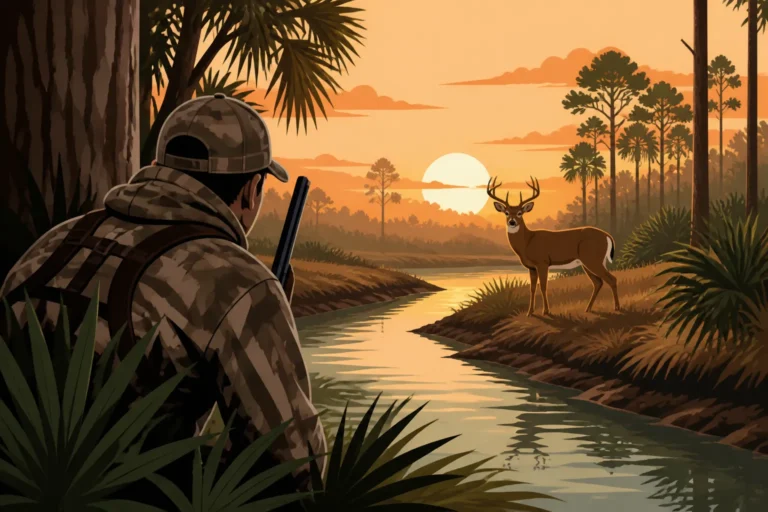
Ideal scenarios for rattling include days with light winds, as heavy winds can carry your scent further and make it difficult for deer to pinpoint the source of the sound. Look for areas with good visibility but also ample cover for a buck to approach cautiously. A funnel between two palmetto heads or the edge of a cypress slough can be perfect. I’ve had success rattling from a ground blind on Florida public land situated just off an old logging road. The key is to set up where a buck can approach unseen for a good portion of his travel, but you have a clear shot when he emerges.
Mastering Grunt Calls in Florida
Grunt calls are arguably the most versatile vocalization you can use in Florida deer hunting. They range from the subtle, contented grunts of a feeding deer to the aggressive roar-grunts of a dominant buck. Understanding the different types of grunts and when to deploy them effectively can significantly increase your chances of luring a buck into range.
Different Types of Grunt Calls and Their Meanings
There's a whole vocabulary of grunts, and each one sends a different message. The social grunt is a soft, deep sound often made by a buck moving through cover, letting other deer know he's around. This is a great call for simply announcing your presence without being overly aggressive. Then there's the trailing grunt, a softer, often quicker grunt made by a buck following a hot doe. This suggests excitement and focus on a nearby doe.
The challenge grunt or dominant grunt is louder, longer, and more guttural. This is the sound a buck makes when confronting another buck, trying to assert his dominance. Finally, the snort-wheeze is a highly aggressive sound, a short burst of air through the nose, often followed by a wheezing sound. This is a direct threat, usually reserved for dominant bucks challenging rivals. It’s important to match the intensity of your call to the situation; overdoing it with a snort-wheeze on a curious, timid buck might send him running. For more specific local context, understanding Grunt Calls in a Florida Oak Hammock can be incredibly useful.
Effective Grunting Techniques for Florida Terrain
Grunting in Florida requires thought, especially given our unique landscapes. In thick areas, short, sharp grunts can cut through the dense foliage better than long, drawn-out calls. You want to sound like a deer moving nearby, not miles away. Focus on realism; don't just blast out a grunt. Vary the volume and cadence to mimic natural deer behavior. Sometimes, a series of three to five soft grunts is all it takes to pique a buck's interest.
When hunting along a creek bottom for late-season deer or in a clear-cut regrowth edge, using directional grunts can be very effective. By aiming your grunt tube in different directions, you can create the illusion of a moving deer. If you're hunting with a partner, one person can grunt from a slightly different position to make it sound like multiple deer. Remember, Florida bucks are pressured, especially on public land, so subtlety often trumps aggression, unless you're absolutely sure you're dealing with a highly dominant, territorial buck during the peak of the rut.
Combining Rattling and Grunting for Maximum Effect
The real magic happens when you combine rattling and grunting. These two forms of communication naturally go hand-in-hand in the deer woods, mimicking real-life interactions. By integrating them strategically, you can create a compelling scenario that draws in even the most hesitant Florida bucks.
Creating Realistic Battle Sequences
When combining rattling and grunting, you're essentially painting a sonic picture of a deer confrontation. Start with some light sparring grunts, then escalate into more aggressive rattling, perhaps adding a few dominant grunts or even a snort-wheeze if you're trying to really challenge a buck.
Here's a common sequence:
- Light sparring: Gently clack the antler tips together, followed by one or two soft social grunts. This indicates two bucks might be interacting casually.
- Increased intensity: Gradually increase the force of your rattling, making it sound like a more serious fight. Add a few deeper, more aggressive grunts during pauses in the rattling.
- Thrashing/Breaking: Incorporate sounds of breaking twigs or pawing the ground.
- Climax: A burst of heavy rattling, possibly ending with a challenge grunt or snort-wheeze.
- Silence: Crucially, follow this with several minutes of complete silence, just as real bucks would after a fight. This allows time for a curious buck to approach and investigate without feeling pressured by continuous noise.
You might be surprised at how quickly a buck shows up after the 'fight' has supposedly ended. They'll often circle downwind to get a scent, so always be mindful of your wind direction.
Adapting Calling Strategies to Various Florida Conditions
Florida's conditions are rarely uniform, and your calling strategy needs to adapt. On hot, still days in the early season, deer movement is typically slower, and they might be more lethargic. In these conditions, opt for softer, less aggressive calls – light tickling of antlers and subtle social grunts might be more effective than a full-blown battle. Over-calling in hot weather can be counterproductive.
Conversely, after a cold front passes through, deer activity often picks up. This is when you can become more aggressive with your calling. The cooler air carries sound better, and deer are more likely to be on their feet and responsive to challenges. If you're hunting an area known for mature bucks, like some of the larger WMA Management Areas, don't be afraid to use a snort-wheeze if you believe there's a dominant buck in the vicinity. Remember to always consider the Wind and Thermals in Flat Florida Terrain to ensure your calls carry properly and your scent doesn't give you away.
Factors Influencing Success and Troubleshooting
Even with the best techniques, rattling and grunting aren't always a magic bullet. Florida hunting presents unique variables that can impact your success, and understanding these factors, along with how to troubleshoot common issues, will make you a more effective caller.
Environmental Variables and Deer Pressure
Florida's environment is a major player. The dense vegetation in areas like the Green Swamp or the Big Cypress makes it hard for sound to travel long distances, meaning you often need to be closer to deer for your calls to be effective. This also means bucks can approach more stealthily, so constant vigilance is key. Hot weather, especially during early archery seasons in Zone A, can make deer less responsive to calls, as they are often bedded down to conserve energy.
Deer pressure, particularly on public lands, is another significant factor. Bucks that have been called to repeatedly will often become call-shy. This is where subtlety becomes your best friend. Instead of aggressive sequences, try very soft, infrequent social grunts or light sparring. Sometimes, simply letting out a few soft grunts and then remaining silent for 20-30 minutes is more effective than an elaborate routine. Understanding Hunting Pressure on Florida Public Land can help you gauge how call-shy deer might be in a particular area.
Common Mistakes and How to Avoid Them
One of the most common mistakes is over-calling. It's easy to get excited and keep hitting the calls, but in many cases, less is more. Give deer time to respond. Another mistake is calling blindly. Always have a good understanding of the habitat, wind direction, and potential approach routes for a buck. Don't rattle in an open field without any cover for the deer to feel safe approaching.
Ignoring your scent is a critical error. A buck might respond to your calls, but if he winds you downwind, he's gone. Always hunt with the wind in your favor, especially when calling. If a buck starts to circle downwind, be ready for a shot or be prepared to cut him off. Finally, lack of realism can kill your chances. Practice your calls, listen to real deer vocalizations, and ensure your rattling sounds like two bucks fighting, not a clumsy hunter banging sticks together. Use external mapping and scouting tools like GoHunt to mark areas where you've seen buck sign, like fresh Scrape Lines Along a Sand Road or rubs, indicating a buck's presence and potential receptiveness to calling.
| Call Type | Primary Use | Intensity | Best Timing | Notes |
|---|---|---|---|---|
| Social Grunt | Announce presence, locate deer | Soft to Medium | Pre-rut, Rut, Post-rut | Good for curious deer, subtle communication |
| Trailing Grunt | Buck following a hot doe | Soft to Medium | Rut | Conveys urgency and excitement |
| Challenge Grunt | Assert dominance, challenge buck | Medium to Loud | Pre-rut, Rut | Use with caution; can spook wary deer |
| Snort-Wheeze | Aggressive threat | Loud | Peak Rut | For dominant bucks, direct challenge |
| Light Rattling | Casual sparring | Soft | Pre-rut, Rut | Good for attracting curious deer, warm-up to fight |
| Heavy Rattling | Full-blown fight | Loud | Peak Rut | Mimics intense battle, challenges dominant bucks |
Advanced Tactics and Persistence
Once you've got the basics down, you can start to fine-tune your approach and incorporate some advanced tactics to really dial in your calling game for Florida bucks. It often comes down to knowing when to push and when to hold back, and always, always having patience.
Decoy Use in Conjunction with Calls
Adding a decoy to your calling setup can be a game-changer, especially during the rut when bucks are looking for interaction. A realistic buck decoy, particularly a smaller, less dominant one, can draw in larger bucks looking to assert their superiority. Place your decoy so that an approaching buck will see it before he sees you, and ideally, present a broadside shot opportunity once he commits. Position it facing away from your shooting lane, mimicking a buck that's just turned to face its challenger, which encourages an approaching buck to present a frontal or quartering-away shot.
When combining a decoy with calls, start your rattling and grunting sequence. Once you get a response or believe a buck is approaching, stop calling and let the decoy do the rest of the work. The visual confirmation often seals the deal. Remember that setting up a decoy requires clear sight lines, so this tactic works best on the edges of food plots, powerline cuts, or open pinewoods where visibility is decent. Be aware of the risks, especially on public land, and use appropriate blaze orange when carrying a decoy.
The Role of Patience and Observation
No matter how good your calling technique, patience and keen observation remain paramount. You might call for twenty minutes and hear nothing, then suddenly a buck appears silently from the thicket. Deer have an incredible ability to move undetected. After a calling sequence, commit to at least 15-20 minutes of complete silence, scanning all angles. Bucks often circle downwind to scent-check the source of the sound, so be ready for an approach from unexpected directions.
Watch for subtle cues: a flick of an ear, a flash of white in the distant undergrowth, a shadow moving slowly. Often, the first sign of a deer responding to a call is a small movement, not a full-blown charge. Learn to Find Ground Others Walk Past on crowded public lands, as these less-pressured areas might hold bucks more receptive to calling tactics. Be prepared to wait, and don't be discouraged if a buck doesn't appear immediately. Persistence, coupled with smart calling, is how you eventually find success in the diverse and often challenging Florida woods.
Disclaimer
The information provided in this guide is for educational and informational purposes only. Hunting regulations and seasons can change, and it is the hunter's responsibility to consult the latest Florida Fish and Wildlife Conservation Commission (FWC) rules and regulations before engaging in any hunting activities. Always prioritize safety and ethical hunting practices.