Predator Calling Florida Palmetto Country
Hunting predators in Florida's vast palmetto country can feel like trying to find a needle in a haystack, especially when those wily coyotes and elusive bobcats seem to vanish into the dense scrub. Many hunters get frustrated, setting up perfect stands only to come away empty-handed, wondering how these intelligent animals outsmart them time and again. This comprehensive guide is designed to peel back the layers of mystery surrounding predator calling in Florida's unique palmetto landscapes, offering proven strategies, gear insights, and tactical advice to turn those quiet hunts into successful encounters.
Understanding Florida's Palmetto Country Predators
Florida's palmetto country is a challenging but rewarding landscape for predator hunting, largely dominated by dense saw palmetto and scattered pines or oaks. The predators here are masters of concealment and incredibly sharp. To consistently call them in, you first need a solid understanding of who you're after and how they operate in this environment.
Coyote Behavior in Florida's Flatwoods
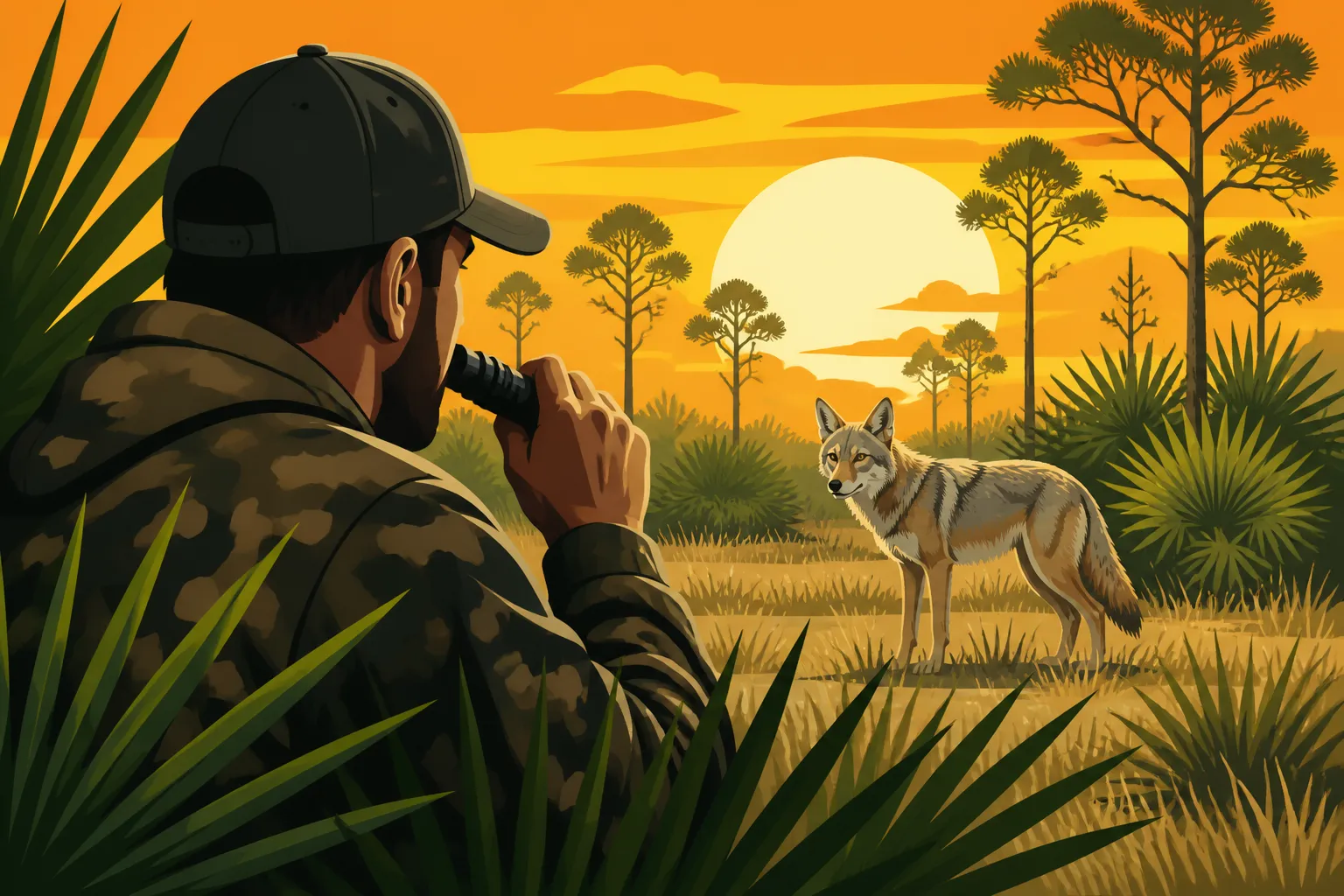
Coyotes are perhaps the most widespread and adaptable predators you'll find across Florida, and they thrive in palmetto country. They're opportunistic omnivores, feeding on anything from deer fawns and small game to fruits and insects. This makes them highly responsive to distress calls, especially those mimicking prey animals in distress.
Their behavior in palmetto country often differs from their counterparts in open ranch lands. Here, cover is king, and they use the dense palmetto for bedding, raising pups, and ambushing prey. They tend to be more secretive, less prone to open travel, and will often circle downwind of a call to scent-check the source before committing. Understanding their travel corridors—which might be faint game trails through the palmetto, old logging roads, or the edges of cypress heads—is crucial. They are constantly moving, covering large territories, so successful calling often hinges on intercepting them during their patrols. You can learn more about their distribution in our article on Florida Coyote Range and Density.
Decoding Bobcat Habits in Dense Scrub
Bobcats are the true ghosts of the palmetto. While their populations are healthy in Florida, actually seeing one, let alone calling one in, is a significant accomplishment. They are solitary and territorial, relying on stealth and explosive bursts of speed to catch their prey, which consists primarily of rabbits, rodents, and birds.
Unlike coyotes, bobcats are often less vocal and more cautious. They won't come charging in like a coyote might. Instead, they'll often stalk slowly, using every piece of cover available, sometimes taking several minutes to cover a short distance. They are incredibly sensitive to sound and scent, making wind direction paramount. Their keen eyesight means any unnatural movement on your part will likely send them slinking away before you even know they're there. When calling, expect a bobcat to appear silently, often from an unexpected direction, and be ready for a quick, fleeting shot opportunity.
Fox Species and Their Responses
Florida is home to both gray foxes and, less commonly, red foxes, though the red fox is more prevalent in agricultural areas and the Panhandle. Gray foxes, however, are quite at home in the palmetto and mixed hardwood forests. They are agile climbers, a trait that sets them apart, often seeking refuge in trees when pursued.
Foxes, particularly grays, are generally smaller and more skittish than coyotes or bobcats. They respond well to higher-pitched distress calls, mimicking smaller prey like mice, squirrels, or young birds. While they might not cover ground as quickly as a coyote, they are equally adept at using cover and will often pop out quickly, assess the situation, and then disappear just as fast. They tend to stick to denser cover and edges, so setting up near thickets or transition zones where palmetto meets pines can increase your chances.
Gear Up for Success: Essential Calling Equipment
Just like any specialized hunting method, predator calling in Florida's palmetto country demands the right tools. The dense environment and intelligent quarry mean you can't just show up with a basic mouth call and expect consistent results. A strategic approach to gear will significantly improve your odds.
Choosing Between Electronic and Mouth Calls
The heart of predator calling lies in the sounds you produce, and you have two main avenues: electronic calls and mouth calls. Both have their place, but one typically shines in the varied, often windy, conditions of Florida.
Electronic calls are, without a doubt, the workhorses for serious predator callers in Florida's palmetto. Brands like Foxpro and ICOtec offer a vast library of realistic sounds, from rabbit distress to fawn bleats, bird chirps, and even coyote howls or barks. Their biggest advantage is volume and hands-free operation. You can place the speaker unit upwind, away from your position, drawing the predator's attention away from you. This is crucial when a coyote or bobcat inevitably circles downwind. The ability to switch calls instantly, adjust volume, and program sequences makes them incredibly versatile. In thick palmetto, where visibility is limited, broadcasting a loud, clear sound that penetrates the brush is essential. A remote control means you don't have to move a muscle, reducing the chance of being spotted.
Mouth calls, on the other hand, require skill and practice. They're lighter, cheaper, and require no batteries, making them excellent backups or for quick, impromptu sets. However, their volume is limited, and projecting sound effectively through dense palmetto can be a challenge. They also demand movement to operate, which can give away your position to sharp-eyed predators. While excellent for specific, close-range situations or to add realism to an e-caller setup (e.g., a subtle lip-squeak), they often fall short as the primary calling tool in Florida's open, yet brushy, landscapes.
Optics, Camouflage, and Concealment
Your ability to see predators before they see you, and remain unseen, is just as vital as the calls you make. Florida's palmetto often presents challenges with low light, dappled shade, and varying distances.
Good optics are non-negotiable. A quality pair of binoculars, usually 8x to 10x magnification, will help you scan the edges of palmetto heads, pick out subtle movements, and identify camouflaged animals approaching your setup. Given that predators will often try to circle downwind, having a wide field of view and clear glass to scan all potential approach lanes is critical. For shooting, a scope on your rifle or shotgun is a must, preferably one with good low-light performance and a broad magnification range (e.g., 2-7x or 3-9x) to handle both close-in and longer shots.
Camouflage choice should blend specifically with the Florida environment. Think greens, browns, and tans that mimic the dried palmetto fronds, pine needles, and sparse undergrowth. Avoid overly dark or light patterns that stand out. Full head-to-toe camouflage, including face masks or paint and gloves, is essential. Predators have incredible eyesight, and a patch of exposed skin can blow your cover.
Concealment isn't just about what you wear; it's about how you position yourself. In palmetto country, natural cover is abundant. Look for a large palmetto clump, a fallen log, or the base of a dense pine that can break up your silhouette. A comfortable ground blind or pop-up blind can be incredibly effective, especially on public land where natural cover might be sparse or you need to be mobile. A good blind not only hides you but also contains your movements, allowing you to shift and adjust your gun without alarming an approaching animal. Remember, the goal is to disappear into the landscape completely.
Master the Sound: Predator Calling Techniques
Once you've got your gear dialed in, it's time to focus on the art of calling. Producing the right sounds at the right time and with the right cadence is what separates a successful predator hunter from someone simply making noise.
Common Distress Calls and Their Application
The most common and effective sounds for predator calling are distress calls, mimicking an injured or vulnerable prey animal. In Florida, rabbits, birds, and fawns are primary food sources for coyotes and bobcats, so calls simulating their cries work exceptionally well.
- Rabbit Distress: This is the universal bread-and-butter call for almost all predators. Coyotes and bobcats alike are drawn to the sound of a struggling rabbit. There are many variations, from loud, frantic screams to softer, whiny squeals. Start with a loud, attention-grabbing series, then reduce the volume and frequency as you settle into a sequence. This call works year-round.
- Fawn Distress: During spring and early summer, when fawns are vulnerable, this call can be incredibly effective for coyotes. A bleating fawn signifies an easy meal. This call tends to elicit a more aggressive response from coyotes, especially dominant females. Use it judiciously, as it can sometimes attract other animals like curious does.
- Bird Distress: High-pitched bird distress calls (like a woodpecker, crow, or songbird) are particularly good for bobcats and foxes due to their smaller prey base. They can also pique the interest of coyotes. These calls tend to cut through the wind and brush well, making them useful in dense palmetto.
- Mouse/Vole Squeaks: For very cautious or educated predators, or when you know an animal is close but won't commit, subtle mouse or vole squeaks can be the ticket. These are often made with lip squeaks or specialized mouth calls and are incredibly quiet, designed to seal the deal when a predator is within 50 yards.
Vary your calls during a stand. Don't stick to just one sound. A common sequence might involve starting with a loud rabbit distress for a minute or two, pausing, then switching to a bird distress, then back to a softer rabbit. Think about what story your calls are telling. Is it a lone rabbit? Or a rabbit struggling near a flock of birds? Variety keeps predators guessing and makes your setup more intriguing.
Understanding Predator Vocals and How to Use Them
Beyond distress calls, understanding and using predator vocalizations can add another layer to your strategy, particularly for coyotes. These calls aren't meant to attract them for a meal, but to challenge their territorial instincts or locate them.
- Howls: Coyote howls (lone howls, group howls, or challenge howls) serve several purposes. They can be used to locate coyotes before a setup, getting them to respond and reveal their position. A challenge howl can sometimes draw in an aggressive male, especially during the breeding season. Be careful with howls, as they can also educate wary coyotes or hold them up at a distance. If you're using howls to locate, use them sparingly and listen intently for a response.
- Barks and Yips: These calls often indicate excitement, alarm, or social interaction. A "pup in distress" or "pup yips" can sometimes draw in adult coyotes, particularly mothers. Alarm barks can signal danger and might cause coyotes to approach cautiously to investigate, but often send them running.
- Growls and Whines: Less commonly used, but growls can simulate a coyote feeding or defending a kill, which might attract curious or subordinate coyotes. Whines often indicate submission or social bonding.
Using predator vocals requires careful timing and understanding of the local coyote dynamics. An aggressive challenge howl might work on some coyotes but scare others away. For new callers, focusing on distress calls is often more productive. However, as you gain experience, incorporating subtle howls to locate or challenge can greatly enhance your success, particularly when hunting areas that may be seeing Coyote Calling Florida Ranch Country at Dawn.
The Art of the Calling Sequence
A calling sequence is a planned series of calls, pauses, and sound variations designed to keep a predator interested and draw them into shooting range. Consistency and patience are your best friends here.
A typical stand should last at least 15-20 minutes, sometimes longer in heavily pressured areas or for wary bobcats. Start with an attention-grabbing, loud series of calls, often a rabbit distress, for 30-60 seconds. This is your initial broadcast, telling every predator within earshot that something is happening. Then, go silent for 1-2 minutes. This pause is crucial; it allows any distant animals to start moving in and gives them a chance to commit without being overwhelmed by constant noise.
After the initial pause, resume calling with a slightly softer, shorter sequence, perhaps 15-30 seconds. Vary the sound – maybe a bird distress now, or a different rabbit call. Pause again. Repeat this pattern, gradually increasing the length of your pauses and decreasing the intensity of your calls. The idea is to make the animal believe it's approaching the source of the sound, and the "struggle" is winding down, making it more confident to close the distance.
If you see a predator coming in, immediately stop calling. Let it come. If it hangs up or starts to lose interest, a very soft, short lip-squeak or whimpering distress call can often seal the deal and bring it those last few crucial yards. Sometimes, a predator will hang up downwind, trying to pick up scent. If it stalls, try a subtle, soft call to draw its attention back and lure it into a shooting lane before it gets a whiff of you. This methodical approach, combining aggressive starts with patient, subtle follow-ups, is key to turning a distant howl into a successful harvest.
Reading the Landscape: Setup Strategies in Palmetto
Florida's palmetto country presents unique challenges for setting up a predator stand. Flat terrain, dense cover, and often tricky wind patterns mean you can't just pick any spot. A successful setup maximizes your visibility while minimizing your footprint and predicting predator movement.
Choosing Your Calling Location
The right location is half the battle. When scouting, look for natural funnels, travel corridors, and areas that offer a slight advantage in elevation or clear lanes of sight. Even a subtle rise of a few feet in Florida's generally flat landscape can make a huge difference in your field of view.
- Edges and Transitions: Predators love edges. Focus on areas where palmetto flats meet pine stands, cypress heads, food plots, or even old logging roads. These transition zones are natural travel routes and hunting grounds for coyotes and bobcats. Setting up on the edge of a large palmetto head, overlooking a more open area, allows you to project sound into the thick cover while having a view of where an animal might emerge.
- Roads and Trails: While you don't want to set up on a busy road, old overgrown logging trails or seldom-used sand roads that cut through palmetto can be excellent choices. Predators use these as highways. Position yourself slightly off the road, hidden in the brush, but with a clear view down the lane.
- Natural Openings: Look for small clearings or burns within the palmetto. These patches of more open ground are often irresistible to predators investigating a call. Set up with the wind in mind, so you can see into these openings and cover all potential entry points.
- Mapping Tools: Using mapping apps like GoHunt can be incredibly helpful for identifying these features. You can analyze satellite imagery to pinpoint palmetto heads, timber lines, and old roads, helping you plan your approach and setup before you even set foot on the ground. This kind of pre-hunt intelligence is invaluable, especially when you are Scouting Florida Public Land Before Season.
When choosing a specific spot, always consider your backdrop. Avoid silhouetting yourself against the sky. A dense cluster of palmetto or a dark stand of pines behind you will help you disappear. Also, think about escape routes for yourself if needed, and most importantly, clear shooting lanes in all likely directions of approach.
Wind Direction and Predator Approach
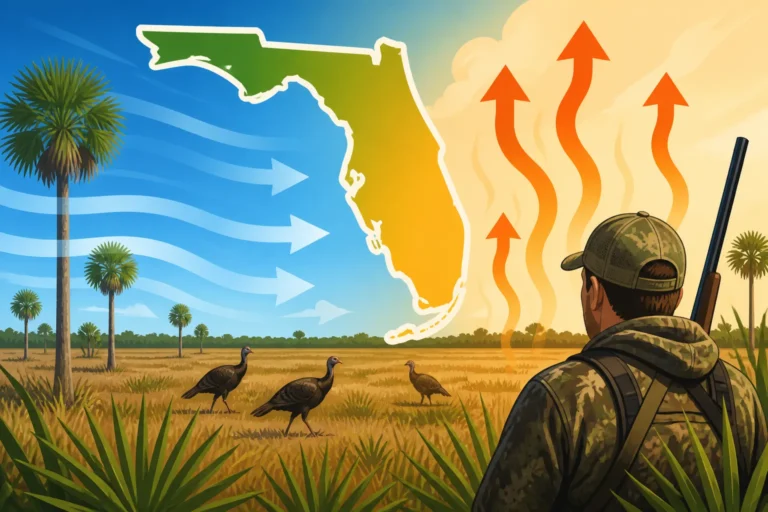
The wind is your most critical factor in predator calling, especially in Florida. Predators, particularly coyotes, have an exceptional sense of smell and will almost always try to circle downwind to scent-check the source of a call before fully committing. Ignoring the wind is a guaranteed way to go home empty-handed.
- Crosswind/Quartering Wind: The ideal scenario is a crosswind or a quartering wind. This means the wind is blowing from left to right (or vice-versa) across your setup, or slightly toward you at an angle. This allows you to place your e-caller upwind of your position (where the predator is likely to approach from initially), while giving you a clear view of the downwind side where the predator will eventually try to circle. You want to be positioned so that the animal approaches the call, and then, as it circles downwind to smell, it presents a shot opportunity before it catches your scent.
- Never Upwind: Never set up with the wind directly at your back, blowing towards where you expect the predator to come from. It will smell you immediately. Similarly, a direct headwind (wind blowing straight into your face) can be tricky. While it hides your scent, it also carries your calls away from you and can make it harder for you to hear subtle approach sounds or even the predator's own vocalizations.
- Scent Control: Even with perfect wind, practicing good scent control is crucial. Wear clean clothes, spray down with a scent eliminator, and be mindful of what you touch. In humid Florida, scents can linger.
- Visualizing the Approach: Before you start calling, mentally map out the most likely approach routes based on the wind and terrain. Where will the predator try to circle? Where are your shooting lanes in that direction? How far can you comfortably shoot? Adjust your position, your e-caller placement, and your body orientation to cover those zones effectively. For example, if you're Hunting a Palmetto Flatwoods Edge, you'll want to position yourself to see into the flatwoods, knowing they'll likely use the thicker cover to approach silently.
Timing Your Hunt: Seasons, Weather, and Time of Day
Successful predator calling isn't just about location and technique; it's also about timing. Florida's subtropical climate means predator activity can vary significantly throughout the year and even day-to-day based on conditions.
Best Seasons for Predator Calling
While you can technically call predators year-round in Florida, certain seasons offer distinct advantages.
- Winter (Late Fall to Early Spring): This is arguably the prime season for predator calling in Florida. Cooler temperatures mean predators are more active, often needing to burn more calories to stay warm, making them more responsive to calls. The undergrowth can also be less dense after a few cold fronts or if controlled burns have occurred, improving visibility. During this period, food sources can become scarcer, driving predators to be more aggressive in their hunting. Also, the breeding season for coyotes (typically late winter) can make males more territorial and responsive to challenge howls or even certain distress calls.
- Summer: While challenging, summer can still be productive, especially in the early mornings or late evenings when temperatures are cooler. Predators are often more nocturnal during the heat of summer. Distress calls mimicking fawn bleats can be highly effective, as fawns are born in spring and early summer, presenting an easy meal. However, dense foliage and abundant natural food sources can make calling more difficult. Be prepared for mosquitoes and other biting insects.
- Spring: Spring offers a mixed bag. The turkey season is in full swing, and coyotes and bobcats are active, preying on turkey poults and eggs. However, dense new growth can reduce visibility. Early spring can still benefit from cooler temperatures, but as it warms, activity shifts to dawn and dusk.
Understanding these seasonal nuances allows you to adjust your calling strategies and expectations accordingly. For example, in winter, you might be able to extend your calling sessions into mid-morning, while in summer, you're usually done by 9 AM.
Impact of Weather and Cold Fronts
Florida's weather patterns can dramatically influence predator activity. Knowing how to leverage these changes is crucial for maximizing your success.
- Cold Fronts: A strong cold front is a predator hunter's best friend in Florida. The drop in temperature, especially if it brings clear skies and lower humidity, invigorates predators. They become more active, moving more, and are generally more receptive to calls. The days immediately following a cold front, when temperatures are at their lowest, are often the most productive. This is an excellent time to be out there, as animals are driven to feed.
- Rainy Days: Light rain or drizzle can sometimes be good, as it dampens sound, covers your scent, and can make animals feel more secure. However, heavy rain is usually a bust; predators will be hunkered down, and your calls won't carry well. After a heavy rain, once it clears, can be a great time as animals emerge to hunt.
- Windy Conditions: High winds are challenging. While they can help carry your scent away, they also make it difficult for predators to pinpoint the source of your call, and they'll likely hold tighter to cover. You'll need to use louder calls and position your e-caller strategically to cut through the noise. Often, finding a more sheltered area out of the direct wind can be more productive.
- Overcast Days: Overcast days, especially with light winds, can be excellent. The diffused light makes predators feel less exposed and encourages them to move throughout the day, not just at dawn and dusk.
Best Times of Day for Calling
Predators are generally most active during low-light conditions, but they can be called throughout the day if conditions are right.
- First Light (Dawn): This is prime time. Animals are wrapping up their nocturnal hunts or just starting their daytime movements. They're often hungry and less cautious. The cool air helps calls carry, and visibility is still low enough to aid your concealment. Aim to be set up and ready to call at least 30 minutes before sunrise.
- Last Light (Dusk): Another highly productive window. Predators are becoming active again, preparing for their night hunts. Similar to dawn, the low light and cooler temperatures are in your favor. Be ready to call until well after sunset.
- Mid-Day: While less consistent, mid-day can still be productive, especially on cool, overcast winter days or after a cold front. This is when patience pays off. Predators might be bedded down but can still be drawn out by a compelling distress call if it sounds like an easy meal. This is often where a longer stand (20-30 minutes) can make the difference. Don't discount midday, especially for bobcats who sometimes move during the day.
Common Pitfalls and How to Avoid Them
Even seasoned callers make mistakes. Florida's unique hunting environment, with its thick palmetto and cunning predators, can amplify common errors. Being aware of these pitfalls and actively working to avoid them will greatly increase your success rate.
Over-Calling and Impatience
One of the most common mistakes, especially for new callers, is over-calling or simply not being patient enough. It’s easy to get excited and blast calls continuously, or to give up on a stand too early.
- The Over-Calling Trap: Continuous, loud calling can sound unnatural or overwhelming to a predator. Imagine a rabbit screaming for 20 minutes straight—it's not realistic. Instead, a series of calls followed by silence, then another series, mimics a more natural scenario where the prey animal is struggling, resting, then struggling again. This ebb and flow creates curiosity and confidence in the predator. Over-calling can also make wary animals hang up further out, trying to decipher the continuous noise.
- The Impatience Curse: Most predators, especially bobcats and educated coyotes, won't come charging in right away. They'll take their time, circle, stop, listen, and scrutinize the area. Many hunters cut their stands short at 5 or 10 minutes, packing up just as a cautious bobcat was about to commit. A good rule of thumb is to sit for a minimum of 15-20 minutes, even up to 30 minutes in tough conditions or highly pressured areas. That extra 5 or 10 minutes can often be the difference between success and failure. Remember, silence doesn't mean nothing is coming. It means the predator is often silently stalking in.
Ignoring Wind and Scent Control
We’ve touched on this, but it bears repeating because it's that important. Ignoring the wind and proper scent control is the fastest way to educate a predator and ensure it never comes to your call again.
- Wind is King: Always, always, play the wind. A predator's nose is its primary defense. If it catches your scent, the game is over, usually before you even know it was there. Even a subtle breeze can carry your scent further than you think. Use a wind checker constantly—the small powder bottles or milkweed fluff are your best friends. Check the wind as you approach, as you set up, and periodically during your stand. If the wind shifts unexpectedly, you might need to quickly adjust your position or abandon the stand.
- Scent Mitigation: This isn't just about cover scents or sprays, though they can help. It starts with hygiene: wash your hunting clothes in scent-free detergent, store them in sealed bags or containers, and avoid filling up with gas or eating strong-smelling foods right before a hunt. Avoid wearing the same clothes you wore for breakfast or around camp. Your goal is to be as scent-neutral as possible. Even with perfect wind, a strong human odor can sometimes drift and alert an animal.
Poor Setup and Lack of Situational Awareness
A poor setup can negate perfect calling and wind advantage. Likewise, failing to pay attention to your surroundings can lead to missed opportunities.
- Inadequate Concealment: Not breaking up your silhouette, sitting in plain sight, or moving too much will lead to predators spotting you. Palmetto country is dense, so use it. Blend in with your background, remain motionless, and ensure your face and hands are covered. A small folding stool and a dense backdrop are far better than trying to sit on the ground with nothing behind you.
- Limited Visibility: While you need concealment, you also need to see. Choose a spot that offers clear shooting lanes in all likely directions of approach, especially downwind. Trim small branches if necessary (where legal and appropriate) before the hunt. Remember that predators will appear from nowhere, so constantly scan from side to side.
- Lack of Situational Awareness: This means not paying attention to subtle cues. Did you hear a faint bark in the distance before you even started calling? Did a deer suddenly get jumpy? Are birds alarm calling? These are all indicators of predator presence. Be ready. Have your gun up and ready to shoulder, not resting on your lap. When a predator does appear, it might only offer a fleeting shot opportunity. Being prepared means you're already halfway there. For further tactics, check out our guide on Predator Calling Florida Palmetto Country.
By diligently addressing these common pitfalls, you’ll not only become a more effective predator caller but also a more skilled and patient hunter in Florida's challenging palmetto country. It’s all about attention to detail and respecting the incredible senses of these wild animals.
Navigating Public Land Challenges in Florida
Hunting Florida's public lands, particularly its vast Wildlife Management Areas (WMAs) and National Forests, offers incredible opportunities for predator calling. However, it also comes with a unique set of challenges that every hunter needs to understand and navigate.
Understanding WMA Regulations and Access
Florida's public lands are managed by the Florida Fish and Wildlife Conservation Commission (FWC), and each WMA has its own specific set of rules, regulations, and often, quota hunt systems. What might be legal on one WMA could be prohibited on another.
- WMA Permit: Most WMAs require a WMA Management Area Permit in addition to your basic Florida hunting license. This permit supports the management and conservation efforts on these public lands. Our article on The Florida WMA Management Area Permit provides a detailed overview of this requirement.
- Check Regulations Annually: Regulations change. Before heading out, always check the current WMA regulations for the specific area you plan to hunt. These booklets are available online through the FWC website and at local license vendors. Pay close attention to legal hunting hours, allowed methods (e.g., electronic calls may be restricted in some areas, or specific types of firearms), vehicle access rules, and any specific requirements for game retrieval.
- Quota Hunts: Many WMAs, especially those with high demand or sensitive populations, operate on a quota hunt system. This means you need to apply for and draw a permit to hunt during specific seasons or for certain game. While predator hunting for coyotes or hogs is often outside these quota systems, it's crucial to be aware if you're hunting an area that also hosts a deer or turkey quota hunt, as this can affect access and hunter density.
- Limited Access: Public lands often have designated access points and road systems. Use maps, including the FWC public hunting map and mapping apps like GoHunt, to understand where you can legally enter, park, and travel. Some areas might be walk-in only, which can be an advantage for getting away from pressure, but requires careful planning for gear and game retrieval.
Dealing with Other Hunters and Pressure
Public land means sharing the woods, and hunter pressure is a reality, especially during peak seasons. Learning to adapt and mitigate this pressure is key to successful predator calling.
- Scouting is Essential: Pre-season scouting, both in person and using aerial maps, is critical to finding spots that see less pressure. Look for areas that are difficult to access, involve a long walk, or are tucked away from main roads. These are often where the wariest predators reside. Check out our guide on Reading Aerial Photos for Florida Deer for tips that apply equally well to finding remote predator haunts.
- Early Bird Gets the Worm: Arriving at your spot well before first light, or staying until after dark, can help you beat other hunters to prime locations and capitalize on periods of low activity.
- Be Adaptable: If you arrive at your planned spot and find another truck already there, have a backup plan. Be willing to move to a different area or try a different approach. Flexibility is a virtue on public land.
- Hunter Safety and Courtesy: Always wear blaze orange (where required, or as a safety precaution if other hunting seasons are open). Be aware of your surroundings, and never set up too close to another hunter. A simple wave or nod from a distance can often convey respect without disturbing their hunt. Most importantly, identify your target positively before shooting.
- Off-Season Opportunities: Predator hunting for coyotes and hogs is often allowed year-round, even when other seasons are closed. This can offer fantastic opportunities to hunt with significantly reduced pressure, allowing you to move freely and find unpressured animals. Always double-check regulations for specific WMAs, as rules vary.
Ethical Considerations and Regulations
Even with no bag limits on certain predators like coyotes, ethical hunting practices and adherence to all regulations are paramount.
- Local Laws: Always be aware of local ordinances regarding firearm discharge, especially near residences or roads. Florida has specific setback rules for discharging firearms, which you can read about in Florida Firearms Discharge Setback Rules.
- Retrieval: While not always mandatory for predators, making every effort to retrieve any animal you shoot is part of ethical hunting. This means being prepared to track and recover.
- Night Hunting: If you plan to hunt predators at night, be absolutely certain of the specific regulations for the WMA or private land you are on. Night hunting rules vary widely and often require special permits or are prohibited. Our article on Night Hunting Rules for Florida Coyotes provides essential details.
- Respecting Wildlife: Even when hunting predators, respect for the animals is key. Avoid taking unethical shots, and strive for quick, humane kills. Predator calling is a tool for management and sport, and ethical conduct preserves the integrity of the hunt for everyone.
By understanding these public land dynamics, you can better plan your hunts, avoid conflicts, and ultimately increase your chances of successfully calling in Florida's elusive palmetto country predators.
| Predator Species | Preferred Distress Calls | Effective Vocals | Ideal Setup Distance | Key Behavioral Trait |
|---|---|---|---|---|
| Coyote | Rabbit, Fawn, Bird Distress | Howls (Challenge/Locate), Barks | 75-150 yards (open to thicker) | Will almost always circle downwind |
| Bobcat | Bird, Mouse, Rabbit Squeaks | Minimal; soft growls (rare) | 40-80 yards (thick cover) | Slow, cautious stalk; uses extreme cover |
| Gray Fox | Mouse, Bird, Small Rabbit Squeals | Vixens' screams (breeding) | 30-70 yards (dense edges) | Skittish, can climb trees; sticks to thickets |
Disclaimer
Always consult the latest Florida Fish and Wildlife Conservation Commission (FWC) regulations and local ordinances before engaging in any hunting activities. Regulations can change frequently, and it is the hunter's responsibility to stay informed and compliant with all applicable laws. This guide is for informational purposes only and does not supersede official FWC guidelines.