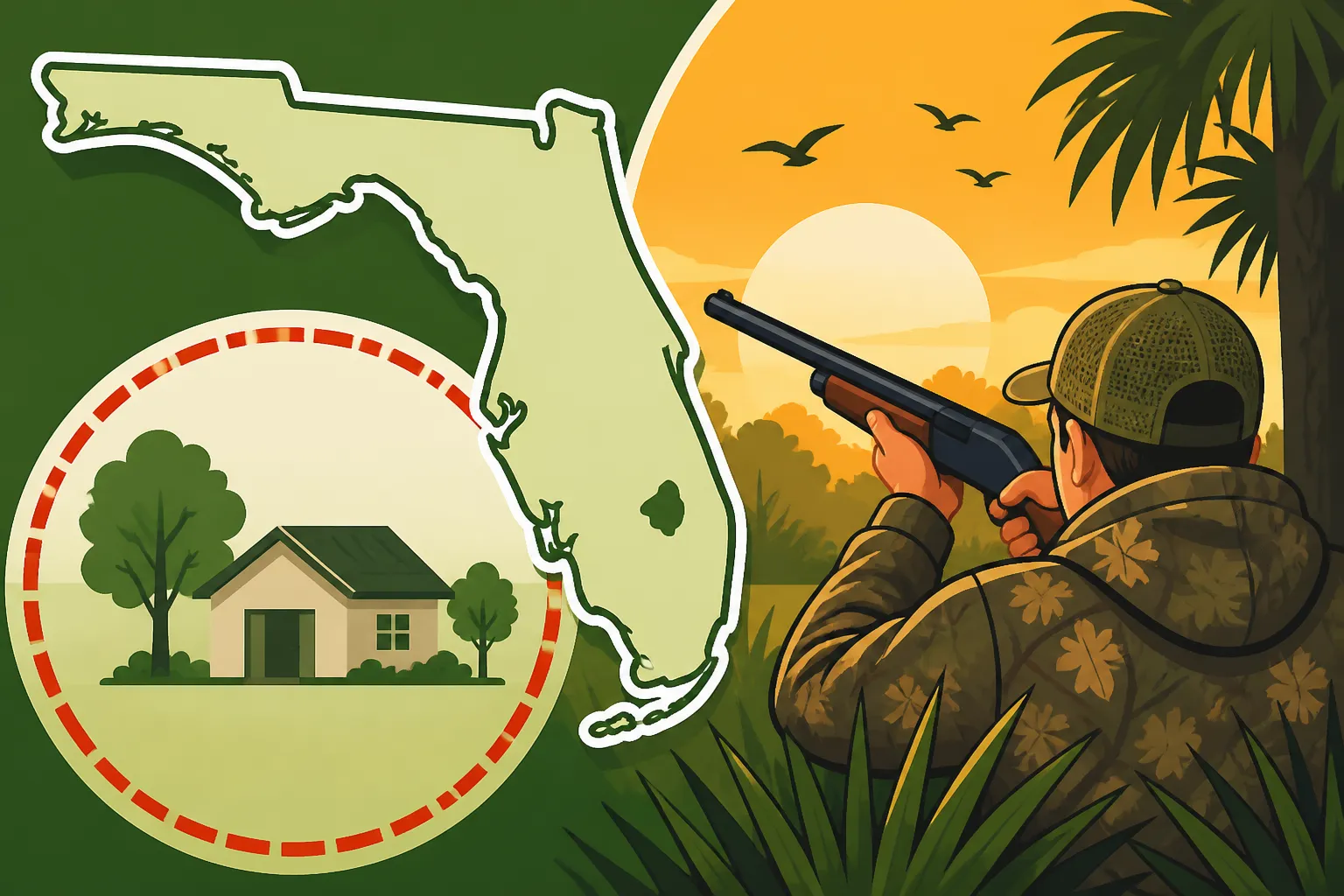
Florida Firearms Discharge Setback Rules
The sheer confusion and anxiety around exactly where you can legally discharge a firearm in Florida, whether for hunting or target practice, can be a massive headache for even seasoned outdoors enthusiasts. With our beautiful state seeing more and more development, what once felt like wide-open spaces now often abut homes or public thoroughfares, making it absolutely crucial to understand the rules. This guide will meticulously break down Florida's firearms discharge setback rules, ensuring you understand the critical distances and situations to stay legal, safe, and respectful of your neighbors and fellow citizens.
Understanding the Core Setback Rules for Discharging a Firearm
Let's cut right to the chase: Florida has clear statutes designed to prevent accidents, property damage, and public nuisance caused by the discharge of firearms. These aren't just arbitrary numbers; they're in place for the safety of everyone, whether they're a fellow hunter, a homeowner, or someone simply enjoying a walk. The spirit of these laws is about responsible gun ownership and usage, ensuring that while we enjoy our Second Amendment rights and the tradition of hunting, we do so without endangering others. Ignorance of these laws is absolutely no excuse, and the consequences for violating them can be severe.
Residential Dwellings and Occupied Buildings
This is perhaps the most critical rule to commit to memory, especially for anyone hunting or shooting on private land that might be near other properties. Florida Statute 790.15 states that it is generally unlawful to discharge a firearm over or on any public road or highway, or to discharge a firearm in any residential area. More specifically, when it comes to structures, you cannot lawfully discharge a firearm on any property where the projectile goes over or onto any public or private road or street, or into any dwelling, building, or structure located on an adjacent property.
The commonly cited "150-yard rule" comes into play with the general understanding of what constitutes a safe and reasonable distance from occupied structures. While the statute doesn't explicitly state "150 yards from a dwelling" as a blanket prohibition, it very clearly prohibits shooting into any dwelling or structure on adjacent property. This means you must have an adequate and safe backstop, and your projectile must remain entirely on your property or the property you have permission to hunt. If you're hunting on a private tract, you need to be acutely aware of every single home, barn, shed, church, or schoolhouse within range of your firearm. You might be deep in a palmetto flat, feeling like you're miles from civilization, but that distant pole barn with a light on or a faint hum of machinery could very well be an "occupied building" where people are working. If your bullet could conceivably travel that far and hit it, you're looking at a serious problem. Always err on the side of caution.
Public Roads and Rights-of-Way
Another area where hunters and recreational shooters often get into trouble is around roads. It's incredibly tempting to hop out of the truck and take a shot at a hog or target you see on the edge of a field, but this can have dire consequences. Florida law prohibits discharging a firearm over or on any public road or highway. This isn't just about paved interstates; it includes county roads, state roads, and even unpaved dirt roads on public lands like many of our Wildlife Management Areas (WMAs) or National Forests.
Beyond just not shooting on the road, you absolutely cannot shoot across a public road or highway. Your projectile must stay clear of these travel corridors. For safety and legal compliance, the general rule of thumb is to maintain a significant buffer. While hunting on a WMA, for example, even if a deer crosses a dirt road, shooting at it if it means your bullet will travel over or down that road is a serious infraction. The projectile could ricochet, strike a passing vehicle, or injure another person. When you're Hunting a Cypress Head at Last Light, ensure you've got a clear, safe line of fire that doesn't intersect with any public access routes. Always consider the potential trajectory and how far a bullet can travel safely, even when hunting with appropriate firearms for deer.
Specific Scenarios and Common Misconceptions
The rules aren't always black and white, and context matters. What's permissible in one situation might be a serious violation in another. It's easy to fall prey to common misunderstandings, especially if you're new to hunting in Florida or accustomed to rules in other states. Always remember that Florida's diverse landscape, from sprawling ranches to suburban fringes, means you'll encounter a wide range of specific local rules.
Hunting on Private Land Versus Public Land
The rules for discharging a firearm don't magically change depending on whether you're on private or public land, but their application and supplementary regulations can vary significantly.
On private land, while you generally have more freedom to manage your property, the core setback rules regarding occupied dwellings and public roads on adjacent properties still apply. Just because you own 20 acres doesn't give you license to shoot towards your neighbor's house, even if it's 100 yards away. You need to ensure your bullets are contained within your property boundaries or the property you have explicit permission to hunt. A crucial part of responsible private land hunting is securing permission not just for access, but also understanding the boundaries and potential hazards. This often involves discussions about Florida Trespass and Permission Law and even ensuring your shots have a safe backdrop. Many landowners will use tools like GoHunt to meticulously map their property lines, identify neighboring structures, and plan stand locations to ensure all shots are taken safely away from boundaries and homes. This mapping foresight is invaluable.
On public land, such as our numerous Florida Wildlife Management Areas or National Forests, the state's setback rules are the bare minimum. Each WMA or National Forest often has its own set of specific rules and regulations that can be even more restrictive. For instance, some WMAs might have areas designated as "still hunt only" where certain firearm types are prohibited, or specific safety zones around campgrounds or trailheads. You might find areas with stricter rules about shooting across or along forest roads. It is imperative that before you even step foot on a WMA or National Forest, you download and thoroughly read the specific regulations for that area. The FWC website is your best friend here, providing detailed brochures for each WMA. Ignoring these can lead to fines, loss of permits, and even a permanent ban from public hunting lands. When you're Scouting Florida Public Land Before Season, don't just look for game sign; pay close attention to access points, roads, and any posted signs indicating special restrictions. Using the FWC Public Hunting Map in conjunction with your actual scouting helps immensely.
Recreational Shooting and Target Practice
This is where the waters often get muddier, leading to more calls to local law enforcement than legitimate hunting activities. While Florida has broad protections for firearm ownership, discharging a firearm for casual target practice in your backyard or an open field often faces much stricter scrutiny than hunting.
Many counties and municipalities in Florida have adopted local ordinances that further restrict the discharge of firearms, especially in suburban and even some rural areas. What might be legal under state statute could still be illegal under a city or county ordinance. For example, some counties prohibit any discharge of a firearm within a certain distance (e.g., 200 or 300 yards) of any occupied building, regardless of whether the projectile crosses property lines. This is where it gets tricky, because state law might outline a general framework, but your local county commissioners could have an entirely different idea based on local population density and public safety concerns.
For most recreational shooting, designated public or private shooting ranges are not just the safest option but often the only legal option. These facilities are designed with proper backstops, safety officers, and clear rules to ensure all rounds are safely contained. If you're considering shooting on private land for practice, you absolutely must verify local ordinances in addition to state statutes. Always ensure you have a robust and safe backstop that can contain all projectiles, and consider the noise implications for your neighbors. Remember, while you might not be breaking a state setback rule by shooting safely on your property, a noise complaint to the local sheriff could still bring unwanted attention.
Scenario General State Setback Distance Notes & Specifics
Okay, let's talk about something that can really tie you up in knots here in Florida: knowing exactly where you can legally pull the trigger on a firearm. It feels like every time you blink, another subdivision pops up, or a quiet dirt road becomes a busy thoroughfare. For hunters and recreational shooters, this can create a real sense of anxiety – you want to enjoy your sport, but you absolutely must stay on the right side of the law and, more importantly, stay safe. This guide is going to break down Florida's firearms discharge setback rules, cutting through the confusion so you can hunt and shoot with confidence, knowing you're following every regulation to the letter.
Understanding the Foundation of Florida's Firearms Discharge Rules
At its heart, Florida's legislation concerning firearm discharge is built on a cornerstone of public safety. It's not just about preventing accidents, which, sadly, can happen when rules are ignored. It's also about preventing property damage, minimizing public nuisance, and ensuring that everyone in our diverse state, whether they're participating in outdoor sports or simply living their lives, can feel secure. These rules apply universally, whether you're hunting whitetails in the Panhandle, stalking hogs in Central Florida, or simply heading out for some target practice. Ignoring them, even accidentally, isn't just a minor oversight; it can carry serious legal ramifications. It's crucial to understand that these aren't just suggestions; they are the law, and being unaware of them won't stand up as a defense if an incident occurs.
Residential Dwellings and Occupied Buildings
This is arguably the most vital piece of information for any Floridian who plans to discharge a firearm. Florida Statute 790.15 makes it unequivocally clear that it is unlawful to discharge a firearm over or onto any public road or highway, or to discharge a firearm in any residential area. Crucially, the law also prohibits discharging a firearm on any property where the projectile goes over or onto any public or private road or street, or into any dwelling, building, or structure located on an adjacent property.
Now, you often hear talk about the "150-yard rule," and while the statute doesn't always spell out specific yardages from a dwelling as a blanket prohibition, the spirit of the law and common sense dictate a safe distance. The core principle is that your projectile must remain entirely on the property where you have legal permission to shoot, and it absolutely cannot enter any adjacent dwelling, building, or occupied structure. Imagine you're hunting on a private tract of land near Ocala. You've got permission, and the land feels vast. But what about that distant barn where the ranch hands store equipment, or the small guesthouse across the property line? Even if it feels far away, if people could be in it, it's considered an "occupied building" for the purposes of this statute. If your bullet, after traveling its full range, could strike that building, you're in violation. This isn't just about direct hits; ricochets are a real concern, especially in dense Florida scrub or when shooting at low angles. Always ensure you have a natural, bullet-stopping backstop – a berm, a thick tree line, or rising ground – that will safely contain your projectile on authorized property.
Public Roads, Highways, and Rights-of-Way
Another common pitfall for shooters in Florida involves roads and their associated rights-of-way. It’s incredibly tempting when you’re driving down a rural road and spot a feral hog on the roadside to think about pulling over for a quick shot. Resist that urge! Florida law explicitly prohibits discharging a firearm over or on any public road or highway. This isn't just limited to busy paved highways; it extends to county roads, state roads, and even the myriad of unpaved dirt roads found throughout Florida's vast Public Hunting Land in Florida, including many Wildlife Management Areas (WMAs) and National Forests.
Furthermore, it is strictly forbidden to shoot across a public road or highway. Your bullet's trajectory must be entirely clear of these areas. This means if you're hunting a particular block of woods and a deer or hog steps out onto a forest road, or even just approaches it, you cannot take that shot if it means your projectile would travel over or down that road. The risk of striking a passing vehicle, another hunter, a hiker, or even an animal on the road itself is too great. Always assume a road is "hot" with potential traffic, even if you haven't seen a vehicle in an hour. When assessing a shot, envision the bullet's entire path and its ultimate resting place. If any part of that path intersects a public road, no matter how remote, it's a no-go. Safety means always knowing your target and what lies beyond it.
Navigating Specific Scenarios and Common Misconceptions
The landscape of Florida, both natural and legal, presents a variety of situations where these rules need careful interpretation. It's easy to assume things based on past experiences in other states or even anecdotal advice, but Florida has its own specific nuances that can trip you up. A significant part of responsible hunting and shooting here is moving beyond assumptions and digging into the details.
Hunting on Private Land Versus Public Land
The fundamental rules about firearm discharge remain consistent across Florida, but how they apply and what additional regulations you might encounter can vary significantly between private and public lands.
On private land, while you often have more control over your immediate surroundings, the core setback rules regarding adjacent occupied dwellings and public roads are still very much in effect. Simply owning the land or having permission to hunt on it doesn't give you immunity from these safety statutes. You must ensure that every shot you take is contained safely within the property boundaries you have permission to use. This means a thorough understanding of your property lines and the surrounding properties. Many savvy hunters and landowners use advanced mapping applications like GoHunt to precisely delineate property boundaries, identify nearby structures, and plan safe shooting lanes and stand locations well in advance. This tool can be invaluable for Reading Aerial Photos for Florida Deer and understanding the full layout of your hunting parcel, helping you to pinpoint potential risks before you even step afield.
Conversely, on public land, such as Florida's extensive network of Florida Wildlife Management Areas or National Forests, the state's setback rules serve as a baseline. However, each individual WMA or National Forest typically comes with its own unique set of specific regulations that can be considerably more restrictive. For instance, some WMAs might have designated "archery-only" zones, specific distances you must be from campgrounds or trailheads, or different rules for different types of firearms. It is absolutely essential to obtain and thoroughly review the specific WMA regulations for the area you intend to hunt before your trip. These detailed guides are available on the FWC website and are often the difference between a successful, legal hunt and a costly citation. When you're performing your Scouting Florida Public Land Before Season, don't just look for game sign; meticulously check for boundary markers, road classifications, and any posted signs detailing specific local rules.
Recreational Shooting and Target Practice
This is an area where the lines often blur, leading to more complaints and legal issues than traditional hunting. While Florida generally has strong protections for gun owners, the casual discharge of firearms for target practice in a backyard or an open field is frequently subject to much stricter oversight than many realize.
Beyond state law, many counties and municipalities in Florida have enacted local ordinances that impose additional restrictions on firearm discharge, especially in more populated or developing areas. This means what might technically be permissible under state statute could still be illegal under a local city or county law. For example, your county might have an ordinance prohibiting the discharge of any firearm within 200 yards of an occupied dwelling, regardless of whether the projectile technically crosses a property line. This is where it gets incredibly tricky, because the state provides a general framework, but local governments have the authority to add their own layers of regulation based on population density, public safety concerns, and quality of life issues for residents. Always check with your local sheriff's office or county administration for specific ordinances in your area.
For the vast majority of recreational shooting, the safest, most legal, and often most practical option is to use a designated public or private shooting range. These facilities are specifically designed with appropriate backstops, safety protocols, and often range safety officers to ensure all projectiles are safely contained. If you're determined to do target practice on private land, you must go above and beyond to ensure you have an extremely robust, impenetrable backstop capable of containing all rounds, and meticulously verify both state and local ordinances. Furthermore, consider the noise impact on your neighbors; while not a direct discharge violation, persistent noise complaints can lead to unwelcome attention from local authorities.
Avoiding Penalties and Embracing Safe Practices
The consequences of violating Florida's firearms discharge setback rules are far from trivial. They can range from significant fines and the loss of hunting privileges to severe criminal charges, especially if property damage or, tragically, injury occurs. Understanding these potential repercussions is a strong motivator for adherence, but even more important is embracing a mindset of unwavering safety.
Penalties for Violating Discharge Rules
The legal penalties for unlawfully discharging a firearm in Florida depend heavily on the specifics of the violation. If you discharge a firearm in a residential area or across a public road without causing injury or significant damage, you could face misdemeanor charges, resulting in substantial fines, potential probation, and the temporary suspension of your hunting license. However, if your actions lead to property damage or, even worse, injure someone, the charges can escalate dramatically to felony offenses. These can carry severe penalties, including lengthy prison sentences, permanent loss of firearm rights, and astronomical civil liability lawsuits. You can find more details on general hunting infractions in our guide on Florida Wildlife Violation Penalties.
Beyond the direct legal consequences, there are significant personal and community repercussions. An incident can tarnish your reputation, instill fear in neighbors, and, regrettably, contribute to a negative public perception of hunters and responsible gun owners. Every time a careless act makes headlines, it puts the entire hunting community under a microscope, making it harder for all of us to enjoy our traditions. We all share the responsibility to represent our sport ethically and safely.
Utilizing Technology and Best Practices for Clarity
In today's world, there's really no excuse for not knowing your surroundings and the specific rules that apply. Modern technology offers incredible tools to help you stay compliant and safe.
First and foremost, digital mapping applications are your best friends. Platforms like GoHunt (or even Google Maps, onX Hunt, etc.) allow you to pinpoint your exact location, view property lines, identify adjacent dwellings, and trace the routes of public roads. Before you head to your stand or set up a shooting lane, take the time to virtually scout the area. Identify any potential hazards, confirm distances, and plan your shot angles accordingly. This is a critical step, similar to carefully Reading Aerial Photos for Florida Deer to find good hunting spots.
Second, make the Florida Fish and Wildlife Conservation Commission (FWC) website your primary source of information. It's constantly updated with the latest regulations, WMA-specific rules, and any emergency closures. Don't rely on outdated pamphlets or hearsay. For public land hunting, always download and review the current year's WMA brochure for your specific hunting area. Remember that Florida Hunter Education Requirements exist for a reason – they instill a foundational knowledge of safety and ethics that goes hand-in-hand with understanding these specific discharge rules.
Finally, and perhaps most critically, always practice situational awareness and adhere to the fundamental rules of firearm safety:
- Treat every firearm as if it's loaded.
- Always point the muzzle in a safe direction.
- Keep your finger off the trigger until you're ready to shoot.
- Be sure of your target and what is beyond it.
This last rule is paramount when considering setback distances. A bullet doesn't stop just because it hits your target; it can travel significant distances, especially high-powered rifle rounds. Always know your backdrop. Is it a dense thicket that will contain a bullet? Or is it open pasture that could allow a projectile to travel for a mile or more, potentially impacting a distant dwelling or public road? Your shot selection should always prioritize safety above all else, ensuring that if you miss or the bullet passes through, no one and nothing beyond your target is endangered.
Disclaimer
Please be aware that hunting and firearm regulations, including discharge setback rules, are subject to change. While this guide provides comprehensive information based on current Florida statutes and common interpretations, it is your responsibility to verify all regulations with the Florida Fish and Wildlife Conservation Commission (FWC) and local authorities before engaging in any hunting or shooting activities. This content is for informational purposes only and should not be considered legal advice.