Florida Deer Tag Transfer Rules
It’s a scenario many of us have faced: you’re heading out for a hunt with a buddy, or maybe your child wants to use one of your deer tags because they didn't get one, and the thought crosses your mind – "Can I just transfer one of my extra deer tags to them?" This question about Florida deer tag transfer rules comes up surprisingly often, driven by good intentions but hitting a brick wall of regulations. Let's dig into the nitty-gritty of how deer tags work in the Sunshine State and what you absolutely need to know to stay on the right side of the law.
Understanding Florida's Deer Tag System
Florida's deer tag system might seem a little complex at first glance, especially if you're used to systems in other states. But once you understand the core principles, it makes a lot of sense from a wildlife management perspective. It's all about ensuring sustainable harvests and collecting vital data.
Why Deer Tags Are Issued in Florida
At its heart, the issuance of deer tags by the Florida Fish and Wildlife Conservation Commission (FWC) serves a few critical purposes. First and foremost, it's a vital tool for wildlife conservation. By regulating the number of deer hunters can harvest, the FWC can manage deer populations to ensure their long-term health and stability. Without tags, it would be much harder to monitor harvest rates and prevent overhunting in certain areas. Think of it as a finely tuned instrument for keeping the ecosystem balanced.
Beyond conservation, tags are crucial for data collection. Every time a hunter reports a harvest, that information – location, date, sex of the deer – feeds into a larger database. This data helps biologists understand herd health, reproductive rates, and population trends. For instance, if harvest numbers suddenly dip in a particular zone, it might prompt further investigation into habitat changes or disease. This continuous flow of information, often accessible through tools like GoHunt's state-specific regulations database, allows the FWC to make informed decisions about future seasons and bag limits, truly making us partners in wildlife management.
Different Types of Florida Deer Tags
Florida offers a variety of deer tags, each serving a specific purpose within the overall management framework. Understanding these different tags is key to navigating the hunting seasons.
The most common are the general use deer tags. These come with your regular hunting license package and typically allow for the harvest of antlered deer. The number of these tags you receive depends on whether you're a resident or non-resident, and they're valid across the appropriate deer management zones during their respective seasons. These are your bread-and-butter tags for pursuing that Florida buck you've been scouting. Remember, these tags are specific to the hunter they are issued to.
Then you have bonus antlerless deer tags, which are an optional purchase for hunters who want to harvest antlerless deer during specified periods. These tags are crucial for managing doe populations, especially in areas where herd numbers are high or buck-to-doe ratios need balancing. These are often zone-specific, so you'll need to check the regulations for your particular hunting area, as highlighted in the guide, Why Florida's Deer Seasons Vary So Much by Zone. The availability and number of these tags can change from year to year based on FWC surveys and management goals, so it’s always wise to consult the latest regulations before planning your hunts.
Additionally, there are special Deer Management Unit (DMU) antlerless permits. These are a bit more restrictive, issued for specific areas to meet localized management objectives. Hunters typically apply for these permits through a lottery system, and if drawn, they receive a permit that must be used within a designated DMU. These are highly specific and emphasize the FWC's granular approach to managing deer at a local level, reflecting the diverse habitats and deer densities across the state, from the palmetto flatwoods to the Panhandle pines.
The Rules of Transferring Deer Tags in Florida
Now for the main event: can you transfer your Florida deer tag to another hunter? This is where many well-intentioned hunters run into the strict legal framework designed to prevent misuse and ensure accountability.
Can You Transfer a Deer Tag to Another Hunter?
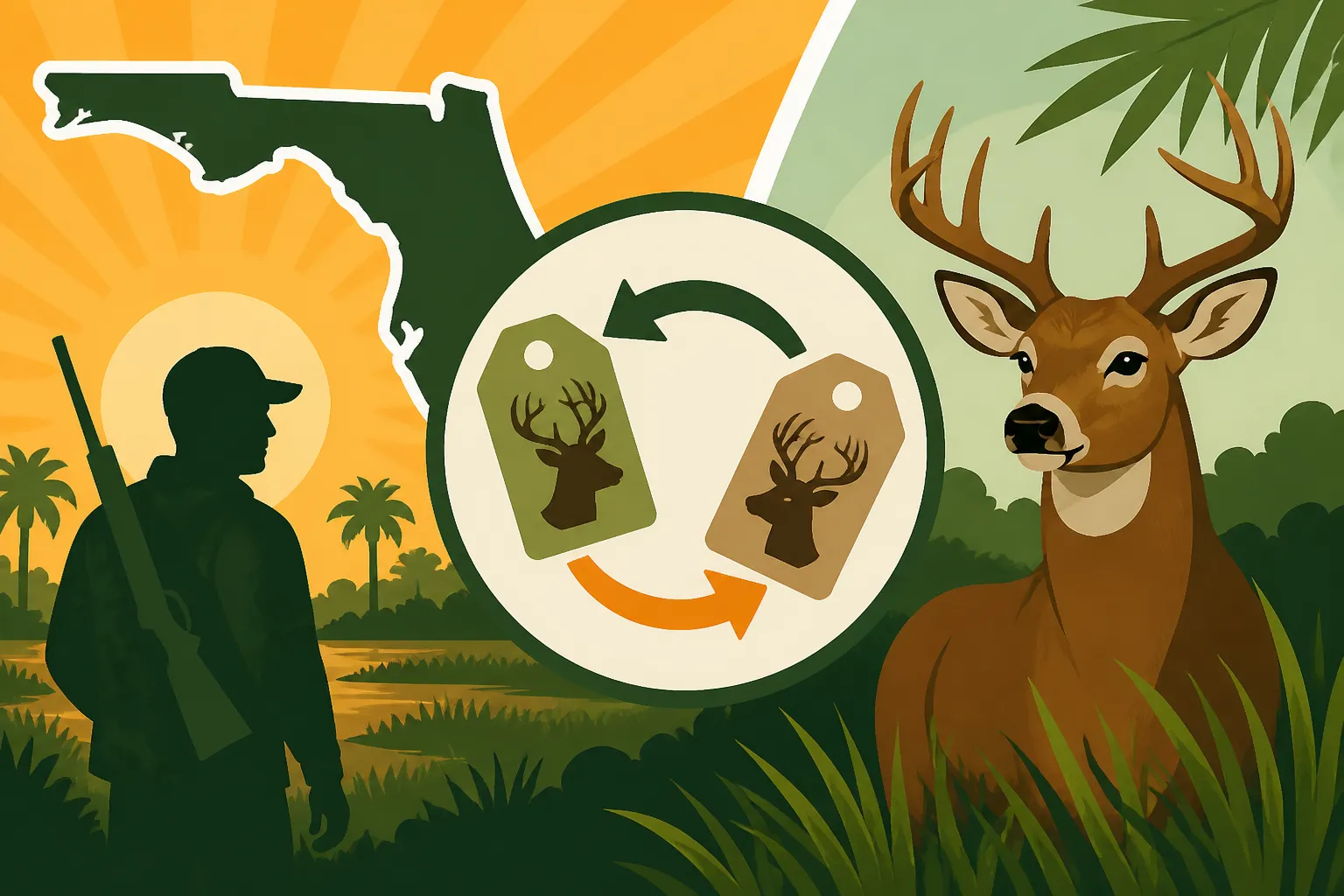
Let's get straight to it: No, you cannot transfer a Florida deer tag to another hunter. This is a fundamental rule that the FWC enforces rigorously. Each deer tag is issued specifically to the individual hunter whose name appears on the license. It is tied to their unique hunter identification number and is part of their personal bag limit and harvest record. You might have an extra tag left at the end of the season, and your friend might have filled all theirs, but that doesn't mean you can just hand one over.
The reasoning behind this is quite clear. If tags were transferable, it would open the door to all sorts of abuses, making it incredibly difficult for the FWC to accurately monitor harvest data and enforce bag limits. Imagine a scenario where one individual buys dozens of licenses and then sells or gives away their tags to other hunters. This would completely undermine the state's conservation efforts and skew all the valuable data collected. The system is designed to track individual hunter activity and ensure personal accountability for each animal harvested. So, while it might feel ungenerous to hold onto a tag you won't use when a buddy needs one, it's a necessary regulation for the health of Florida's deer herd, as you'd learn when studying topics like Florida Deer Herd Size.
This rule applies universally across all types of deer tags—whether it's a general antlered tag, a bonus antlerless tag, or a special DMU permit. Your tags are your tags, and they are not meant to be shared, loaned, or sold to anyone else. Trying to bypass this rule, even with the best intentions, can lead to serious legal repercussions.
Specific Scenarios: Youth, Mentored, and Group Hunts
While the general rule against transferring tags is absolute, there are specific scenarios involving youth, mentored, and group hunts that often raise questions and deserve clarification. It's easy to get confused, so let's walk through these common situations.
For youth hunters, the rules are designed to encourage participation while still maintaining accountability. If a youth hunter is hunting under a youth license or a mentored youth exemption, any deer they harvest must be tagged with their own tags. A parent or guardian, even if they are present and mentoring, cannot use one of their adult tags for a deer harvested by a youth hunter, nor can they give their tags to the youth. The youth must possess their own valid hunting license and deer tags, or hunt under the specific provisions of a Florida Mentored Youth Hunting Rules permit, which allows an unlicensed youth (under 16) to hunt under the direct supervision of a licensed adult. In this mentored scenario, if the youth harvests a deer, it must be tagged with the adult mentor's appropriate deer tag. This is a critical distinction and the only true instance where a tag is used by a different individual (the youth) but officially tied to the mentor's license. The key here is direct supervision and adherence to all mentored youth program requirements.
When it comes to group hunts or deer drives, which are common in some parts of Florida, particularly during gun season, the rule remains consistent: each hunter is responsible for tagging their own kill. If multiple hunters are involved in a deer drive, like those described in Deer Drives With Three or Four Hunters, and a deer is harvested, the individual who made the kill is the one whose tag must be affixed to the animal. There’s no pooling of tags or assigning a tag to the person who "flushed" the deer versus the person who "shot" it. The FWC defines the person who successfully takes the animal as the one responsible for tagging it. This prevents confusion and ensures each harvest is accurately attributed.
So, while you might be hunting together, your tags are still distinctly yours. You can’t lend a tag to a fellow hunter who has already filled their limit, even if they're part of your hunting party. The integrity of the tag system relies on each hunter managing their own bag limit and tags. Using resources like the GoHunt app to keep track of your tags and bag limits in real-time can be incredibly helpful in avoiding accidental violations during these dynamic hunts.
Consequences of Improper Tag Transfer
Attempting to bypass Florida's deer tag rules, even if you believe you have a good reason, can lead to significant legal trouble. The FWC takes these regulations seriously as they are foundational to ethical hunting and wildlife management.
What Constitutes an Illegal Transfer
An illegal transfer of a deer tag in Florida is essentially any instance where a tag issued to one individual is used to tag a deer harvested by another individual, outside of the specific mentored youth exception. Let's break down some common scenarios that would be considered illegal:
- Loaning a tag: Giving one of your unused deer tags to a friend or family member who has already filled their own tags, or who doesn't have any tags, to use on a deer they harvest. This is one of the most common mistakes and is strictly prohibited.
- Selling a tag: Charging money for one of your unused tags so another hunter can use it. This is a more severe offense, involving commercial activity with a state-issued permit.
- "Gift-giving" a tag: Even if no money exchanges hands, simply handing over an extra tag to someone else who harvests a deer and uses your tag is illegal. The intent doesn't matter; the act of one person's tag being used for another person's harvest is the violation.
- Improper tagging by a non-harvesting individual: If you harvest a deer, and someone else (who didn't harvest the deer) uses their tag to tag your deer because you're out of tags, that's also an illegal transfer. The person who harvests the animal is the one legally obligated to tag it with their own valid tag.
The rule is clear: the person who physically harvests the deer must be the one to affix their own, valid, unused deer tag to the animal. Any deviation from this, save for the specific mentored youth program where the mentor's tag is used for the youth's kill under direct supervision, constitutes an illegal transfer.
Penalties for Violations
The penalties for violating Florida's deer tag transfer rules can be quite severe, ranging from hefty fines to the loss of hunting privileges. It's not just a slap on the wrist; these are serious infractions.
Typically, an illegal transfer of a deer tag falls under poaching or a wildlife violation. The FWC has the authority to issue citations that carry significant monetary penalties. These fines can easily run into hundreds or even thousands of dollars, depending on the specifics of the violation, whether it's a first offense, and if other illegal activities (like harvesting over the bag limit) are involved. Beyond the financial hit, a conviction for an illegal tag transfer can result in the revocation of your hunting license for a specified period, often several years. This means you would be legally prohibited from hunting any game in Florida during that time, and often, other states participate in license revocation agreements, meaning you could lose privileges across state lines.
In more egregious cases, or for repeat offenders, charges could escalate to misdemeanors, or even felonies if commercial activity or significant wildlife theft is involved. This could lead to court appearances, legal fees, and even potential jail time. For a hunter who values their time afield and their reputation, these consequences are a stark reminder of the importance of adhering to all regulations. It's far better to understand and respect the rules than to face the fallout of an honest mistake or, worse, a deliberate disregard for the law.
Best Practices for Tagging and Reporting
Staying compliant with Florida's deer hunting regulations is straightforward if you know the proper steps for tagging and reporting your harvest. It's all about attention to detail and respecting the process.
How to Properly Tag Your Harvest
Once you’ve successfully harvested a deer in Florida, the clock starts ticking. Proper tagging isn't just a suggestion; it's a legal requirement that must be completed before you move the deer from the point of kill.
First, immediately secure your tag to the deer. Your deer tags are typically tear-off sections from your license or printed permits. Make sure the tag is valid for the species (deer), the sex (antlered or antlerless), and the season. You'll need to completely fill out the tag in indelible ink, noting the date of harvest, the county, and the specific Wildlife Management Area (WMA) or land type if applicable. Then, securely attach the tag to the deer in a conspicuous manner. Many hunters attach it to an antler or through the hock, ensuring it won't accidentally fall off during transport. This ensures that anyone, including law enforcement or other hunters, can clearly see that the deer has been legally tagged, which is especially important if you're Dragging a Deer Out of a Palmetto Head or moving it through public access points.
It's absolutely vital that the tag remains attached to the deer until it reaches its final destination for processing, or until it's prepared for consumption. Don't remove it prematurely. This tag is the legal proof of your harvest. Make sure to carry a pen that works in all weather conditions, as a smudged or illegible tag can cause problems. Some hunters even carry a small zip-tie to ensure the tag is extra secure, preventing it from getting snagged or lost during transit in rough terrain.
Florida Deer Reporting Requirements
Beyond tagging, reporting your deer harvest to the FWC is an equally important legal step and contributes directly to the agency's vital data collection efforts. This isn't optional; it's mandatory.
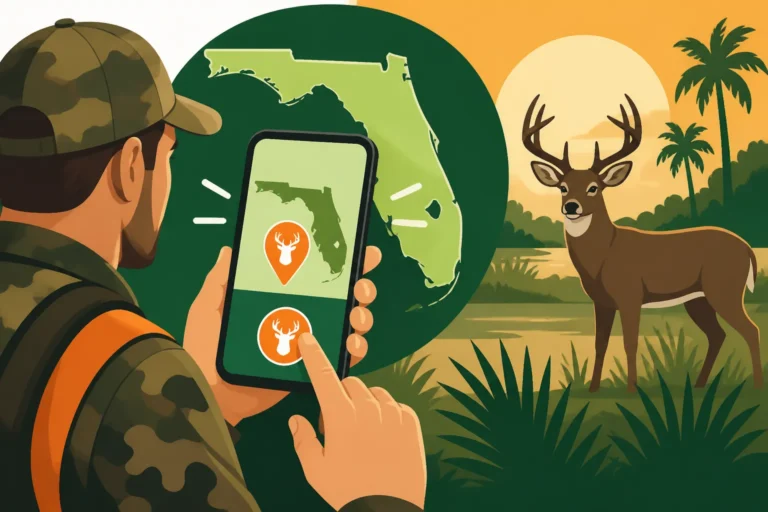
Florida hunters are required to report their deer harvest within 24 hours of taking the deer and prior to final processing or taxidermy. There are a few convenient ways to do this. The easiest method for many is through the FWC's Go Outdoors Florida mobile app. This app allows you to quickly log your harvest details directly from your phone, even from many remote areas where cell service might be spotty (it often stores data and uploads when a signal is available). You can also report your harvest online via the Go Outdoors Florida website, or by calling the FWC's toll-free harvest reporting hotline. Many hunters find the app incredibly user-friendly, offering a quick way to fulfill their obligation, and it integrates well with other tools like GoHunt that help you manage your hunting data.
When reporting, you'll need to provide information such as your customer ID number, the date of harvest, the county and specific WMA (if applicable) where the deer was harvested, and the sex of the deer. For antlered deer, you'll also report the number of antler points. This information is critical for the FWC to gather accurate statistics on deer populations, herd health, and overall harvest trends across the state, ensuring that future hunting regulations are based on sound scientific data. Neglecting to report your harvest is a violation of Florida law, so make it a priority after every successful hunt.
Florida Deer Tagging and Reporting Summary
To help clarify the core rules, here’s a quick summary of the do's and don'ts when it comes to Florida deer tags.
| Action | Legality in Florida | Notes |
|---|---|---|
| Transferring your deer tag to another adult hunter | Illegal | Each tag is specific to the individual hunter and their license. Sharing, loaning, or selling tags to other adults is a serious violation. |
| Mentored Youth Hunting (youth under 16, unlicensed) | Legal, with specific rules | If an unlicensed youth (under 16) harvests a deer under the direct supervision of a licensed adult mentor, the mentor must use one of their own valid deer tags. The youth does not need their own tags in this specific scenario. The guide, Florida Mentored Youth Hunting Rules, covers this in detail. |
| Youth Hunter with own license/tags | Legal | If a youth hunter (even if mentored) has their own valid hunting license and deer tags, any deer they harvest must be tagged with their own tags. The adult mentor cannot use their tag for the youth's kill in this instance. |
| Immediately tagging a harvested deer | Mandatory | The hunter who harvests the deer must immediately fill out and securely attach their own valid tag to the deer before moving it from the kill site. Failure to do so is a violation. |
| Reporting a harvested deer | Mandatory, within 24 hours | All deer harvests must be reported to the FWC within 24 hours of taking the deer, and before final processing or taxidermy. This can be done via the Go Outdoors Florida app, website, or phone line. Information on Reporting a Deer Through Florida's App is available for convenience. |
| Carrying proof of license and tags | Mandatory | Hunters must carry proof of their valid hunting license and deer tags (physical copy or on the FWC app) while afield. For more details on this, see Carrying Proof of License on Your Phone. |
| Exceeding personal bag limits | Illegal | You cannot harvest more deer than your individual tag limit allows, even if another hunter has unused tags. This is often covered in discussions about Florida Buck Bag Limit and Florida Bonus Antlerless Tag Purchase Rules. |
| Using a tag from a different zone/season | Illegal | Ensure the tag you use is valid for the specific deer management zone and season in which you harvested the deer. Regulations vary greatly by zone, as explored in articles like Which Zone Covers Your Florida County and Why Florida's Deer Seasons Vary So Much by Zone. |
Disclaimer
Please remember that hunting regulations can change. While I strive to provide the most current and accurate information, it is always your responsibility as a hunter to consult the official Florida Fish and Wildlife Conservation Commission (FWC) regulations directly before heading afield. This guide is for informational purposes only and should not be considered legal advice.