Deer Drives With Three or Four Hunters
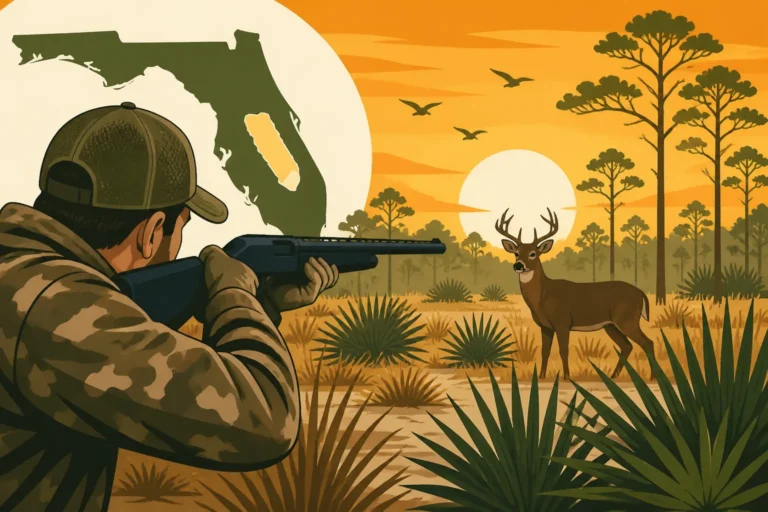
Trying to still-hunt Florida's incredibly dense palmetto thickets and oak hammocks can feel like navigating a maze blindfolded, especially when deer seem to vanish into thin air just steps from where you saw them. For many of us, getting deer to move on their own terms, particularly on public land or smaller private tracts, is a constant struggle. This guide will walk you through how a small, coordinated deer drive with just three or four hunters can be your most effective strategy for coaxing those elusive Florida whitetails out of their impenetrable cover and into your shooting lane.
The Frustration of Still-Hunting Dense Florida Cover
Let's be real, Florida isn't the Midwest with its wide-open cornfields or even the piney woods of Alabama where you can see for hundreds of yards. Here, we're talking about palmetto heads so dense you can barely crawl through them, cypress swamps that swallow light, and oak hammocks with undergrowth thick enough to hide an elephant, let alone a mature buck. You can spend hours meticulously still-hunting, taking three steps and pausing for five minutes, only to have a deer burst from cover 20 yards away, giving you zero time for a shot. It's enough to make you pull your hair out! This isn't a knock on still-hunting; it's a fantastic skill, but sometimes, the terrain dictates a different approach. When bucks bed down in these natural fortresses, they simply won't move unless pushed. That's where a well-executed small deer drive shines.
Planning Your Small-Scale Deer Drive for Success
A successful deer drive, even with just a few people, isn't about aimless wandering or yelling. It's a calculated maneuver that requires scouting, clear communication, and understanding deer behavior in Florida's unique landscape. Think of yourselves as a finely tuned machine, not a disorganized rabble.
Scouting Key Escape Routes and Bedding Areas
Before you even step foot in the woods with a rifle, you need to understand where the deer are bedding and, more importantly, where they want to go when disturbed. This is where your pre-season scouting pays dividends. Florida deer, like deer everywhere, prefer the path of least resistance when escaping pressure, but they're also masters of using the densest cover for security.
Start by looking at aerial maps. Tools like GoHunt can be invaluable here, helping you identify isolated palmetto islands, overgrown clear-cuts, or pockets of thick brush within larger, more open areas. These are prime bedding spots. Look for any natural funnels or pinch points that deer would likely use to travel through or escape. This might be a narrow strip of hardwoods between two swamps, a small creek bottom, or even a transition line where thick palmetto meets a slightly more open pine flat. Knowing these spots is critical for setting up your standers. You can find a lot of useful information by Reading Aerial Photos for Florida Deer before you ever set foot on the ground.
Walk the edges of these thick areas. Look for fresh deer sign: rubs, scrapes, tracks, and droppings. A well-used trail leading into a seemingly impenetrable thicket is a huge clue. Pay attention to how the trails exit these areas, especially towards water or larger, more open feeding areas. Remember, Florida bucks often bed in the thickest palmetto, so understanding Where Florida Bucks Bed in Thick Palmetto is crucial for planning where to push them from and where they'll try to escape to. You’re trying to predict their escape routes before they even know they need one.
Assigning Roles to Each Hunter
With only three or four hunters, every role is crucial, and communication is paramount. It’s not just about who walks and who waits; it’s about coordinated movement.
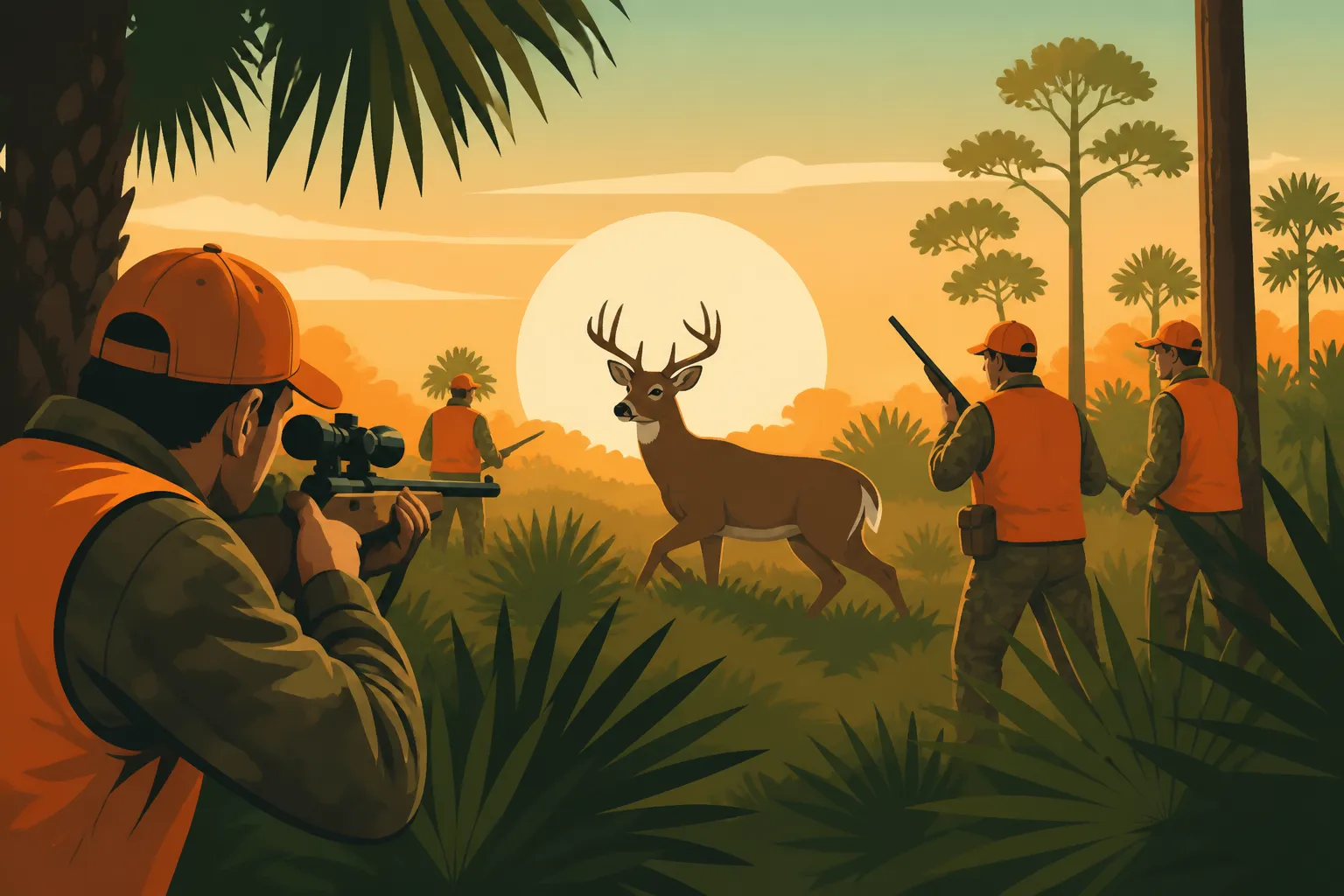
- The Drivers (1-2 people): These are the hunters who will actively push through the cover. Their job is to move slowly, deliberately, and make just enough noise to encourage deer to move, not to bolt in a panic. They need to understand the boundaries of the drive and the direction of the standers. If you have two drivers, they should maintain visual or audible contact to ensure they cover the area effectively without leaving gaps. Their pace should be steady, not a sprint.
- The Standers (2-3 people): These hunters are positioned along the anticipated escape routes. They are the shooters. They must remain absolutely still, silent, and vigilant. Their primary responsibility is safety, ensuring they have clear shooting lanes and a safe backstop. They should be aware of where the drivers are at all times and where other standers are positioned. This often involves standing along a known deer trail, a fenceline, or at a natural bottleneck. For example, knowing how to approach Posting a Drive Around a Palmetto Head can make all the difference in where your standers are positioned to catch deer exiting that dense cover.
- The Blocker (Optional, 1 person if four hunters): If you have four hunters, one stander can sometimes act as a "blocker" or a flanker. This person might be positioned slightly off the main escape route, designed to turn deer back towards the main standers if they try to slip out the side. This role requires excellent judgment and communication.
It's vital that everyone knows their role and the exact boundaries of the drive. Use radios (with earpieces for standers to maintain stealth) to communicate when the drive starts, when drivers are nearing the standers, and any observations.
Executing the Drive Effectively
Once your plan is set, the execution needs to be precise and disciplined. This isn't a chaotic free-for-all; it's a controlled movement designed to funnel deer predictably.
The Driver's Pacing and Noise Level
The effectiveness of a small drive hinges on the driver's ability to create controlled movement. You're not trying to scare deer into a dead run right out of the gate; you're trying to nudge them subtly.
Drivers should move at a slow, deliberate pace, about a third to half the speed of a normal walk. They should make enough noise to be heard, but not so much that it causes deer to panic and blow through the standers without a shot opportunity. This could mean calling out softly every 30-40 yards, occasionally rattling a stick against a tree, or even just the steady rustle of boots through palmettos. The goal is to make the deer feel slightly pressured, leading them to get up and walk or trot away, rather than crash through the brush in a full sprint. If you're driving through a specific feature like a cypress head or a thick scrub, consider how Hunting Florida Cypress Swamp Edges might influence deer movement and adjust your pace accordingly.
It's crucial for drivers to move in a straight line or along a pre-determined sweep. If there are two drivers, they should maintain communication (visual or quiet radio checks) to ensure they stay abreast and don't leave gaps for deer to slip back through. The drive should terminate at a clear landmark, and drivers should know exactly where the standers are positioned, stopping well short of them to maintain a safe zone.
Stander Positioning and Vigilance
The standers are the critical component for a successful shot. Their placement and focus are everything. Standers should get to their positions early, quietly, and set up against a tree or in a natural ambush point. If permitted and practical, Using a Ground Blind on Florida Public Land can offer excellent concealment and an unwavering platform for a shot, particularly in more open areas.
Choose positions that offer clear shooting lanes but also provide good cover. Deer will often try to sneak along the edges of cover, so positioning yourself where you can see down a trail or across a small opening is ideal. For instance, Hunting a Funnel Between Two Palmetto Heads is a classic strategy that works incredibly well for standers, as deer are naturally pushed through these narrow passages.
Once in position, standers must be absolutely still and silent. Any movement or noise will give you away. Scan your shooting lanes constantly, paying close attention to any movement, flick of an ear, or flash of white. Don't just look for an entire deer; look for parts of a deer. Be ready to raise your firearm or bow slowly and deliberately when a deer appears. Remember, in Florida's thick stuff, shot opportunities are often fleeting. Knowing the general direction of the drivers and other standers is crucial, not just for safety but for anticipating where deer might break cover.
Safety Considerations for Small Drives
Safety is non-negotiable in any hunting scenario, but especially during a drive where movement, blind spots, and multiple hunters are involved. This is not the time for assumptions; it's the time for strict adherence to safety protocols.
Clear Communication and High Visibility
Before the drive even begins, everyone must understand the plan, their role, and the safety rules. A pre-hunt briefing should cover:
- Boundaries: Exact start and end points for the drive, and the specific area the drivers will cover.
- Stander Locations: Precise spots where standers will be positioned.
- Anticipated Deer Movement: The direction the deer are expected to move.
- Shooting Lanes: Designated safe shooting zones for each stander.
- Communication Protocol: Use of two-way radios (set to a specific, clear channel) to announce start, progress, and end of the drive. Establish code words or signals for "deer spotted," "driver approaching," or "stop."
- Emergency Plan: What to do if someone gets lost, injured, or if a deer is wounded.
Every hunter, regardless of role, must wear appropriate amounts of blaze orange or blaze pink as required by Florida law. This isn't just a suggestion; it's a legal and ethical imperative. Standers should ensure their blaze orange is clearly visible to other hunters, especially if they are positioned in denser cover. Drivers should also be highly visible to each other and to any potential unforeseen individuals in the area. Remember to check current FWC regulations regarding Florida Blaze Orange Requirements to ensure compliance.
Knowing Your Shooting Lanes and Backstops
This is perhaps the most critical safety rule for standers during a drive. Never, ever take a shot unless you are 100% certain of your target and what lies beyond it. In Florida's often flat terrain, projectiles can travel a long way.
- Establish Clear Lanes: Before the drive starts, each stander must identify their clear shooting lanes. These are areas free of obstructions where they can confidently take a shot without risking hitting trees, brush, or another hunter.
- Identify Your Backstop: Beyond your target, you must have a safe backstop. This could be a hill (rare in much of Florida, but possible in some central ridge areas), a thick palmetto head that will absorb a bullet, or simply a direction where you know no other hunters or property exist. Never shoot at a deer silhouetted on a ridge (if you happen to find one!) or where your bullet could travel indefinitely.
- No Running Shots Towards Drivers: This should be a given, but it bears repeating: under no circumstances should a stander shoot back towards the direction the drivers are coming from. The risk of hitting a driver is too high.
- Identify All Hunters: Before the drive, confirm the location of every single person involved. As the drive progresses, drivers should announce their general location periodically. Standers should keep mental tabs on where everyone is.
If you have any doubt about a shot, do not take it. A missed opportunity is far better than a tragic accident.
Reading the Terrain for Optimal Results
Florida's landscape is diverse, from pine flatwoods to cypress swamps and dense scrub. Understanding how deer use these specific habitats will allow you to tailor your drives for maximum effectiveness.
Identifying Natural Funnels and Bottlenecks
Deer, especially pressured ones, will always look for the easiest and safest path. Your job in a small drive is to anticipate these paths and position your standers accordingly.
- Water Barriers: Swamps, large creeks, or lakes can act as natural funnels. Deer will often skirt the edges of these, or use narrow dry strips of land to cross. Positioning standers at these natural crossings or along the edges can be highly effective. Consider how deer move along a Hunting a Florida Green Swamp Slough.
- Thick-to-Open Transitions: Deer prefer to move from dense cover to more open areas, or from open areas back into dense cover when spooked. A transition line between a palmetto flat and a pine plantation, or between an oak hammock and a food plot, can be a prime spot.
- Man-Made Barriers: Fencelines, old logging roads, or property lines can also act as linear funnels, directing deer movement. Deer will often travel parallel to these, or cross them at specific points. Use these to your advantage.
- Pinch Points: Any area where suitable deer habitat narrows significantly, forcing deer into a smaller area, is a bottleneck. This could be a narrow neck of woods connecting two larger blocks of cover, or a small gap in a long line of impenetrable brush. These are absolute gold mines for stander placement.
Using a mapping app like GoHunt to mark these features during scouting and then transferring them to your hunting partners is a game-changer. It ensures everyone is literally on the same page.
Using Wind and Thermals to Your Advantage
Even in Florida's relatively flat terrain, wind and thermals play a significant role. You might think flat ground means no thermals, but that's not entirely true. Micro-thermals and prevailing winds are still critical.
- Standers Downwind: Always try to position your standers downwind or crosswind of the expected deer path. Deer rely heavily on their sense of smell, and if they catch your scent, the drive is over before it even begins. This is particularly important for your primary shooting lanes.
- Drivers Upwind or Crosswind: The drivers can sometimes use the wind to their advantage, pushing scent ahead of them to gently nudge deer. However, their primary goal is to make noise and provide pressure, so being directly upwind isn't always feasible or necessary for them.
- Morning vs. Evening: In the morning, thermals tend to rise as the air warms, carrying scent upwards. In the evening, as the air cools, thermals drop, carrying scent downwards. While Florida doesn't have drastic elevation changes, understanding these subtle shifts can still give you an edge, especially if you're hunting near water or slightly elevated ridges. For more nuanced insight, consider the article on Wind and Thermals in Flat Florida Terrain. This knowledge helps you predict how scent will travel and how deer might react to it.
By carefully considering wind direction and thermal movement when planning your stander placements, you significantly increase your chances of a deer moving past undetected until it's within shooting range. It's all about minimizing the chances of a deer busting out of the drive before you even get a look at it.
A small, coordinated deer drive with three or four hunters can be an incredibly effective strategy for deer hunting in Florida's challenging terrain. It requires diligent planning, clear communication, and an unwavering commitment to safety, but the rewards—like finally getting a shot at that elusive buck hiding in the impenetrable palmettos—are well worth the effort.
| Role | Primary Responsibility | Key Action Points | Safety Emphasis |
|---|---|---|---|
| Driver | Move deer out of cover towards standers | Maintain slow, steady pace; make consistent, controlled noise | Know stander positions; stop well short; wear blaze orange |
| Stander | Position for a shot at moving deer | Remain silent, still; identify clear shooting lanes and backstops | Absolute target identification; no shots towards drivers; wear blaze orange |
| Blocker | Turn deer back towards main standers (if 4 hunters) | Anticipate deer breaking wide; subtle movements to redirect | Maintain awareness of all hunters; clear communication; wear blaze orange |
Disclaimer
The information provided in this guide is for informational purposes only and is not a substitute for official regulations. Always consult the latest Florida Fish and Wildlife Conservation Commission (FWC) regulations before engaging in any hunting activities. Hunting involves inherent risks, and safety should always be your top priority.