Hunting Florida Central Ridge Sandhills
Hunting Florida’s Central Ridge Sandhills can feel like stepping into a completely different world compared to the state's more famous swamps or dense palmetto thickets. This unique landscape, dominated by longleaf pines and wiregrass, often presents hunters with challenges related to vast, open visibility and soft, shifting sands, making traditional tactics less effective. If you’ve ever found yourself wondering where the deer hide in such sparse cover, or how to move silently across seemingly endless stretches of sand, you’re not alone. This guide aims to demystify hunting in Florida's sandhills, offering practical advice and strategies to help you navigate this distinctive habitat and find success.
Understanding the Central Ridge Sandhills Ecosystem
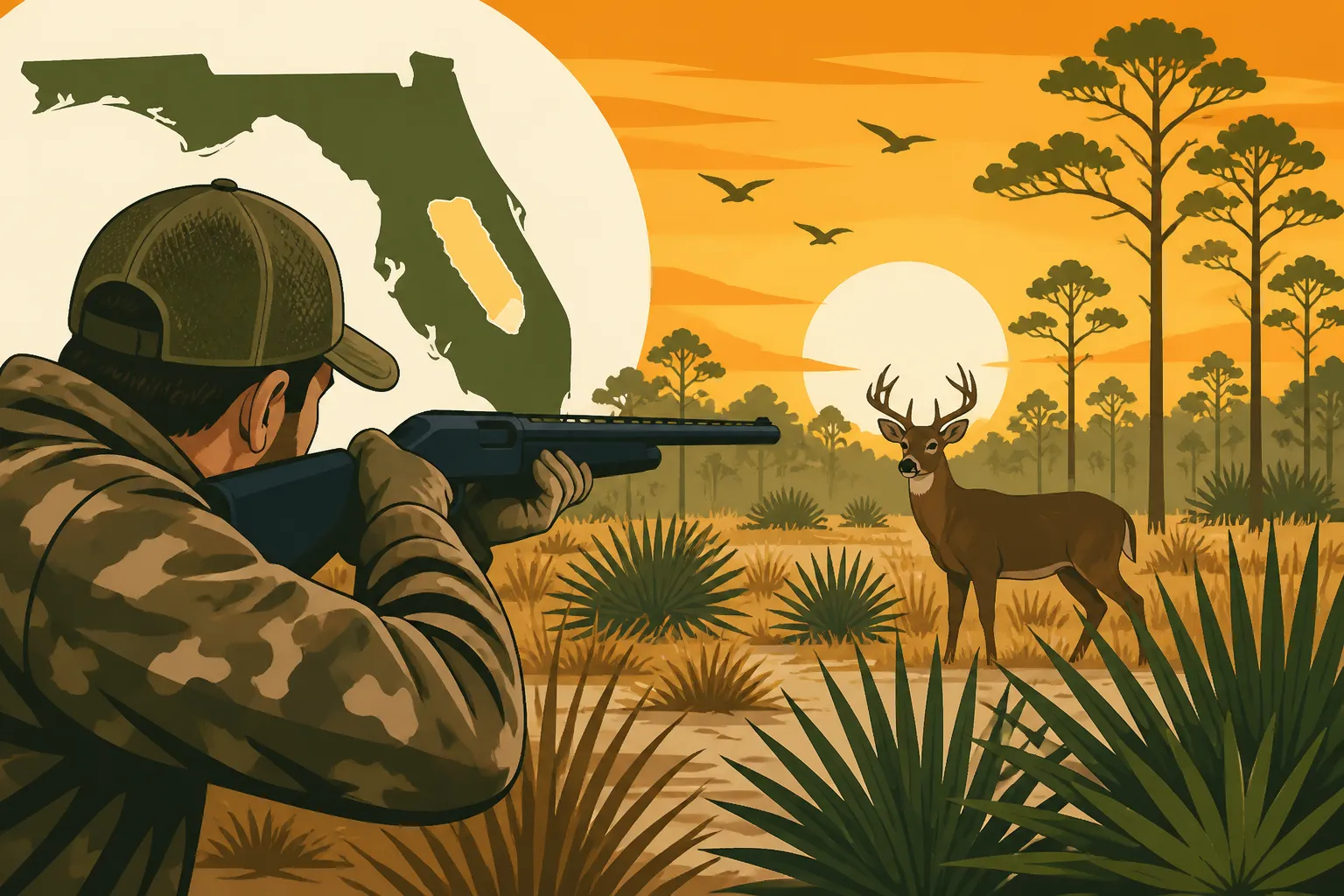
Florida’s Central Ridge Sandhills are a relic of ancient coastlines, characterized by rolling hills of deep, sandy soil that support a unique forest of longleaf pines and an understory dominated by wiregrass. This isn't your typical dense Florida cover; it’s an open, almost park-like environment that can feel both expansive and deceptively bare.
What Makes These Sandhills Unique
The defining feature of the sandhills is the longleaf pine ecosystem, a habitat that relies heavily on natural fire cycles. These frequent, low-intensity fires clear out competing hardwoods and dense underbrush, maintaining the open structure that wiregrass and various forbs thrive in. This ecological process shapes everything, from the types of vegetation available for browse to the way animals move through the landscape. The deep, often white or yellowish, sandy soil is less fertile than other areas, impacting the density and variety of food sources. What might look like barren ground to the uninitiated is actually a vibrant ecosystem, supporting a surprisingly diverse array of wildlife that has adapted to these specific conditions. Understanding this dynamic is your first step to unlocking its secrets.
Navigating the Rolling Terrain and Loose Sands
While Florida is generally known for its flatness, the Central Ridge Sandhills offer subtle, yet significant, changes in elevation. These aren't mountains, but gentle undulations and swales that can still create natural funnels, block line of sight, and influence wind patterns. The biggest challenge, however, is the loose, sugar-sand soil. Walking through it can be exhausting, loud, and can quickly give away your position. Every step can be a struggle, and silent movement often feels impossible. This type of terrain makes traditional tracking difficult as well, as tracks can easily shift or be obscured. For instance, a deer's hoof print might look clear in one spot, but a slight breeze can quickly fill it in with loose sand, making a blood trail almost impossible to follow without careful attention. This is where patience and observation become paramount. Using mapping tools like the ones available on GoHunt can help you identify subtle elevation changes and potential travel corridors long before you set foot on the ground, saving you precious energy and increasing your chances of success.
Key Game Species and Their Behavior in Sandhills
While the sandhills might seem sparse, they are home to several sought-after game species. Each has adapted to this open environment in distinct ways, and knowing these behaviors is critical for a successful hunt.
Whitetail Deer Adaptations and Movement Patterns
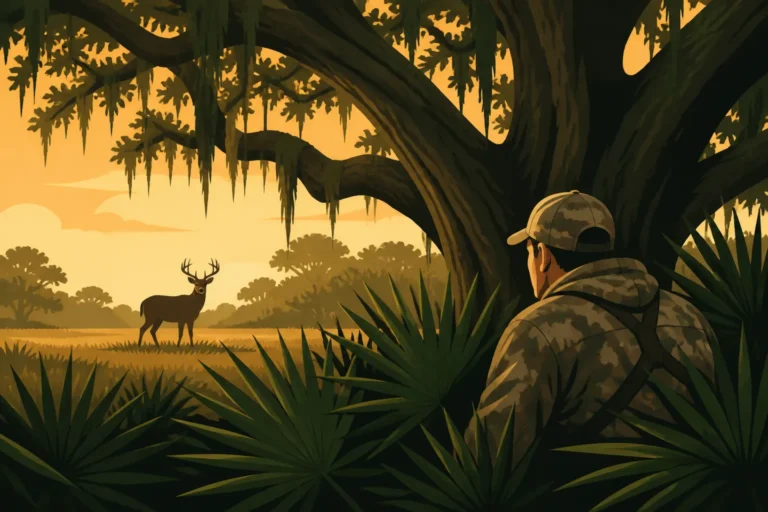
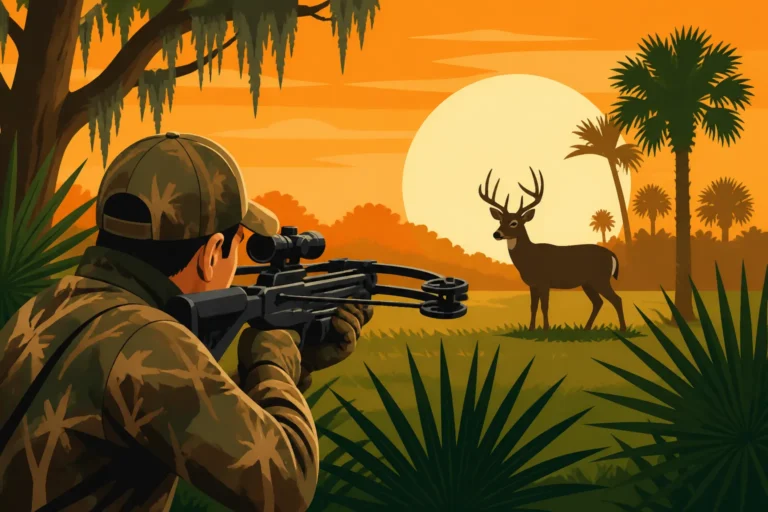
Florida whitetail deer in the Central Ridge Sandhills often exhibit behaviors tailored to the open pine woods. Unlike deer in thicker cover, they tend to move more subtly, utilizing the slightest depressions, stringers of oak hammocks, or the edges of prescribed burns for cover and travel. You might find them bedding down in a dense clump of palmettos or under a low-hanging oak within the pines, where they can still see and smell danger from a distance. Their diet in these areas often consists of wiregrass shoots, young longleaf pine needles (when available), and various forbs that emerge after a fire. When the acorns drop from scattered oak trees, these spots become primary feeding locations. You might find deer traveling between these limited food sources and water, often along subtle ridge lines or through areas with slightly denser cover. For hunters trying to figure out Where Florida Bucks Bed in Thick Palmetto, the sandhills version often involves smaller, more isolated patches of cover.
Feral Hogs Rooting and Wallowing in Sandy Soils
Feral hogs absolutely love the sandhills, especially for rooting. The soft, sandy soil makes it easy for them to dig up tubers, roots, and insects, which are a significant part of their diet. You’ll often find extensive rooting damage in areas where hogs have been feeding, looking like a plowed field. They also frequently create wallows in any low-lying, damp depressions or near seasonal water sources, using the mud to cool themselves and deter insects. Identifying these wallows and fresh rooting is a clear indicator of recent hog activity. Because there's often less dense cover for hogs to hide in compared to a cypress swamp, they can be more visible, but their sense of smell is incredibly sharp. Understanding Florida's Year-Round Hog Hunting Rules is also important, as these prolific animals can be hunted year-round in many areas without bag limits, offering consistent opportunities in the sandhills.
Turkey and Quail Hotspots in the Open Pines
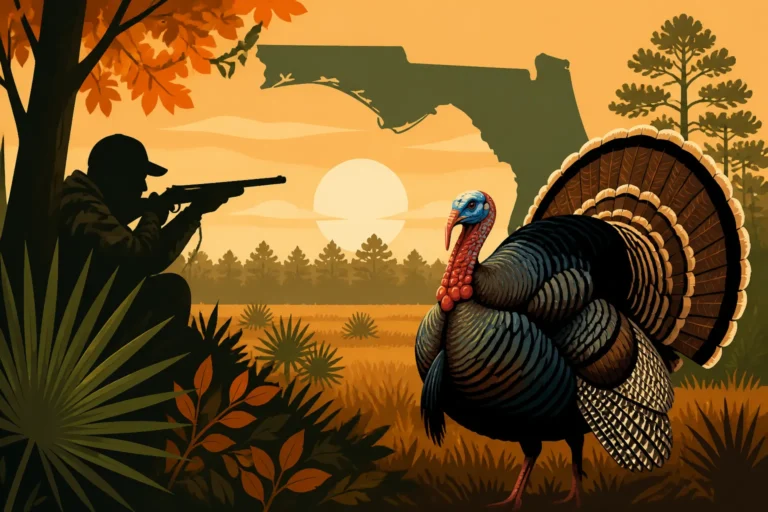
The open nature of the longleaf pine and wiregrass understory makes the Central Ridge Sandhills prime habitat for both Osceola turkeys and bobwhite quail. Osceola turkeys thrive here, using the open pine flats for strutting grounds where gobblers can be easily seen and heard. They’ll often roost in the taller longleaf pines, especially near water sources or along creek bottoms that cut through the sandhills. The expansive visibility allows them to spot predators from a distance, making them cautious birds. For hunters pursuing a grand slam, knowing Hunting an Osceola Gobbler in Palmetto Scrub can be a valuable skill that easily translates to the slightly more open sandhill environment.
Bobwhite quail are another iconic species of the sandhills. They rely on the mosaic of wiregrass, sparse palmettos, and bare ground created by fire for nesting, brooding, and feeding. The wiregrass provides excellent cover, while the open spaces allow them to move and forage. Finding coveys often means focusing on the transition zones between different habitat types or areas that have recently experienced a prescribed burn, which stimulates new growth of preferred food plants. Quail Hunting Behind Pointing Dogs is not just a classic method but often the most effective way to find these elusive birds in their natural sandhill habitat.
Effective Hunting Strategies for Central Ridge Sandhills
Success in the sandhills isn't about brute force; it's about finesse, observation, and adapting your approach to the environment.
Scouting for Subtle Sign and Funnels
Before you ever carry a gun or bow into the sandhills, quality scouting is paramount. With the vastness of the terrain, simply walking blindly isn't efficient. Focus on identifying subtle signs that might be overlooked in other habitats. Look for areas where the pine trees give way to a stringer of oaks or where a low-lying area might hold seasonal water, creating a natural congregation point for wildlife. Utilize tools like GoHunt or other topographic maps to pinpoint these variations from home. Deer and hogs will often travel along these subtle landscape features, even if they're not obvious funnels like those found between two swamps. Pay close attention to trails where the sand shows consistent tracks, indicating regular travel routes. Scouting Florida Public Land Before Season is always important, but in the sandhills, it's particularly crucial to identify these small pockets of activity that might otherwise go unnoticed.
Furthermore, look for recent fire lines. Prescribed burns are a common management practice in these ecosystems, and new growth that emerges post-fire can be a magnet for deer and hogs. These areas offer fresh browse and easier rooting, making them excellent places to focus your efforts.
Mastering Still-Hunting and Spot-and-Stalk Techniques
The open nature of the sandhills makes traditional stand hunting challenging, especially for deer. Instead, still-hunting and spot-and-stalk become incredibly effective. Still-hunting involves moving slowly and deliberately, taking a few steps, then pausing for several minutes to observe your surroundings. This allows you to spot game before they spot you, or to hear faint sounds that would be masked by continuous movement. The soft sand, while noisy if you rush, can be surprisingly quiet if you move with extreme care, placing each foot gently.
Spot-and-stalk is particularly suited to the sandhills' long sightlines. Utilizing good optics, you can often scan vast areas for movement. A pair of quality binoculars or a spotting scope can help you pick out a bedded deer or a hog rooting in the distance. Once spotted, the challenge becomes using the subtle terrain features, like a slight rise or a cluster of palmettos, to close the distance without being detected. This requires an acute awareness of the wind, as scents carry far in the open air, and understanding Wind and Thermals in Flat Florida Terrain is absolutely vital to prevent game from getting your scent.
Utilizing Natural Cover and Terrain Features
Even in the seemingly open sandhills, there are always pockets of cover and terrain features that game animals, and smart hunters, learn to utilize. Look for thicker clumps of palmetto or saw palmetto that provide excellent bedding cover for deer and hogs. Isolated oak hammocks, even small ones, offer both cover and food sources (acorns), acting as magnets for wildlife. These are often excellent places to set up a ground blind, brushed in carefully to blend with the surroundings. Hunters often overlook the subtle depressions or swales in the terrain; these can create natural travel corridors and offer hunters a way to move undetected, dipping out of sight as they navigate.
Another often-underestimated feature is the transition zone, or "ecotone," where the sandhills meet a cypress swamp, a hardwood hammock, or even a planted pine plantation. These edges are often bustling with activity, providing a variety of food sources and cover types. When you're Hunting a Green Field Planted for Deer, remember that deer will use the cover of the sandhills to access it. Learning to "read" these landscape nuances is key to placing yourself in the right position for an encounter.
| Species | Common Sandhill Behavior | Best Hunting Strategy |
|---|---|---|
| Whitetail Deer | Travel along subtle ridges and oak stringers; bed in dense palmetto clumps; feed on wiregrass shoots, forbs, and acorns. | Still-hunting: Slow, deliberate movement, pausing frequently to scan ahead, especially into the wind. Spot-and-stalk: Utilize long sightlines with optics to locate deer, then use subtle terrain for concealment to close the distance. Consider setting up near water or oak hammocks. |
| Feral Hogs | Extensive rooting in soft sand for tubers; wallowing in damp depressions; travel between feeding and watering sites. | Tracking: Follow fresh rooting and tracks, understanding their travel patterns. Still-hunting: Move quietly towards fresh sign. Stand hunting/Baiting: Where legal, setting up over a consistent food source or wallow can be effective, especially at dawn/dusk. |
| Osceola Turkey | Strutting in open pine flats; roosting in tall longleaf pines near water; feeding in recently burned areas. | Calling: Use traditional calls to draw birds into open areas. Run-and-gun: Cover ground, listen for gobblers, and quickly set up. Ground Blinds: Effective near roost sites or known strutting zones, especially if birds are pressured. |
| Bobwhite Quail | Coveys hold tight in wiregrass and sparse palmettos; feed on seeds and insects in open, fire-maintained areas. | Walk-ups with dogs: Pointing dogs are invaluable for locating coveys in the dense wiregrass. Push and post: For public lands without dogs, slowly walking likely cover with partners can flush birds. Focus on edges and transition zones. |
Essential Gear and Preparation for Sandhill Hunts
Hunting Florida’s Central Ridge Sandhills isn't just about strategy; it's also about having the right gear and being physically prepared for the unique demands of the terrain.
Footwear and Clothing Choices for Comfort and Stealth
Your footwear is arguably the most critical piece of gear for a sandhill hunt. Forget stiff, heavy hiking boots. Instead, opt for lightweight, flexible boots with soft soles that offer good traction in loose sand. Sneakers or specialized hunting shoes designed for quiet movement can also work wonders. The goal is to minimize noise as you traverse the sandy ground and reduce fatigue from constantly walking through soft terrain. For clothing, Florida heat is always a factor, even during deer season. Lightweight, breathable fabrics in camouflage patterns are ideal. Layers are your friend, especially for early mornings that might be cool before the sun starts to beat down. Remember, stealth in the sandhills involves both quiet movement and blending into the sparse background. This isn't the place for bright colors unless you are specifically following Florida Blaze Orange Requirements during certain seasons or on specific public lands, which are vital for safety.
Navigation Tools and Optics for Expansive Views
In the vastness of the sandhills, getting disoriented is a real possibility, especially when tracking game or still-hunting through seemingly endless pines. A reliable GPS unit or a smartphone with a robust hunting app like GoHunt is non-negotiable. Download offline maps before you go, as cell service can be spotty. Mark your truck, your stand locations, and any significant sign you find. These apps can also show property boundaries, which is crucial for staying legal.
Beyond navigation, optics are your best friend. Binoculars (10×42 or 10×50 are great) are essential for scanning the open woods, spotting distant game, and identifying subtle movements or features. A good pair of binos can literally save you miles of walking by allowing you to glass large areas from a stationary position. If you’re hunting very open areas, a spotting scope might even be a consideration, though often overkill for most Florida hunting scenarios. The more you can see without moving, the better your chances of ambushing game.
Physical Conditioning for Long Walks in Soft Sand
Let's be real, walking through soft sand is a workout. It’s akin to walking on a beach all day, but with more gear and greater distances. Even subtle inclines become challenging. Being in decent physical shape will significantly increase your comfort and endurance during a sandhill hunt. Incorporate walking, especially on uneven or soft surfaces, into your pre-season routine. Strong legs and core muscles will prevent fatigue from setting in too quickly, allowing you to cover more ground and maintain focus. This isn't about running a marathon, but about building the stamina to stay out longer, move more quietly, and ultimately, have a more enjoyable and successful hunt. Consider carrying a lightweight pack with plenty of water to stay hydrated, as the open environment can lead to faster dehydration than in shaded, humid swamps.
Disclaimer
Hunting is an inherently dangerous activity. Always prioritize safety, follow all local, state, and federal hunting regulations, and ensure you have the proper licenses and permits before heading into the field. The information provided here is for educational purposes and should not replace professional guidance or personal judgment.