Posting a Drive Around a Palmetto Head
There’s nothing quite like the exasperation of knowing a big Florida buck is holed up in an impenetrable palmetto head, just out of reach. These dense, sprawling thickets offer deer incredible sanctuary, making traditional still-hunting or stand hunting nearly impossible. When you’re facing down one of these green fortresses, sometimes the only way to get a deer moving is a well-orchestrated drive, and knowing how to effectively post around one can make all the difference. This guide will walk you through the nuances of organizing and executing a palmetto head drive, focusing on safety, strategy, and success.
The Unique Challenge of Hunting Florida Palmetto Heads
Florida's landscape is dotted with these almost cartoonishly dense palmetto heads, which are essentially islands of saw palmetto, often mixed with oak hammocks or cypress strands. For deer, especially mature bucks, they are the ultimate hideout, providing thermal cover, escape routes, and bedding areas that human hunters struggle to penetrate quietly.
Why Deer Seek Refuge in Palmetto Thickets
Deer in Florida, particularly whitetails, are masters of concealment. Palmetto heads offer them an almost impenetrable fortress against predators, including hunters. The dense, overlapping fronds create a canopy that's difficult to see through, and the ground beneath is often a tangled mess of roots and decaying vegetation, making quiet movement a distant dream for anyone but a snake. Bucks especially love these spots for bedding down during daylight hours, knowing they're largely safe. They offer shade from the relentless Florida sun and protection from cold snaps, as well as a great vantage point to smell or hear approaching threats. It's often where you'll find where Florida bucks bed in thick palmetto.
The thick cover also provides a sense of security during high-pressure hunting periods. When hunters are constantly pushing through pine flats or oak hammocks, deer quickly learn to dive into the nearest palmetto head and stay put. They'll often have multiple escape routes planned, using game trails that are almost invisible to the human eye, allowing them to slip out undetected if a threat gets too close. Understanding these preferences is the first step in formulating a successful strategy.
Deciphering Deer Movement in Dense Cover
Even though palmetto heads seem like a chaotic maze, deer often have predictable patterns within and around them. Look for subtle signs: a faint trail leading into the thicket from a food source, rubs or scrapes on the few trees standing on the edge, or droppings that indicate a bedding area just inside the perimeter. Deer will often skirt the edges, using the cover for security while still being able to access more open areas for feeding.
Their movement inside a palmetto head is usually along established game trails, which can be surprisingly tunnel-like. They'll move just enough to escape immediate danger, often circling back or cutting through the densest part of the cover. This is why a strategic drive is so effective – it pushes them off these predictable paths and into the open, even if only for a brief moment. Paying close attention to these small details during your scouting can reveal key entry and exit points, helping you to position standers more effectively. Don't underestimate the value of spending time scouting Florida public land before season.
The Frustration of Still-Hunting Palmetto
If you've ever tried to still-hunt through a true Florida palmetto head, you know the frustration. It's noisy, slow, and visibility is often limited to a few feet. Every step sounds like you're stomping through a bag of potato chips, and you're more likely to bump a deer out of its bed unseen than you are to get a shot. The dense vegetation makes it almost impossible to move silently or see more than a few yards, rendering traditional still-hunting tactics largely ineffective.
The humidity and heat add another layer of challenge. Pushing through thick palmetto is exhausting work, quickly leading to fatigue and diminished focus. You might spend hours busting brush, only to find fresh tracks where a deer slipped out just meters ahead of you. This is precisely why deer drives are a time-honored tradition in these parts, especially in conditions where a deer has decided to hunker down and ride out the pressure. It’s not about giving up on skill; it’s about adapting to the terrain and the deer’s behavior.
Strategic Planning for a Successful Palmetto Head Drive
A successful drive isn't just about making noise and hoping for the best. It requires careful planning, knowledge of the terrain, and clear communication among all participants. Thinking through every detail beforehand can mean the difference between tagging a deer and just pushing deer to another hunter.
Scouting the Perimeter and Interior Routes
Before you even think about putting boots on the ground for a drive, you need to scout the specific palmetto head you intend to push. This isn't just about finding fresh sign; it's about understanding the topography, identifying potential escape routes, and noting any open areas or funnels where a deer might choose to run. Use mapping tools like GoHunt to mark trails, depressions, or breaks in the palmetto that deer might favor. Look for game trails entering and exiting the thicket, and try to discern if they're frequently used. A crucial part of this is looking for a funnel between two palmetto heads, which can be a prime stander location.
Pay attention to wind direction on the day of the hunt. Ideally, your standers should be positioned downwind or crosswind of the expected escape routes, while drivers can work with or against the wind depending on how you want to push the deer. Sometimes, even the smallest ditch or rise in elevation can act as a natural travel corridor for deer trying to escape. Understanding these subtle features is paramount to correctly placing your standers and guiding your drivers. If you don't have access to the land for physical scouting, use tools like GoHunt to virtually scout using satellite imagery.
Assigning Roles: Drivers and Standers
For any deer drive, you typically have two main roles: drivers and standers.
- Drivers are the folks who walk through the thick cover, making noise and pushing the deer. Their job isn't to blast through at top speed but to move slowly and deliberately, covering the area thoroughly. The number of drivers depends on the size of the palmetto head; for a larger area, you might need several, moving in a line. Their goal is to keep the deer moving in a controlled direction.
- Standers are positioned strategically around the perimeter, waiting for deer to be pushed out. They need to be absolutely still, quiet, and ready to shoot. Their placement is critical, usually covering known escape routes or areas where deer are likely to break from cover.
It's essential to assign roles based on experience and physical ability. Younger or more athletic hunters might be better suited for driving, while those who can remain motionless for extended periods and are confident shooters should be standers. Make sure everyone understands their role and the exact path they should take, whether driving or standing. This clear division of labor is what makes deer drives with three or four hunters so effective.
Establishing Clear Safety Zones and Communication
Safety is the absolute priority in any group hunt, especially a drive. Before anyone moves, clearly define the boundaries of the drive, where drivers will start and end, and where standers will be positioned. Use landmarks, GPS coordinates, or even colored tape if it's private land, to delineate these areas. Everyone must know where every other hunter is located. One of the best ways to ensure this is a pre-hunt briefing, perhaps using a map on an app like GoHunt to show exact positions.
Communication is also vital. Consider using two-way radios, but even hand signals or pre-arranged calls can work in a pinch. However, silence is often golden on a drive, so communication should be minimal once the drive starts. Crucially, establish a clear understanding of shooting lanes and zones of fire. Standers should only shoot at deer that are safely clear of drivers and other standers. Make sure everyone is wearing the required amount of Florida blaze orange. A quick table can help clarify responsibilities:
| Role | Primary Responsibility | Key Tactics | Safety Notes |
|---|---|---|---|
| Driver | Push deer out of cover towards standers. | Move slowly, deliberately, and make consistent noise. Cover assigned lanes. | Maintain line, stay aware of stander positions, call out deer sightings. |
| Stander | Remain hidden and stationary, ready for a shot. | Identify shooting lanes, anticipate deer movement, be patient and silent. | Only shoot at identified deer with clear backstop; no shots towards drivers. |
Remember, no shot is worth risking another person's safety. Always err on the side of caution.
Executing the Drive: Tactics for Pushing and Posting
Once the plan is set, it's time to put it into action. The execution requires patience, discipline, and a deep understanding of deer behavior in these challenging environments.
The Art of the Slow, Deliberate Drive
When driving a palmetto head, speed is not your friend. A fast, noisy charge might spook deer into bolting wildly in unpredictable directions, potentially through standers' safe shooting zones or straight back through the drivers. Instead, drivers should move slowly, almost like a slow-motion sweep. Walk at a steady, deliberate pace, making consistent noise. This isn't necessarily about yelling; it could be the rhythmic crunch of boots on palmetto fronds, snapping small branches, or even an occasional whistle.
The goal is to gently nudge the deer, making them feel uneasy enough to move, but not so terrified that they panic. This encourages them to follow their natural escape routes, which is precisely where your standers should be waiting. Maintain a consistent line with other drivers, spacing yourselves appropriately to cover the width of the palmetto head. Don't leave gaps where a savvy buck might slip through. Think of it less as a chase and more as a subtle herding operation.
Standers' Vigilance and Shot Placement
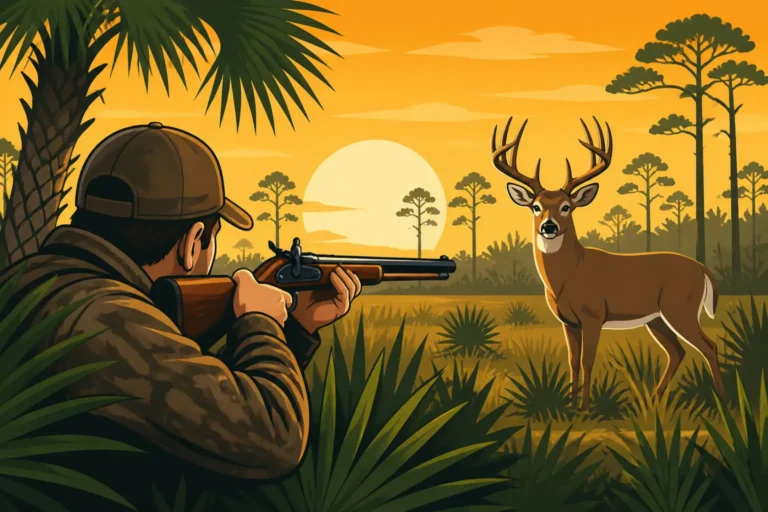
For standers, patience is the ultimate virtue. Once you're in position, become one with the landscape. Find a good spot with a clear view of potential shooting lanes, but also one that offers concealment. You might consider using a ground blind on Florida public land for better concealment. Stay absolutely motionless and scan your assigned zone constantly. Deer pushed from cover often burst out quickly, offering only a fleeting shot opportunity. Be ready to raise your weapon smoothly and quickly.
When a deer appears, take a split second to confirm it’s a legal animal (if applicable) and that your shot will be clean and safe, with a clear backstop. In Florida’s dense environment, this is critical. Avoid taking running shots unless you are highly confident in your ability and the safety of the shot. Aim for the vitals, and remember that an ethical shot is a paramount responsibility. Often, deer will pause for a moment at the edge of the cover before fully committing to an open run—this is your window.
Handling Post-Shot Scenarios in Thick Cover
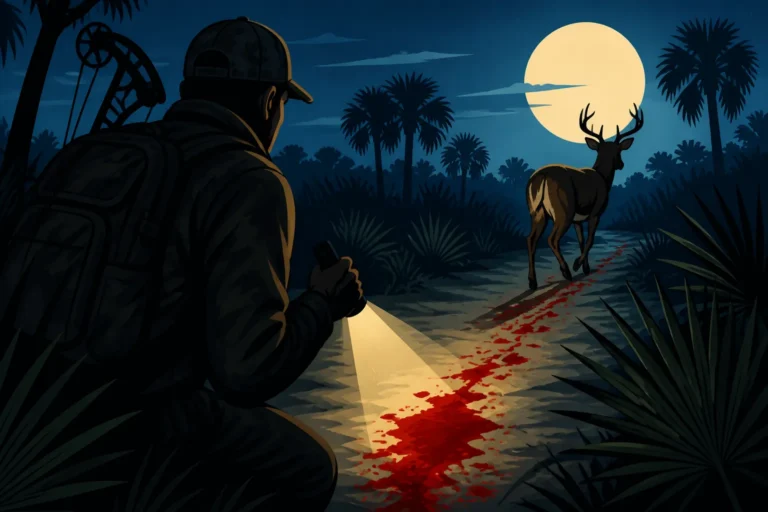
You've made a good shot, and the deer is down—or is it? In dense palmetto, tracking can be incredibly challenging, even with a solid hit. Mark the exact spot where the deer was standing when you shot and where you last saw it. This reference point is invaluable. Wait a reasonable amount of time after the shot, especially if you suspect a marginal hit, to give the deer time to expire. If you track immediately, you might push a wounded animal deeper into the thicket, making recovery even harder.
Once you begin tracking, move slowly and methodically. Look for blood, broken vegetation, and displaced leaves. Even small specks of blood can lead you to your prize. If you lose the trail, back out, mark your last known blood, and widen your search. A dog can be a lifesaver in these situations. Remember that recovering a deer from a cypress slough or a dense palmetto head can be strenuous work, so be prepared with plenty of water and a method for extraction. Don't hesitate to call on your fellow hunters to assist; a collective effort often leads to a successful recovery. Knowing how to track a deer in sandy Florida soil will certainly help.
Essential Safety Measures and Ethical Considerations
Beyond the tactics, the most important aspects of any drive are safety and ethical conduct. These aren't just rules; they're principles that ensure everyone returns home safely and that we uphold the integrity of our sport.
Mandatory Blaze Orange and Visual Awareness
Florida law requires hunters to wear a minimum of 500 square inches of blaze orange or blaze pink above the waist when hunting deer on public lands during general gun season. Even on private land, and especially during a drive, it's a non-negotiable safety measure. This bright color makes you highly visible to other hunters, significantly reducing the risk of accidental shootings. Ensure jackets, vests, and hats meet these requirements.
Beyond just wearing it, actively use your blaze orange. Make eye contact with other hunters before the drive starts to confirm their position. Drivers should know where standers are, and standers should be aware of the drivers' approximate progress. Don't assume others see you just because you're wearing orange; actively make yourself known to prevent misunderstandings or dangerous situations. Visual awareness is a two-way street that protects everyone involved.
Understanding Shooting Lanes and Backstops
Before the drive commences, standers must identify their safe shooting lanes. These are the clear lines of sight where you can confidently take a shot without endangering other hunters. It’s also about what’s behind your target. In Florida, with its often flat terrain and thick vegetation, a natural backstop might be hard to come by. Never take a shot if you’re unsure of what lies beyond your target, especially if it could be another hunter.
If you're hunting in a group, establishing clear shooting zones for each stander is crucial. For example, "You cover from 10 o'clock to 2 o'clock, and I'll cover 2 o'clock to 6 o'clock." This prevents cross-firing and ensures that all areas are covered without overlap. Remember the golden rule: identify your target and what's beyond it before placing your finger on the trigger. Misjudging distances or trajectories in dense cover can have dire consequences.
Respecting Property Lines and Other Hunters
Whether you're on public land or private, respecting property lines is paramount. Before the drive, confirm your boundaries. Use a GPS device with property line overlays (like those found in GoHunt) to ensure drivers don't accidentally trespass and standers don't shoot onto neighboring properties. This isn’t just about legality; it’s about maintaining good relationships with landowners and other hunters. A quick check of "Florida Trespass and Permission Law" would show you the importance of this.
Additionally, be respectful of other hunters you might encounter, especially on crowded public lands. If you see another hunting party already set up near your intended drive, it's often best to find another spot or politely communicate your intentions. Nobody wants their hunt interrupted by an unannounced drive. Ethical hunting extends beyond just game animals; it encompasses our interactions with the land and with each other. By practicing respect and courtesy, we ensure a positive experience for everyone afield and help preserve access for future generations.
Disclaimer
The information provided in this guide is for educational purposes only and is not a substitute for professional instruction or official regulations. Always consult the Florida Fish and Wildlife Conservation Commission (FWC) for the most current hunting regulations, license requirements, and safety guidelines. Hunting inherently involves risks, and adherence to safety protocols is the hunter's sole responsibility.