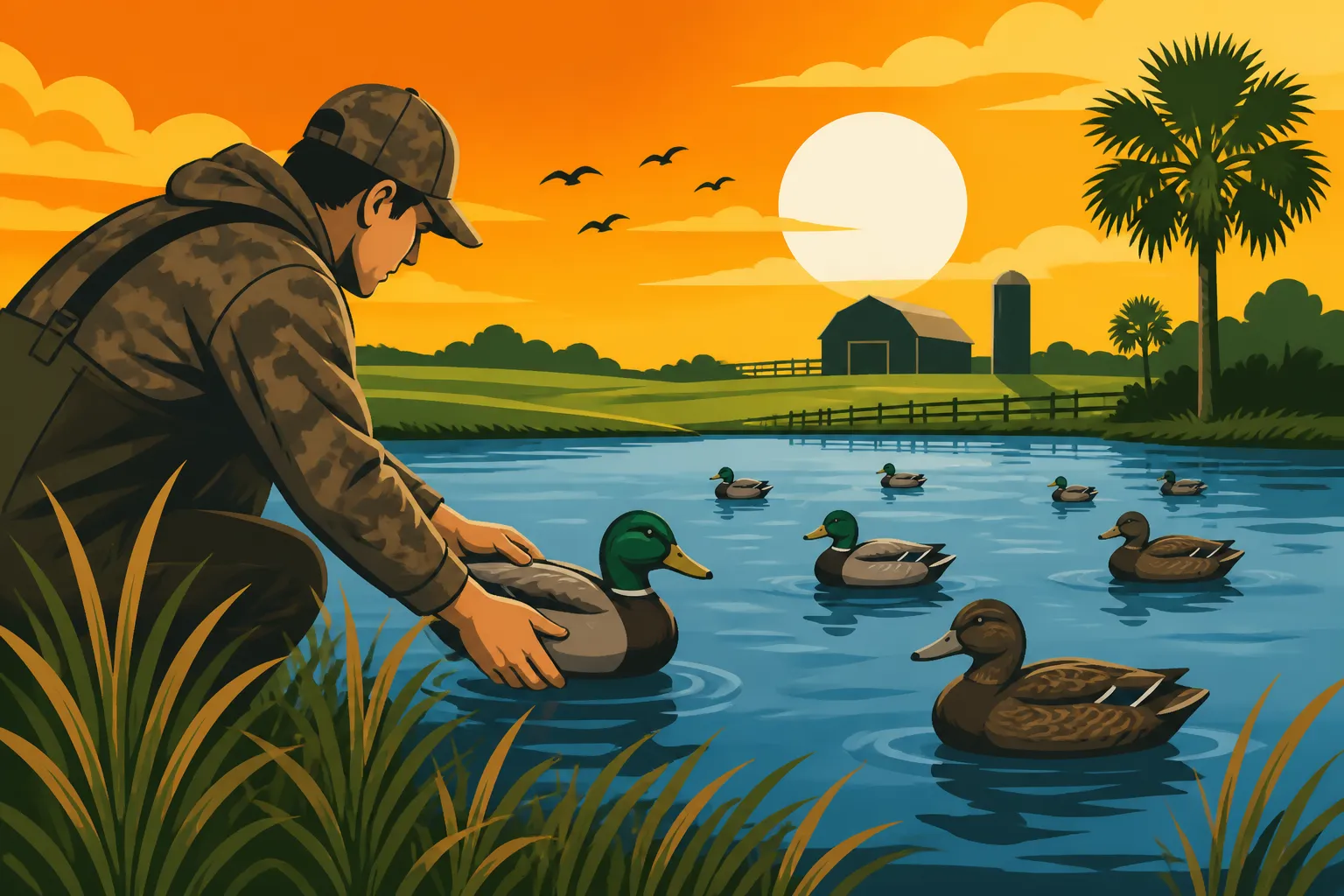
Setting Decoys on a Farm Pond
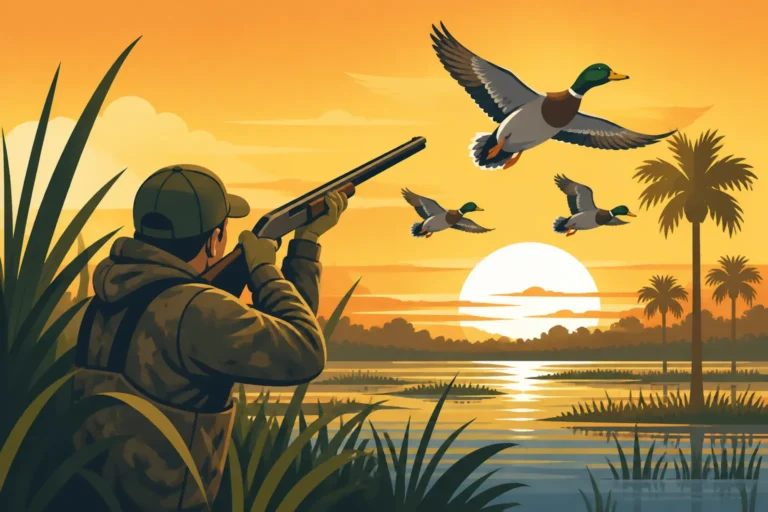
There's nothing quite like the rush of ducks cupped up and committed, wings set, heading straight for your decoys. But let's be honest, getting them to do that consistently on a smaller, often overlooked farm pond in Florida can feel like a mystery. You've probably watched ducks circle, flare, and land just outside your spread, leaving you wondering what you did wrong. This guide is all about demystifying the art and science of setting decoys on a Florida farm pond, helping you understand the subtle nuances that make all the difference, so you can transform those frustrating fly-bys into successful decoying.
Understanding Farm Pond Dynamics for Waterfowl
Hunting Florida's abundant waterfowl population, especially on smaller farm ponds, requires a different mindset than hunting vast marshes or open lakes. These often-overlooked water bodies can be absolute magnets for ducks, but only if you understand their unique characteristics and how ducks use them. It's not just about throwing out some blocks; it's about replicating a natural, inviting scene.
Why Ducks Use Smaller Ponds in Florida
Florida's landscape is dotted with countless farm ponds, drainage ditches, and cattle tanks. While they might seem insignificant compared to larger impoundments, these smaller water sources offer vital resources for ducks. Often, they provide undisturbed resting areas, especially if they're nestled away from heavy human activity. They also serve as crucial feeding grounds, particularly when surrounded by agricultural fields like corn, peanuts, or even cattle pastures where insects and spilled grains are plentiful. Ducks, especially dabblers like Wood Ducks and Mottled Ducks, appreciate the shallower edges and dense emergent vegetation these ponds often possess, offering both food and cover. During cold snaps, even minor temperature differences can make these smaller, shallower ponds more appealing if larger bodies of water are feeling the chill. Many waterfowl hunters overlook these smaller spots, which can mean less pressure for the birds that use them.
Key Factors of a Productive Pond
Before you even think about setting a single decoy, take the time to really observe the pond you intend to hunt. What makes it tick from a duck's perspective? First, assess the food sources. Are there crops nearby? Is the water shallow enough for dabblers to feed? Look for signs like muddy edges, dabble marks, or even droppings. Next, consider cover and concealment. Ducks feel safe when they have places to hide, whether that's thick cattails, tall grasses along the bank, or overhanging trees. This also dictates where you can effectively set up your blind.
The prevailing wind direction is absolutely critical; ducks almost always land and take off into the wind. This is a non-negotiable aspect of decoy placement. You want the wind at your back or slightly to your side, so ducks commit and land right in front of your shooting lane. Finally, understand the light conditions. Early morning sun can cast harsh shadows or silhouette your decoys poorly if you're facing it directly. Consider how the sun will hit your setup and the birds as they approach. Tools like the GoHunt app can be invaluable for pinpointing property lines and understanding topographical features around these ponds, helping you visualize potential flight paths and optimal setup locations long before you ever step foot on the property.
Choosing the Right Decoys for Florida Ponds
When it comes to duck decoys for a Florida farm pond, it's easy to get caught up in the latest gadgets or super-realistic, expensive spreads. But for these smaller, often intimate settings, simplicity and accuracy usually win the day. You're not trying to attract ducks from miles away; you're convincing local birds, or those just passing by, that your pond is a safe and appealing stop.
Species-Specific Decoy Selection
The first rule of thumb is to use decoys that match the species you expect to encounter. While a mixed spread can sometimes work, ducks are incredibly observant. If a flock of Wood Ducks sees a dozen Mallard decoys with no Wood Ducks in sight, they might get suspicious. In Florida, you're primarily looking at Wood Ducks, Mottled Ducks, various Teal (Blue-winged, Green-winged, Cinnamon), and sometimes Ring-necked Ducks or Scaup on deeper ponds.
- Wood Ducks: These are kings of the cypress sloughs and wooded ponds. Their vibrant plumage demands realism. A few good-quality Wood Duck decoys are essential. Don't go overboard; a small, realistic flock is often more effective than a huge, mismatched one. You can read more about Wood Ducks in Florida Cypress Swamps to understand their habitat preferences.
- Mottled Ducks: Our resident Florida ducks. They're wary, so quality matters. Use a handful of Mottled Duck decoys, often mixed with a few Mallards (which they readily associate with). Their presence adds a lot of confidence for other species. Pay attention to Florida Mottled Duck Population Trends as well to understand local numbers.
- Teal: Especially during the early season, Teal are abundant. They're small and move quickly. A tight cluster of Teal decoys, perhaps with a few motion decoys, can be very effective. Their smaller size also allows you to fit more into a compact spread. For specific tactics, check out Early Teal Season Tactics in Florida.
- Mallards: While not as common as Wood Ducks or Mottled Ducks in many Florida farm pond scenarios, a few Mallard decoys can still add confidence, especially in mixed spreads, as many duck species will associate with them.
You don't need hundreds of decoys for a farm pond. A dozen to two dozen high-quality decoys, accurately representing the local bird life, is often plenty. The goal is to make your spread look natural and inviting, not overwhelming.
Motion Decoys and Confidence Boosters
Adding motion to your spread can be a game-changer, especially on still mornings or when dealing with wary birds. A static spread can look unnatural, but even a subtle ripple can make a big difference.
- Jerk Rigs: Simple, effective, and relatively inexpensive. A jerk rig creates ripples and makes a few decoys twitch, mimicking active feeding ducks. It's a fantastic way to add life to your spread without breaking the bank. You control the motion directly from your blind.
- Spinner Decoys: Brands like Mojo Decoys are incredibly popular for a reason. The flashing wings of a spinning decoy are highly visible and can pull ducks from a great distance. However, sometimes ducks can get "educated" to them, especially on pressured ponds. Use them sparingly, or consider turning them off as ducks get closer.
- Feeder Butts and Half-Shells: These decoys mimic ducks actively feeding with their heads down. They add a sense of security and realism to your spread. A few feeder butts mixed with full-body decoys can create a very convincing scene of contented ducks.
- Goose or Heron Decoys: Adding a few "confidence decoys" like a Canada Goose or a Great Blue Heron can tell incoming ducks, "Hey, this place is safe. Other birds are already here and relaxed." On a smaller farm pond, a single heron decoy can be particularly effective, as these birds are often seen fishing in such locations. It's just another subtle cue that everything is okay.
Remember, the goal isn't just to attract ducks, but to make them feel comfortable enough to commit to your landing zone. A balanced mix of species-specific blocks, subtle motion, and a few confidence boosters will go a long way.
Effective Decoy Spreads for Farm Ponds
Setting up decoys isn't just about throwing them out; it's about creating a visual story that communicates safety, food, and an easy landing spot. On a small Florida farm pond, you have less water to work with, so every decoy placement counts. Your spread needs to be efficient, realistic, and tailored to the conditions of the day.
The Importance of the Landing Zone
This is arguably the most critical element of any decoy spread. The landing zone is the open water area you leave for ducks to land in. It should be directly in front of your blind, within comfortable shooting range, and oriented into the wind. Ducks almost always land into the wind, so if the wind is blowing from left to right, your landing zone should be on the right side of your spread, allowing ducks to approach from the left, turn into the wind, and settle in. This also helps slow them down, offering better shots.
Think about the sun's position here too. You want the sun at your back as much as possible, so incoming birds don't have to squint into it, and you don't get silhouetted. Use the GoHunt app for detailed weather forecasts, including wind direction and sunrise/sunset times, which can drastically improve your planning.
Common Decoy Formations for Ponds
While there are countless ways to set decoys, a few tried-and-true formations work well on smaller ponds.
- The J-Hook or U-Shape: This is a classic for a reason. Decoys are set in a J or U formation, with the open part of the letter facing into the wind, directly in front of your blind. The "hook" or "arms" of the U provide a visual funnel, guiding ducks right into your landing zone. One side of the J or U can be heavier with feeder decoys, suggesting a prime feeding spot.
- Loose Flock or Family Groups: Instead of a rigid pattern, consider several small, loose clusters of decoys. Ducks rarely sit in a perfect line. Group 3-5 decoys together, with a bit of space between groups. This looks much more natural and less intimidating. Place your Wood Duck decoys near cover, perhaps closer to the bank or where there's some emergent vegetation, as they often prefer the edges. Mottled Ducks might be slightly more out in the open.
- The "X" or Cross Pattern: If you have multiple hunters or the wind is shifting slightly, an "X" pattern with two crossing lines of decoys can offer multiple landing zones. The center of the "X" becomes the prime landing spot. This can be tricky on very small ponds, but effective on slightly larger ones.
When setting your decoys, ensure they are stable and floating naturally. If your pond has varying depths, use longer lines on deeper sections and shorter ones on shallower areas. You want them to look like live birds, not toy boats floating randomly. For a more detailed look into species-specific setups, consider guides like Decoying Wood Ducks at First Light.
| Decoy Spread Type | Best for Pond Size | Advantages | Disadvantages | Key Feature |
|---|---|---|---|---|
| J-Hook / U-Shape | Small to Medium | Funnels birds directly, easy to set, natural look | Can be predictable for wary birds | Clear landing zone |
| Loose Flock | Small to Medium | Highly realistic, flexible, reduces pressure look | Requires more observation to place effectively | Multiple small groups |
| X-Pattern | Medium | Offers multiple landing zones, good for shifting wind | Can spread decoys too thin on very small ponds | Crossing lines |
| Edge Cluster | Very Small, Wooded | Ideal for Wood Ducks, utilizes natural cover | Less effective for open-water species like Teal | Close to vegetation |
Positioning Your Blind and Shooting Lanes
Your blind location is just as crucial as your decoy spread. Ideally, your blind should be downwind from your decoys, allowing ducks to approach into the wind, over your spread, and directly in front of you. Concealment is paramount. Use natural vegetation like palmettos, cattails, or brush. If you're using a ground blind, ensure it's well brushed in. Remember that ducks have incredible eyesight. Even a sliver of uncamouflaged face or hands can send them flaring.
Ensure your shooting lanes are clear. There's nothing worse than ducks committed, only to have your swing blocked by a tree limb or thick brush. Trim branches and clear any obstructions before the hunt. On smaller ponds, you might only have one or two optimal shooting lanes, so make them count. This careful planning, much like scouting new areas with services like GoHunt, pays off when the birds start flying.
Situational Adjustments and Advanced Tactics
Even with the best plan, duck hunting is rarely static. Conditions change, ducks act unpredictably, and what worked yesterday might not work today. Being able to adapt your decoy strategy on the fly is what separates a consistent duck hunter from one who just hopes for the best.
Adapting to Wind and Weather Changes
Florida weather is famously fickle. A calm morning can quickly turn into a breezy one, or a warm front can give way to a sudden cold snap. Your decoy spread needs to be as adaptable as the weather.
- Wind Shifts: If the wind changes direction, you absolutely must adjust your spread. If you don't, ducks will be landing outside your shooting zone or directly into your face, making ethical shots nearly impossible. This usually means pulling all your decoys and resetting them to create a new, properly oriented landing zone. It's a pain, but it's essential.
- Low Light/Fog: On very dark mornings or in heavy fog, ducks rely more on sound and general silhouettes. A larger, more visible spread with a spinning wing decoy (if legal and not spooking birds) might be more effective to draw attention. However, as the fog lifts, you might want to scale back the flashiness.
- Bright Sun vs. Overcast: On bright, sunny days, decoys can look very realistic. On overcast days, duller decoys can disappear. Consider adding more motion on overcast days to increase visibility. Also, think about glare. If the sun is reflecting off the water directly into your blind, it will affect your visibility and potentially spook incoming birds.
- Post-Frontal Conditions: After a cold front pushes through, ducks can be very active, but also more wary. They've been pushed around and might be looking for undisturbed feeding areas. A natural, sparse spread with good motion can be highly effective. This is when Duck Migration Timing Through Florida can be crucial in understanding what new birds might be moving into your area.
Hunting Pressured Versus Unpressured Ponds
The behavior of ducks changes dramatically based on hunting pressure. A pond on private land that sees little hunting will be very different from a public WMA pond.
- Unpressured Ponds: On ponds that rarely get hunted, ducks might be less wary. You can often get away with a simpler, smaller spread. Sometimes, even just a dozen decoys are enough. The focus here is simply presenting an inviting scene. These ponds are often found if you're Hunting Small Private Tracts in Florida and have done your homework.
- Pressured Ponds: This is where the subtleties come into play. Ducks on pressured water have seen it all. They've been shot at over huge spreads, over spinners, and everything in between. Here, less can often be more.
- Smaller, Super-Realistic Spreads: Instead of 24 decoys, try 6-12 ultra-realistic blocks, perfectly positioned.
- No Spinners (or Use Sparingly): Overly flashy motion can make pressured ducks flare. If you use a spinner, turn it off as soon as birds commit.
- Focus on Confidence: Feeder butts, subtle jerk-rig motion, and species-specific decoys that look genuinely relaxed are key.
- Utilize Natural Cover: Don't put decoys out in the middle of nowhere. Place them near the reeds, logs, or brush that ducks naturally use for cover.
- Calling: On pressured ponds, less calling is often better. A few soft greeting calls or feeding chuckles can be enough.
It's all about mimicking absolute naturalness. Ducks on pressured ponds are looking for any reason to leave, so eliminate those reasons. Remember, your license covers Florida Duck Daily Bag Limit, so make every opportunity count by being as effective as possible.
Integrating Natural Pond Features into Your Setup
Your farm pond isn't a blank slate; it has character, and ducks use that character. Leverage it!
- Emergent Vegetation: Cattails, smartweed, or pickerelweed provide natural cover and food. Place Wood Duck decoys partially hidden in these areas, as if they're feeding or resting.
- Overhanging Trees: These are classic Wood Duck spots. Place a few Wood Duck decoys directly under the canopy, especially if you're Decoying Wood Ducks in a Cypress Slough.
- Shallow Edges and Mud Flats: These are prime feeding zones for dabblers. Concentrate feeder decoys here.
- Logs or Stumps: If there's a log or stump in the water, ducks will often perch on it. A single decoy placed on or near it can add incredible realism.
- Blind Positioning: Always build your setup around what the pond already offers. If there's a thick bank of palmettos, use it for your blind, then set your spread out from there, utilizing the wind and open water. For more information on licenses and general regulations, refer to Florida Duck and Goose Bag Limits. And if all else fails, or you're new to the game, consider Booking a Florida Waterfowl Guide who knows these local nuances inside and out. They often have access to prime private farm ponds and can show you the ropes, including the subtle decoy tricks that locals use.
A well-thought-out spread on a Florida farm pond isn't just a collection of plastic ducks; it's an invitation. By understanding the dynamics of these smaller water bodies, selecting the right decoys, and adapting your tactics to the conditions and pressure, you'll greatly increase your chances of a successful and memorable hunt.
Disclaimer
Hunting is an inherently dangerous activity. Always prioritize safety, understand and follow all Florida Fish and Wildlife Conservation Commission (FWC) regulations, and ensure you have all required licenses and permits. This guide provides informational content only and should not replace professional instruction or legal advice. Always scout thoroughly and be aware of your surroundings.