Working a Fencerow for Late-Season Deer
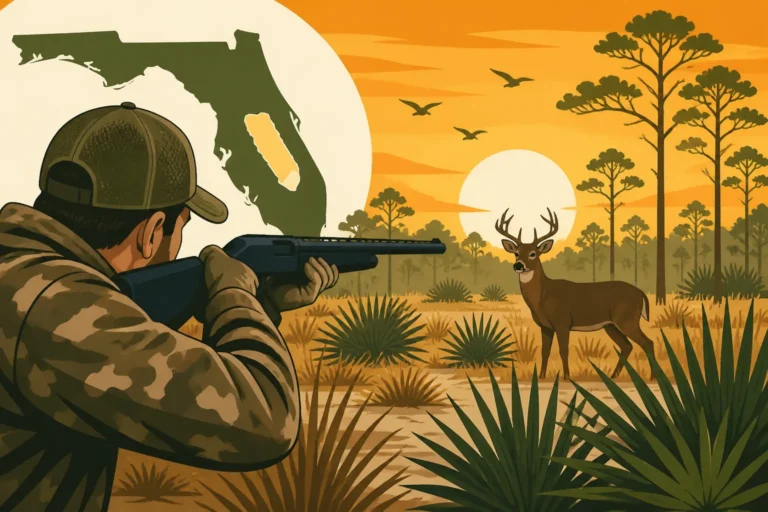
The late season in Florida can be incredibly challenging for deer hunters. After months of pressure, deer become ghost-like, often sticking to the thickest cover during daylight hours and only emerging under the cloak of darkness. It's a real head-scratcher trying to figure out where they feel safe enough to move, especially when the prime food sources of early season are long gone. This guide is all about giving you the edge, focusing on how to effectively scout and hunt those often-overlooked fencerows to find those wary late-season bucks.
The Underrated Power of Fencerows for Late-Season Deer
When the leaves have mostly dropped up north, or here in Florida, when the palmetto flats feel too open and the oak hammocks have been scoured clean of acorns, deer change their patterns. They become masters of stealth, using every available piece of cover to move unseen. This is where fencerows truly shine. Many hunters overlook them, seeing them as mere property lines, but to a pressured deer, a fencerow can be a lifeline – a ribbon of security connecting vital habitat components.
Why Fencerows Offer Crucial Cover
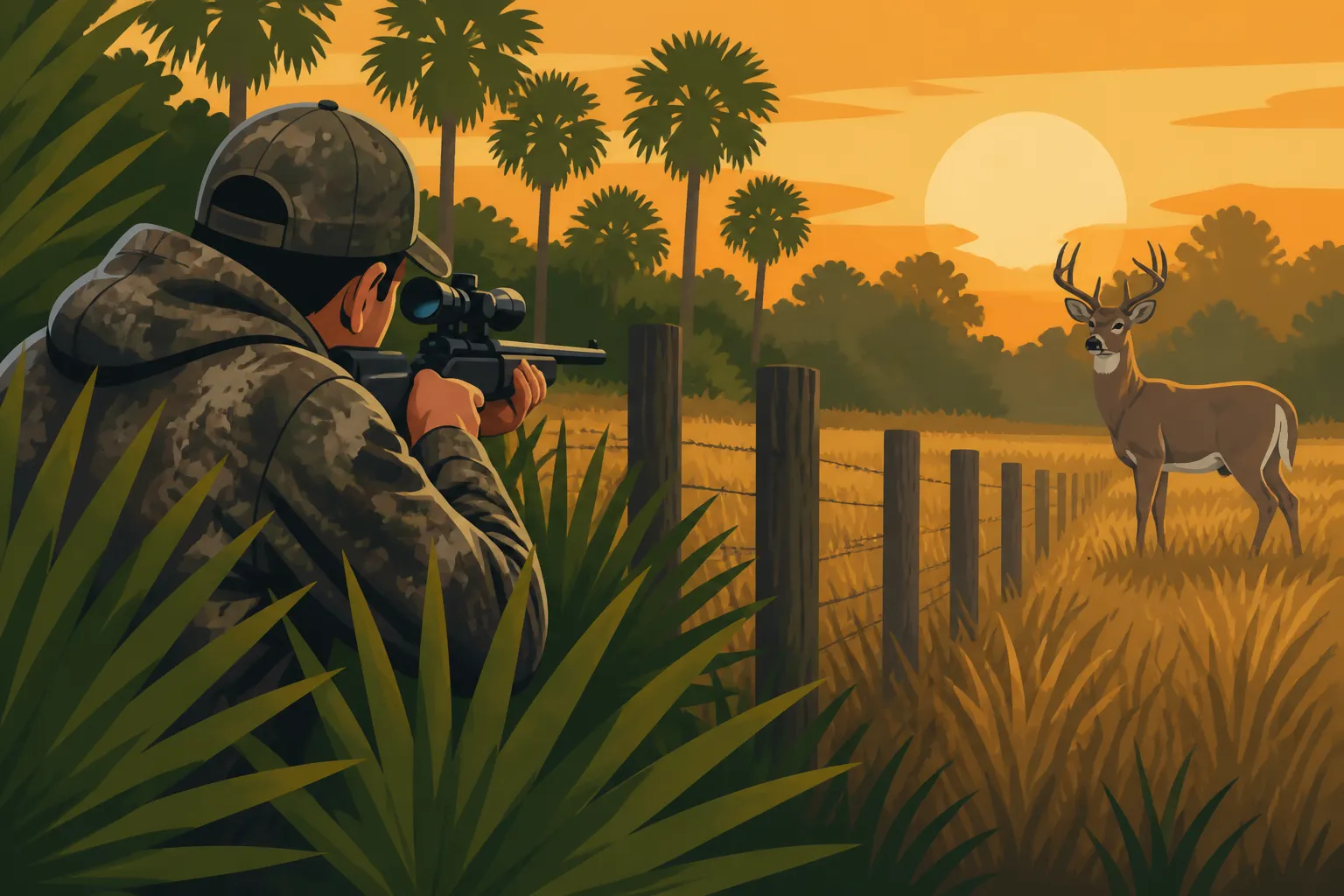
Think about it: a fencerow, even if it's just a couple of lines of barbed wire with a tangled mess of blackberry bushes, privet hedge, or saw palmetto growing up along it, creates a visual barrier. For a deer that's been bumped and pushed all season, any visual buffer is a godsend. They can walk parallel to a field edge, or move between two blocks of timber, with their bodies mostly obscured. This sense of security is amplified when the fencerow backs up to a dense swamp edge or a thick block of pine plantation. They feel less exposed, giving them the confidence to move during legal shooting light.
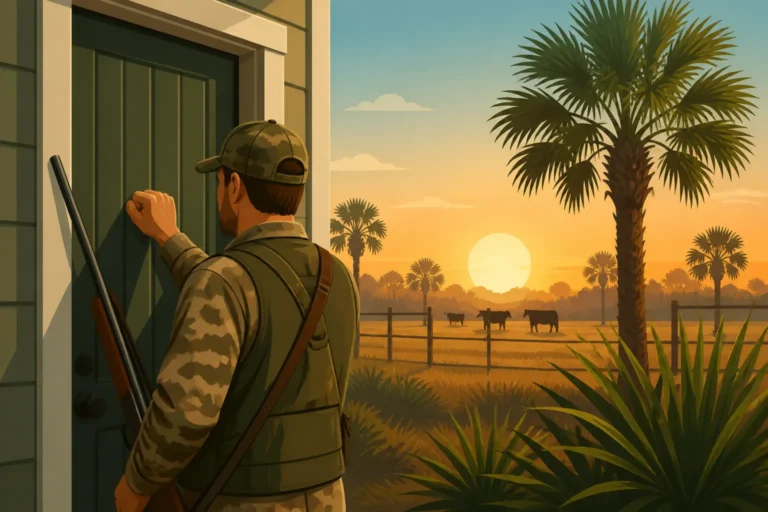
Imagine a typical Central Florida cattle ranch; vast open pastures stretching for hundreds of acres. Deer aren't going to just waltz across the middle of those during the day. But if there’s an old, overgrown fencerow bisecting the property, or separating pasture from a patch of scrub, that becomes their highway. They'll use that thin line of brush as a hidden pathway, especially during the colder mornings or late afternoons when they're transitioning between bedding areas and whatever meager food sources are still available. It’s a natural funnel, even if it doesn't look like much at first glance.
Connecting Food and Bedding Areas
By late season, the deer's diet has shifted dramatically. The lush green browse of early fall is gone, and the heavy acorn drop has usually been exhausted. What's left? Often, it's the more resilient or persistent food sources, and many of these can be found adjacent to or directly within fencerows. Think about fields that might have some leftover gleanings – dropped peanuts, corn stubble, or even patches of winter forages if a farmer has planted them. A fencerow bordering these fields becomes the stealthy access point for deer.
Deer often bed in the thickest, nastiest cover they can find – a dense cypress slough, a deep palmetto head, or a young pine plantation. Fencerows frequently run right alongside or even through these types of bedding areas, acting as natural transition corridors. They provide a safe route from a bedding area directly to a late-season food source, without the deer having to expose themselves too much in open terrain. This is why when you're glassing a powerline cut at last light, you might see a deer materialize seemingly out of nowhere, often right where it emerges from a fencerow connecting a thicket to the open area. Understanding these connections is critical to finding success when hunting into a Zone B February close.
Scouting Fencerows for Optimal Success
You can't just pick a random fencerow and expect success. Late-season deer are incredibly smart, and you need to put in the legwork (or the digital equivalent) to identify the fencerows that offer the most potential. This means dedicated scouting, both on the ground and with mapping tools.
Identifying Key Fencerow Features
When you're out there pounding the sandy soil, or even just driving slowly along a road that borders potential hunting land, pay close attention to the features of a fencerow. You're looking for anything that might make it more attractive to deer.
- Intersections and Funnels: Does the fencerow intersect another game trail, a creek crossing, or another line of cover? These intersections are often high-traffic areas. A bottleneck or pinch point, where the fencerow narrows or forces deer movement into a specific spot, is pure gold. For example, if a fencerow runs along the edge of a large palmetto head and then suddenly angles to cross a small drain, that crossing point is a prime location for deer activity. You can often see clear tracks in the sandy Florida soil at these points.
- Sign, Even If Subtle: Late-season sign might not be as fresh or as abundant as early season, but it's still there. Look for well-worn trails running parallel to the fence, recent droppings, or even some late-season rubs or scrapes. Bucks, even after the primary rut, will still check scrape lines along a sand road, especially if it's a secure travel corridor like a fencerow. Fresh tracks in the mud or soft sand after a rain are a dead giveaway that deer are using that particular route. Don't be discouraged if the sign isn't overwhelming; remember, these deer are trying to be invisible.
- Adjacency to Preferred Food Sources: Use mapping tools like GoHunt or OnX to identify fields that might hold gleanings. If a fencerow borders a standing peanut field, for example, deer will absolutely use that fencerow to access the field after dark, and sometimes even in low light. Also, look for native browse that might still be palatable – greenbriar, muscadine vines, or any persistent mast crops like live oak acorns. Even after a poor acorn year, deer will seek out every last one.
Leveraging Mapping Technology
In today's hunting world, not utilizing mapping apps is like leaving a critical tool in your truck. Programs like GoHunt or OnX Hunt are invaluable for scouting fencerows, especially for public land hunting in Florida. You can sit at home with a cup of coffee and do a massive amount of "pre-scouting."
Start by pulling up your target area and enabling aerial photo layers. Zoom in and identify all the fencerows. Pay attention to how they connect different habitat types: dense woods to open fields, swamps to higher ground, or even different types of timber cuts. Look for natural funnels created by the fence line itself or the surrounding vegetation. You can mark potential stand locations, entry routes through a Florida food plot, and even potential bedding areas, all from your computer or phone. These apps also clearly delineate property lines, which is absolutely crucial when hunting near private land. You don't want to accidentally trespass or set up a stand where your shot might carry onto someone else's property. Mapping apps can also help you understand how hunting pressure on Florida public land might be pushing deer into these more secluded fencerow corridors.
Effective Hunting Strategies for Fencerows
Once you've identified promising fencerows, it's time to formulate your hunting strategy. This isn't just about throwing up a stand; it's about meticulous planning for stand placement, entry/exit, and adapting to conditions.
Strategic Stand Placement and Setup
Your stand placement along a fencerow is paramount. You need to position yourself where you can intercept deer moving along the fence, while also considering the prevailing wind and your ability to get in and out undetected.
- Intersecting Trails or Funnels: Look for where deer trails cross the fencerow or where the fencerow creates a natural funnel. A bend in the fence, a dip in the terrain, or a section where the cover along the fence is particularly thick are all great spots. Setting up a stand where a fencerow crosses a creek bottom at first light can be deadly.
- Wind Direction: Florida's winds can be tricky, often light and variable, especially in the morning. However, playing the wind is always critical. Position your stand so your scent cone blows away from where you expect deer to approach or travel. Consider multiple stand locations for different wind directions. Even in flat Florida terrain, understanding wind and thermals is vital. If a fencerow borders an open field, deer will often approach it with the wind in their face, scent-checking the open area before entering.
- Entry and Exit Routes: This is often overlooked but can make or break a hunt. Plan a route to your stand that keeps you hidden and avoids disturbing the area you plan to hunt. Walk in with the wind in your face or across it, not at your back, blowing your scent into the hunting zone. For fencerows, you might be able to use the cover of the fencerow itself for your approach if it's thick enough, but be mindful not to spook deer already using it. If the fencerow borders a public road, be discreet and ensure you're well off the road before setting up. For those using a ground blind on Florida public land, brushing in a blind on a field edge near a fencerow can be incredibly effective, offering concealment and a good shot angle.
Adapting to Late-Season Deer Behavior
Late-season deer are wary and often move differently than during the rut. Your tactics need to reflect this increased caution.
- Timing Your Hunts: While dawn and dusk are always prime times, don't rule out midday activity, especially if there's cold weather or increased hunting pressure. A pressured deer might move through a secure fencerow corridor during the quietest parts of the day when most hunters are taking a break. A sharp cold front can really get them on their feet.
- Calling and Decoys (Carefully): While not as effective as during the rut, some light calling can still draw a curious deer. A soft grunt call in a Florida oak hammock or near a fencerow could bring a buck within range. If the fencerow offers good cover, even rattling volume in thick Florida scrub might work, but be judicious. Decoys are less common for fencerow hunting due to limited visibility, but if you have a clear shooting lane and the fencerow opens into a small clearing, a doe decoy could sometimes work to stop a buck.
- Stealth and Patience: These deer will pick up on any little thing. Move slowly, quietly, and minimize unnecessary movements. Patience is your biggest weapon. A deer might stand just inside the cover of a fencerow for 20 minutes, scent-checking the area before stepping out. If you're fidgeting or making noise, you've lost your chance.
Overcoming Common Fencerow Hunting Challenges
Hunting fencerows isn't without its difficulties. Understanding these potential roadblocks and planning for them can save you a lot of frustration.
Navigating Property Boundaries and Access
One of the most significant challenges with fencerows is that they often are property boundaries. This means you need to be acutely aware of where you are and where your shot is going.
- Know Your Lines: Before you ever step foot in the woods, use your mapping apps to clearly identify property lines. GoHunt's detailed maps can show you exactly where private property begins and ends. Never assume a fence is the boundary; always verify. You need to know what Florida trespass law requires, especially if you retrieve game from private land in Florida.
- Respect Adjacent Landowners: Even if you're on public land, be mindful of private property bordering the fencerow. Avoid shooting towards homes or buildings. A little courtesy goes a long way. If you have permission to hunt a small private tract in Florida, understanding its boundaries and the neighboring properties is even more vital.
- Retrieving Game: If a deer you shoot runs onto private land, you must have permission to retrieve it. This is not just common courtesy; it's the law. Develop relationships with landowners in advance if possible, or at least have a plan for who to contact if this situation arises.
Dealing with Thick Cover and Limited Visibility
Florida's vegetation can be incredibly dense, and fencerows often accumulate even more tangled undergrowth. This can make for challenging hunting conditions.
- Creating Shooting Lanes (Where Permitted): On private land where you have permission, you might be able to do some light trimming to create a few shooting lanes. However, on public land, altering vegetation is usually strictly prohibited. Always check the specific WMA or National Forest rules.
- Patience and Persistence: In thick cover, you might only get a small window for a shot. Be ready. Position yourself to take advantage of any natural breaks in the vegetation, or where deer might pause before entering an opening. Sometimes, the best strategy is to let the deer get slightly past you for a quartering away shot, rather than trying to thread a bullet through a tiny window head-on.
- Choosing the Right Weapon: For extremely thick fencerows, a shotgun with slugs, a muzzleloader, or a crossbow during Florida's archery season might be more suitable than a long-range rifle, allowing for quicker, more precise shots in tight quarters. If you're bowhunting Florida's Zone A August opener, remember how thick the vegetation can be even then, let alone late season.
Working a fencerow for late-season deer requires observation, careful planning, and a deep understanding of deer behavior under pressure. But with a bit of effort and the right approach, these unassuming linear strips of habitat can unlock some of the most rewarding hunting experiences Florida has to offer.
Disclaimer
Hunting is an inherently dangerous activity. Always prioritize safety, understand and follow all Florida Fish and Wildlife Conservation Commission (FWC) regulations, and never hunt without proper licenses and hunter education. This guide is for informational purposes only and does not supersede official hunting regulations.