Layout Blind Hunting Florida Rice Fields
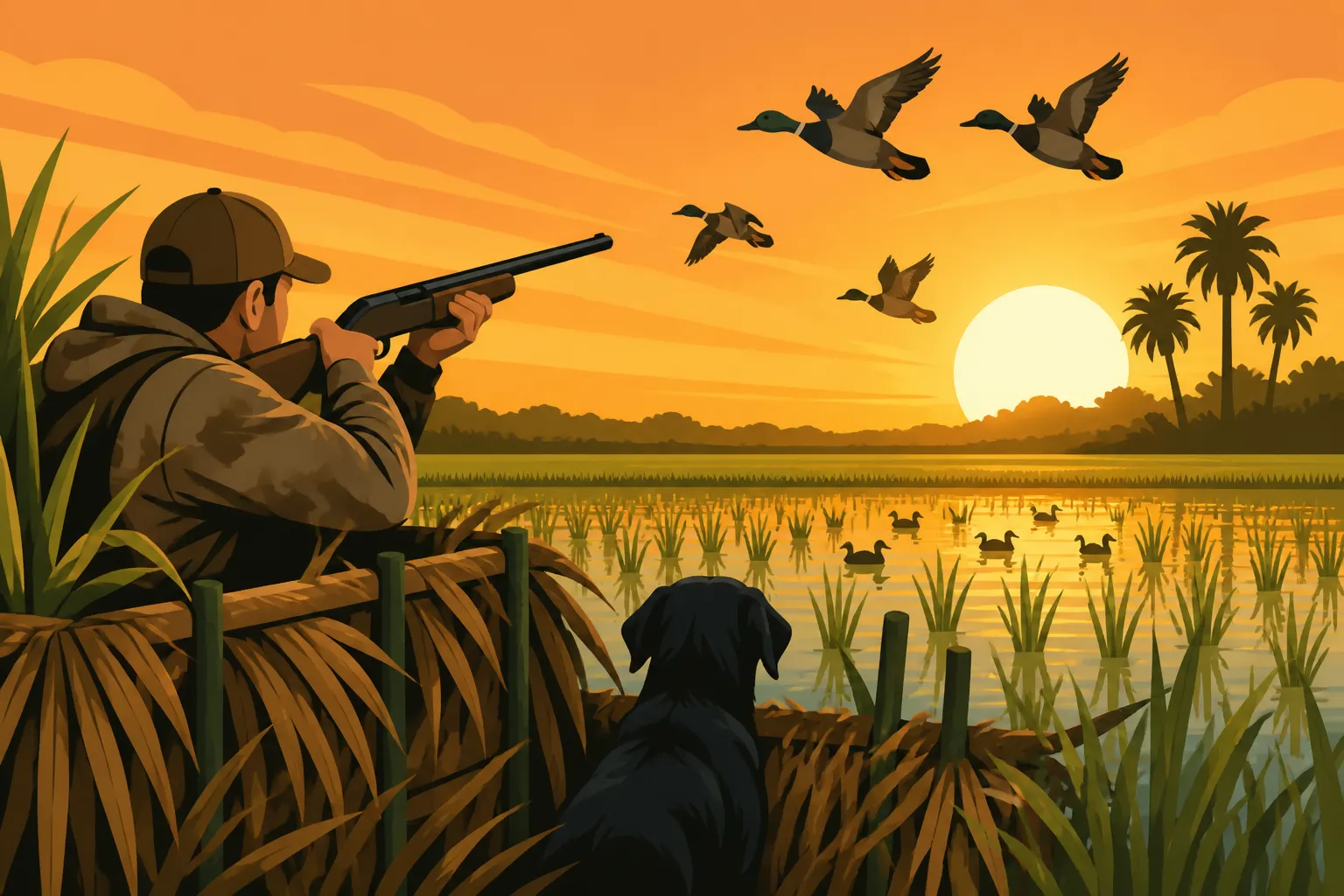
For many waterfowlers in Florida, the image of duck hunting often conjures up cypress swamps or vast open marshes. But the reality is, some of the most consistent and exciting action happens in an overlooked habitat: rice fields. These agricultural landscapes, especially the flooded ones, draw in incredible numbers of ducks and geese, yet hunting them successfully requires specialized tactics. This guide will walk you through everything you need to know about effectively using layout blinds in Florida's rice fields, turning what might seem like an open, exposed challenge into a prime hunting opportunity.
Why Layout Blinds are Essential for Rice Field Waterfowling
Hunting ducks and geese in the vast, flat expanse of a flooded rice field presents a unique set of challenges compared to the more forgiving cover found in natural wetlands. Without the thick cattails, brush lines, or timber to hide within, hunters often feel exposed. This is precisely where the layout blind truly shines, transforming a potential bust into a brilliant setup.
The Low Profile Advantage in Open Water
Imagine standing upright or even trying to hide behind a few scattered clumps of vegetation in a flooded rice field. It's nearly impossible to disappear. Ducks and geese have incredible eyesight, honed over generations to spot anything out of the ordinary from hundreds of feet up. A layout blind solves this problem by getting you as low to the ground as possible, often just inches above the water or mud. This extremely low profile effectively breaks up your human outline, making you virtually invisible to circling birds. When those mallards or teal are making their final approach, eyes locked on your decoys, the last thing you want is a glint of movement or a visible silhouette sending them flaring away. A well-brushed layout blind becomes part of the landscape, allowing birds to commit without a second thought.
Blending into the Monoculture Landscape
Florida's rice fields are, by nature, monocultures – large areas dedicated to a single crop. While some residual stubble or sprouting rice might offer minimal natural concealment, it's rarely enough to completely hide a hunter. Layout blinds are specifically designed to be "brushed in" with local vegetation, allowing you to seamlessly integrate your setup into the uniform backdrop of the field. You can gather stubble, dry grass, or even a few sparse rice stalks and tuck them into the blind's stubble straps. This customization is critical because it ensures your blind doesn't stick out like a sore thumb against the consistent texture and color of the rice field. The goal isn't just to be low, but to truly become indistinguishable from the surrounding environment, a natural-looking mound of debris or stubble that holds no threat to wary waterfowl.
Mobility and Adaptability for Changing Conditions
One of the often-underestimated benefits of layout blinds for rice field hunting is their portability. Unlike permanent blinds or bulky A-frame setups, most layout blinds are relatively lightweight and designed for quick deployment and takedown. This mobility is a game-changer when you're hunting expansive rice fields where bird patterns can shift with changes in weather, feeding habits, or hunting pressure. Imagine scouting a field on a Monday, identifying a hot feeding spot, and then arriving on Saturday morning to find the ducks have moved 500 yards downwind. With a layout blind, you can quickly adjust your setup, relocating to where the birds want to be without a massive logistical undertaking. This adaptability also extends to unexpected weather changes, allowing you to reposition for optimal wind direction or sun angle, which are crucial for effective decoy spreads and minimizing shadows.
Choosing the Right Layout Blind for Florida's Environment
Selecting the perfect layout blind for Florida's rice fields isn't just about picking one off the shelf. You need a blind that can withstand the unique challenges of the Sunshine State – from intense sun and humidity to standing water and unexpected downpours. The right choice will keep you comfortable, concealed, and ready for action.
Material Durability and Water Resistance
Florida's environment is notoriously tough on gear. Constant exposure to sun, humidity, and often standing water means your layout blind needs to be built to last. Look for blinds constructed from heavy-duty, waterproof or water-resistant fabrics like 600D polyester. Reinforced stitching and robust zippers are also key, as flimsy components will quickly fail under repeated use in wet conditions. You'll likely be dragging your blind through muddy edges or setting it directly in shallow water, so the bottom material should be particularly durable and completely waterproof to prevent you from getting soaked. Some higher-end models feature rubberized bottoms or reinforced PVC sections for ultimate protection against punctures and moisture, which can be a real blessing after hours of sitting.
Camouflage Patterns for Florida's Landscape
While many general waterfowl camouflage patterns work, optimizing for Florida's specific rice field aesthetics can give you an edge. Think about the dominant colors and textures of a dry or flooded rice field. You'll often see shades of faded tan, light brown, muted green, and straw-like yellows. Patterns that mimic stubble, dry grass, or agricultural waste are ideal. Brands like Avery, Final Approach, and Rogers Sporting Goods offer patterns designed for diverse agricultural settings. Often, a pattern that blends with dead cattails or marsh grass will also work well, as these are common along field edges. Remember, the best camo pattern is only as good as its brushing. Even a perfectly matched pattern needs to be covered with natural vegetation from the field to truly disappear. When you grab your GoHunt app to scout, take note of the actual colors in the fields you're targeting.
Comfort and Accessibility Features
Spending hours lying flat in a field, often in warm or humid conditions, demands a comfortable blind. Look for features like a padded headrest, a comfortable backrest that offers support, and ample interior room, especially if you plan to store gear like extra calls, snacks, or water bottles inside. Side flag ports are crucial for flagging down distant birds, and mesh face screens provide a view of incoming birds while maintaining concealment and offering some protection from insects. Easy entry and exit are also important, particularly if you need to quickly retrieve a downed bird or stand up for safety reasons. Some blinds offer a wider profile for larger hunters or more gear, while others prioritize a more compact design for ultimate stealth and mobility. Consider how quickly you can sit up and shoot, as a slow, cumbersome blind can cost you opportunities.
Scouting and Setup Techniques for Optimal Success
Hunting success in rice fields, perhaps more than any other habitat, hinges on meticulous scouting and strategic blind placement. Without the natural funnels or cover features of timber or marsh, you have to create your own advantage through observation and smart setup.
Reading the Rice Field Landscape for Waterfowl Sign
Before you even think about setting up a blind, you need to understand where the birds want to be. Start by spending time observing the fields, ideally during non-hunting hours. Look for visible feeding activity – ducks "tipping up" to dabble, geese grazing, or large rafts of birds loafing in a particular section. Pay attention to their flight patterns: Where do they enter the field? What routes do they take? Where do they land most consistently? Scouting With the Florida FWC App can be a huge asset here, allowing you to mark potential hot spots and access routes from home. Look for subtle variations in water depth or leftover rice grains that might be attracting birds. Sometimes, just a slight depression that holds a bit more water or a patch of slightly taller stubble can be the key to where birds congregate.
Strategic Placement for Flight Paths and Wind
Once you've identified a promising area, your blind placement becomes paramount. Ducks almost always land into the wind, so position your blinds downwind of your decoy spread, facing into the prevailing wind direction. This allows incoming birds to finish their approach directly over your blinds, offering close, ethical shots. Consider the sun's position – you want the sun at your back, if possible, to keep it out of the birds' eyes and prevent your shadow from being cast towards the spread. Also, think about accessibility. Can you get to your chosen spot without disturbing other areas of the field? Are there any subtle changes in elevation or a small drainage ditch that might offer a little extra concealment for your approach? Sometimes, Hunting a Funnel Between Two Palmetto Heads applies even in open fields, finding those subtle pathways birds prefer.
Brushing In Your Layout Blind Effectively
This is perhaps the most critical step in rice field layout blind hunting. No matter how good your blind's camo pattern, it will stick out if not properly brushed. Use natural vegetation from the immediate area. If the field has rice stubble, use rice stubble. If it has dry grass, use dry grass. The goal is to make your blind look like a natural part of the field, not a foreign object. Tuck material into the stubble straps, making sure to break up the hard lines of the blind. Don't overdo it, though; too much brushing can make your blind look like a suspicious mound. The aim is to create texture and blend, allowing you to disappear. For added realism, you can even put a small amount of stubble on the blind's top cover, so when it's open for shooting, it still has some natural texture.
Decoy Spreads and Calling Strategies for Rice Fields
Once you're concealed in your layout blind, the next phase of the hunt relies heavily on how well you can draw birds into range. In the open, vast environment of a rice field, your decoys and calling become your primary tools for deception. They need to be convincing and visible from a distance.
Realistic Decoy Spreads for Ducks
For ducks in a rice field, realism and visibility are key. You'll want a good mix of species common to Florida, such as teal, pintails, wigeon, and, of course, mallards. Use a variety of decoy sizes, including some magnum-sized decoys, to enhance visibility from afar. Motion decoys, like spinning wing decoys, can be incredibly effective in drawing attention from distant flocks, especially on calm days. Position your spread to create a "landing zone" directly in front of and slightly upwind of your blinds. This funnel-like setup gives ducks a clear, inviting space to land. Consider breaking up large clumps of decoys into smaller, more natural-looking groups, mimicking how ducks often feed and rest. A common and effective tactic is to create a "J" or "U" shape with your decoys, leaving the open part of the letter as your landing hole. Remember that Decoying Wood Ducks at First Light principles still apply even for other species – making your spread look alive and inviting.
Confidence Decoys for Wary Geese
While ducks are often the primary target, geese, especially specklebellies or Canada geese, can frequent Florida's rice fields. If you're targeting geese or hoping to capitalize on mixed flocks, incorporating a few goose decoys can add significant confidence to your spread. Geese are often more wary than ducks, especially later in the season or in heavily hunted areas. Seeing a few goose decoys contentedly "feeding" in your spread can make those high-flying ducks feel safer about committing. Place goose decoys slightly apart from your duck spread, maybe on the downwind edge or as sentinels further out. Large, full-body goose decoys offer excellent visibility and realism. Keep in mind that Florida Duck Daily Bag Limit and goose limits are separate, so be sure you know the regulations for both.
Mastering the Call and Knowing When to Be Quiet
Calling in a rice field often requires a different approach than in timber or marsh. Your calls will travel much further in open country, so volume control is crucial. For ducks, start with loud hail calls to get their attention, then transition to softer, more contented feed calls and clucks as they approach. Watch the birds' reactions closely. If they start to turn towards your spread, ease off the calling. If they seem hesitant, a well-timed comeback call or a series of soft quacks might coax them in. Overcalling is a common mistake that can spook wary birds. For geese, short, sharp clucks and moans, along with some excited honks, can be effective. Knowing when to put the call down and let the decoys do the work is a skill developed over time. In highly pressured areas, sometimes minimal calling is the most effective approach, letting your expertly brushed blinds and realistic spread speak for themselves. This is particularly true if you are hunting areas experiencing Hunting Pressure on Florida Public Land.
Safety and Ethical Considerations in Rice Field Hunting
Hunting in rice fields brings with it specific safety and ethical considerations that are important to keep in mind. These unique agricultural environments, often featuring varying water depths, soft bottoms, and proximity to private property, demand extra vigilance and respect.
Situational Awareness and Blind Location
The open nature of rice fields means that while you are hidden, others might be too, or simply unaware of your presence. Always be acutely aware of your surroundings, especially if you are hunting a public land WMA where Florida Public Land Hunting Hours are clearly defined. Before the hunt, establish clear shooting lanes and zones of fire with your hunting partners. It's easy to get target fixation when a flock of ducks is cupped over the decoys, but you must always know where your partners are and what's beyond your target. Never shoot at low-flying birds if there's any chance of a pellet reaching another hunter or residential area. Additionally, be mindful of the sun's position throughout the hunt; what was a safe shooting direction at dawn might become unsafe later if the sun blinds your view or highlights your partners.
Retrieving Birds in Water and Mud
Flooded rice fields can often have surprisingly deep sections or extremely soft, mucky bottoms. Retrieving downed birds can become a challenge, and even a safety hazard, if you're not prepared. Always assess the water depth and bottom conditions before entering the field, especially if you're on unfamiliar ground. Wearing waders is usually a necessity, and a retriever dog can be an invaluable asset, not just for speed but for safety. Never wade into water that is over your head or where the bottom feels unstable. Carry a long retrieval pole if you don't have a dog. Losing a downed bird is not only disheartening but also an ethical failure. Make every effort to retrieve your game swiftly and safely.
Respecting Private Land Boundaries
Many rice fields in Florida are on private agricultural land. If you're lucky enough to have permission to hunt such a field, always respect the landowner's property. Know your boundaries precisely and avoid straying onto neighboring properties, even if birds fly over. Trespassing is not only illegal but can also jeopardize future hunting opportunities for you and others. If hunting on public land, use tools like GoHunt or the FWC app to clearly identify property lines. It's not uncommon for public lands to border private fields, and straying even a few yards can lead to serious issues. Always close gates, pack out all your trash, and leave the property better than you found it. Remember, good hunter-landowner relations are built on trust and respect, and even on public land, being a good neighbor goes a long way. This is particularly important when considering Asking a Florida Landowner for Permission for future hunts.
Overcoming Common Challenges in Florida Rice Field Hunting
Florida's rice fields offer incredible waterfowl hunting, but they come with their own set of unique hurdles. From fluctuating water levels to swarming insects, being prepared for these challenges can make the difference between a frustrating outing and a successful one.
Dealing with Variable Water Levels
One of the biggest variables in Florida rice fields is water. Depending on rainfall, irrigation schedules, or drainage efforts, water levels can change dramatically, sometimes even overnight. This can impact everything from your access to your decoy spread effectiveness. Too much water, and your layout blinds might float or become less stable. Too little, and ducks might avoid the field, or you might struggle to create realistic water movement with your decoys. Always check local conditions and forecasts before your hunt. If possible, scout the day before to see current water levels. Some blinds are designed to be more versatile in varying depths, offering adjustable legs or a more buoyant design. Be prepared to adjust your decoy spread based on the water: shallower water might require more feeding-style decoys, while deeper water allows for more upright positions.
Managing Mosquitoes, No-See-Ums, and Heat
Let's be real: Florida is buggy, and rice fields, with their standing water, can be mosquito and no-see-um factories. These tiny tormentors can turn a promising hunt into an unbearable ordeal if you're not prepared. Invest in high-quality insect repellent, preferably one with a good percentage of DEET or picaridin. Permethrin-treated clothing can also provide an excellent barrier. Head nets, while not always comfortable, can be a lifesaver, especially during early morning or late evening hunts. Beyond insects, Florida's heat and humidity can also be challenging, even during the "cooler" hunting months. Dress in light, moisture-wicking layers, stay hydrated, and bring plenty of water. Overheating in a layout blind is a real risk. Sometimes, knowing Hot-Weather Sitting Strategy in Florida can mean the difference between staying in the field or packing up early.
Handling Hunting Pressure on Public and Private Land
Florida's prime hunting spots, whether public or private, often experience significant pressure. In rice fields, this can mean ducks are wary, flying high, or landing far out of range. If you're on public land, recognizing Hunting Pressure on Florida Public Land is key. This might mean getting to your spot extra early, being willing to walk further than other hunters, or even scouting for less obvious Finding Ground Others Walk Past. On private land, pressure might come from neighboring properties or even earlier hunts on the same field. To counter this, sometimes a minimalist approach to calling is best. Focus on perfecting your concealment and decoy spread, letting the natural look draw birds in. Using realistic feeding sounds or a single confidence call can be more effective than aggressive, high-volume calling that might have spooked birds before. Flexibility is crucial; if birds aren't working the spread, be ready to move, or try different calling sequences or decoy adjustments to adapt.
| Feature / Consideration | Optimal for Rice Fields | Why it Matters |
|---|---|---|
| Profile | Ultra-low | Ducks see everything in open fields; must disappear. |
| Color/Pattern | Stubble/Dry Grass | Blends with agricultural landscape. |
| Waterproofing | Heavy-duty, Full Bottom | Prevents soaking in shallow water/mud. |
| Brushing Capability | Abundant Stubble Straps | Critical for natural concealment with local vegetation. |
| Portability | Lightweight, Collapsible | Allows quick relocation to follow moving birds. |
| Comfort | Padded Headrest/Backrest | Hours lying flat can be taxing without support. |
| Visibility (Internal) | Mesh Face Screen | See incoming birds without being seen. |
| Insect Protection | Tight Weave, Room for Gear | Reduces exposure to mosquitoes and no-see-ums. |
| Durability | 600D+ Polyester, Reinforced | Withstands sun, water, and rough handling. |
| Access/Egress | Easy-open top | Quick shooting response and bird retrieval. |
Disclaimer
Hunting is an inherently dangerous activity. The information provided in this guide is for informational purposes only and should not replace proper hunter education, safety courses, or professional guidance. Always follow all local, state, and federal hunting regulations. Ensure you have all required licenses and permits, including your Florida Migratory Bird Certification if targeting waterfowl. Be mindful of ethical hunting practices, respect landowners, and prioritize safety for yourself and others. The author and publisher are not responsible for any accidents, injuries, or legal issues that may arise from using this information.