Hunting Florida’s Zone D Fall Opener
The fall opener in Florida's Zone D can feel like a riddle wrapped in an enigma, especially with the sweltering heat often lingering well into September and the unique challenges our southern deer herds present. Many hunters get frustrated trying to figure out where the deer are, what they're doing, and how to effectively hunt them when the leaves aren't changing and the mercury is still hitting the high 80s. This guide aims to unravel those mysteries, offering seasoned advice and practical strategies to help you make the most of your Zone D fall opener.
Understanding Zone D's Specifics
Florida's Zone D is a distinctive hunting region, not just because of its geographical location, but also due to its specific climate and deer behavior patterns. Unlike the crisp fall mornings many hunters associate with deer season, Zone D often starts with a continuation of summer, demanding a unique approach to scouting and hunting.
Zone D Geography and Habitat
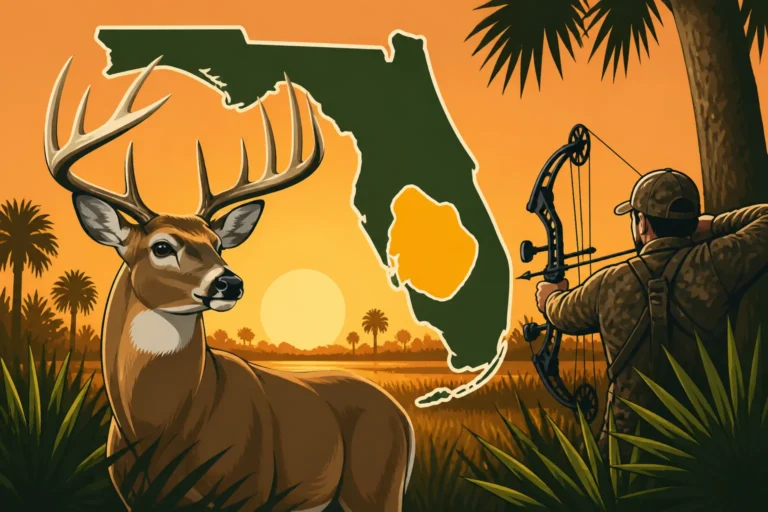
Geographically, Zone D covers a significant portion of Southwest Florida, stretching across counties like Collier, Hendry, Glades, and parts of Palm Beach and Lee. This region is characterized by vast expanses of cattle ranches, large agricultural operations, palmetto flatwoods, cypress swamps, and dense oak hammocks. The sheer scale and variety of habitat can be daunting. You're looking at areas that range from wide-open pastures where deer might cross quickly at dawn to incredibly thick, nearly impenetrable swamps where they vanish into the shadows. The transition areas between these habitat types are often key, serving as natural travel corridors or bedding areas. Understanding the specific nuances of your hunting spot, whether it’s a privately managed ranch or a public Wildlife Management Area (WMA), is crucial for success. These diverse landscapes demand different scouting methods and hunting tactics, which is why a one-size-fits-all approach just doesn't cut it here.
Fall Opener Dates and Season Structure
The fall opener in Zone D typically kicks off in mid-September for archery season, followed by muzzleloader season a couple of weeks later, and then the general gun season, which can sometimes extend into late February. These staggered openings offer different opportunities and require adapting your strategy to the legal weapon type. For instance, the early archery season, often coinciding with peak heat, demands an extremely quiet and scent-controlled approach. As you move into muzzleloader and then gun season, the deer have often experienced some hunting pressure, making them warier. You'll want to check the most current FWC regulations for exact dates each year, as they can shift slightly. The duration of the season, particularly the late close for general gun, means that even if the opener is slow, you have ample opportunity as the weather eventually cools and the deer become more active. This extended season provides a unique chance to adapt and learn as the weeks progress.
Deer Behavior Leading into Fall
Florida deer, particularly in Zone D, behave differently than their northern cousins. The rut timing is far less predictable and often later than in other states, sometimes peaking in late fall or even early winter. As the fall opener arrives, bucks are typically still in their bachelor groups, focused primarily on feeding and putting on weight. They haven't quite entered the aggressive, territory-marking phase that comes with the rut. You'll often find them transitioning between bedding areas in thick cover and prime food sources like oak hammocks dropping acorns, planted food plots on private land, or agricultural fields. Does and fawns will also be concentrated around these food sources, often in family groups. The key frustration here is that traditional pre-rut behaviors like scraping and rubbing might be minimal or non-existent during the very early opener. Instead, focus on consistent patterns related to food, water, and thick cover. A great resource for understanding these patterns is to read up on articles like Florida Deer Herd Size or When the Florida Rut Peaks by Zone to get a broader perspective on their annual cycles.
Pre-Season Scouting and Preparation
Effective scouting and preparation are paramount for success, especially when dealing with the unique conditions of Florida's Zone D. Without a solid understanding of the terrain and deer movement, you'll be largely relying on luck, and we all know how reliable that can be.
Leveraging Technology for Early Intel
Before you even step foot in the woods, the right technology can give you a massive advantage. Satellite imagery and topographical maps are your best friends. Services like GoHunt offer incredible detail, allowing you to identify potential bedding areas, travel corridors, and water sources from the comfort of your home. Look for subtle changes in elevation, even small ones that can create funnels or provide a slight thermal advantage. Pinpoint oak hammocks, dense palmetto thickets, and creek bottoms. Pay close attention to property lines, especially if you're hunting public land adjacent to private property, as deer often use these boundaries for safe travel. You can mark potential stand locations, entry, and exit routes, and even identify areas that might hold later-season food sources like persimmon trees. This digital reconnaissance, as detailed in our guide on Reading Aerial Photos for Florida Deer, saves countless hours of aimless wandering and helps you prioritize where to focus your boots-on-the-ground efforts.
Boots-on-the-Ground Reconnaissance
There's no substitute for getting your boots dirty. Once you've identified key areas on your map, it's time to confirm them in person. During the pre-season, focus on finding fresh sign: tracks, droppings, rub lines (even if sparse), and old scrapes. Look for trails that lead from thick cover to food sources, paying attention to the size and freshness of the tracks. Water sources, whether natural ponds, creeks, or even drainage ditches, are critical, especially during the hot early season. Deer will always need water, and they'll often travel predictable routes to get it. Be mindful of scent control even during scouting. The goal is to observe without disturbing. If you find a promising area, don't over-scout it. Make your observations, confirm what you saw on the map, and move on. Remember, you're not just looking for deer sign; you're looking for patterns of movement that you can exploit during the season. Consider reading Scouting Florida Public Land Before Season for more in-depth tips on what to look for.
Setting Up Stands and Blinds
Stand placement is an art, not a science, and it's particularly tricky in Zone D. With the early opener's heat and often dense foliage, visibility can be limited. Think about prevailing wind directions – a constant challenge in Florida's flat terrain where thermals can be less predictable than in mountainous regions. Look for natural funnels, pinch points, and cover edges. If you're using a ladder stand or hang-on, get it up well before the season to let the deer get accustomed to it. For ground blinds, brush them in thoroughly to break up their outline. This is especially important on public land where deer see a lot of pressure. I've seen too many hunters slap a blind up the day before opening morning and wonder why deer are spooking. Give it time, make it blend, and consider your entry and exit routes carefully. You want to be able to get to and from your stand without alerting every deer in the county. For more specific advice on using blinds, check out Using a Ground Blind on Florida Public Land.
Effective Hunting Strategies for the Fall Opener
Given the unique environmental conditions of Zone D during the fall opener, typical northern hunting strategies often need significant modification. Adapting your approach to the heat and early-season deer behavior is key to filling a tag.
Morning and Evening Stand Placement
During the early fall opener, deer movement, especially for mature bucks, will be concentrated during the cooler hours of dawn and dusk. This makes morning and evening stand placements absolutely critical. In the mornings, focus on stands that intercept deer moving from feeding areas back to thick bedding cover. This often means setting up on the edge of a food plot, agricultural field, or an oak hammock where acorns are dropping. Be in your stand well before first light, using a quiet entry route.
For evening hunts, reverse the strategy: position yourself between known bedding areas and prime food sources. Deer will slowly filter out of their sanctuaries as the sun begins to dip. Pay careful attention to the wind, as thermal currents can sometimes drop as the air cools, pulling your scent downhill or into a low-lying area. On a private ranch, a stand overlooking a green field planted for deer can be deadly, but on public land, focus on natural forage like acorns or browse lines along transition zones. Remember, in the heat, deer aren't going to be moving far or fast in the middle of the day.
Still-Hunting and Spot-and-Stalk
While stand hunting is popular, still-hunting and spot-and-stalk tactics can be incredibly effective in Zone D, especially in areas with varied terrain or where you suspect deer are bedded down in thick cover. Still-hunting involves moving slowly and deliberately through the woods, pausing frequently to scan for movement or listen for subtle sounds. Think of it as stalking, but covering more ground. Focus on areas with good visibility but also enough cover to break up your silhouette. This could be along the edges of palmetto flatwoods or through open pine stands.
Spot-and-stalk is more challenging, requiring keen eyesight and extreme patience. It's best suited for more open areas, like pastures or agricultural fields, where you can glass from a distance. Once you spot a deer, the real work begins: using available cover, wind direction, and terrain features to close the distance undetected. This is where your GoHunt maps become invaluable again, helping you visualize potential approach routes to avoid being seen or winded. In the dense Florida scrub, however, getting close enough for a shot without being detected is a high-level skill, often requiring you to focus on Still-Hunting Florida Palmetto Flatwoods specifically.
Calling and Decoying Tactics
Early season calling in Zone D is generally more subdued than during the peak rut. Buck grunts can work, but a subtle doe bleat or fawn distress call might be more effective in attracting curious deer without spooking them. Remember, bucks are still in their bachelor groups and not yet aggressively seeking does. Over-calling can easily alert and send deer scattering.
Decoying can be a powerful tool, particularly for archery hunters, but it needs to be used judiciously. A single doe decoy placed near a food source or travel corridor can draw in other deer, especially younger bucks or does. Ensure the decoy is positioned to allow for a clear shot and always consider the wind. If you're using a buck decoy, keep it small and non-aggressive; a large, dominant buck decoy too early in the season can sometimes intimidate younger deer or challenge mature bucks that aren't yet in a fighting mood. Integrating these tactics with your stand placement or still-hunting approach can sometimes be the missing piece of the puzzle, but always prioritize stealth and scent control above all else in these early, warm conditions. Our guide on Grunt Calls in a Florida Oak Hammock offers more insight into subtle calling techniques.
| Strategy Type | Best Conditions | Pros | Cons |
|---|---|---|---|
| Morning Stand | Deer moving from feed to bed, cool dawn hours. | Intercepts predictable movement, element of surprise. | Requires early, quiet entry; sensitive to wind shifts. |
| Evening Stand | Deer moving from bed to feed, late afternoon. | Catches deer as they become active; good for observing patterns. | Light fades quickly; careful exit needed. |
| Still-Hunting | Dense cover, varied terrain, scouting new areas. | Covers ground, adaptive, good for finding bedded deer. | Requires extreme stealth and patience; easy to spook deer. |
| Spot-and-Stalk | Open fields, pastures, long sightlines. | Exciting, precise targeting of specific animals. | Very challenging in thick Florida cover; requires excellent glass. |
| Calling (Subtle) | Early season, curious deer, light pressure. | Can draw deer into range that might otherwise pass by. | Over-calling can spook deer; less effective for dominant bucks. |
| Decoying | Near food sources, transition zones, good visibility. | Can distract deer, hold their attention, and create shot opportunities. | Requires careful placement; deer may ignore or be spooked. |
Gear and Equipment Considerations
Hunting in Florida's Zone D, especially during the fall opener, presents unique challenges that demand specific gear choices. From the type of weapon you carry to the clothing you wear, everything needs to be optimized for hot weather and dense cover.
Weapon Choices for Zone D
Your weapon choice for Zone D will depend heavily on the specific season you are hunting (archery, muzzleloader, or general gun) and your personal preference, but always consider the environment. For archery season, a reliable compound bow with accurate broadheads is standard. Crossbows are also legal during archery season and can be an excellent option for newer hunters or those who prefer a steadier aim. In Florida, the legal requirements for crossbows are quite specific, so be sure to check those out.
During muzzleloader season, a modern inline muzzleloader offers excellent range and accuracy. Given Florida's dense vegetation, a scope is often advantageous for target acquisition in low light. For general gun season, deer rifles are popular, but consider the cartridge. A .243, .270, or .30-06 are common and effective. However, in extremely thick cover, shots are often close, and a brush gun like a .30-30 or a shotgun with slugs can be highly effective. The key is to be proficient with whatever you choose and ensure it's sighted in for the distances you expect to shoot in the field. Our guide on Legal Firearms for Deer Hunting provides more insight into what's allowed.
Essential Clothing and Scent Control
This is where many hunters from up north struggle. You're not dealing with freezing temperatures, but stifling heat and humidity. Lightweight, moisture-wicking clothing is absolutely essential. Think thin, breathable layers in camouflage patterns suitable for Florida's green landscape. Cotton is your enemy; it holds moisture and scent. Instead, opt for synthetics or merino wool blends.
Scent control is non-negotiable in the early season. Deer have an incredible sense of smell, and in warm, humid air, your scent can hang heavy. Use scent-eliminating sprays, wash your hunting clothes in scent-free detergent, and store them in airtight containers. Shower with scent-free soap before heading out. Even with the best efforts, some scent will escape, so always try to hunt with the wind in your favor. Carrying extra water, bug spray (non-scented, of course!), and a comfortable, lightweight pair of snake boots are also smart additions to your packing list. When considering your overall strategy, remember how critical Hot-Weather Sitting Strategy in Florida is to your comfort and effectiveness.
Navigation and Safety Gear
Florida's wild areas can be disorienting, with vast tracts of similar-looking palmettos or cypress heads. A reliable GPS unit or a smartphone with a robust hunting app like GoHunt is non-negotiable. Download offline maps before you go, as cell service can be spotty in remote areas. Mark your truck, your stand, and any key features like water crossings or property lines.
Safety is paramount. Always carry a first-aid kit, especially one equipped for snake bites and insect stings. Let someone know where you're going and when you expect to return. Blaze orange is often required during general gun season on public lands, so check the regulations carefully and make sure you're compliant. Even outside of mandatory times, wearing a blaze orange vest when walking in and out of your stand can be a smart move, especially if other hunters are in the vicinity. A fully charged power bank for your phone, a good headlamp, and a signaling device (whistle or satellite messenger) can literally be lifesavers.
Post-Harvest Protocol and Regulations
Congratulations, you've harvested a deer in Zone D! But the work isn't over yet. Florida has specific requirements for reporting and processing your game, and the warm climate adds urgency to field dressing and meat care.
Deer Reporting Requirements
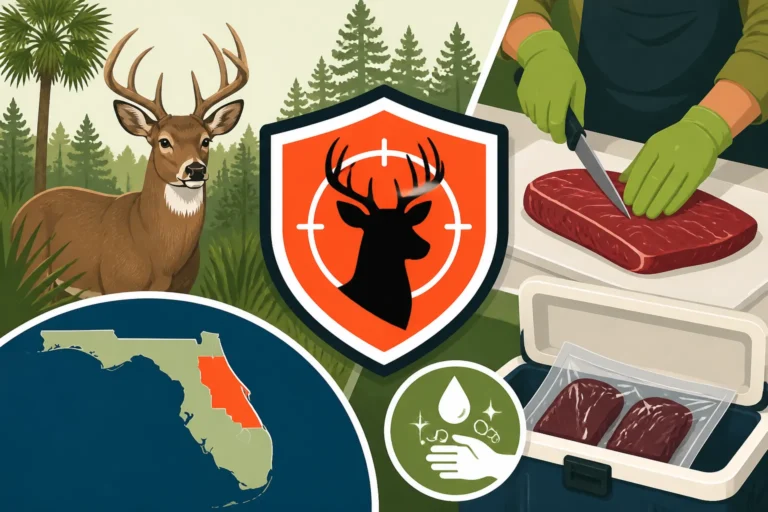
Florida law requires hunters to report their deer harvest. This is vital for wildlife management, helping the FWC track deer populations and harvest rates across different zones. The good news is that it’s incredibly easy these days. You can typically report your harvest online through the FWC website or using their Fish|Hunt FL app. You’ll need to provide details like the date, county, management zone (Zone D in this case), and sex of the deer. This usually needs to be done within 24 hours of harvest. Failing to report your harvest can result in penalties, so always make it a priority before you even think about butchering. For more details, you can consult Florida Deer Reporting Requirements.
Field Dressing in Warm Weather
This is arguably the most critical step after the shot, especially in Florida's persistent heat. Meat spoils quickly in warm temperatures. As soon as possible after recovery, you need to field dress your deer. This involves removing all internal organs to allow the carcass to cool rapidly. Work quickly and efficiently. If you're alone, having a sharp knife, a good pair of gloves, and a plan for dragging the deer out are essential.
Once field dressed, get the deer out of the woods and into a cooler environment as fast as possible. If you have a long drive ahead, consider packing the body cavity with ice or frozen water bottles, especially if you can get the hide off right away. The goal is to drop the core temperature of the meat to prevent bacterial growth. Don't underestimate how fast meat can spoil in 80-degree weather. Our guide on Field Dressing a Deer in Hot Weather goes into much greater detail on techniques to save your venison.
Transporting Your Harvest
Transporting your deer safely and legally is the final step. Ensure the deer is properly tagged (if required by your license or WMA regulations). When driving, the carcass should be secured and ideally kept as cool as possible. If the weather is hot, consider wrapping the deer in a tarp or placing it on ice in a large cooler, especially if you've already quartered it. Make sure any CWD (Chronic Wasting Disease) regulations are followed, especially if you harvested your deer near a CWD management zone. While Florida has only had one confirmed case, the FWC takes this very seriously, and certain restrictions apply to moving deer carcasses out of surveillance zones. Check the latest FWC guidelines for any specific transport restrictions for your area to avoid any issues.
Common Challenges and Troubleshooting
Hunting in Zone D during the fall opener is rarely without its hurdles. From crowded public lands to unpredictable weather, being prepared for common challenges can save your hunt.
Dealing with Hunting Pressure
Public lands in Zone D can experience significant hunting pressure, especially on opening weekend. This means deer are warier, more nocturnal, and quickly learn to avoid areas with human activity. One of the biggest frustrations is showing up to your spot only to find another truck parked where you planned to hunt, or worse, hearing shots from unexpected directions.
To mitigate this, consider hunting during weekdays if possible, when pressure typically lessens. If hunting on weekends, be prepared to walk further than most other hunters. Deer will often retreat to the thickest, most overlooked pockets of cover, sometimes just a few hundred yards from a main trail. Using mapping tools like GoHunt to identify these overlooked areas can be a game-changer. Scout areas with less obvious access points, or those that require a bit more effort to reach. Being flexible and having backup spots is key. You might also want to review Hunting Pressure on Florida Public Land for tips on how to adapt.
Adapting to Weather Swings
Florida weather is famously unpredictable. While the fall opener is generally hot, sudden cold fronts can blow through, bringing with them a significant drop in temperature and sometimes heavy rain. These changes can dramatically impact deer movement. A cold front often invigorates deer, making them more active during daylight hours.
Conversely, a sudden spike in temperature or a prolonged period of rain can shut down movement. Always check the forecast leading up to and during your hunt. Be prepared for heat with plenty of water and lightweight clothing, but also pack rain gear and an insulating layer in case a cold snap rolls in. Adapting your strategy to these weather swings is crucial. For instance, after a cold front, deer might be more likely to visit open food plots, while during a warm spell, they’ll stick to dense cover near water.
Handling Wounded Game
The ethical recovery of wounded game is a fundamental responsibility of every hunter. In Zone D, tracking a wounded deer can be particularly challenging due to dense vegetation, sandy soil, and heat. A blood trail can quickly diminish in sandy conditions or be washed away by rain.
If you suspect you've made a marginal shot, give the deer ample time before tracking. For a gut shot, a minimum of 4-6 hours, or even overnight if conditions allow, can increase your chances of finding the deer bedded nearby. Mark the location of the shot and the last sign you found. Take your time, look for every speck of blood, broken twigs, or disturbed leaves. If you lose the trail, expand your search in circles around the last known sign. Having a tracking dog (where legal) can be an invaluable asset. If tracking into nightfall, a powerful headlamp is critical. Never give up on a wounded animal; it’s our duty to do everything we can to recover it. For nighttime tracking, our article on Blood Trailing After Dark in Florida can offer specific guidance.
Disclaimer
Please remember that hunting regulations and conditions can change. Always consult the official Florida Fish and Wildlife Conservation Commission (FWC) regulations each year before you hunt. This guide is for informational purposes only and does not supersede state laws or FWC directives. Be safe, ethical, and enjoy your time in Florida's outdoors.