Florida WMA Quota Permit System
It’s a tale as old as time for Florida hunters: you’ve meticulously scouted a promising piece of public land, invested in new gear, and the season opener is just around the corner. Then, the gut-punch—you realize the area you want to hunt requires a special quota permit, and the application window closed months ago. Navigating Florida's Wildlife Management Area (WMA) quota permit system can feel like trying to solve a Rubik's Cube blindfolded, but understanding it is absolutely critical for anyone hoping to chase game on some of the state's most coveted public lands. This comprehensive guide will demystify the quota hunt process, from application to drawing, and help you strategize for success in the Sunshine State’s competitive hunting landscape.
What are WMA Quota Permits and Why Do They Exist?
Hunting on Florida's vast network of Wildlife Management Areas offers incredible opportunities, but it's not always as simple as just showing up with your license. Many WMAs, especially those with high demand or sensitive ecosystems, require a special quota permit. These aren't just extra hurdles; they're a vital tool for ensuring sustainable hunting and a quality experience for everyone.
The Purpose of Quota Hunts
At its core, the quota permit system is designed for management and conservation. Imagine if every hunter in Florida descended on the same prime WMA during peak deer season. The pressure would be immense, the game would be pushed out or over-harvested, and the hunting experience would quickly deteriorate into a frustrating crowd control exercise. The Florida Fish and Wildlife Conservation Commission (FWC) uses quotas to regulate the number of hunters on specific WMAs or for particular game species during certain seasons. This ensures that animal populations aren't overstressed, habitats remain healthy, and hunters can enjoy a more solitary, higher-quality experience. It's about balancing opportunity with responsibility, making sure there's enough game and elbow room for current and future generations. Without this system, our public lands would quickly become chaotic and less productive.
Public Land Access Challenges
While Florida boasts millions of acres of public land, gaining access isn't always straightforward. Many of our most productive or unique WMAs face immense pressure due to their location, habitat quality, or reputation for trophy animals. Places like the Green Swamp Wilderness Preserve, with its sprawling cypress sloughs and pine flatwoods, or the rich hardwood hammocks of the Panhandle, would be overrun if access wasn't regulated. The quota system aims to mitigate this by creating a controlled environment. It shifts the challenge from finding an uncrowded spot on opening day to successfully navigating the application lottery. For many, this is a fair trade, as a drawn quota permit often means less competition and a more focused hunt. It certainly beats the feeling of showing up to your favorite spot only to find a dozen other trucks already there.
Understanding the Permit Lottery System
The FWC quota permit system operates largely as a lottery. You apply for specific hunts, and if more people apply than there are available permits, a drawing is held to determine who gets to go. It’s essentially a randomized selection process, but it's not entirely without strategy. For some of the most popular hunts, like specific archery deer seasons or prime spring turkey dates, the odds can be incredibly slim. However, for others, particularly those during less popular times or on more remote WMAs, your chances might be surprisingly good. The system is designed to give everyone an equal shot at the beginning, but understanding how preference points work and which hunts are consistently over-subscribed can significantly influence your long-term success. It’s important to remember that this isn't a pay-to-play system; it’s about managing hunter density for the good of the resource and the experience.
Navigating the Application Process for Florida Quota Hunts
The phrase "application process" can send shivers down any hunter's spine, conjuring images of endless forms and confusing deadlines. Florida's quota system is streamlined compared to some states, but it still requires attention to detail and timely action. Missing a deadline or making a simple mistake can cost you a valuable hunting opportunity.
Creating and Managing Your FWC Account
The gateway to all FWC quota hunts is your online FWC license and permit account. If you don’t have one, you’ll need to create it on the MyFWC website. This account is where you'll purchase your annual hunting license, WMA Management Area Permit, and apply for all quota hunts. It’s crucial to keep your personal information, especially your contact details, up-to-date. The FWC will use this information to notify you of drawing results and important updates. Think of this account as your hunting passport—you can't travel to those special hunting grounds without it. Make sure you remember your login credentials, or keep them in a safe place, because you'll be visiting this portal frequently throughout the year as different application periods open and close. Having a good mapping app like GoHunt can complement this by helping you visualize the specific WMA units you're applying for, ensuring you're targeting the right sections.
Step-by-Step Application Submission
Once logged in, you'll navigate to the "Permit Applications" section. Here, you'll see a list of available quota hunts, often categorized by species or type (e.g., deer, turkey, alligator). The application period for each hunt type is strictly enforced, and they often overlap or run at different times of the year. For instance, deer and turkey quota hunt applications typically open in late spring or early summer, with results posted a few months later, well before the season begins. Alligator quota permits have their own, often earlier, application window.
When applying, you'll select your desired hunt, specific dates, and method of take. Many hunts allow you to list multiple choices, increasing your chances of drawing something, even if it's not your top pick. You'll also declare whether you're applying as an individual or as part of a group. If applying in a group, remember that the FWC typically uses the lowest number of preference points among all group members for the drawing, so choose your hunting partners wisely! There's usually a non-refundable application fee for each hunt choice you submit, so be prepared for that small expense. Double-check every entry before you hit submit; once it’s in, it’s usually final.
Checking Application Status and Results
The waiting game after submitting your applications can be excruciating. Fortunately, the FWC makes it relatively easy to check your status. After the application period closes and the drawings are complete, results are posted directly to your MyFWC account. You'll often receive an email notification when results are available, but it's always a good idea to periodically check your account, especially if you're eagerly awaiting a specific outcome.
If you draw a permit, congratulations! You'll usually need to "accept" the permit within a specified timeframe and may need to print it out to carry with you in the field. If you don't draw, don't despair. The system often awards "preference points" for unsuccessful applications on certain hunt types, which can improve your odds in future drawings. We'll delve into those strategies a bit more later. Knowing your status helps you pivot your plans, whether it's confirming your WMA trip or shifting focus to general access areas or private land opportunities. For up-to-date information on specific dates, you can always refer to the official Florida WMA Quota Permit Application Window.
Understanding Quota Hunt Types and Categories
Florida's diverse ecosystems support a wide array of game species, and the quota system reflects this variety. It's not a one-size-fits-all approach; different animals, hunting methods, and even hunter demographics have their own specific quota categories.
Deer, Turkey, Hog, and Other Game Quotas
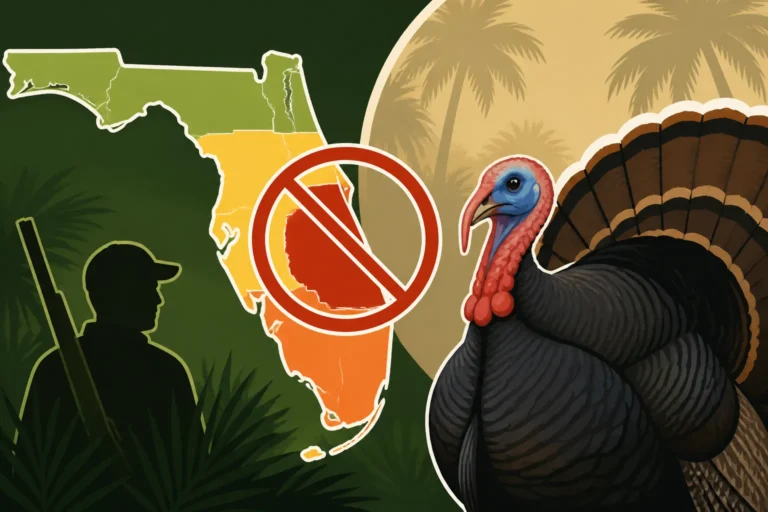
The most common quota hunts are for white-tailed deer and wild turkeys. These are often the most sought-after permits due to the popularity of these species. Deer quotas might be offered for specific archery, muzzleloader, or general gun seasons on WMAs where pressure needs careful regulation. Similarly, spring turkey quotas are fiercely competitive, particularly for the coveted Osceola subspecies in peninsular Florida. If you’re planning on Hunting Florida's Osceola Turkey, you’ll quickly learn the importance of these permits.
While hogs are an unprotected species with no closed season or bag limit on private land, certain WMAs implement hog quotas to manage populations and hunter access, especially when hog hunting overlaps with deer or turkey seasons. Other game, like some waterfowl hunts or even specific small game opportunities, might also fall under the quota system, particularly in high-demand areas. It's critical to check the specific regulations for each WMA and hunt type you're interested in, as the rules can vary significantly from one property to another.
Specific Weapon and Season Restrictions
A key aspect of quota hunts is that they often come with very specific weapon and season restrictions that differ from statewide regulations. For example, an archery-only quota hunt means only archery equipment is allowed, even if general gun season is open in other parts of the state. Muzzleloader hunts also have their own strict timelines and equipment rules. Some WMAs might have different legal shooting hours, specific bag limits for antlered or antlerless deer, or unique tagging requirements.
Understanding these nuances is vital not just for legality but for your hunting strategy. For instance, a bow-only quota hunt might mean fewer hunters in the woods, allowing you to use more aggressive calling tactics without fear of spooking another hunter’s deer. Always consult the FWC WMA regulations booklet for the specific area you've drawn a permit for. This booklet, updated annually, is your bible for understanding what's allowed and when. It truly dictates how you'll be able to hunt, from what caliber rifle you can bring to whether you can use a dog.
Youth and Special Opportunity Hunts
The FWC recognizes the importance of recruiting new hunters and providing opportunities for specific populations. Because of this, they offer youth-only quota hunts on many WMAs. These hunts are specifically for young hunters (typically under 16) and often require them to be accompanied by a licensed adult. These hunts are fantastic for introducing children to the outdoors in a controlled, less pressured environment, often with higher success rates.
Additionally, there are "Special Opportunity" hunts for various species, sometimes geared towards hunters with disabilities or other specific needs. These hunts might involve different application processes or criteria. Always check the FWC website for these categories, as they represent unique chances to experience Florida hunting that might not be available through the general quota system. These programs are a testament to Florida’s commitment to ensuring diverse access to its rich hunting heritage.
Strategies for Increasing Your Quota Permit Odds
Let's be honest, getting drawn for a coveted quota hunt feels amazing, but getting rejected repeatedly is a real bummer. While it's ultimately a lottery, there are definitely ways to play the game smarter and improve your long-term chances. It’s not about cheating the system, but rather understanding how it works to your advantage.
Applying for Less Popular Hunts
This might seem obvious, but it's often overlooked in the excitement of wanting a trophy hunt. The most popular WMAs, prime season dates, and specific hunt types (like opening weekend of general gun season on a well-known deer WMA) will always have the lowest draw odds. If you consistently apply for only these "dream hunts," you're likely to be disappointed.
A savvy strategy is to diversify your applications. Research WMAs that are less known, harder to access, or have hunt dates outside the peak popularity windows (e.g., mid-week hunts instead of weekends, late-season instead of early season). While they might not be the "glamour" hunts, these often have significantly better draw odds. You might even discover a hidden gem! Using tools like GoHunt's mapping and data layers can help you identify these lesser-known opportunities by showing public land boundaries, habitat types, and even past harvest data, allowing you to make informed decisions beyond just the reputation of a WMA. Remember, a less popular permit is still a permit, and it gets you into the woods. You might be surprised by what you find when you explore new areas, and it adds to your overall experience as a Florida hunter.
Understanding Preference Points
Florida's preference point system is your best friend for popular quota hunts. For many deer and turkey quota hunts, if you apply and are unsuccessful, you'll earn a preference point (often referred to as an "unsuccessful applicant preference point"). These points accumulate year after year, and in subsequent drawings, applicants with more preference points are given higher priority. It’s not a guarantee, but it significantly increases your statistical chance of drawing for a high-demand hunt over time.
For example, if a hunt has 100 permits and 1,000 applicants, but 50 of those applicants have 5+ preference points, the FWC's system might prioritize those high-point holders for a percentage of the permits. It pays to apply consistently, even for hunts you don't necessarily expect to draw, just to build up those points. Be aware that applying for a hunt without preference points can reset your point count for that specific hunt type, or you might need to apply for a certain category to retain them. Always consult the latest FWC regulations on preference points; they can be nuanced depending on the hunt category. The more points you accrue, the better your odds for those truly special opportunities, such as a prime hunt in Hunting Florida's Green Swamp or the coveted slots in Ocala National Forest Hunting.
Applying with a Party
Applying as a group can be a double-edged sword, but it often works out positively. When you apply as a party, if one member of the party draws a permit, everyone in that party draws. This is great for ensuring you can hunt with friends or family. However, there's a crucial detail regarding preference points: for many quota hunts, the FWC will use the lowest number of preference points among all members of the party for the drawing.
This means if you have 5 preference points and your friend has 1, your party effectively applies with 1 preference point. So, while it guarantees you hunt together if drawn, it can significantly reduce your chances of drawing for highly competitive hunts if you're grouping with someone who has far fewer points than you do. For hunts that are less competitive, or if everyone in your group has a similar number of preference points, a party application is an excellent way to secure permits for multiple hunters. Always weigh the benefits of hunting together against the potential impact on your draw odds. You can find more detailed analysis on this topic through resources like Florida WMA Quota Permit Draw Odds which often break down success rates based on preference points and party size.
| Hunt Type | Typical Application Period | Preference Point Eligibility | Avg. Draw Odds (Highly Popular Hunts) | Avg. Draw Odds (Less Popular Hunts) |
|---|---|---|---|---|
| General Gun Deer (Antlered) | May – June | Yes | 5-15% | 25-50% |
| Archery/Muzzleloader Deer | May – June | Yes | 10-20% | 30-60% |
| Spring Turkey (Osceola/Eastern) | May – June | Yes | 2-10% | 15-30% |
| Alligator (Statewide) | May – June | Yes | 10-25% | (N/A – Statewide only) |
| Specific WMA Hog Hunts | Varies by WMA | No (often) | 20-40% | 50-80% |
| Small Game/Migratory Bird | Varies | No (often) | 30-50% | 60-90% |
Note: Draw odds are generalized estimates and can vary wildly based on the specific WMA, hunt dates, and year. Always check current FWC regulations and draw statistics for the most accurate information.
Life After Drawing (or Not Drawing) a Quota Permit
The emotional rollercoaster of the quota permit system doesn't end after you click "submit." Whether you draw a permit or not, there are crucial steps and considerations to navigate that can impact your hunting season.
What to Do Once You Draw a Permit
First and foremost, if you draw a permit: celebrate! That feeling of seeing "Successful" next to a coveted hunt choice is pure joy. Your next step is usually to formally "accept" the permit within a specified timeframe through your FWC online account. Failing to accept it can result in forfeiture, and you definitely don't want that. Once accepted, you'll need to print the permit to carry with you in the field. This isn't just a formality; FWC officers will ask to see it, along with your valid hunting license and any required stamps (like the Florida Migratory Bird Certification for waterfowl hunts).
With your permit in hand, the real planning begins. Start digging deep into the specific WMA regulations for your hunt. Understand the boundaries, legal equipment, access points, and any special check-in/check-out procedures. Now is the time to really dive into scouting, whether it's through aerial maps and tools like GoHunt, or, ideally, boots on the ground. Knowing you have a dedicated permit for a specific block of time allows you to focus your efforts. This is where your investment in Scouting Florida Public Land Before Season truly pays off, turning a theoretical hunt into a concrete plan.
Dealing with Not Drawing a Permit
The sting of an "Unsuccessful" notification can be tough, especially after you've built up your hopes. But don't let it derail your entire season! This is where flexibility and a backup plan become your best assets. Remember, Florida has millions of acres of public hunting land, and while many WMAs require quotas, there are still numerous general access areas, national forests, and state forests that don't. These areas might require a WMA Management Area Permit, but no additional quota is needed beyond that.
Use this as an opportunity to explore new public lands or focus on species that don't typically require quotas, such as hogs on private land (where you can enjoy Year-Round Hog Hunting in Florida) or small game. You can also look into other types of hunting like migratory birds, which often have different access rules. Alternatively, this is a great time to start looking into private land opportunities, either by asking for permission (if you're a good door-knocker!) or joining a hunting club. And most importantly, remember to check if your unsuccessful application earned you a preference point, which will serve you well in future drawings.
Transferring or Rejecting Permits
Generally speaking, FWC quota permits are non-transferable. You cannot give or sell your permit to another hunter. The permit is issued specifically to the individual (or party) drawn. If you draw a permit and, for whatever reason, cannot make the hunt, you typically have the option to reject it. While rejecting a permit might seem counterintuitive, it's sometimes necessary due to unforeseen circumstances.
However, be aware of the implications. Rejecting a permit might or might not affect your preference points, depending on the specific hunt type and FWC regulations at the time. Sometimes, rejecting a permit means you simply don't get a point for that year's application cycle. It's rare for a rejected permit to be re-drawn and offered to another applicant on a waiting list, but it does happen occasionally, especially for alligator permits. Always review the specific FWC rules regarding permit rejection to understand any potential consequences for your preference point accrual or future eligibility.
Common Frustrations and Troubleshooting the System
Let's face it, dealing with any large bureaucratic system can be frustrating, and the FWC quota system is no exception. Technical glitches, communication gaps, and intense competition are all part of the experience. But acknowledging these challenges is the first step to navigating them successfully.
Technical Glitches and Common Errors
"The website crashed!" "My payment didn't go through!" "I can't log in!" These are all common refrains heard during peak application periods. Just like any high-traffic online system, the FWC's permit portal can experience slowdowns or errors, especially close to a major deadline. To avoid these headaches, the best advice is simple: apply early! Don't wait until the last day, or even the last week, of an application period. Submitting your applications well in advance gives you time to troubleshoot any technical issues, confirm your payment, and ensure all your choices are properly registered.
Common errors also include forgetting to update your address, not selecting enough choices, or applying for the wrong WMA/hunt type. Double-checking your application before submission is paramount. If you do encounter a persistent technical issue, take screenshots and contact FWC customer support immediately. They are generally responsive and helpful, but waiting until the last minute will only increase your stress.
Understanding FWC Communication and Support
The FWC does a good job of communicating important dates and changes, but it's ultimately your responsibility as a hunter to stay informed. Their website is the primary source of information, offering detailed regulations booklets, news releases, and FAQs. Make sure you're signed up for FWC email newsletters, as these often contain timely reminders about application periods, season dates, and regulatory updates. Following FWC social media channels can also be helpful for quick alerts.
If you have specific questions or encounter problems, don't hesitate to reach out to FWC customer service. They have phone lines and email support dedicated to licenses and permits. Having your license ID and any relevant application numbers ready will help them assist you more quickly. Remember, these folks are there to help, but they can't help you if you don't ask, or if you wait until after the deadline has passed. Their comprehensive resources are designed to help you, whether you're inquiring about Florida's Four Deer Management Zones Explained or navigating the intricacies of a specific WMA rule.
Navigating Competition for Popular Areas
The simple truth is that some WMAs and hunts are just incredibly popular. Everyone wants to hunt that trophy buck in the Big Cypress or harvest an Osceola gobbler from a prime WMA. This means competition for those quota permits will always be fierce. Even with preference points, there's no guarantee for the most sought-after opportunities. This reality can be disheartening, especially if you've been building points for years.
The best way to navigate this is with a realistic mindset and a diversified plan. Accept that you might not draw your dream hunt every year. Instead, apply for a mix of highly competitive hunts (to build points and take a long shot) and less competitive hunts (to secure a solid opportunity for the upcoming season). Consider expanding your horizons to other WMAs, or even other species. While a Florida Hunting Licenses and What They Cost might seem like a lot, the access it grants is unparalleled. Ultimately, the goal is to get out and hunt, and Florida offers a myriad of ways to do that, even if your first choice doesn't pan out. Remember, every time you apply and don't draw for a preference-point-eligible hunt, you’re just one step closer to that future golden ticket.
Disclaimer
Please note: Hunting regulations and permit application processes in Florida are subject to change by the Florida Fish and Wildlife Conservation Commission (FWC). While every effort has been made to provide accurate and up-to-date information, it is the hunter's responsibility to consult the official FWC website and current regulations handbooks before participating in any hunting activity.