Florida Crossbow Equipment Rules
Navigating the world of hunting regulations can feel like trying to untangle a fishing line after a particularly rough day on the water – confusing, frustrating, and often leaving you wondering if you're even holding the right end. For those of us looking to embrace the versatility of a crossbow in Florida's unique hunting landscapes, understanding the specific equipment rules set by the Florida Fish and Wildlife Conservation Commission (FWC) is absolutely essential. This guide is here to cut through the jargon and clearly lay out everything you need to know about Florida's crossbow regulations, helping you hunt legally, ethically, and confidently.
Understanding Florida's Crossbow Classification and General Rules
Florida has a specific way of classifying crossbows, which is important because it dictates when and how you can use them. It’s not just about picking up a new piece of gear; it’s about understanding its place within the larger framework of hunting tools and seasons.
Defining a Legal Crossbow in Florida
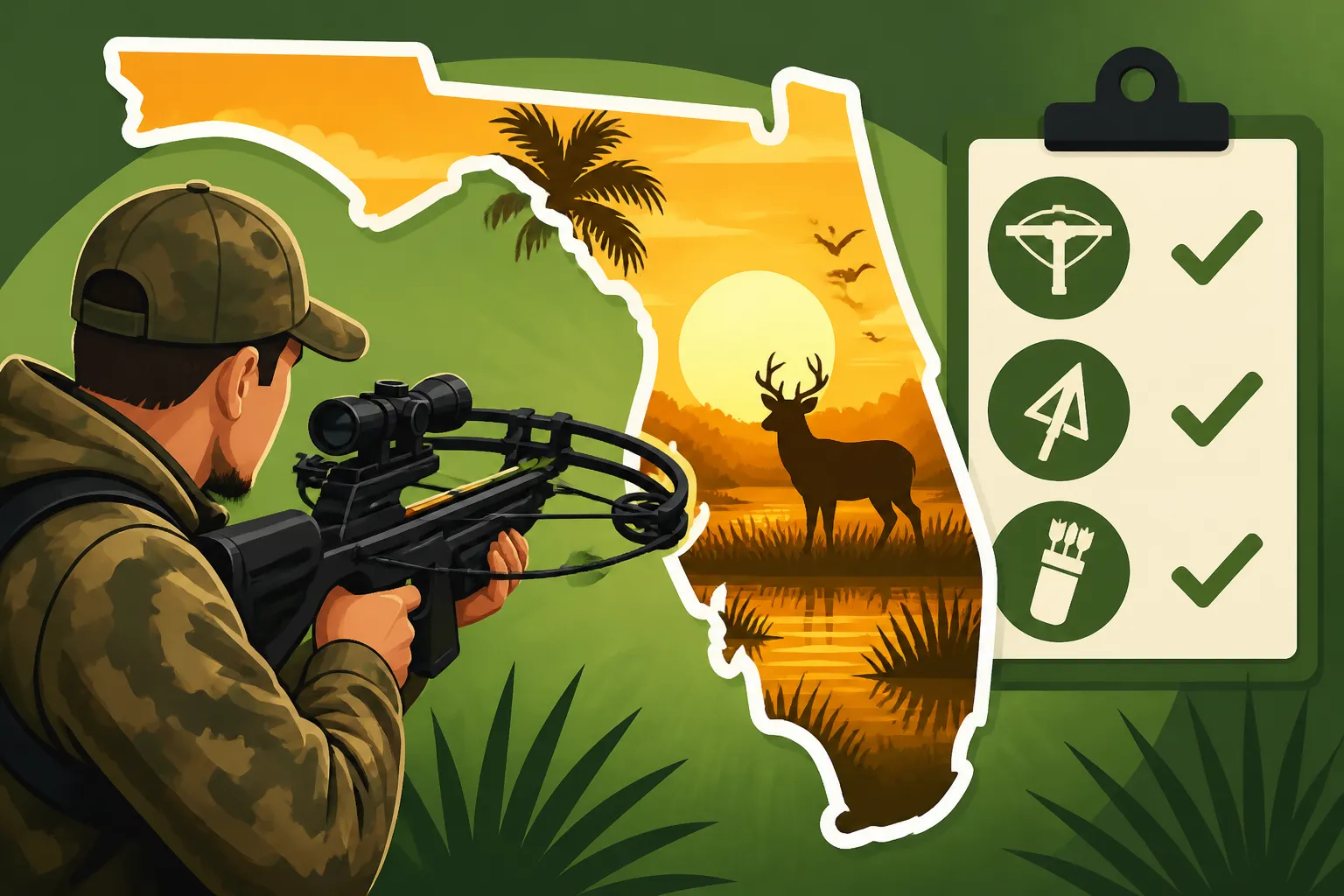
When the FWC talks about a "crossbow," they're referring to an archery device, distinct from a firearm. This distinction is crucial for understanding its legality during various hunting seasons. Generally, a legal crossbow in Florida is a device consisting of a bow mounted horizontally on a stock, capable of launching a bolt or arrow. Unlike some states that might specify minimum draw weights or power strokes, Florida's regulations focus more on the type of projectile and the manner of discharge.
The key is that it uses mechanical force to propel an arrow or bolt, and you cock it, usually with a mechanical device. It's not a compound bow you hold at full draw, nor is it a traditional stick and string. Its design allows it to be held in a cocked position, ready to fire, which differentiates it significantly from other archery equipment. This ready-to-fire state is what grants it certain privileges during archery season but also means its use is under careful scrutiny by wildlife officials to maintain fair chase principles. For instance, you can't just slap a scope on any old bow and call it a crossbow; it must be manufactured and designed as a crossbow.
General Seasons and Legal Use for Crossbows
One of the biggest advantages of crossbows in Florida is their flexibility. They are generally permitted for hunting deer and turkey during the established archery season, but their utility doesn't stop there. You can also use a crossbow during the general gun season, muzzleloader season, and even during certain special opportunity hunts. This makes them incredibly versatile, allowing hunters to extend their time in the woods or to choose a weapon that best suits their physical capabilities or hunting style.
However, this versatility comes with the caveat that you must adhere to the specific season dates for the game you are pursuing and the zone you are hunting in. For example, while a crossbow is legal for deer during archery season, you still need to know exactly when Florida's Zone A Archery Opening Day is, or any other zone you plan to hunt in. It’s not a free-for-all; rather, it’s about utilizing a specific tool within established legal windows. This broad legality means that if you're comfortable with a crossbow, you'll have ample opportunity to put meat in the freezer throughout much of Florida's hunting calendar.
Comparing Crossbows to Traditional Archery Equipment
From a regulatory standpoint, the FWC groups crossbows under "archery equipment" for most purposes, especially during the designated archery season. This means that many of the same rules that apply to compound bows and recurve bows also apply to crossbows during these periods. However, there are subtle but important differences. For instance, a crossbow, by its nature, allows for a prolonged holding of the draw, which is mechanically different from a traditional or compound bow hunter holding their string back by sheer physical strength.
This mechanical advantage is precisely why some purists in the archery community initially viewed crossbows with skepticism, but FWC regulations have evolved to include them as a legitimate and legal form of archery. While Legal Weapons During Florida Archery Season typically includes longbows, recurves, and compound bows, crossbows are explicitly included, recognizing their place in modern hunting. The critical aspect is that all these tools share the common principle of launching a non-firearm projectile (an arrow or bolt) by mechanical force, thus differentiating them from firearms like rifles or shotguns, which have their own set of rules and seasons.
Specific Crossbow and Bolt Equipment Requirements
Beyond simply being classified as a crossbow, there are precise rules about the type of bolts and broadheads you can use. Ignoring these details isn't just a minor oversight; it can lead to legal trouble and, more importantly, an unethical hunt.
Draw Weight and Kinetic Energy Standards
Interestingly, the FWC does not explicitly specify a minimum draw weight for crossbows used for hunting. This differs from many states that might require, for instance, a 75-pound minimum draw weight for deer. Instead, Florida’s regulations implicitly rely on the ethical hunter's judgment and the requirement that the broadhead must be capable of causing "death by hemorrhage" upon impact. This means that while no hard number is printed in the rulebook for draw weight, a crossbow must still generate sufficient kinetic energy to effectively harvest game animals like deer or turkey.
Experienced hunters understand that kinetic energy is key for penetration. For deer, a general rule of thumb suggests needing at least 40-50 foot-pounds of kinetic energy for reliable pass-through shots with well-placed broadheads. For larger game like hogs, you might want even more. Therefore, while the FWC doesn't dictate a specific draw weight, it's incumbent upon the hunter to choose a crossbow powerful enough to ensure a clean, humane kill. This often translates to modern crossbows with draw weights typically ranging from 150 to 225 pounds or more, which comfortably deliver the necessary punch. GoHunt's gear reviews often delve into these kinetic energy ratings, offering practical insights for selecting appropriate equipment.
Legal Bolt and Broadhead Specifications
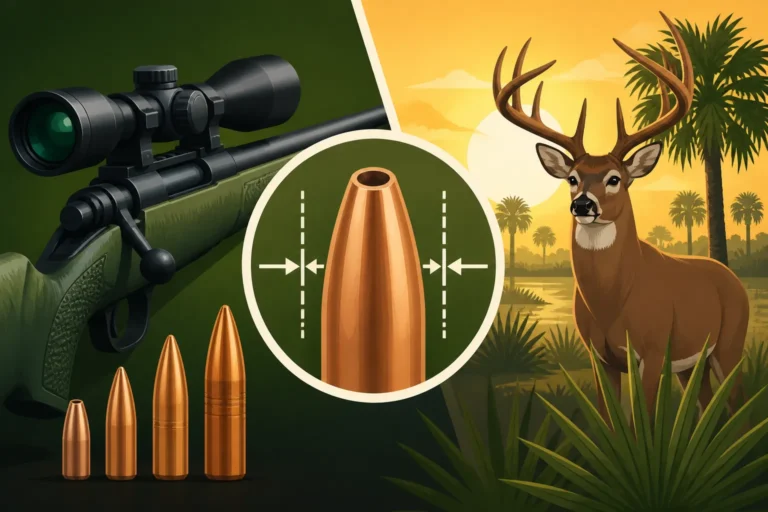
This is where Florida gets quite specific. For hunting deer and turkey with any archery equipment, including crossbows, bolts must be equipped with a broadhead that has at least two sharpened edges with a minimum width of 7/8 inch. The rule about "death by hemorrhage" reinforces the need for broadheads that cut effectively and cause significant blood loss, ensuring a quick and humane harvest.
This minimum width ensures that even if you're using a mechanical broadhead, it must deploy to create a cutting diameter of at least 7/8 inch. While the FWC doesn't stipulate a minimum bolt length or weight, the combination of a sufficiently heavy bolt and a well-designed broadhead is crucial for kinetic energy transfer and penetration. Fixed-blade broadheads are always a reliable choice, but modern mechanical broadheads, when functioning correctly and meeting the minimum cutting diameter, are also perfectly legal and widely used. It's vital to test your chosen broadheads with your specific crossbow to ensure accuracy and proper deployment.
Accessories and Modifications
Modern crossbows come with a plethora of accessories, and thankfully, most are perfectly legal for hunting in Florida. Scopes, for instance, are not only allowed but widely used, significantly enhancing accuracy, especially at longer ranges. Illumination devices, such as lighted nocks for bolts, are also legal and can be incredibly helpful for tracking a shot and locating a bolt after it passes through game, particularly in the low light conditions often encountered during hunting.
Cocking devices, whether integrated into the crossbow or external rope cockers, are standard and legal. They make cocking easier and more consistent, which directly translates to better accuracy. However, one area that often raises questions is the use of suppressors or silencers. While technically not a "firearm" in the traditional sense, crossbows themselves aren't subject to suppressor regulations. Any attached device must still comply with all other FWC hunting regulations and generally, suppressors are associated with firearms. As always, if there's any doubt about a specific modification, checking the latest FWC regulations or contacting them directly is the safest bet.
Crossbow Use During Florida's Archery and Other Seasons
The beauty of hunting in Florida often lies in the diverse ecosystems and the extended seasons available. Crossbows play a significant role in making these opportunities accessible to a broader range of hunters.
Archery Season Privileges and Restrictions
Florida's archery season is traditionally the first opportunity many hunters have to pursue deer and turkey, and crossbows are explicitly permitted during this period. This means you can be out there during the early fall, taking advantage of cooler weather (if we're lucky!) and game patterns before the general gun season ramps up. The ability to use a crossbow during archery season is a huge plus, particularly for those who may have physical limitations that prevent them from drawing and holding a traditional or compound bow.
While crossbows enjoy broad acceptance during archery season, it's imperative to always check the specific regulations for the Wildlife Management Area (WMA) you plan to hunt. Many WMAs have unique rules regarding weapon types, dates, and even bag limits. For example, some WMAs might have different rules for antlered versus antlerless deer during these early seasons. Always consult the FWC WMA regulations handbook or the FWC website for your chosen area. Remember, the general statewide rules are a good starting point, but WMA specifics always take precedence, and ignoring them can quickly turn a successful hunt into a costly mistake. For deeper insights into this topic, consider reading our guide on Crossbow Hunting During Florida's Archery Season.
Use During General Gun Season and Muzzleloader Season
Beyond the dedicated archery season, crossbows offer continued utility during Florida’s general gun season and muzzleloader season. This might seem counterintuitive at first – why would you use a crossbow when you could use a powerful rifle or shotgun? The reasons are varied and personal. Some hunters simply prefer the challenge and quiet nature of a crossbow, even when other weapons are legal. Others might be hunting in areas where shot distances are short, making a crossbow equally effective and perhaps less disruptive to other game.
During general gun season, you typically have more flexibility in terms of weapon choice, and crossbows fall under this broader category. The same applies to Muzzleloader Deer Hunting in Florida season; if you have the appropriate license and are hunting in the correct zone, a crossbow is often a legal alternative. This overlap provides a fantastic opportunity for hunters who want to extend their season and prefer to stick with a single, familiar piece of equipment for multiple hunting periods. It’s about personal preference and maximizing your time afield within the legal framework.
WMA Specific Regulations and Quota Hunts
Public hunting lands in Florida, particularly the Wildlife Management Areas (WMAs), are a treasure trove of hunting opportunities. However, they often come with their own distinct sets of rules, especially concerning weapon types and season dates. While crossbows are generally legal statewide, you absolutely cannot assume that every WMA will follow the exact same rules. Some WMAs might restrict crossbow use to specific parts of the archery season, or even entirely prohibit them during certain special opportunity hunts.
Before you ever set foot on WMA land with your crossbow, you must check the specific WMA regulations for that particular area. These are often available as downloadable brochures on the FWC website, or through resources like the GoHunt app, which frequently updates WMA boundaries and regulations. Many prime WMA hunts are part of the Florida WMA Quota Permit System, requiring an application and draw. Even if you secure a quota permit, you must still verify the weapon type allowed for that specific hunt period. Misunderstanding these localized rules can lead to fines, loss of hunting privileges, and a generally miserable day.
Ethical Considerations and Best Practices for Crossbow Hunters
Just because a weapon is legal doesn't automatically make every shot ethical. Responsible hunting involves not only knowing the rules but also understanding the capabilities of your equipment and your own limitations.
Shot Placement and Ethical Harvest
When hunting with a crossbow, just as with any archery equipment, shot placement is paramount. Unlike a high-powered rifle that can create a massive wound channel, an arrow or bolt kills by hemorrhage. This means a precise shot to the vitals – typically the heart and lungs – is crucial for a quick, humane kill. A poorly placed shot, even with a sharp broadhead, can lead to a wounded animal that suffers and is difficult to recover.
Before heading into the field, take the time to study deer and turkey anatomy. Understand where the vitals lie in relation to the shoulder blade and leg bones from various angles. Practice shooting from different positions you might encounter in the woods, not just from a bench. Know your effective range; while a crossbow might be accurate at 60 yards, can you consistently place a killing shot at that distance under hunting pressure? Emphasizing ethical harvest means choosing your shots wisely, passing on questionable angles, and ensuring you have enough kinetic energy and a sharp broadhead to achieve a clean pass-through.
Practice and Familiarity with Your Equipment
A crossbow might be easier to shoot accurately than a compound bow for some, but it's not a magical shortcut. Regular practice is still non-negotiable. This means sighting in your crossbow, confirming your scope is zeroed at various distances, and practicing with the broadheads you intend to hunt with. Broadheads, especially mechanical ones, can fly differently than field points, so always verify their flight path.
Moreover, practice handling your crossbow in realistic hunting scenarios. Can you quietly load a bolt? Can you aim and fire smoothly from your treestand or ground blind without snagging anything? Knowing your crossbow inside and out builds confidence and reduces the chance of making a mistake when it counts. Many hunters find that using a hunting app like GoHunt to track their shot data and practice sessions helps them identify strengths and weaknesses, allowing them to refine their skills before opening day. This familiarity translates directly into more ethical and successful hunts.
Scouting and Stand Placement
Scouting is fundamental to successful crossbow hunting in Florida. The dense palmetto thickets, cypress swamps, and oak hammocks mean that visibility can often be limited, making precise stand placement even more critical. You need to identify natural funnels, pinch points, feeding areas, and bedding locations that will bring deer or turkey within your effective crossbow range. Remember, while modern crossbows can shoot further, most ethical crossbow shots on deer are taken within 40 yards, often much closer in thick Florida cover.
Understanding game movement patterns, wind direction, and thermal currents is also vital. A good scouting app or even just a detailed paper map can help you plan your entry and exit routes to minimize disturbance. Consider reading our guide on Scouting Florida Public Land Before Season to get a head start. Finding areas where deer or turkey feel safe to move during daylight hours and setting up downwind of their travel corridors will dramatically increase your chances of success. Without diligent scouting, you’re often just randomly hoping, which isn't a recipe for consistent success or ethical hunting.
Licenses, Permits, and Chronic Wasting Disease (CWD) Considerations
Hunting in Florida requires more than just knowing your gear; it demands proper licensing and awareness of critical wildlife health issues like CWD, even if you’re using a crossbow. These administrative aspects are just as important as the equipment rules.
Required Licenses for Crossbow Hunting
Before you even think about stepping into the woods with your crossbow, you need to ensure you have the appropriate licenses and permits. In Florida, this typically includes a valid Florida hunting license (often called a "base license") and a Florida Archery Permit. Even though a crossbow is a mechanical device, it falls under the archery category for permit purposes. If you plan to hunt on public lands, such as Wildlife Management Areas (WMAs), you'll also need a Florida WMA Management Area Permit.
These licenses and permits are your ticket to legally hunt in the Sunshine State. The cost can vary depending on whether you are a Florida resident or a nonresident, and if you opt for annual or multi-year options. Our guide on Florida Hunting Licenses and What They Cost can provide a detailed breakdown of these expenses. Always carry proof of your licenses with you while hunting, whether that's a physical copy, a screenshot on your phone, or accessible through the FWC Fish/Hunt Florida app. Getting caught without the proper documentation can result in hefty fines and a spoiled hunting trip.
CWD and Crossbow Hunting
While Chronic Wasting Disease (CWD) is a neurological disease affecting deer and other cervids and not directly related to your crossbow, it's a critical consideration for all Florida deer hunters, regardless of weapon choice. Florida recently had Florida's Single Confirmed CWD Case in Holmes County, which led to the establishment of Florida's CWD Management Zone Boundaries.
As a responsible hunter, you need to be aware of these zones and the FWC's regulations regarding carcass movement and CWD testing within them. The FWC encourages hunters to voluntarily submit samples for testing, and in some areas, mandatory testing may be required. While CWD doesn't affect crossbow equipment rules, it absolutely impacts how you handle your harvested deer, especially if you hunt within or near a CWD management zone. Stay informed through the FWC website or official communications to ensure you're doing your part to monitor and prevent the spread of this serious disease.
Disabled Hunter Permits and Crossbow Exemptions
Florida is committed to making hunting accessible to everyone, including hunters with disabilities. For individuals with certain permanent disabilities that impair their ability to use traditional archery equipment, the FWC offers provisions that may allow for the use of crossbows even during times when only traditional bows are typically permitted. This is often done through a Disabled Crossbow Permit, which grants an exemption.
To qualify, hunters usually need to provide medical documentation from a licensed physician certifying their disability. This permit ensures that individuals with genuine physical limitations aren't excluded from participating in the rich tradition of Florida archery hunting. If you or someone you know might qualify, it's highly recommended to contact the FWC directly to understand the specific requirements and application process for a Disabled Crossbow Permit. These provisions highlight Florida's inclusive approach to hunting, ensuring that passion for the outdoors can be pursued by all.
Comparing Archery Equipment in Florida
Here's a quick look at how crossbows stack up against other common archery equipment types in Florida:
| Feature | Crossbow | Compound Bow | Traditional Bow (Recurve/Longbow) |
|---|---|---|---|
| Draw Method | Mechanical cocking device (rope, crank) | Levered cams, held at reduced let-off | Direct muscle pull, held at full draw |
| Holding Draw | Can be held cocked indefinitely | Physically held at let-off, can fatigue | Physically held at full weight, requires strength |
| Accuracy (Avg.) | High, often scope-equipped, consistent release | High, with sights and releases | High, but requires significant practice and skill |
| Effective Range | 20-60+ yards (ethical) | 20-60+ yards (ethical) | 10-30 yards (ethical) |
| Speed (FPS) | 300-450+ FPS | 280-350 FPS | 150-200 FPS |
| Physical Demand | Low to moderate (cocking) | Moderate to high | High |
| Season Legality | Archery, Muzzleloader, General Gun seasons | Archery, Muzzleloader, General Gun seasons | Archery, Muzzleloader, General Gun seasons |
| Broadhead Rules | 2 sharpened edges, min 7/8" width | 2 sharpened edges, min 7/8" width | 2 sharpened edges, min 7/8" width |
Disclaimer
The information provided in this guide is intended for informational purposes only and is not a substitute for the official regulations published by the Florida Fish and Wildlife Conservation Commission (FWC). Hunting regulations can change annually. Always consult the most current FWC hunting regulations handbook or visit their official website before participating in any hunting activity.