Minimum Bullet Diameter for Florida Rifles
There’s nothing quite like the excitement of preparing for deer season in Florida, but let's be honest, trying to decipher all the regulations can sometimes feel like you need a law degree! One of the questions that frequently trips up both new and seasoned hunters is about the legal minimum bullet diameter for rifles used to hunt deer. This guide is here to cut through the confusion and give you the straight facts, ensuring your gear is legal and your hunt is ethical.
Understanding Florida's Minimum Bullet Diameter for Deer
It’s easy to get lost in the details, especially when you’re dealing with technical terms. But when it comes to hunting deer with a rifle in Florida, the rule about bullet diameter is actually quite straightforward. The Florida Fish and Wildlife Conservation Commission (FWC) has established a clear standard to promote ethical and humane harvesting.
The Core Regulation: .20 Centerfire
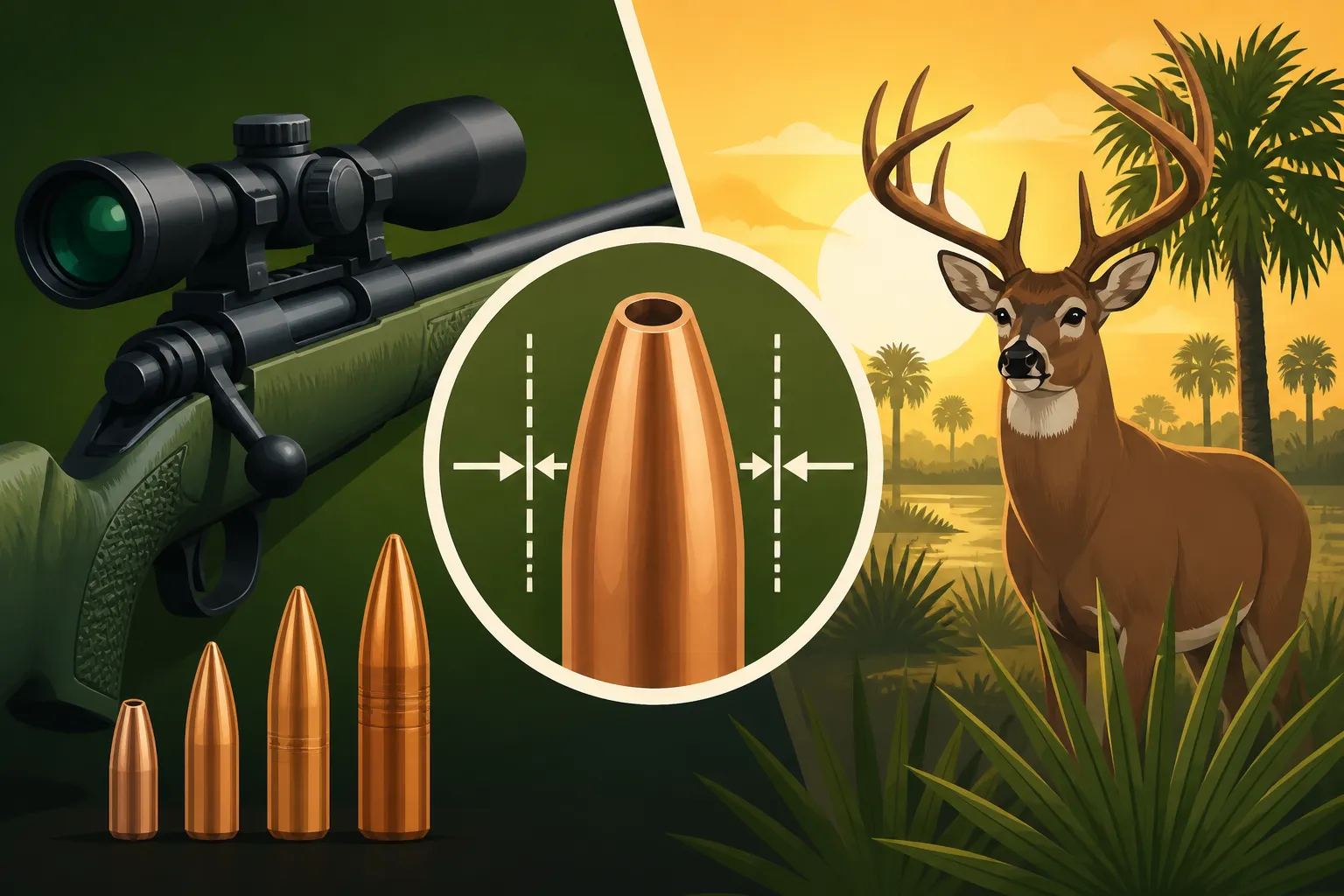
To put it plainly, if you're using a rifle to hunt deer in Florida, the bullet must be a minimum of .20 caliber centerfire. That's the key specification right there. Now, what exactly does ".20 centerfire" mean? It means the bullet itself must be at least two-tenths of an inch in diameter. More importantly, it specifies that the cartridge must be a centerfire cartridge. This distinguishes it from rimfire cartridges, like the common .22LR, where the firing pin strikes the rim of the casing. Centerfire cartridges are generally more powerful and reliable, designed for hunting larger game like deer.
This regulation isn't just an arbitrary number plucked out of thin air. It's carefully considered to ensure that hunters are using adequate firearms for the job. A bullet that is too small might not have the necessary energy to ethically harvest a deer, leading to wounded animals and prolonged suffering. When you're out in the field, knowing your rifle meets these basic requirements gives you peace of mind and reinforces your commitment to responsible hunting. For a broader look at all legal firearm options, you might find our guide on Florida Legal Firearms for Deer Hunting helpful, as it covers shotguns and other implements too.
Why the Minimum Diameter Matters
The FWC’s regulation isn't about making things harder for hunters; it’s fundamentally about promoting a quick and humane harvest. Deer are robust animals, and it takes a certain amount of kinetic energy and bullet penetration to dispatch them effectively. Using a bullet that is too small in diameter or lacks sufficient power means you risk merely wounding the animal, which is every ethical hunter's nightmare.
A .20 centerfire minimum ensures that the projectile carries enough energy to penetrate vital organs and create a sufficient wound channel for a quick kill. A larger diameter bullet, combined with adequate bullet construction, is more likely to create a larger entry and exit wound, facilitating blood trailing and recovery, even if the shot isn't absolutely perfect. Consider the dense palmetto thickets and cypress swamps we often hunt here in Florida; you want every advantage for a clean shot and easy recovery. No one wants to spend hours tracking a wounded deer through tough terrain, knowing they could have prevented it with the right equipment. This regulation helps minimize that possibility, ensuring that the animals we pursue are treated with respect, even in the moment of harvest. It’s part of the broader commitment to conservation and responsible wildlife management in the state, something we all share as stewards of Florida's natural resources.
Navigating Legal Calibers and Exemptions
Understanding the core regulation is one thing, but knowing which specific calibers fit the bill and where exceptions lie can still feel like a puzzle. Florida's diverse hunting landscape means you'll encounter a variety of game and terrain, each potentially influencing your choice of firearm.
Common Legal Rifle Calibers for Deer
Many popular and readily available rifle calibers meet or exceed Florida's .20 centerfire minimum for deer. If you're using a cartridge with a bullet diameter of .224 inches (like a .223 Remington or 5.56x45mm NATO), .243 Winchester, .270 Winchester, .30-06 Springfield, .308 Winchester, 6.5 Creedmoor, or anything larger, you're well within the legal limits. These calibers are widely respected for their effectiveness on deer-sized game and are commonly used by hunters across Florida.
For example, the ubiquitous .223 Remington, despite its "22" designation, fires a .224-inch diameter bullet, making it legal under the .20 centerfire rule. It's a fantastic choice for many hunters due to its mild recoil and accuracy, especially in more open country. Calibers like the .308 Winchester or .30-06 Springfield offer even more knockdown power, which can be advantageous when hunting the larger-bodied deer sometimes found in the Panhandle, or when you anticipate longer shots. When planning your hunt, consulting resources like the GoHunt app can help you research specific calibers and their ballistics, ensuring you're making an informed choice for the conditions you'll face, whether you're hunting in the pine flatwoods or along a river bottom. The key is that they are all centerfire cartridges, designed to deliver the energy needed for a quick and ethical harvest.
When Smaller Calibers Are Allowed (and Not)
It's absolutely crucial to remember that the .20 centerfire rule applies specifically to deer hunting. This regulation does not extend to all other game species in Florida. For smaller game animals like squirrels or rabbits, rimfire rifles chambered in .22LR or even .17 HMR are perfectly legal and appropriate. These calibers are designed for smaller targets and generate less energy, making them unsuitable and unethical for deer.
The distinction is important because while you might own a .22LR rifle, bringing it into a deer stand with the intent to harvest a deer would be a violation of state law. Similarly, for feral hogs, which are considered a nuisance species and can be hunted year-round without a bag limit on private lands, there's generally no minimum caliber restriction. Hunters often use a wider array of firearms for hogs, including smaller calibers, but for deer, the .20 centerfire rule is non-negotiable. Always verify the specific regulations for the species you intend to hunt. The FWC continually updates its rules, and a quick check on their website or the GoHunt platform before heading out can save you a lot of headaches and potential legal trouble. You’d hate to have your hunt cut short because of a simple misunderstanding of the rules, especially when you’ve put in all that effort scouting Florida public land before season.
Other Legal Weapons for Deer
While rifles are a popular choice, Florida offers hunters a diverse range of legal weapons for deer, each with its own specific regulations. Shotguns are very common, especially in areas with dense cover or where rifle use might be restricted due to proximity to populated areas. For deer, shotguns must be 20-gauge or larger, firing a single projectile (slug). You can't use buckshot for deer in Florida. This is a common point of confusion, so always double-check the specifics. If you're primarily a shotgun hunter, our detailed article on Which Shotgun Gauges Florida Allows for Deer will clarify everything you need to know.
Muzzleloaders, which harken back to a more traditional hunting style, are also legal during specific seasons. For deer, a muzzleloader must be .40 caliber or larger. Many hunters enjoy the challenge and historical aspect of Muzzleloader Deer Hunting in Florida, and the regulations ensure that these firearms are capable of an ethical harvest. Archery equipment, including traditional bows, compound bows, and crossbows, is also highly popular. During archery season, specific draw weight and arrow minimums apply to ensure sufficient penetration. For example, crossbows must have a minimum draw weight of 80 pounds. Each weapon type presents its own unique challenges and rewards, but all are governed by regulations designed to promote responsible and humane hunting practices.
Ensuring Compliance and Ethical Hunting
Being a responsible hunter means not just knowing the rules, but actively seeking to understand them and integrate them into your hunting practices. It’s about more than just avoiding a ticket; it’s about respecting the game and the heritage of hunting itself.
Checking FWC Regulations
The absolute best source for current and accurate hunting regulations in Florida is the Florida Fish and Wildlife Conservation Commission (FWC) itself. Their website, MyFWC.com, is a treasure trove of information, offering detailed summaries, downloadable handbooks, and even an interactive map to help you navigate public lands. Regulations can and do change, sometimes annually, so relying on old information or hearsay is a risky game. Before every season, and especially before venturing into a new zone or targeting a new species, take the time to review the most recent regulations.
The FWC also offers a fantastic mobile app, which can be an indispensable tool for hunters. It allows you to check regulations on the go, report harvests, and even locate specific public hunting areas. Pairing this with a robust mapping app like GoHunt, which often integrates land ownership boundaries and other valuable scouting information, creates a powerful toolkit for staying legal and organized in the field. Don't forget that many WMAs have their own specific rules that might be more restrictive than statewide regulations, so always check WMA-specific rules carefully. Knowing that you’re fully compliant with all rules, from Florida Hunter Education Requirements to specific caliber laws, means you can focus on the hunt itself.
Consequences of Non-Compliance
Ignoring or simply being unaware of hunting regulations can lead to serious consequences, far beyond just a ruined hunt. Violations can range from minor infractions to significant misdemeanors or even felonies, depending on the severity and nature of the offense. For instance, using an illegal caliber for deer hunting could result in fines, confiscation of your firearm, and the suspension or revocation of your hunting license. If you're caught using an underpowered rifle and wound an animal, the legal and ethical implications become even more severe.
Beyond the legal penalties, there's the profound ethical breach. An ethical hunter strives for a clean, humane kill. Using a weapon that is not legally sanctioned for deer hunting often means it's also not powerful enough for a quick, ethical harvest. This leads to unnecessary suffering for the animal and a potentially gut-wrenching experience for the hunter. The FWC takes these matters very seriously, and rightfully so. The goal of these regulations is to maintain the integrity of hunting and ensure the welfare of Florida's diverse wildlife populations. Understanding Florida Wildlife Violation Penalties can certainly provide a sobering perspective on why compliance is so critical. Always choose the right tool for the job, both legally and ethically.
Table: Common Rifle Calibers and Their Legality for Florida Deer
To make things a bit easier, here’s a quick overview of some common rifle calibers and whether they meet Florida’s minimum .20 centerfire requirement for deer. Remember, this is about the bullet diameter and the centerfire designation, not the number that might appear on the cartridge name itself.
| Caliber Name (Common) | Bullet Diameter (inches) | Centerfire? | Legal for Florida Deer? | Notes |
|---|---|---|---|---|
| .223 Remington / 5.56 NATO | .224 | Yes | Yes | Minimum legal, widely used. |
| .243 Winchester | .243 | Yes | Yes | Excellent deer cartridge, good range. |
| 6.5 Creedmoor | .264 | Yes | Yes | Very popular, flat shooting. |
| .270 Winchester | .277 | Yes | Yes | Classic deer and elk cartridge. |
| .30-30 Winchester | .308 | Yes | Yes | Lever-action favorite, great for brush. |
| .308 Winchester | .308 | Yes | Yes | Modern military/hunting standard, versatile. |
| .30-06 Springfield | .308 | Yes | Yes | Powerful, classic American hunting cartridge. |
| .350 Legend | .357 | Yes | Yes | Straight-wall cartridge gaining popularity, WMA friendly in some states. |
| .45-70 Government | .458 | Yes | Yes | Heavy hitter, good for dense cover and larger game. |
| .22 Long Rifle (.22LR) | .223 | No | No | Rimfire, not legal for deer. Only for small game. |
| .17 HMR | .172 | Yes | No | Centerfire, but below .20 minimum diameter. Not legal for deer. |
| .22 Magnum (.22WMR) | .224 | No | No | Rimfire, not legal for deer. Only for small game. |
This table should give you a quick reference when considering your rifle choice for deer season. Always remember that while a caliber might be legal, ethical hunting also demands accurate shot placement and choosing appropriate bullet construction for deer.
Disclaimer
The information provided in this guide is for informational purposes only and is not a substitute for checking the official regulations published by the Florida Fish and Wildlife Conservation Commission (FWC). Hunting regulations can change, and it is the hunter's responsibility to review and comply with all current federal, state, and local laws before participating in any hunting activity.